Basque Recipes
Hearty One-Pot Tuna and Potato Stew
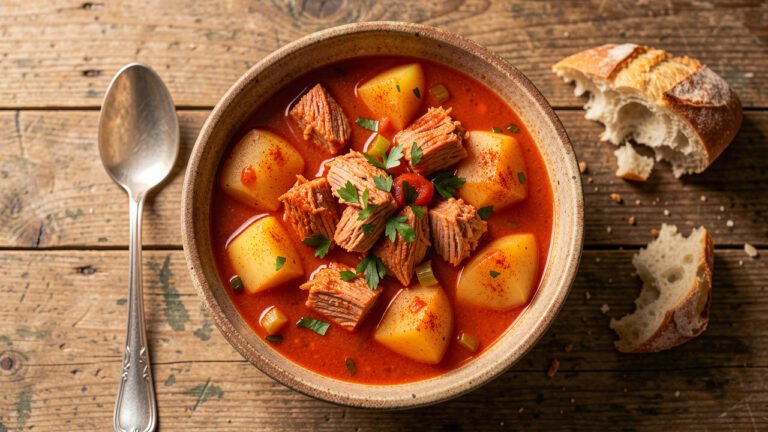
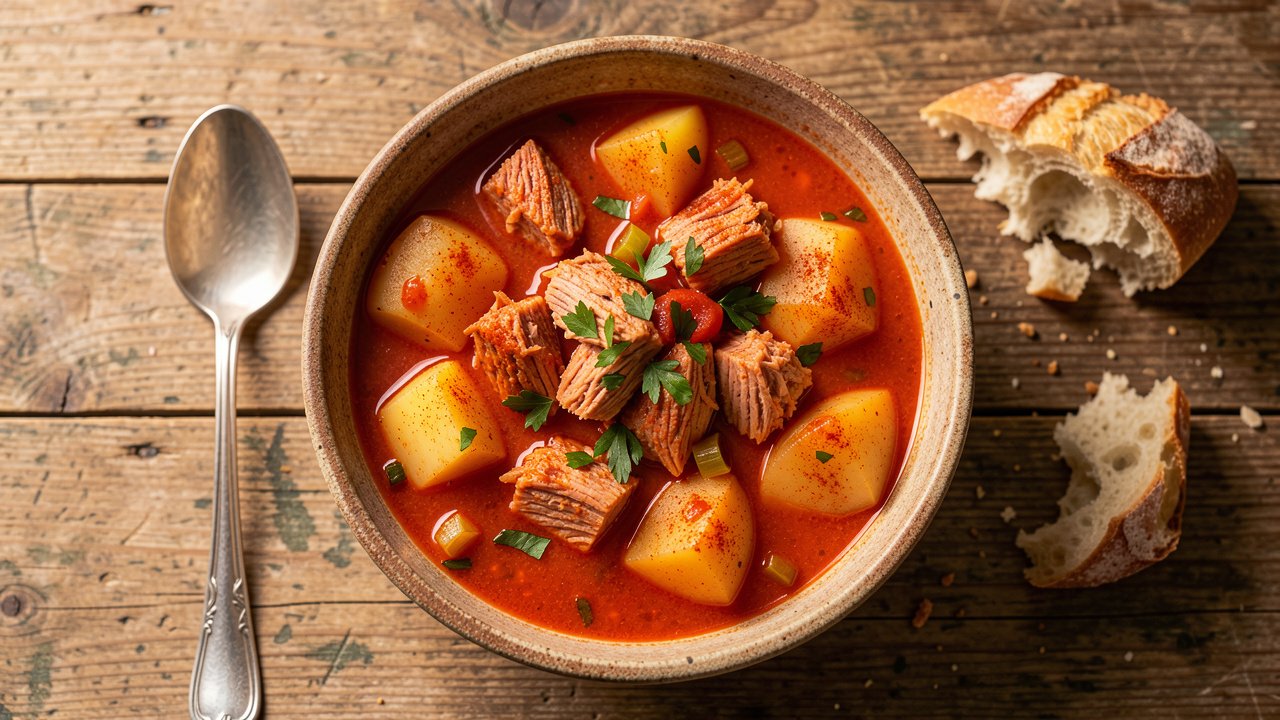
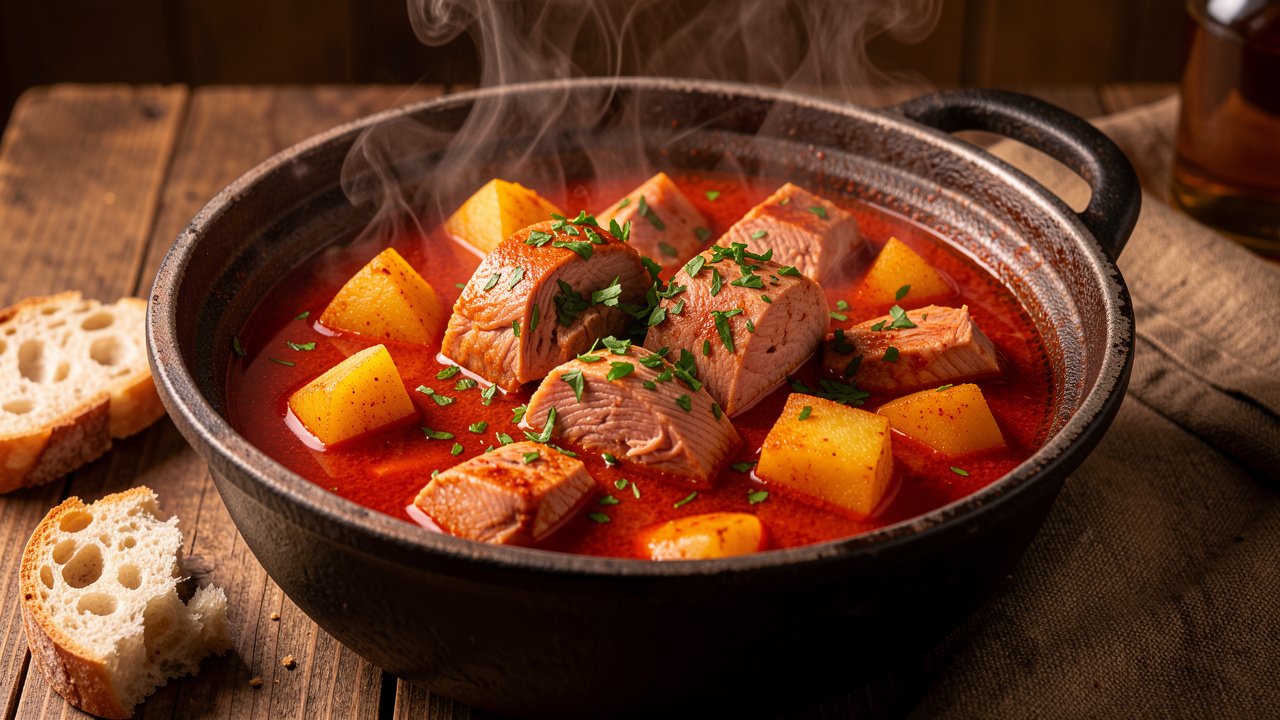
Marmitako began at sea, cooked by Basque tuna fishermen in a single pot with the day’s catch and whatever potatoes and peppers were aboard. It is comfort food in its purest form: a smoky, paprika-scented broth built slowly from onion, pepper, and tomato, thickened by potato, and finished with tender chunks of tuna that poach in the residual heat.
Why This Marmitako Works
Marmitako is a lesson in restraint. It is built from humble ingredients that anyone can find, and its whole character comes from the order in which they meet the pot. Soften the onion and pepper first, deepen them with garlic and smoked paprika, let the tomato collapse into a sauce, and only then add potatoes and broth. Get that sequence right and you end up with a stew that tastes far richer than its short shopping list suggests.
The potatoes do double duty. Instead of slicing them cleanly, you crack them: dig the knife in and snap each chunk off. That ragged surface releases starch into the broth as they simmer, so the liquid turns silky and slightly thickened without any flour. It is the single technique that separates a real marmitako from a thin fish soup.
The tuna is treated gently. It is the last thing to go in, added when the potatoes are already tender and the pan is pulled from the heat or barely simmering. Tuna cooks in minutes and turns dry and chalky the moment it is overdone, so poaching it in the hot broth keeps every chunk moist and just cooked through.
It is also forgiving and frugal, which is exactly why fishermen relied on it. The base can be built ahead, the broth stretches a modest amount of fish to feed a table, and the smoky paprika ties everything together. Once you know the rhythm, you can cook it from memory with whatever firm fish and peppers you have on hand.
Pro observation: The broth is ready for the tuna when a potato chunk crushes easily against the side of the pot and the liquid has turned glossy and lightly thickened. If it still tastes watery, simmer a few minutes longer before the fish goes in; you cannot fix it once the tuna is added.
Ingredients
Ingredient Notes & Substitutions
Tuna
Fresh tuna steak, cut into two-inch chunks, is traditional; bonito is the prized fish in the Basque Country. Any firm, meaty fish works well, and you can use good drained canned tuna in a pinch, stirred in at the very end just to warm through.
Potatoes
Choose a waxy or all-purpose potato that holds its shape while still lending starch to the broth. Crack them into chunks rather than slicing, so their rough edges thicken the liquid. Floury baking potatoes can work but will break down more.
Peppers & Paste
A green bell pepper builds the fresh base. For the classic deep flavor, stir in a spoon of red pepper paste, made from dried choricero peppers in Spain; a mild red pepper or ancho paste is a fine stand-in and adds the same sweet, earthy body.
Smoked Paprika & Broth
Sweet smoked paprika gives marmitako its signature warmth and color, so use a fresh, fragrant tin. A light fish broth is most authentic, but vegetable broth keeps it simple and still tastes clean and savory. Finish with parsley for a fresh lift.
Equipment
- Large heavy pot or Dutch oven
- Wooden spoon
- Sharp knife and board
- Box grater
- Ladle
- Measuring spoons and cup
Kitchen Measurement Converter
Need to convert an amount while you measure? Pick a category, enter a value, and the result updates instantly.
Step-by-Step Instructions
Marmitako rewards a little prep up front, then mostly looks after itself while it simmers. Have the fish cut and the vegetables ready before you start, and hold the tuna until the very end so it stays tender and moist.
Prep the Fish and Vegetables
Cut the tuna into two-inch chunks and keep it cold. Chop the onion and bell pepper, mince the garlic, and grate the tomatoes on the coarse side of a box grater, discarding the skins. Peel the potatoes and crack them into rough chunks by cutting partway in and snapping each piece off, which helps thicken the broth later.
Build the Sofrito
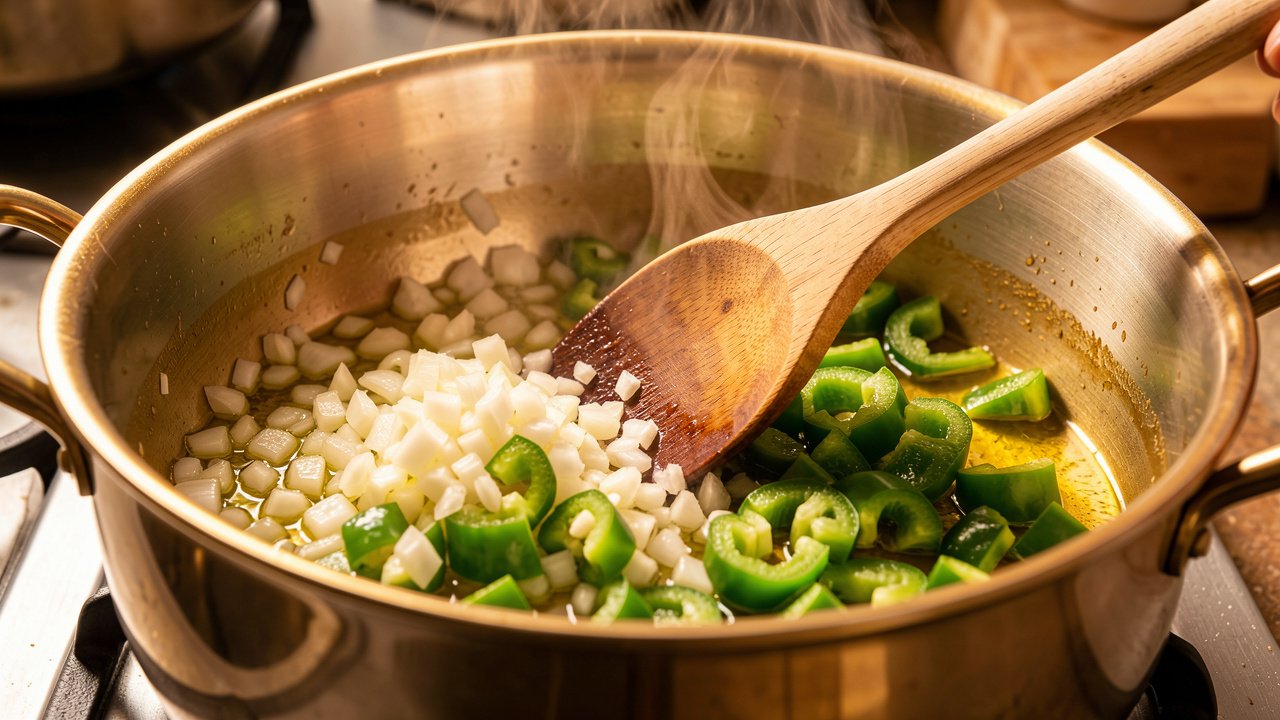
Warm the olive oil in a large heavy pot over medium heat. Add the onion and bell pepper with a pinch of salt and cook 8 to 10 minutes, stirring now and then, until soft and golden at the edges. This slow, patient start is where the sweetness and depth of the stew are born.
Add Garlic, Paprika, and Tomato
Stir in the garlic and cook for a minute until fragrant, then add the smoked paprika and red pepper paste and stir for a few seconds so the paprika blooms without scorching. Pour in the grated tomatoes and cook 5 minutes, stirring, until the mixture darkens and turns jammy and the raw tomato smell is gone.
Simmer the Potatoes
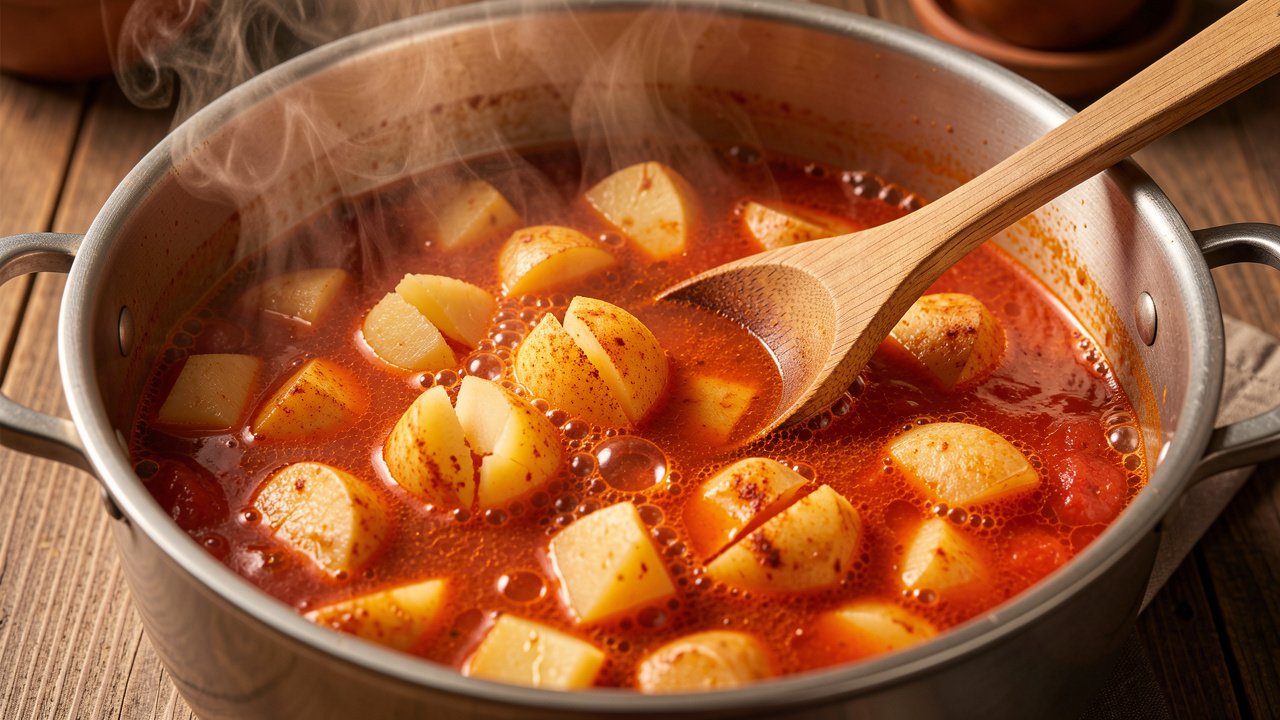
Add the cracked potatoes and turn them to coat in the red sofrito, then pour in the broth and add the salt. Bring to a gentle boil, lower to a steady simmer, and cook uncovered 18 to 22 minutes, until the potatoes are tender and the broth has thickened slightly. Crush one potato chunk against the side to enrich the liquid.
Poach the Tuna
Taste the broth and adjust the salt. Nestle the tuna chunks into the hot stew, then pull the pot off the heat or drop it to the barest simmer. Let the tuna sit in the broth for 4 to 5 minutes, just until it turns opaque and is cooked through. Do not stir hard or boil it, or the fish will toughen.
Rest and Serve
Cover the pot and let the marmitako rest off the heat for 5 minutes so the flavors settle and the fish finishes gently in the residual warmth. Scatter the chopped parsley over the top, ladle into deep bowls, and serve hot with plenty of crusty bread for the broth.
Chef’s Tips & Troubleshooting
Crack the potatoes instead of slicing them. The torn edges release starch as they simmer and thicken the broth into a proper stew rather than a thin soup.
Add the tuna last and off the heat. It only needs a few minutes to turn opaque, and gentle poaching is what keeps every chunk moist instead of dry and chalky.
Bloom the smoked paprika in the oil for just a few seconds before the tomato goes in. That releases its color and aroma; let it scorch and it turns bitter.
If it did not turn out right
Broth too thin? The potatoes did not release enough starch. Crush a couple of chunks against the side of the pot and simmer a few minutes longer before adding the fish.
Dry, tough tuna? It boiled or cooked too long. Next time pull the pot off the heat first, add the tuna, and let it poach quietly for only 4 to 5 minutes.
Tastes flat? It needs salt or a fresher paprika. Season the broth before the tuna goes in, and finish with parsley for a bright lift.
Recipe Variations
Serving Suggestions
- Thick slices of crusty bread for the broth
- A simple green salad with vinaigrette
- A bowl of olives and pickled peppers
- Sparkling water or a chilled soft drink
Nutrition Facts
| Nutrient | Amount per serving |
|---|---|
| Calories | 420 |
| Protein | 38 g |
| Carbohydrates | 34 g |
| Fat | 14 g |
| Saturated Fat | 2.5 g |
| Fiber | 5 g |
| Sugar | 6 g |
| Sodium | 640 mg |
Values are estimates per serving and vary with the exact ingredients and brands you use.
A Note on Fish Safety
Tuna is best cooked gently, but it should still reach a safe temperature. Cook the fish until it is opaque all the way through and flakes easily, which corresponds to an internal temperature of about 145 F (63 C) if you want to check. Use fresh fish that smells clean and of the sea, keep it chilled until it goes into the pot, and serve marmitako hot and freshly made. Do not leave the cooked stew at room temperature for more than two hours, and cool leftovers quickly before refrigerating.
Make-Ahead, Storage & Reheating
A Note on Basque Cooking
Marmitako sits at the heart of Basque coastal cooking, born on tuna boats where a single pot fed the whole crew. The name comes straight from that origin: it means roughly “from the pot,” after the “marmita,” the metal cooking pot the fishermen kept aboard. Everything went into that one vessel, and the dish still carries the plain, generous spirit of food made at sea.
It is worth being clear about what marmitako is and is not. Where many tuna dishes show off the fish seared rare or grilled over coals, marmitako is the opposite: a brothy potato stew in which the tuna is quietly poached at the end. The star is really the smoky, tomato-rich broth, with the fish added last as a tender finish rather than the seared centerpiece.
The same coastal larder gives the Basque Country a whole family of tomato-and-pepper cooking. If you enjoy this stew, the gentle egg-and-pepper braise of Basque piperade comes from the same tradition, while a pot of steamed mussels with fennel and tomatoes is another one-pot way to bring the sea to the table. What ties them together is patience with a humble base and respect for the freshness of the catch.
Frequently Asked Questions
More Tomato Recipes to Try
Last updated: September 29, 2026