Uruguayan Recipes
River Plate Sunday Sauce
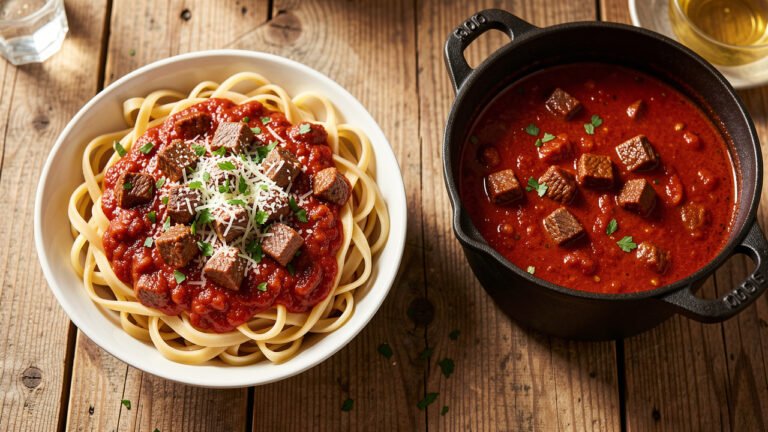
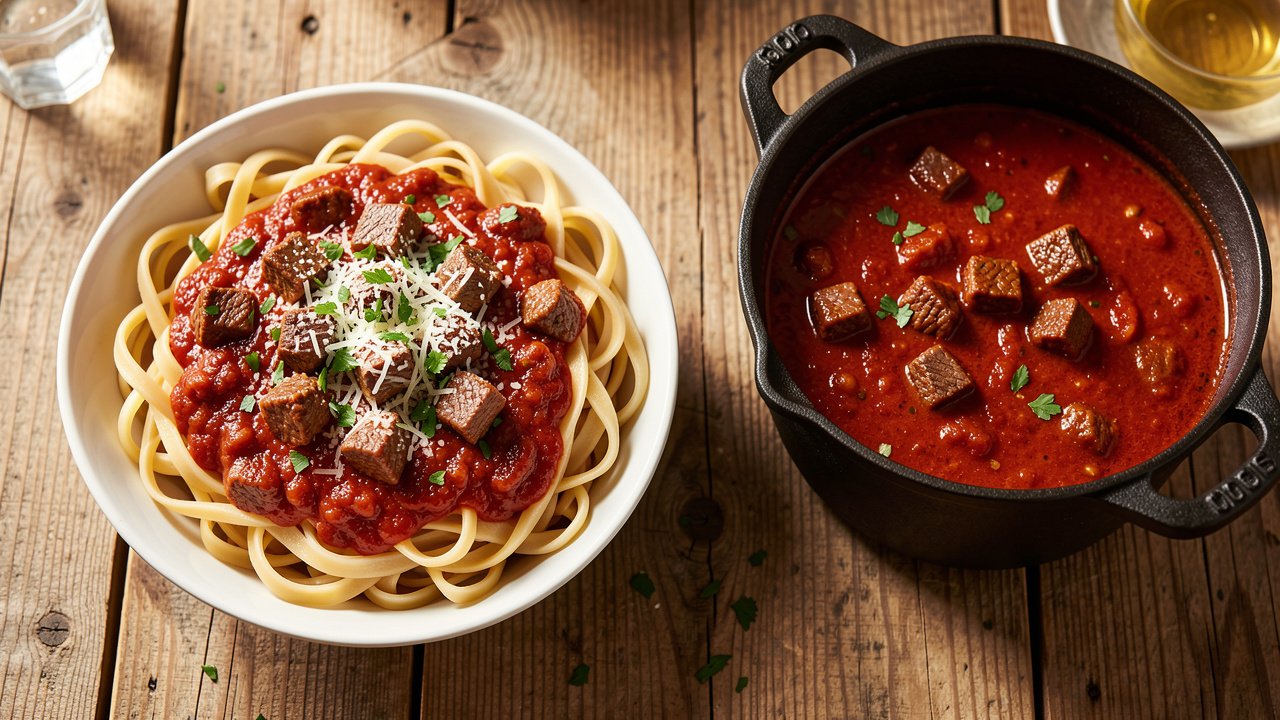
Tuco is the sauce that fills Uruguayan homes with the smell of Sunday. It is not a quick weeknight red sauce; it is a slow, patient pot of tomato and halal beef that sits on the back of the stove for hours while the family drifts in and out of the kitchen. The reward is a sauce that tastes like far more than its short ingredient list, spooned generously over pasta or over pillowy noquis.
The first time I rushed a tuco, I pulled it off the heat after forty minutes because I was hungry, and it tasted thin and sharp, more like a plain tomato sauce with some beef in it. The second time I let it go for two full hours, barely bubbling, and it was a completely different dish: sweet, savory, and rounded, with beef that fell apart at the touch of a fork. That patience is the whole recipe.
Why This Uruguayan Tuco Works
Tuco earns its depth from three simple moves done well: browning the beef, building a proper vegetable base, and simmering low and slow. Skip any one of them and you still get a sauce, but you lose the layers that make tuco taste like a Sunday tradition rather than a Tuesday shortcut.
Browning comes first. Searing the halal beef in a hot pot before anything else builds a savory crust and leaves flavorful browned bits stuck to the bottom. Those bits dissolve into the sauce later and give it a roasted, meaty backbone you cannot fake with seasoning alone.
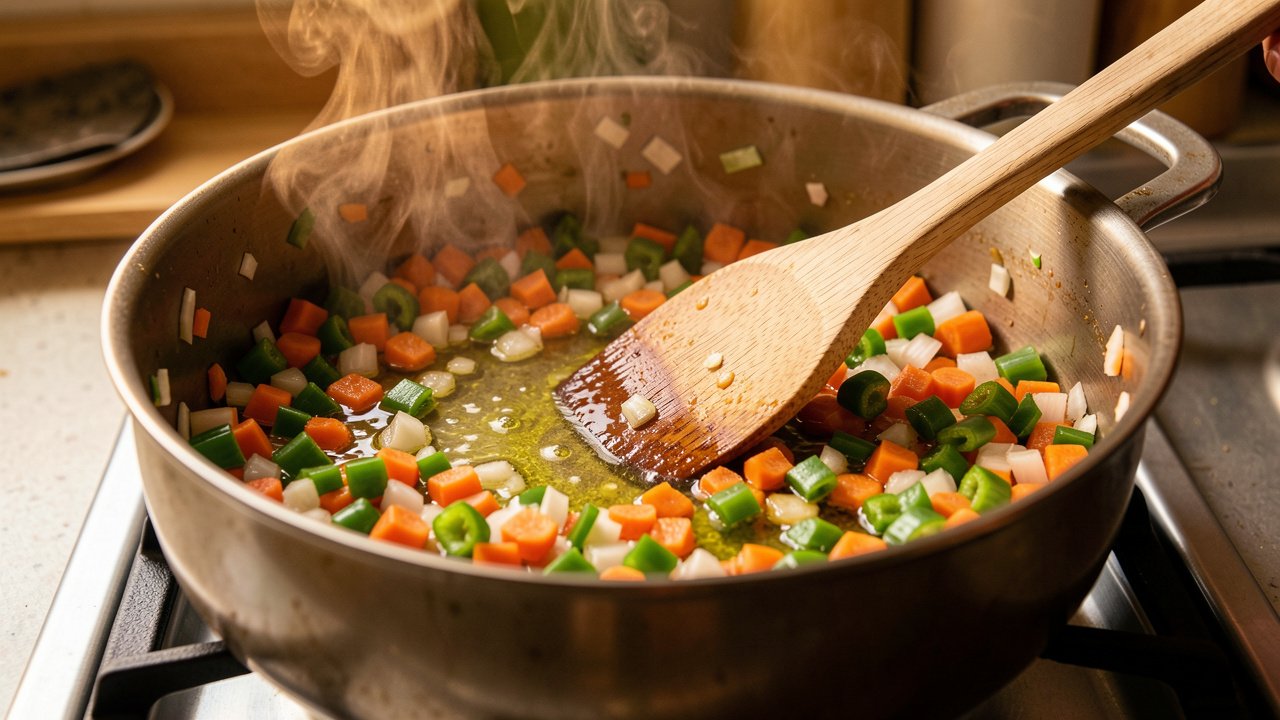
The vegetable base, what Uruguayans and their Italian and Spanish ancestors would recognize as a sofrito, is the quiet workhorse. Onion, carrot, and green bell pepper cooked down slowly turn sweet and mellow, balancing the acidity of the tomatoes so the finished sauce never tastes sharp. The carrot in particular adds a natural sweetness that means you barely need any sugar.
Then comes the long simmer. Tuco is not a sauce you hurry. Two hours at the barest bubble breaks down the beef into tender, yielding pieces and lets the tomato reduce and concentrate. The sauce thickens, darkens, and turns glossy, and the flavors marry into something far greater than the sum of the parts.
Pro observation: The tuco is ready when a wooden spoon dragged across the bottom of the pot leaves a trail that fills back in slowly, and the beef gives way when pressed against the side of the pot. That is your cue that the sauce has reduced enough and the meat is tender.
Ingredients
Kitchen Measurement Converter
Quickly convert between common cooking measurements without leaving the recipe. Pick a category, enter a value, and the result updates instantly.
Ingredient Notes & Substitutions
Halal Beef
Use a well-marbled cut made for slow cooking, such as halal beef chuck or stewing beef, cut into bite-size cubes. Lean cuts dry out over a long simmer, while chuck stays juicy and turns tender. Pat the cubes dry before browning for the best crust.
Tomatoes
Canned crushed tomatoes or passata give a reliable, smooth base year round. In peak summer you can use about two pounds of ripe fresh tomatoes, peeled and chopped, but you will need to simmer a little longer to cook off the extra water.
The Sofrito Vegetables
Onion, carrot, and green bell pepper are the classic River Plate trio. Dice them small and even so they melt into the sauce. The carrot is not optional here; its gentle sweetness is what keeps the tomato from tasting sharp.
The Splash
Traditional cooks sometimes add a splash of liquid to deglaze the pot. Here we use beef broth, which keeps the sauce savory and family friendly. A spoonful of grape juice adds a similar fruity roundness if you want it.
Equipment
- Heavy pot or Dutch oven
- Wooden spoon
- Sharp knife and board
- Can opener
- Tongs for the beef
- Ladle for serving
Before You Start
1. Bring the beef to room temperature. Take the halal beef out of the fridge about 20 minutes ahead and pat it dry. Dry, slightly warmed meat browns far better than cold, damp cubes straight from the fridge.
2. Prep all the vegetables first. Chop the onion, carrot, pepper, and garlic before the pot goes on. Once you start browning, the cooking moves quickly and you will not want to be dicing on the fly.
3. Plan for a long, gentle simmer. Tuco needs roughly two hours of quiet bubbling, so start early. This is a sauce that rewards you for staying out of its way.
Beef food-safety note: Keep raw halal beef refrigerated until you cook it, and use a separate board and knife from your vegetables to avoid cross-contamination. Brown the beef promptly, and once the tuco is cooked, cool any leftovers within two hours and refrigerate. When reheating, bring the sauce back to a full, steaming simmer throughout before serving.
Step-by-Step Instructions
Brown the Beef
Pat the halal beef cubes dry and season with a little of the salt and pepper. Heat 2 tablespoons of the olive oil in a heavy pot over medium-high heat. Working in batches so the pot is not crowded, brown the beef on all sides, about 6 to 8 minutes per batch. Transfer the browned pieces to a plate and set aside. Do not clean the pot; those browned bits are pure flavor.
Build the Sofrito
Lower the heat to medium and add the remaining tablespoon of olive oil. Add the chopped onion, carrot, and green bell pepper and cook 8 to 10 minutes, stirring often, until soft and sweet. Stir in the minced garlic, oregano, and cumin and cook 1 minute more until fragrant.
Add Tomato Paste and Deglaze
Stir in the tomato paste and cook 1 to 2 minutes so it darkens slightly and loses its raw edge. Pour in the beef broth and scrape the bottom of the pot with your spoon to lift all the browned bits into the sauce. Let it bubble for a minute to reduce a little.
Add Tomatoes, Beef, and Herbs
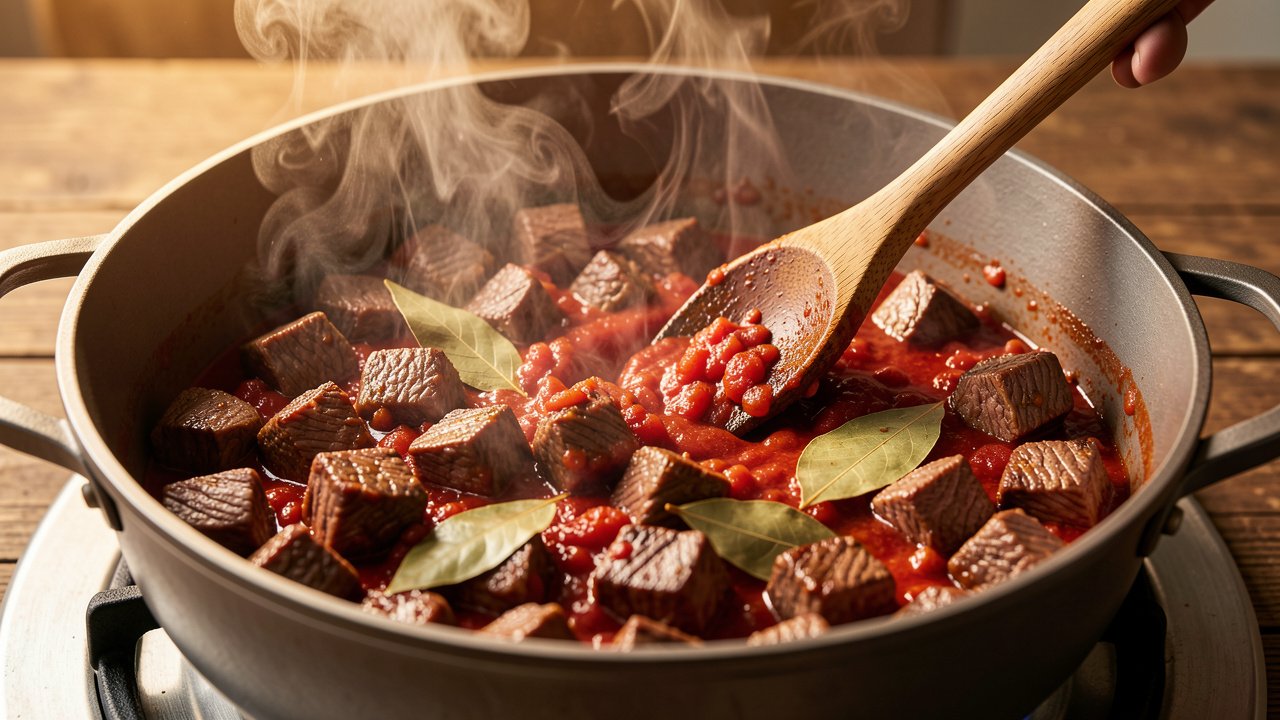
Return the browned beef and any juices to the pot. Add the crushed tomatoes, bay leaves, sugar, and the rest of the salt and pepper. Stir well, then bring everything up to a gentle bubble.
The Long, Slow Simmer
Lower the heat until the sauce is just barely bubbling, then partly cover the pot. Simmer 1 hour 45 minutes to 2 hours, stirring every 20 minutes or so and adjusting the heat to keep it gentle. The beef should turn fork-tender and the sauce should darken and thicken. If it gets too thick before the meat is tender, stir in a splash of water or broth.
Finish and Serve Over Pasta
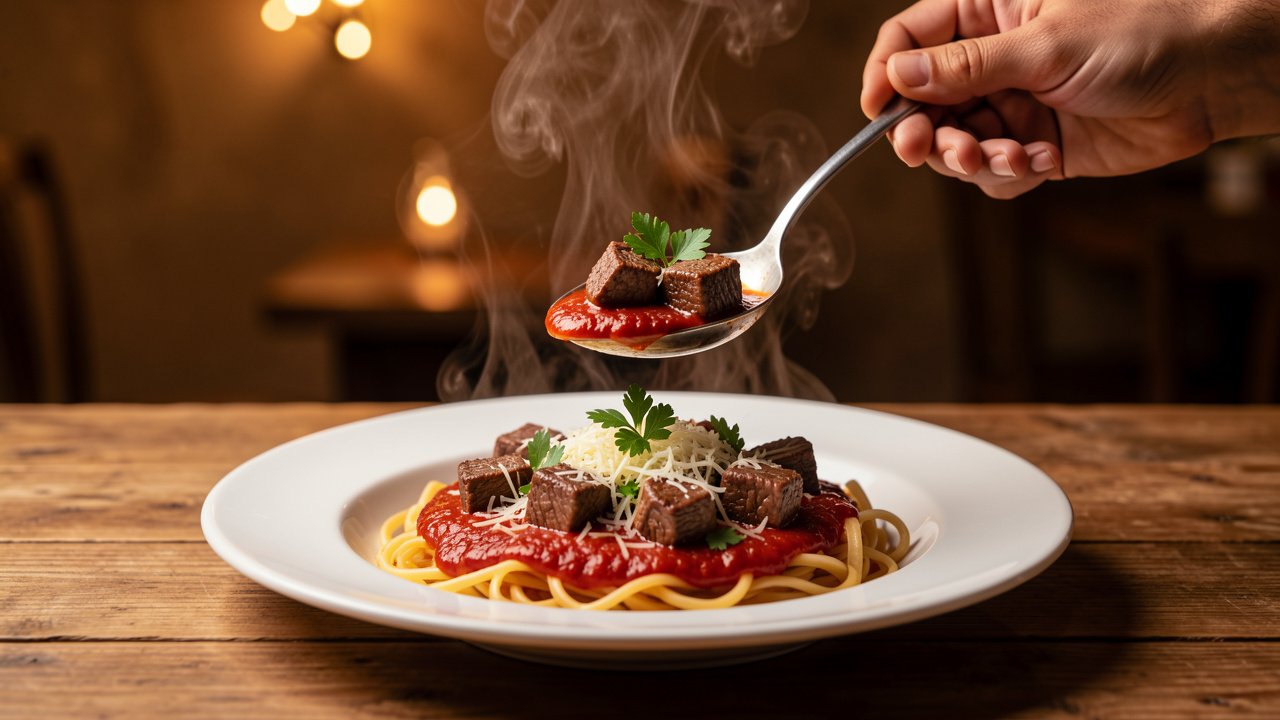
Fish out the bay leaves. Taste and adjust with more salt or a pinch more sugar to balance the tomato. Stir in most of the chopped parsley. Ladle the tuco generously over cooked pasta or noquis, and scatter the last of the parsley over the top with grated cheese if you like.
Chef’s Tips From Real Kitchen Testing
Brown the beef in batches and never crowd the pot. Crowded meat steams instead of searing, and you lose the browned crust that gives tuco its deep, savory backbone.
Keep the simmer barely moving. A hard boil toughens the beef and can make the sauce taste flat. You want lazy bubbles breaking the surface, nothing more.
Season at the start and again at the end. Salt early to build flavor into the beef and vegetables, then taste after the simmer and adjust, since reduction concentrates everything.
Recipe Variations
Serving Suggestions
- Spooned over spaghetti, tagliatelle, or rigatoni
- Ladled over soft potato noquis (Uruguayan gnocchi)
- Topped with plenty of grated hard cheese
- With crusty bread to mop up the sauce
Nutrition Facts
| Nutrient | Amount per serving |
|---|---|
| Calories | 380 |
| Protein | 30 g |
| Carbohydrates | 16 g |
| Fat | 22 g |
| Saturated Fat | 7 g |
| Fiber | 4 g |
| Sugar | 9 g |
| Sodium | 620 mg |
Values are estimates per serving and vary with the exact ingredients and brands you use. Pasta is not included.
Make-Ahead Tips
Tuco is one of those sauces that tastes even better the next day, which makes it perfect to make ahead. Cook it fully, cool it, and refrigerate overnight so the flavors settle and deepen. Reheat gently on the stove, loosening with a splash of water or broth if it has thickened. Stir in fresh parsley just before serving to bring back a lift of green.
Storage, Freezing & Reheating
Common Mistakes to Avoid
Troubleshooting
Sauce tastes sharp or acidic? Let it simmer longer and stir in a pinch more sugar. The carrot and time are what round off the tomato’s edge.
Beef still tough? It simply needs more time. Keep the simmer gentle and give it another 20 to 30 minutes; tough beef almost always means undercooked, not overcooked.
Sauce too thin? Uncover the pot and raise the heat slightly to reduce, or stir in a little extra tomato paste to thicken and deepen it.
A Note on Uruguayan Cooking
Uruguay’s kitchen was shaped by waves of Italian and Spanish immigration in the late nineteenth and early twentieth centuries, and few dishes show that inheritance more clearly than tuco. The word itself comes from the Italian sugo, meaning sauce, carried across the Atlantic and made at home in the River Plate. Sunday became the day for a long-simmered pot of tomato and beef, ladled over pasta or over noquis, gathering the whole family around one table.
There is even a tradition tied to the twenty-ninth of each month, when many households serve noquis with tuco, a small ritual of comfort and togetherness. If you enjoy slow, homey tomato cooking like this, browse more ideas in our collection of tomato recipes.
Frequently Asked Questions
More Tomato Recipes to Try
Last updated: September 29, 2026