
Nepali Recipes
Smoky Roasted Tomato Chutney
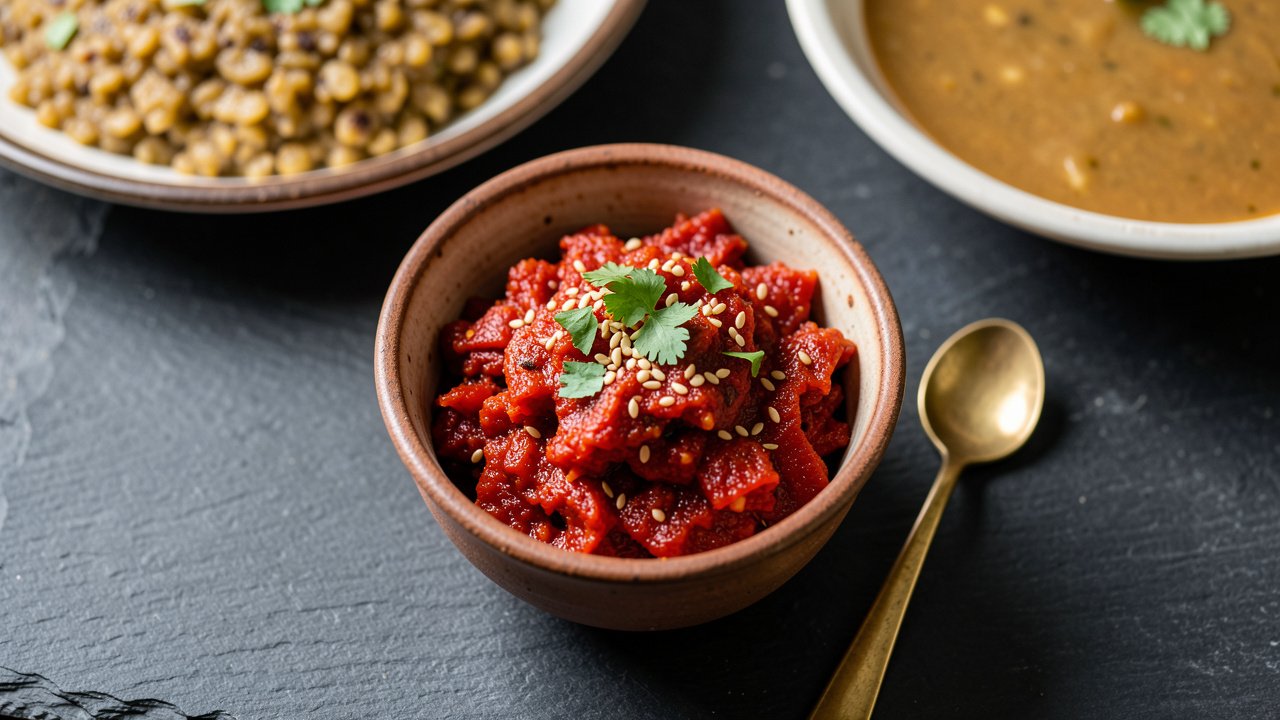
If you have ever eaten a plate of dal bhat in a Nepali home, there was almost certainly a small mound of achar tucked to one side, and there is a good chance it was this one. Golbheda ko achar is the workhorse of the Nepali table, a smoky, tangy, sesame-rich tomato chutney that turns a simple plate of rice and lentils into something you keep going back to. It is punchy without being heavy, and a spoonful wakes up everything it touches.
The magic is in the char. You do not just cook the tomatoes, you blister and blacken their skins over a flame or under a broiler until they collapse and turn jammy inside. That smokiness, paired with the toasty depth of ground sesame, is what separates a real golbheda ko achar from an ordinary tomato relish.
Why This Golbheda ko Achar Works
Nepali cooking loves a bright, sour, chili-forward condiment, and golbheda ko achar is one of the most beloved. The whole point is contrast: a rich, spice-heavy plate of dal bhat needs something sharp and lively on the side, and this smoky tomato chutney delivers exactly that. It cuts through richness, adds tang, and brings just enough heat to keep every bite interesting.
The single most important step is charring the tomatoes. Raw or gently stewed tomatoes give you a flat, one-note relish. Blistering the skins over a flame or under a hot broiler concentrates the sugars, adds smoke, and gives the finished achar a depth that tastes far more complicated than the short ingredient list suggests.
Toasted sesame is the second secret. Ground roasted sesame seeds give the chutney body and a warm, nutty backbone that balances the acidity of the tomatoes and lime. Without it, the achar can taste thin and overly sharp; with it, it turns silky and rounded.
Finally, the fenugreek tempering ties everything together. A few seeds sizzled in hot oil until they turn a shade darker release a gentle bitterness that Nepali cooks prize. Poured over the chutney at the end, it perfumes the whole bowl and signals that this is a proper achar, not just mashed tomato.
Pro observation: Do not wash away the charred flecks of tomato skin. Those little blackened bits are pure flavor, and leaving them in the grind is what gives golbheda ko achar its smoky, campfire character.
Ingredients
Kitchen Measurement Converter
Achar is measured in small amounts, so a quick conversion helps when you scale up for a crowd. Pick a category, enter a value, and the result updates instantly.
Ingredient Notes & Substitutions
Tomatoes
Ripe, red, medium tomatoes are ideal because they char and collapse quickly. Roma or plum tomatoes give a thicker achar with less liquid, while juicy salad tomatoes make a looser, brighter one.
Sesame Seeds
White sesame (til) is traditional. Toast it low and slow until golden and fragrant, then grind. Do not let it burn, or the whole chutney turns bitter. Black sesame works too for a deeper color.
Fenugreek (Methi)
Just a pinch of whole fenugreek seeds tempered in oil gives the classic Nepali note. It should turn a shade darker, not black. Burnt fenugreek is aggressively bitter, so watch it closely.
Chilies and Lime
Green chilies bring fresh heat, dried red chilies bring smoky depth. Adjust both to taste. Lime is the everyday souring agent, though many Nepali cooks use lemon; add it at the end, off the heat.
Equipment
- Open flame, broiler, or dry skillet
- Small dry pan for sesame
- Mortar and pestle or blender
- Sharp knife and board
- Small tempering pan
- Mixing bowl
Before You Start
1. Choose your charring method. A gas flame gives the most authentic smoke, but a hot broiler or a dry cast-iron skillet blisters the tomatoes just as well. Decide before you begin so your setup is ready.
2. Toast the sesame separately. Sesame burns in seconds, so give it its own dry pan and your full attention rather than trying to multitask.
3. Keep the tempering ingredients close. The fenugreek tadka happens fast at the very end. Have the seeds, dried chili, and oil measured and by the stove before you heat the pan.
Step-by-Step Instructions
Char the Tomatoes
Set the whole tomatoes directly over a gas flame, under a hot broiler, or in a dry, ripping-hot skillet. Turn them every couple of minutes until the skins blister, blacken in patches, and split, about 6 to 8 minutes. You want them soft and smoky all the way around. Set them aside to cool slightly, then slip off any loose skin, but leave plenty of the charred flecks for flavor.
Toast the Sesame
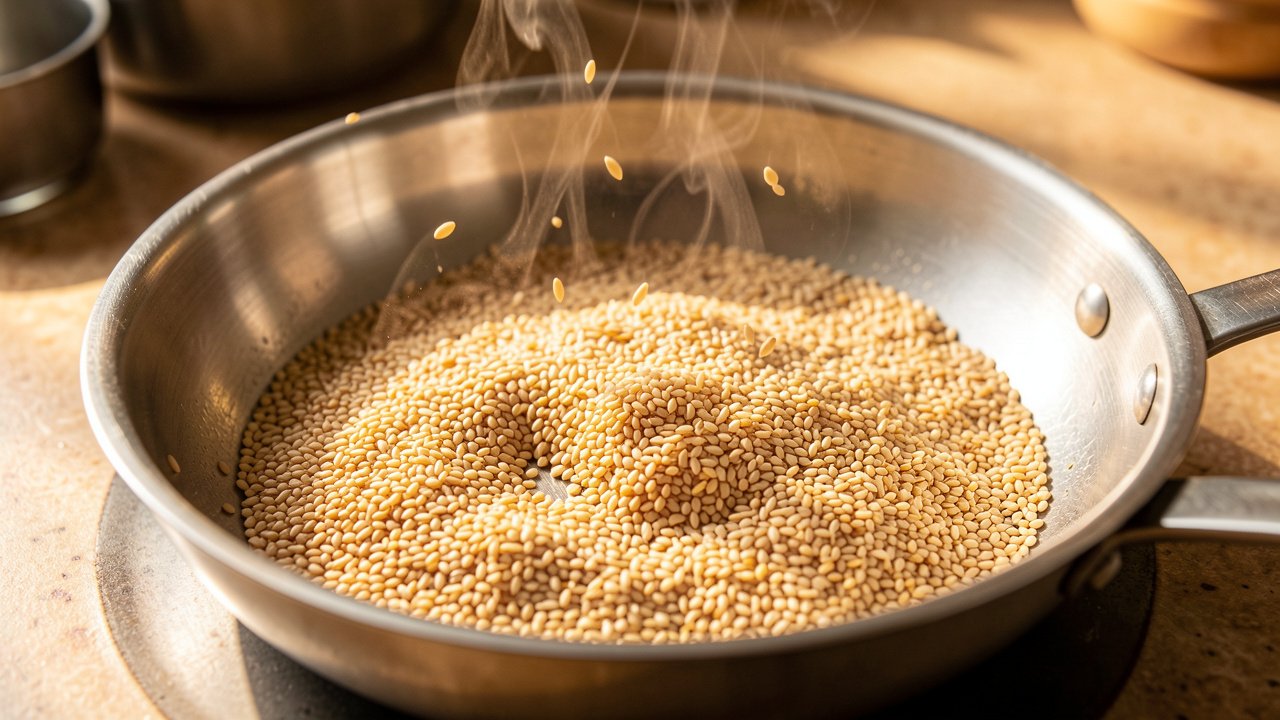
Put the sesame seeds in a small dry pan over low to medium heat. Toast them, shaking the pan constantly, until they turn golden and start to smell nutty and popcorn-like, about 2 to 3 minutes. Tip them onto a plate right away so they stop cooking, because they scorch fast once they hit that golden point.
Grind the Sesame Base
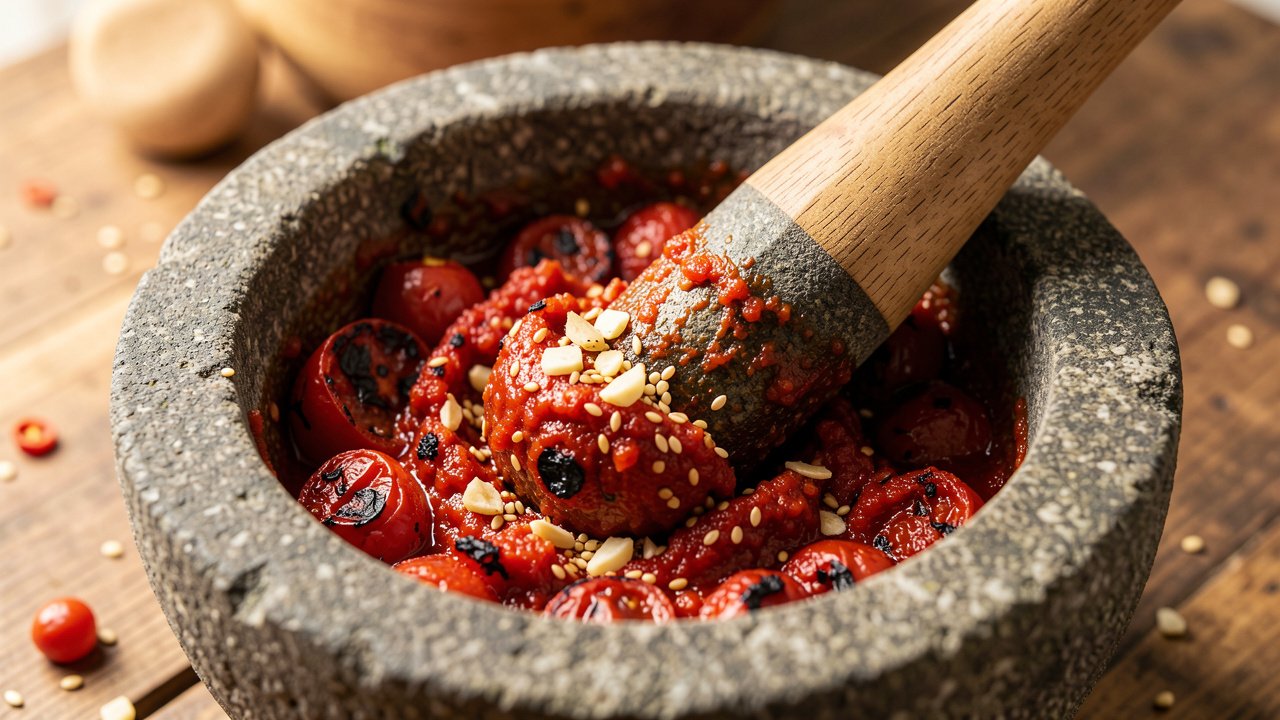
Grind most of the toasted sesame into a coarse powder using a mortar and pestle or a blender, keeping a spoonful whole to stir in later for texture. Add the garlic, ginger, green chilies, and dried red chilies and pound or pulse into a rough paste. This aromatic sesame paste is the backbone that gives the achar its body and warmth.
Blend in the Tomatoes
Add the charred tomatoes, turmeric, and salt to the sesame paste and grind or pulse to a coarse, spoonable chutney. Do not overdo it; golbheda ko achar is meant to be rustic and slightly chunky, not a smooth puree. Taste and adjust the salt and chili now, while it is easy to correct.
Make the Fenugreek Tempering
Heat the mustard oil in a small pan over medium heat until it shimmers. Add the fenugreek seeds and the broken pieces of one dried red chili and let them sizzle for 10 to 20 seconds, just until the fenugreek turns a shade darker and smells toasty. Do not let it blacken. Immediately pour the hot oil and seeds over the tomato chutney and stir it through.
Finish with Lime and Cilantro
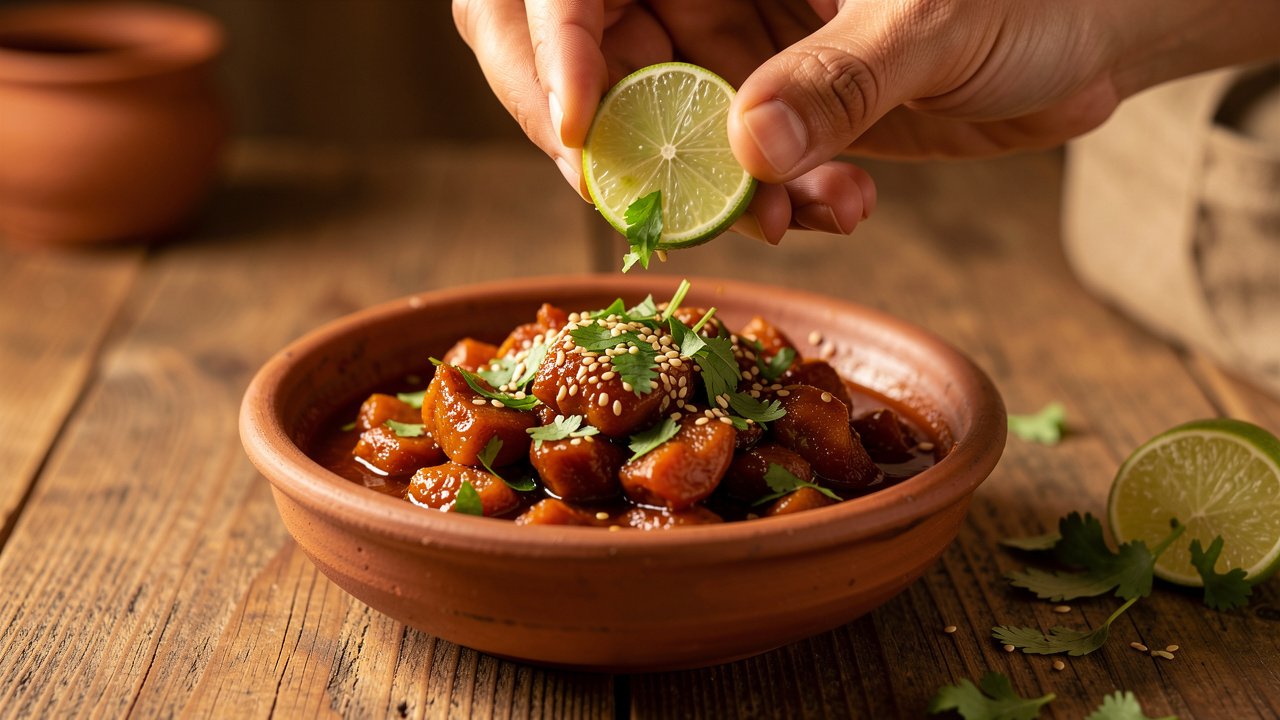
Stir in the lime juice, the chopped cilantro, and the reserved whole toasted sesame. Taste one more time and balance the salt, tang, and heat. Let the achar rest for 10 minutes so the flavors settle, then serve at room temperature alongside dal bhat, momos, or grilled sekuwa.
Chef’s Tips From Real Kitchen Testing
Char harder than feels comfortable. The tomatoes should look genuinely blackened in spots; that is where the smoky flavor lives. Timid charring gives a pale, flat achar.
Toast sesame low and slow, and take it off the heat the moment it turns golden. Even a few seconds too long makes it bitter and drags the whole chutney down with it.
Keep it coarse. Nepali achar is prized for its rustic texture. A few pulses too many turns it into a smooth sauce and loses the character you want.
Recipe Variations
Serving Suggestions
- Alongside a plate of dal bhat and steamed rice
- As a dipping sauce for steamed or fried momos
- Spooned over grilled sekuwa or roasted vegetables
- With roti, sel roti, or crisp papad for scooping
Nutrition Facts
| Nutrient | Amount per serving |
|---|---|
| Calories | 60 |
| Protein | 2 g |
| Carbohydrates | 5 g |
| Fat | 4 g |
| Saturated Fat | 0.5 g |
| Fiber | 1 g |
| Sugar | 2 g |
| Sodium | 300 mg |
Values are estimates per roughly 2-tablespoon serving and vary with the exact ingredients and brands you use.
Make-Ahead Tips
Golbheda ko achar is a good make-ahead condiment, and many cooks think it tastes even better after a few hours, once the smoke, sesame, and tempering have had time to marry. Make it in the morning for an evening meal, keep it covered at cool room temperature if you will serve it the same day, and stir it well before serving. If you want to prep further ahead, char the tomatoes and toast the sesame in advance, then grind and temper closer to the meal for the freshest flavor.
Storage & Freshness
Common Mistakes to Avoid
Troubleshooting
Achar tastes flat? It usually needs more salt and a bigger squeeze of lime. The acidity is what makes this condiment sing against rich food.
Too bitter? The sesame or fenugreek likely went too dark. Balance it with a pinch of salt and a little extra tomato, and toast more gently next time.
Too thin and watery? Stir in a spoonful of extra ground toasted sesame to thicken it and add body, or drain off a little of the tomato liquid.
A Note on Nepali Cooking
In Nepal, achar is not a garnish but an essential part of the meal, and almost every home has its own version. A daily plate of dal bhat, the lentils and rice that anchor the Nepali table, is nearly always served with at least one achar to add brightness, heat, and contrast. Golbheda, simply meaning tomato, is one of the most common, precisely because tomatoes are affordable, available, and take so well to the flame.
What makes Nepali achar distinct from a generic chutney is the layering of roasted, ground, and tempered elements: the smoke of charred vegetables, the nutty weight of sesame, and the aromatic finish of oil bloomed with fenugreek or timur. If you enjoy building bold tomato condiments like this, our collection of tomato recipes is full of ideas in the same spirit.
A Note on Kitchen Hygiene
Because this achar is a fresh, uncooked-style condiment, clean handling matters. Wash the tomatoes, chilies, ginger, and cilantro well before charring or chopping, and start with clean hands, a clean board, and a clean knife. Store the finished achar in a sterilized, airtight jar, always serve it with a clean, dry spoon rather than one that has touched other food, and keep it refrigerated between uses. If it ever smells off, looks fizzy, or shows any mold, discard it rather than risk it. Small, fresh batches are the safest and the most delicious.
Frequently Asked Questions
More Tomato Recipes to Try
Last updated: September 29, 2026