Sri Lankan Recipes
Creamy Sri Lankan Tomato Coconut Curry
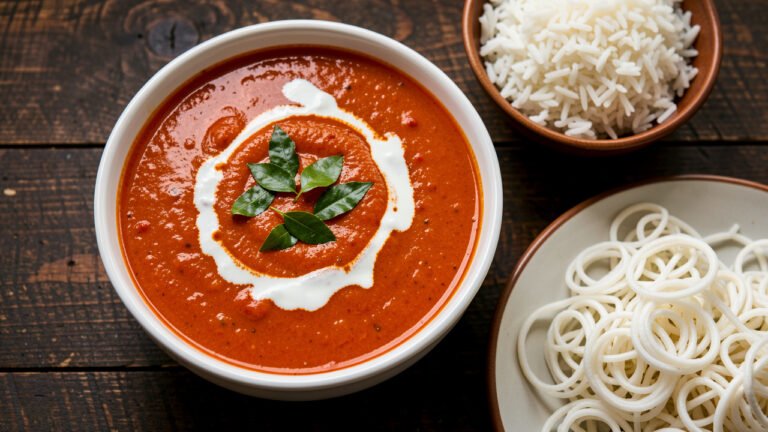
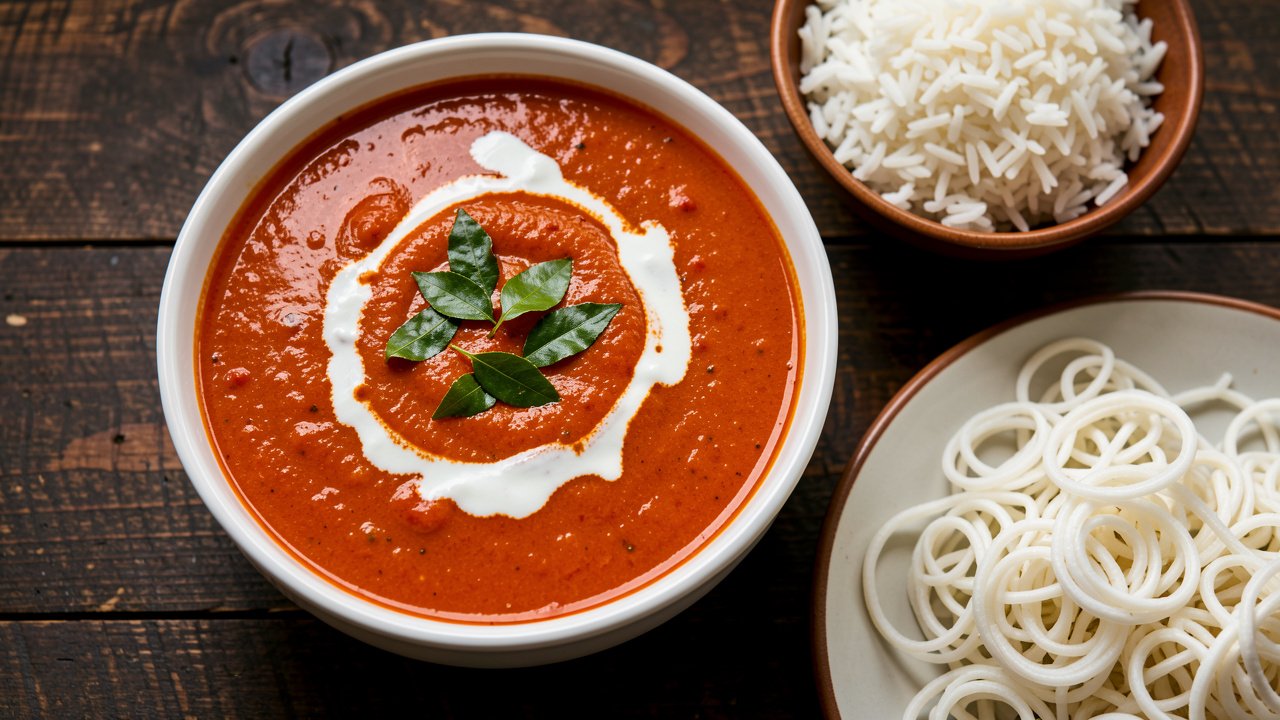
Thakkali means tomato in Tamil, and this curry treats the humble tomato as the main event rather than a background note. The coconut milk turns it silky and mild, the roasted curry powder gives it that deep, toasty Sri Lankan character, and a spoonful of tamarind at the end keeps everything bright. It tastes far more complex than the short ingredient list suggests.
Why This Sri Lankan Thakkali Curry Works
Sri Lankan home cooking is built on layering aromatics, and thakkali curry is one of its friendliest examples. You start with a gentle tempering of fenugreek, onion, garlic, curry leaves, and a knot of pandan, then let ripe tomatoes melt into that base before coconut milk turns the whole thing lush and creamy. Every element has a job, and nothing fights for attention.
The roasted curry powder is what separates this from an ordinary tomato sauce. Sri Lankan curry powder is dark-roasted, so it carries a smoky, toasted depth that raw spice blends never reach. Just a couple of teaspoons folds the dish firmly into island territory, all warmth and gentle spice rather than heat for its own sake.
Cooking the tomatoes down properly before the coconut milk goes in is the quiet secret. You want them soft, broken, and slightly jammy so the sauce tastes concentrated and sweet rather than raw and watery. The coconut milk then rounds everything into something you want to spoon over rice again and again.
It is also forgiving and flexible. The same base happily takes a couple of hard-cooked eggs for protein, extra green chilies for heat, or a splash more coconut milk for a richer, milder pot. Once the method is in your hands, thakkali curry becomes a weeknight staple you can bend to whatever is in the kitchen.
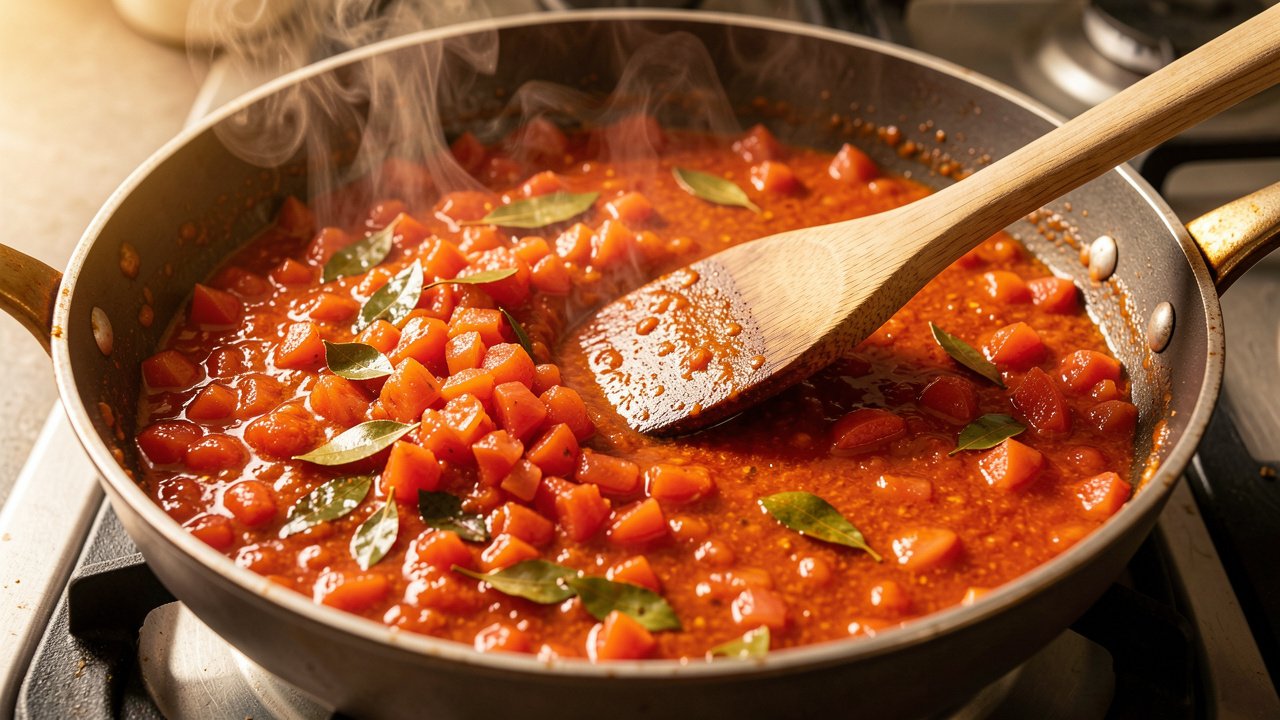
Pro observation: The tomato base is ready for the coconut milk when it looks glossy and thick and a spoon dragged across the pan leaves a brief clear trail. That means the raw edge is cooked out and the flavors have concentrated.
Ingredients
Kitchen Measurement Converter
Quickly convert between common cooking measurements without leaving the recipe. Pick a category, enter a value, and the result updates instantly.
Ingredient Notes & Substitutions
Tomatoes
Ripe, red tomatoes give the best sweet-tart base. Out of season, one 14-ounce can of chopped tomatoes works well and is often more reliable than pale fresh ones. Aim for tomatoes that yield to a gentle squeeze.
Coconut Milk
Use full-fat canned coconut milk for a rich, silky curry. Light coconut milk works but the sauce is thinner. Shake the can well before opening so the cream and water combine into one smooth pour.
Roasted Curry Powder
Sri Lankan roasted (dark) curry powder is key to the toasted flavor. If you only have unroasted curry powder, dry-toast it in the pan for a minute first, or use a mix of ground coriander, cumin, and fennel.
Pandan & Curry Leaves
Fresh curry leaves and a knot of pandan give the curry its signature aroma. If you cannot find pandan, leave it out rather than substituting; do not swap in bay leaves, which taste completely different.
Equipment
- Wide, heavy pan or clay pot
- Wooden spoon
- Sharp knife and board
- Can opener
- Measuring spoons
- Small bowl for spices
Before You Start
1. Measure the spices first. The tempering happens quickly, so have the fenugreek, mustard seeds, curry leaves, and pandan ready by the stove before the oil is hot.
2. Chop the tomatoes small. Smaller pieces break down faster into a smooth, jammy base, which shortens the cooking time and gives a rounder sauce.
3. Cook your rice alongside. This curry is best over steamed rice or with string hoppers, so start the rice before you begin the tempering.
Step-by-Step Instructions
Prep the Aromatics
Thinly slice the onion, slice the garlic, and slit the green chilies. Chop the tomatoes small so they collapse quickly. Measure the turmeric, roasted curry powder, and chili powder into a small bowl, and have the fenugreek, mustard seeds, curry leaves, and pandan within arm’s reach of the stove.
Temper the Aromatics
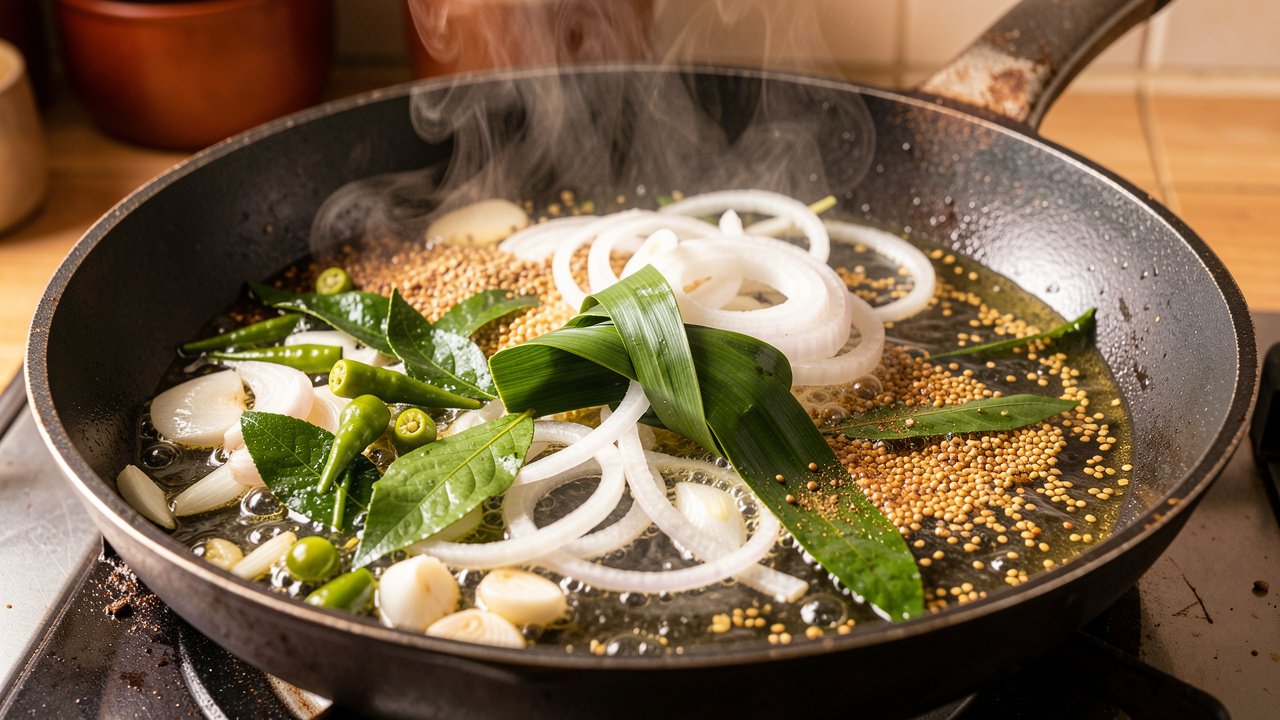
Heat 2 tablespoons of coconut oil in a wide pan over medium heat. Add the fenugreek and mustard seeds and wait until they start to crackle, about 30 seconds. Add the sliced onion, garlic, green chilies, curry leaves, and pandan, then cook 5 to 6 minutes until the onion is soft and golden at the edges. Stand back a little, as the curry leaves can spit.
Bloom the Curry Powder
Turn the heat to low and add the turmeric, roasted curry powder, and chili powder. Stir constantly for 30 to 45 seconds so the spices toast in the oil and lose their raw, dusty edge. Keep them moving, because dark roasted curry powder can scorch quickly at the bottom of the pan.
Cook Down the Tomatoes
Add the chopped tomatoes and a teaspoon of salt. Raise the heat to medium and cook 10 to 12 minutes, stirring often, until the tomatoes collapse into a thick, glossy sauce and most of the liquid has cooked off. Mash any stubborn pieces against the side of the pan for a smoother base.
Simmer in Coconut Milk
Pour in the coconut milk and stir to combine into a smooth, orange-red sauce. Bring it to a gentle simmer, then lower the heat and cook 6 to 8 minutes so the flavors marry. Do not let it boil hard, or the coconut milk can split. For a looser curry, add a splash of water now; for a thicker sauce, let it reduce a couple of minutes longer.
Finish with Tamarind and Serve
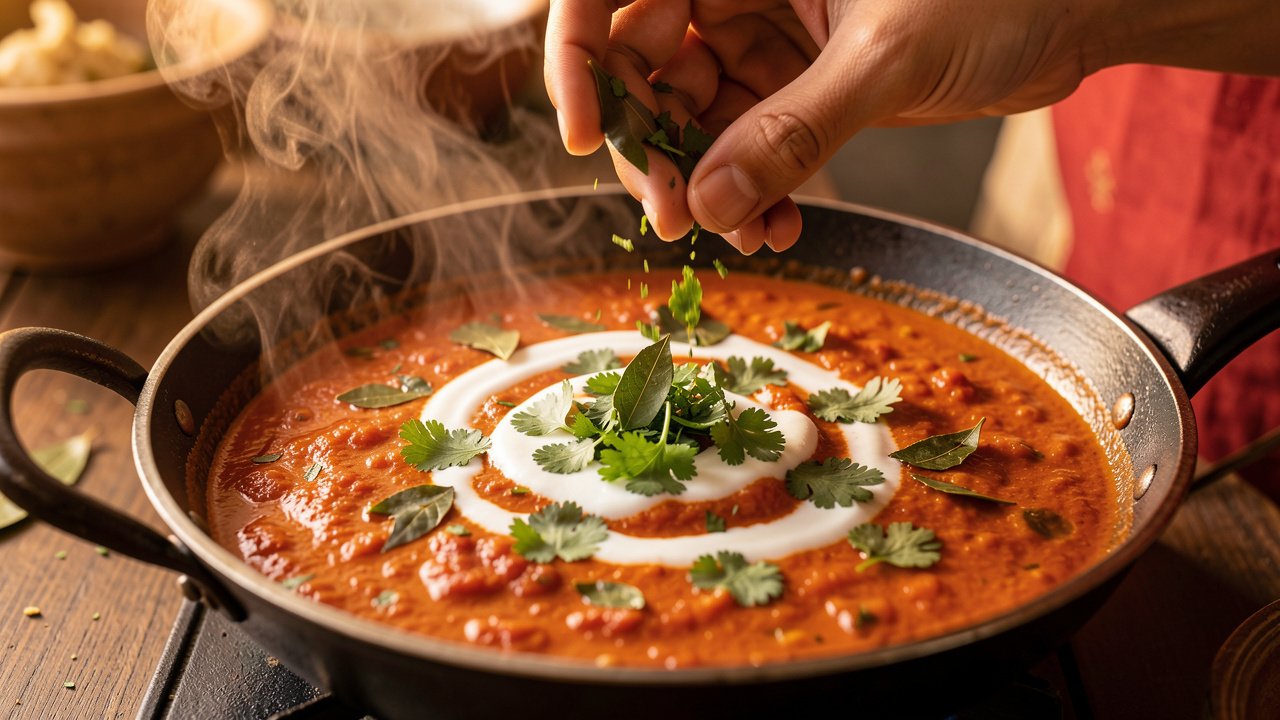
Stir in the tamarind paste and taste. Adjust with more salt or a little more tamarind for tang. Scatter fresh cilantro over the top and serve hot over steamed rice or with string hoppers. Let it rest off the heat for a couple of minutes so the sauce settles and thickens slightly before serving.
Chef’s Tips From Real Kitchen Testing
Never boil the coconut milk hard. A gentle simmer keeps it smooth; a rolling boil can make it curdle and look grainy.
Toast the roasted curry powder in the oil for half a minute over low heat before the tomatoes go in. It deepens the flavor, but watch closely so it does not burn.
Add tamarind at the very end and in stages. It is easy to overdo the sourness, and you can always add more but cannot take it out.
Recipe Variations
Serving Suggestions
- Steamed rice, red rice, or coconut sambol on the side
- String hoppers, hoppers, or roti to soak up the sauce
- A simple lentil dhal for a classic rice-and-curry plate
- Extra fresh cilantro and a wedge of lime
Nutrition Facts
| Nutrient | Amount per serving |
|---|---|
| Calories | 260 |
| Protein | 4 g |
| Carbohydrates | 16 g |
| Fat | 21 g |
| Saturated Fat | 15 g |
| Fiber | 4 g |
| Sugar | 7 g |
| Sodium | 480 mg |
Values are estimates per serving and vary with the exact ingredients and brands you use.
Make-Ahead Tips
This curry is a great make-ahead dish, because the flavors deepen overnight in the fridge. Cook it a day ahead, cool, and refrigerate. Reheat gently on the stove and stir in a splash of water or coconut milk to loosen it, since it thickens as it sits. Add fresh cilantro just before serving. If you are using the egg option, add the eggs when you reheat rather than storing them in the sauce.
Storage, Freezing & Reheating
Food safety: Cool leftovers and refrigerate within 2 hours of cooking, and within 1 hour on a hot day. Store in a sealed container and reheat until piping hot all the way through, stirring once. If you add hard-cooked eggs, keep them chilled and use within 3 days. Do not refreeze curry that has already been thawed.
Common Mistakes to Avoid
Troubleshooting
Curry tastes flat? It usually needs salt and a touch more tamarind to wake up the flavors, or a few extra curry leaves fried in oil and stirred through.
Sauce split or grainy? The coconut milk boiled too hard. Lower the heat and whisk in a splash of warm water to bring it back together.
Too sour? Balance it with an extra splash of coconut milk or a small pinch of jaggery or sugar to soften the tamarind.
A Note on Sri Lankan Cooking
Sri Lankan curries are defined by their tempering and their aromatics. Frying whole spices, curry leaves, and pandan in hot oil at the start, a step often called tempering or tarka, releases oils that perfume the entire pot in a way that stirring spices in later never matches. Curry leaves add a nutty, citrusy note, while pandan lends a subtle grassy sweetness that is quietly distinctive. Roasted curry powder, dark-toasted until fragrant, gives the island’s dishes their signature warmth. If you enjoy spiced tomato dishes, browse more ideas in our collection of tomato recipes.
Frequently Asked Questions
More Tomato Recipes to Try
Last updated: September 29, 2026