Central Asian Recipes
Hand-Pulled Noodles with Lamb and Tomato Sauce
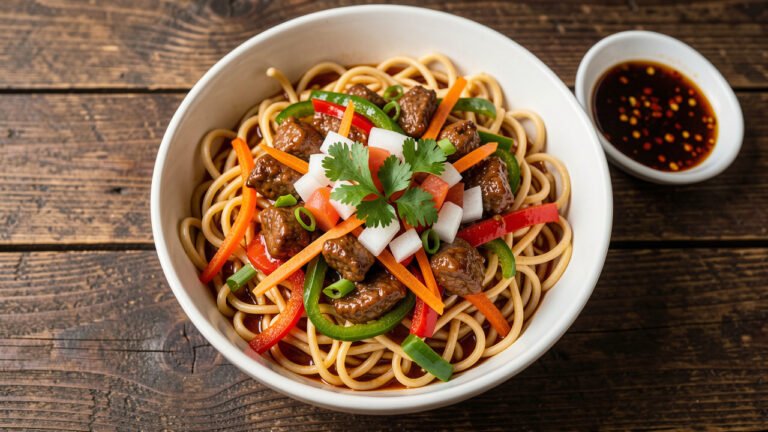
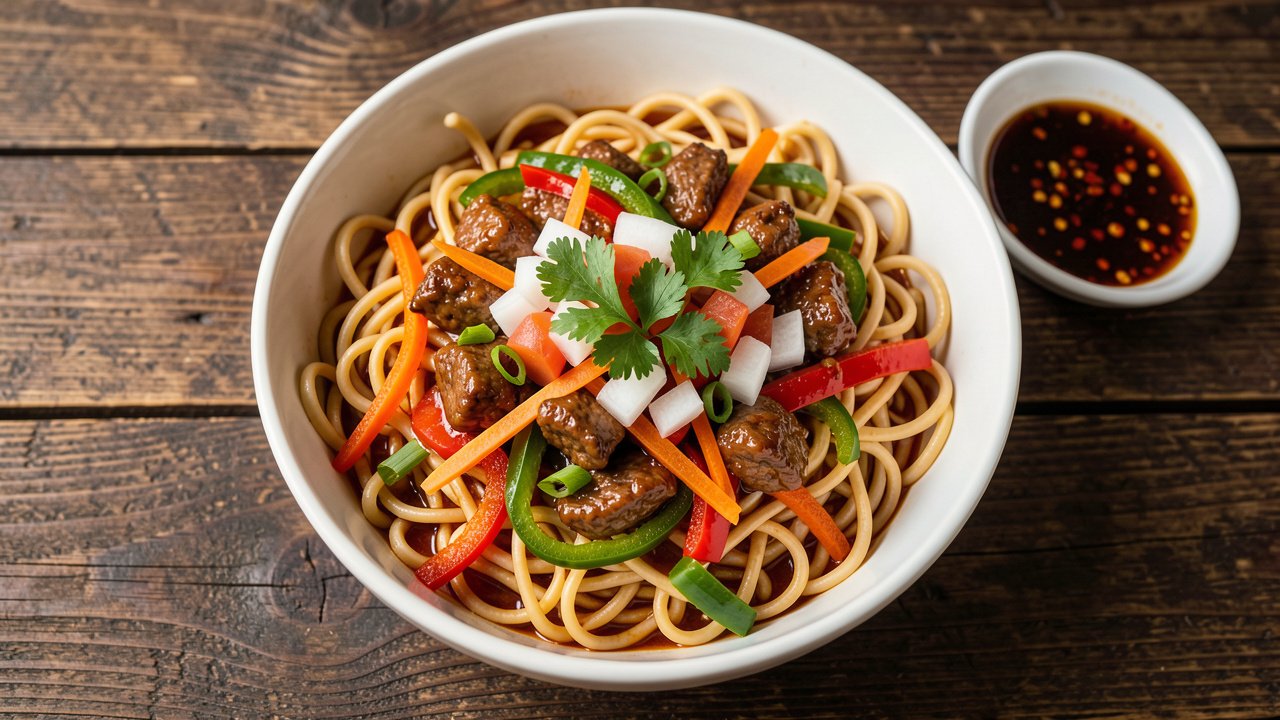
Lagman is one of those dishes that manages to be soup, stir-fry, and noodle bowl all at once, and that is exactly why people who grow up on it never stop craving it. The noodles are springy and slippery, the sauce is loose and brothy rather than thick, and every bite carries a little of the seared meat, the sweet carrot, and the peppery bite of daikon. Cumin ties it together and makes the whole kitchen smell like a Silk Road bazaar.
I learned quickly that the two halves of this dish want to stay apart until the last second. The first time I dumped cooked noodles into the simmering sauce, they swelled and soaked up all the broth, turning a bright, saucy bowl into a gluey mass. Keep them separate, marry them in the bowl, and lagman rewards you.
Why This Uzbek Lagman Works
Lagman succeeds because it treats the noodles and the sauce as two separate crafts that only meet in the bowl. The noodles stay springy because they never simmer in the sauce, and the sauce stays loose and bright because it is not thickened with flour or reduced to a paste. What you get is a saucy, brothy bowl that drinks like a light stew but eats like a noodle dish.
The single most important move is a proper high-heat sear on the lamb or beef. When the meat hits a screaming-hot pan and browns hard before anything else goes in, it leaves a fond that becomes the backbone of the whole sauce. Skip that step, and the sauce tastes boiled and pale instead of deep and savory.
The vegetables are chosen for texture as much as flavor. Carrot brings sweetness, bell pepper brings freshness, onion and garlic build the base, and daikon radish gives that clean, faintly peppery bite that keeps a rich meat sauce from feeling heavy. Cutting them into similar slim shapes means they cook evenly and cling to the noodles.
Cumin is the seasoning that makes this taste like lagman and not just any noodle bowl. Toasted in the oil with the aromatics, it blooms into the warm, earthy aroma that runs through Uyghur and Uzbek cooking across Central Asia.
Pro observation: The sauce is ready when it looks glossy and a little soupy, not thick. If you can see a thin sheen floating on a loose broth flecked with vegetables, you have it right. Thick lagman sauce is a sign it reduced too far.
Ingredients
Kitchen Measurement Converter
Quickly convert between common cooking measurements without leaving the recipe. Pick a category, enter a value, and the result updates instantly.
Ingredient Notes & Substitutions
Lamb or Beef
Use halal lamb shoulder or a well-marbled beef cut like chuck. Cut it into small, even cubes so it sears fast and stays tender in the loose sauce. Trim any heavy sinew but keep a little fat for flavor.
Noodles
Traditional lagman noodles are hand-pulled, but thick fresh wheat noodles or udon-style noodles are an excellent shortcut. Cook them just to the chewy side of done, since they finish softening in the hot bowl.
Daikon Radish
Daikon gives lagman its clean, peppery bite. If you cannot find it, a piece of white turnip is the closest swap. Dice it small so it softens in the same time as the carrot.
Tomato and Cumin
Ripe tomatoes plus a spoon of tomato paste give the sauce its color and gentle tang. Ground cumin is the signature seasoning; toast it briefly in the oil to wake up its aroma before the liquid goes in.
Equipment
- Wok or wide heavy pan
- Large pot for noodles
- Sharp knife and board
- Colander or strainer
- Wooden spoon
- Ladle for serving
Before You Start
1. Cut everything before you turn on the heat. Lagman sauce moves fast once the meat is seared, so have the onion, garlic, carrot, daikon, peppers, and tomatoes all cut and within reach.
2. Dry the meat well. Pat the lamb or beef cubes dry with paper towels so they brown instead of steam. Dry meat is what gives you that deep, savory fond in the pan.
3. Get the noodle water boiling. Bring a big pot of salted water to a boil early so the noodles are ready the moment the sauce is done. Fresh noodles cook in just a few minutes.
Step-by-Step Instructions
Prep and Cut Everything
Cut the lamb or beef into small, even cubes and pat them dry. Slice the onions, mince the garlic, julienne the carrots, dice the daikon, slice the bell peppers, and dice the tomatoes. Keep the vegetables in separate piles so you can add them in stages, and measure out the cumin, paprika, salt, and pepper.
Sear the Meat
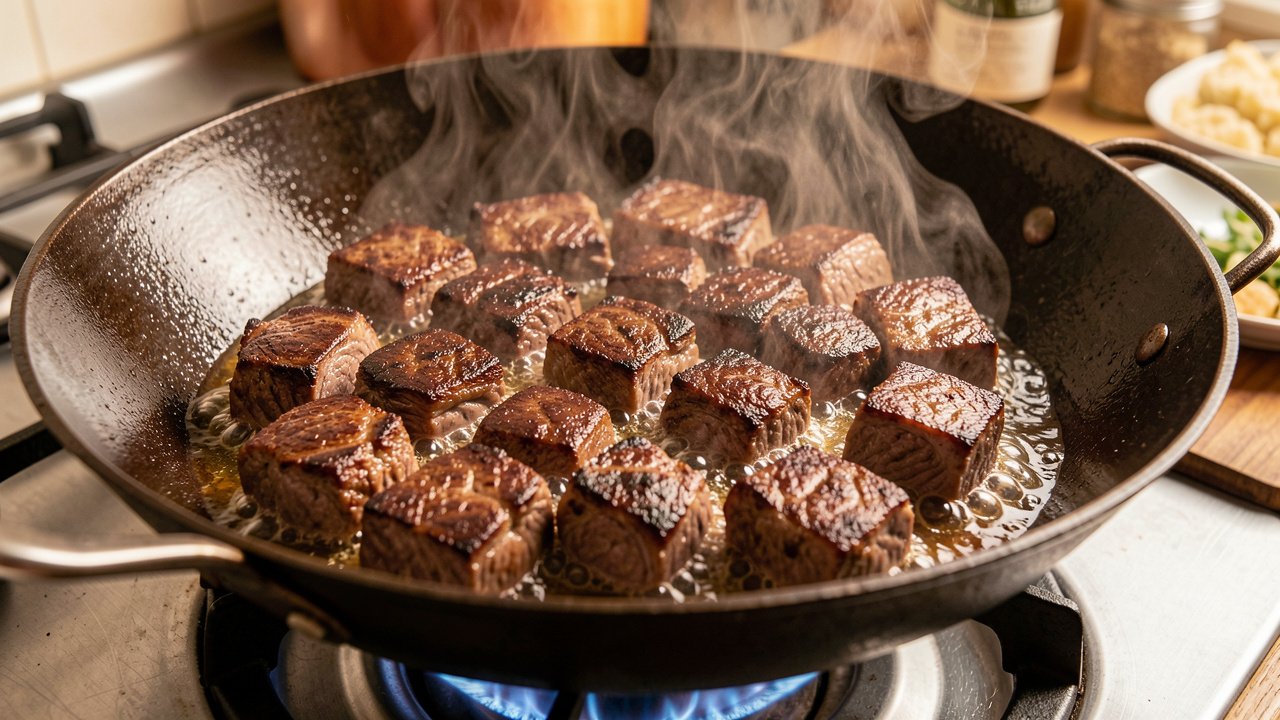
Heat the oil in a wok or wide pan over high heat until it shimmers. Add the meat in a single layer and let it brown hard on one side before stirring, about 4 to 5 minutes total, until deeply seared. This fond is the flavor base, so do not rush it or crowd the pan.
Build the Aromatic Base
Add the onions and cook 3 to 4 minutes until soft and translucent. Stir in the garlic, carrots, and daikon and cook another 4 minutes so they begin to soften. Add the cumin, paprika, and black pepper and toast for 30 seconds until the pan smells warm and fragrant.
Add Tomatoes and Peppers
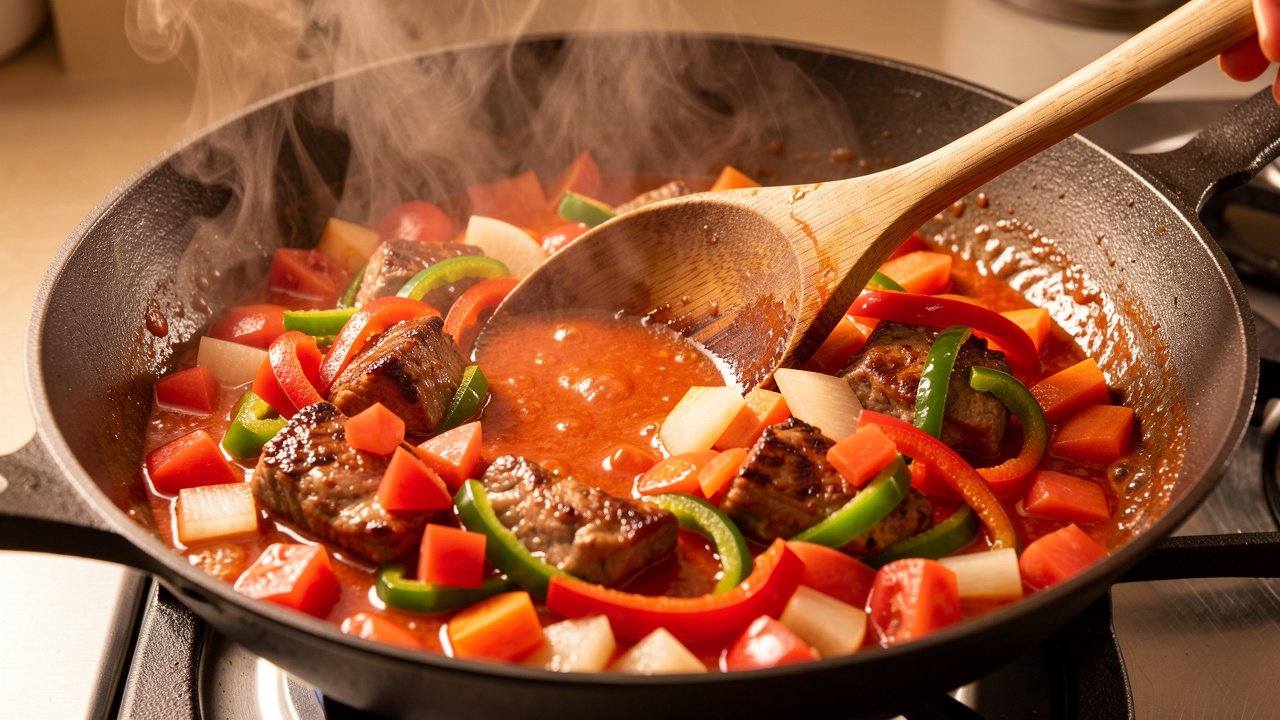
Stir in the tomato paste and cook it for a minute to take off the raw edge, then add the diced tomatoes and sliced bell peppers. Cook 5 to 6 minutes, stirring, until the tomatoes break down into a loose, glossy base and the peppers just begin to soften but keep some bite.
Simmer the Sauce
Pour in the broth and add the salt. Bring to a boil, then lower the heat and simmer gently for 15 to 20 minutes, until the meat is tender and the sauce is loose and brothy rather than thick. Taste and adjust the salt. Keep it soupy; the noodles will drink up some of the liquid in the bowl.
Cook the Noodles and Assemble
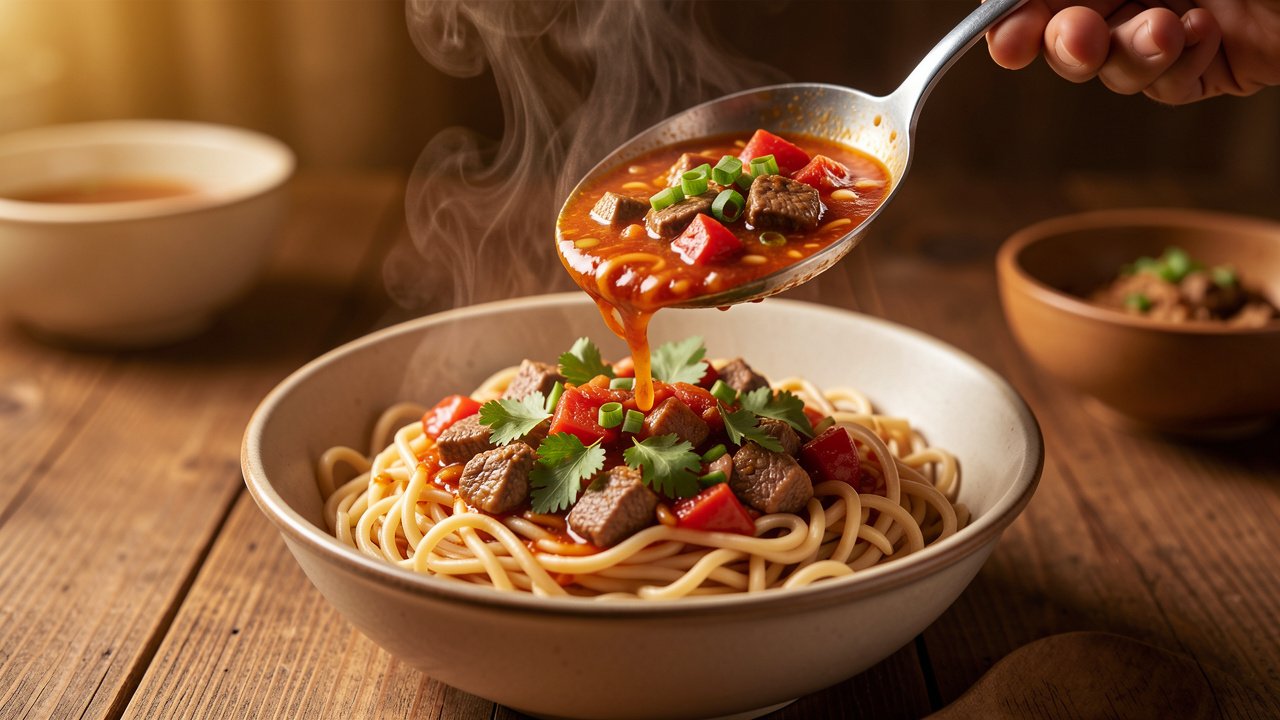
While the sauce finishes, boil the wheat noodles in salted water until chewy-tender, then drain. Divide the noodles among deep bowls and ladle the hot sauce generously over the top, making sure each bowl gets plenty of meat and vegetables. Scatter cilantro and green onions over each bowl and serve at once.
Chef’s Tips From Real Kitchen Testing
Sear the meat in batches if your pan is small. Crowding drops the temperature and the cubes steam gray instead of browning, which flattens the whole sauce.
Keep the sauce loose on purpose. Lagman is meant to be brothy, so if it reduces too far just splash in more broth or hot water to bring it back.
Never let cooked noodles sit in the sauce. Combine them only in the serving bowl, or the noodles bloat, turn soft, and soak up all the broth.
Recipe Variations
Serving Suggestions
- A spoonful of garlicky chili oil for heat
- A side of pickled vegetables or fresh radish
- Warm flatbread to mop the brothy sauce
- Extra cilantro, green onion, and black pepper
Nutrition Facts
| Nutrient | Amount per serving |
|---|---|
| Calories | 560 |
| Protein | 34 g |
| Carbohydrates | 58 g |
| Fat | 20 g |
| Saturated Fat | 6 g |
| Fiber | 5 g |
| Sugar | 9 g |
| Sodium | 780 mg |
Values are estimates per serving and vary with the exact ingredients and brands you use.
Make-Ahead Tips
The sauce is a natural make-ahead dish, and it actually tastes better the next day once the cumin and meat have had time to mingle. Cook the sauce fully, cool it, and refrigerate it separately from any noodles. Boil fresh noodles just before serving, since day-old noodles turn soft and clumpy. Reheat the sauce gently on the stove, loosen it with a splash of broth or water, and ladle it over freshly cooked noodles.
Storage, Freezing & Reheating
Common Mistakes to Avoid
Troubleshooting
Sauce tastes flat? It usually needs more salt and a fresh pinch of cumin. A splash of the noodle cooking water can also round it out.
Meat turned tough? It needed a longer, gentler simmer. Lower the heat and give it more time until the cubes turn fork-tender.
Noodles gummy and heavy? They sat in the sauce too long or were overboiled. Cook a fresh batch and only marry them with the sauce at serving time.
A Note on Uzbek Cooking
Lagman travels the old Silk Road, carried between the Uyghur, Uzbek, and other Central Asian communities whose kitchens share a love of hand-pulled noodles and slow-built meat sauces. The noodles are traditionally stretched and swung by hand into long, springy ropes, a skill that gives the dish its signature chew. Cumin runs through this whole region of cooking, lending its warm, earthy scent to grilled meats, rice pilafs, and noodle bowls alike. Even with store-bought noodles, this recipe keeps the soul of that tradition: a generous, brothy bowl meant to be shared. If you enjoy tomato-rich comfort food, browse more ideas in our tomato recipes collection.
A Note on Lamb and Beef Safety
Use fresh halal lamb or beef and keep it cold until you cook. Wash your hands, board, and knife well after handling raw meat to avoid cross-contamination. Sear the meat, then simmer it in the sauce until fully cooked through and fork-tender; whole cuts reach a safe internal temperature of 145 F, while diced pieces should show no pink in the center. Refrigerate leftovers within two hours, and reheat the sauce until steaming hot before serving again.
Frequently Asked Questions
More Tomato Recipes to Try
Last updated: September 29, 2026