Italian Recipes
Fast Vegetarian Weeknight Dinner
Last updated: September 29, 2026
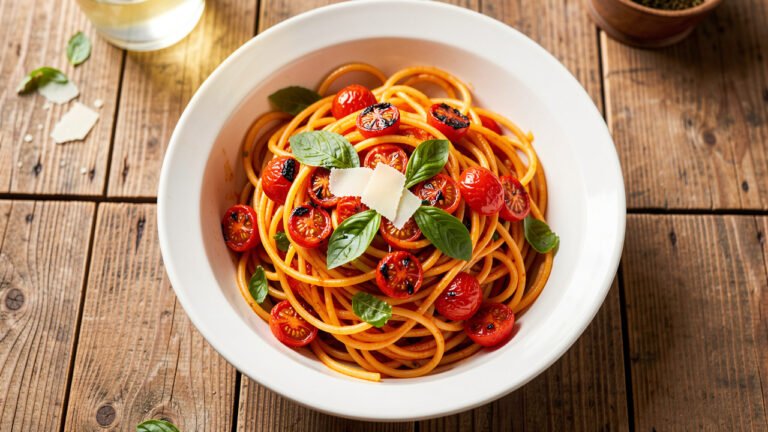
The whole trick here is timing. The sauce takes exactly as long as the pasta, so if you start the water first and set the skillet going the minute the noodles hit the pot, everything lands together. I have made this on nights when I got home at 8:40 and was eating by 8:52.
Why This Blistered Cherry Tomato Pasta Works
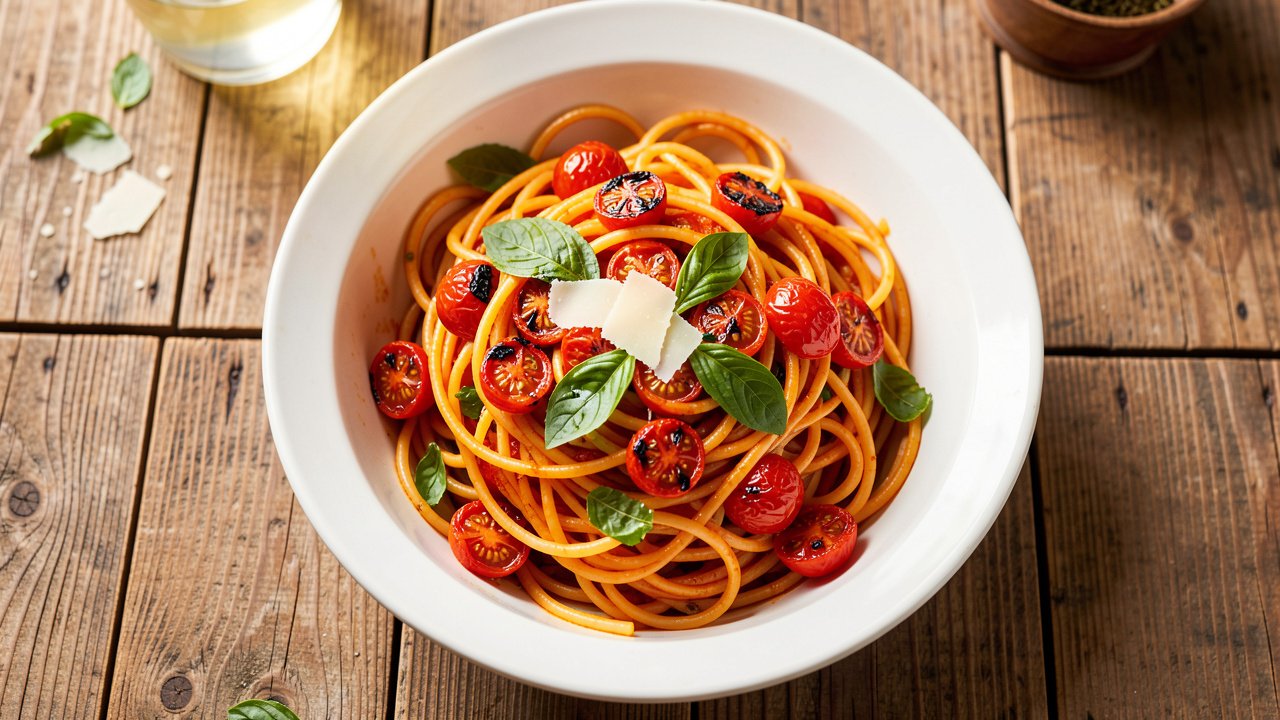
Cherry tomatoes are sweet even in the off-season, because the sugar is concentrated in a small fruit. Put them in a properly hot skillet and leave them alone, and the skins char in spots and split on their own. What comes out is smoky, jammy, and slightly caramelized, in under four minutes.
Blistering also does the work of a long simmer. When a skin splits, hot juice and seeds spill into the oil and start reducing right away. That concentrated juice is the backbone of the sauce, which is why you never need canned tomatoes, sugar, or a half hour on the stove.
Then there is the part most people skip. Pasta water is loaded with starch shed by the noodles. Add a big splash to hot oil and tomato juice, toss hard, and the starch binds fat and water into one creamy, glossy sauce. Without it, you get oily noodles with tomatoes sitting on top.
The timing is the last piece. Pasta boils in eight to ten minutes and so does this sauce, so the two run in parallel. Nothing waits, and there is no second pan to wash.
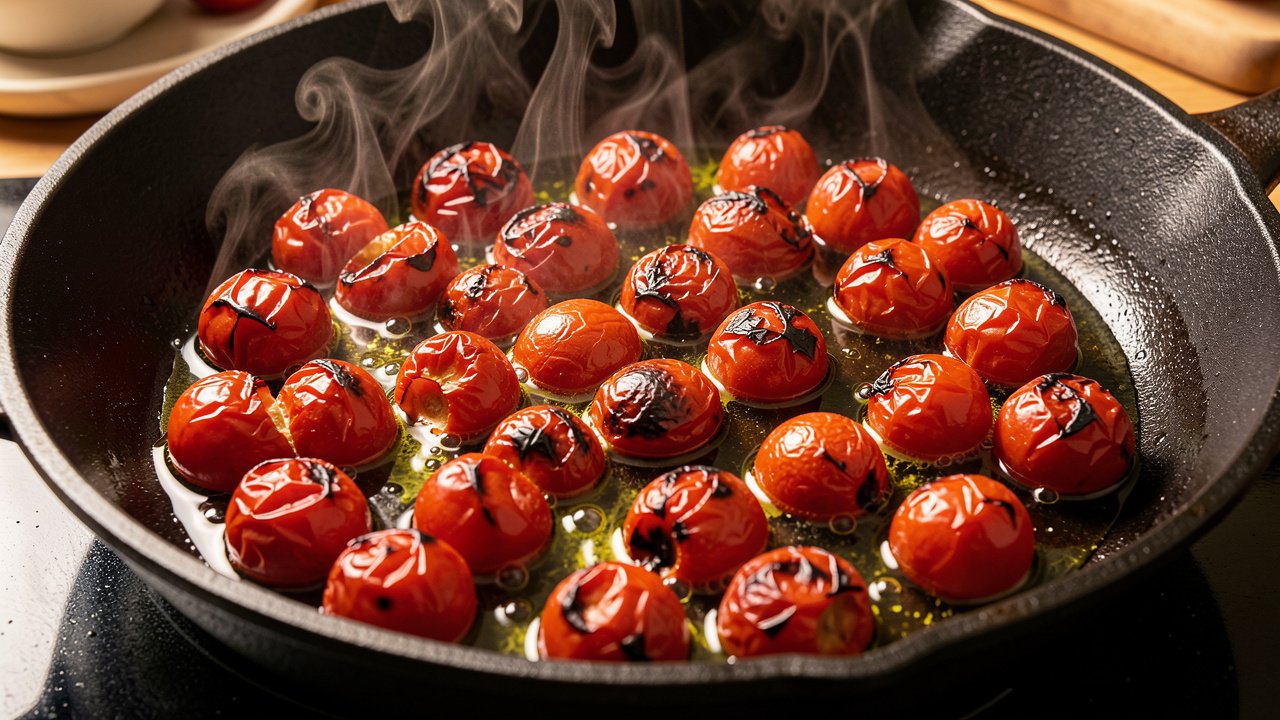
Pro observation: You will hear the tomatoes before you see them work. A dry, sharp sizzle means the pan is hot enough to blister. A soft, wet bubbling means the pan is too cool and the tomatoes are stewing instead of charring.
Ingredients
Kitchen Measurement Converter
Quickly convert between common cooking measurements without leaving the recipe. Pick a category, enter a value, and the result updates instantly.
Ingredient Notes & Substitutions
Cherry Tomatoes
Buy them on the vine if you can, and leave them whole. Grape tomatoes work and hold their shape longer. Skip anything soft or wrinkled; those release water instead of blistering.
Pasta Shape
Spaghetti and linguine catch the emulsion best. Short shapes like rigatoni or orecchiette also work, but reserve extra pasta water since they carry less sauce per bite.
Olive Oil
Use a real extra-virgin oil and do not be shy with it. The oil is half the sauce, so a flat, cheap oil gives you a flat sauce. It will smoke slightly at blistering heat, which is normal.
Parmesan
Grate it yourself from a block; pre-shredded cheese is coated in anti-caking starch and turns gritty here. For a strictly vegetarian dish, use a rennet-free hard cheese.
Equipment
- Large pot for pasta
- Wide heavy skillet
- Tongs
- Wooden spoon
- Heatproof measuring cup
- Box grater
Before You Start
1. Put the water on first, before anything else. Fill the pot, salt it heavily, and get it going. Every other step is scheduled around that pot, and a cold pot is the one thing that turns a 10-minute dinner into 25.
2. Slice the garlic while the water heats. Thin slices, not minced. Minced garlic burns in seconds at blistering heat.
3. Put a mug next to the colander. The most common failure is draining the pasta and realizing the water is gone.
4. Dry the tomatoes. Rinse them early and pat them dry. Wet tomatoes steam instead of charring.
Step-by-Step Instructions
Start the Water, Then the Pasta
Bring a large pot of water to a rolling boil and salt it until it tastes like a mild broth, about 1 tablespoon per 4 quarts. Drop the spaghetti in and set a timer for one minute less than the box says. From this moment you have roughly nine minutes, and the sauce has to be done when the timer goes off.
Get the Skillet Ripping Hot and Blister
As soon as the pasta goes in, set a wide skillet over medium-high and add the olive oil. Wait until it shimmers and moves like water when you tilt the pan, about 90 seconds. Add the dry cherry tomatoes in one layer and leave them alone. They should sizzle sharply on contact. After 3 to 4 minutes, with maybe two shakes of the pan in that whole time, the skins will be brown-black in patches and starting to split. Resist stirring; contact with the metal makes the char.
Add the Garlic and Chili Late
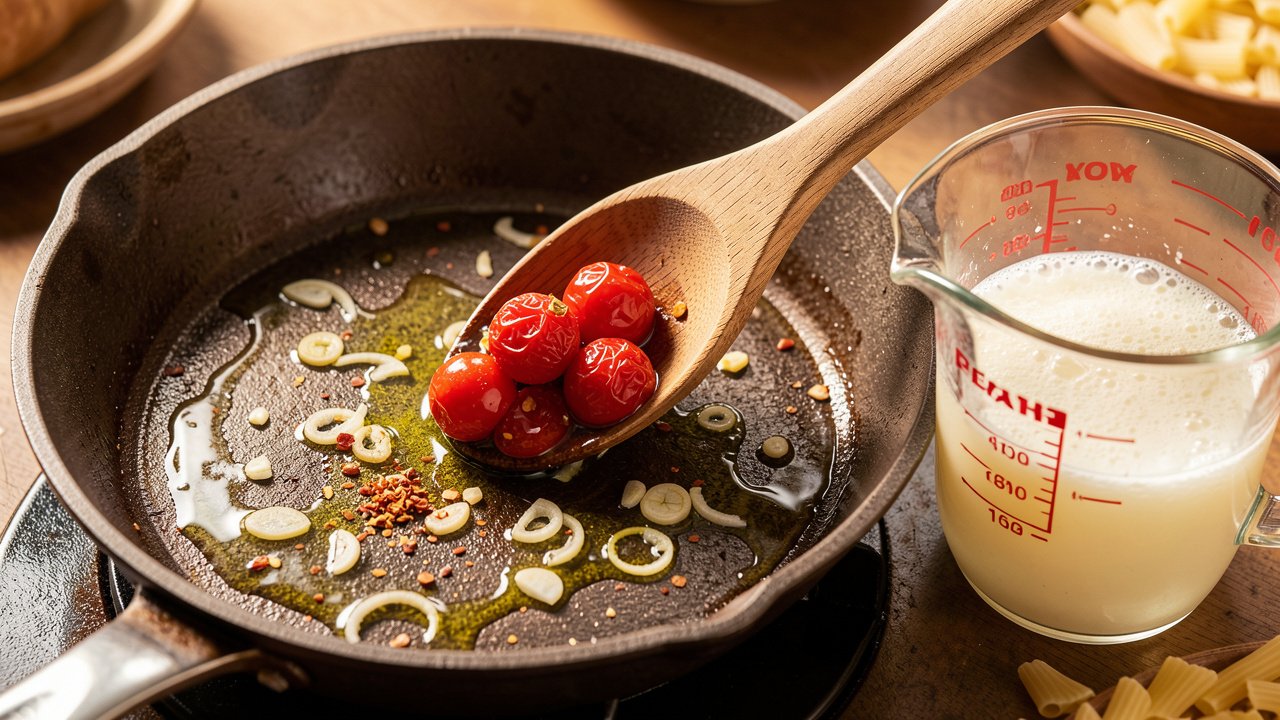
Only when the tomatoes are already blistered, scatter the sliced garlic and chili flakes into the oil and stir for 30 seconds, no longer. The smell changes fast from sharp to sweet and toasty; that is your cue to move on. Garlic added at the start of a screaming-hot pan is black long before the tomatoes are ready, which is why it goes in last.
Smash Some Tomatoes and Save the Water
Press about half the tomatoes against the pan with the back of a spoon so they burst and release their juice into the oil. Leave the rest whole for texture. Now scoop out at least 1 cup of pasta water with a heatproof cup and set it aside. Do this before you drain, every single time.
Drag the Pasta In and Toss Hard
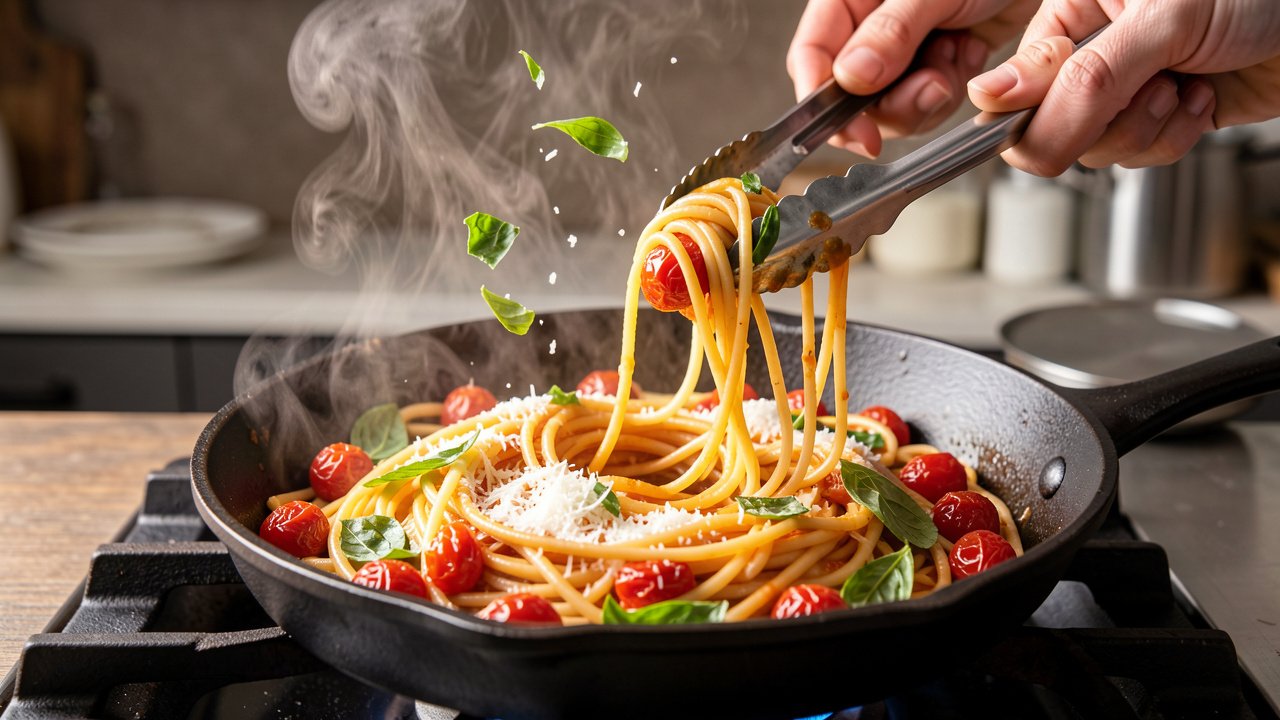
Lift the pasta straight from the pot into the skillet with tongs, dripping wet, one minute shy of done. Add about half a cup of the reserved pasta water and turn the heat to high. Now toss constantly and aggressively for 60 to 90 seconds, moving the pan and the tongs together. The liquid will look thin and broken at first, then suddenly go cloudy, thick, and glossy as the starch pulls the oil and water together. That change is the whole recipe. If it stays watery, keep tossing; if it tightens too fast, add another splash.
Finish Off the Heat with Basil and Parmesan
Pull the pan off the burner. Tear in the basil and add the grated Parmesan, then toss again so the cheese melts into the sauce instead of seizing into strings, which is exactly what happens if you add it over direct heat. Taste and add salt and black pepper. Serve immediately in warm bowls, because this sauce is at its best in the first two minutes.
Chef’s Tips From Real Kitchen Testing
Use a skillet wider than you think you need. Two pints of tomatoes in a 10-inch pan will steam; in a 12-inch pan they blister. If your pan is small, cook the tomatoes in two batches rather than crowding them.
Salt the pasta water like you mean it, but taste before you salt the finished dish. Between the water, the tomato juice, and the Parmesan, it is often seasoned already.
Undercook the pasta by a full minute. It finishes in the skillet as it absorbs the sauce, and pasta that was already perfect in the pot comes out soft after tossing.
Recipe Variations
Serving Suggestions
- Warm bowls, so the emulsion does not tighten
- Torn crusty bread for the oil left in the pan
- A sharp green salad with lemon and shaved fennel
- A cold sparkling lemon water
Nutrition Facts
Values are estimates per serving and vary with how much pasta water salt is absorbed and how heavily you cheese it.
Make-Ahead Tips
This is not a dish you make ahead, because the emulsion breaks as it cools and cannot be rebuilt. What you can do is prep ahead. Rinse and dry the tomatoes, slice the garlic, grate the cheese, and pick the basil in the morning, and store them covered in the fridge. Then dinner is only the boil and the toss.
Storage, Freezing & Reheating
Common Mistakes to Avoid
Troubleshooting
Sauce is oily and slides off the pasta? The emulsion never formed. Add another splash of pasta water, put it back on high, and toss hard for another minute. Movement is what does the work, not time.
Sauce is watery and thin? Too much pasta water at once, or the heat was too low to reduce it. Raise the heat and keep tossing until it tightens and coats a strand.
Cheese turned into stringy clumps? It went in over direct heat. Off the burner is the rule. Add a splash of water and toss to smooth it out.
Tastes flat despite everything? It usually wants salt and acid. A pinch of flaky salt and a small squeeze of lemon wakes the tomatoes right up.
A Note on Fast Italian Pasta
Italian home cooking is full of sauces built in the time water boils, from aglio e olio to cacio e pepe. They all rely on one idea: the pasta and its water are ingredients, not an afterthought. Once the emulsion clicks, it transfers everywhere. You will find the same move in our tomato basil pasta and the spicy tomato shrimp pasta. For slower weekends, the tomato sauce recipes collection covers the long-simmer end, and the creamy tomato spinach tortellini is the comfort-food answer to the same weeknight problem.