Pizza Recipes
Caramelized Onion Pizza
Last updated: September 29, 2026
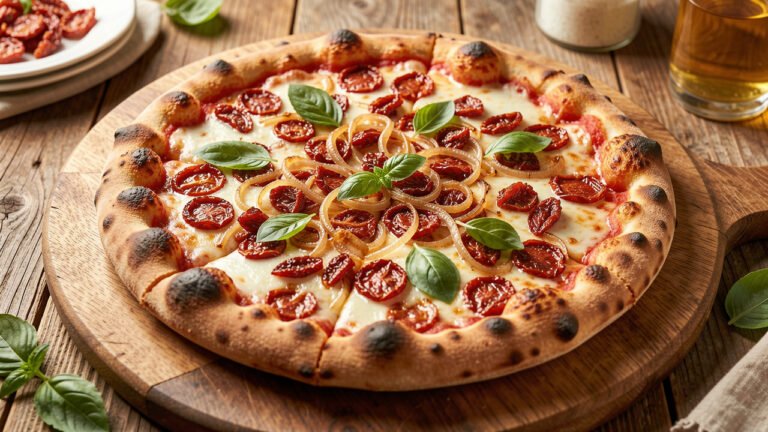
This is my go-to pizza when I want something that tastes richer than a plain cheese pie but does not need a pile of toppings. Sweet, jammy onions and sharp, chewy sundried tomatoes do all the heavy lifting, and a little basil at the end keeps it fresh. The first time I made it I overloaded the top and got a soggy middle, so this version keeps things restrained on purpose.
Why This Sundried Tomato and Onion Pizza Works
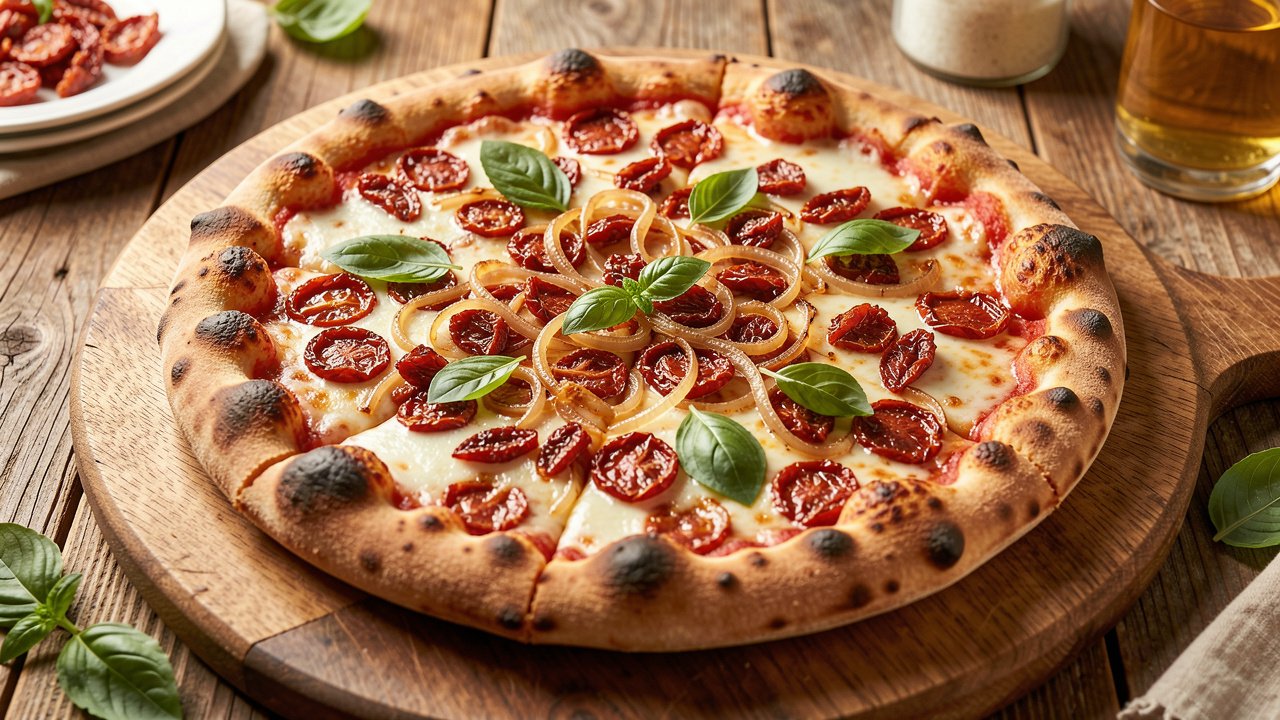
The magic here is the pairing of two strong flavors that balance each other. Caramelized onions are sweet and mellow, while sundried tomatoes are sharp, salty, and a little chewy. Put them side by side on melted mozzarella and each bite tastes deeper than the short topping list would suggest.
Heat is the second half of the story. A home oven cranked as high as it goes, ideally around 475 to 500 F with a stone or steel preheated inside, drives off surface moisture fast and blisters the crust before the middle can turn to bread. That contrast of crisp bottom and airy edge is what separates a real pizza from a topped flatbread.
Restraint matters more than people expect. Sundried tomatoes carry a lot of oil and the onions release moisture, so a thin layer of each is plenty. Pile them on and the crust steams instead of crisping, and you end up with a wet center no matter how hot the oven is.
Finally, hand-stretching the dough keeps the air bubbles that a rolling pin flattens out. Those bubbles puff up in the heat and give the cornicione, the puffy outer rim, its light, blistered character. It is a small habit that changes the whole texture.
Pro observation: When the dough is properly relaxed and at room temperature, it stretches without snapping back. If it keeps shrinking, it is too cold or too tight; let it rest another 10 minutes and try again.
Ingredients
Kitchen Measurement Converter
Quickly convert between common cooking measurements without leaving the recipe. Pick a category, enter a value, and the result updates instantly.
Ingredient Notes & Substitutions
Pizza Dough
Store-bought dough works great and saves an hour. Whether homemade or bought, take it out of the fridge 45 to 60 minutes ahead so it comes to room temperature and stretches easily.
Sundried Tomatoes
Oil-packed sundried tomatoes are softer and more flavorful than the dry-packed kind. Chop them small and save the jar oil to brush on the crust for an extra layer of taste.
Onions
Yellow onions caramelize into the sweetest result, but red onions work for a sharper bite. Slice them thin and even so they soften at the same rate without any raw, crunchy pieces.
Mozzarella
Low-moisture mozzarella melts cleanly and browns well. Fresh mozzarella tastes wonderful but holds water, so tear it, pat it dry, and use a little less to avoid a wet center.
Equipment
- Pizza stone or steel
- Wide, heavy skillet
- Pizza peel or flat tray
- Sharp knife and board
- Pastry brush
- Parchment paper
Before You Start
1. Preheat long and hot. Put your stone or steel on an upper-middle rack and heat the oven to 500 F for a full 45 minutes. A cold stone is the number one reason home pizza turns out pale and limp.
2. Warm the dough. Let the dough sit covered at room temperature so the gluten relaxes. Cold dough fights back and tears when you stretch it.
3. Caramelize the onions early. They take 30 to 40 minutes and cannot be rushed, so start them first and let them cook while the oven heats.
Step-by-Step Instructions
Preheat the Oven and Stone
Set a pizza stone or steel on an upper-middle rack and heat the oven to 500 F, or as high as it will go. Give it a full 45 minutes so the stone is thoroughly hot. This stored heat is what blisters the bottom crust the moment the pizza lands.
Caramelize the Onions
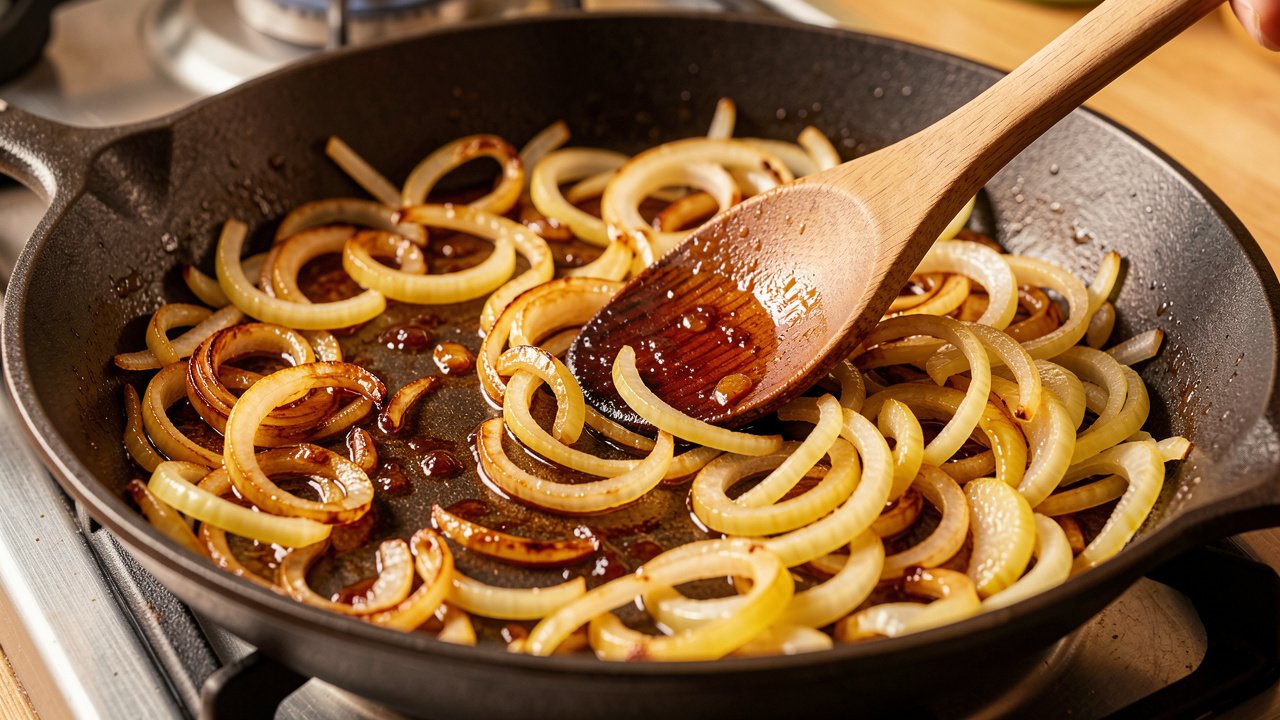
Melt the butter with the olive oil in a wide skillet over medium-low heat. Add the sliced onions and a pinch of salt, then cook slowly, stirring every few minutes, for 30 to 40 minutes. They are done when they are soft, deep golden, and jammy, not just translucent. A pinch of sugar near the end helps them along if they are stubborn.
Stretch the Dough
On a lightly floured surface, press the room-temperature dough from the center outward with your fingertips, leaving a puffy rim. Lift and stretch it over your knuckles, letting gravity thin it into a 12-inch round. Do not use a rolling pin, which flattens the air bubbles you want in the crust. Slide it onto a parchment-lined peel or flat tray.
Add the Base and Cheese
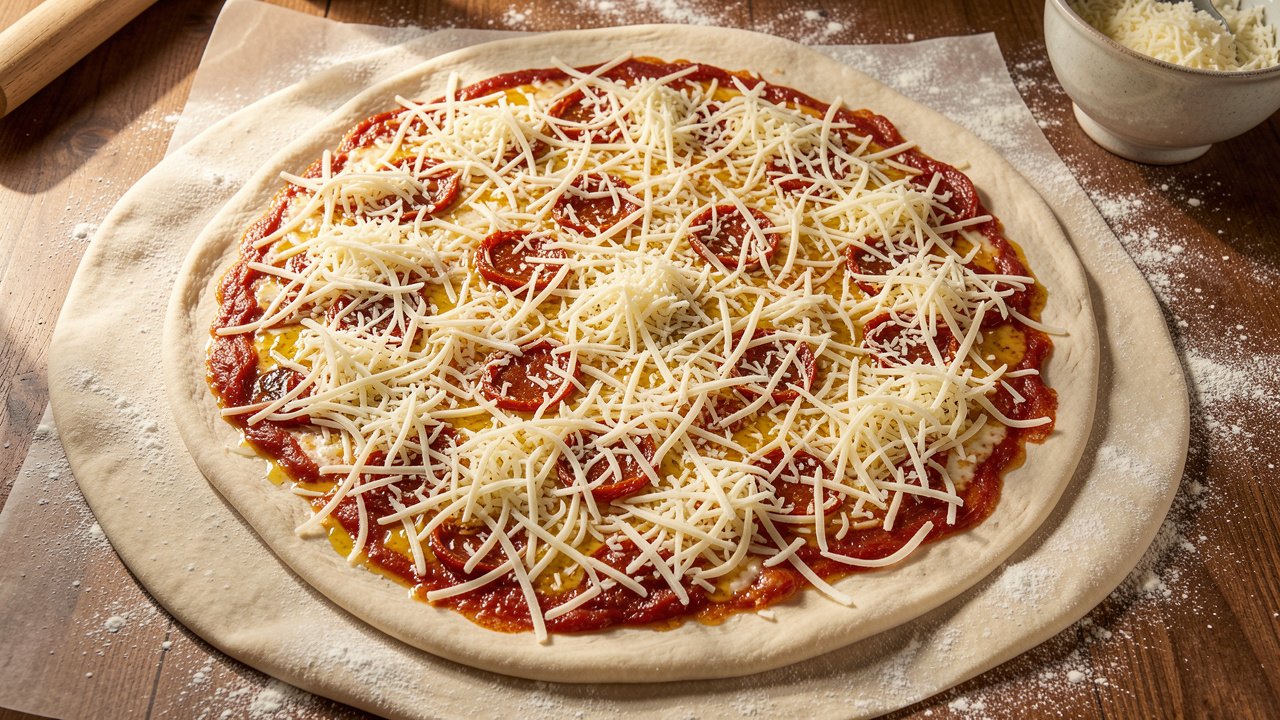
Brush the dough with a little sundried tomato oil, or spread a thin layer of tomato sauce, leaving a half-inch border bare for the crust. Scatter the mozzarella evenly, but do not blanket it edge to edge. A lighter hand keeps the pizza from steaming and helps the toppings brown.
Top with Onions and Sundried Tomatoes
Spread the caramelized onions over the cheese in a thin, even layer, then dot the chopped sundried tomatoes around the pizza. Resist the urge to add more; too many toppings weigh the dough down and trap moisture. A scatter of grated parmesan and a pinch of pepper finishes it before baking.
Bake Hot and Finish with Basil
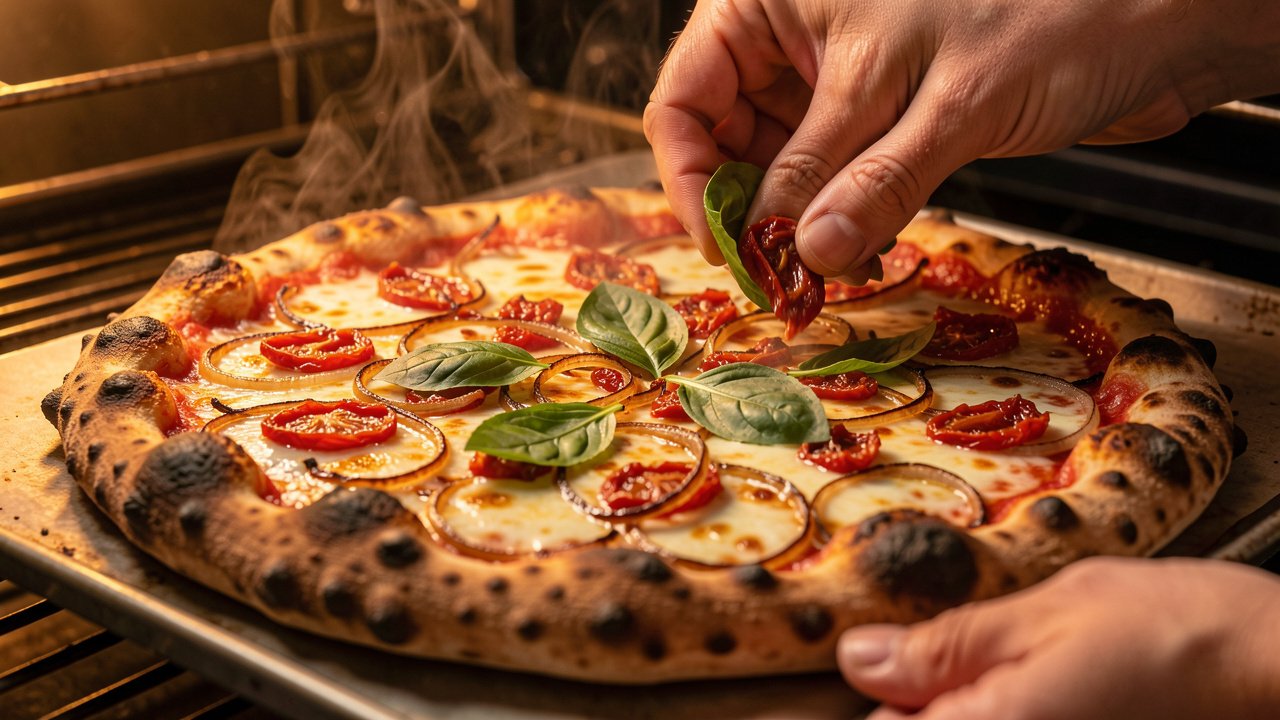
Slide the pizza, parchment and all, onto the preheated stone. Bake 8 to 12 minutes until the crust is blistered and browned and the cheese bubbles with a few golden spots. Pull the parchment out halfway through if it darkens. Let it rest a minute, then scatter fresh basil over the top and slice.
Chef’s Tips From Real Kitchen Testing
Preheat the stone far longer than feels necessary. Forty-five minutes at full heat is what gives you a crisp, blistered bottom instead of a pale, floppy one.
Blot oil-packed sundried tomatoes on a paper towel before they go on. They carry a lot of oil, and skipping this step is a common cause of a greasy, slick surface.
Switch to the broiler for the final minute if your oven maxes out below 500 F. The top blast of heat mimics a pizzeria oven and helps the cheese char in spots.
Recipe Variations
Serving Suggestions
- A crisp arugula salad with lemon and olive oil
- A glass of chilled pomegranate spritzer
- Warm garlic knots or focaccia on the side
- A drizzle of balsamic glaze over each slice
Nutrition Facts
Values are estimates per slice, based on a four-slice pizza, and vary with the dough and cheese you use.
Make-Ahead Tips
The caramelized onions are the slow part, so make them up to three days ahead and keep them in the fridge. You can also stretch and top the pizza while the stone heats, but do not let a fully topped pizza sit long, or the dough goes slack and sticky. If you are prepping for a crowd, caramelize a big batch of onions once and build several pizzas in quick succession.
Storage, Freezing & Reheating
Common Mistakes to Avoid
Troubleshooting
Soggy center? Usually too many toppings or too much oil. Use less cheese, blot the sundried tomatoes, and make sure the stone was fully preheated.
Dough keeps shrinking back? The gluten is too tight or the dough is too cold. Let it rest another 10 to 15 minutes at room temperature, then stretch again.
Crust pale on the bottom? The stone lost heat or sat too low. Move it up a rack and preheat longer, or finish under the broiler.
A Note on Italian Pizza Making
Traditional Neapolitan pizza is baked in wood-fired ovens that hit close to 900 F, cooking a pie in under 90 seconds. Home ovens cannot reach that, but a preheated stone or steel gets you surprisingly close by storing and radiating intense heat. If you like this style, try our tomato and cheese pizza for the classic base, or explore homemade tomato sauce recipes to build your own toppings. For a pasta night instead, our tomato basil pasta uses the same fresh, simple flavors, and you can read why tomatoes anchor the Mediterranean diet.