Italian Recipes
30-Minute Pantry Dinner
Last updated: September 29, 2026
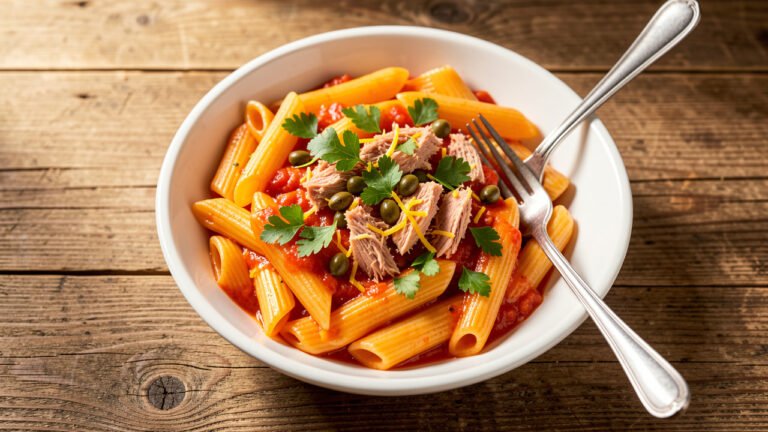
Canned tuna pasta has a bad reputation, and almost always for the same two reasons: cheap water-packed tuna, and tuna that got boiled in the sauce until it went chalky. Fix those two things and this becomes a dinner you make on purpose, not just when the fridge is empty.
Why This Creamy Tomato Tuna Penne Pasta Works
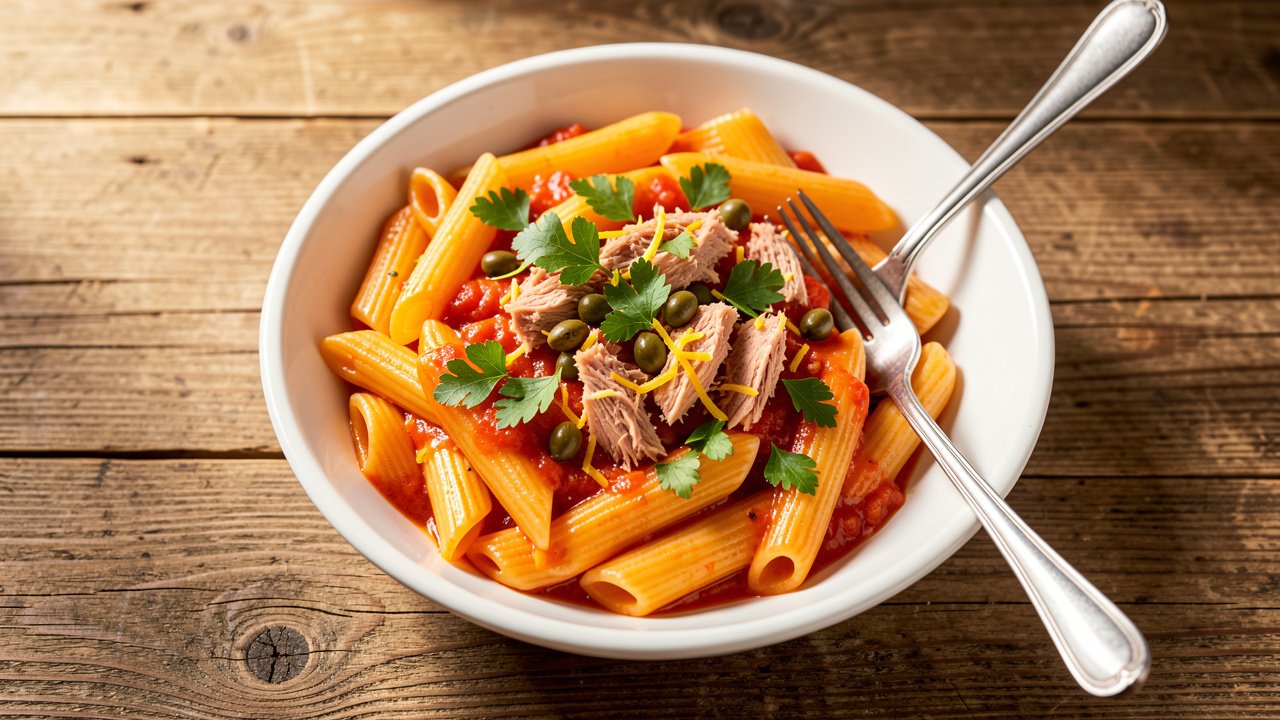
The whole dish hangs on the tuna you open. Oil-packed tuna is cured in fat, so it stays moist and breaks into big silky flakes. Water-packed tuna is leaner and goes stringy and slightly metallic once it hits a hot pan. Side by side in my kitchen, the oil-packed batch tasted like fish; the water-packed one tasted like sandwich filling. That packing oil is free flavor too, so I pour a tablespoon of it into the pan and drain the rest away.
The second thing that matters is when the tuna goes in. Canned tuna is already fully cooked. Every extra minute it spends bubbling in tomato sauce squeezes more water out of the muscle fibers, and the flakes tighten into dry threads. Folding it in off the heat lets it warm through instead of cooking again.
Cream is the third piece, and a small amount does a lot. A third of a cup takes the sharp edge off canned tomatoes and turns the sauce a soft coral pink without making it heavy. This is not a cream sauce with tomato in it; it is a tomato sauce with just enough cream to round the corners.
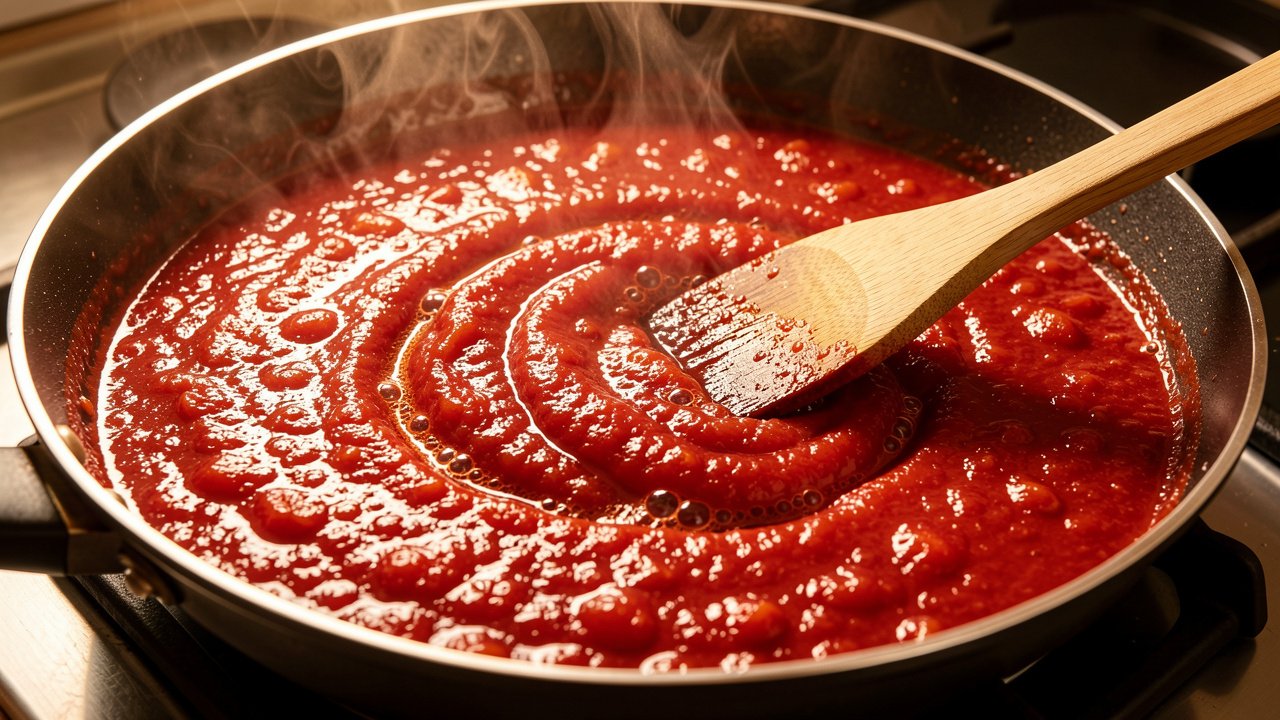
Pro observation: The sauce is ready for the cream when it stops looking watery and starts clinging to the back of the spoon. Drag a spoon through it; if the line closes up in under a second, keep simmering.
Ingredients
Kitchen Measurement Converter
Quickly convert between common cooking measurements without leaving the recipe. Pick a category, enter a value, and the result updates instantly.
Ingredient Notes & Substitutions
Tuna
Buy solid or chunk tuna packed in olive oil, ideally in a glass jar. Look for large intact pieces rather than shredded flakes. If water-packed is all you have, drain it hard and add an extra tablespoon of olive oil.
Tomatoes
Canned crushed tomatoes give the smoothest coating sauce. Whole peeled tomatoes crushed by hand work too and taste a little brighter. Skip diced tomatoes, which are treated with calcium chloride and stay stubbornly chunky.
Cream
Heavy cream is the safest choice because its fat content stops it from splitting. Half-and-half works if you keep the heat low. Mascarpone or a spoonful of cream cheese is a good thicker alternative.
Capers and Olives
Capers add the salty pop that keeps the cream from tasting flat. Rinse them if they are salt-packed. Chopped black olives are the easy swap, and a couple of anchovy fillets melted in with the garlic add depth.
Equipment
- Large pot for pasta
- Wide skillet or saute pan
- Colander
- Fork for flaking
- Microplane or zester
- Heatproof mug for pasta water
Before You Start
1. Open and drain the tuna first. Tip the oil into a small bowl and keep a tablespoon of it. Leave the tuna in big pieces; it will break down more in the pan.
2. Salt the pasta water properly. Use about a tablespoon of salt per four quarts. The dish gets much of its seasoning from the pasta itself, so under-salted water shows up at the table.
3. Put a mug in the colander. It is the only reliable way I know to remember to save pasta water before it goes down the drain.
Step-by-Step Instructions
Boil the Penne
Bring a large pot of well-salted water to a rolling boil and add the penne. Cook it two minutes short of the package time, so it is still firm in the middle. It will finish cooking in the sauce. Before you drain, scoop out a full cup of the starchy water.
Soften the Garlic and Chili
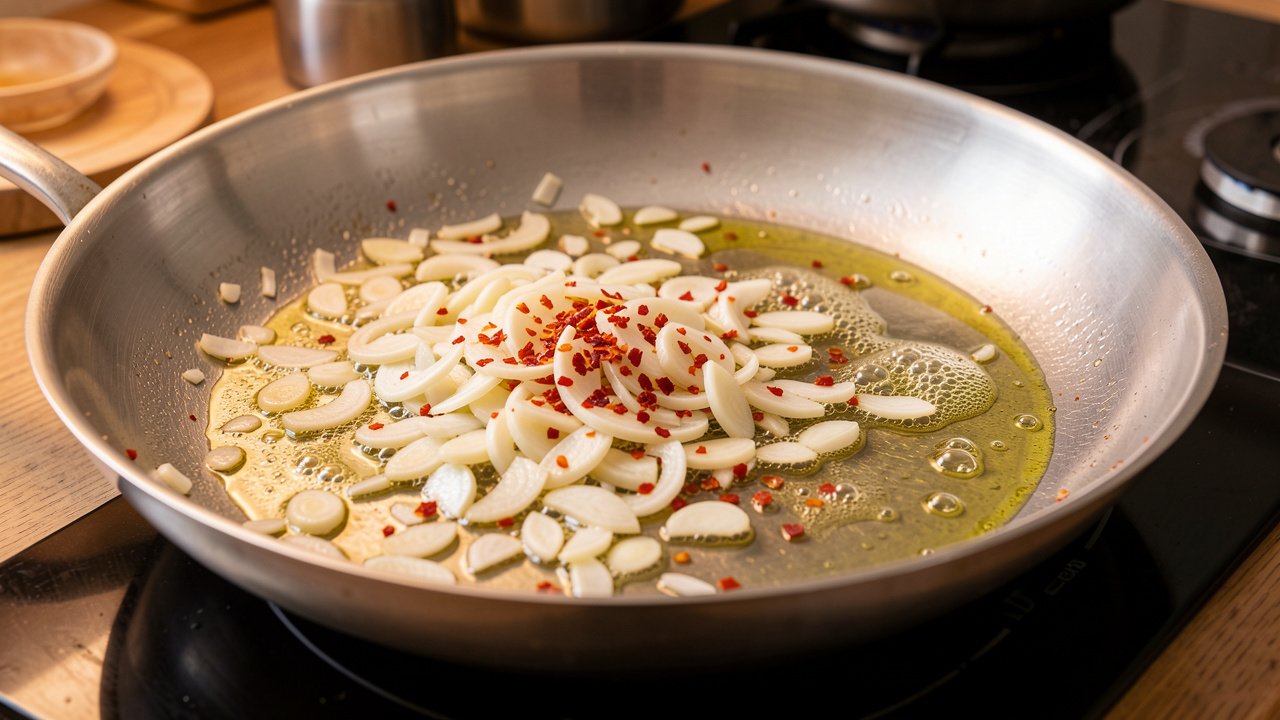
While the pasta boils, warm the olive oil plus a tablespoon of the reserved tuna oil in a wide skillet over medium-low heat. Add the sliced garlic and red pepper flakes. You want a lazy sizzle, not a fizz. Cook 2 to 3 minutes until the garlic turns pale gold and smells sweet. Brown garlic is bitter garlic, so pull the pan off the heat if it moves too fast.
Cook Out the Tomato Paste
Stir in the tomato paste and let it fry for about a minute. It will darken from bright red to brick and start to stick slightly to the pan. That stickiness is exactly what you want; it means the sugars are caramelizing and the raw tinned taste is cooking off.
Simmer the Tomatoes
Pour in the crushed tomatoes and add half a teaspoon of salt. Simmer 8 to 10 minutes at a gentle bubble, stirring now and then. The color deepens, the surface goes glossy, and the volume drops by roughly a quarter. If it spits, lower the heat rather than covering the pan; a lid traps the steam you are trying to drive off.
Stir In the Cream, Then the Pasta
Turn the heat to low and stir in the cream. The sauce should shift to a soft coral color. Keep it at a bare simmer for a minute; do not let it boil, or the cream can break and leave greasy specks. Add the drained penne and a splash of the pasta water, then toss hard for a minute. That starch is what makes the sauce grab the pasta instead of sliding off. Add more water a spoonful at a time until every piece is glossy.
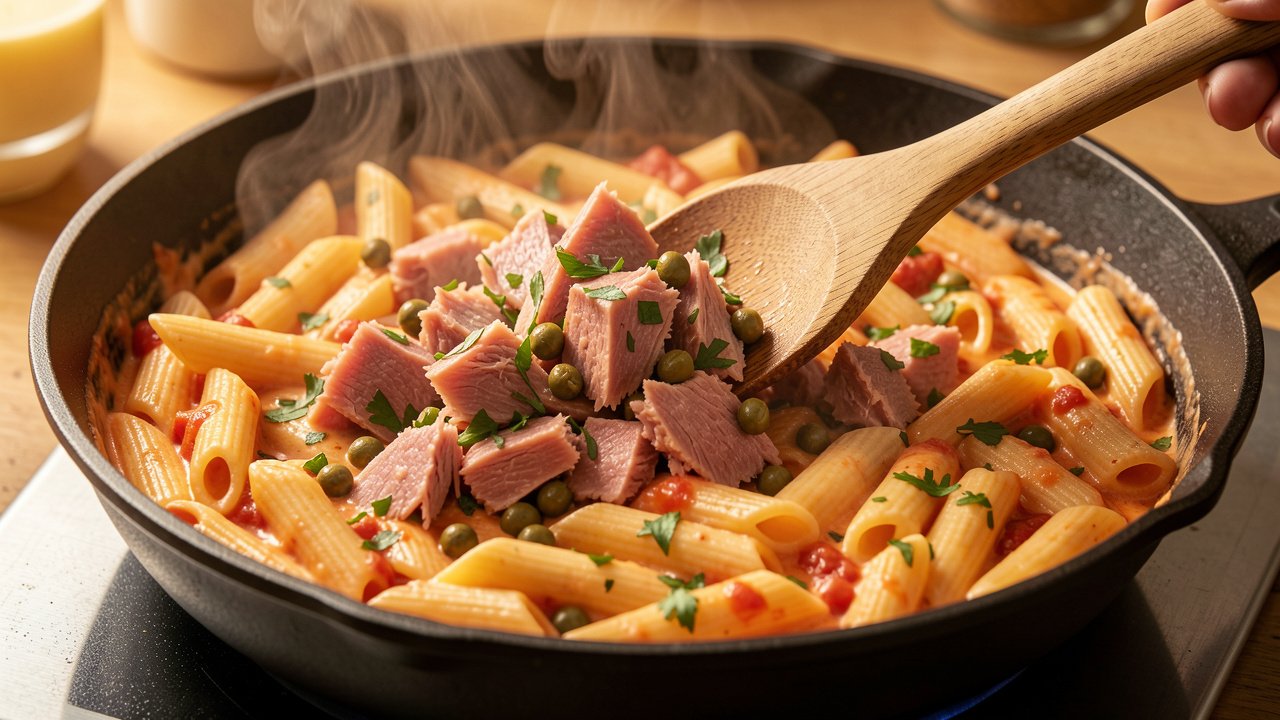
Fold In the Tuna Off the Heat
Take the pan off the burner completely. Break the tuna into large flakes with a fork and scatter it over the pasta with the capers, parsley, and lemon zest. Fold it through with two or three gentle turns, then stop. The residual heat warms the tuna in about 30 seconds. Taste, adjust the salt, and serve straight away while the sauce is still loose.
Chef’s Tips From Real Kitchen Testing
Save the leftover tuna oil in a jar in the fridge for up to a week. It is excellent brushed on toast for garlic bread alongside.
Warm the serving bowls with a splash of hot pasta water. Cold bowls chill this sauce fast and it tightens on the way to the table.
Zest the lemon over the pan, not a cutting board. The oils that spray out of the peel are half the aroma, and they land in the food instead of on the counter.
Recipe Variations
Serving Suggestions
- Garlic bread brushed with the reserved tuna oil
- A sharp green salad with lemon and olive oil
- Blistered cherry tomatoes or roasted broccolini
- A cold sparkling water with lemon
Nutrition Facts
Values are estimates per serving and vary with the tuna brand, how much packing oil you use, and the capers.
Make-Ahead Tips
Make the tomato base up to three days ahead, but stop before the cream. Cool it and refrigerate it in a jar. On the night, reheat the base, add the cream, boil fresh pasta, and fold in the tuna. Total time drops to about 15 minutes. Do not assemble the whole dish ahead; cooked penne keeps absorbing sauce, and the tuna firms up in the fridge no matter how gently you treated it.
Storage, Freezing & Reheating
Common Mistakes to Avoid
Troubleshooting
Tuna dry and chalky? It cooked too long. Next time add it off the heat. To rescue this batch, stir in a spoonful of olive oil to coat the fibers.
Sauce greasy or separated? The cream boiled. Pull the pan off the heat and whisk in a splash of hot pasta water to bring the emulsion back.
Sauce sliding off the penne? Not enough starch or tossing. Add pasta water a spoonful at a time and keep the pan moving for a full minute.
Tastes flat? It needs salt and acid. Add capers, a few drops of lemon juice, or a little caper brine and taste again. If it swings too acidic, a pinch of sugar or an extra tablespoon of cream will round it out.
A Note on Italian Pantry Pasta
Tuna pasta belongs to the Italian family of cupboard dishes built from jars and tins, the same tradition that gave us puttanesca and aglio e olio. The logic is always the same: strong salty ingredients like capers, olives, anchovies, and good tinned fish do the heavy lifting, and the pasta water pulls everything together.
The same toss-with-starchy-water trick carries our tomato basil pasta and spicy tomato shrimp pasta. The creamy tomato spinach tortellini uses the same tomato-and-cream ratio, and our guide to tomato sauce recipes covers the bases worth keeping in the fridge.