
Greek Recipes
Crispy Santorini Tomato Fritters
These little fritters taste like a Greek summer. Ripe tomatoes, grated onion, and a big handful of fresh mint make a batter that fries up crisp on the outside and soft in the middle, with a bright, herby flavor you cannot get from anything but real, in-season tomatoes. On Santorini they are practically a way of life.
The one thing that separates a great batch from a soggy one is draining the tomatoes. I learned this the hard way; my first attempt turned into a wet, greasy mess because I skipped the squeezing step. Get the tomatoes dry and everything else falls into place.
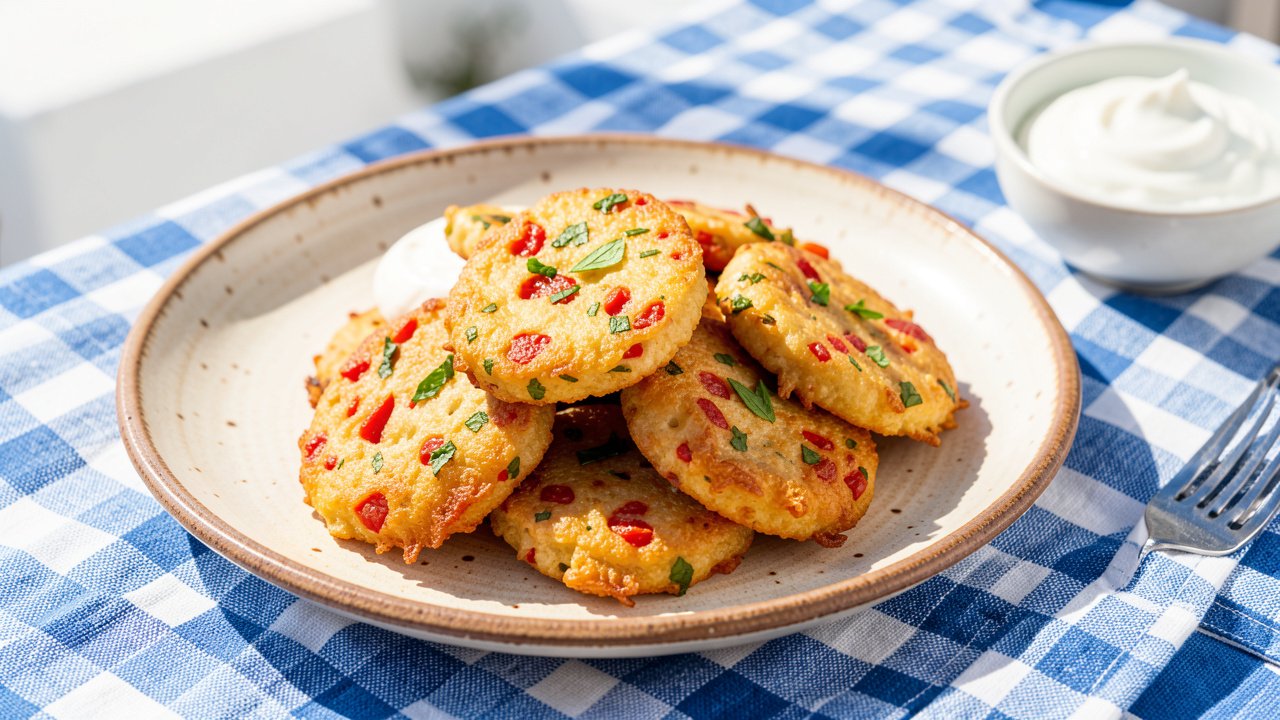
Why These Santorini Tomato Fritters Work
Domatokeftedes are proof that a few humble ingredients, treated with care, can turn into something you cannot stop eating. Ripe tomatoes carry the whole dish, so the recipe is really about coaxing the most flavor out of them while keeping the batter dry enough to crisp. Get that balance and you get fritters that shatter at the edge and stay tender inside.
The single most important step is draining the grated tomatoes. Tomatoes are mostly water, and that water is the enemy of a crisp fritter. Squeeze it out and the batter holds together, fries fast, and drinks up far less oil, so the fritters stay light instead of greasy.
Fresh mint is the other quiet hero. It gives domatokeftedes their unmistakable Aegean lift, cool and fragrant against the sweet tomato. A little grated onion adds savory depth, and just enough flour and baking powder binds everything into spoonable patties without turning heavy or bready.
They are also forgiving and flexible. Once you have the method down, you can fold in crumbled feta, swap the mint for dill, or bake them instead of frying. The same simple batter becomes a party meze, a light lunch with salad, or a side that disappears off the plate before dinner is even served.
Pro observation: The batter is ready when a spoonful holds its shape on the spoon and does not slump or run. If it spreads, it is too wet; stir in a little more flour a tablespoon at a time.
Ingredients
Kitchen Measurement Converter
Quickly convert between common cooking measurements without leaving the recipe. Pick a category, enter a value, and the result updates instantly.
Ingredient Notes & Substitutions
Tomatoes
Ripe, deeply flavored summer tomatoes are the whole point. Firm, meaty varieties with less water, like Roma or plum tomatoes, drain fastest. Pale, watery winter tomatoes make weak fritters, so save this recipe for peak season.
Fresh Mint
Mint is the classic Santorini herb here and gives domatokeftedes their signature aroma. Chop it just before mixing so it stays bright. Dill or a little oregano make lovely alternatives if that is what you have.
Flour
Plain all-purpose flour binds the batter. Add it gradually, since the exact amount depends on how dry your tomatoes are. For a gluten-free version, a good cup-for-cup blend or chickpea flour both work well.
Olive Oil
A good olive oil is traditional and adds flavor, but any neutral oil fries these well. You want about a quarter inch in the pan for shallow frying, hot but not smoking, so the fritters crisp rather than soak.
Equipment
- Box grater
- Colander or sieve
- Clean kitchen towel
- Large mixing bowl
- Wide frying pan
- Slotted spoon
Before You Start
1. Drain the tomatoes well. Grate them, salt lightly, and let them sit in a colander for 10 to 15 minutes, then squeeze hard. This is the step that makes or breaks the fritters.
2. Add flour gradually. Wetter tomatoes need a little more flour. Start with less and stir in more only until the batter holds its shape on a spoon.
3. Heat the oil properly. Test with a small drop of batter; it should sizzle steadily on contact. Oil that is too cool gives greasy, pale fritters.
Step-by-Step Instructions
Grate and Drain the Tomatoes
Grate the tomatoes on the large holes of a box grater, discarding the skins that stay in your hand. Tip the pulp into a colander, sprinkle with a little salt, and leave it to drain for 10 to 15 minutes. Then gather it in a clean towel and squeeze out as much liquid as you can. This is the most important step in the whole recipe.
Mix the Batter
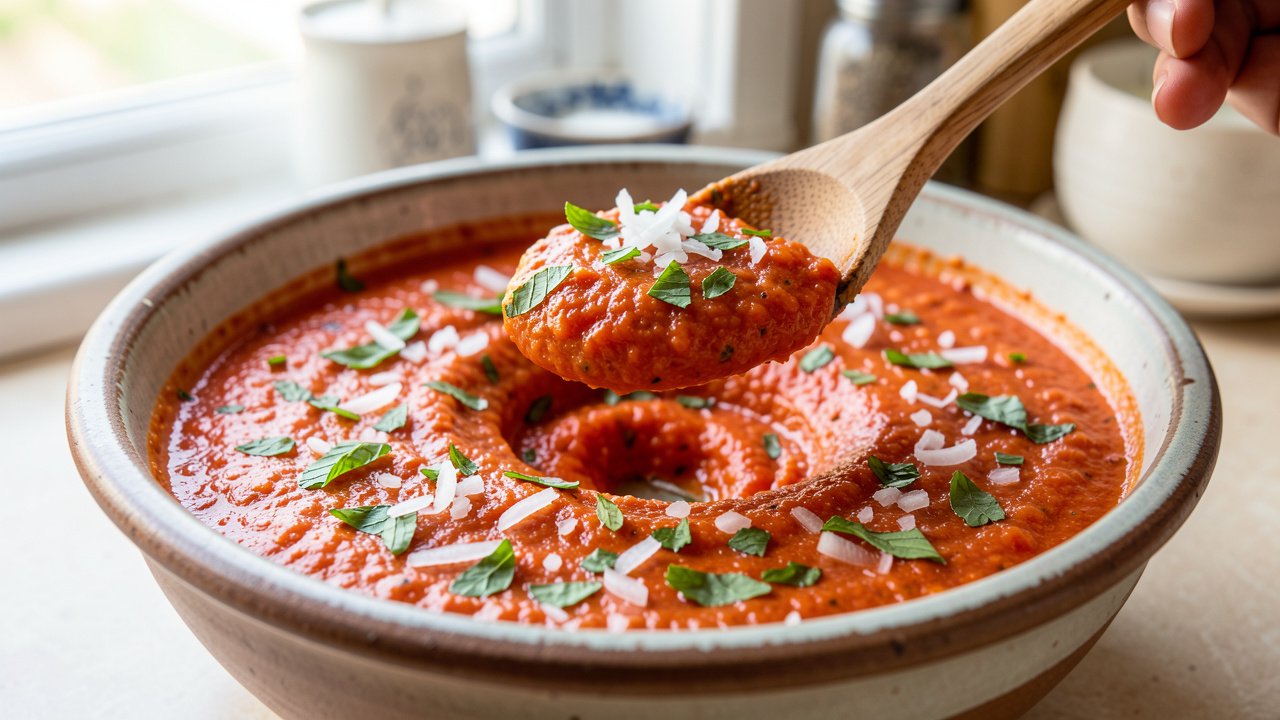
Put the drained tomato pulp in a large bowl with the grated onion, chopped mint, and parsley. Add the salt, pepper, and cumin if using. Stir in the baking powder, then add the flour a little at a time, mixing until you have a thick batter that holds its shape on the spoon. Do not overmix.
Heat the Oil
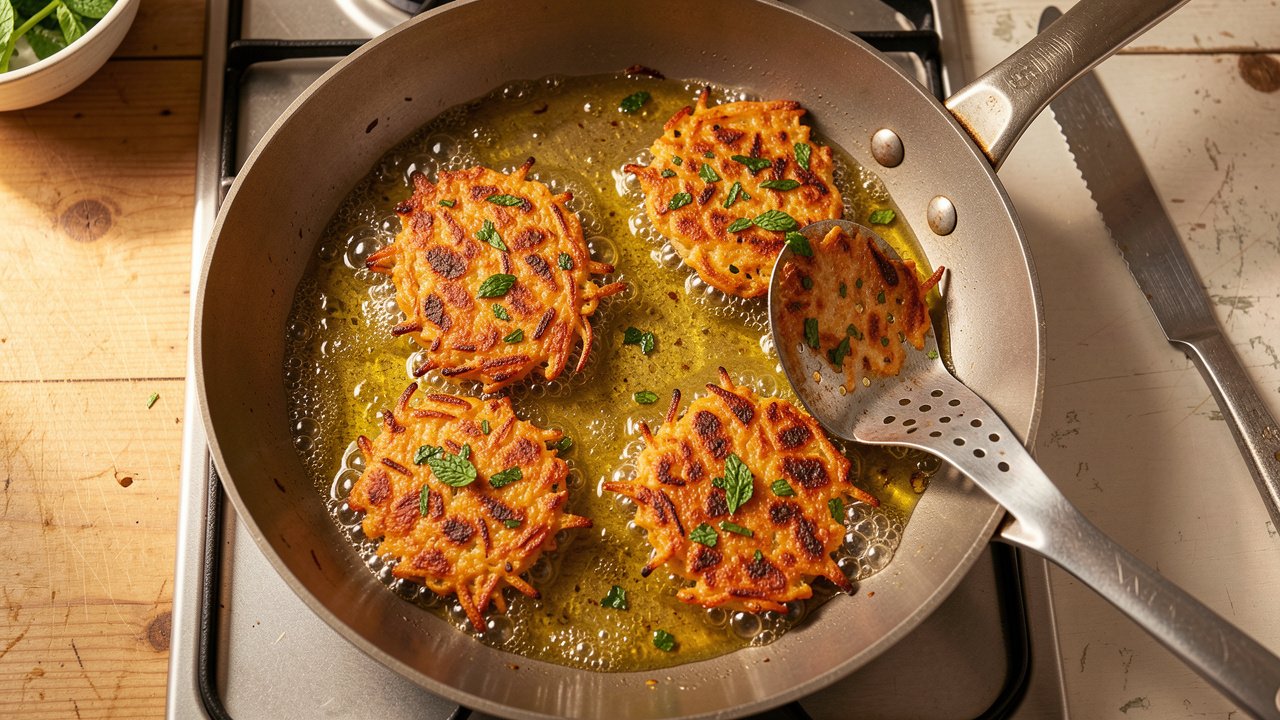
Pour about a quarter inch of olive oil into a wide frying pan and set it over medium heat. Let it get properly hot before you start; drop in a tiny bit of batter to test, and it should sizzle at once. If it just sits there, wait a little longer.
Fry the Fritters
Drop heaped tablespoons of batter into the hot oil, flattening each one slightly with the back of the spoon. Do not crowd the pan; fry in batches. Cook 2 to 3 minutes per side until deep golden and crisp, turning once. They should be firm and browned, not pale.
Drain the Fritters
Lift the fritters out with a slotted spoon and set them on a plate lined with paper towels to drain the excess oil. A quick rest on the towels keeps them crisp and stops them from tasting oily. Sprinkle with a pinch of salt while they are still hot.
Serve Warm
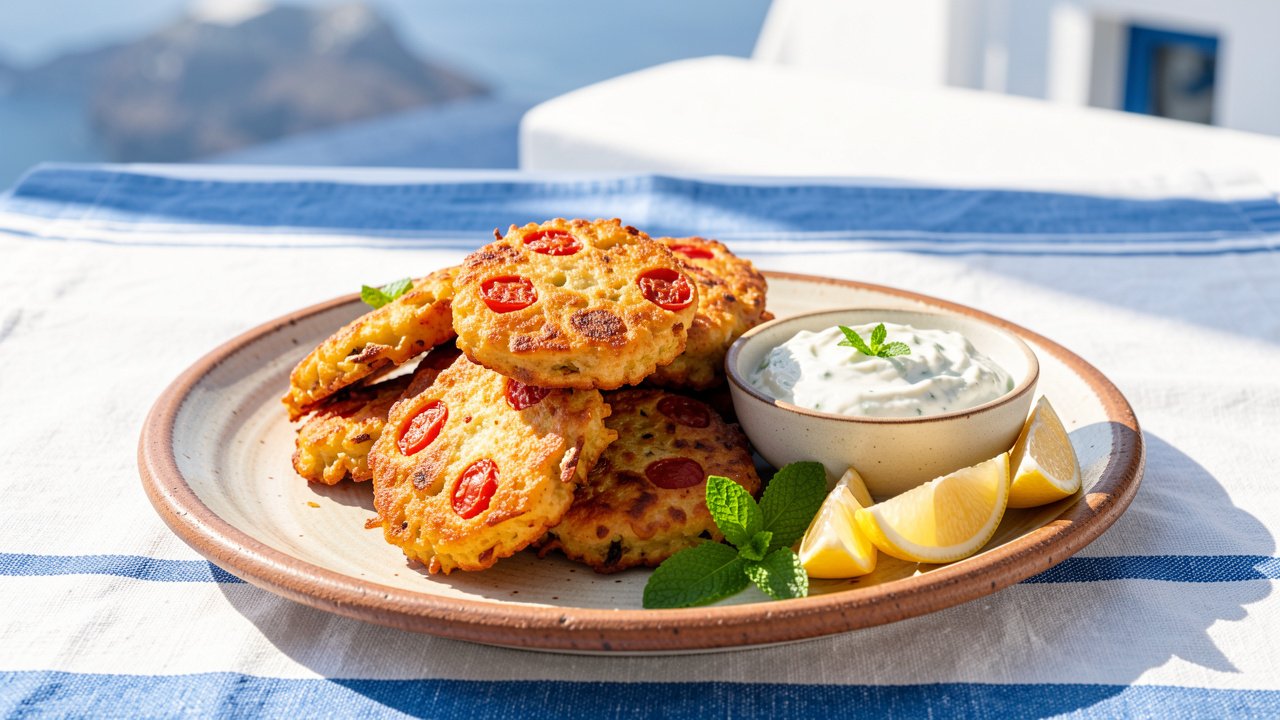
Pile the fritters on a platter and serve them warm, while the edges are still crisp. Set out a bowl of tzatziki or thick strained yogurt for dipping, add a scatter of extra mint and a wedge of lemon, and bring them straight to the table as a meze.
Chef’s Tips From Real Kitchen Testing
Squeeze the tomatoes drier than you think you need to. Every extra bit of water you remove means crisper fritters and a batter that fries fast instead of spreading and stewing in the oil.
Fry one test fritter first. It tells you if the oil is hot enough and whether the batter needs a touch more flour, before you commit the whole batch.
Salt the fritters the moment they come out of the pan. Hot oil helps the salt cling, and that first seasoned bite is what makes them so hard to stop eating.
Recipe Variations
Serving Suggestions
- A bowl of tzatziki or thick strained yogurt for dipping
- A crisp Greek salad with cucumber and olives
- Warm pita bread and a drizzle of olive oil
- Lemon wedges and a scatter of extra fresh mint
Nutrition Facts
| Nutrient | Amount per serving |
|---|---|
| Calories | 210 |
| Protein | 4 g |
| Carbohydrates | 27 g |
| Fat | 10 g |
| Saturated Fat | 1.5 g |
| Fiber | 3 g |
| Sugar | 5 g |
| Sodium | 480 mg |
Values are estimates per serving and vary with the exact ingredients, oil absorbed, and brands you use.
Make-Ahead Tips
Fritters are best eaten fresh, but you can do the prep ahead. Grate and drain the tomatoes and chop the herbs up to a few hours in advance, keeping them covered in the fridge. Mix the batter only when you are ready to fry, since the salt keeps drawing out moisture and a batter that sits too long turns loose and needs extra flour to firm up again.
Storage, Freezing & Reheating
Common Mistakes to Avoid
Troubleshooting
Fritters falling apart in the pan? The batter is too wet or short on binder. Stir in a little more flour and make sure the oil is hot enough to set the crust quickly.
Greasy and heavy? The oil was too cool or the tomatoes were not squeezed dry. Get the oil hotter and drain the pulp harder next time.
Bland? They likely need more salt and mint, and a bright squeeze of lemon over the top just before serving.
A Note on Santorini Cooking
Santorini’s cooking is shaped by its volcanic soil and dry, sun-baked climate. The island’s small cherry tomatoes, grown almost without water in that ashy ground, concentrate into intensely sweet, low-moisture fruit that is practically made for frying into fritters. Domatokeftedes are a cornerstone of the local meze table, served alongside fava, capers, and a glass of something cold on a warm evening. If you love simple tomato dishes, our fresh tomato salsa and the wider collection of tomato recipes share the same celebration of ripe, in-season fruit.
Frequently Asked Questions
More Tomato Recipes to Try
Last updated: September 29, 2026