Sri Lankan Recipes
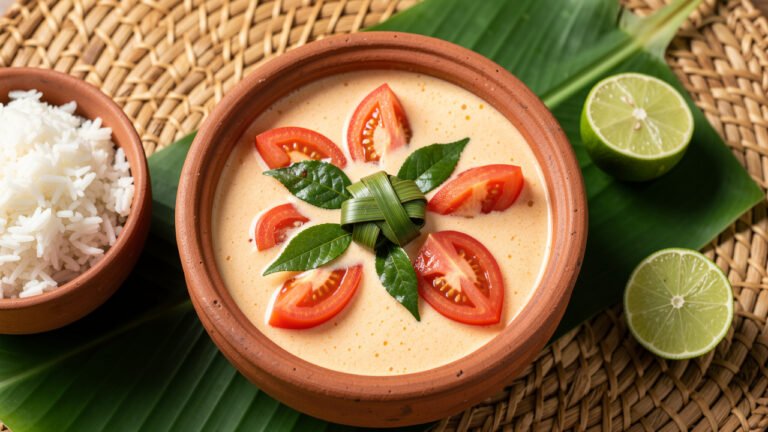
Creamy Tomato Coconut Curry
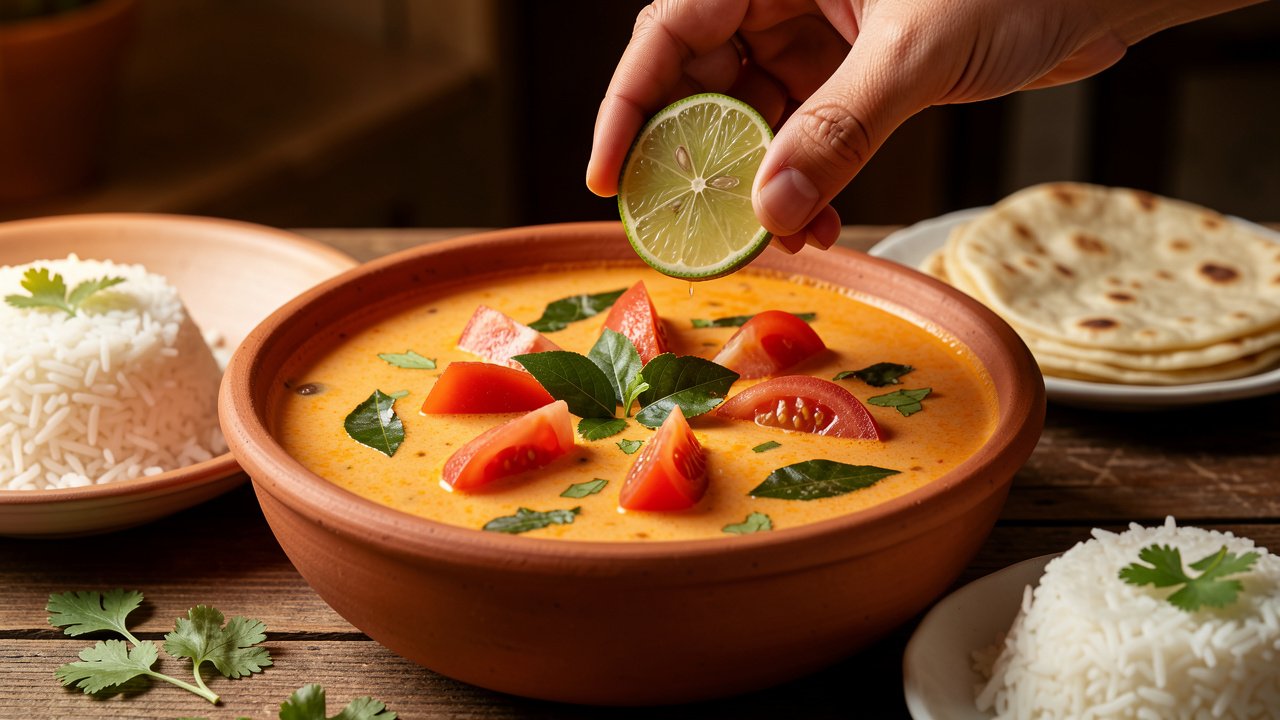
Thakkali simply means tomato in Tamil, and this curry shows up on a Sri Lankan table almost by default. It costs very little and turns plain rice into something people go back to for seconds. The wedges stay whole rather than dissolving, so every spoonful has structure as well as sauce.
What makes it Sri Lankan is the tempering and the curry powder. Pandan and curry leaves crackling in coconut oil give an aroma you cannot fake. The first time I made it I let the pan boil while I answered the door, and the coconut milk broke into grainy specks. That taught me more than any recipe card.
Why This Thakkali Curry Works
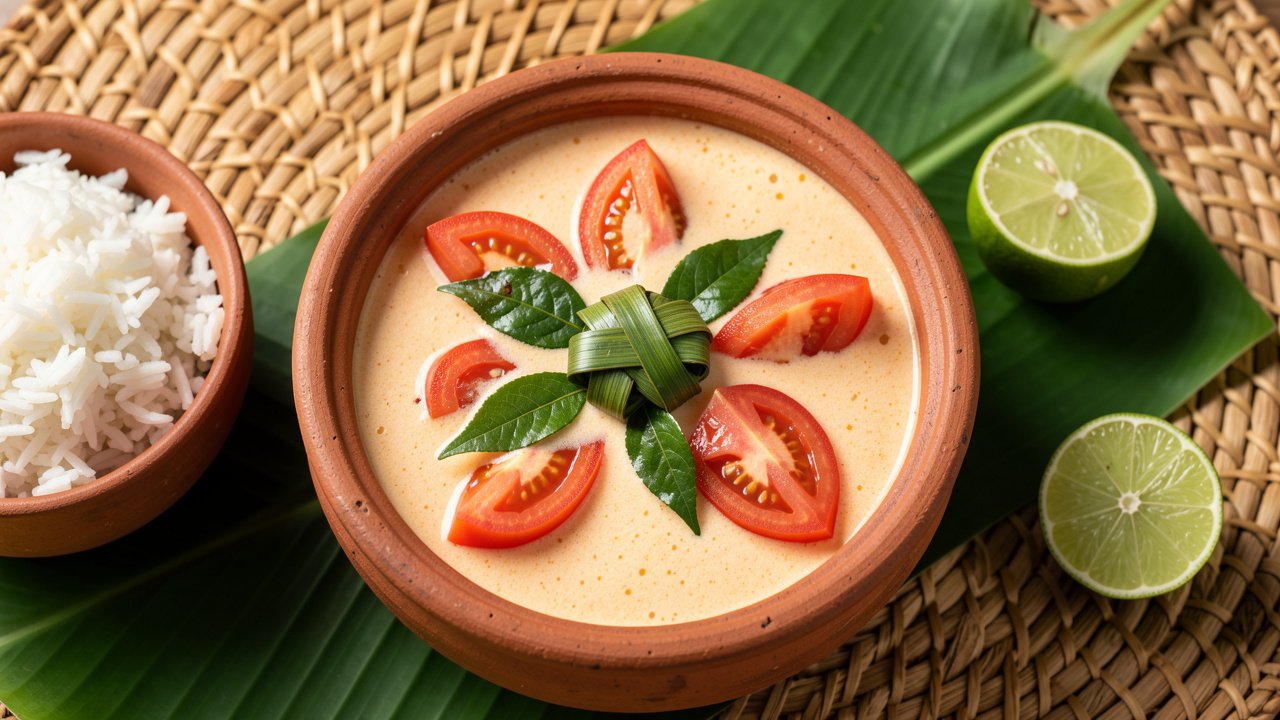
Most tomato curries push the tomatoes until they collapse into a paste. This one does the opposite. The wedges go in late and simmer only long enough to soften at the edges while the centers stay intact, so the dish reads as tomatoes in a sauce rather than tomato sauce.
The tempering carries the aroma. Mustard seeds pop, fenugreek turns nutty, curry leaves release their citrus-resin scent, and pandan perfumes the oil, all inside ninety seconds.
Coconut milk does the rounding, softening the acidity and pulling the fat-soluble flavor out of the spices. The balance is a two-stage sour: mellow cooked acidity during the simmer, then a sharp squeeze of lime at the end.
Pro observation: The sauce is ready when a spoon drawn across the pan leaves a track that closes slowly. If it closes instantly the curry is too thin.
Ingredients
Kitchen Measurement Converter
Working from grams one day and cups the next? Pick a category, enter a value, and the result updates instantly.
Ingredient Notes & Substitutions
Tomatoes
Choose firm, ripe tomatoes with taut skin. Overripe fruit turns to pulp and you lose the wedge texture that defines the dish. Roma or plum hold up best.
Coconut Milk
Full-fat canned coconut milk gives the right body. Shake the can hard before opening. Freshly squeezed second-extract milk is traditional and makes a lighter, sweeter sauce.
Curry Powder
Unroasted Sri Lankan curry powder is pale and coriander-forward, not the dark roasted blend used for meat. With a standard Indian blend, add a pinch of ground coriander and fennel.
Pandan and Curry Leaves
Pandan, called rampe locally, adds a grassy vanilla note, and frozen works as well as fresh. Curry leaves are harder to replace, so omit them rather than swapping in bay leaves.
Equipment
- Wide, shallow pan or clay pot
- Wooden spoon
- Sharp knife and board
- Can opener
- Measuring spoons
- Small spice bowl
Before You Start
1. Line up the tempering. Mustard seeds, fenugreek, curry leaves, and pandan all hit the oil within a minute of each other, so measure them into one bowl beside the stove.
2. Cut the tomatoes last. Wedges weep juice as soon as they are cut, so slice the onion and garlic first.
3. Use a wide pan. A shallow pan lets the wedges sit in one layer; a deep saucepan turns the bottom layer to mush.
Step-by-Step Instructions
Prep the Aromatics and Tomatoes
Slice the red onion thinly and the garlic into coins. Slit the green chili lengthwise but leave it whole, so it perfumes the sauce without shredding into it. Measure the ground spices and knot the pandan leaf. Last, cut each tomato into six wedges.
Build the Tempering
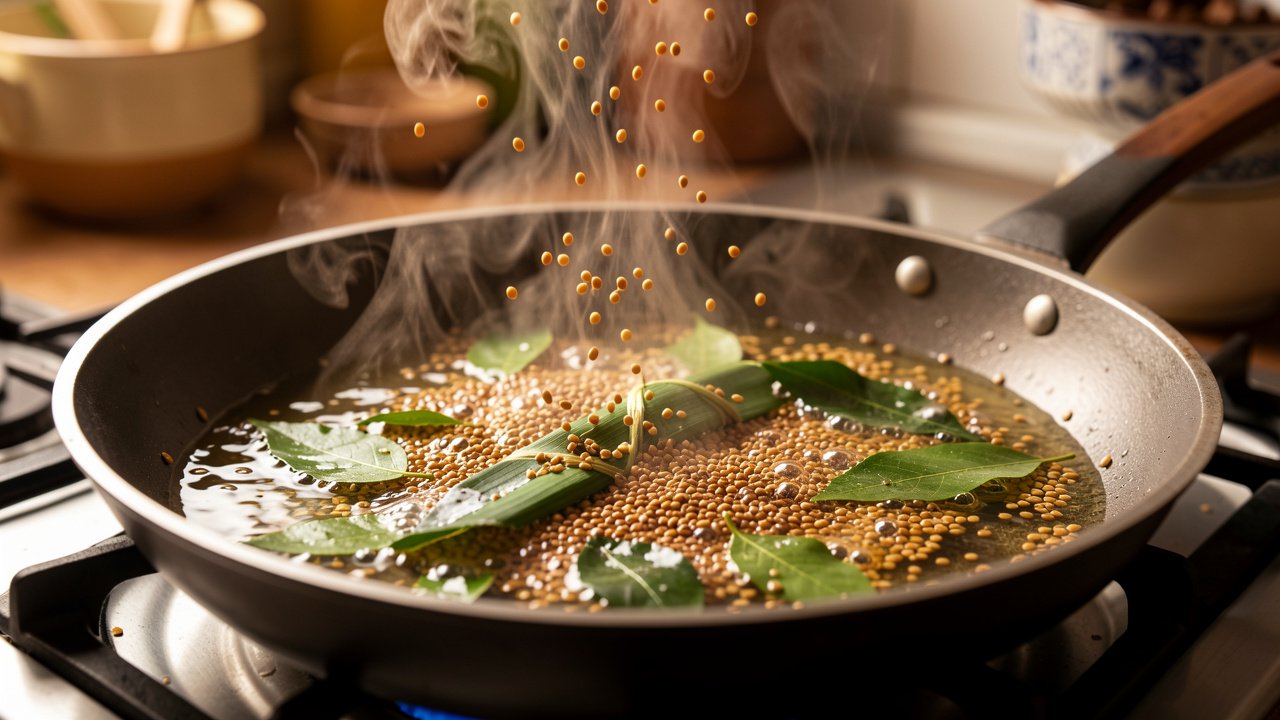
Heat the coconut oil in a wide pan over medium heat until it shimmers. Add the mustard seeds and wait about 30 seconds until they pop, then add the fenugreek, curry leaves, and knotted pandan and crackle 15 to 20 seconds until intensely fragrant. Curry leaves spit, so stand back. Do not let the fenugreek darken past golden or it turns bitter.
Soften the Onion and Garlic
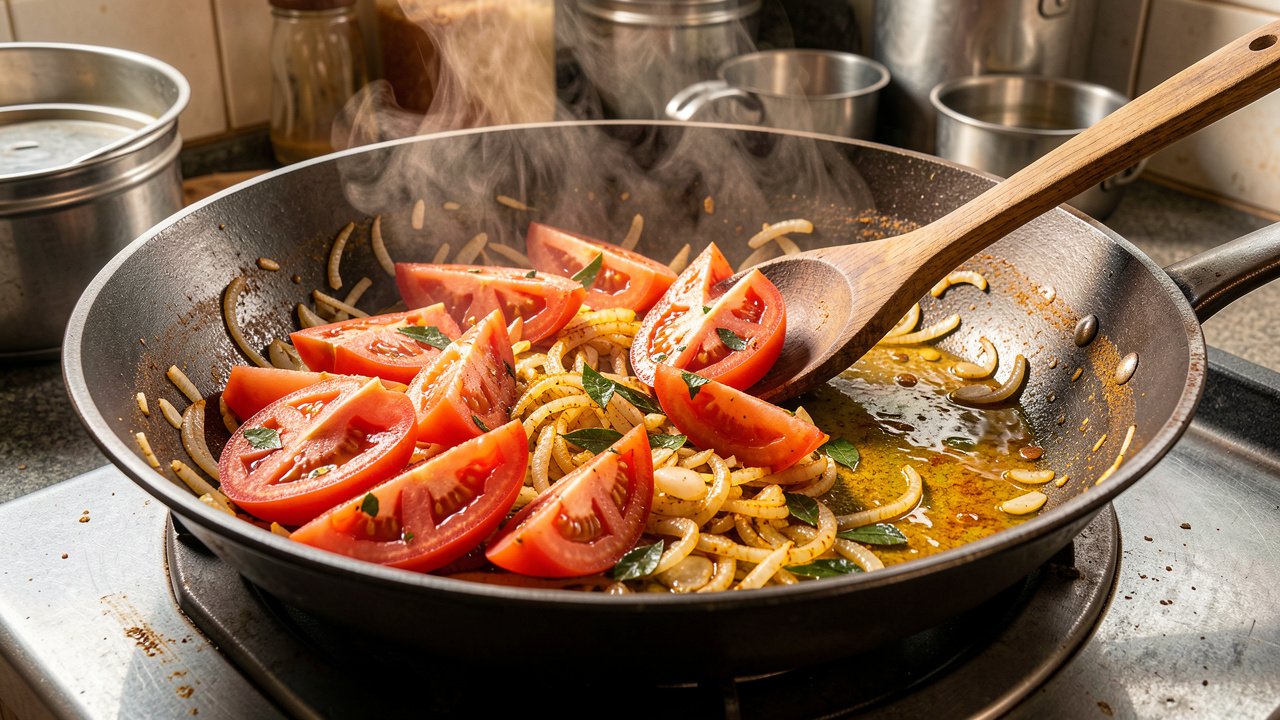
Add the sliced onion and slit green chili and cook 5 to 6 minutes until soft and translucent with golden edges. Add the garlic and cook 1 minute more, just until it smells sweet. Garlic burns fast in hot coconut oil, so keep it moving.
Bloom the Spices and Add the Tomatoes
Lower the heat and stir in the curry powder, turmeric, and chili powder, toasting them about 30 seconds until the raw dustiness turns nutty. Add the tomato wedges and salt, pour in the water, and stir gently once. Cover and cook 6 to 8 minutes, until the wedges have slumped slightly but still hold their shape.
Pour in the Coconut Milk
Pour in the coconut milk and swirl the pan rather than stirring, so the wedges stay whole. Bring it to the barest simmer, where only a few lazy bubbles break the surface, and hold it uncovered 6 to 8 minutes until the sauce thickens and turns soft orange. Never let it reach a rolling boil, which is when coconut milk splits.
Finish with Lime and Serve
Take the pan off the heat, squeeze in the lime, and adjust with salt until the sauce tastes bright rather than flat. Fish out the pandan knot, scatter the cilantro, and rest 5 minutes so the tomatoes drink up some sauce. Serve with rice, string hoppers, or roti.
Chef’s Tips From Real Kitchen Testing
Swirl the pan instead of stirring once the tomatoes go in. A spoon dragged through the wedges shears them apart.
Salt the tomatoes early, with the water. That juice becomes part of the sauce; tomatoes seasoned late taste separate from it.
If the surface is chattering, the coconut milk is too hot. Pull the pan half off the burner.
Rest it five minutes. The sauce thickens, the tomatoes absorb it, and the flavor settles.
Recipe Variations
Serving Suggestions
- Steamed white or red rice
- String hoppers or hoppers
- Coconut roti or pol roti
- Pol sambol and a green mallung
Nutrition Facts
| Nutrient | Amount per serving |
|---|---|
| Calories | 255 |
| Protein | 4 g |
| Carbohydrates | 16 g |
| Fat | 21 g |
| Saturated Fat | 17 g |
| Fiber | 4 g |
| Sugar | 8 g |
| Sodium | 610 mg |
Values are estimates and vary with the brands you use. They cover the curry only, not the rice or bread alongside.
Make-Ahead Tips
The wedges keep absorbing the sauce overnight and the spices settle into something rounder, so this reheats better than most tomato dishes. Cook it through step five, cool it uncovered, then refrigerate without the lime and cilantro and add those once it is hot again.
You can also make the tempering and onion base two days ahead, then add tomatoes and coconut milk at the last minute. That cuts day-of cooking to twelve minutes.
Storage, Freezing & Reheating
Common Mistakes to Avoid
Troubleshooting
Sauce split into grainy curds? It boiled. Off the heat, cool it two minutes, then whisk in two tablespoons of warm water in a thin stream.
Tomatoes fell apart? Too ripe or cooked too long. Reduce the sauce further and serve it as a thicker spooning curry.
Curry tastes flat? Salt first, lime second. Add a quarter teaspoon of salt, taste, then squeeze lime in small increments.
Too sour or too thin? A teaspoon of jaggery rounds sharp tomatoes; a tablespoon of desiccated coconut thickens a loose sauce.
Bitter aftertaste? The fenugreek went too dark. Add it only after the mustard seeds finish popping.
A Note on Sri Lankan Cooking
Sri Lankan curries get lumped in with Indian ones, but the pantry is different, and the clearest marker is curry powder. There are two. Unroasted curry powder is pale and aromatic, leaning on coriander, cumin, and fennel, and it is used for vegetables, seafood, and anything that should stay recognizable. Roasted curry powder is the same spices darkened in a dry pan until nearly black, reserved for deep meat curries.
Then the aromatics. Curry leaves are used fresh and by the sprig, not the pinch. Pandan, or rampe, is a broad green blade smelling faintly of new-mown grass and vanilla, knotted and thrown in whole to be fished out later. Neither has a real substitute, which is why Sri Lankan cooks abroad grow curry leaf on windowsills and keep pandan in the freezer.
Coconut is the third pillar, in more forms than most kitchens use: oil for the tempering, thick first-extract milk for richness, thin second-extract for simmering, scraped coconut for sambols. And the curry is mild on purpose, because it sits beside two or three others, a fiery pol sambol, and a mound of rice, where its job is to be the cooling one. For a spiced tomato bowl that stands alone, our creamy Indian tomato soup is built for that, and the wider collection of tomato recipes has more ideas.
Frequently Asked Questions
More Tomato Recipes to Try
Last updated: September 29, 2026