Taiwanese Recipes
Braised Halal Beef and Tomato Noodle Bowl
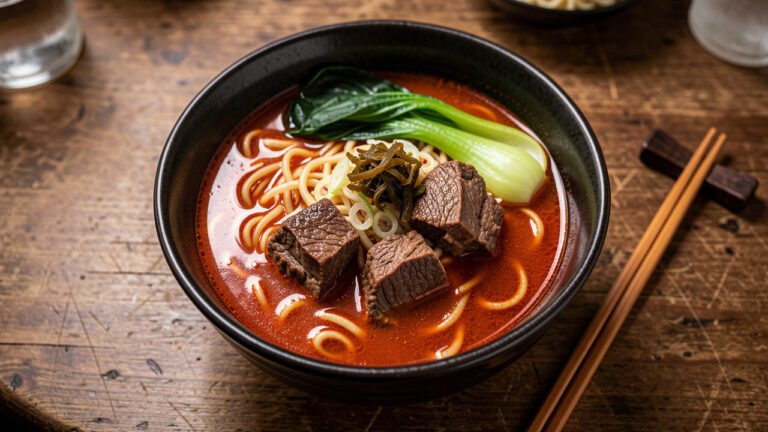
If there is one dish that Taiwan argues about, cooks over endlessly, and lines up for on cold nights, it is beef noodle soup. This tomato-forward version is the cozy, home-kitchen take: the tomatoes break down into the broth and soften the salty edge of the fermented bean paste, so every spoonful tastes rich but never harsh. It is the bowl I make when I want the house to smell like star anise for the whole afternoon.
The first time I rushed this soup, I pulled the beef out after forty-five minutes because it smelled ready. It was chewy and stubborn, and I learned my lesson: the braise is the recipe. Give it time and the beef shank turns silky, the connective tissue melts into body, and the broth deepens into something you will want to drink straight from the bowl.
Why This Tomato Beef Noodle Soup Works
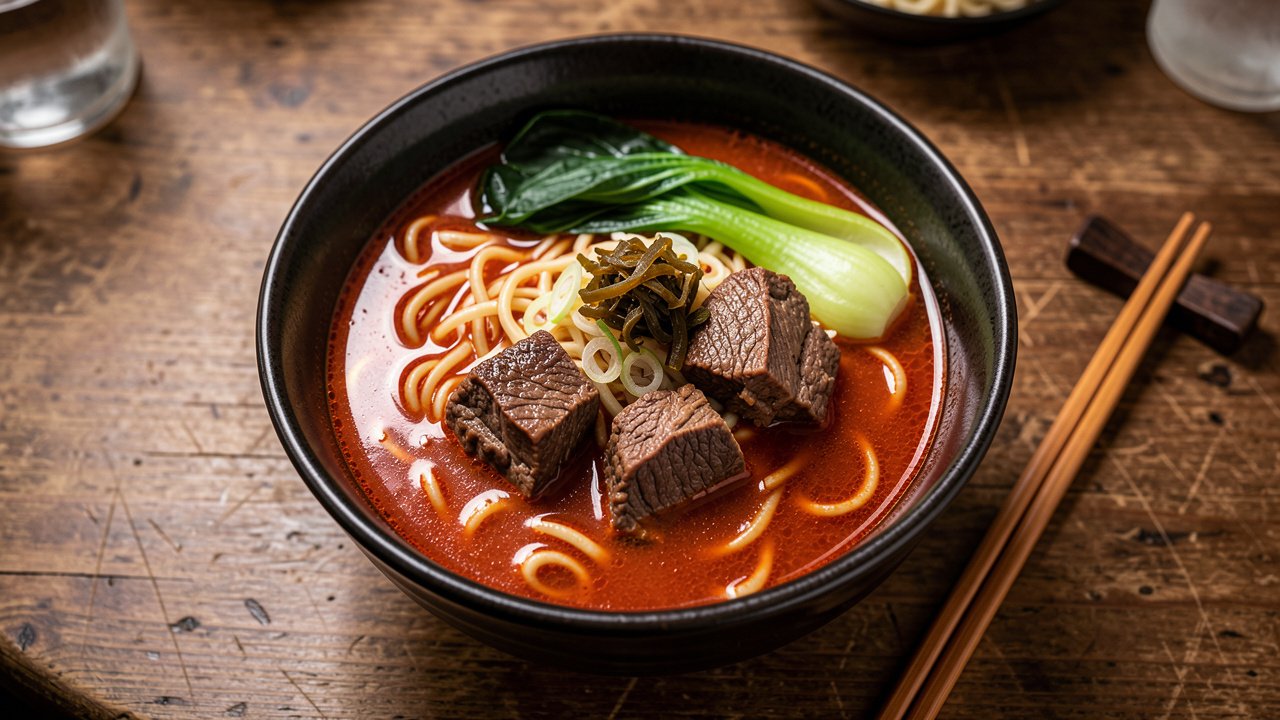
Great beef noodle soup is a balancing act between savory depth, gentle heat, and a hint of sweetness, and the tomatoes are what pull it all together. As they braise, they collapse into the broth and add natural sugars and a soft acidity that rounds off the salt of the soy sauce and the funk of the fermented bean paste. The result is a broth that tastes layered rather than one-note.
The beef shank is the other non-negotiable. It is a working muscle full of connective tissue, which is exactly what you want for a long braise. Over two to three low hours that collagen turns to gelatin, giving the broth a lush, lip-coating body and leaving the meat tender enough to break with a spoon. Lean cuts simply cannot do this, no matter how long you cook them.
Doubanjiang, the fermented chili bean paste, is the backbone flavor. A couple of spoonfuls fried in oil until the fat turns red releases a savory, gently spicy aroma that defines the dish. Paired with star anise and cinnamon, it gives the broth that unmistakable warm, spiced character you smell walking past a noodle shop.
Finally, the components stay separate until the last moment. Noodles are boiled on their own, the greens are blanched, and everything meets in the bowl. That keeps the noodles springy and the broth clear-tasting, instead of a starchy, cloudy pot where everything has cooked together into mush.
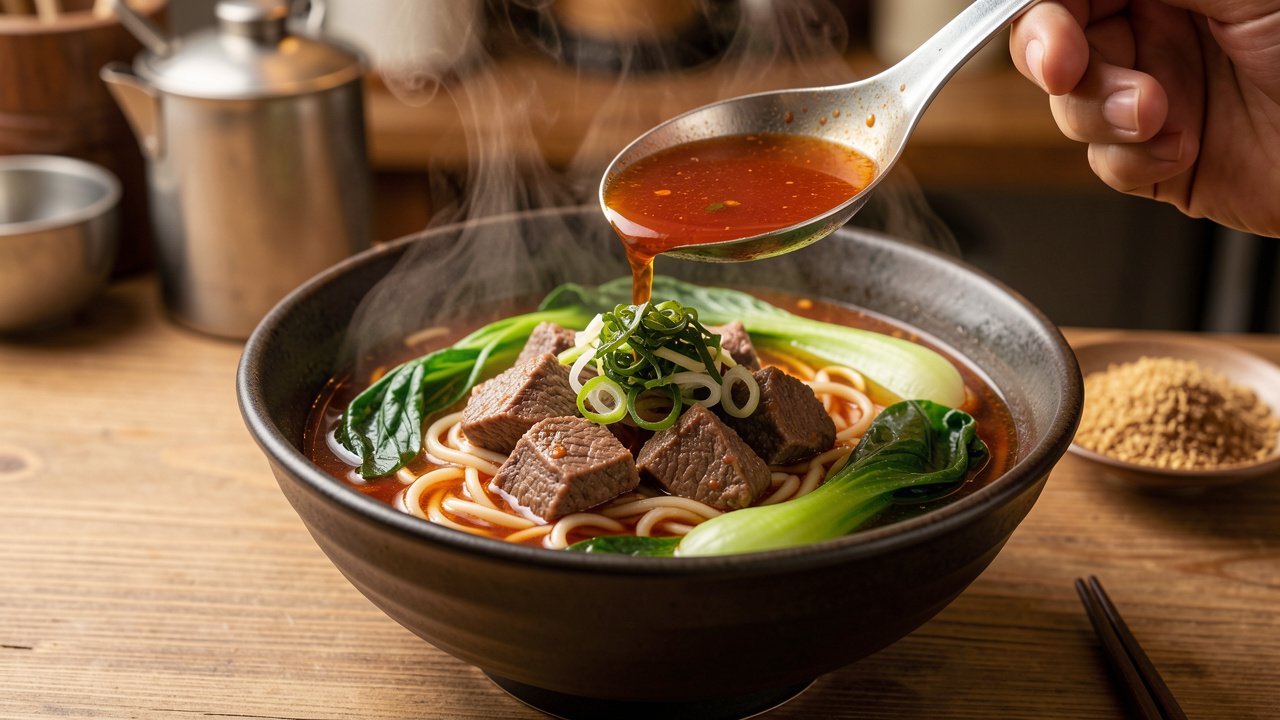
Pro observation: The broth is ready when the beef offers no resistance to a chopstick and the surface carries a thin sheen of red-tinted fat. That gloss is the doubanjiang and the rendered beef fat carrying flavor across the whole bowl.
Ingredients
Kitchen Measurement Converter
Quickly convert between common cooking measurements without leaving the recipe. Pick a category, enter a value, and the result updates instantly.
Ingredient Notes & Substitutions
Halal Beef Shank
Look for halal beef shank with visible connective tissue and a little marbling. Boneless shin or chuck works too. Avoid lean cuts, which stay tough. Cut into large two-inch chunks so they hold together through the long braise.
Tomatoes
Ripe, red tomatoes give the broth its sweetness and color. Out of season, one 14-ounce can of whole peeled tomatoes is more reliable than pale fresh ones. The tomato paste boosts depth and a richer red.
Doubanjiang
This fermented chili bean paste is the signature flavor. Brands vary in salt and heat, so start with two spoonfuls and adjust at the end. For a milder bowl, use a non-spicy fermented bean paste instead.
Wheat Noodles
Thick, chewy fresh wheat noodles are traditional and hold up best in hot broth. Knife-cut or udon-style noodles are great stand-ins. Cook them separately so they stay springy and never turn gummy in the pot.
Halal note: This recipe uses only halal beef and contains no other meat. The traditional splash of rice cooking liquid is omitted entirely; a little extra stock or water does the same job of loosening the braise without changing the flavor.
Equipment
- Heavy pot or Dutch oven
- Large pot for noodles
- Sharp knife and board
- Slotted spoon or spider
- Ladle
- Fine strainer (optional)
Before You Start
1. Blanch the beef first. A quick blanch in boiling water draws out the scum and gives you a cleaner, clearer broth. Do not skip it; it is the difference between a murky pot and a bright one.
2. Give yourself time. The braise needs two to three unhurried hours. It is almost entirely hands-off, but it cannot be rushed, so start early in the afternoon for an evening dinner.
3. Cook noodles and greens last. Boil the noodles and blanch the bok choy only when the broth is done and the bowls are ready, so nothing sits and softens.
Step-by-Step Instructions
Blanch the Beef
Put the beef chunks in a pot, cover with cold water, and bring to a boil over high heat. Let it bubble for 3 to 4 minutes, until a grey foam rises to the surface. Drain the beef in a colander and rinse the pieces under warm running water to wash off the scum. This simple step is the secret to a clean, clear broth.
Fry the Aromatics and Paste
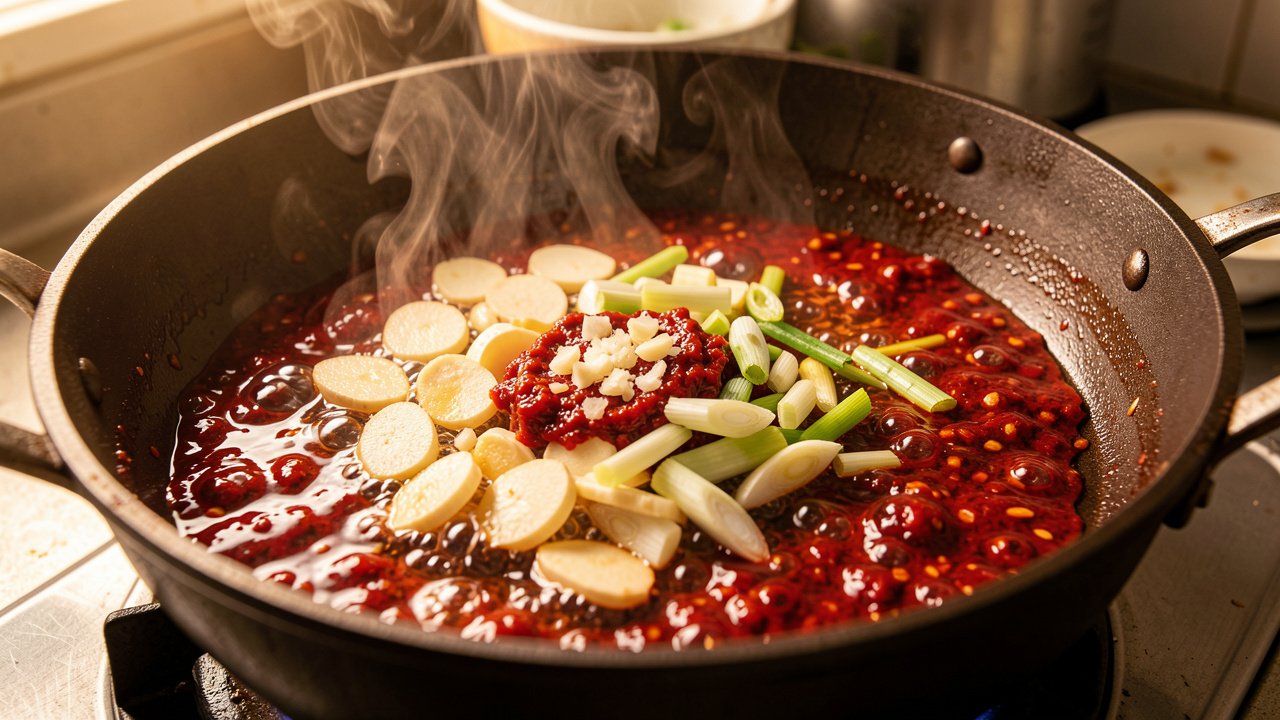
Wipe the pot dry, add the cooking oil, and warm it over medium heat. Add the ginger, garlic, and scallion and fry for about a minute until fragrant. Stir in the doubanjiang and tomato paste and cook for 2 minutes, stirring, until the oil takes on a deep red color. This blooming step is where the broth gets its backbone.
Add Tomatoes and Beef
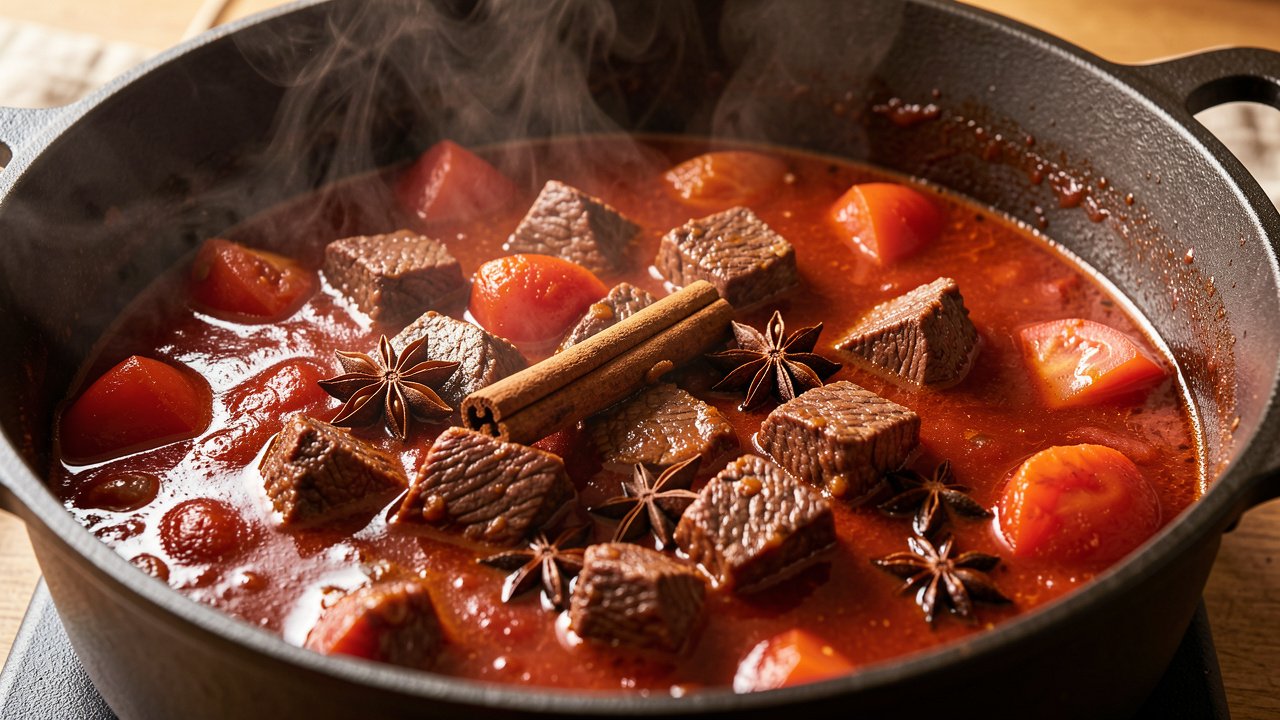
Add the quartered fresh tomatoes and cook for 3 to 4 minutes, pressing them with a spoon until they begin to slump and release their juice. Return the blanched beef to the pot and stir to coat it in the red, aromatic base. Add the light soy sauce, dark soy sauce, rock sugar, star anise, and cinnamon stick, and toss everything together for a minute.
Braise Low and Slow
Pour in the beef stock or water until the beef is just covered. Bring to a boil, then lower the heat to the gentlest simmer, cover, and cook for 2 to 2 and a half hours. Stir occasionally and add a splash of water if the level drops too far. The beef is ready when a chopstick slides through it with no resistance and the broth has turned a deep red-brown.
Cook the Noodles and Greens
When the beef is nearly done, bring a large pot of water to a rolling boil. Blanch the bok choy for 1 minute until just tender and lift it out. Cook the wheat noodles according to the package until springy but not soft, then drain well. Cook the noodles in batches if your pot is small, so they have room to move and cook evenly.
Assemble the Bowls
Fish out the star anise and cinnamon stick from the broth. Divide the noodles among four deep bowls, ladle over plenty of beef and hot broth, and tuck in the bok choy. Top each bowl with a spoonful of chopped pickled mustard greens and a scatter of fresh scallion. Serve at once, while the noodles are springy and the broth is steaming.
Chef’s Tips From Real Kitchen Testing
Never let the braise reach a hard boil. A rolling boil toughens the beef and clouds the broth. Keep it at a lazy simmer with just a few bubbles breaking the surface.
Fry the doubanjiang until the oil turns visibly red before any liquid goes in. Skipping this leaves the broth flat and raw-tasting no matter how long it cooks.
Taste for salt only at the very end. The doubanjiang and soy sauce concentrate as the broth reduces, so a broth that seems light early can turn perfectly seasoned by the finish.
For beef doneness, trust texture over the clock. It is ready when a chopstick pushes through a chunk with no resistance; if it still grips, give it another 20 to 30 minutes.
Recipe Variations
Serving Suggestions
- Extra pickled mustard greens on the side
- A jammy soy-marinated egg per bowl
- A spoon of chili crisp for the table
- Blanched greens like choy sum or spinach
Nutrition Facts
| Nutrient | Amount per serving |
|---|---|
| Calories | 520 |
| Protein | 38 g |
| Carbohydrates | 52 g |
| Fat | 16 g |
| Saturated Fat | 5 g |
| Fiber | 5 g |
| Sugar | 9 g |
| Sodium | 1400 mg |
Values are estimates per serving and vary with the exact ingredients and brands you use.
Make-Ahead Tips
This is a dream make-ahead dish, because the broth genuinely improves overnight. Braise the beef and broth a day in advance, cool, and refrigerate. The flavors settle and deepen, and any surface fat firms up so you can lift off as much or as little as you like before reheating. Always keep the noodles, greens, and pickled mustard greens separate and cook or add them fresh, right before serving.
Storage, Freezing & Reheating
Common Mistakes to Avoid
Troubleshooting
Broth tastes thin or bland? Simmer uncovered for 15 to 20 minutes to concentrate it, then adjust with a little more soy sauce or a small extra spoon of doubanjiang.
Beef still chewy? It simply needs more time. Return it to a low simmer and keep going in 30-minute stretches until a chopstick slides through with no resistance.
Broth too salty? Add a splash of water or a couple of extra tomato quarters and simmer a few minutes to soften the edge and balance the seasoning.
A Note on Taiwanese Cooking
Beef noodle soup is close to a national obsession in Taiwan. Taipei even holds an annual festival crowning the city’s best bowl, and cooks defend their favorite noodle shops with real passion. The dish traces back to the mid-twentieth century, when flavors from mainland regional cooking took root and evolved into something distinctly Taiwanese, built on doubanjiang, soy sauce, and warm spices like star anise and cinnamon.
The tomato version is the softer, homier cousin of the fiery classic. Adding tomatoes brings a natural sweetness and a light acidity that mellow the salty, fermented depth of the bean paste, so the broth tastes generous and comforting rather than sharp. It is exactly the kind of bowl a Taiwanese home cook makes to feed a family on a cool evening. If you love a spiced tomato bowl, our creamy Indian tomato soup shares the same warming spirit, and you can find more ideas in our full collection of tomato recipes.
Frequently Asked Questions
More Tomato Recipes to Try
Last updated: September 29, 2026