
Cambodian Recipes
Cambodian Sweet and Sour Tomato-Tamarind Soup
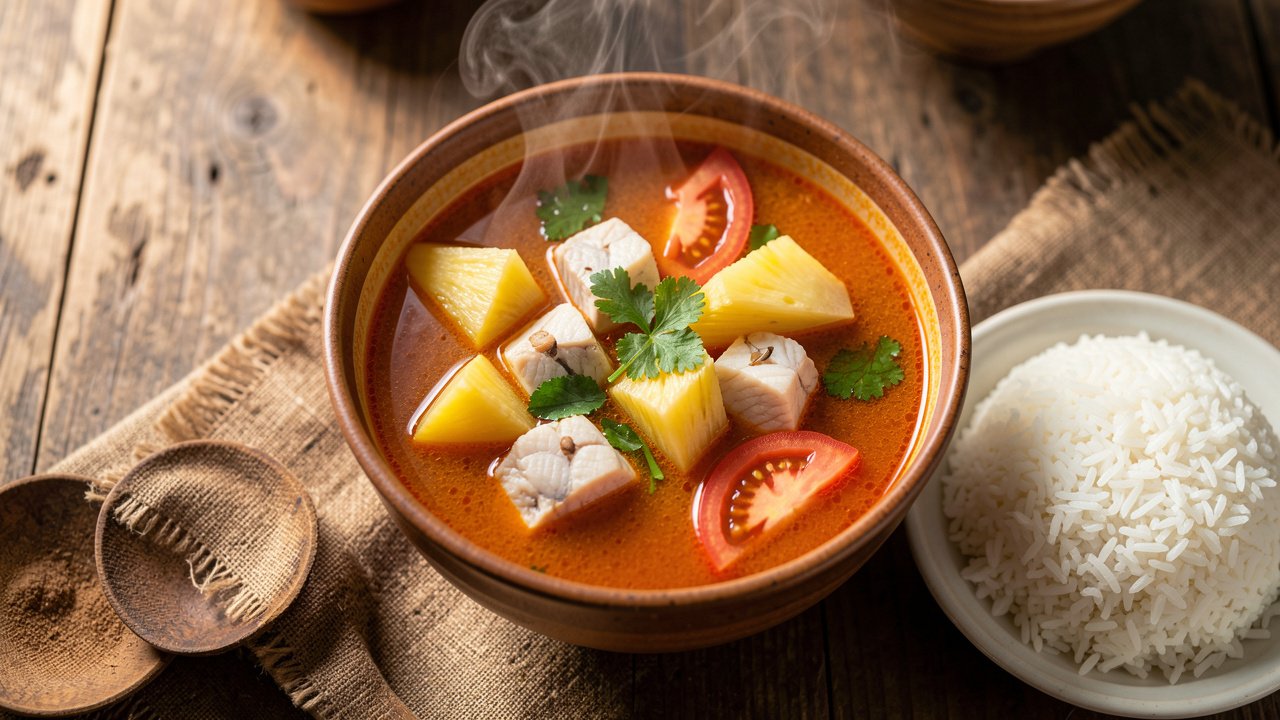
Samlar machu is the soup Cambodian cooks reach for when a meal needs to feel alive. The name simply means sour soup, and that sourness, from tamarind and ripe tomatoes, is what makes every spoonful crackle. What keeps it from being merely tart is the balance around it: sweet pineapple, savory fish sauce, a whisper of palm sugar, and the deep herbal hum of a pounded kroeung paste.
The first time I made it, I dumped everything in at once and ended up with a muddy, aggressively sour broth. The version below fixes that by building the soup in layers, tasting as you go, so the sweet, sour, and savory notes land in harmony rather than fighting each other.
Why This Samlar Machu Works
Cambodian sour soups live or die on balance, and this one is engineered to keep the sour, sweet, and savory notes in tune. Tamarind and tomatoes carry the tang, pineapple and a little palm sugar round the edges, and fish sauce anchors it all with deep savory backbone. No single element is allowed to shout over the others.
The quiet workhorse is the kroeung, the pounded aromatic paste of lemongrass, galangal, garlic, fresh turmeric, and kaffir lime. Frying it briefly before the broth goes in wakes up its oils and gives the soup a fragrant base you simply cannot get by tossing whole aromatics into water. It takes minutes but changes the entire character of the pot.
Building the broth in stages is the other secret. The tomatoes go in early so they soften and lend body, the fish goes in near the end so it stays tender, and the delicate herbs land last so they stay fresh and green. Season, taste, adjust, taste again, that rhythm is how Cambodian cooks nail the sour-sweet line every time.
It is also generous and forgiving. The same fragrant broth welcomes halal white fish, chicken, or a vegetable-and-tofu version, so once the method is in your hands you can turn a short list of ingredients into a bright, restorative bowl any night of the week.
Pro observation: Taste the broth before the fish goes in and again at the end. Sourness reads stronger when the soup is very hot, so aim for a balance that tastes just slightly under-sour off the stove; it settles into perfect as it cools a touch in the bowl.
Ingredients
Kitchen Measurement Converter
Quickly convert between common cooking measurements without leaving the recipe. Pick a category, enter a value, and the result updates instantly.
Ingredient Notes & Substitutions
The Kroeung Paste
Lemongrass, galangal, garlic, fresh turmeric, and kaffir lime pound into the aromatic heart of the soup. If galangal is hard to find, use a smaller amount of fresh ginger; it is not identical, but it keeps the broth lively.
Tomatoes & Pineapple
Ripe red tomatoes give the broth color, body, and gentle tartness. Fresh pineapple brings the sweet counterweight; canned pineapple in juice works in a pinch, but drain it and hold back the palm sugar so it does not turn cloying.
Fish or Chicken
Use firm halal white fish such as tilapia, snakehead, catfish, or basa, cut into large chunks so they hold together. Boneless chicken thigh works beautifully too; just simmer it a few minutes longer until cooked through.
Tamarind & Fish Sauce
Tamarind paste is the signature sour note. Add it gradually and taste as you go. Fish sauce brings the salty, savory depth; start with three tablespoons and adjust, since brands vary widely in saltiness.
Equipment
- Large soup pot
- Mortar and pestle or blender
- Sharp knife and board
- Ladle
- Fine grater
- Small bowl for kroeung
Before You Start
1. Pound the kroeung first. The paste takes a few minutes in a mortar or a quick whirl in a blender. Have it ready before you heat the pot so the aromatics do not sit and dry out.
2. Cut the fish into large chunks. Big pieces hold their shape and stay tender in the simmering broth, while small pieces overcook and fall apart. Cut them last and keep them cold until the broth is ready.
3. Have the herbs washed and chopped. Rice paddy herb and sawtooth go in at the very end, so prep them early and set them aside so nothing wilts on the counter.
Step-by-Step Instructions
Pound the Kroeung Paste
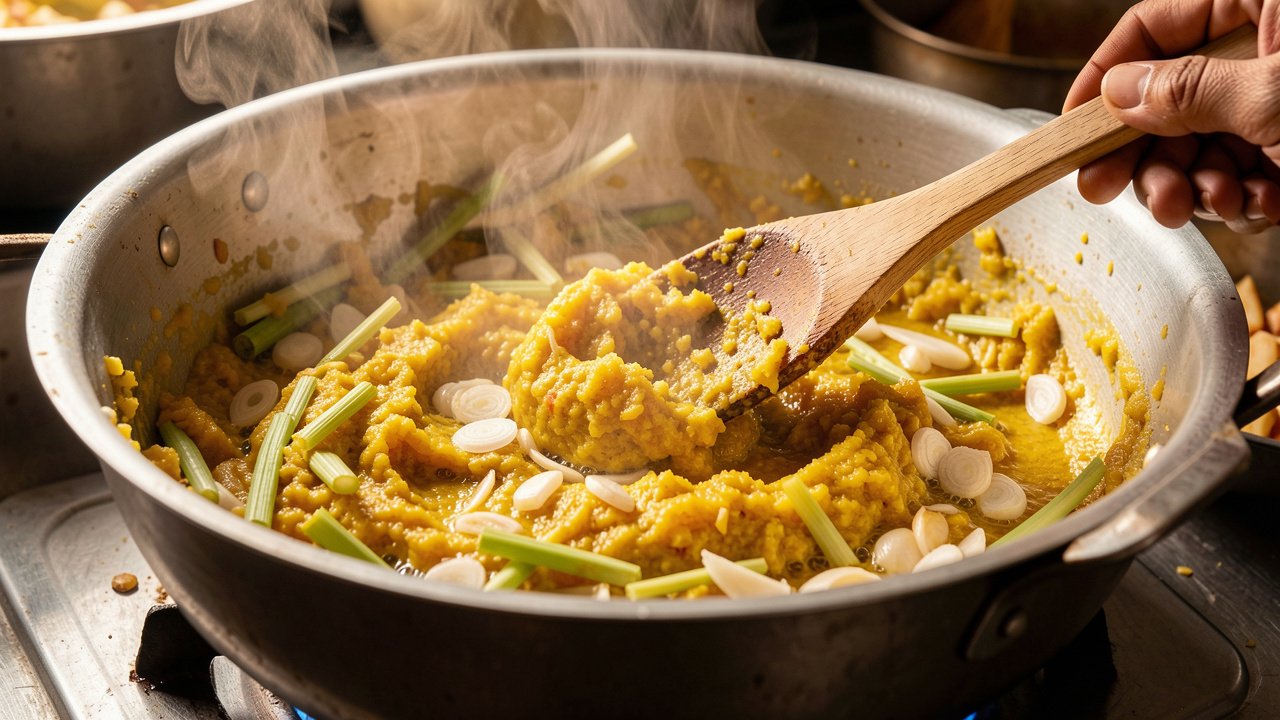
Trim the lemongrass to the tender lower stalks and slice thinly. Pound the lemongrass, galangal, garlic, fresh turmeric, and two of the kaffir lime leaves in a mortar into a coarse, fragrant paste. If you prefer, pulse everything in a small blender with a spoonful of water. You are aiming for a rough paste, not a smooth puree.
Fry the Aromatics
Heat the cooking oil in a large pot over medium heat. Add the sliced shallots and cook 2 to 3 minutes until softened. Stir in the kroeung paste and fry for 2 minutes, until the raw edge lifts and the kitchen fills with a bright lemongrass and turmeric aroma. Keep the heat moderate so the paste does not scorch.
Build the Broth
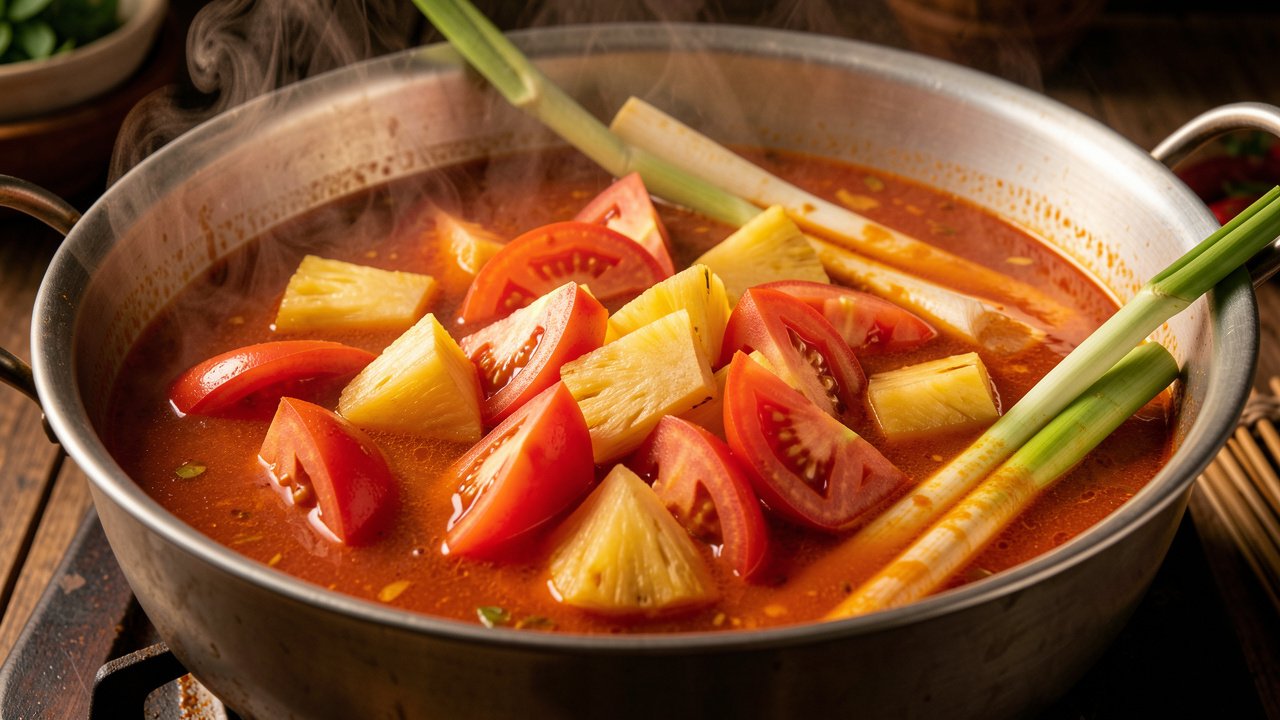
Pour in the water or light stock and add the remaining kaffir lime leaves and the bruised lemongrass stalks. Bring to a gentle boil, then lower to a steady simmer for 8 to 10 minutes so the broth takes on the aromatics. Stir in the tamarind paste, fish sauce, palm sugar, and salt, then taste. Adjust in small steps until it reads pleasantly sour, savory, and lightly sweet.
Add Tomatoes and Pineapple
Slide in the tomato wedges and pineapple chunks and simmer 5 to 6 minutes, until the tomatoes soften and release their juices and the pineapple turns tender. The broth will deepen to a warm red-gold. Taste again here; the tomatoes add tartness and the pineapple adds sweetness, so you may want to nudge the tamarind or palm sugar to keep the balance.
Poach the Fish Gently
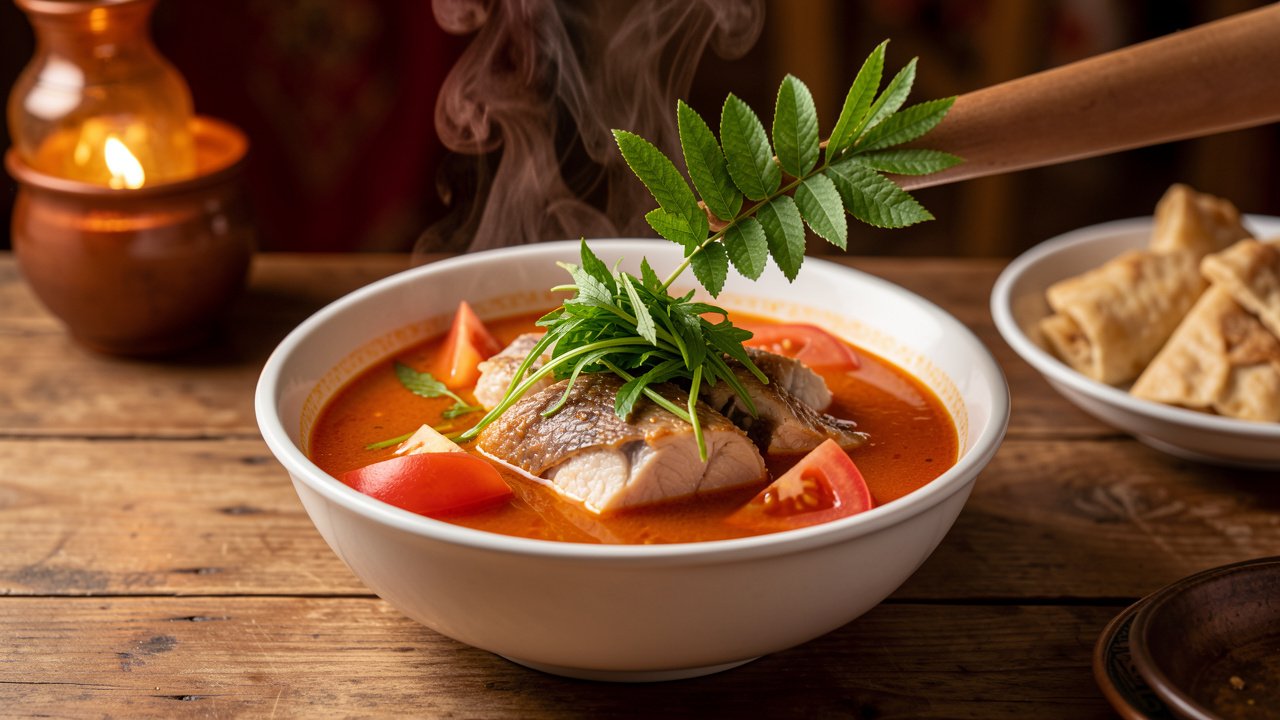
Lower the heat so the broth is barely simmering, then slide in the fish chunks. Poach gently for 5 to 7 minutes, without stirring hard, until the fish turns opaque all the way through and flakes easily when nudged with a spoon. Fish is done at an internal temperature of 145 F (63 C). Simmering too vigorously will break the pieces apart, so keep it gentle.
Finish with Herbs and Serve
Turn off the heat and stir in the bean sprouts, rice paddy herb, and sawtooth herb. The residual heat is enough to wilt them while keeping them fresh and green; adding them earlier dulls their aroma. Taste one last time and adjust with a little more fish sauce or tamarind. Ladle into bowls and serve hot with steamed jasmine rice.
Chef’s Tips From Real Kitchen Testing
Add tamarind and palm sugar in small increments and taste after each. Sourness and sweetness are personal, and it is far easier to build the balance up than to rescue a broth that has gone too sour.
Poach the fish at the barest simmer. A gentle heat keeps the chunks whole and silky, while a hard boil shreds them and clouds the broth.
Save the tender herbs for the very end. Rice paddy herb and sawtooth are all about fresh aroma, and stirring them in off the heat keeps that fragrance intact.
Recipe Variations
Serving Suggestions
- Steamed jasmine rice to soak up the broth
- A saucer of sliced fresh chili and lime
- Extra bean sprouts and herbs on the side
- A crisp cucumber and shallot salad
Nutrition Facts
| Nutrient | Amount per serving |
|---|---|
| Calories | 210 |
| Protein | 24 g |
| Carbohydrates | 15 g |
| Fat | 6 g |
| Saturated Fat | 1.5 g |
| Fiber | 3 g |
| Sugar | 9 g |
| Sodium | 890 mg |
Values are estimates per serving and vary with the exact ingredients and brands you use.
Make-Ahead Tips
The broth is the make-ahead star here. Build it through the tamarind, fish sauce, and palm sugar stage, then cool and refrigerate for up to two days; the flavors deepen and the sourness mellows nicely. When you are ready to eat, bring the broth back to a gentle simmer, add the tomatoes and pineapple, then poach the fish and stir in the fresh herbs. Cooking the fish and herbs fresh keeps them tender and vivid rather than reheated.
Storage, Freezing & Reheating
Common Mistakes to Avoid
Troubleshooting
Broth tastes flat? It usually needs more fish sauce for savory depth or a touch more tamarind to brighten it. Add a little at a time and taste.
Too sour? Balance it with a bit more palm sugar, a few extra pineapple chunks, or a splash more broth to soften the edge.
Fish fell apart? The broth was simmering too hard when the fish went in. Next time keep it at a bare simmer and slide the chunks in gently without stirring.
A Note on Cambodian Cooking
Cambodian, or Khmer, cooking is built on layers of fresh aromatics rather than heavy heat, and the pounded kroeung paste sits at its center. That paste, usually lemongrass, galangal, garlic, turmeric, and kaffir lime, flavors countless dishes and gives samlar machu its distinctive perfume. Samlar machu belongs to a whole family of Cambodian sour soups, each leaning on a different souring agent: tamarind and tomato here, sometimes green mango, lime, or fermented fish elsewhere. The pairing of tamarind and pineapple is what makes this version sing, weaving sour and sweet through a savory broth. If you enjoy bright, spiced tomato bowls, our creamy Indian tomato soup shares the same comforting spirit, and you can browse more ideas in our full collection of tomato recipes.
Frequently Asked Questions
More Tomato Recipes to Try
Last updated: September 29, 2026