French Recipes
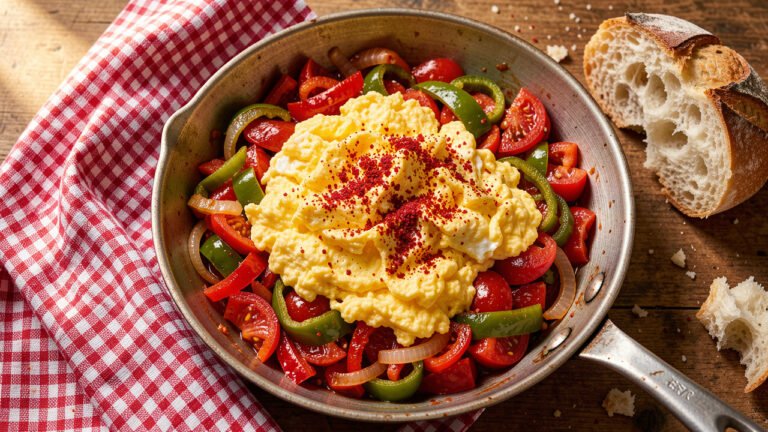
Basque Peppers, Tomato and Eggs
Piperade is one of those dishes that looks humble on paper and tastes like a small holiday. It is really just peppers, onions, and tomatoes given time to melt into each other, then loosened with egg. But the patience is the whole point. Rush any part of it and you end up with crunchy peppers in watery tomato; give it the slow half hour it wants and the vegetables turn sweet, glossy, and almost spoonable.
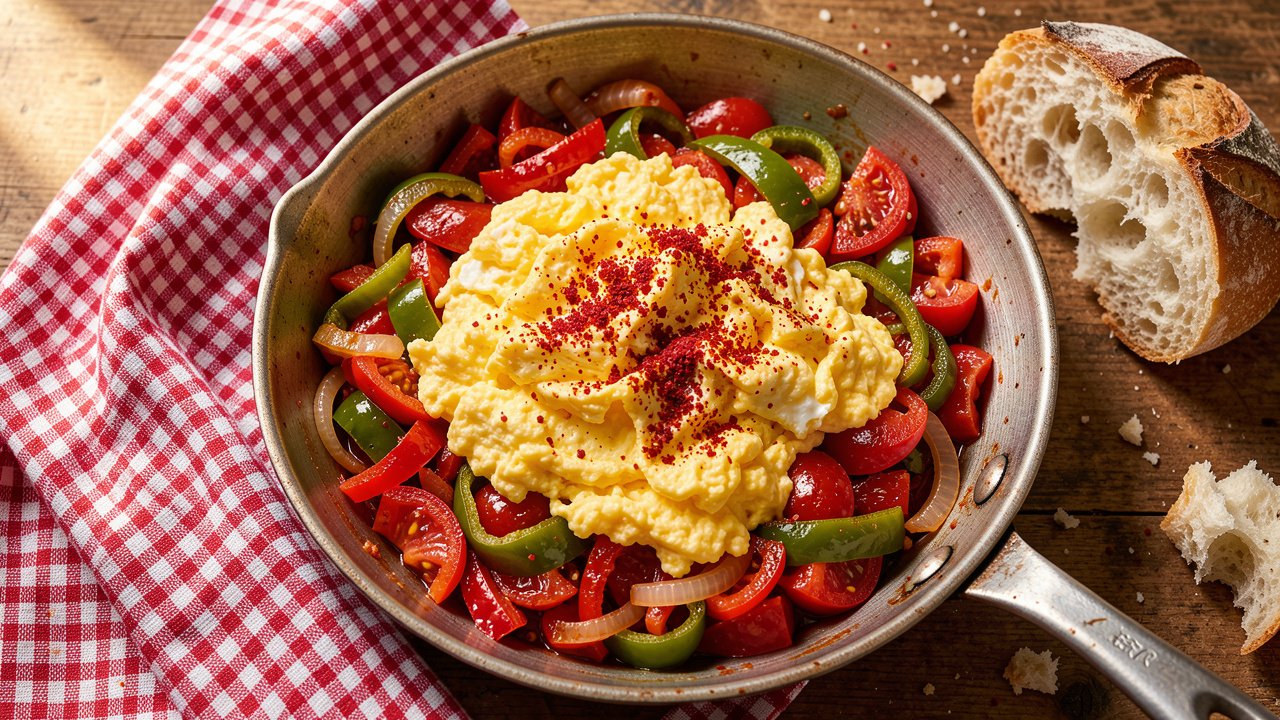
The name comes from the Basque word for pepper, and you can taste why. This is a dish built around the sweetness of green peppers and the gentle, fruity warmth of piment d’Espelette. The eggs come at the very end, stirred through just until they set into soft curds, so every forkful is part vegetable stew and part tender scramble. I like it best straight from the pan with a torn piece of bread.
Why This Piperade Works
Piperade is proof that a short shopping list can carry a lot of flavor when you cook it with intention. There is nothing to hide behind here, so each of the three main vegetables gets the time it needs. The onions go in first and cook until soft and sweet, the peppers follow and are stewed until they lose every trace of crunch, and only then do the tomatoes join to reduce into a thick, savory base.
The seasoning is gentle but distinctive. Piment d’Espelette is not a fiery chili; it is fruity, mildly warm, and a little smoky, and it defines the whole dish. Combined with garlic and slow-cooked sweetness, it gives piperade that unmistakable Basque character without ever tipping into heat that overwhelms the eggs.
The eggs are the final, careful step. They are folded through the warm vegetables off high heat, so they stay loose and custardy rather than dry. That contrast between the jammy pepper base and the soft egg is exactly what makes a good piperade feel comforting instead of heavy.
It is also flexible by nature. You can stop before the eggs and use the pepper-tomato base as a sauce or a side, bake whole eggs on top for a firmer brunch, or lean harder into the Espelette if you like more warmth. Once you know the base, it becomes a weeknight habit rather than a special occasion.
Pro observation: The vegetable base is ready for the eggs when a spoon dragged across the pan leaves a brief clear trail before the mixture closes back over it. That means the excess moisture has cooked off and the eggs will not turn the pan watery.
Ingredients
Kitchen Measurement Converter
Quickly convert between common cooking measurements without leaving the recipe. Pick a category, enter a value, and the result updates instantly.
Ingredient Notes & Substitutions
Green Peppers
Sweet green bell peppers are the classic choice and give piperade its gentle, grassy sweetness. A mix of green and red peppers is also traditional and adds color, so feel free to swap one green pepper for a red one.
Tomatoes
Ripe, red summer tomatoes give the best flavor. Peel them if you can, since the skins can curl into tough strips. Out of season, one 28-ounce can of good chopped tomatoes works beautifully and is often more reliable.
Piment d’Espelette
This mild, fruity Basque chili is the signature seasoning. If you cannot find it, use a blend of sweet paprika with a small pinch of cayenne to mimic its gentle warmth without turning the dish sharp.
Eggs
Use the freshest eggs you can and beat them only lightly, just enough to break the yolks. They should still show a little streak of white and yolk when they hit the pan, which keeps the finished scramble tender.
Equipment
- Wide, heavy skillet or saute pan
- Wooden spoon or spatula
- Sharp knife and board
- Bowl for beating eggs
- Measuring spoons
- Lid for the pan
Before You Start
1. Slice everything thin and even. Thin, uniform slices of onion and pepper soften at the same rate, so nothing stays crunchy while the rest turns to mush.
2. Peel the tomatoes if you have time. A quick score and a dip in hot water loosens the skins, which otherwise separate into chewy ribbons in the finished dish.
3. Beat the eggs last. Crack and lightly beat the eggs only when the vegetable base is nearly done, so they are ready the moment the pan is.
Step-by-Step Instructions
Prep the Vegetables
Thinly slice the onions and the green peppers, and mince the garlic. Peel and chop the tomatoes, or drain a can of chopped tomatoes if using. Keep the vegetables in separate piles so you can add them in stages. Have the piment d’Espelette, salt, sugar, and bay leaf measured and within reach of the stove.
Soften the Onions
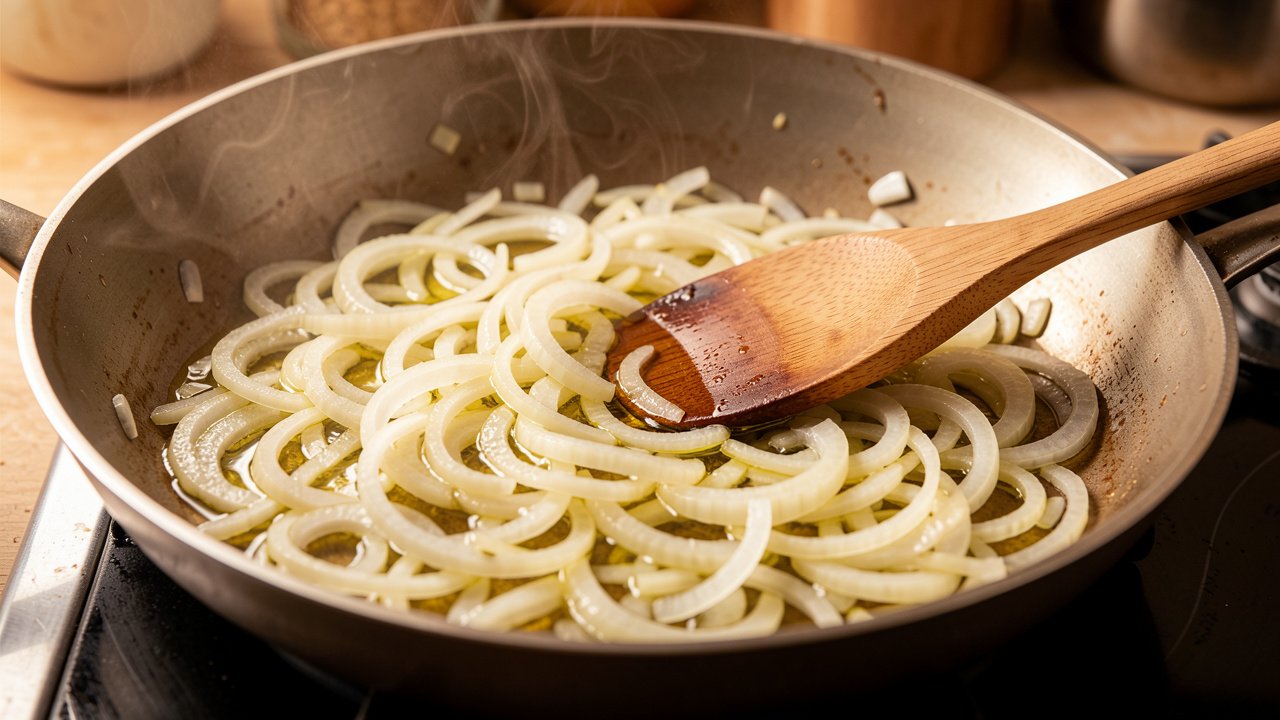
Warm the olive oil in a wide pan over medium-low heat. Add the sliced onions with a small pinch of salt and cook gently for 8 to 10 minutes, stirring now and then, until soft, translucent, and just beginning to turn golden. Keep the heat low so they sweat rather than brown; this is where the base sweetness comes from.
Stew the Peppers
Add the sliced green peppers and stir to coat them in the oil. Cover the pan and cook for 12 to 15 minutes over medium-low heat, stirring every few minutes, until the peppers are completely soft and floppy with no crunch left. This slow stewing is the step most people rush, and it is the difference between silky piperade and raw peppers in sauce. Stir in the garlic for the last minute.
Simmer the Tomatoes
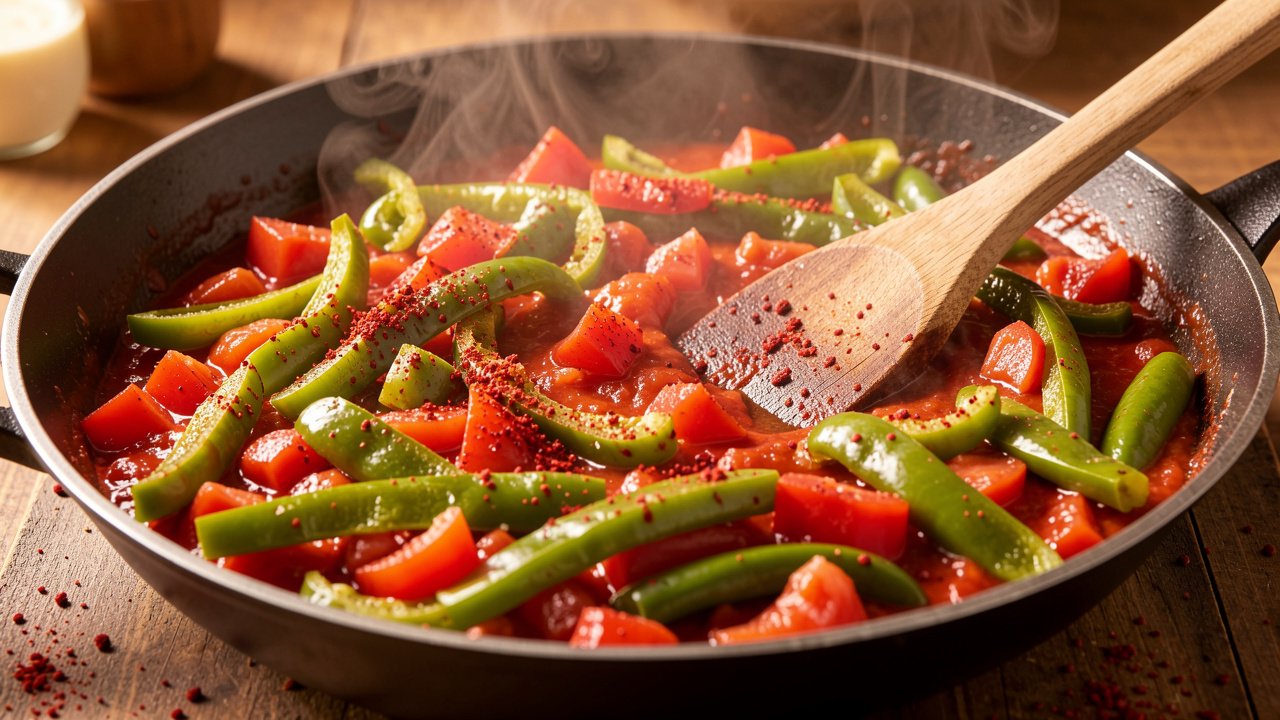
Stir in the chopped tomatoes, piment d’Espelette, sugar, salt, black pepper, and the bay leaf. Cook uncovered for 15 to 20 minutes, stirring occasionally, until the tomatoes break down and most of their liquid cooks away. You want a thick, glossy base, not a watery one, so let it reduce until a spoon leaves a brief trail across the pan. Remove and discard the bay leaf.
Taste and Adjust
Taste the base and adjust the seasoning. It should be savory and gently warm from the Espelette, with a whisper of sweetness balancing the tomatoes. Add a little more salt or a pinch more chili if you like. If the mixture still looks loose, cook it a couple of minutes longer, since any extra liquid now will thin out the eggs later.
Fold in the Eggs
Lower the heat to its gentlest setting. Pour the lightly beaten eggs over the warm vegetables and let them sit for a few seconds, then fold slowly with a spatula, drawing the setting egg through the peppers. Keep the motion gentle and stop while the eggs are still soft and glossy, as they will finish setting off the heat. Scatter the parsley over the top and serve straight away with crusty bread.

Chef’s Tips From Real Kitchen Testing
Give the peppers more time than you think they need. Soft, floppy peppers are the soul of piperade; if they still snap, the whole dish tastes underdone.
Take the pan off the heat while the eggs still look a touch too soft. Residual heat keeps cooking them, and a few extra seconds is the line between silky and rubbery.
Reduce the tomatoes fully before the eggs go in. A dry, jammy base holds the eggs; a wet one weeps liquid and leaves you with a soupy pan.
Recipe Variations
Serving Suggestions
- Thick slices of warm, crusty country bread
- A green salad with a sharp vinaigrette
- Buttery boiled or roasted potatoes
- An extra dusting of piment d’Espelette
Nutrition Facts
| Nutrient | Amount per serving |
|---|---|
| Calories | 290 |
| Protein | 14 g |
| Carbohydrates | 16 g |
| Fat | 19 g |
| Saturated Fat | 4.5 g |
| Fiber | 4 g |
| Sugar | 9 g |
| Sodium | 640 mg |
Values are estimates per serving and vary with the exact ingredients and brands you use.
Make-Ahead Tips
The pepper and tomato base is the perfect make-ahead component, and it actually improves after a night in the fridge as the flavors settle. Cook the base right up to the point before the eggs, cool it, and refrigerate. When you are ready to eat, warm the base gently in a pan, then fold in freshly beaten eggs at the last moment. The eggs are always best cooked to order, so add them fresh rather than reheating a finished piperade.
Storage, Freezing & Reheating
Common Mistakes to Avoid
Troubleshooting
Peppers still firm? They needed longer. Cover the pan and keep stewing on low until they are completely soft before the tomatoes reduce.
Eggs turned dry? They cooked too long or too hot. Next time lower the heat and pull the pan off while the eggs still look slightly underset.
Piperade too watery? The tomato base did not reduce enough. Tip the pan and simmer off the extra liquid before folding the eggs back through.
A Note on Basque Cooking
The Basque Country straddles the border of southwest France and northern Spain, and its cooking leans on a handful of ingredients used with real care: sweet peppers, garlic, tomatoes, good oil, and above all piment d’Espelette, the mild chili grown around the village of Espelette and strung up to dry in bright red ropes along house fronts each autumn. Piperade is one of the region’s defining dishes, built on that same pepper-and-tomato base that shows up again and again in Basque kitchens. Even the colors feel local: the red of the tomato and chili, the green of the peppers, and the white of the eggs echo the red, green, and white you see on the region’s flags and shutters. If you love this style of gentle, vegetable-forward cooking, browse more of our tomato recipes, or try a bright, fresh tomato salsa for a livelier take on peppers and tomatoes.
Frequently Asked Questions
More Tomato Recipes to Try
Last updated: September 29, 2026