Italian Recipes
Rosy Weeknight Pasta
Last updated: September 29, 2026
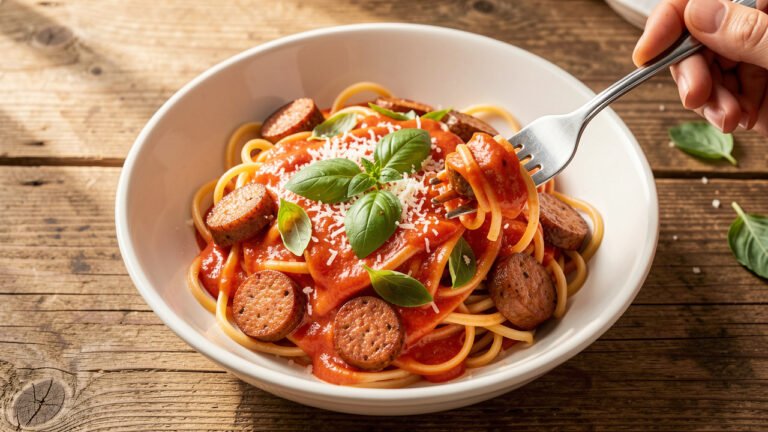
This is the pasta I make when I want something that tastes slow-cooked but fits inside a weeknight. The browned sausage gives the sauce its backbone, and a small pour of cream softens the tomato acidity without burying it. The trick I learned the hard way is to keep the cream at a bare simmer and let the starchy pasta water do the real work of pulling the sauce onto the noodles.
Why This Tomato Cream Sauce Works
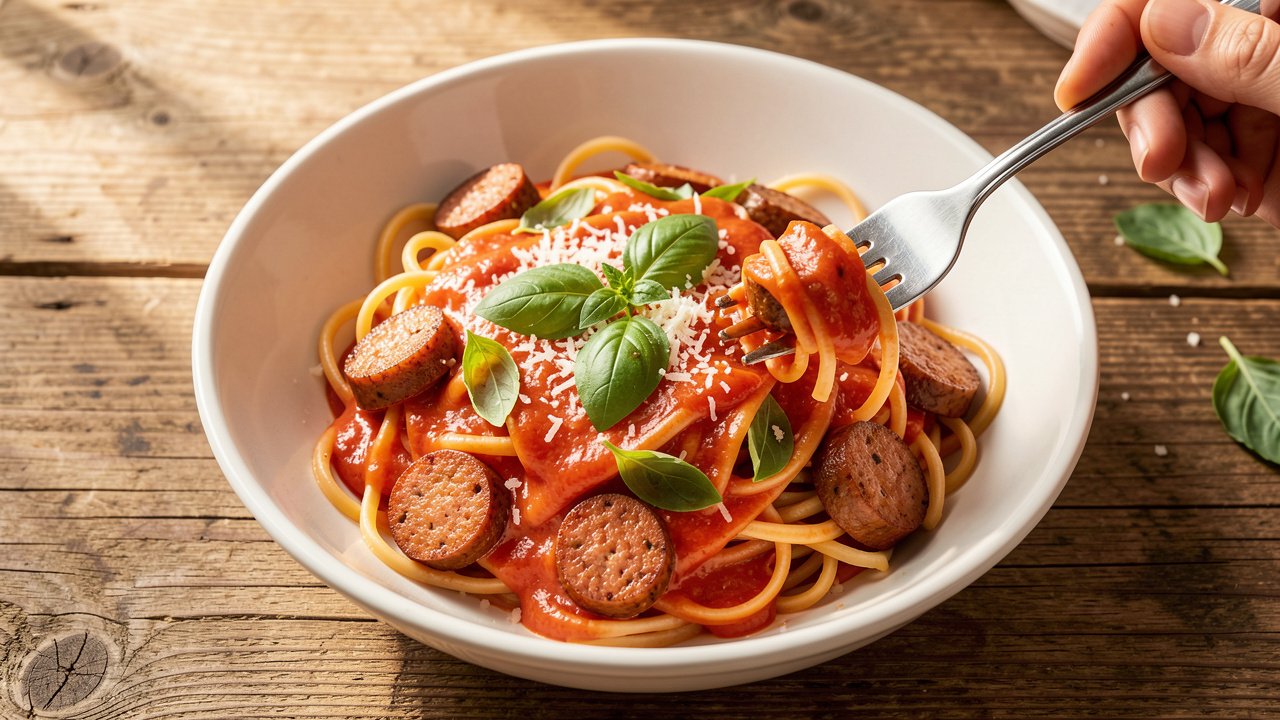
The whole dish leans on one idea: build deep flavor before the cream ever shows up. Sweet Italian chicken sausage is leaner than fattier meats, so it needs a real sear to develop those brown, savory bits. Those bits, plus the fond stuck to the pan, are what make the finished sauce taste like more than tomatoes and dairy.
Crushed tomatoes give a smooth, thick base that clings to linguine without turning watery. A spoon of tomato paste, cooked until it darkens, adds a low, roasted sweetness that balances the natural tang. Only then does the cream go in, and just enough to turn the sauce a soft rose, not a heavy white.
Pasta water is the quiet hero. The starch in it lets the tomato and cream emulsify into one glossy sauce instead of two separate layers. When you toss the linguine straight from the pot into the pan with a splash of that water, the noodles finish cooking in the sauce and drink it in.
Because chicken sausage carries less fat than most meats, the sauce feels lighter than most tomato cream pastas, yet it still tastes rich. That is the sweet spot I keep coming back to on busy nights.
Pro observation: Your tomato base is ready for the cream when it looks matte and thick, not shiny and loose, and a spoon dragged across the pan leaves a trail that fills back in slowly. Rush the cream in too early and the sauce tastes thin and sharp.
Ingredients
Kitchen Measurement Converter
Quickly convert between common cooking measurements without leaving the recipe. Pick a category, enter a value, and the result updates instantly.
Ingredient Notes & Substitutions
Italian Chicken Sausage
Sweet Italian chicken sausage keeps the dish lighter than most meats. Buy links and slice them into coins, or squeeze the meat from the casing for a looser, crumbled sauce. Hot Italian works too if you want more kick.
Crushed Tomatoes
Canned crushed tomatoes give the best clingy texture. A good San Marzano style can tastes sweeter and less acidic. Whole peeled tomatoes crushed by hand also work if that is what you have.
Heavy Cream
Heavy cream resists splitting better than milk or half-and-half. If you only have half-and-half, add it off the heat and do not let it boil. A spoon of mascarpone is a rich stand-in.
Linguine
Linguine holds this sauce well, but fettuccine or spaghetti are fine swaps. Cook it one minute shy of the box time so it can finish in the sauce and stay springy rather than soft.
Equipment
- Large deep skillet or saute pan
- Pasta pot
- Colander
- Wooden spoon
- Sharp knife and board
- Heatproof measuring cup
Before You Start
1. Get the pasta water going first. Bring a big pot of well-salted water to a boil before you touch the sausage, so the timing lines up and the noodles are ready when the sauce is.
2. Slice and mince ahead. Cut the sausage into coins and mince the garlic before the pan is hot. Once you start browning, things move quickly and you will not want to stop and chop.
3. Keep a cup by the stove. Set an empty measuring cup next to the pot as a reminder to scoop out pasta water before you drain. That starchy water is what makes the sauce silky.
Step-by-Step Instructions
Brown the Sausage
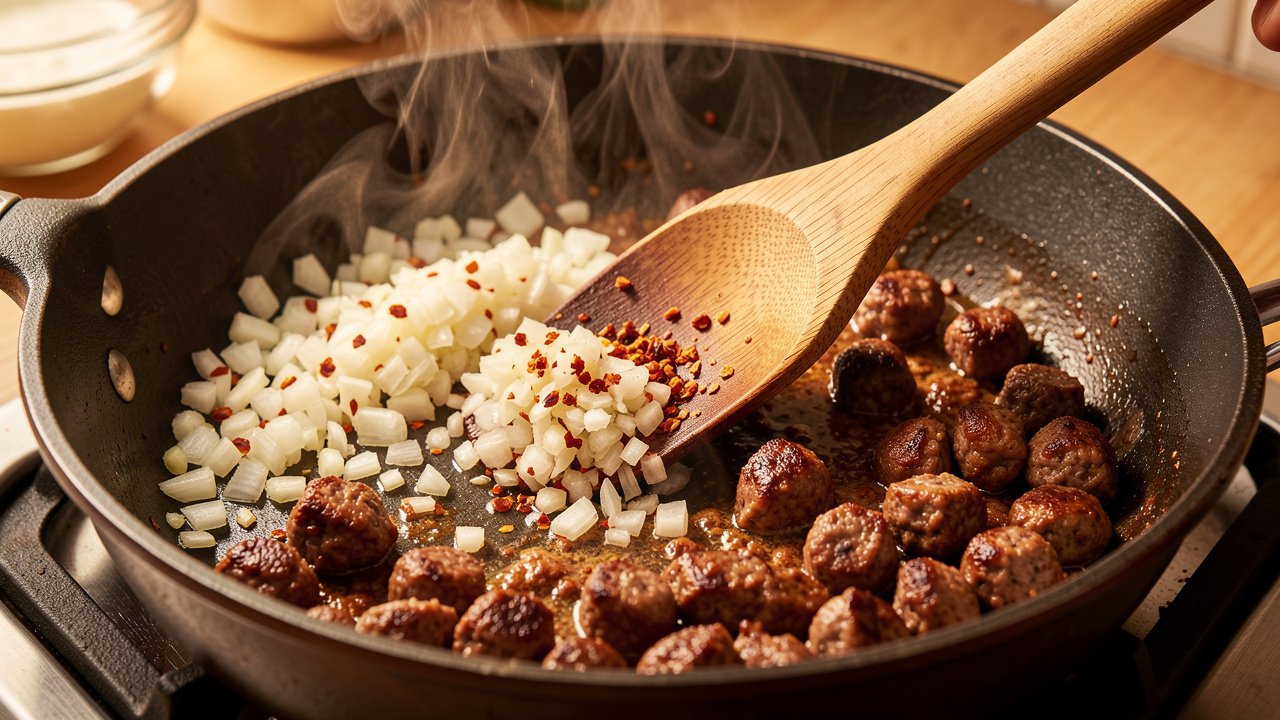
Heat a tablespoon of olive oil in a large deep skillet over medium-high heat. Add the sliced sausage in one layer and leave it alone for 2 to 3 minutes so it can sear. Flip and brown the other side until the coins have deep golden edges, about 5 minutes total. Move the sausage to a plate; it does not need to be cooked through yet.
Build the Aromatics
Lower the heat to medium. Add the chopped onion to the same pan and cook 3 to 4 minutes until soft, scraping up the browned bits. Stir in the garlic and red pepper flakes and cook 30 seconds, just until fragrant, so the garlic does not scorch and turn bitter.
Deepen the Tomato Paste
Push the onions to one side and add the tomato paste to the bare part of the pan. Fry it for about a minute, stirring, until it darkens from bright red to a deeper brick color. This quick step cooks out the raw, tinny taste and builds a roasted sweetness into the base.
Simmer the Tomato Sauce
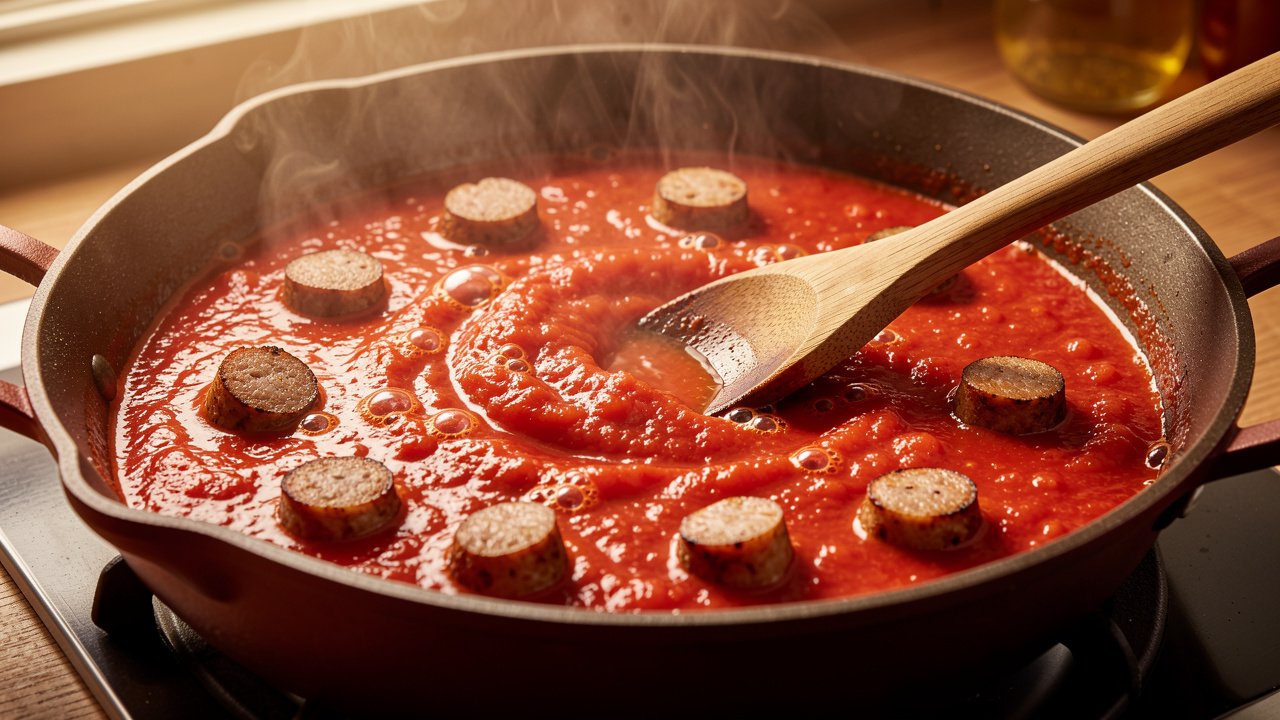
Pour in the crushed tomatoes and season with salt, black pepper, and the dried oregano. Return the sausage and any juices to the pan. Bring to a gentle bubble, then lower the heat and simmer 8 to 10 minutes until the sauce thickens and looks matte rather than watery. Stir now and then so nothing catches.
Stir in the Cream
Turn the heat to low and pour in the heavy cream, stirring until the sauce turns an even rosy color. Let it warm through for 2 minutes but do not let it boil hard, or the cream can break and look grainy. Taste and adjust with salt; a pinch of sugar helps if your tomatoes are sharp. Meanwhile, drop the linguine into the boiling water and cook one minute shy of the package time, saving a cup of pasta water before draining.
Toss with Linguine and Finish
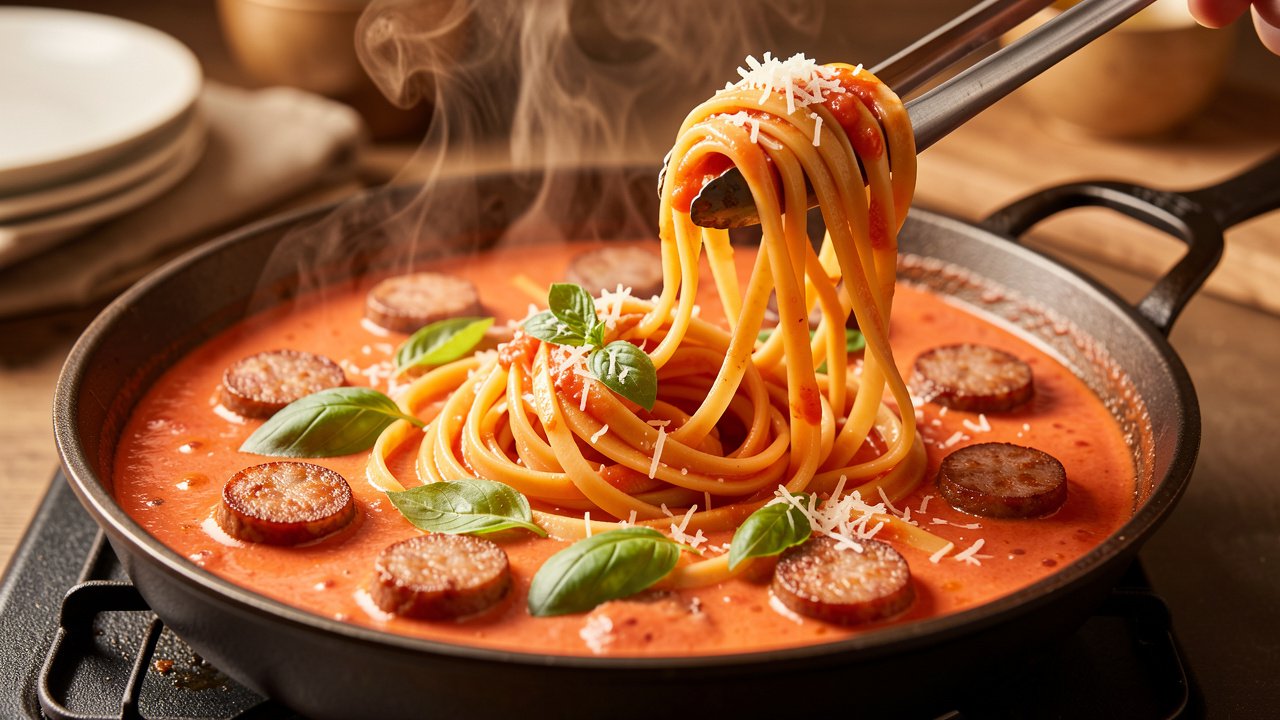
Add the drained linguine straight into the sauce with a splash of the reserved pasta water. Toss with tongs for a minute, adding more water a little at a time, until the sauce coats each strand and looks glossy. Kill the heat, stir in torn basil and grated Parmesan, and serve right away with extra cheese on top.
Chef’s Tips From Real Kitchen Testing
Do not crowd the sausage. If the coins touch too tightly they steam instead of sear, and you lose the brown fond that flavors the whole sauce. Work in two batches in a smaller pan.
Add cream off a hard boil. Keep the sauce at a lazy simmer once the dairy goes in. A rolling boil is what makes cream separate into an oily, grainy mess.
Undercook the linguine on purpose. Pull it a minute early so it can finish in the sauce. It keeps a pleasant chew and soaks up flavor instead of tasting like plain boiled noodles.
Recipe Variations
Serving Suggestions
- Garlic bread or a crusty ciabatta to mop the sauce
- A sharp arugula salad with lemon dressing
- Extra grated Parmesan or Pecorino at the table
- A chilled pomegranate spritzer
Nutrition Facts
Values are estimates per serving with linguine included and vary with the sausage and cream you use.
Make-Ahead Tips
The sauce is the make-ahead friendly part. Brown the sausage and build the tomato base up through the simmer, then cool and refrigerate it for up to three days. When you are ready to eat, reheat gently, stir in the cream, and boil fresh linguine. Hold off tossing the pasta into sauce until serving, since noodles left sitting in sauce turn soft and soak up too much liquid.
Storage, Freezing & Reheating
Common Mistakes to Avoid
Troubleshooting
Sauce too acidic? Add a pinch of sugar or a little more cream to round it off, and check that the tomato paste was cooked long enough.
Sauce broke or looks grainy? The cream got too hot. Pull the pan off the heat and whisk in a splash of warm pasta water to bring it back together.
Sauce too thin? Let it simmer a couple more minutes before adding pasta, or toss longer so the starchy water thickens it around the noodles.
A Note on Rosy Tomato Cream Pastas
Tomato and cream is a classic Italian-American pairing, the same idea behind a creamy tomato sauce, where a little dairy tames the bright acidity of tomatoes into something round and comforting. Sausage just adds savory depth. If you like this style, our creamy tomato spinach tortellini and tomato basil pasta work the same magic, and spicy tomato shrimp pasta is a great seafood swap for the sausage.