Mediterranean Recipes
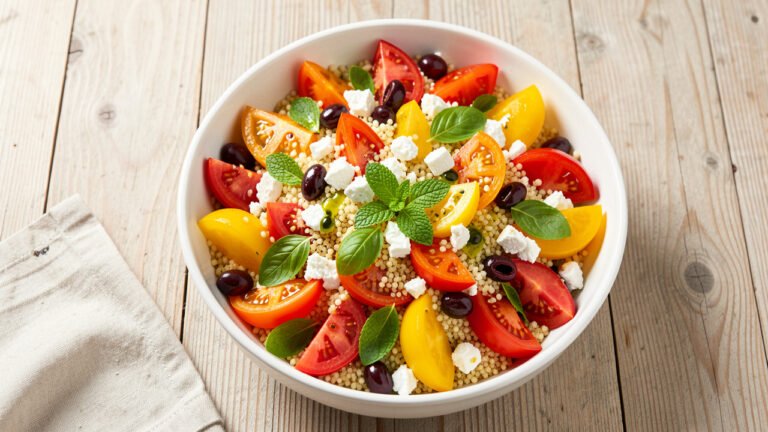
Bright Mediterranean Salad
Last updated: September 29, 2026
This is the salad I make on repeat all summer, when heirloom tomatoes are heavy and sweet and I do not want to turn on the oven. Toasted pearl couscous gives it real substance, so it eats like a meal rather than a side. The trick I learned after a few flat batches is to dress the couscous while it is still warm, so it drinks up the lemon and tomato juice instead of shrugging it off.
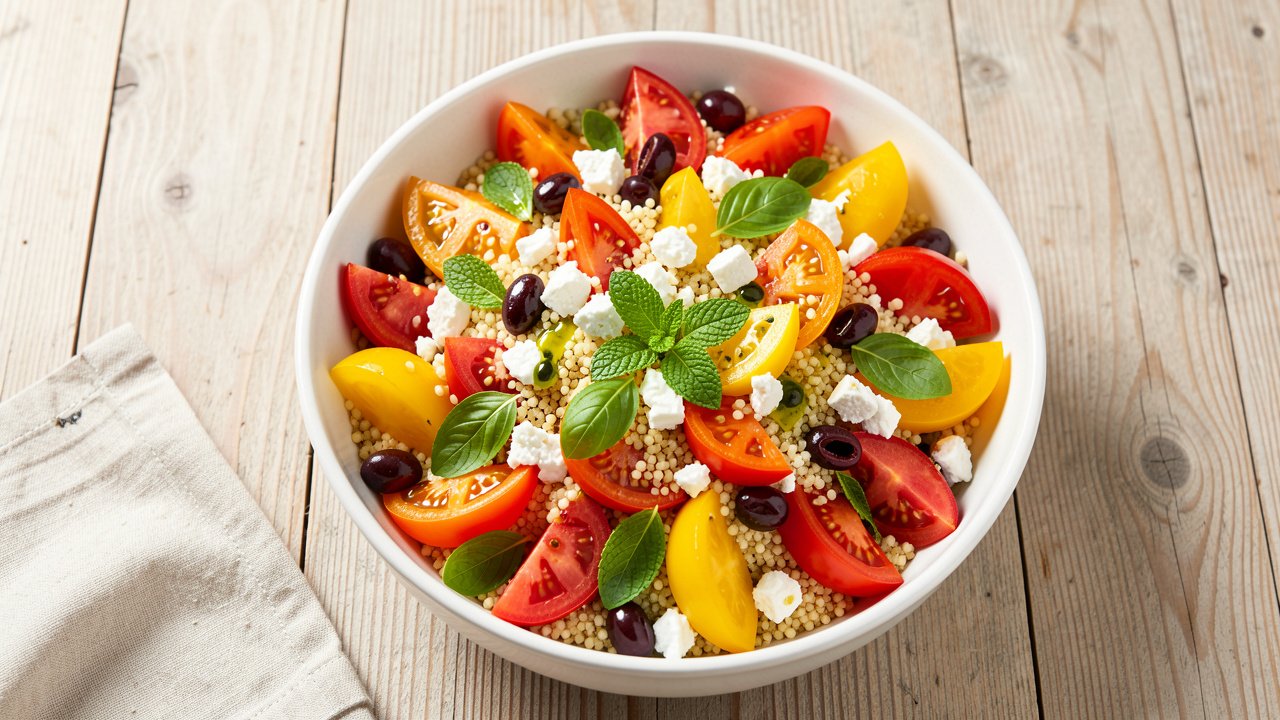
Why This Heirloom Tomato Salad with Pearl Couscous Works
Most tomato-and-grain salads taste like two separate things sharing a bowl. This one does not, because two small moves tie it together. You toast the couscous before it simmers, and you salt the tomatoes before anything else touches them. Both steps take minutes and change the whole dish.
Toasting the pearl couscous in a little oil turns the pale beads golden and gives them a nutty, almost popcorn-like flavor. That warmth stands up to the acidity of the tomatoes instead of tasting like plain starch. It is the same reason cooks toast rice for pilaf; the flavor goes deeper than boiling alone can reach.
Salting the chopped heirloom tomatoes pulls out their juice, and that juice is not waste. It mixes with the lemon and olive oil to make a light dressing that carries real tomato flavor, so nothing bland gets left on the cutting board. You are building the sauce from the fruit itself.
Serving it at room temperature is the last piece. Cold dulls tomatoes and mutes herbs, so a salad like this always tastes fuller when it has not just come out of the fridge. The feta stays creamy, the basil stays fragrant, and the couscous stays tender rather than tight.
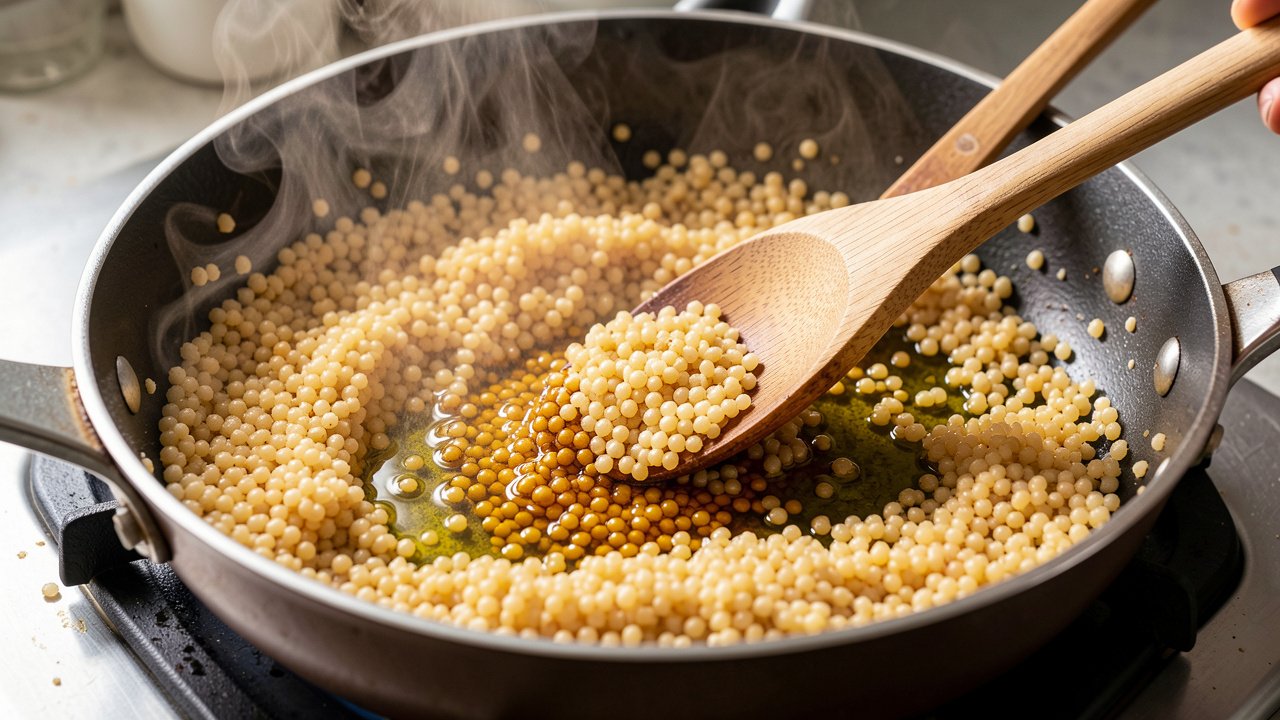
Pro observation: The couscous is toasted enough when about a third of the beads have turned deep gold and the pan smells toasty, like a warm bakery. Stop there; past that point they scorch and turn bitter fast.
Ingredients
Kitchen Measurement Converter
Quickly convert between common cooking measurements without leaving the recipe. Pick a category, enter a value, and the result updates instantly.
Ingredient Notes & Substitutions
Heirloom Tomatoes
Use truly ripe heirlooms that feel heavy and give slightly when pressed. A mix of colors looks beautiful, but flavor matters more than looks. If yours are firm, leave them on the counter a day or two; never refrigerate them first.
Pearl Couscous
Pearl couscous, also sold as Israeli or ptitim, gives the chewy bite this salad needs. Regular fine couscous turns mushy here and will not hold the dressing the same way, so it is not a good swap.
Feta
Buy a block of feta in brine and crumble it yourself. It tastes creamier and less chalky than pre-crumbled tubs. For a milder salad, a soft goat cheese works too, added in small pinches at the end.
Herbs & Lemon
Fresh basil, parsley, and mint together give the salad its lift; dried herbs will not do it. Use fresh-squeezed lemon, not bottled, and a good fruity olive oil, since both flavors sit right on the surface.
Equipment
- Medium saucepan with lid
- Fine mesh strainer
- Large mixing bowl
- Colander or second bowl
- Sharp knife and board
- Citrus juicer or fork
Before You Start
1. Salt the tomatoes first. Chop and salt them before you cook the couscous, so they have 15 to 20 minutes to release their juice while everything else comes together.
2. Have your liquid ready. Toasting happens fast, so measure the water or stock and keep it by the stove to add the moment the couscous turns golden.
3. Chop the add-ins while the couscous simmers. Dice the cucumber and red onion and tear the herbs during the 10-minute simmer so nothing waits and the couscous can be dressed warm.
Step-by-Step Instructions
Salt the Tomatoes
Core the heirloom tomatoes and cut them into bite-size wedges or thick chunks. Put them in a bowl, sprinkle with half a teaspoon of salt, and toss gently. Set them aside on the counter. Within a few minutes you will see juice pooling at the bottom, and that liquid becomes part of the dressing.
Toast the Pearl Couscous
Heat a tablespoon of olive oil in a saucepan over medium heat. Add the dry couscous and stir almost constantly for 3 to 4 minutes. Listen for a soft crackle and watch for the beads turning golden. When the pan smells nutty and toasty, they are ready. Do not walk away, because they go from golden to burnt in seconds.
Simmer Until Tender but Chewy
Pour in the water or vegetable stock and a pinch of salt, and bring it to a boil. Lower the heat, cover, and simmer 9 to 11 minutes until the liquid is absorbed and the couscous is tender with a little chew at the center. Taste a bead near the end; you want it cooked through but not soft. Drain off any extra liquid.
Cool the Couscous Slightly
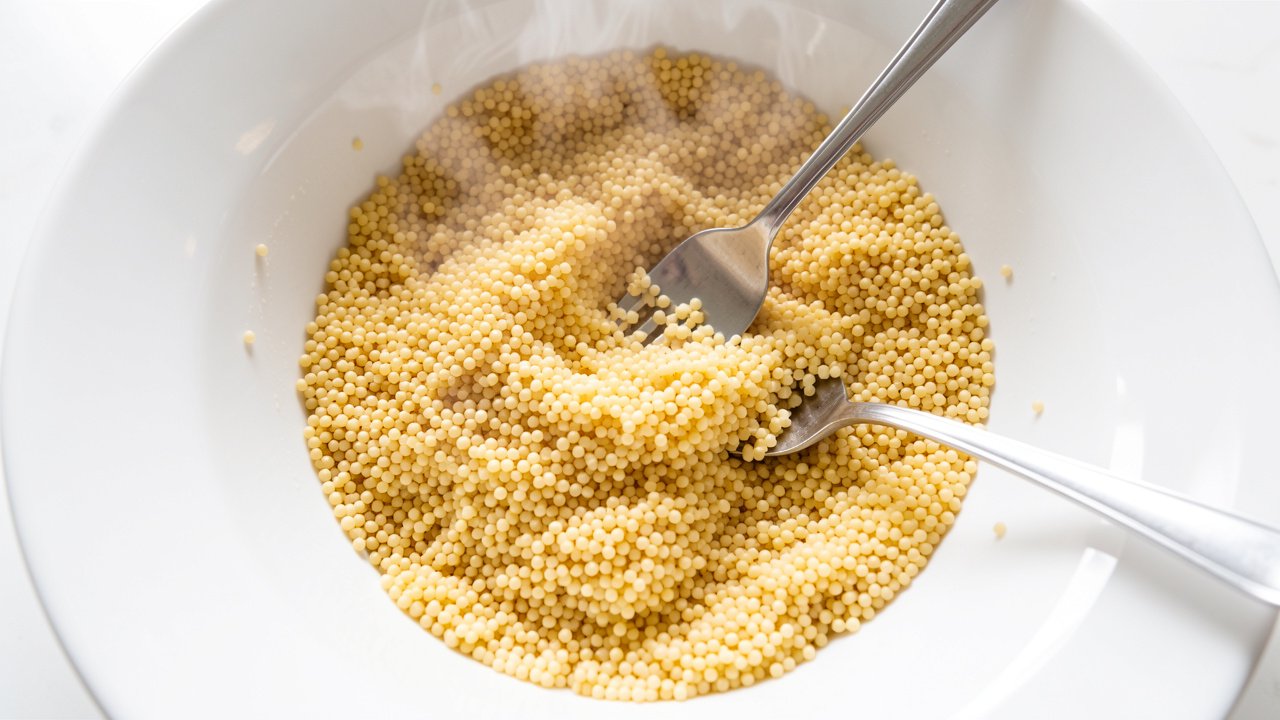
Spread the couscous on a plate or in a wide bowl and let it cool for about 5 minutes, tossing once or twice so it does not clump. You want it warm, not hot and not cold. Warm couscous soaks up the lemon and tomato juices; cold couscous just sits there and stays bland.
Make the Dressing and Combine
In the bottom of a large bowl, whisk the lemon juice, olive oil, a grating of garlic, and a little black pepper. Add the warm couscous and toss so it soaks up the dressing. Then tip in the salted tomatoes along with all their juice, the diced cucumber, and the red onion, and fold everything together gently.
Add Herbs, Feta, and Serve
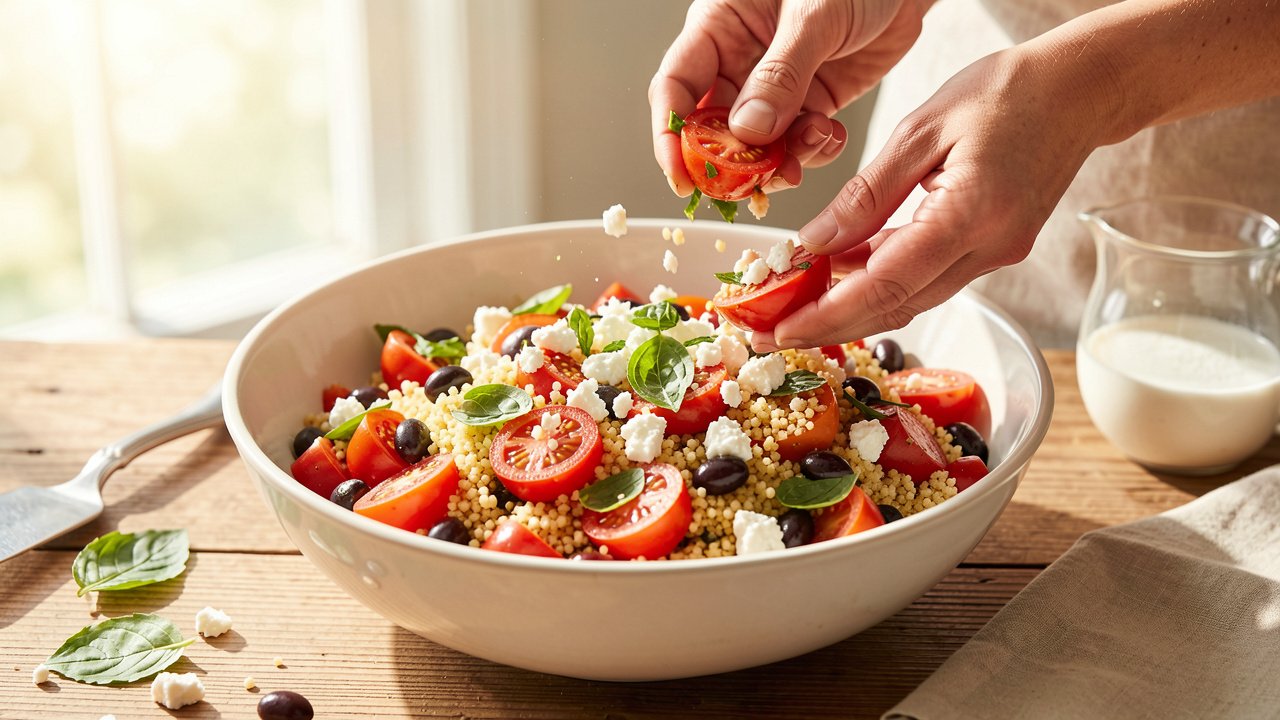
Tear in the basil, parsley, and mint, scatter over the olives, and crumble the feta on top. Fold once, lightly, so the feta stays in soft pieces. Taste and adjust with more lemon or salt. Let it sit 10 minutes, then serve at room temperature. It only gets better as it rests.
Chef’s Tips From Real Kitchen Testing
Soak the diced red onion in cold water for 10 minutes before adding it. It keeps the crunch but takes off the harsh raw bite that can take over the whole bowl.
Save the tomato juice that collects when salting. If the finished salad tastes dry after resting, stir a spoonful back in rather than reaching for more oil.
Dress the couscous alone first, before the tomatoes go in. Coating the warm beads directly means they absorb flavor instead of getting a thin film once cold.
Recipe Variations
Serving Suggestions
- Grilled halloumi or a wedge of frittata alongside
- Warm pita or crusty sourdough to mop the dressing
- A simple green salad and a bowl of olives
- Chilled sparkling lemon water
Nutrition Facts
Values are estimates per serving and vary with the tomatoes, feta, and amount of olive oil you use.
Make-Ahead Tips
You can toast and cook the couscous up to a day ahead and keep it in the fridge. Prep the tomatoes, cucumber, and dressing separately and combine everything an hour or two before serving. Hold the herbs and feta until the last minute so the herbs stay bright green and the feta keeps its texture. Bring the salad back to room temperature before serving.
Storage, Freezing & Reheating
Common Mistakes to Avoid
Troubleshooting
Salad tastes flat? It almost always needs more salt and a squeeze of lemon. Acid and salt are what make tomatoes taste like tomatoes.
Couscous clumped together? It cooled in a tight mass. Break it up with a fork and toss with a little oil before adding the rest.
Too watery at the bottom? The tomatoes gave off a lot of juice. Lift the salad out with a slotted spoon, or stir in a handful more couscous to soak it up.
A Note on Mediterranean Tomato Salads
Tomatoes, olive oil, lemon, and herbs are the backbone of coastal Mediterranean cooking, where a good salad often carries the meal rather than sitting on its edge. Pearl couscous adds the grain that makes this one filling enough to be dinner. If you like this style, read more about tomatoes in the Mediterranean diet, or try our tomato and artichoke salad with capers and classic tomato mozzarella salad for more no-cook ideas.