West African Recipes
The Gambia’s National Dish
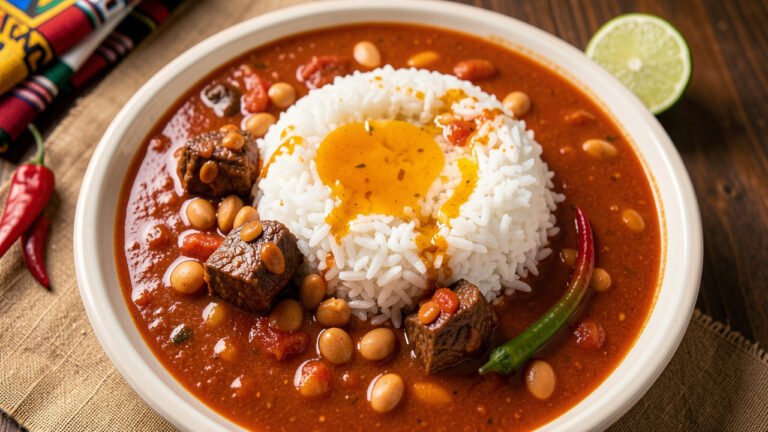
Domoda is comfort in a single pot. Peanuts and tomatoes may sound like an unusual pairing, but they melt together into a sauce that is savory, nutty, and gently sweet all at once, with a slow-building warmth from the scotch bonnet. It is the kind of stew that fills a kitchen with a homey, roasted aroma and pulls everyone to the table.
The one thing I learned the hard way is patience. The first time I rushed it, the peanut butter sat on top in a raw, pasty layer and the oil never came up. Give it time to loosen and simmer, and the groundnut flavor turns round and rich instead of chalky.
Why This Domoda Works
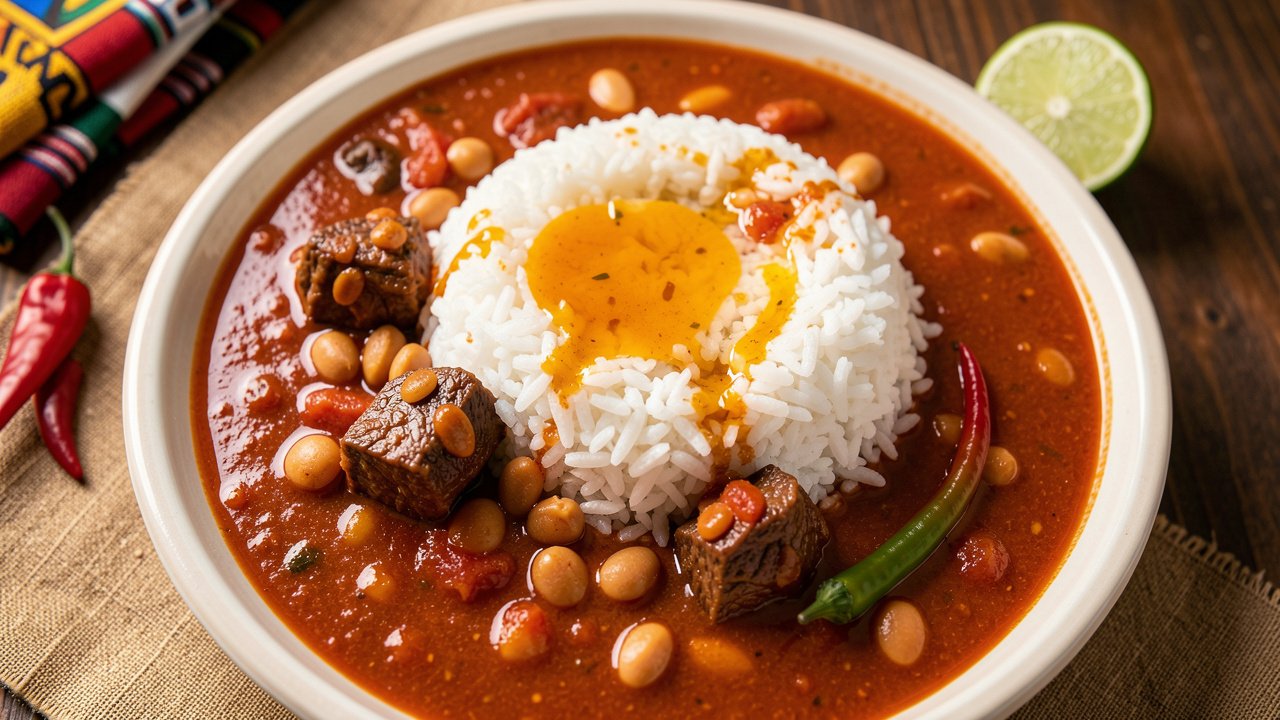
Domoda works because it is built on a small handful of everyday ingredients that do a lot of quiet work. Groundnut, which is simply peanut, brings body and a toasty richness. Tomato paste and fresh tomatoes bring acidity and color, cutting through the fat so the sauce never feels heavy. Together they create that signature red-brown gloss that tells you the stew is ready.
The scotch bonnet is left mostly whole, which is the traditional trick. It perfumes the whole pot with fruity heat without turning the stew into something only chili lovers can eat. You control the heat by how much you pierce or break the pepper, so one recipe suits a whole table of different tastes.
Balance is the last piece. A squeeze of lime or a spoon of tamarind at the end lifts the richness and keeps every bite bright. That sweet, savory, and tangy three-way balance is exactly why groundnut stews are loved across West Africa, and why domoda earns its place as The Gambia’s national dish.
It is also flexible. The same sauce welcomes halal beef or chicken, and it turns fully vegetarian with pumpkin or sweet potato without losing a thing. Once you know the method, you can cook it a dozen ways from the same pantry.
Pro observation: Domoda is done when a thin layer of orange oil rises and pools on the surface. That sheen means the peanut has cooked through and the raw, pasty edge is gone.
Ingredients
Peanut allergy warning: Domoda is built on peanuts and contains a large amount of peanut butter. It is not safe for anyone with a peanut or tree-nut allergy, and there is no simple swap that keeps the dish authentic. If you are cooking for a crowd, tell your guests clearly that this stew contains peanuts.
Kitchen Measurement Converter
Quickly convert between common cooking measurements without leaving the recipe. Pick a category, enter a value, and the result updates instantly.
Ingredient Notes & Substitutions
Peanut Butter
Use a smooth, natural, unsweetened peanut butter with no added sugar or oil for the truest groundnut flavor. In The Gambia, cooks often grind fresh roasted peanuts into a paste; natural peanut butter is the easy stand-in.
Tomatoes and Paste
You need both. Tomato paste gives deep color and concentrated tang, while fresh chopped tomatoes add body. Out of season, one 14-ounce can of chopped tomatoes replaces the fresh ones reliably.
Halal Beef or Chicken
Use cubed halal beef for a hearty, slow-simmered stew, or halal chicken thighs for a quicker cook. Both work beautifully. For a vegetarian pot, swap in pumpkin or sweet potato, as noted in the variations.
Scotch Bonnet and Acid
A whole scotch bonnet adds fruity heat; leave it unbroken for a milder pot or pierce it for more fire. Finish with lime juice or a spoon of tamarind to brighten the rich, nutty sauce.
Equipment
- Large heavy pot or Dutch oven
- Wooden spoon
- Sharp knife and board
- Small bowl for the peanut mix
- Measuring cups and spoons
- Whisk or fork
Before You Start
1. Loosen the peanut butter. Whisk the peanut butter with a cup of warm water or stock in a small bowl before it goes in. This stops it from clumping and helps it blend smoothly into the sauce.
2. Brown the meat in batches. If you crowd the pot, halal beef or chicken steams instead of browning. A good sear builds the deep, savory base the stew is known for.
3. Cook your rice alongside. Domoda is always served over fluffy white rice, so start the rice partway through the simmer so both are ready together.
Step-by-Step Instructions
Brown the Meat
Heat the vegetable oil in a large heavy pot over medium-high heat. Pat the halal beef or chicken dry, season with a little salt and the black pepper, and brown the cubes on all sides in batches, about 5 to 6 minutes per batch. Set the browned meat aside on a plate.
Build the Aromatic Base
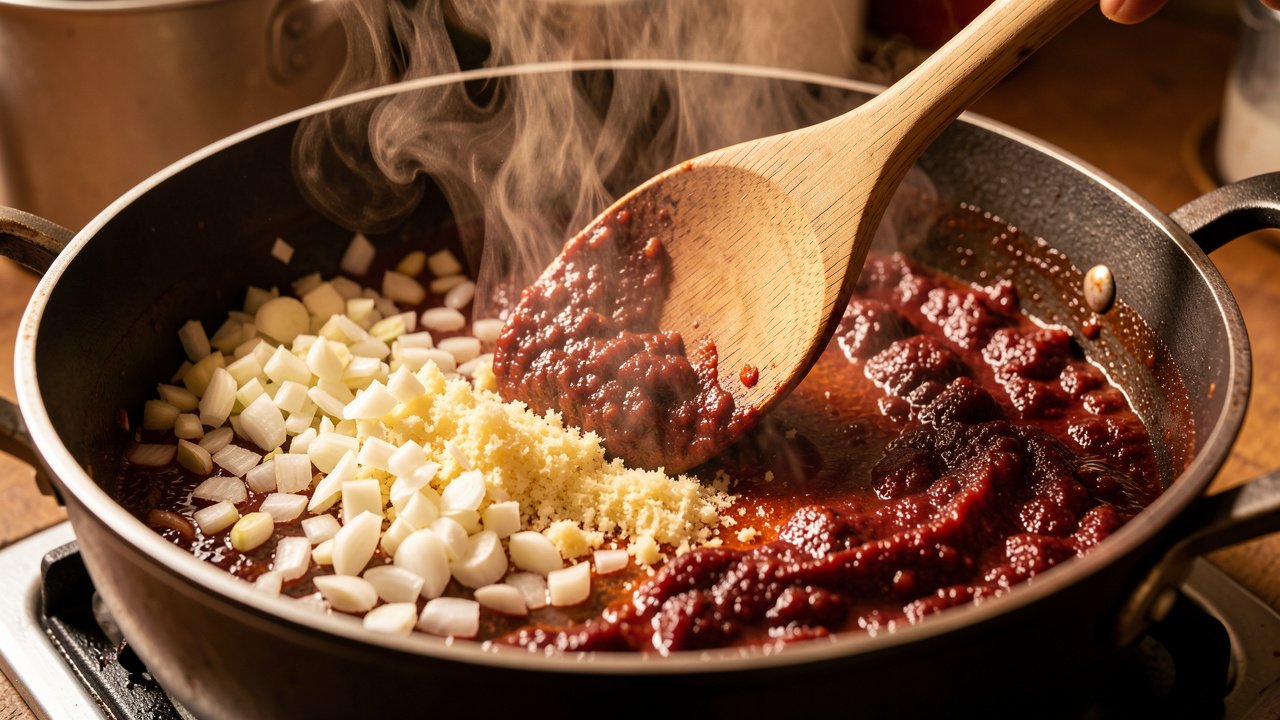
Lower the heat to medium and add the chopped onion to the same pot. Cook 5 to 6 minutes until soft and golden, scraping up the browned bits. Stir in the garlic and ginger and cook 1 minute more until fragrant, then add the tomato paste and fry it for 2 minutes until it darkens and smells sweet.
Add Tomatoes and Return the Meat
Stir in the chopped fresh tomatoes and cook 6 to 8 minutes until they collapse into a thick, jammy sauce. Return the browned meat and any resting juices to the pot, then add the bay leaf and the whole scotch bonnet. Leave the pepper unbroken for gentle heat, or pierce it once for more fire.
Stir In the Peanut Butter
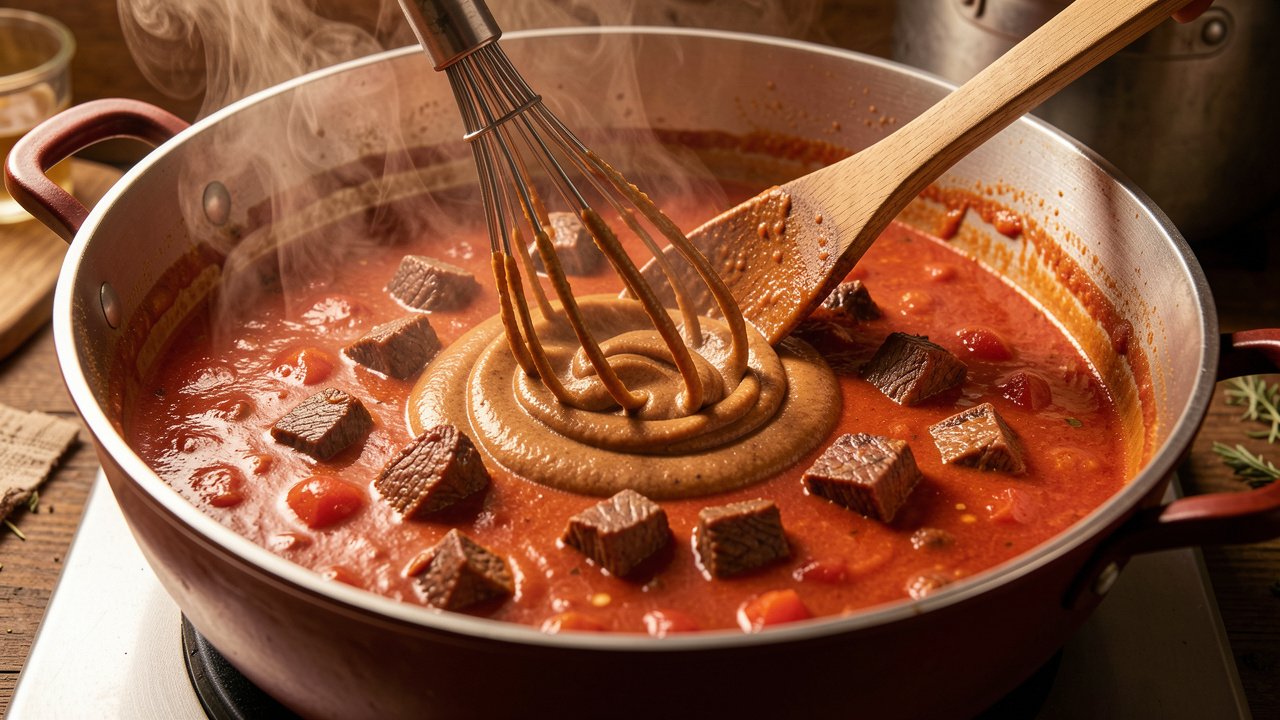
Whisk the peanut butter with one cup of the warm water or stock until smooth, then stir it into the pot. Pour in the remaining water or stock and stir until the sauce is even and creamy with no pasty lumps. Add the salt. Bring to a gentle simmer, stirring often so the peanut does not catch on the bottom.
Simmer Low and Slow
Cover partly and simmer gently for 35 to 45 minutes, stirring every few minutes and scraping the bottom so nothing sticks. The sauce will thicken and darken to a glossy red-brown. If it gets too thick before the meat is tender, loosen it with a splash of warm water. The stew is ready when a thin layer of orange oil rises to the top.
Balance and Serve
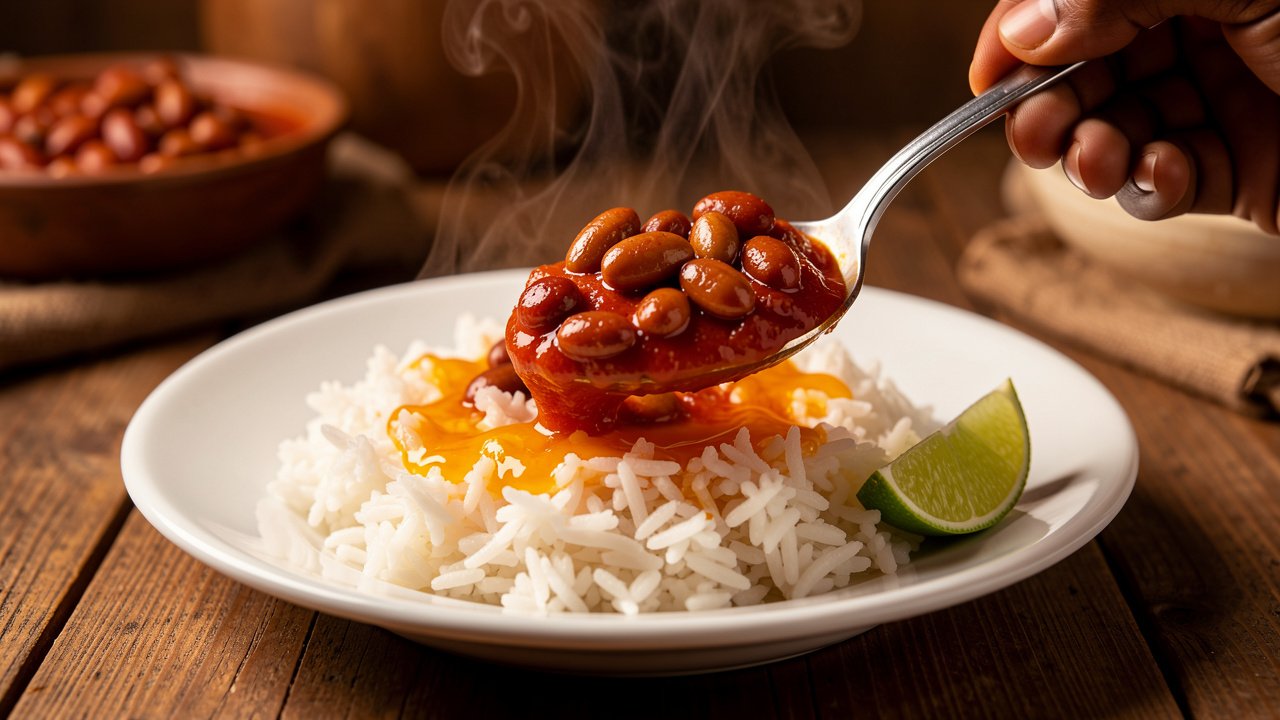
Fish out and discard the bay leaf and, if you like, the scotch bonnet. Squeeze in the lime juice or stir in the tamarind, then taste and adjust with more salt or acid until it is bright and balanced. Serve the domoda hot over fluffy white rice, spooning plenty of the glossy sauce on top.
Chef’s Tips From Real Kitchen Testing
Stir often and scrape the bottom. Peanut butter is prone to catching and scorching once it thickens, and a scorched bottom will taint the whole pot with a bitter, burnt note.
Wait for the oil to separate. That thin orange sheen on the surface is the classic sign the groundnut has cooked through and the sauce tastes rounded rather than raw.
Check the meat for doneness before you serve. Halal beef should be fork-tender, and halal chicken should reach an internal temperature of 165 F with no pink at the center.
Recipe Variations
Serving Suggestions
- A mound of fluffy white rice, the classic pairing
- Steamed greens or a simple cabbage side
- Sliced raw onion and extra lime wedges
- Fried plantain for a sweet contrast
Nutrition Facts
| Nutrient | Amount per serving |
|---|---|
| Calories | 560 |
| Protein | 32 g |
| Carbohydrates | 34 g |
| Fat | 34 g |
| Saturated Fat | 8 g |
| Fiber | 5 g |
| Sugar | 7 g |
| Sodium | 720 mg |
Values are estimates per serving, including rice, and vary with the exact ingredients and brands you use.
Make-Ahead Tips
Domoda is a wonderful make-ahead dish, because the peanut and tomato flavors deepen and marry overnight in the fridge. Cook it a day ahead, cool it, and refrigerate. Reheat gently on the stove and stir in a splash of warm water to loosen it, since the sauce thickens considerably as it sits. Cook fresh rice just before serving so it is light and fluffy.
Storage, Freezing & Reheating
Common Mistakes to Avoid
Troubleshooting
Sauce tastes raw or chalky? The peanut needs more time. Keep simmering gently, stirring often, until a thin layer of oil separates and rises to the surface.
Stew scorched on the bottom? Stop stirring the burnt layer up. Carefully pour the good sauce into a clean pot, leaving the scorched base behind, and continue from there.
Too thick or too oily? Loosen an overly thick pot with warm water. If it looks too oily, spoon a little off the top, or add a squeeze of lime to cut the richness.
A Note on Gambian Cooking
Groundnut stews run like a thread through West African cooking, from Senegal to Mali to Nigeria, each region giving the peanut its own twist. In The Gambia, domoda is the beloved everyday version, cooked in homes and served at gatherings, usually rich with tomato and spooned over rice. The technique that ties them together is patience at the stove: the cook waits for that telltale layer of oil to separate and float, the sign that the groundnut has fully cooked and the sauce has reached its deep, glossy best. If you enjoy warming, tomato-rich bowls, our hearty tomato lentil soup shares the same comforting spirit, and you can browse more ideas in our full collection of tomato recipes.
Frequently Asked Questions
More Tomato Recipes to Try
Last updated: September 29, 2026