Bahamian Recipes
Fish in a Savory Browned Tomato Gravy
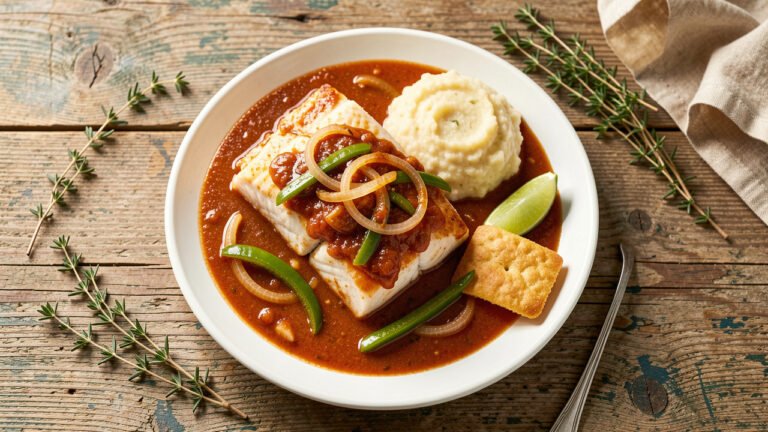
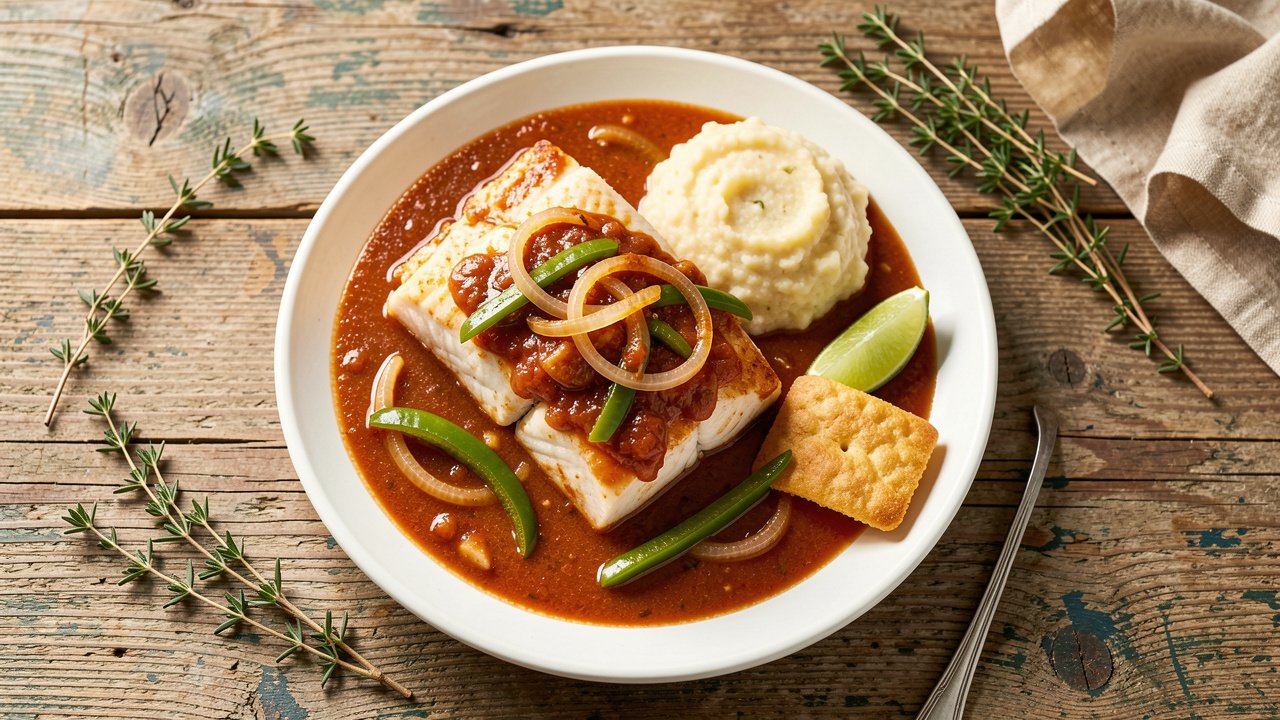
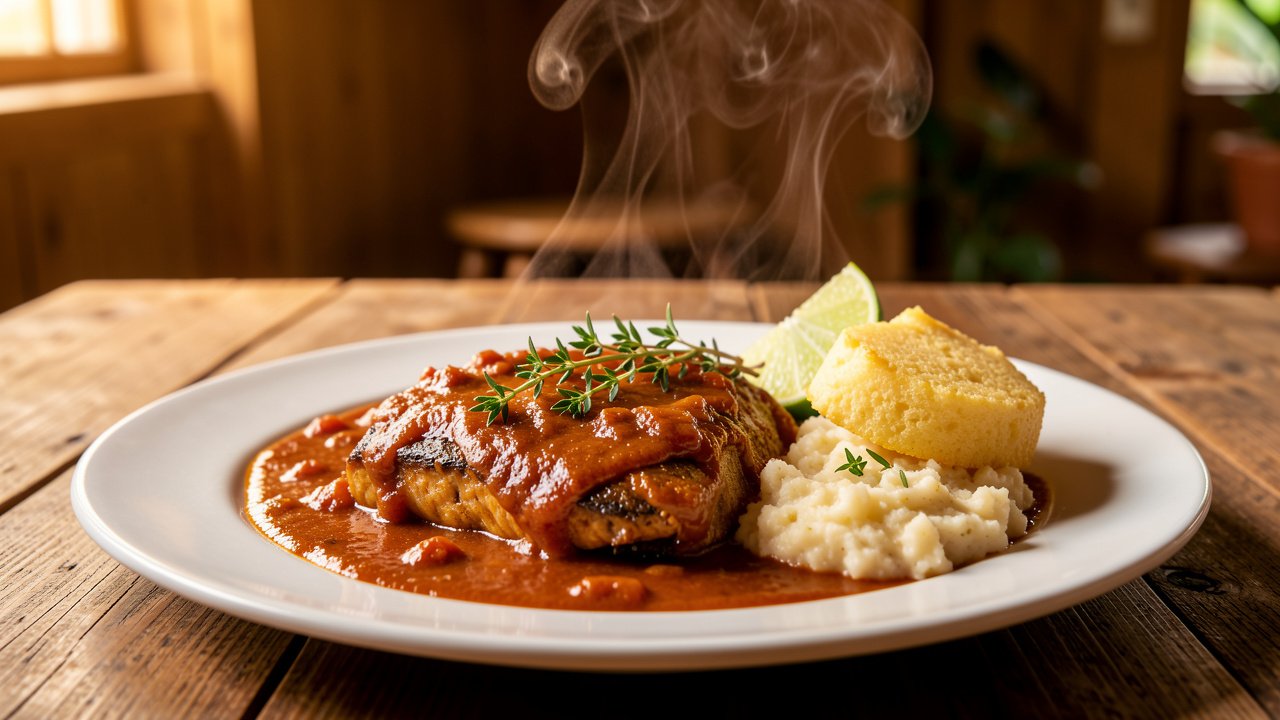
This is Bahamian comfort food at its most honest. The fish stays in big, tender pieces, and the gravy around it is deep brown-red, savory, and just spicy enough to keep you reaching for more. The secret is the browning, a light roux you cook until it turns the color of caramel before anything else goes in.
I learned the hard way that the browning is where this dish is won or lost. Take it too far and the gravy turns bitter; stop too soon and it tastes pale and flat. Once you find that middle, nutty golden-brown stage, the rest is easy.
Why This Bahamian Stew Fish Works
Bahamian cooking builds huge flavor from a short list of humble ingredients, and this dish is the proof. There is no long simmer of stock or cream here. Almost all the depth comes from one technique: browning a little flour in oil until it is deep and nutty, then using that to thicken and color the gravy.
The tomato paste and fresh tomatoes do double duty. The paste, cooked briefly in the browning, adds a concentrated savory richness and a red-brown hue, while the fresh tomatoes melt down to give the gravy body and a gentle tang that keeps it from feeling heavy.
Searing the fish first is the other quiet win. A quick sear firms up the surface so the pieces hold together in the gravy instead of flaking apart, and it leaves behind browned bits that season the whole pot. The fish then finishes gently in the simmering gravy, staying moist and tender.
The seasoning is pure island: thyme, bay, allspice, plenty of onion and green bell pepper, celery, garlic, a squeeze of lime, and just enough hot pepper to warm the back of your throat. It is savory, bright, and deeply satisfying over grits or rice.
Pro observation: The browning is ready when it smells like toasted nuts and looks like the color of an old penny, not coffee. If you catch even a whiff of burnt or bitter, start the roux over. It is the backbone of the whole gravy.
Ingredients
Kitchen Measurement Converter
Quickly convert between common cooking measurements without leaving the recipe. Pick a category, enter a value, and the result updates instantly.
Ingredient Notes & Substitutions
The Fish
Grouper and snapper are the traditional choices, both firm enough to hold their shape in the gravy. Any firm, halal white fish works, such as mahi-mahi, cod, or halibut. Ask for thick fillets or steaks rather than thin ones.
Tomatoes & Paste
Ripe fresh tomatoes give a bright, gentle tang, while tomato paste brings the deep savory color. Out of season, one 14-ounce can of chopped tomatoes stands in for the fresh ones with reliable results.
The Browning
Plain all-purpose flour toasted in oil is the classic thickener and color base. If you want to skip the roux, a spoon of browning sauce plus a little cornstarch slurry gives a similar deep color, though the flavor is milder.
Heat & Aromatics
A whole scotch bonnet simmered in the pot and lifted out gives fragrance with controlled heat. Thyme, bay, and allspice are non-negotiable island seasonings; fresh thyme is best, but a teaspoon of dried works too.
Equipment
- Wide, heavy skillet or pot
- Fish spatula or slotted turner
- Sharp knife and board
- Whisk for the browning
- Measuring spoons
- Small bowl for spices
Before You Start
1. Season the fish early. Rub the fillets with lime, salt, and pepper and let them sit while you prep, so the flavor sinks in and the surface dries for a better sear.
2. Have your browning tools ready. The roux moves fast once the flour hits hot oil, so keep the whisk in hand and the chopped onion, pepper, and celery close by.
3. Start your side. Grits, johnnycake, or rice all pair beautifully, so get your chosen side going before the fish, since the stew comes together quickly at the end.
Step-by-Step Instructions
Season and Sear the Fish
Pat the fish dry, then rub it all over with the lime juice, 1 teaspoon of the salt, and the black pepper. Heat 2 tablespoons of oil in a wide skillet over medium-high heat and sear the pieces 1 to 2 minutes per side, just until golden. They do not need to cook through here. Lift them out and set aside on a plate.
Make the Browning
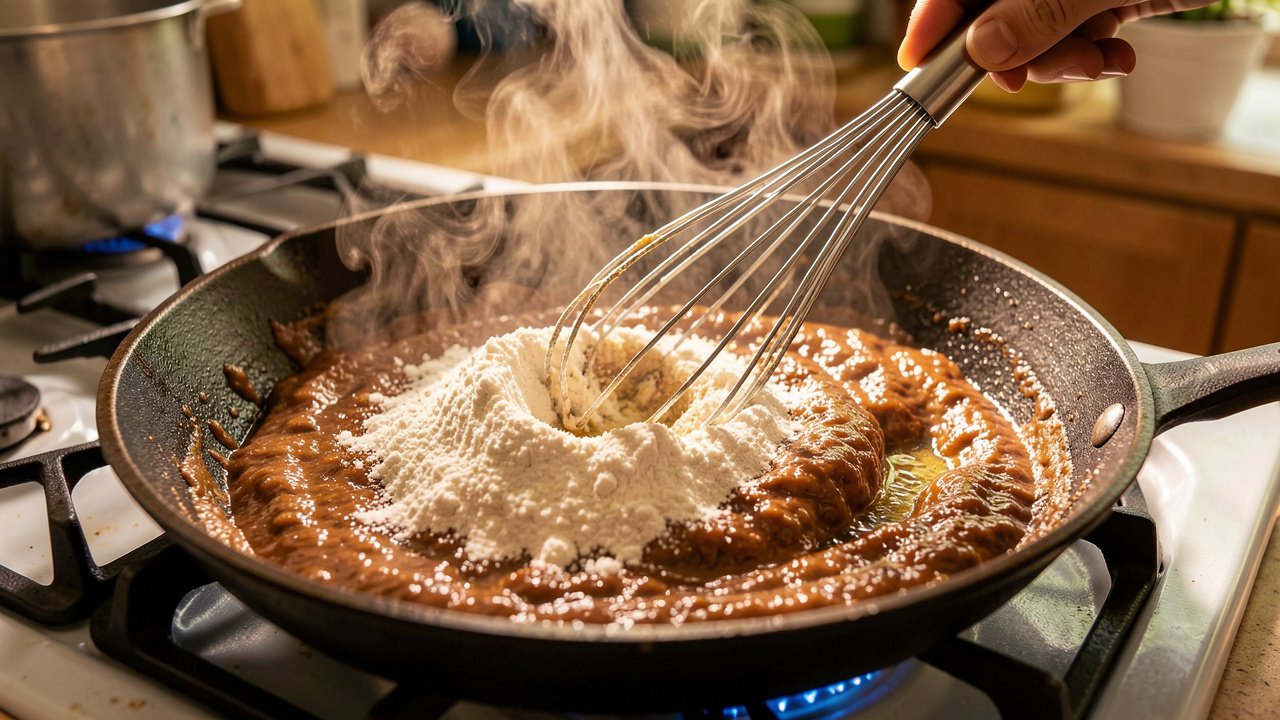
Lower the heat to medium and add the remaining 2 tablespoons of oil to the same pan. Whisk in the flour and keep whisking constantly. Over 4 to 6 minutes it will move from pale to golden to a deep, nutty copper-brown. Watch it closely; the moment it smells toasty and looks like an old penny, it is ready. Do not walk away, because it turns bitter fast if it scorches.
Sweat the Aromatics
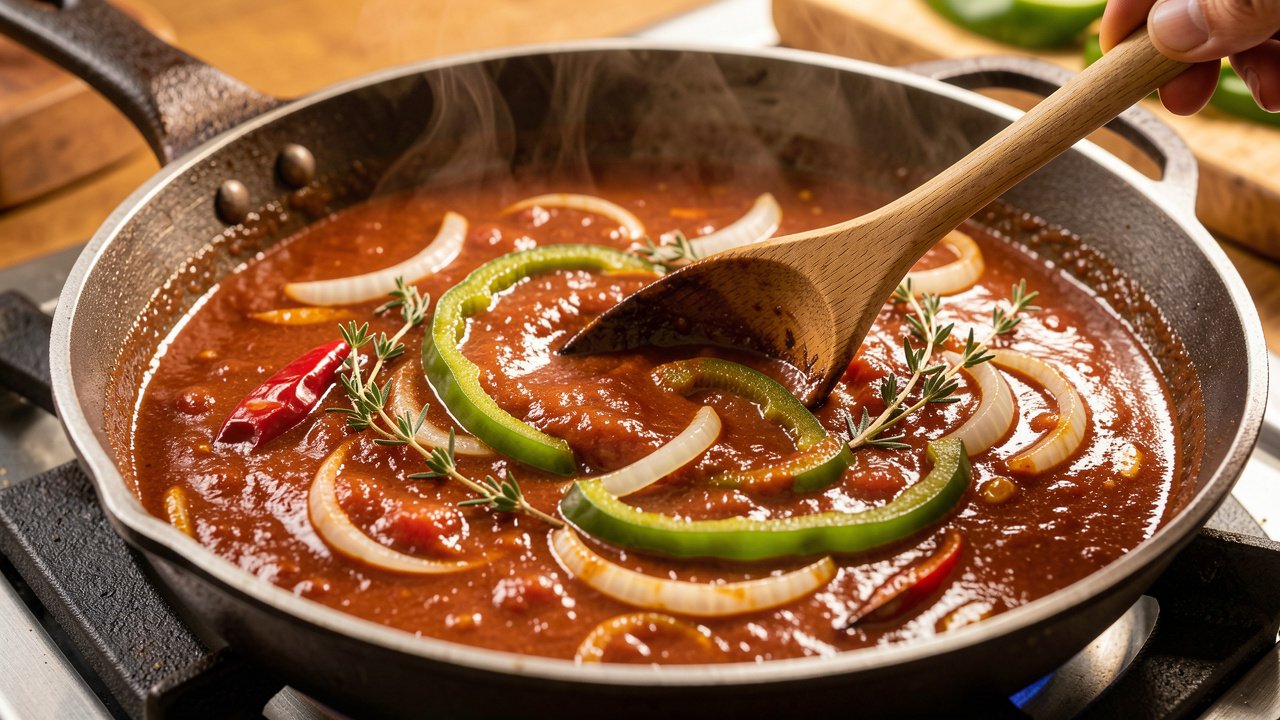
Add the sliced onion, green bell pepper, and celery to the browning and stir well to coat. Cook 4 to 5 minutes until they soften and smell sweet. Stir in the garlic and the tomato paste and cook 1 to 2 minutes more, letting the paste darken slightly and lose its raw edge.
Build the Tomato Gravy
Stir in the chopped tomatoes, thyme, bay leaves, and allspice, then pour in the water or fish stock a little at a time, stirring so the browning dissolves into a smooth gravy. Tuck in the whole scotch bonnet. Bring to a simmer and cook 10 minutes, until the gravy thickens and the tomatoes melt down. Taste and add the remaining salt as needed.
Simmer the Fish
Nestle the seared fish back into the gravy in a single layer, spooning some over the top so it stays moist. Lower the heat to a gentle simmer, cover, and cook 8 to 10 minutes. Resist the urge to stir; instead, tilt and spoon the gravy over the fish so the pieces stay whole.
Finish and Serve
Lift out the scotch bonnet and the bay leaves. Check that the fish flakes easily with a fork and looks opaque all the way through. Taste the gravy one last time, adjusting salt or adding a squeeze more lime for brightness. Serve hot over grits, with johnnycake or rice, spooning extra gravy on top.
Chef’s Tips From Real Kitchen Testing
Keep whisking the browning without pause. The line between deep golden and burnt is only seconds wide, and a scorched roux will make the whole gravy taste bitter.
Spoon, do not stir, once the fish is back in the pan. Stirring breaks the delicate pieces apart; tilting the pan and basting keeps them whole and handsome.
Leave the scotch bonnet whole for fragrance without fire. Only pierce or chop it if you truly want the gravy to bite back.
Recipe Variations
Serving Suggestions
- Creamy stone-ground grits, the classic pairing
- Warm johnnycake or Bahamian bread to soak up gravy
- Steamed white rice or peas and rice
- Lime wedges and a little extra fresh thyme
Nutrition Facts
| Nutrient | Amount per serving |
|---|---|
| Calories | 340 |
| Protein | 38 g |
| Carbohydrates | 12 g |
| Fat | 15 g |
| Saturated Fat | 2.5 g |
| Fiber | 2 g |
| Sugar | 5 g |
| Sodium | 720 mg |
Values are estimates per serving and vary with the exact fish, side dish, and brands you use.
Make-Ahead Tips
The gravy actually improves with a short rest, so you can build it up to the end of step 4 a few hours ahead and keep it warm or gently reheat it. Sear the fish and finish the simmer just before serving, though, since fish is at its best fresh from the pan. If you must cook it all ahead, slightly undercook the fish so it does not dry out on reheating.
Storage, Freezing & Reheating
Common Mistakes to Avoid
Troubleshooting
Gravy tastes bitter? The browning went too dark. There is no fixing a scorched roux, so it is worth starting that step over; the reward is a clean, savory gravy.
Gravy too thin? Simmer it a few minutes longer to reduce, or whisk a teaspoon of flour into a little water and stir it in, cooking briefly to thicken.
Fish falling apart? The pieces were stirred or cooked too hard. Keep the simmer gentle and baste rather than stir, and choose a firmer fish like grouper next time.
A Note on Bahamian Cooking
In the Bahamas, stew fish is classic breakfast food, often served at sunrise with grits or a warm round of johnnycake to sop up every drop of gravy. The heart of it is the browning, that patient toasting of flour in oil that gives so many Bahamian stews their signature deep color and savory depth. It is a technique passed down at the stove, judged by smell and shade rather than a timer. If you love a good tomato base, our collection of tomato recipes and this fresh tomato salsa carry the same bright, from-scratch spirit.
Frequently Asked Questions
More Tomato Recipes to Try
Last updated: September 29, 2026