Azerbaijani Recipes
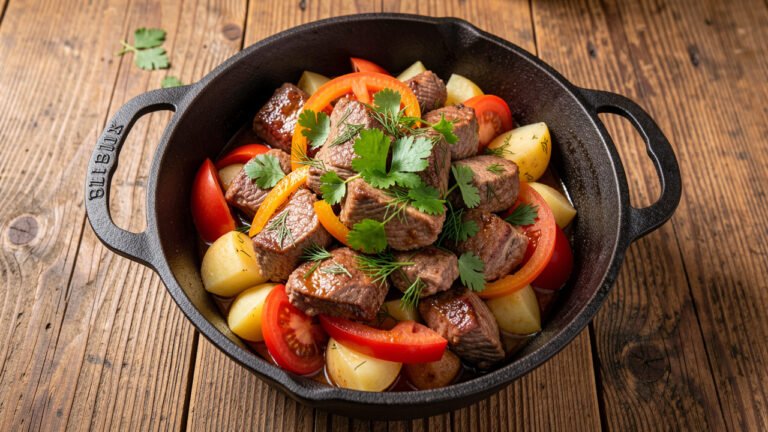
Steamed Lamb and Tomato Stew
Buglama is one of those dishes that looks almost too simple to be as good as it is. The name comes from the idea of steaming, and that is exactly what happens: everything cooks in the moisture the meat and tomatoes release, so the flavor stays concentrated instead of washing out into a broth. The first time I made it I could not believe I did not need to brown the lamb or babysit a pan.
Why This Buglama Works
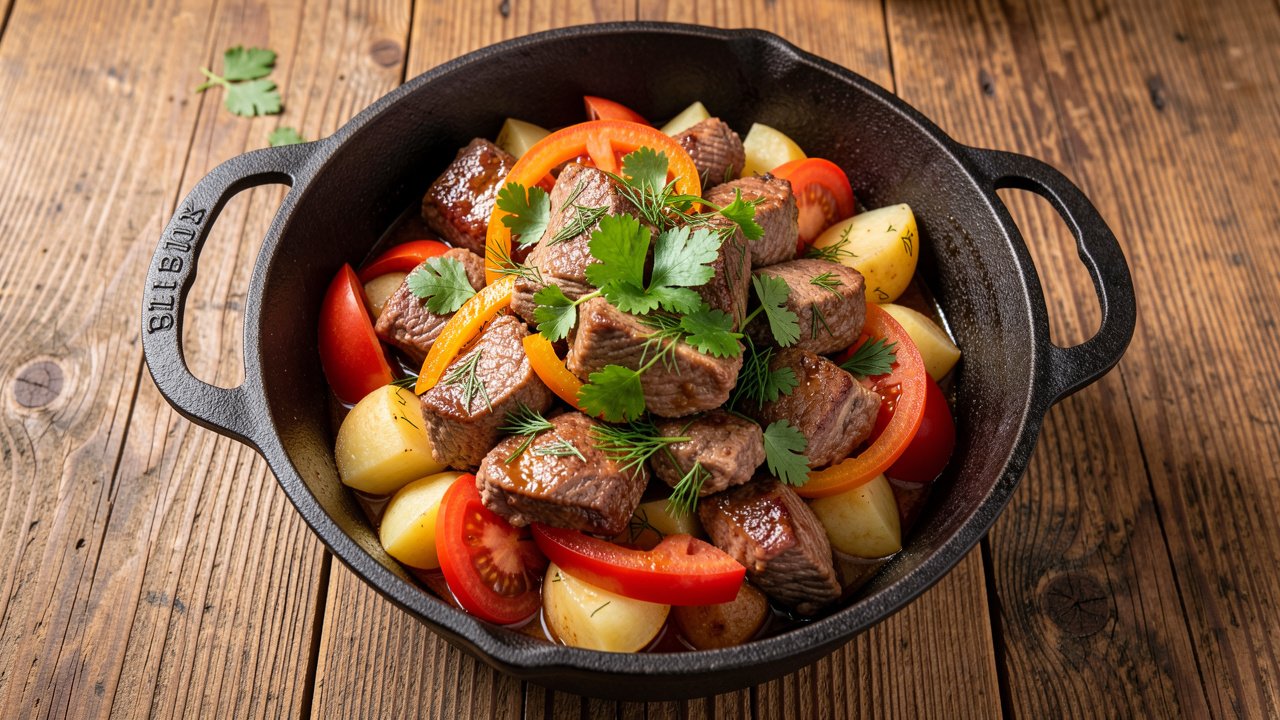
Buglama proves that the best stews are not always the ones you fuss over. Because you never add much water, the lamb and tomatoes essentially confit in their own concentrated juices, so every spoonful tastes deeply of itself. Onion and tomato at the bottom melt into a natural sauce, while the potato and peppers on top steam through and soak up all that savory moisture.
The single most important idea is that this is a steam-braise, not a boil. You want a tight lid, gentle heat, and patience. The pot builds its own humid environment, and that trapped steam is what turns tough cuts of halal lamb or beef into something you can pull apart with a spoon. Add water and you dilute the very thing that makes buglama special.
Layering matters just as much as the ingredients. Onion goes on the bottom so it cushions the meat and releases moisture first. The lamb sits in the middle where it stays surrounded by juice, and the vegetables crown the top where the steam reaches them last. Once it is built, you leave it alone. No stirring means the layers hold their shape and the potatoes do not turn to mush.
It is also a forgiving, flexible dish. The same method welcomes halal lamb or beef, and you can lean it toward chicken, fold in eggplant, or crank up the heat with extra chili once you understand the rhythm. Learn the layered steam-braise once and you have a whole family of one-pot dinners.
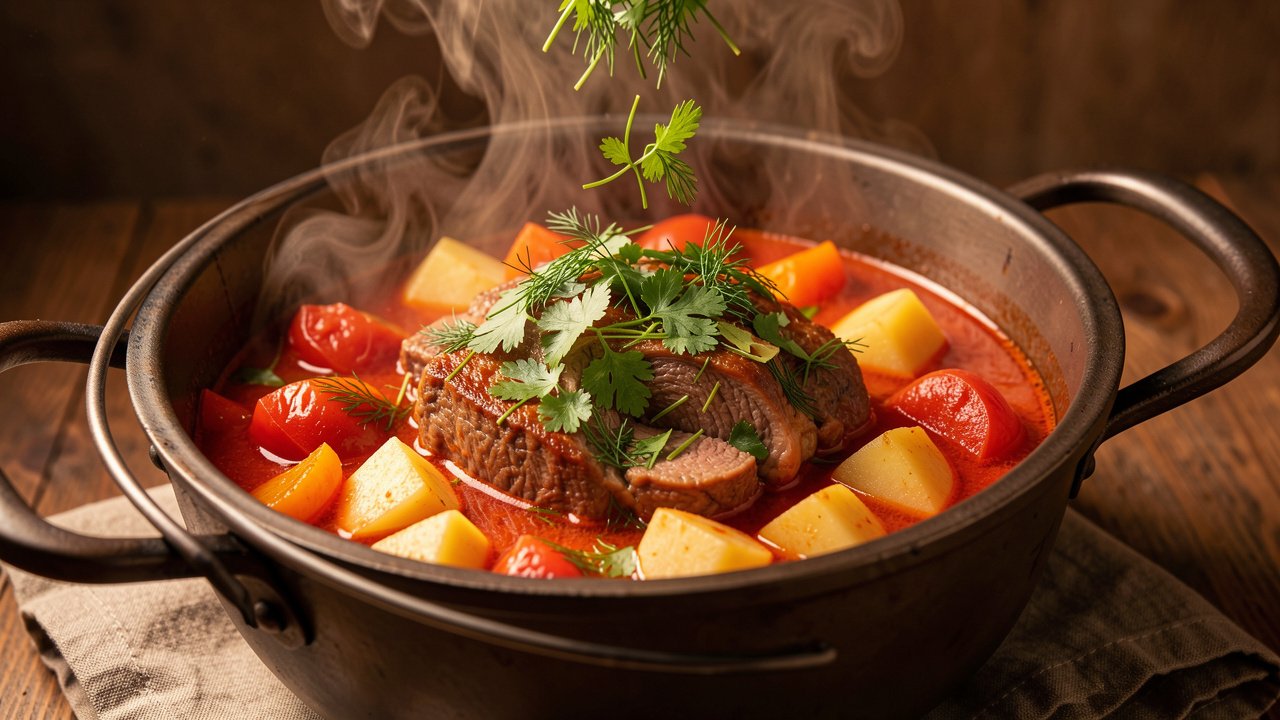
Pro observation: When you lift the lid after two hours, there should be a shallow pool of glossy red juice at the bottom and the lamb should slide off the bone or fall apart at a nudge. That pool is your sauce; do not pour it off.
Ingredients
Kitchen Measurement Converter
Quickly convert between common cooking measurements without leaving the recipe. Pick a category, enter a value, and the result updates instantly.
Ingredient Notes & Substitutions
Halal Lamb
Use bone-in halal lamb shoulder or shank for the richest result, since bones add body to the juices. Boneless works too. Halal lamb or beef both suit the long steam-braise; keep the chunks large so they stay juicy.
Tomatoes
Ripe, red tomatoes are the engine of the dish because they release the moisture that steams everything. Out of season, use canned whole tomatoes drained of most of their liquid so the pot does not turn soupy.
Fresh Herbs
Cilantro, dill and basil are traditional and generous here. Add most of them at the end so they stay bright, and tuck a few stems into the layers as it cooks for a deeper background note.
Potato and Peppers
Waxy potatoes hold their shape better than floury ones through a long steam. Any sweet bell pepper works; a mix of colors looks beautiful, and a mild green pepper is the most traditional choice.
Equipment
- Heavy pot with tight lid
- Sharp knife and board
- Measuring spoons
- Tongs or a spoon
- Cutting bowl for herbs
- Ladle for serving
Before You Start
1. Choose a heavy pot with a good lid. A wide cast-iron or thick-based pot holds gentle, even heat and traps steam, which is the whole point of buglama.
2. Cut everything into large, even pieces. Big chunks survive two hours of steaming without falling apart, and they layer neatly so the pot builds a stable stack.
3. Resist the urge to add water. The tomatoes and lamb will make plenty of liquid. Trust the process; only add a couple of tablespoons if your tomatoes are very firm and dry.
Step-by-Step Instructions
Prep the Lamb and Vegetables
Cut the halal lamb into large chunks and pat them dry. Thickly slice the onions, cut the tomatoes into wedges, chop the potatoes into big pieces, and slice the bell peppers into strips. Smash the garlic and roughly chop the herbs, keeping most of the cilantro, dill and basil aside for the finish.
Layer the Onion Base
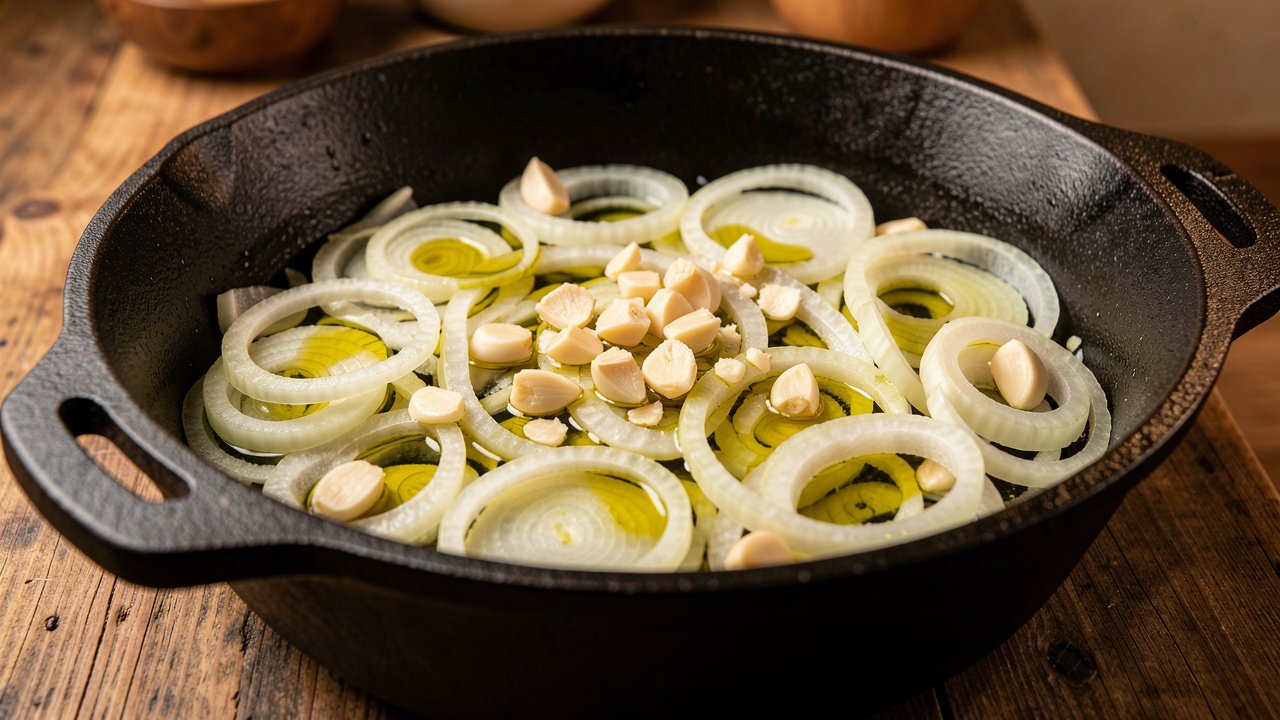
Drizzle the olive oil or melted butter across the bottom of your heavy pot. Spread the sliced onions in an even layer and scatter the smashed garlic over them. This soft, moist bed keeps the lamb from catching and gives up the first wave of steam as the pot heats.
Add the Lamb and Season
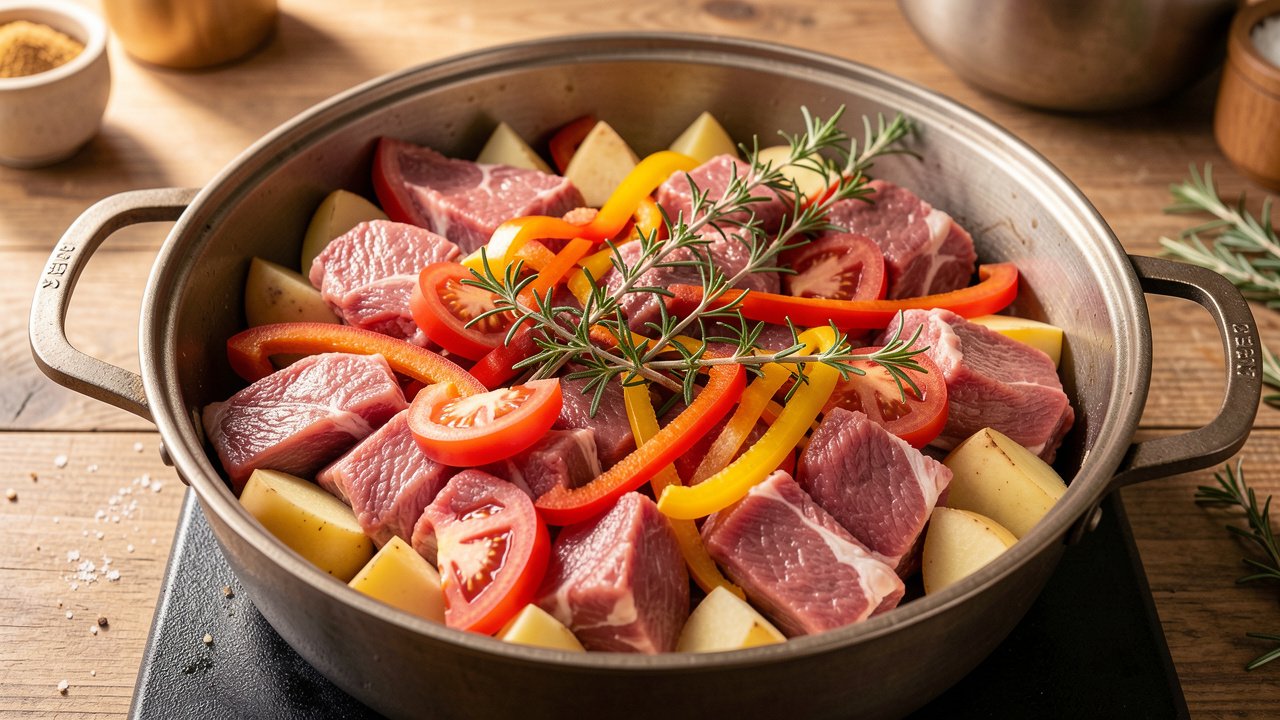
Arrange the lamb chunks in a single layer over the onions. Season with the salt, black pepper, and paprika if using. Tuck a few garlic pieces and a couple of herb stems between the chunks so the seasoning reaches the middle of the pot as it steams.
Crown with Tomatoes, Potato and Peppers
Layer the tomato wedges over the lamb so their juice can trickle down as they soften. Add the potato chunks and bell pepper strips on top. Do not stir. The vegetables sit up high where the steam finishes cooking them, while their juices run down into the meat below.
Cover and Steam Low and Slow
Put the lid on tight and set the pot over low heat. Let it come up gently, then keep it at a bare simmer so steam builds inside without the liquid boiling away. Cook for about 2 hours, resisting the urge to lift the lid too often. Peek only once or twice to check there is juice at the bottom; if it ever looks dry, add just a splash of water.
Rest, Add Herbs and Serve
The buglama is ready when the lamb is fork-tender and pulls apart easily and the potatoes are soft all the way through. For food safety, make sure the lamb has cooked well past a safe internal temperature of 145F with a rest, which the long steam easily achieves; there should be no pink at the bone. Turn off the heat, shower the remaining cilantro, dill and basil over the top, and let it rest a few minutes before serving hot straight from the pot.
Chef’s Tips From Real Kitchen Testing
Keep the heat genuinely low. Buglama should steam, not boil. If you hear a hard rolling bubble, turn it down; a lazy simmer is what keeps the lamb silky.
Do not stir. Every time you dig in and mix the layers, the potatoes break and the neat stack collapses into a mush. Trust the steam to do the cooking.
Salt in the layers, herbs at the end. Seasoning the lamb early carries flavor through, while adding the delicate cilantro, dill and basil last keeps them fresh and green.
Recipe Variations
Serving Suggestions
- Warm flatbread or lavash to scoop up the juices
- Plain rice or bulgur pilaf on the side
- A cool herb-and-cucumber salad
- Extra fresh cilantro, dill and lemon wedges
Nutrition Facts
| Nutrient | Amount per serving |
|---|---|
| Calories | 480 |
| Protein | 34 g |
| Carbohydrates | 24 g |
| Fat | 28 g |
| Saturated Fat | 10 g |
| Fiber | 4 g |
| Sugar | 6 g |
| Sodium | 640 mg |
Values are estimates per serving and vary with the exact cut of lamb and vegetables you use.
Make-Ahead Tips
Buglama is even better the next day, once the lamb has had time to soak up the tomato juices overnight. Cook it fully, cool it, and refrigerate right in the pot if it fits. Reheat gently over low heat with the lid on so it steams back to life, adding only a splash of water if the bottom looks dry. Stir through a little fresh herb just before serving to wake it up again.
Storage, Freezing & Reheating
Common Mistakes to Avoid
Troubleshooting
Lamb still tough? It simply needs more time. Give it another 20 to 30 minutes of gentle steam; tough cuts turn tender only once the connective tissue fully breaks down.
Pot looks dry? Your tomatoes were probably firm or the heat crept up. Add a couple of tablespoons of water, lower the heat, and reseal the lid.
Too watery at the end? Uncover and simmer a few minutes to reduce, or tip the pot gently and spoon off a little liquid before serving.
A Note on Azerbaijani Cooking
Azerbaijani home cooking treasures slow, gentle methods that let a few good ingredients speak for themselves, and buglama is a perfect example. The whole tradition of the no-water steam-braise rests on trapping moisture: you layer meat and vegetables, seal the pot, and let the trapped steam do what fire and water usually fight over. Fresh herbs like cilantro, dill and basil are almost a food group of their own at the Azerbaijani table, showered on at the end to keep everything bright. If you love these unhurried, tomato-rich pots, our roundup of tomato recipes and our comforting hearty tomato lentil soup share the same warming, layered spirit.
Frequently Asked Questions
More Tomato Recipes to Try
Last updated: September 29, 2026