Basque Recipes
Sweet Peppers, Tomatoes and Eggs
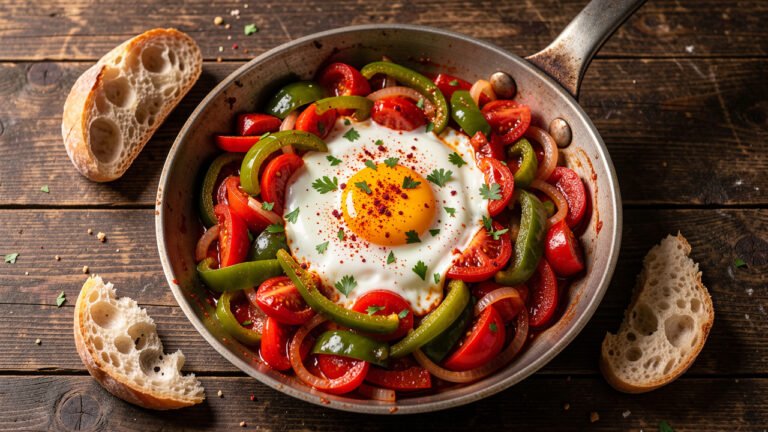
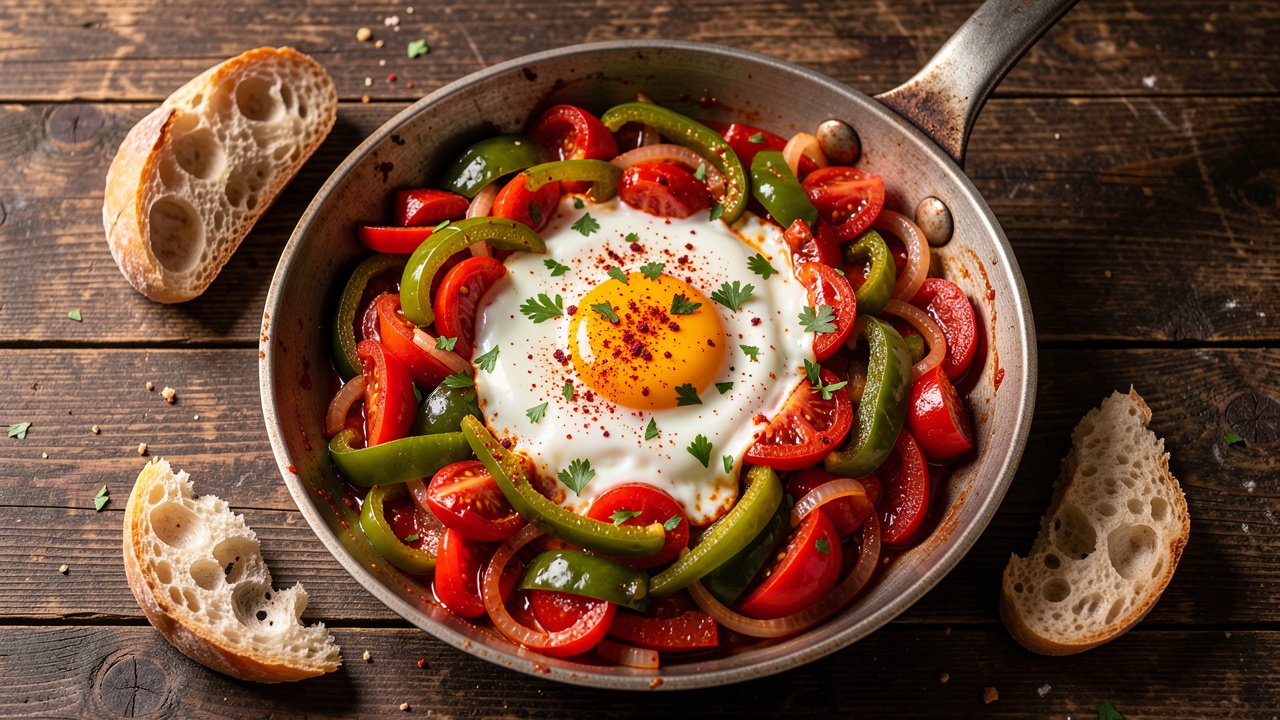
Piperade tastes like a warm afternoon in the Basque hills. It is an unhurried stew of sweet peppers, onions, and tomatoes cooked down slowly with garlic until everything softens into a jammy, glossy tangle, then lifted with the gentle, fruity heat of Espelette pepper. Just before serving, beaten eggs go in and are stirred through until they set into soft ribbons that hold the whole thing together. The first time I made it I rushed the peppers over high heat and ended up with a watery, sharp mess; the second time I let them melt down slowly and it turned into one of the most comforting things I cook.
Why This Basque Piperade Works
Piperade proves that a short list of humble vegetables can taste like far more than the sum of its parts. Sweet peppers, onions, and tomatoes are pantry staples almost everywhere, yet cooked the Basque way they turn into something silky, deeply savory, and a little addictive. The trick is not a secret ingredient; it is patience and a light hand with heat.
The most important thing this recipe gets right is the slow cook. Peppers and onions hold a lot of water, and rushing them over high heat only steams and stews that water out into a thin, sharp liquid. Give them time over gentle heat instead and they collapse, sweeten, and concentrate, releasing their sugars until the whole pan smells rounded and mellow.
Espelette pepper is the signature flavor. It is a mild, fruity chile from the Basque village of the same name, and it brings warmth and a faint smokiness without real burn. A pinch seasons the peppers from within rather than sitting on top as heat, which is exactly why the dish tastes so distinctly Basque. Sweet paprika stands in beautifully if you cannot find it.
Finishing with beaten eggs is what turns a pepper stew into a proper piperade. Stirred through off strong heat, the eggs set into soft, custardy curds that coat every strand of pepper and pull the dish together into a light, satisfying main. Because the eggs go in gently and cook only until just set, they stay tender rather than dry.
Pro observation: The peppers are ready for the eggs when the liquid in the pan has almost disappeared and what remains looks glossy and jammy. If the pan still looks watery, keep cooking; wet peppers are the number one reason a piperade turns out thin.
Ingredients
Kitchen Measurement Converter
Quickly convert between common cooking measurements without leaving the recipe. Pick a category, enter a value, and the result updates instantly.
Ingredient Notes & Substitutions
Sweet Peppers
A mix of green and red bell peppers gives balance: green for a grassy edge, red for sweetness. In the Basque Country long green frying peppers are traditional, so use those if you can find them for the most authentic flavor.
Tomatoes
Ripe, red tomatoes make the sauce sweet and full. Peel them if you like a smoother texture. Out of season, one 14-ounce can of chopped tomatoes is more reliable than pale fresh ones.
Espelette Pepper
This is the defining seasoning, mild and fruity rather than fiery. If you cannot source it, use sweet paprika with a tiny pinch of cayenne, or a mild smoked paprika for a slightly deeper note.
Eggs
Use fresh, room-temperature eggs and beat them lightly before adding. They cook quickly off the heat, so have them ready in a bowl. For a vegan version, skip them and see the variations tab below.
Equipment
- Wide, heavy skillet or pan
- Wooden spoon
- Sharp knife and board
- Mixing bowl for eggs
- Measuring spoons
- Lid for the pan
Before You Start
1. Slice everything evenly. Cut the onions and peppers into thin, similar-sized strips so they soften at the same rate and melt down together.
2. Beat the eggs and set them aside. The eggs go in at the very end and cook fast, so have them lightly beaten in a bowl before you start the peppers.
3. Give yourself time. The whole point of piperade is the slow, gentle cooking of the peppers. Do not plan to rush it; low and slow is where the flavor lives.
Step-by-Step Instructions
Prep the Vegetables
Thinly slice the onions and the green and red peppers into strips. Mince the garlic and chop the tomatoes. Lightly beat the eggs in a small bowl and set them aside within reach of the stove. Having everything ready means the slow cook can run without interruption.
Soften the Onions
Warm the olive oil in a wide pan over medium-low heat. Add the sliced onions with a pinch of salt and cook gently for 6 to 8 minutes, stirring now and then, until soft and translucent but not browned. You want them sweet and mellow, not colored, so keep the heat modest.
Add the Peppers and Slow-Cook
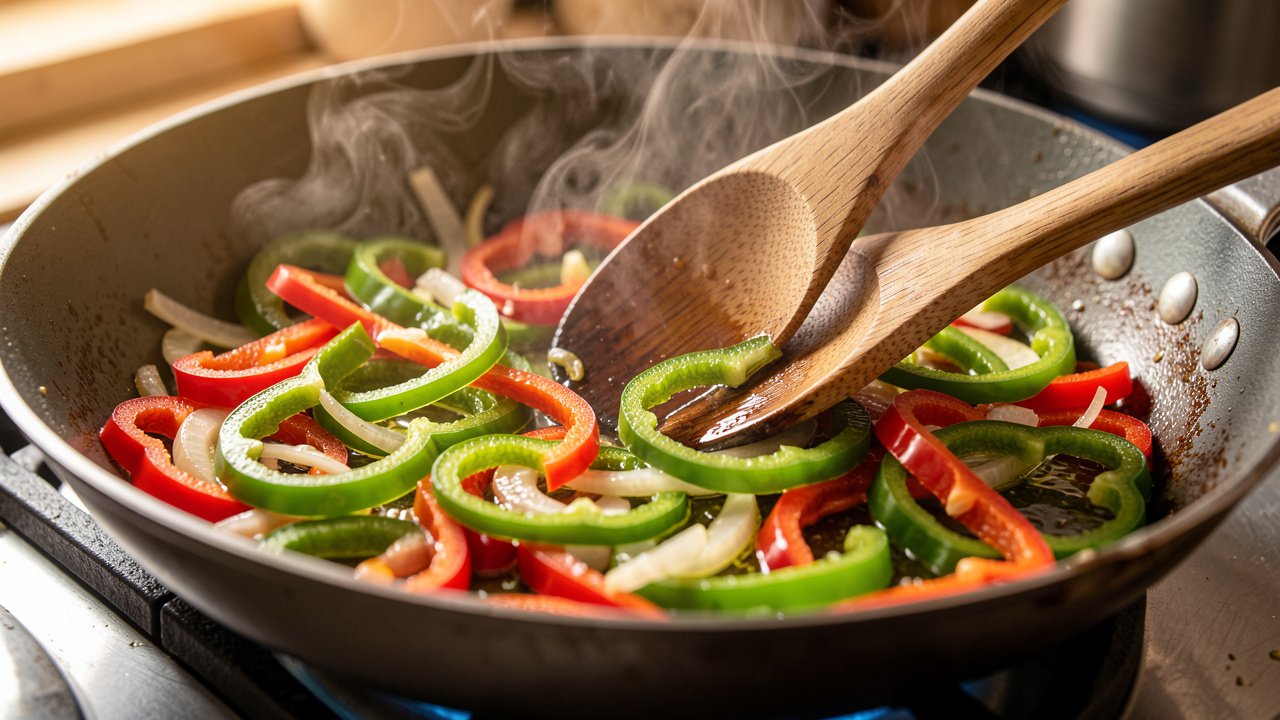
Stir in the sliced green and red peppers, the garlic, and the bay leaf. Lower the heat, cover the pan, and let the peppers cook slowly for 15 to 20 minutes, stirring every few minutes, until they are completely soft and have given up their water. This unhurried step is the heart of piperade, so resist the urge to turn up the heat.
Build the Tomato Base
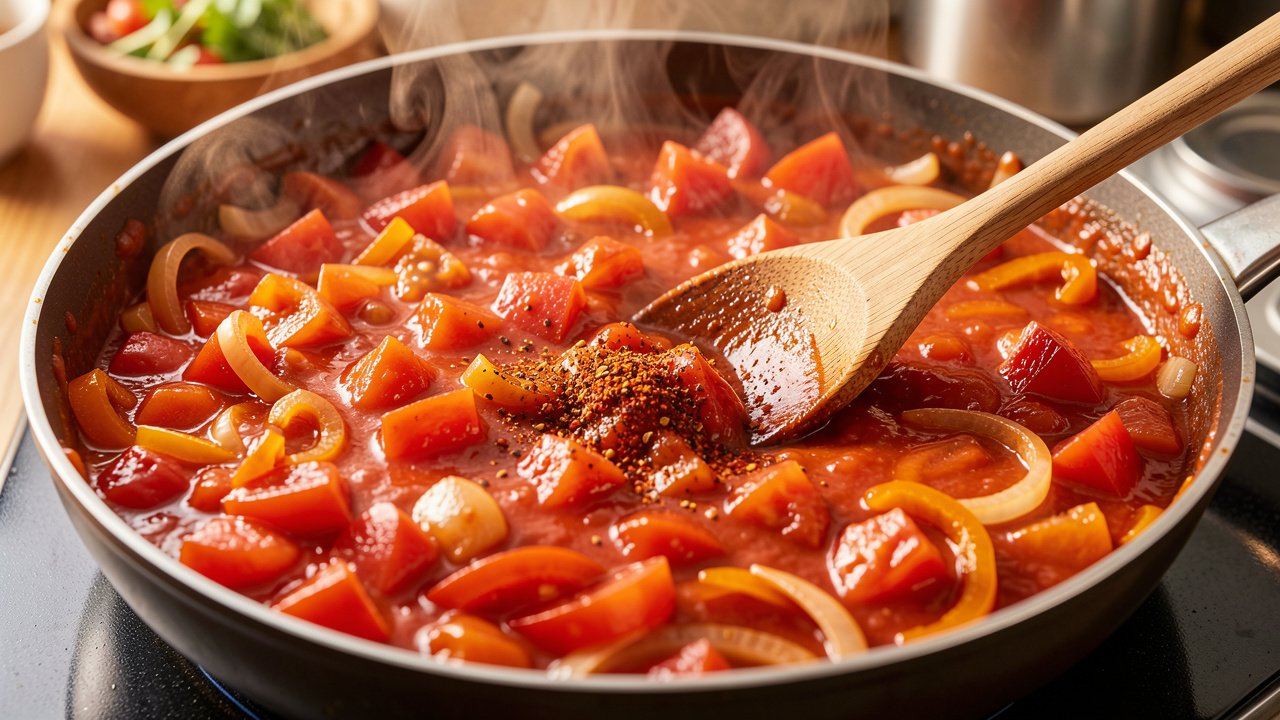
Add the chopped tomatoes, Espelette pepper, sweet paprika, sugar, and the teaspoon of salt. Stir well and cook uncovered for 12 to 15 minutes, stirring often, until the tomatoes break down and most of the liquid cooks away. The mixture should look thick, glossy, and jammy, with no watery pool at the bottom of the pan.
Simmer and Taste
Remove the bay leaf. Taste the stew and adjust with more salt or a little more Espelette for warmth. Let it bubble gently for a couple more minutes so the flavors settle. It should be soft, sweet, and full-flavored, the peppers almost melting. This is your piperade base, and it is delicious on its own even before the eggs go in.
Stir Through the Eggs and Serve
Lower the heat to gentle. Pour the beaten eggs over the peppers and stir slowly and constantly for 1 to 2 minutes, until the eggs set into soft, tender curds that coat the vegetables. Take the pan off the heat while they still look glossy and just set, as they keep firming up. Scatter chopped parsley over the top and serve warm with crusty bread.
Food safety: Cook the eggs until they are set and no longer runny, reaching a safe internal temperature (around 160 F). If you are serving young children, older adults, or anyone pregnant, make sure the eggs are fully cooked through rather than loose.

Chef’s Tips From Real Kitchen Testing
Cook the peppers longer than feels necessary. Truly soft, collapsed peppers are what separate a great piperade from a raw, crunchy one. If in doubt, give them another five minutes.
Add the eggs off strong heat and stir constantly. Treat it like a very loose scramble; the goal is soft, glossy curds, not a firm, dry omelet stuck to the pan.
Season the stew fully before the eggs go in. Once the eggs are folded through it is hard to redistribute salt and Espelette evenly, so get the base tasting right first.
Recipe Variations
Serving Suggestions
- Thick slices of warm, crusty country bread
- A simple green salad with a sharp vinaigrette
- Alongside grilled fish or roast chicken as a side
- Spooned over toast for a rustic brunch
Nutrition Facts
| Nutrient | Amount per serving |
|---|---|
| Calories | 210 |
| Protein | 8 g |
| Carbohydrates | 16 g |
| Fat | 13 g |
| Saturated Fat | 3 g |
| Fiber | 4 g |
| Sugar | 9 g |
| Sodium | 480 mg |
Values are estimates per serving and vary with the exact ingredients and brands you use.
Make-Ahead Tips
The pepper and tomato base is a wonderful make-ahead dish, because the flavors deepen as it rests. Cook it up to the point before the eggs go in, cool, and refrigerate for up to three days. When you are ready to eat, reheat the base gently, then stir the beaten eggs through fresh just before serving. Adding the eggs to order keeps them soft and tender rather than overcooked.
Storage, Freezing & Reheating
Common Mistakes to Avoid
Troubleshooting
Piperade too watery? The peppers or tomatoes were not cooked down enough. Keep simmering uncovered until the liquid reduces and the stew looks thick before adding the eggs.
Eggs turned tough and dry? They cooked too fast on high heat. Next time lower the flame and pull the pan off as soon as the eggs look softly set; they finish cooking in the residual warmth.
Flavor tastes flat? It usually needs a little more salt and a pinch more Espelette pepper. A tiny bit of sugar also helps balance sharp, underripe tomatoes.
A Note on Basque Cooking
Basque cuisine straddles the mountains and the sea between France and Spain, built on bright peppers, garlic, olive oil, and produce grown in a green, rainy corner of Europe. Espelette pepper is its emblem: a mild, sun-dried chile strung in ropes along village walls each autumn. Piperade grew out of that pantry, a humble farmhouse dish that stretches a few peppers and eggs into a generous, colorful meal. It sits alongside other slow-simmered pepper and tomato stews found all around the Mediterranean, and it rewards the same patience. If you love cooking with ripe tomatoes, browse more ideas in our tomato recipes collection.
Frequently Asked Questions
More Tomato Recipes to Try
Last updated: September 29, 2026