Bulgarian Recipes
Bulgaria’s National Salad
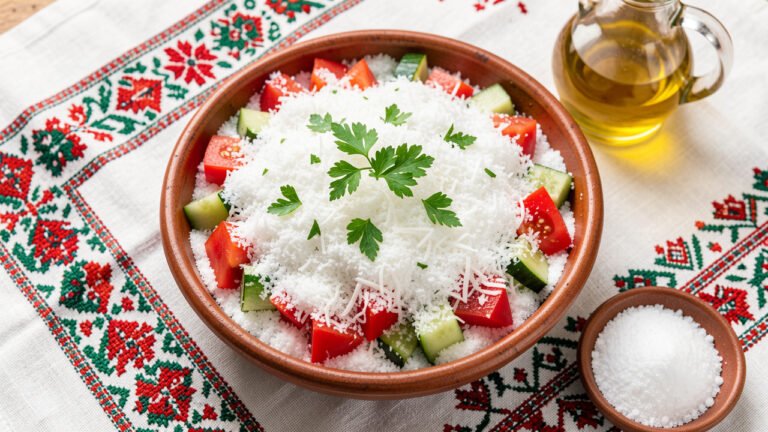
Shopska salata is proof that a salad needs no clever dressing to be unforgettable. What it needs is genuinely ripe tomatoes, a confident hand with the salt, and far more grated white cheese than feels reasonable. The first time I made it with a polite sprinkle of cheese, a Bulgarian friend looked at the bowl and said, kindly, that I had made a tomato salad instead.
Why This Shopska Salad Works
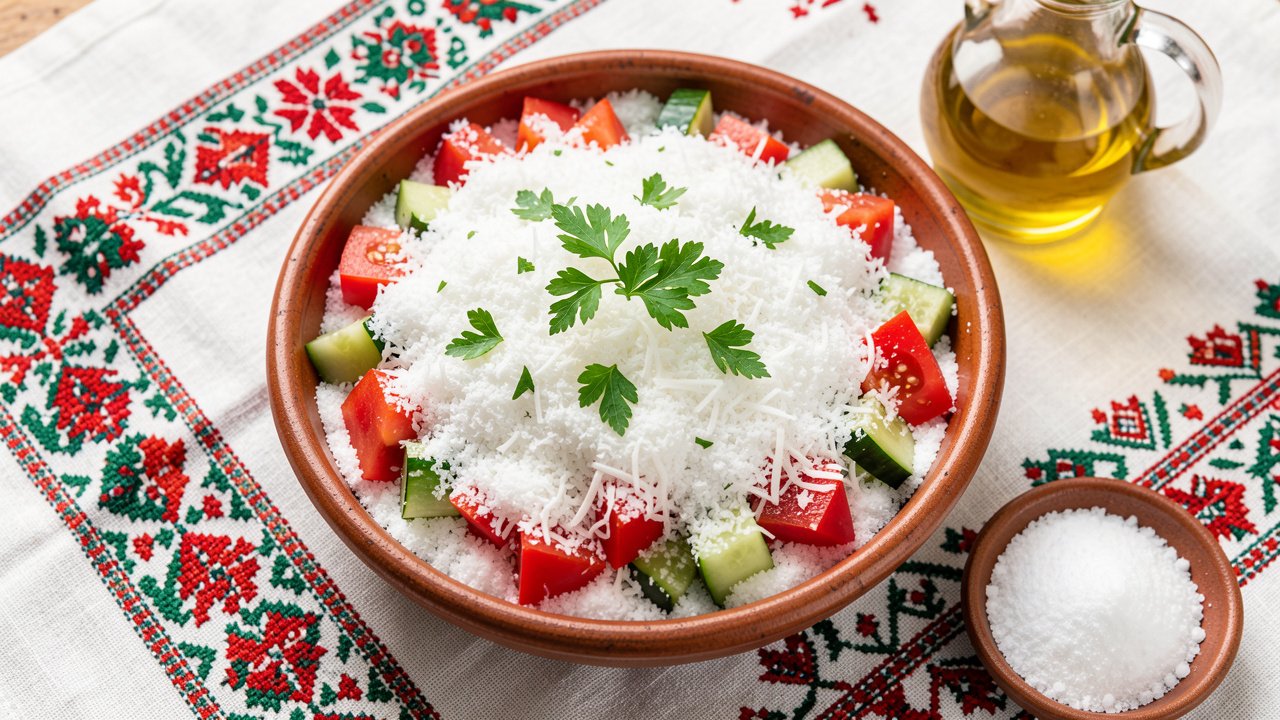
Every element here has one job and does it loudly. The tomatoes bring sweetness and juice, the cucumber cool crunch, the peppers a grassy snap, the onion bite, and the cheese the salt and creaminess that pulls the bowl together. With only five main players, each has to be good and each has to be cut big enough to taste on its own.
The dressing is almost aggressively simple: oil, a little red wine vinegar, and salt, added straight to the bowl rather than whisked separately. Bulgarian cooks let the tomatoes supply most of the acidity, so the vinegar is a nudge rather than a soak. Add too much and you flatten the fruit.
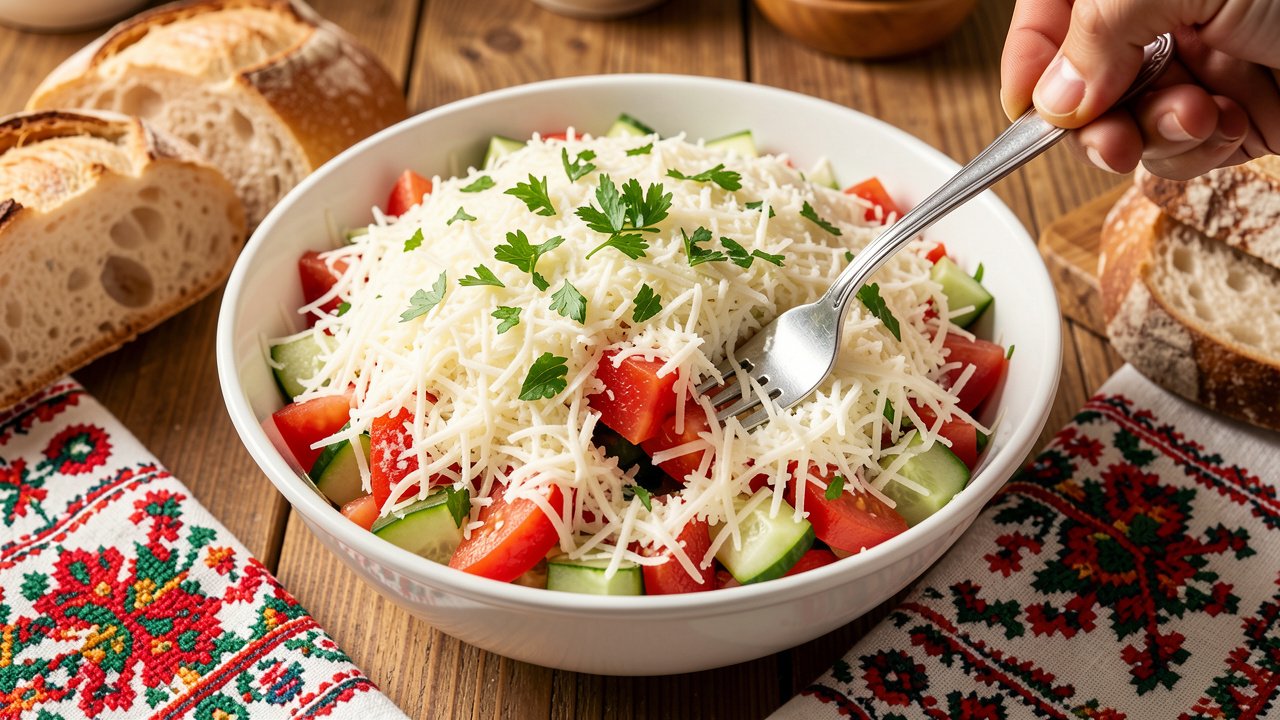
Then comes the part people get wrong. The grated cheese is not a garnish, it is a layer. A proper shopska arrives looking like a small snowdrift has settled over the vegetables, and you break through it with your fork as you eat. That thick cap also insulates the salad, keeping it from turning into a puddle on a hot table. Chop everything, dress it at the last possible moment, then cheese it and carry it straight out. Nothing sits, nothing marinates, nothing softens.
Pro observation: Salt the vegetables only once the oil is already in the bowl. The oil coats the cut surfaces and slows the salt from drawing out juice, the easiest way to stop a watery salad.
Ingredients
Kitchen Measurement Converter
Bulgarian recipes are written in grams and milliliters, so use this to switch between metric and US measures without leaving the page.
Ingredient Notes & Substitutions
Tomatoes
Use the ripest, most fragrant tomatoes you can find, ideally field-grown beefsteak or heirloom types with dense flesh. Never refrigerate them before chopping, since cold dulls both aroma and sweetness.
Sirene Cheese
Sirene is Bulgaria’s brined white cheese, firm enough to shred on the large holes of a box grater. Greek feta is the closest stand-in. Soft styles collapse into paste, so chill the block for 20 minutes first.
Peppers
Bulgarians often use long, thin-skinned sweet peppers called chushki, raw in summer and roasted in autumn. Ordinary bell peppers work perfectly, and one red plus one green gives the salad its familiar colouring.
Oil and Vinegar
Sunflower oil is traditional and stays neutral; mild olive oil is a fine swap. Red wine vinegar gives the classic tang, and lemon juice works if you prefer something softer. Both are halal pantry staples.
Equipment
- Large shallow serving bowl
- Sharp chef’s knife
- Wooden cutting board
- Box grater
- Vegetable peeler
- Measuring spoons
Before You Start
1. Bring the tomatoes to room temperature. Cold tomatoes taste muted and mealy. Leave them on the counter for an hour if they have been in the fridge.
2. Chill the cheese, not the salad. A cold block of sirene or feta grates into clean, fluffy shreds. A warm one smears into a lump.
3. Choose a wide, shallow bowl. Shopska is served spread out rather than piled up, so the cheese layer covers the whole surface.
4. Do not dress it early. Have everyone at the table before the oil, vinegar, and salt go in.
Step-by-Step Instructions
Cut the Tomatoes into Chunks
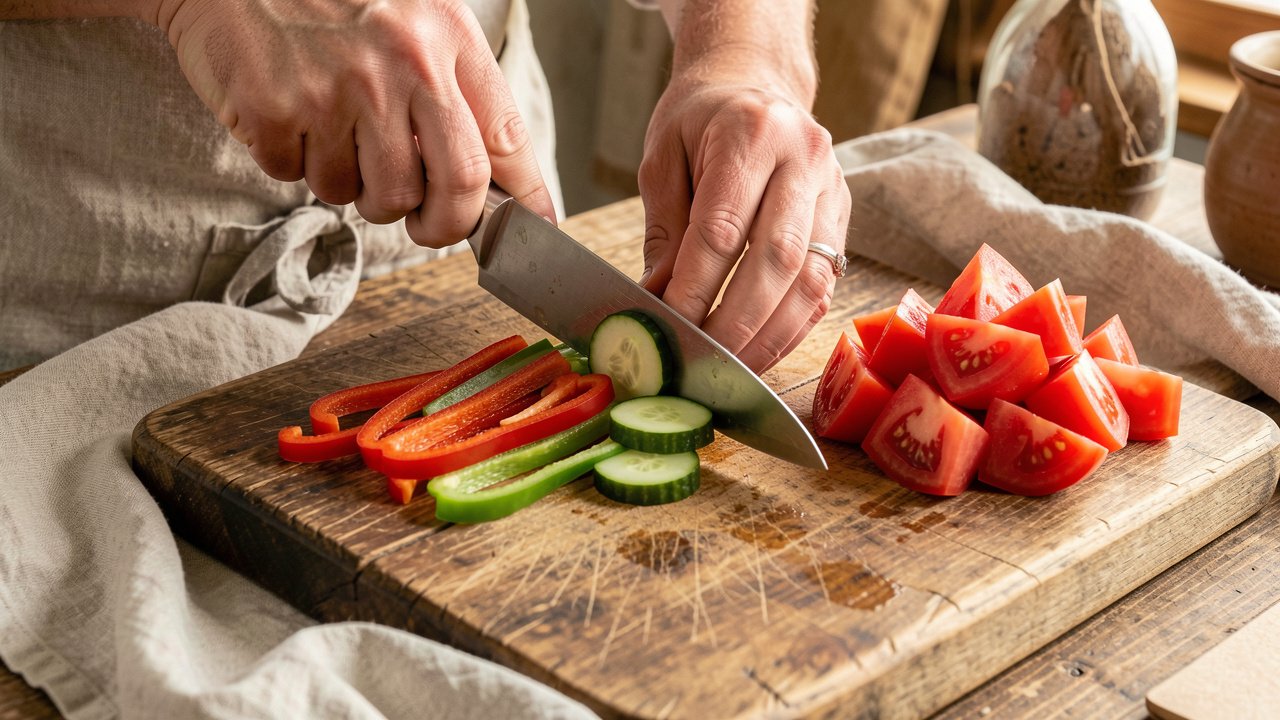
Core the tomatoes and cut them into generous chunks, roughly three quarters of an inch across. Resist the urge to dice them finely; big pieces hold their shape and keep their juice inside. Tip them into your serving bowl with any juice that escapes on the board.
Prepare the Cucumber and Peppers
Peel the cucumber if the skin is thick or waxed, halve it lengthways, and cut it into thick half-moons. Seed the peppers and cut them into short strips about the same size as the tomato chunks. Matching the sizes gives shopska its chunky, mosaic look. Add everything to the bowl.
Slice and Soften the Onion
Slice the red onion as thinly as you can manage. If raw onion overpowers your palate, drop the slices into cold water for five minutes, then drain and pat dry; this washes off the harshest compounds while keeping the crunch. Scatter over the vegetables.
Dress the Salad
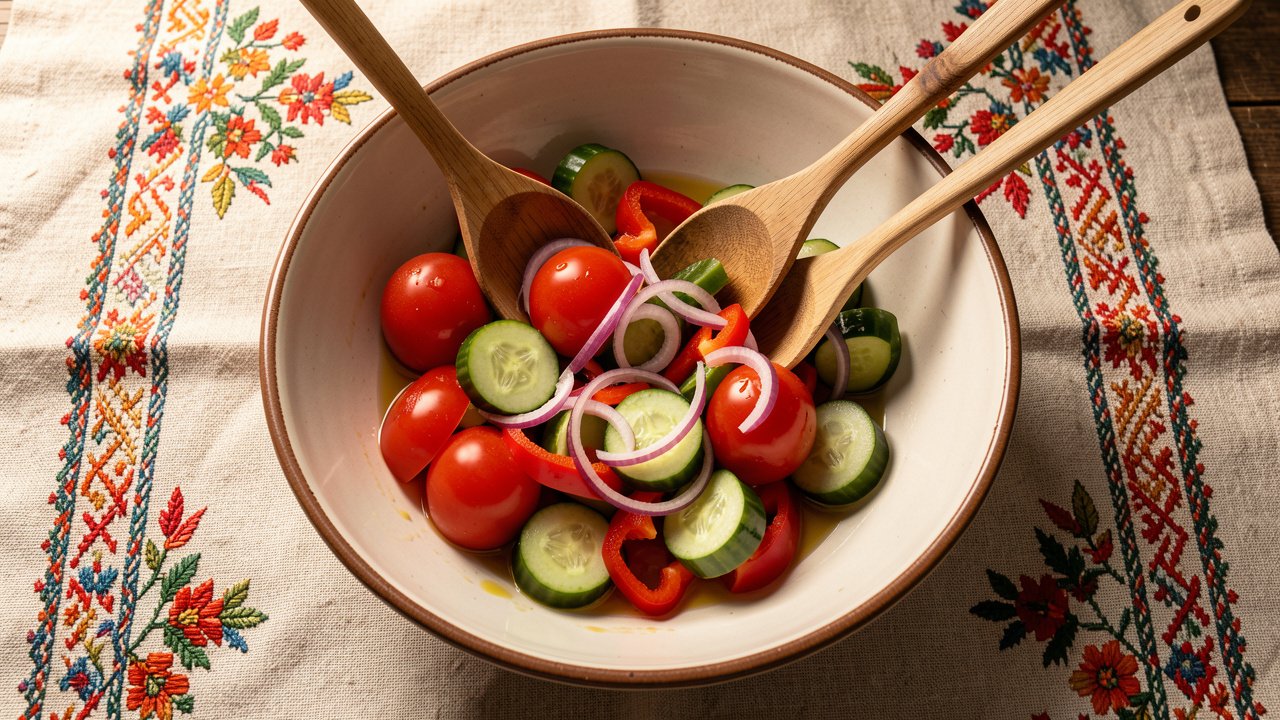
Pour the oil over the vegetables first and turn everything gently so the cut surfaces get a light coating. Add the red wine vinegar, salt, and black pepper, and toss again with two large spoons. Taste a piece of tomato: it should read seasoned and bright, not sharp. Add a pinch more salt if it falls flat.
Grate the Cheese Blanket
Grate the chilled sirene or feta on the large holes of a box grater directly over the bowl, in slow circles so the shreds fall evenly. Keep going until the vegetables have all but disappeared. Aim for an even white layer half an inch deep, not a dusting. Do not stir it in.
Garnish and Serve Right Away
Scatter the parsley over the white surface and add a final grind of black pepper. Carry the bowl straight to the table and let people break through the cheese with their own forks. Serve within ten minutes, with bread to mop up the juices at the bottom.
Chef’s Tips From Real Kitchen Testing
Weigh the cheese at least once. Two hundred grams looks like too much in the packet and exactly right on the salad, and your eye is calibrated after one batch.
Salt the salad, not the cheese layer. Sirene and feta are already salty, so the seasoning belongs in the vegetables underneath.
Save the bowl juices. The tomato, oil, and vinegar liquid left at the bottom is the best part; Bulgarians mop it up with bread rather than pour it away.
Recipe Variations
Serving Suggestions
- Warm crusty bread or Bulgarian pitka
- Grilled vegetables or grilled halal kebapche
- A bowl of cold tarator cucumber soup
- Sparkling water with lemon and mint
Nutrition Facts
| Nutrient | Amount per serving |
|---|---|
| Calories | 265 |
| Protein | 9 g |
| Carbohydrates | 12 g |
| Fat | 21 g |
| Saturated Fat | 8 g |
| Fiber | 3 g |
| Sugar | 8 g |
| Sodium | 780 mg |
Values are estimates per serving and vary with the exact ingredients and brands you use.
Make-Ahead Tips
Shopska does not improve with sitting, but the prep travels well. Up to four hours ahead, chop the tomatoes, cucumber, and peppers into separate covered containers in the fridge, with the onion in its own tub, and grate the cheese so it is ready and cold. At the table, tip the vegetables into the bowl, add the oil, vinegar, salt, and pepper, toss, then add the cheese and parsley. Assembly takes under two minutes.
Storage & Leftovers
Common Mistakes to Avoid
Troubleshooting
Salad is watery? It was salted too soon, or the tomatoes were overripe. Tilt the bowl, spoon off the excess liquid, and add a little more cheese to rebalance.
Tastes bland? Almost always under-salted, or the tomatoes were refrigerated. Add salt a pinch at a time, tossing between additions.
Too sharp from the onion? Soak the slices in cold water for five minutes next time, or use a mild sweet onion. For this batch, more cheese and oil soften the edge.
Cheese turned to paste? The block was too warm. Chill it firm, and use the large holes of the grater rather than the fine ones.
A Note on Bulgarian Cooking
Shopska salata takes its name from the Shopluk, the region around Sofia whose villagers, the Shopi, are famous in folklore for being stubborn, plain-spoken, and thrifty. The salad matches that reputation: nothing fancy, nothing wasted, and no apology for how much cheese is on it. It opens almost every Bulgarian meal.
Its colours are the other half of the story. White cheese, green cucumber and parsley, and red tomato mirror the Bulgarian flag. The modern version was popularised in the mid twentieth century by the state tourism board, which wanted one recognisable summer dish to put in front of visitors, and it worked so well that neighbouring countries adopted it too.
It endures for the reason any good peasant dish endures: it is built entirely around whatever is at its best right now. If you like that kind of raw, tomato-forward cooking, our fresh tomato salsa works on the same principle of chopping well and dressing lightly.
Frequently Asked Questions
More Tomato Recipes to Try
Last updated: September 23, 2026