Balkan Recipes
Serbian Baked Rice and Vegetables in Tomato
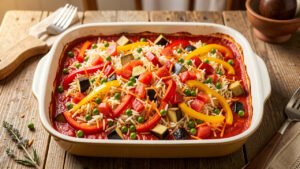
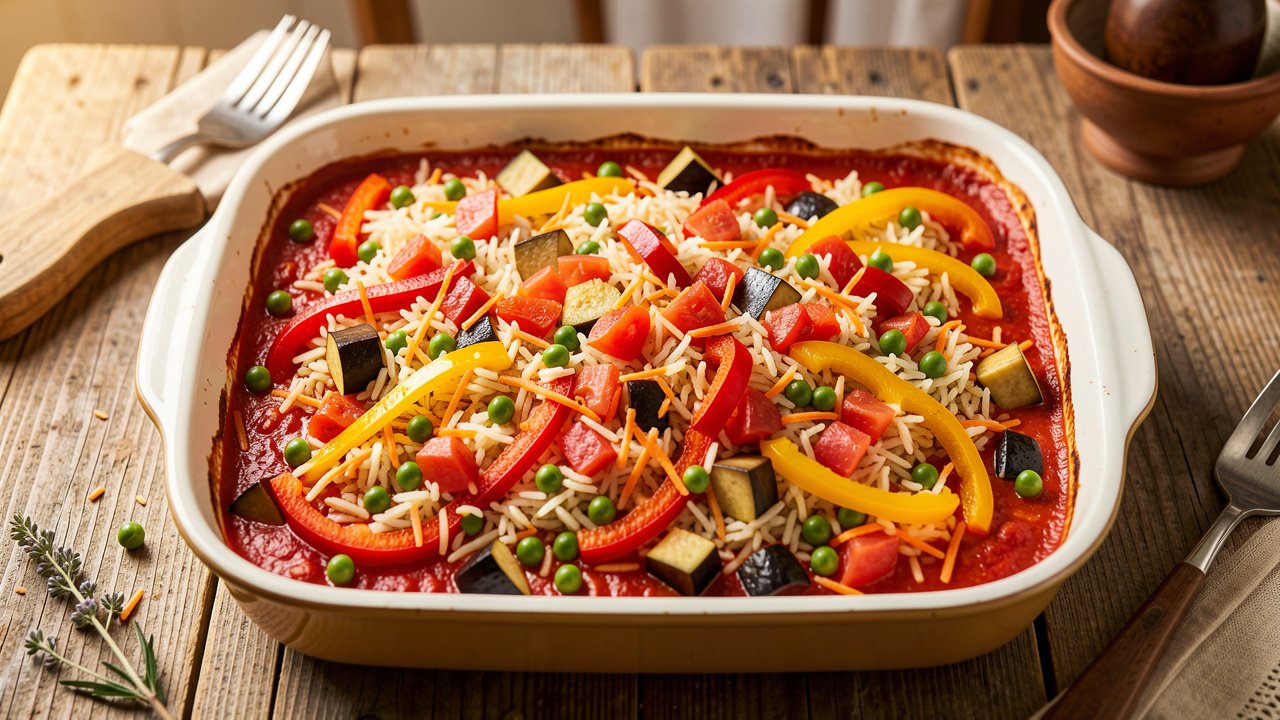
Djuvec, also spelled gyuvech, is the kind of dish that fills a whole kitchen with the smell of sweet paprika and roasting vegetables. It is a humble baked casserole of rice and whatever the garden is giving you, bound together by a rich tomato base and finished with an edge of caramelized crust on top. The first time I made it, I stirred it too often and ended up with something closer to risotto, which taught me the real lesson: djuvec wants to be left alone in the oven.
Why This Djuvec Works
Djuvec is proof that a short list of everyday vegetables can turn into something deeply satisfying when you let the oven do the work. The rice soaks up a tomato base that is sweetened by carrot and onion and warmed by sweet paprika, so every grain tastes seasoned rather than plain. The bell peppers and eggplant soften into the mix while the peas keep little pops of freshness, and the whole thing bakes into one comforting, spoonable casserole.
The single most important idea here is the ratio of rice to liquid. Djuvec is baked, not boiled, so the rice needs enough tomato-rich liquid to swell and cook through without you stirring it. Get that ratio right and the grains come out tender and separate; get it wrong and you end up with a gummy paste or a dry, crunchy layer. This recipe is built around a reliable ratio you can trust.
Sauteing the vegetables briefly before they go in the oven is the other quiet secret. A few minutes in the pan wakes up the onion, blooms the paprika, and cooks the raw edge off the tomato, so the baked dish tastes developed rather than flat. It is a small step that pays off in a much deeper flavor.
Best of all, djuvec is endlessly flexible. The same base welcomes halal chicken or beef when you want a heartier meal, or stays proudly vegetarian when you want something lighter. Once you know the method, you can lean on whatever peppers, squash, or tomatoes are in season and make it your own every time.
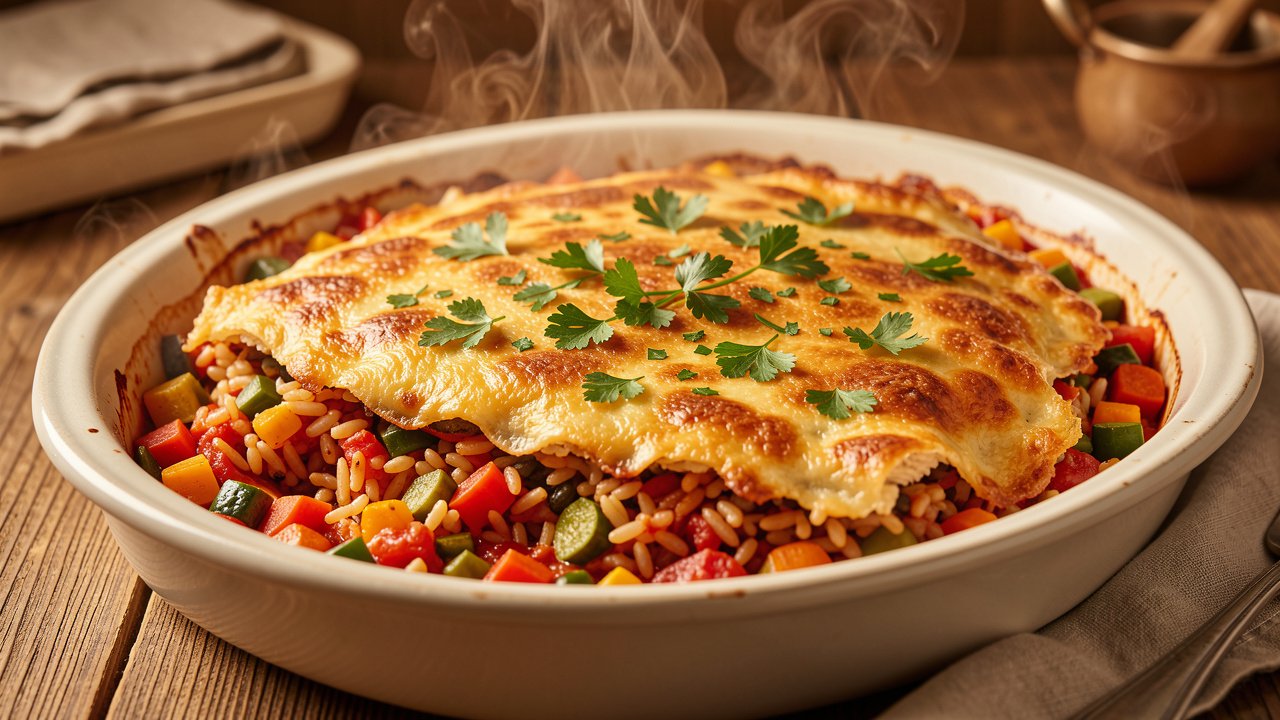
Pro observation: The djuvec is ready to come out when the top has dried into a lightly caramelized crust and there is no loose liquid pooling at the edges. Give it a five minute rest before serving so the rice firms up and stops steaming.
Ingredients
Kitchen Measurement Converter
Quickly convert between common cooking measurements without leaving the recipe. Pick a category, enter a value, and the result updates instantly.
Ingredient Notes & Substitutions
Rice
Long-grain white rice is traditional and forgiving; it bakes into separate, tender grains. Rinse it first to wash off surface starch so the finished djuvec is not gummy. Avoid quick-cook or parboiled rice, which can turn mushy.
Tomatoes and Paste
Ripe red tomatoes give the sweetest base. Out of season, one 14-ounce can of chopped tomatoes works well. The spoonfuls of tomato paste deepen the color and add a concentrated backbone that fresh tomatoes alone cannot.
Paprika
Sweet Balkan paprika is the soul of djuvec, so use a fresh, fragrant one. Bloom it in the warm oil for a few seconds, but do not let it scorch or it turns bitter. Add a pinch of hot paprika if you want gentle warmth.
Vegetables
Bell peppers, carrot, eggplant, and peas are classic, but djuvec loves improvisation. Zucchini, green beans, or a handful of okra all belong here. Keep the total volume similar so the rice-to-liquid balance stays right.
Equipment
- Large ovenproof baking dish
- Wide skillet or saute pan
- Sharp knife and board
- Box grater
- Wooden spoon
- Foil to cover
Before You Start
1. Rinse the rice well. Swirl it in cold water until the water runs clear, then drain. This removes surface starch and is your first defense against a gummy bake.
2. Heat the broth. Warm the vegetable broth before it goes into the dish so the bake does not stall. Cold liquid can leave the rice unevenly cooked.
3. Preheat the oven fully. Bring the oven to 375 F (190 C) before the dish goes in, so the rice starts cooking at a steady temperature and the top can caramelize on schedule.
Step-by-Step Instructions
Prep the Vegetables and Rice
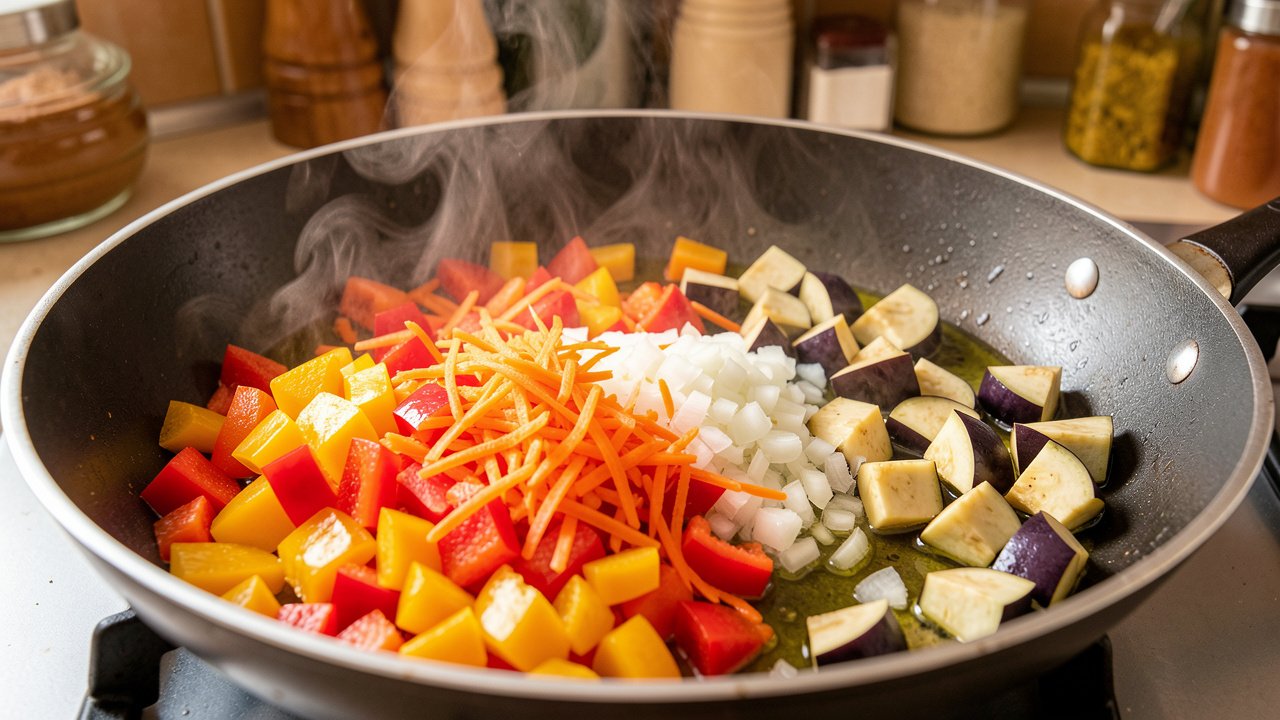
Rinse the rice until the water runs clear and set it aside to drain. Finely chop the onions, mince the garlic, dice the bell peppers and eggplant, and grate the carrot. Chop the tomatoes. Having everything ready by the stove keeps the next steps quick and even.
Saute the Aromatics and Vegetables
Heat the olive oil in a wide skillet over medium heat. Add the onions and cook 5 to 6 minutes until soft and golden, then stir in the garlic for a minute. Add the peppers, carrot, and eggplant and cook another 5 minutes so they begin to soften and pick up a little color.
Build the Paprika-Tomato Base
Lower the heat and stir in the sweet paprika and tomato paste, cooking for about 30 seconds so the paprika blooms without burning. Add the chopped tomatoes, salt, and black pepper, and cook 5 minutes until the tomatoes collapse into a thick, glossy sauce. This is the flavor foundation of the whole dish.
Combine Rice, Peas, and Broth
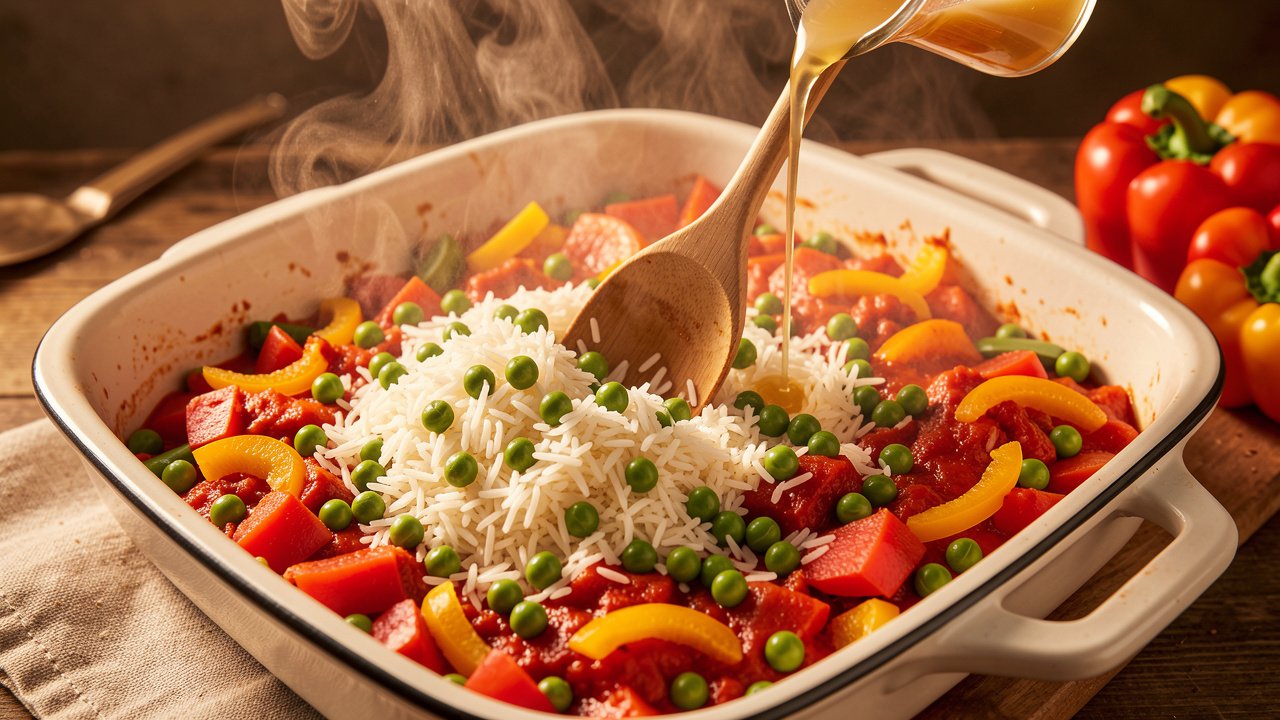
Stir in the drained rice and the green peas so every grain is coated in the tomato base. Scrape everything into your baking dish and spread it level. Pour the hot vegetable broth evenly over the top and give it one gentle stir to settle the rice into the liquid.
Bake Covered
Cover the dish tightly with foil and bake at 375 F (190 C) for 35 minutes. The rice steams gently under the foil and drinks up the tomato broth. Resist the urge to open and stir; djuvec sets best when it is left undisturbed to cook through evenly.
Uncover, Caramelize, and Rest
Remove the foil and bake another 15 to 20 minutes until the liquid is absorbed and the top dries into a lightly caramelized crust. Let it rest 5 minutes, then fluff gently with a fork and scatter fresh parsley over the top before serving hot.
Chef’s Tips From Real Kitchen Testing
Measure the rice and liquid carefully. Baked rice is unforgiving, so a level cup and warm broth make the difference between fluffy and gummy.
Bloom the paprika for only a few seconds off high heat. It should smell sweet and toasty, never acrid, since scorched paprika turns the whole dish bitter.
Do not stir during baking. Djuvec caramelizes on top precisely because the rice is left still; stirring releases starch and makes it sticky.
Recipe Variations
Serving Suggestions
- A dollop of thick plain yogurt on the side
- Crusty bread to catch the tomato sauce
- A crunchy shopska-style tomato and cucumber salad
- Pickled peppers or a spoon of ajvar
Nutrition Facts
| Nutrient | Amount per serving |
|---|---|
| Calories | 320 |
| Protein | 7 g |
| Carbohydrates | 54 g |
| Fat | 9 g |
| Saturated Fat | 1.5 g |
| Fiber | 6 g |
| Sugar | 9 g |
| Sodium | 640 mg |
Values are estimates per serving and vary with the exact ingredients and brands you use.
Make-Ahead Tips
Djuvec is a friendly make-ahead dish because the paprika-tomato base only tastes better after a rest. You can saute the vegetables and build the tomato base up to a day ahead, then refrigerate it. When you are ready, stir in the rinsed rice and warm broth, transfer to the baking dish, and bake as directed. If you prefer, bake the whole dish in advance, cool it, and reheat covered so the rice stays moist rather than drying out.
Storage, Freezing & Reheating
Common Mistakes to Avoid
Troubleshooting
Rice still hard in the middle? The broth ran out too soon. Add a splash of hot broth, re-cover, and bake another 10 minutes until tender.
Djuvec turned out gummy? There was too much liquid or the rice was not rinsed. Next time rinse well and measure the broth level, and uncover earlier to let steam escape.
Top not caramelizing? Finish it uncovered on a higher rack, or give it a few minutes under the broiler while watching closely so it colors without burning.
A Note on Serbian Cooking
Djuvec belongs to a broad Balkan tradition of baked one-pot dishes, named for the earthenware vessel that gave the dish its shape and its slow, even heat. Across Serbia and its neighbors, cooks build these bakes around whatever the summer garden offers: peppers, tomatoes, eggplant, and squash, all bound with rice and a generous spoon of sweet paprika. It is home cooking at its most generous, made to feed a full table and to taste even better as leftovers. If you love spiced tomato dishes, our hearty tomato lentil soup shares the same warming, pantry-friendly spirit, and you can browse more ideas in our full collection of tomato recipes.
Frequently Asked Questions
More Tomato Recipes to Try
Last updated: September 24, 2026