Lebanese Recipes
Vegan Eggplant and Chickpea Stew
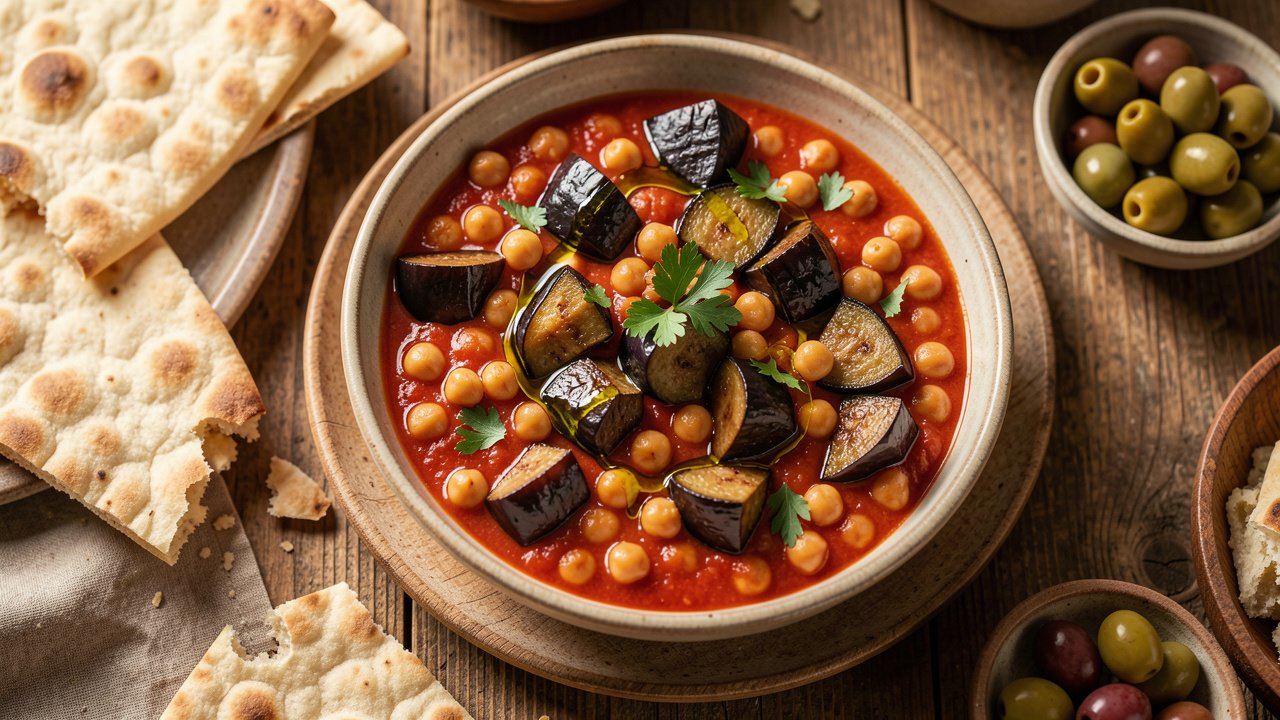
Maghmour is proof that a handful of pantry ingredients can taste like something you fussed over all afternoon. Silky eggplant, tender chickpeas, and a deeply garlicky tomato sauce come together into a stew that tastes even better the next day. It is one of those dishes that fills the kitchen with the smell of toasting garlic and warm spice, and it asks very little of you in return.
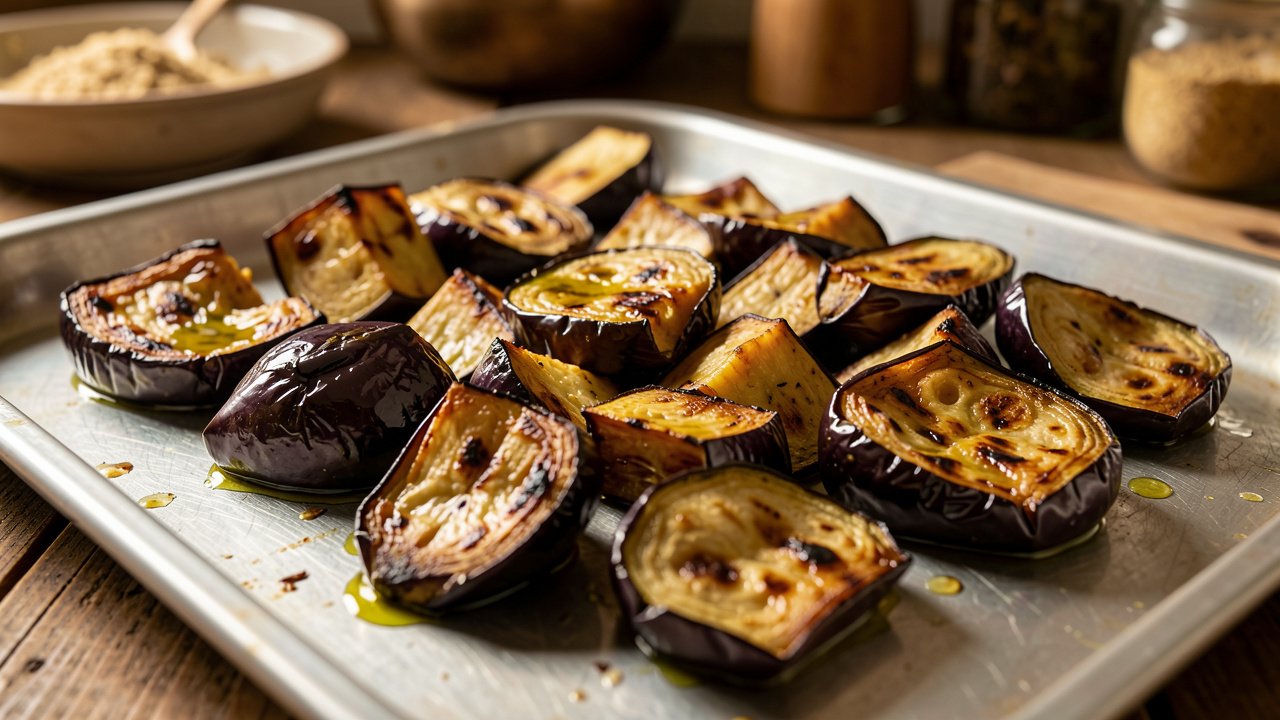
I learned the hard way that the eggplant is the whole game here. The first time I made it, I rushed the eggplant straight into the sauce raw, and it stayed spongy and slightly bitter. Roasting it first, until it is collapsing and sweet, is what turns maghmour from fine into unforgettable.
Why This Maghmour Works
Lebanese home cooking is built on generosity with olive oil, garlic, and vegetables, and maghmour is a perfect example. It takes three humble ingredients that are almost always on hand, eggplant, chickpeas, and tomatoes, and coaxes real depth out of them with nothing more than patience and warm spice. There is no meat and no dairy, yet the stew tastes hearty and satisfying.
The single most important step is roasting the eggplant before it meets the sauce. Roasting drives off moisture and concentrates the eggplant into something meltingly soft and lightly caramelized. That sweetness is what balances the acidity of the tomatoes, so the finished stew tastes round and full rather than sharp.
The garlic does the heavy lifting on flavor. Maghmour is proudly garlicky, and you want more than feels reasonable. Gently softening a generous amount of garlic in olive oil builds a savory backbone, while the cumin, cinnamon, and allspice add the gentle warmth that marks so many Levantine dishes.
It is also forgiving and flexible. You can make it a day ahead, serve it warm or at room temperature, and stretch it to feed a crowd as part of a mezze spread. Once you know the method, you can lean it in any direction: extra garlicky, a little spicy, or baked rather than fried.
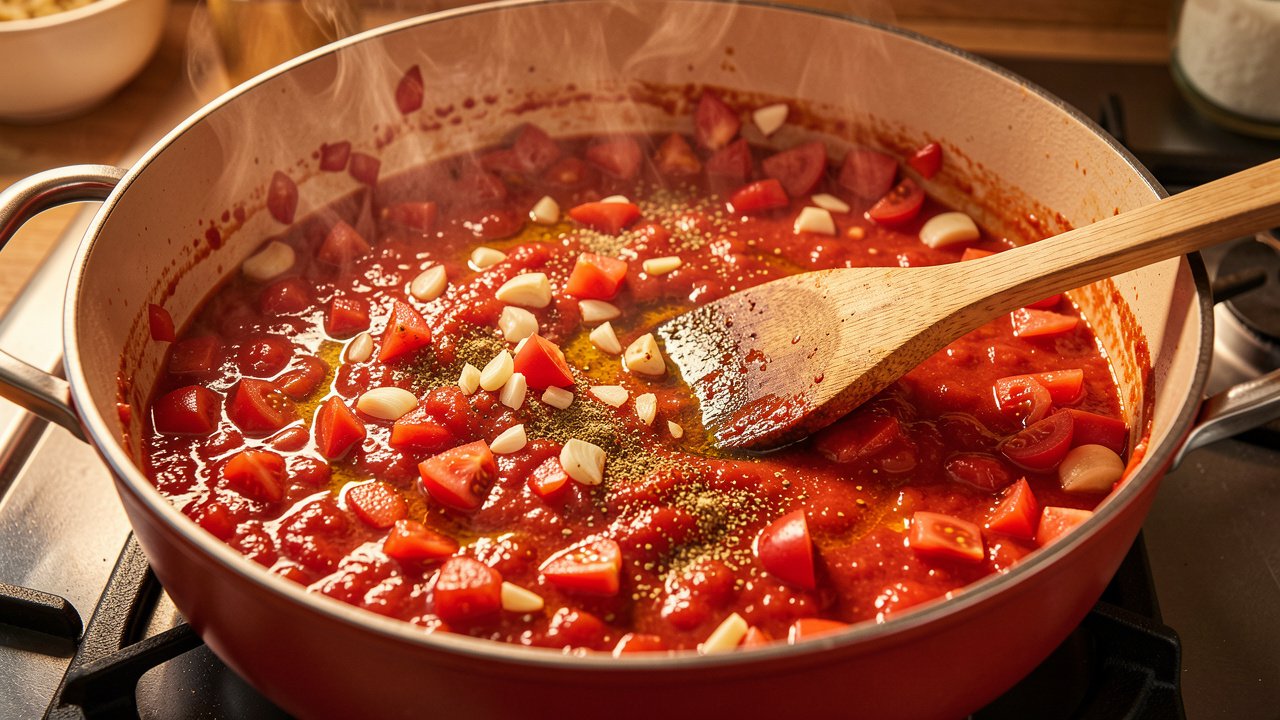
Pro observation: The tomato sauce is ready for the eggplant and chickpeas when the oil starts to glisten and pool at the surface. That sheen means the tomato paste has cooked out its raw edge and the sauce has real body.
Ingredients
Kitchen Measurement Converter
Quickly convert between common cooking measurements without leaving the recipe. Pick a category, enter a value, and the result updates instantly.
Ingredient Notes & Substitutions
Eggplant
Large globe eggplants are ideal, but slender ones work too. Choose firm, glossy fruit that feels heavy for its size. Cut it into generous bite-size chunks so it holds its shape after roasting rather than dissolving.
Chickpeas
Cooked or canned chickpeas both work. If using canned, drain and rinse them well. For the softest, creamiest texture, cook dried chickpeas from scratch until fully tender before they go into the sauce.
Tomatoes
Ripe, red tomatoes give the best sweet-tart base. Out of season, one 14-ounce can of chopped tomatoes is often more reliable than pale fresh ones. The tomato paste adds color and concentrated depth.
Warm Spices
Cumin, cinnamon, and allspice give maghmour its gentle Levantine warmth. Keep a light hand with the cinnamon so it stays a background note. A pinch of chili flakes is a common regional addition if you like heat.
Equipment
- Large roasting tray
- Wide, heavy pot
- Wooden spoon
- Sharp knife and board
- Colander for chickpeas
- Measuring spoons
Before You Start
1. Salt the eggplant. Toss the eggplant chunks with a little salt and let them sit for 15 to 20 minutes, then pat them dry. This draws out excess moisture and any bitterness before roasting.
2. Heat the oven early. The eggplant roasts best in a hot oven, so get it up to temperature while you prep the onion, garlic, and tomatoes.
3. Prep the aromatics. Have your chopped onion and minced garlic ready by the stove, since the sauce comes together quickly once you begin.
Step-by-Step Instructions
Salt and Prep the Eggplant
Cut the eggplant into generous bite-size chunks. Toss them with about half a teaspoon of salt and leave them in a colander for 15 to 20 minutes. Pat the chunks thoroughly dry with a towel. This step keeps the eggplant from turning bitter and helps it roast instead of steam.
Roast the Eggplant
Heat the oven to 425 F (220 C). Toss the eggplant with 3 tablespoons of olive oil, spread it in a single layer on a roasting tray, and roast for 25 to 30 minutes, turning once, until deeply golden and completely soft. Roasting instead of frying keeps the dish lighter while still giving that silky texture.
Soften the Onion and Garlic
While the eggplant roasts, heat the remaining 2 tablespoons of olive oil in a wide pot over medium heat. Add the chopped onion and cook 5 to 6 minutes until soft and translucent. Add the minced garlic and cook 1 minute more, stirring, until fragrant. Do not let the garlic brown, or it can turn bitter.
Build the Tomato Sauce
Stir in the tomato paste, cumin, cinnamon, and allspice and cook 30 seconds to bloom the spices. Add the chopped tomatoes, salt, and pepper. Cook 8 to 10 minutes, stirring, until the tomatoes break down into a thick sauce and the oil begins to glisten at the surface.
Simmer Everything Together
Add the drained chickpeas, the roasted eggplant, and 1 cup of water or vegetable stock. Stir gently so you do not mash the eggplant. Bring to a gentle simmer, then lower the heat, cover, and cook 12 to 15 minutes so the flavors meld and the stew thickens. Taste and adjust the salt.
Rest, Garnish, and Serve
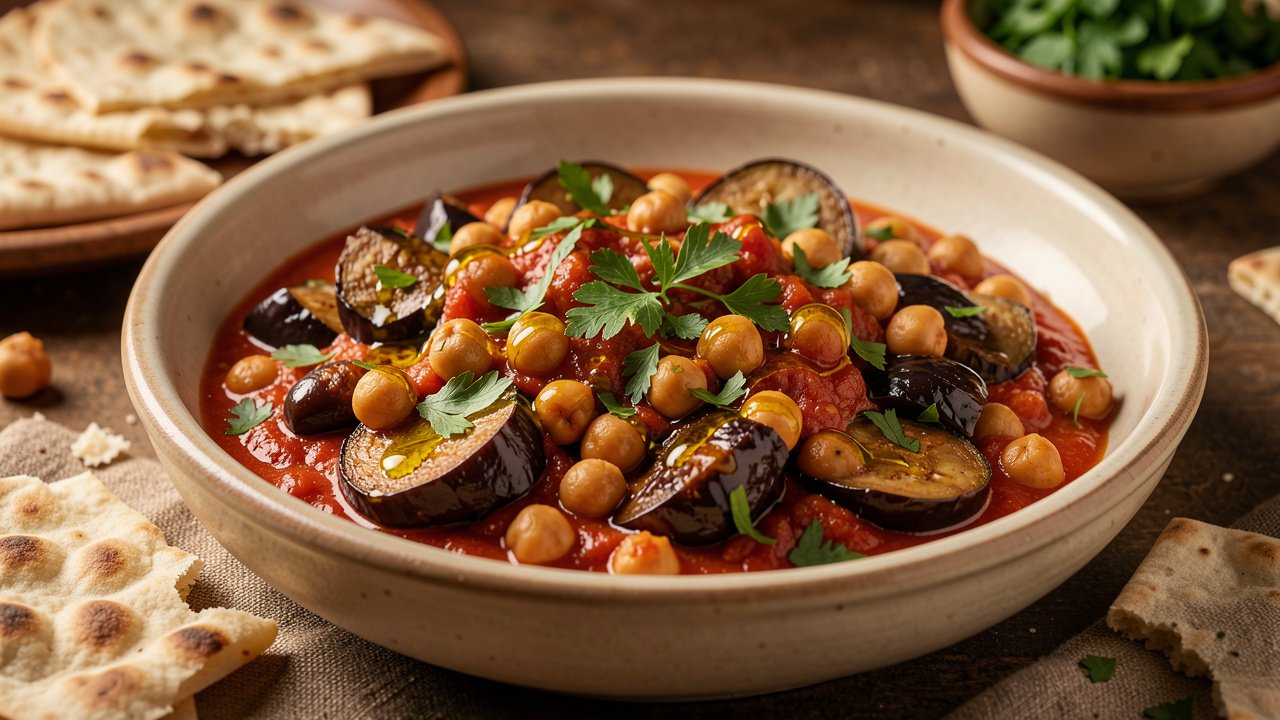
Turn off the heat and let the stew rest for 10 minutes; maghmour is meant to be eaten warm or at room temperature, not piping hot. Finish with a generous drizzle of olive oil and a shower of fresh parsley. Serve with rice or warm bread on the side.
Chef’s Tips From Real Kitchen Testing
Do not skip salting and roasting the eggplant. It is the difference between silky, sweet chunks and spongy, oily, slightly bitter ones.
Be generous with the garlic. Maghmour is meant to be assertively garlicky, so use more than you think and soften it gently so it never scorches.
Make it a day ahead when you can. Like many tomato stews, the flavors deepen overnight and it tastes noticeably better the next day.
Recipe Variations
Serving Suggestions
- Warm pita or fluffy vermicelli rice
- A bowl of creamy hummus and olives
- A crisp fattoush or cucumber-tomato salad
- Extra olive oil and a squeeze of lemon
Nutrition Facts
| Nutrient | Amount per serving |
|---|---|
| Calories | 260 |
| Protein | 7 g |
| Carbohydrates | 28 g |
| Fat | 15 g |
| Saturated Fat | 2 g |
| Fiber | 9 g |
| Sugar | 10 g |
| Sodium | 620 mg |
Values are estimates per serving and vary with the exact ingredients and brands you use.
Make-Ahead Tips
Maghmour is a natural make-ahead dish, because the flavors deepen as it sits. Cook it a day ahead, cool, and refrigerate. Because it is traditionally served warm or at room temperature, you can simply pull it from the fridge an hour before the meal, or warm it gently on the stove. Stir in a splash of water if it has thickened, and add the fresh parsley and a final drizzle of olive oil just before serving.
Storage, Freezing & Reheating
Common Mistakes to Avoid
Troubleshooting
Stew tastes flat? It usually needs more salt and more garlic, plus a final drizzle of good olive oil to lift everything.
Sauce too watery? Simmer it uncovered for a few extra minutes so it reduces and thickens around the eggplant and chickpeas.
Eggplant still spongy or bitter? It was under-roasted. Give it more time in a hot oven next time until it is fully soft and golden.
A Note on Lebanese Cooking
Maghmour sits firmly in the Lebanese tradition of vegetable dishes built on olive oil, garlic, and warm spice. Its nickname, Lebanese moussaka, can be confusing, because it shares almost nothing with the layered, meaty Greek casserole beyond the name and the eggplant. This version is a humble stew, meant to be scooped up with bread and eaten warm or at room temperature as part of a mezze spread. That room-temperature serving is intentional: it lets the flavors settle and makes maghmour ideal for entertaining, since nothing has to come straight from the stove. A final pour of good olive oil at the table is not a garnish so much as a defining ingredient. If you love spiced tomato bowls, our hearty tomato lentil soup shares the same cozy, plant-forward spirit.
Frequently Asked Questions
More Tomato Recipes to Try
Last updated: September 24, 2026