
Italian Recipes
Easy Stovetop Risotto
This risotto proves that a short list of pantry staples can turn into something that feels special. The rice does most of the work, slowly releasing its starch as you stir, and that starch is what makes the dish creamy without a drop of cream. The tomato base keeps every bite bright and savory, so it never feels heavy or dull.
I used to think risotto was fussy restaurant food until I learned it is really just patience in a pan. The one rule that changed everything for me was adding the stock a little at a time instead of all at once. That slow method is exactly what gives you that loose, spoonable, creamy texture.
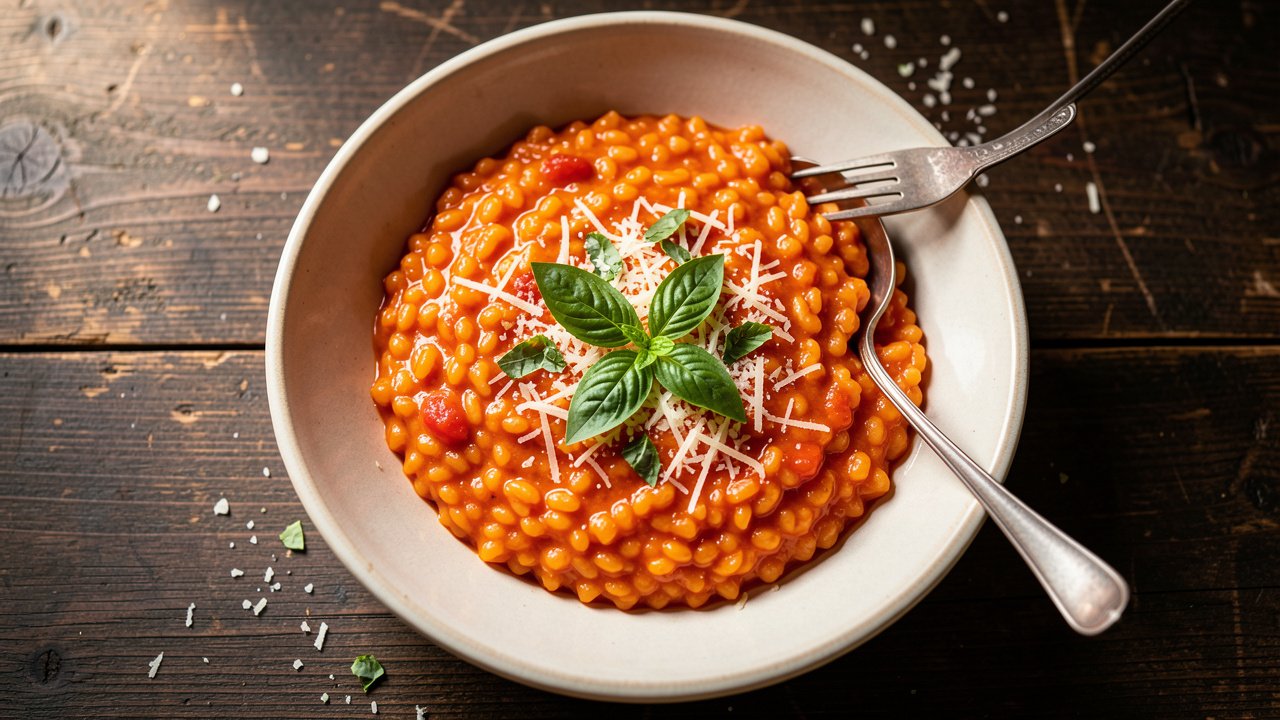
Why This Creamy Tomato Risotto Works
Great risotto is about texture as much as flavor, and this creamy tomato risotto nails both with an honest ingredient list. Toasting the rice first gives it a light nutty flavor and helps the grains hold their shape. The tomato base then layers in a savory, slightly sweet tang that plain risotto simply does not have.
The most important thing to understand is that risotto is creamy because of the rice, not because of cream. Arborio and Carnaroli are high-starch rices, and stirring while you add warm stock coaxes that starch out into the liquid. That released starch is what thickens the dish into a glossy, spoon-coating sauce around every grain.
Adding the stock gradually is the whole game. If you dumped it all in at once, the rice would boil like pasta and stay loose and watery. Adding one ladle at a time, and waiting until each is nearly absorbed, forces the rice to release its starch slowly and evenly.
The tomato base earns its place because it keeps a rich dish from feeling flat. A little tomato paste concentrates the flavor, while chopped or crushed tomatoes bring freshness and gentle acidity. That acidity cuts through the butter and Parmesan so the final bowl tastes balanced instead of heavy.
Pro observation: The risotto is ready when it spreads slowly across the plate and settles into a loose, wavy pool rather than a stiff mound. Italians call this the wave, and it is your best sign the texture is right.
Tomato Risotto Ingredients
Risotto Measurement Converter
Quickly convert between common cooking measurements without leaving the recipe. Pick a category, enter a value, and the result updates instantly.
Risotto Ingredient Notes & Substitutions
Risotto Rice
Arborio is the easiest high-starch rice to find and makes a lovely creamy risotto. Carnaroli holds its shape a bit better and is worth seeking out. Do not use long-grain or basmati, which will not turn creamy.
Tomatoes for Risotto
Ripe fresh tomatoes shine in summer, but a good can of crushed tomatoes is reliable year round. A spoon of tomato paste alongside them deepens the color and gives the risotto a richer, rounder flavor.
Stock for Risotto
Keep your stock warm in a separate pan so it never cools the rice when added. Vegetable stock keeps this risotto vegetarian, but chicken stock works well too. Low-sodium stock lets you control the salt.
Risotto Wine and Cheese
A dry white wine like Pinot Grigio brightens the risotto. To skip the wine, use a splash of stock with a squeeze of lemon. Finish with real Parmesan, grated fresh, for the best savory depth.
Risotto Equipment
- Wide, heavy pan or skillet
- Separate pot for stock
- Wooden spoon
- Ladle
- Sharp knife and board
- Box grater or microplane
Before You Start Your Risotto
1. Warm the stock first. Heat the stock in a small pot and keep it at a bare simmer beside your risotto pan. Cold stock added to hot rice stalls the cooking and makes the texture uneven.
2. Have everything measured. Once the rice is toasting, the risotto moves quickly, so chop the onion and grate the Parmesan before you begin.
3. Plan to stay at the stove. Risotto rewards attention, so give it 20 minutes of near-constant stirring. It is a good time to pour yourself a glass of that white wine.
Step-by-Step Tomato Risotto Instructions
Prep for the Risotto
Finely chop the onion and mince the garlic. Grate the Parmesan and measure out the rice, wine, and tomatoes so everything is within reach. Pour the stock into a small pot and bring it to a gentle simmer, then keep it warm over low heat.
Toast the Risotto Rice
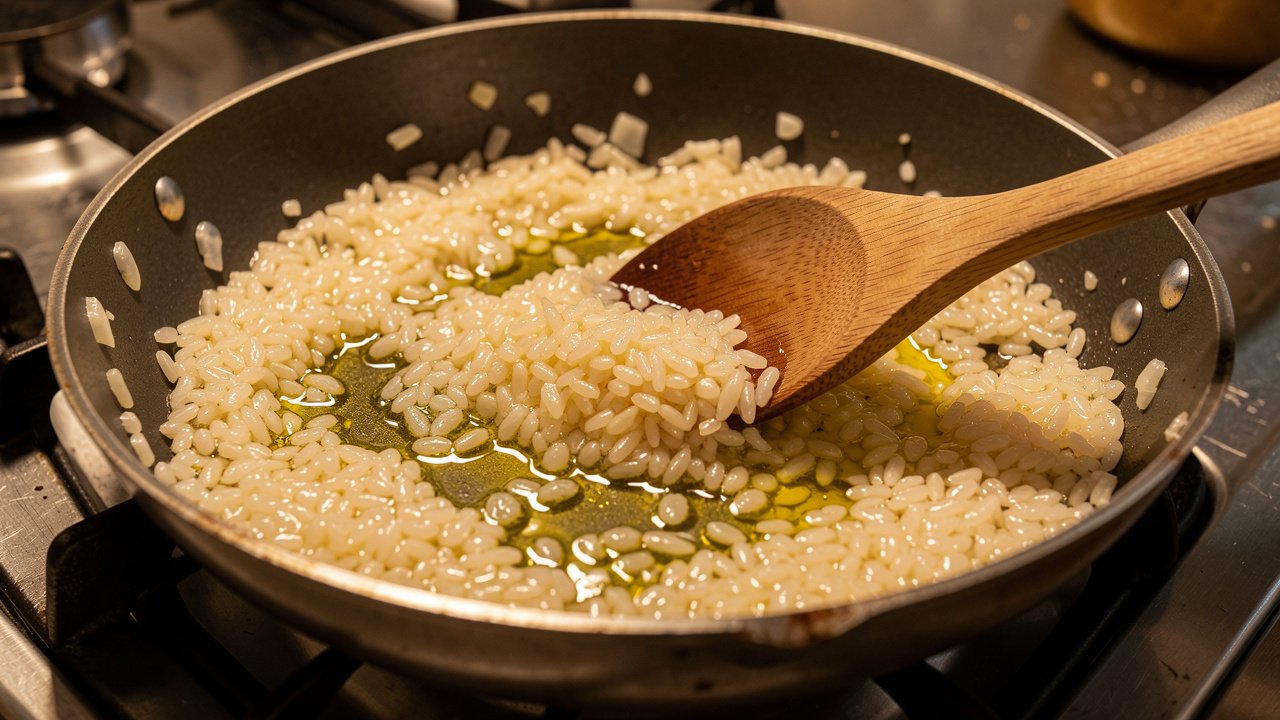
Melt 1 tablespoon of butter with the olive oil in a wide pan over medium heat. Add the onion and cook 4 to 5 minutes until soft, then stir in the garlic for 30 seconds. Add the dry Arborio rice and stir for about 2 minutes, until the grains look glossy and smell lightly nutty and the edges turn translucent.
Deglaze the Risotto with Wine
Pour in the white wine and stir constantly. Let it bubble and cook away almost completely, which takes about 1 to 2 minutes. This lifts the toasty bits off the pan and adds a bright note that balances the richness to come.
Build the Tomato Risotto Base
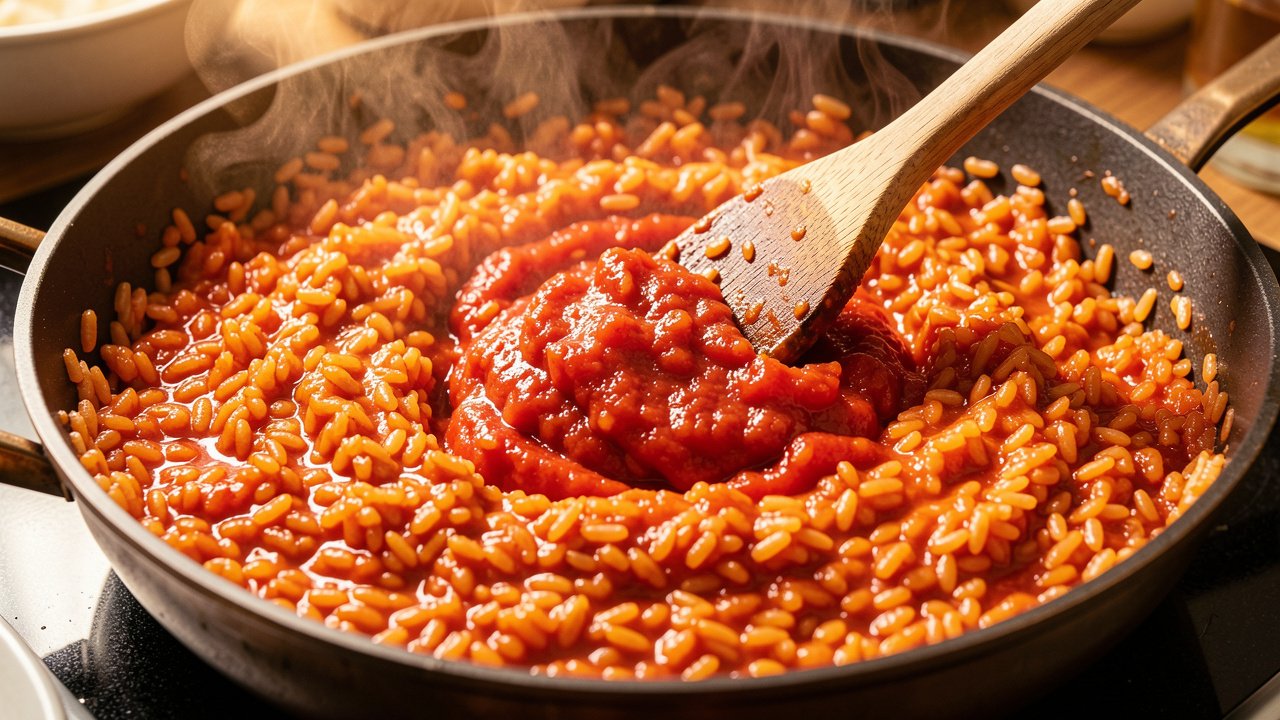
Stir in the tomato paste and cook 1 minute to deepen its flavor, then add the crushed tomatoes. Cook 2 to 3 minutes, stirring, until the mixture looks thick and glossy. The rice will start taking on a warm orange-red color from the tomato.
Add Warm Stock to the Risotto
Add a ladle of warm stock and stir until it is nearly absorbed. Keep adding stock one ladle at a time, stirring often, and waiting for each to soak in before the next. After 18 to 20 minutes the rice should be tender with a slight bite at the center, and the sauce loose and creamy. You may not need every drop of stock.
Finish the Risotto and Serve
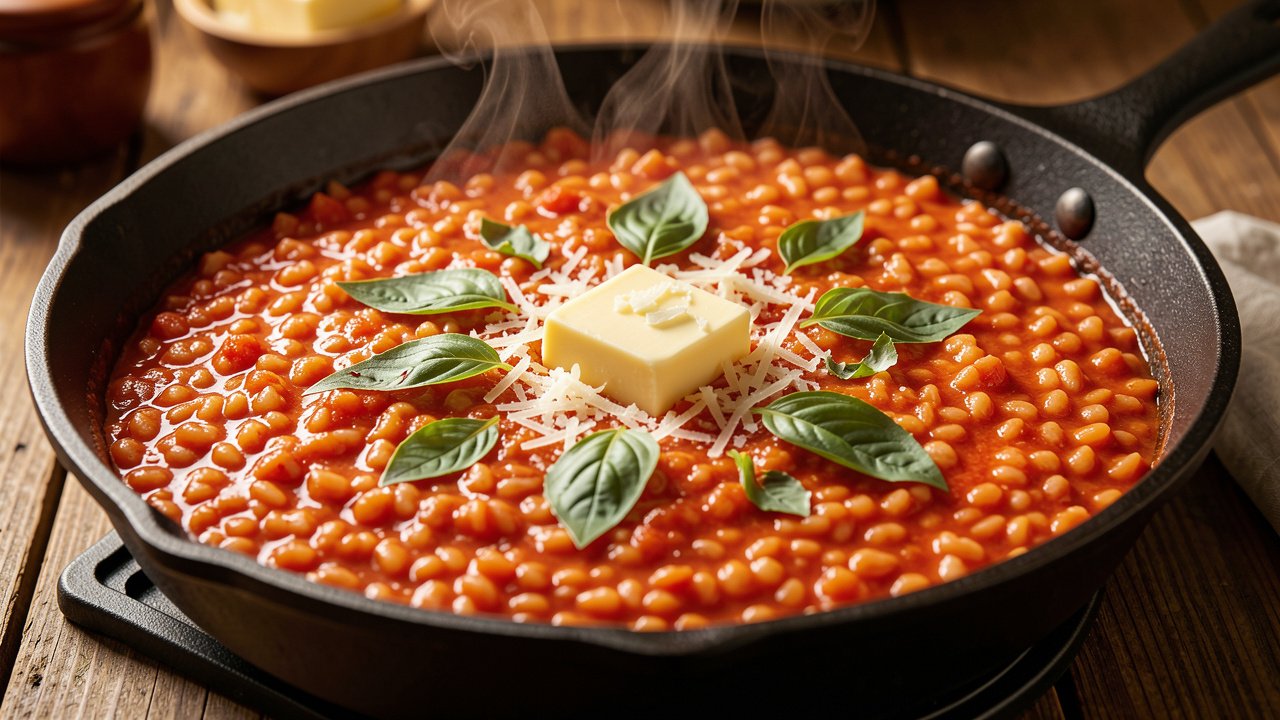
Take the pan off the heat and beat in the remaining 2 tablespoons of butter and the grated Parmesan. Stir hard for a moment so the risotto turns glossy and creamy, an Italian step called mantecatura. Taste for salt and pepper, loosen with a splash of stock if needed, then top with fresh basil and serve at once.
Chef’s Tips for Creamy Tomato Risotto
Keep the stock hot the whole time. Warm stock keeps the pan at a steady simmer, while cold stock shocks the rice and leads to uneven, chalky grains.
Do not rinse the rice. That dusty starch on the surface is exactly what makes the risotto creamy, so rinsing it away works against you.
Finish off the heat. Adding the butter and Parmesan after the pan is off the burner keeps the sauce silky and stops the cheese from turning stringy.
Tomato Risotto Variations
Serving Your Tomato Risotto
- A simple green salad with lemon dressing
- Garlic bread or a crusty baguette
- Extra grated Parmesan and cracked pepper
- A glass of the same dry white wine
Tomato Risotto Nutrition Facts
Values are estimates per serving and vary with the stock, cheese, and butter you use.
Make-Ahead Tomato Risotto Tips
Risotto is truly best served fresh, right off the stove, when the texture is at its creamy peak. If you must get ahead, use the classic restaurant trick and par-cook it. Cook the risotto for about 15 minutes, until it is roughly two-thirds done, then spread it thin on a tray to cool fast and stop the cooking.
When you are ready to eat, tip the par-cooked rice back into a pan, add hot stock, and finish the last few minutes with more butter and Parmesan just before serving. This gives you a fresh-tasting risotto with only minutes of last-minute work.
Storing & Reheating Tomato Risotto
Common Tomato Risotto Mistakes to Avoid
Tomato Risotto Troubleshooting
Risotto too stiff or gluey? It reduced too far. Stir in a splash of hot stock off the heat to bring back that loose, creamy wave.
Rice still hard in the middle? It needs more stock and a few more minutes. Keep adding warm stock a ladle at a time until the bite softens.
Tastes too sharp from the tomato? A small knob of extra butter or a pinch of sugar rounds out the acidity nicely.
A Note on Italian Risotto
Risotto comes from northern Italy, where short-grain rices like Arborio and Carnaroli have been grown in the Po Valley for centuries. The gentle, gradual cooking method is the point, coaxing a creamy sauce out of the rice itself rather than adding cream. If you love bright tomato dishes, our tomato basil pasta and creamy tomato soup share the same comforting, tomato-forward spirit.
Creamy Tomato Risotto FAQs
More Tomato Recipes to Try
Last updated: July 23, 2026