Savory Tomato Bakes
Pesto, Goat Cheese and Sun-Dried Tomato Quiche
Last updated: September 23, 2026
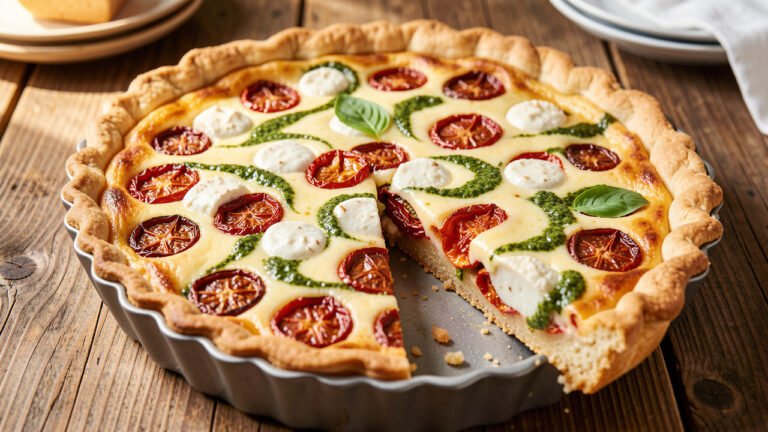
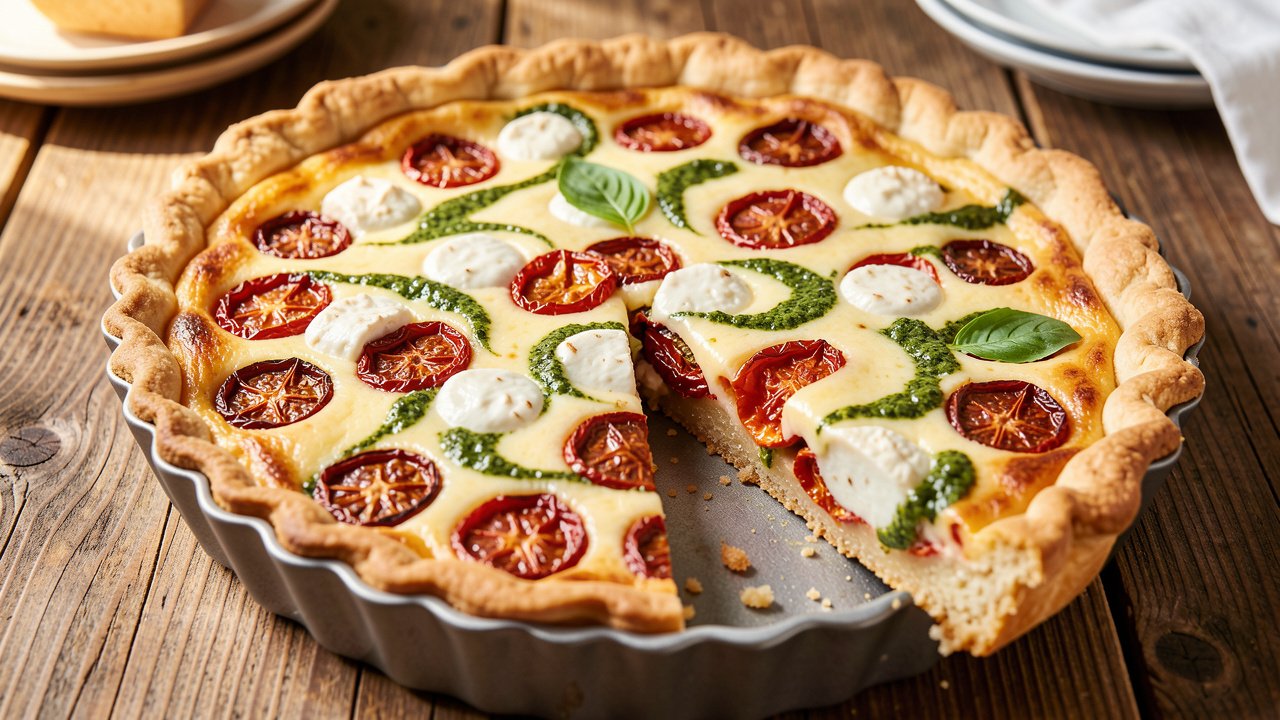
This is the quiche I make when I want something that looks fancy but is really just eggs, cream, and three big flavors. Sweet sun-dried tomatoes, tangy goat cheese, and basil pesto sit against a mild custard.
Most quiche problems come down to two things: the ratio in the custard and the water in the crust. Get those right and the rest is assembly. Both are covered below.
Why This Pesto and Goat Cheese Quiche Works
Sun-dried tomatoes are concentrated, so a small amount carries a lot of sweet, almost jammy tomato flavor without adding the water that fresh tomatoes would. That matters in a custard, where extra liquid is the enemy.
Goat cheese brings acidity that cuts through the cream. Eggs and cream on their own taste rich but a little flat, and the tang is what keeps you eating past the second bite.
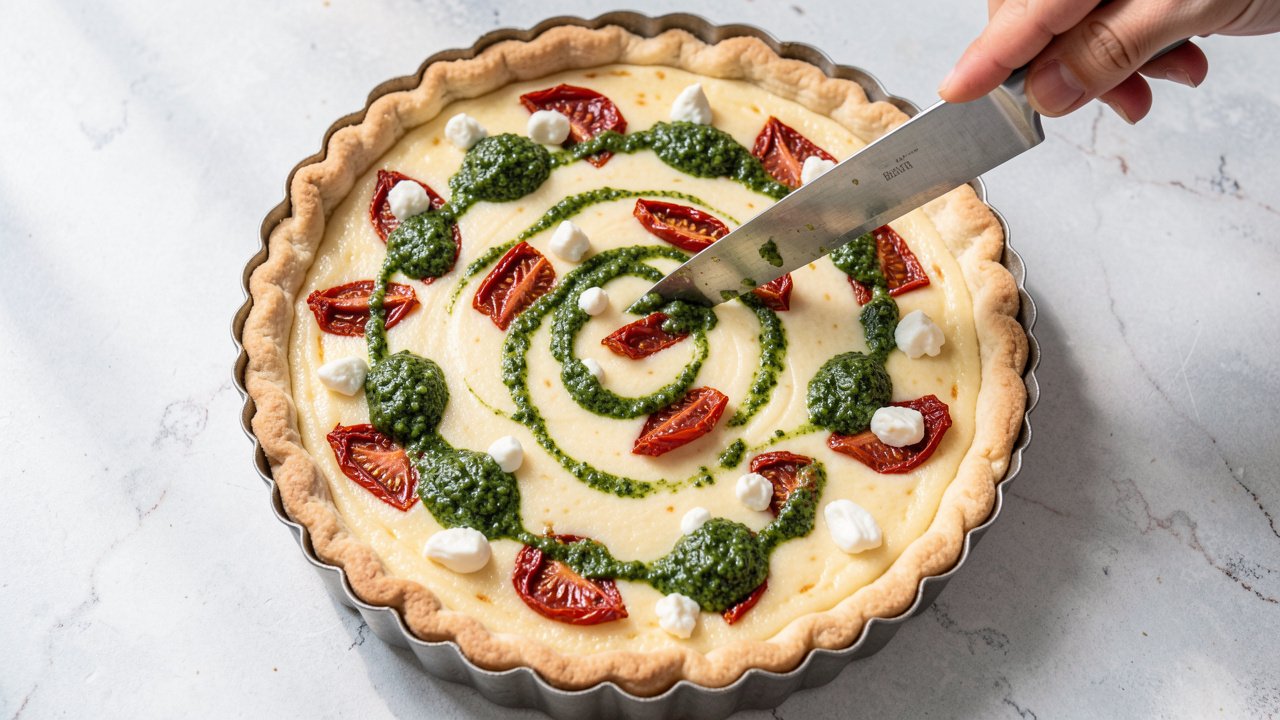
Pesto adds the herbal, garlicky note and the color. Swirled rather than stirred, it stays in visible green ribbons, so each slice looks marbled instead of uniformly greenish.
Ingredients
The Custard Ratio Is the Recipe
The classic ratio for a silky, sliceable savory custard is roughly one large egg to every half cup of dairy. Push past that and the texture changes fast in ways you cannot fix later.
Too many eggs and the filling turns rubbery and tastes eggy, closer to a baked omelet than a quiche. Too much cream and it never sets properly, so the center stays loose and runs when you cut it.
For one 9-inch shell that means 4 large eggs and 2 cups of dairy, which I split as 1 cup heavy cream and 1 cup whole milk. All cream is heavy and slightly greasy; all milk sets firmer and tastes thin. Half and half of each lands right in the middle.
Bake at a Moderate Temperature
Egg custard sets somewhere around 175F to 185F. A hot oven does not get you there faster in any useful way, it just overshoots at the edges while the middle is still raw.
When that happens the proteins tighten too hard, squeeze out their water, and the quiche weeps. It also puffs up like a souffle and then sinks into a wrinkled dip as it cools. Bake at 325F to 350F and none of that happens.
Doneness: Set Edges, a Wobble in the Middle
This is the single most useful cue on this page. Pull the quiche when the outer 2 inches are set and the center still jiggles slightly when you nudge the tin, like soft gelatin rather than liquid.
Carryover heat finishes the middle over the next several minutes. If the center is already firm in the oven, it is overbaked, and you will find a puddle of released liquid under the slices once it cools.
Do not over-whisk. Whisk the eggs and dairy just until the yolks and whites are combined and the mix looks even, with no foam on top. Beating air into a custard makes it rise dramatically in the oven and collapse just as dramatically on the counter.
How to Stop a Soggy Quiche Bottom
A wet custard sitting on raw pastry for an hour will always win unless you set the floor first. Four small steps handle it.
1. Blind Bake, Then Dry Bake
Line the chilled pastry with parchment, fill it to the rim with ceramic weights or dried beans, and bake until the sides look dry and pale gold. Then lift out the parchment and weights and put the shell back in for another 8 to 10 minutes.
That second bake is the part people skip, and it is the one that actually works. Under the weights the base steams; uncovered, it finally dries out and firms into a real barrier.
2. Dock the Pastry
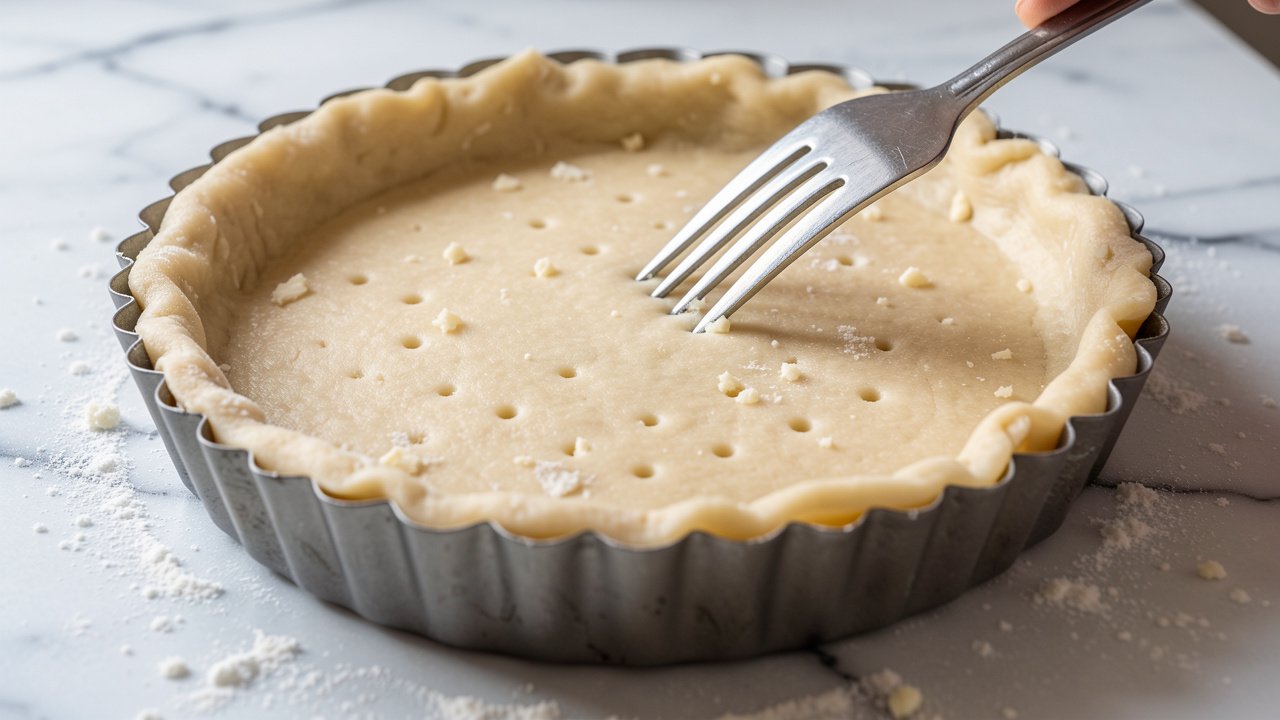
Prick the base all over with a fork before it goes in the oven. Those holes let trapped steam escape so the floor stays flat instead of doming up into the space your filling needs.
3. Seal the Shell With Egg Wash
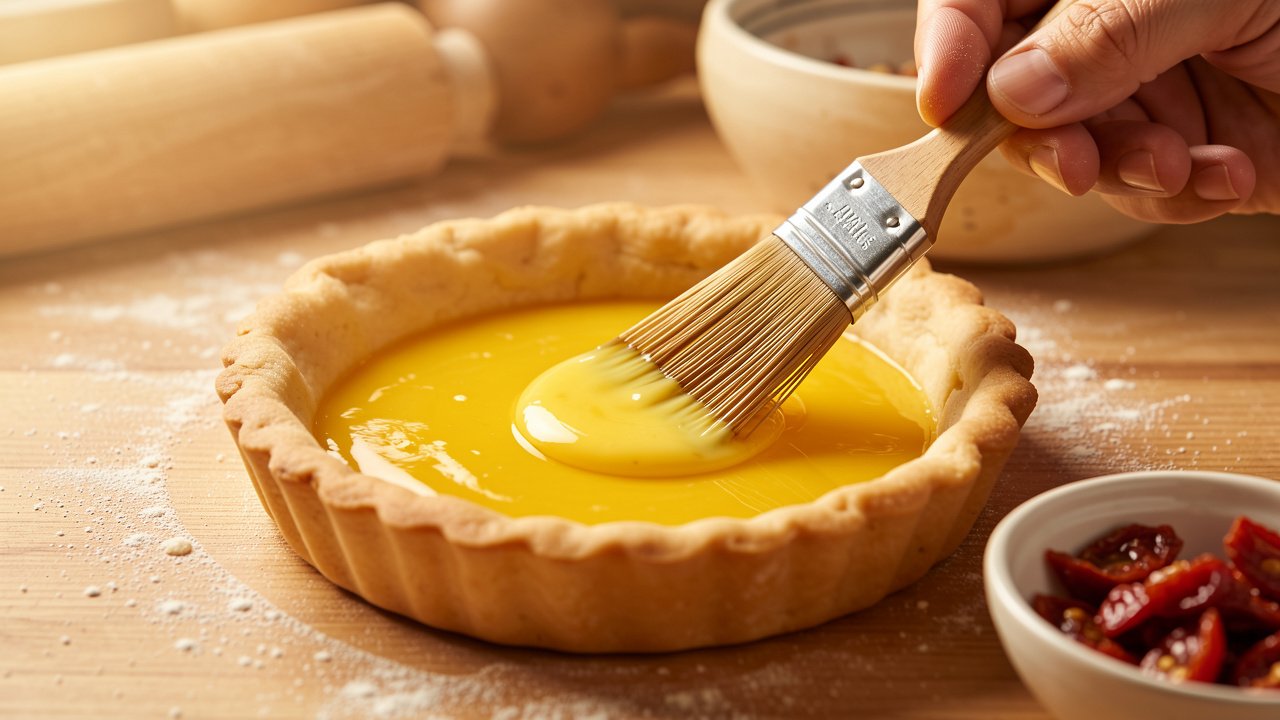
As soon as the dry bake ends, brush the hot base and sides with a thin layer of beaten egg and slide it back into the oven for one minute. The egg cooks into a thin, glossy film that waterproofs the pastry.
This is the best trick on the page and it costs you sixty seconds. Keep the layer thin, because a thick one bakes into a rubbery patch.
4. Cold Butter, Light Hands, Chilled Tin
Use butter straight from the fridge and stop mixing while you can still see flecks of it. Overworked dough builds gluten, and gluten shrinks and toughens.
Then chill the lined tin for at least 30 minutes before baking. Cold fat holds the pastry against the sides long enough to set, so the walls do not slump down and leave you a shallow, greasy shell.
Kitchen Measurement Converter
Quickly convert between common cooking measurements without leaving the recipe. Pick a category, enter a value, and the result updates instantly.
Ingredient Notes & Substitutions
Sun-Dried Tomatoes
Oil-packed are soft and ready to use straight from the jar. Dry-packed ones must be soaked in hot water for 20 minutes first, or they stay leathery and pull moisture out of the custard as they bake.
Either way, pat them dry before they go in. Oil-packed tomatoes carry enough oil to leave a greasy film across the top of the filling.
Goat Cheese
A soft fresh log is what you want here. Goat cheese does not melt into smooth strands the way a young mozzarella or gruyere does; it just softens into creamy pockets.
That is exactly why you dot it over the filling instead of stirring it through. Stirred, it turns the whole custard chalky and dull gray.
Basil Pesto
Use a thick pesto rather than a loose oily one. Stirred through the entire custard, the oil separates during the long bake and pools on the surface.
Dollop it in small spoonfuls and drag a knife tip through once or twice. For a nut-free quiche, use a pesto made with sunflower seeds.
Dairy and Eggs
Large eggs, about 50 grams each, are what the ratio assumes. If yours are extra-large, use three plus one yolk instead.
Skim milk sets watery and low-fat substitutes tend to curdle at the edges, so stick with whole milk and heavy cream.
Equipment
- 9-inch tart or quiche tin
- Rolling pin
- Parchment paper
- Pie weights or dried beans
- Pastry brush
- Large mixing bowl
- Whisk
- Baking sheet
- Wire cooling rack
Before You Start
1. Build in the chilling time. The dough needs 30 minutes of rest and the lined tin needs another 30 in the fridge.
2. Set a rack in the lower third. Heat rising off the oven floor drives the bottom crust and keeps the top from browning before the custard sets.
3. Put the tin on a baking sheet. It makes the loaded quiche easy to move without flexing the base, and it catches any drips.
4. Bring the eggs and dairy toward room temperature. Fridge-cold custard bakes more slowly and less evenly.
How to Make Sun-Dried Tomato and Goat Cheese Quiche
Make the Pastry
Rub the cold cubed butter into the flour and salt with your fingertips until the mix looks like coarse breadcrumbs with visible butter flecks still in it. Sprinkle in the ice water a tablespoon at a time and bring it together into a rough, shaggy ball.
Stop the moment it holds. Flatten it into a disc, wrap it, and chill 30 minutes so the flour hydrates and the gluten relaxes.
Roll, Line, Dock, and Chill
Roll the disc to about 1/8 inch thick and 12 inches across. Lift it into the tin and press it gently into the corners without stretching it, because stretched pastry shrinks back down the sides in the oven.
Trim the overhang, prick the base all over with a fork, and chill the lined tin for 30 minutes. It should feel firm and cold to the touch before it sees any heat.
Blind Bake, Then Dry the Base
Heat the oven to 375F. Line the cold shell with parchment, fill it right to the top with weights, and bake 15 minutes until the rim is pale gold and the sides feel dry.
Lift out the parchment and weights and return the shell for 8 to 10 minutes. You are looking for a base that has lost its damp sheen and feels sandy rather than soft when you touch it.
Seal the Shell and Add the Fillings
Brush the hot base and sides with a thin coat of beaten egg and return the tin to the oven for one minute so the wash sets into a glossy film. Drop the oven to 325F and let it come down while you fill.
Scatter the drained, patted-dry sun-dried tomatoes and the grated parmesan over the base in an even layer. Keeping them low means they will not sink through the custard and land in one clump.
Whisk and Pour the Custard
Whisk the eggs, cream, milk, salt, pepper, and nutmeg together just until the color is even. Stop as soon as it looks uniform, with no bubbles riding on the surface.
Set the baking sheet with the tin on it on the pulled-out oven rack, then pour the custard in. Fill to about a quarter inch below the pastry rim so nothing spills as it warms and expands.
Dot, Swirl, Bake Low, and Cool
Dot teaspoon-sized pieces of goat cheese across the surface and spoon the pesto in small dollops between them. Drag a knife tip through two or three times, no more, to leave green ribbons rather than a uniform tint.
Bake at 325F for 35 to 45 minutes. Start checking at 35: the edges should be set and puffed only slightly, and a nudge should send a slow wobble through the middle 3 inches.
Cool on a wire rack for at least 20 to 30 minutes before slicing. Quiche tastes best warm or at room temperature, and it only cuts into clean wedges once the custard has finished setting.
Chef’s Tips From Real Kitchen Testing
Season the custard a little harder than tastes right raw. Chilled and set, eggs mute salt noticeably, and an under-seasoned quiche is the most common flaw I see.
Strain the custard through a fine sieve before pouring. It catches the stringy chalaza from the eggs and gives you a noticeably smoother slice.
If the rim browns faster than the center sets, lay a ring of foil loosely over the edge. It buys you ten more minutes without burning the pastry.
Quiche Variations Worth Making
Serving Suggestions
- A sharp green salad with lemon vinaigrette
- Roasted asparagus or blistered green beans
- Crusty sourdough and salted butter
- A chilled sparkling water with lemon
For a brunch spread, add something bright and acidic. A tomato mozzarella salad resets your palate between rich slices.
Nutrition Facts
Values are estimates for one of eight slices and vary with the pesto and goat cheese you use.
Make-Ahead Tips
The pastry is the part worth making ahead. It keeps wrapped in the fridge for three days and frozen for three months, and a rested dough rolls out more willingly than a fresh one.
You can also blind bake and seal the shell a day early. Leave it uncovered at room temperature so it does not sweat, then fill and bake when you need it.
Mix the custard no more than a few hours ahead. It separates slightly on standing, and rewhisking reintroduces the air you worked to avoid.
Storage, Freezing & Reheating
Common Mistakes to Avoid
Troubleshooting Your Goat Cheese Quiche
Watery layer under the slices? The quiche was overbaked, so the egg proteins squeezed out their moisture. Next time pull it while the center still wobbles.
Center still liquid after 45 minutes? Either the dairy was over-measured or the oven runs cool. Give it another 10 minutes and check your oven with a thermometer before the next bake.
Pastry walls slumped? The dough was not cold enough, or it was stretched into the tin. Chill harder and press rather than pull.
Greasy film on top? That is oil from the sun-dried tomatoes or a thin pesto. Blot it with a paper towel while warm and pat the tomatoes drier next time.