French Recipes
Tarte a la Moutarde
Last updated: September 29, 2026
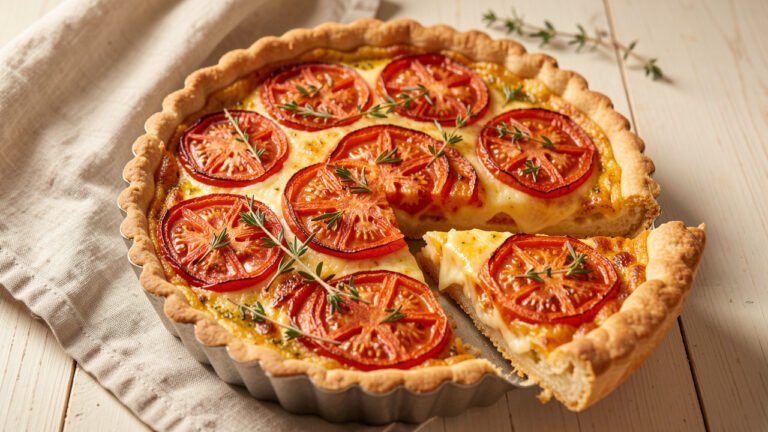
This is the tart every French home cook makes in August, when the tomatoes are too good to waste on anything complicated. Five ingredients, one tin, and thirty minutes of real work. It also fails in exactly one way, every time, and it is always the same way: a wet, pale, floppy bottom. Everything below is aimed at that one problem.
Why This French Tomato and Mustard Tart Works
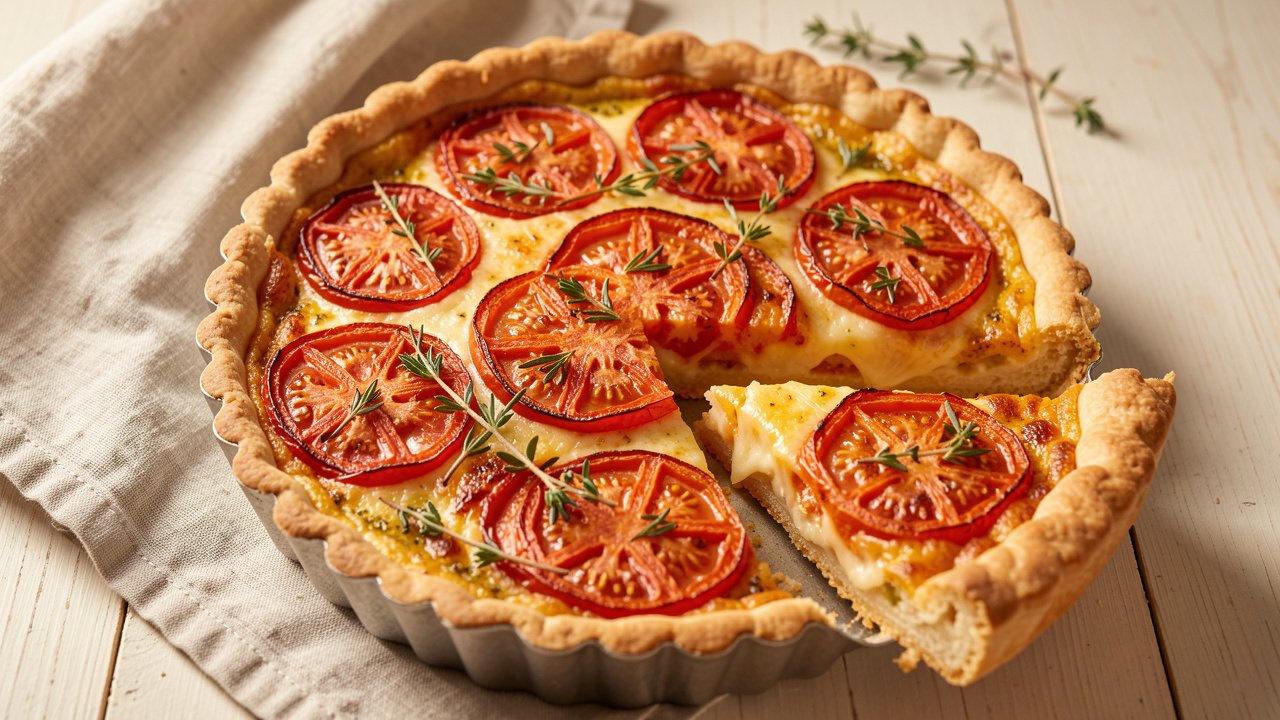
Tomatoes are roughly 94 percent water. This tart asks you to lay that water directly on top of raw pastry and put it in the oven. Understood that way, the recipe stops being a list of steps and becomes one question: where does the water go?
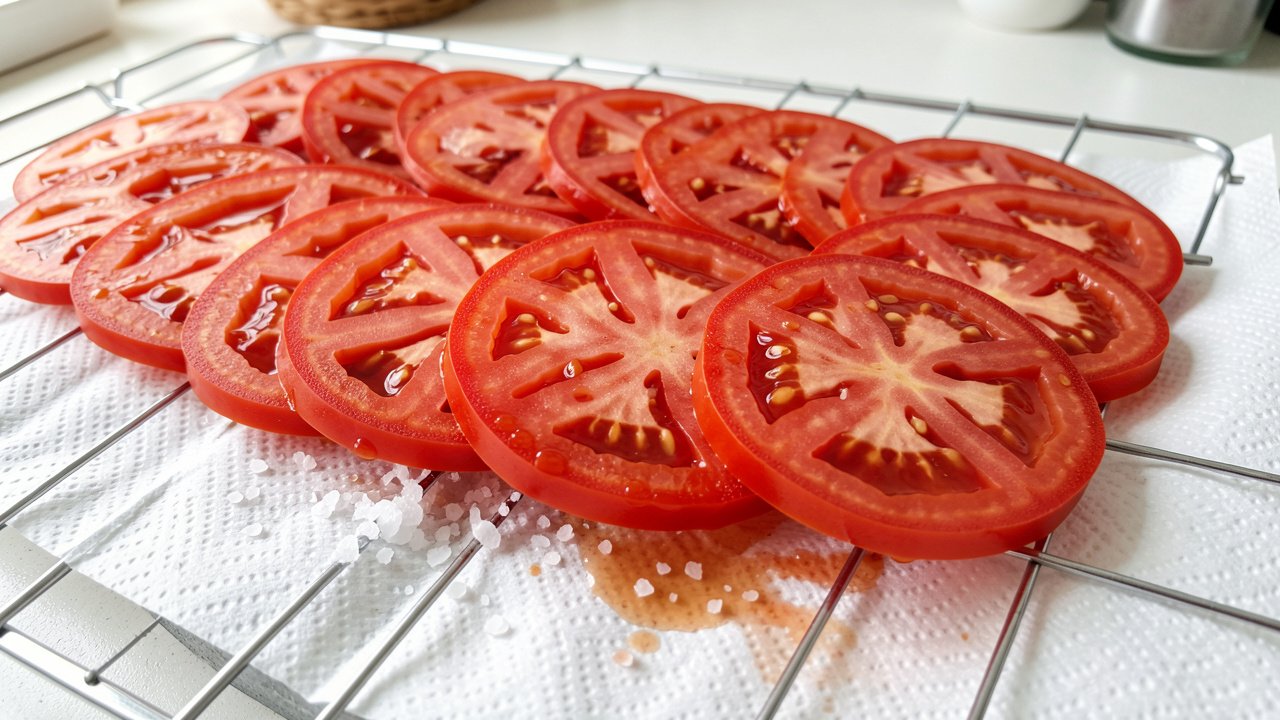
The answer is that you take most of it out before baking, and you block the rest. Salting and draining the sliced tomatoes for half an hour pulls out a genuinely startling amount of liquid, usually a few tablespoons per pound. That liquid would otherwise have gone straight into your crust.
The mustard layer is the part everyone talks about, and it is doing two jobs. It is the flavor spine of the tart, sharp and savory against sweet tomato. It is also a barrier, though an honest cook will tell you it is a thin one: a few tablespoons of Dijon is not a waterproof membrane. The grated cheese underneath the tomatoes does the heavier waterproofing, melting into a fat-rich seal that water struggles to cross.
Blind baking finishes the argument. A crust that has already set, dried, and started to color simply cannot absorb the way raw dough can. Stack those four defenses and the tart comes out with a base that crackles when you cut it.
Pro observation: The tomato slices tell you when the draining is done. They go from wet and glossy to matte and slightly leathery on the surface, and the paper towel beneath them is soaked through. If the towel is still dry, your tomatoes were underripe or you were impatient.
Ingredients
Kitchen Measurement Converter
Quickly convert between common cooking measurements without leaving the recipe. Pick a category, enter a value, and the result updates instantly.
Ingredient Notes & Substitutions
Tomatoes
Firm, ripe, meaty tomatoes are best; Roma and other plum types hold their shape and carry less juice than big beefsteaks. Whatever you use, slice them about a quarter inch thick. Thinner slices dry into leather, thicker ones never lose enough water.
Dijon Mustard
Use smooth Dijon, not grainy. Dijon is emulsified, so it spreads into an even film that clings to pastry; wholegrain sits in wet lumps and slides. Its pungency also mellows a lot in the oven, so use more than feels sensible.
Cheese
Gruyere or comte melts into a proper fatty seal and tastes nutty against the mustard. Soft goat cheese is the other classic; crumble it rather than grate it. Mozzarella is a poor choice here because it releases water of its own.
Pastry
Homemade pate brisee gives the flakiest result, but a good all-butter shortcrust from the chiller is a fair trade on a weeknight. Avoid puff pastry unless you want a different tart entirely; it puffs under the filling and tips the tomatoes off.
Equipment
- 9-inch fluted tart tin
- Rolling pin
- Baking parchment
- Baking beans or dry rice
- Box grater
- Wire rack and paper towels
Before You Start
1. Salt the tomatoes first, before anything else. They need at least 20 to 30 minutes on the rack, and that is dead time you can spend making pastry. Start them and the whole recipe compresses.
2. Get the butter properly cold. Cube it and put it back in the fridge while you weigh the flour. Warm butter smears into the flour instead of staying in pieces, and you lose the flake.
3. Heat the oven early to 400F (200C). A blind bake needs the oven fully up to temperature, or the pastry slumps before it sets.
Step-by-Step Instructions
Make the Pate Brisee
Rub the cold cubed butter into the flour and salt with your fingertips until the mix looks like coarse breadcrumbs with visible pea-sized lumps of butter still in it. Those lumps matter: they melt in the oven and leave steam pockets, which is what flaky actually means. Sprinkle in the ice water a spoonful at a time and press the dough together. Stop the moment it holds. Overworking develops gluten, which makes the pastry tough and shrink-prone. Flatten it into a disc, wrap it, and rest it 30 minutes in the fridge.
Slice, Salt, and Drain the Tomatoes
Slice the tomatoes a quarter inch thick, lay them in a single layer on a rack set over paper towels, and salt them lightly on both sides. Leave them 20 to 30 minutes. Beads of water will surface, run off, and soak the towel. Then blot the tops firmly with fresh paper towel. This step is not optional and it is not a suggestion. It is the single biggest thing standing between you and a soggy bottom.
Roll, Line, Dock, and Chill Again
Roll the rested dough to about an eighth of an inch and lift it into the tart tin, easing it into the corners without stretching it. Stretched dough springs back and shrinks down the sides as it bakes. Trim the edge, then prick the base all over with a fork, roughly an inch apart. Those holes let steam escape so the base does not dome up into a bubble. Chill the lined tin another 30 minutes so the butter is properly cold and firm again before it meets the heat.
Blind Bake the Shell
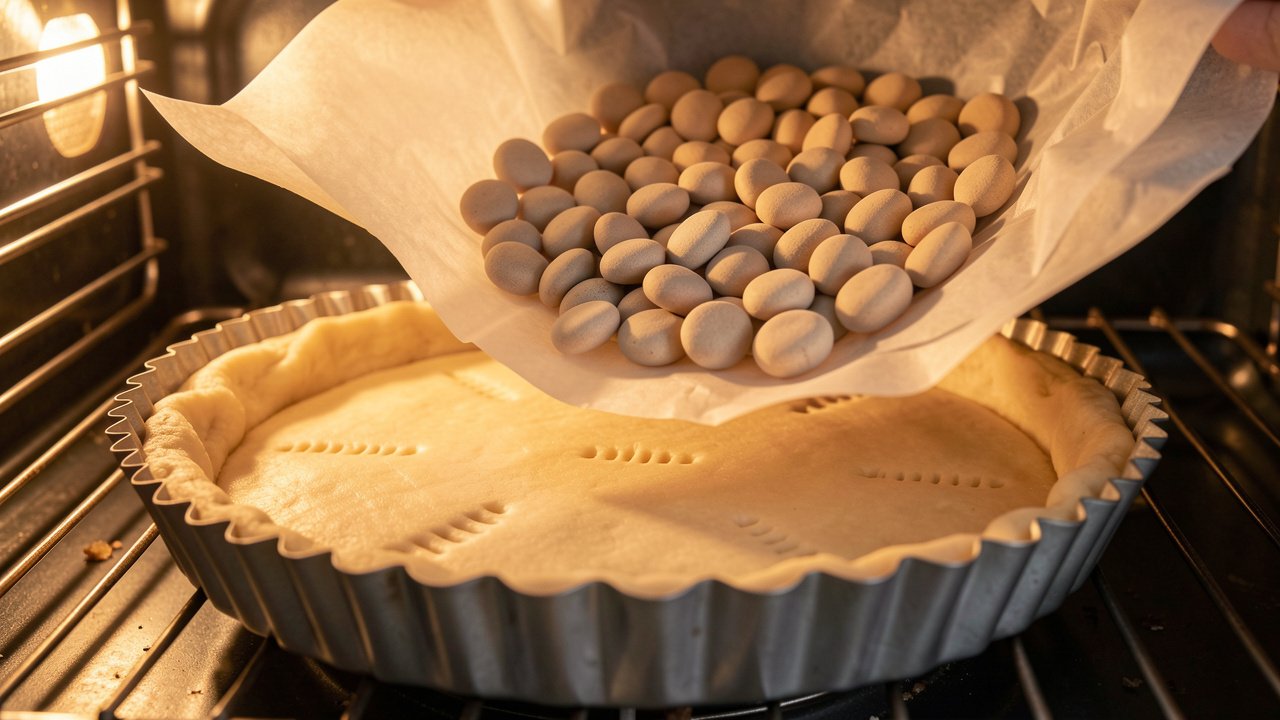
Blind baking just means baking the pastry before the filling goes in, weighted down so it holds its shape. Line the chilled shell with a crumpled sheet of parchment, fill it to the rim with baking beans or dry rice, and bake at 400F (200C) for 15 minutes. Lift out the parchment and beans and give it another 5 to 8 minutes bare, until the base looks dry, sandy, and pale gold. This is the step that sets the crust before any wet filling arrives.
Mustard, Cheese, Then Tomatoes
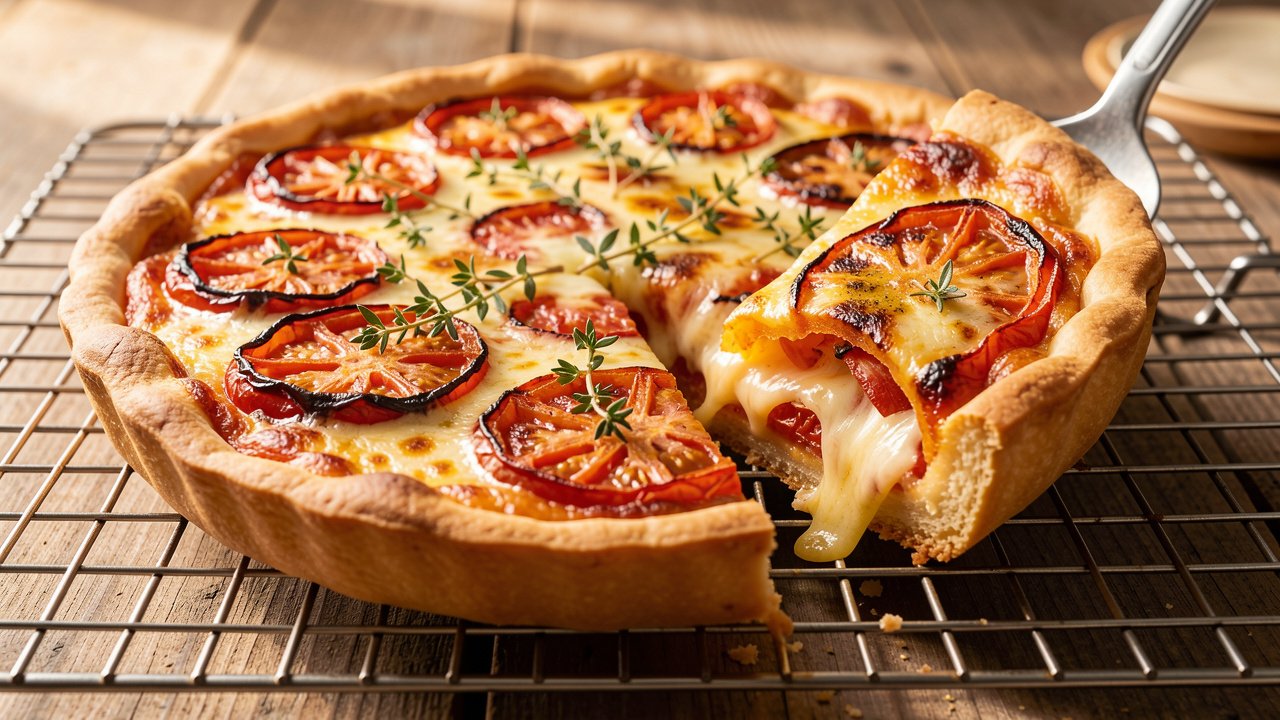
Spread the Dijon over the warm base in an even layer, right to the edges. It will look like a lot. It is not; the heat knocks most of the nose-tingling pungency out of it and leaves a savory hum. Scatter the grated Gruyere over the mustard, which is your real moisture barrier, then shingle the blotted tomato slices on top in overlapping circles. Brush with olive oil and scatter the herbes de Provence and pepper.
Bake, Then Let It Settle
Bake at 400F (200C) for 25 to 30 minutes. The tomatoes should shrink noticeably and take on dark, caramelized edges, and the cheese should be bubbling up between them. Check the bottom before you call it done: slide a spatula under the tart and lift it out of the tin. You want deep gold underneath, not just on the rim. Cool it at least 20 minutes and serve it warm or at room temperature, never straight from the oven, because it firms up as it settles.
Chef’s Tips From Real Kitchen Testing
Weigh the beans right to the rim, not halfway. A shallow layer holds the base down but lets the sides slump inward, and you lose depth for the filling.
If your kitchen is warm, chill the tin on a metal baking sheet and slide the whole thing into the oven together. The hot sheet drives heat into the base from below and buys you a crisper bottom.
Save the drained tomato liquid. It is intensely savory and makes a fine addition to a vinaigrette or a pan sauce later in the week.
Recipe Variations
Serving Suggestions
- A sharp green salad with a mustard vinaigrette
- A chilled cranberry spritzer
- Boiled new potatoes with butter and chives
- Cut cold into small squares for a picnic
Nutrition Facts
Values are estimates per slice, based on six slices, and vary with your pastry and cheese.
Make-Ahead Tips
The pastry is the part worth doing ahead. The dough disc keeps three days wrapped in the fridge, or three months frozen, and it rolls better after a long rest. You can blind bake the shell a day early too; leave it in the tin at room temperature, uncovered, so it stays dry, then fill and bake when you want it.
What you cannot do ahead is assemble it. A filled, unbaked tart sitting in the fridge is exactly the scenario the whole method exists to prevent. Once the tomatoes go on, it goes in the oven.
Storage, Freezing & Reheating
Common Mistakes to Avoid
Troubleshooting
Base still soggy? Put it back in a 400F oven on a hot baking sheet for 8 to 10 minutes. Direct bottom heat can drive out a surprising amount of moisture even after the fact.
Pastry shrank down the sides? The dough was stretched into the tin rather than eased in, or it did not rest long enough. Both are fixed next time by the second chill.
Tart tastes flat? It wants salt and more mustard. Remember you salted the tomatoes and then rinsed most of that salt away with the liquid.
Tomatoes pale and slumped, not browned? The oven was too cool or too crowded. This tart wants a hot, dry oven and nothing else baking alongside it.
A Note on the French Mustard Tart
Tarte a la moutarde belongs to the everyday French repertoire rather than the restaurant one. It is what you make with a glut of tomatoes and a jar of Dijon, and it is claimed by both Burgundy, where Dijon mustard comes from, and the south, where the tomatoes and herbs do. The version with goat cheese leans Provencal; the Gruyere version leans north and east.
If you like the idea of tomatoes carrying a dish on their own, the same logic runs through a tomato mozzarella salad and a good tomato basil pasta: few ingredients, all of them working.