
Summer Side Dishes
Baked Late-Summer Side
Last updated: September 29, 2026
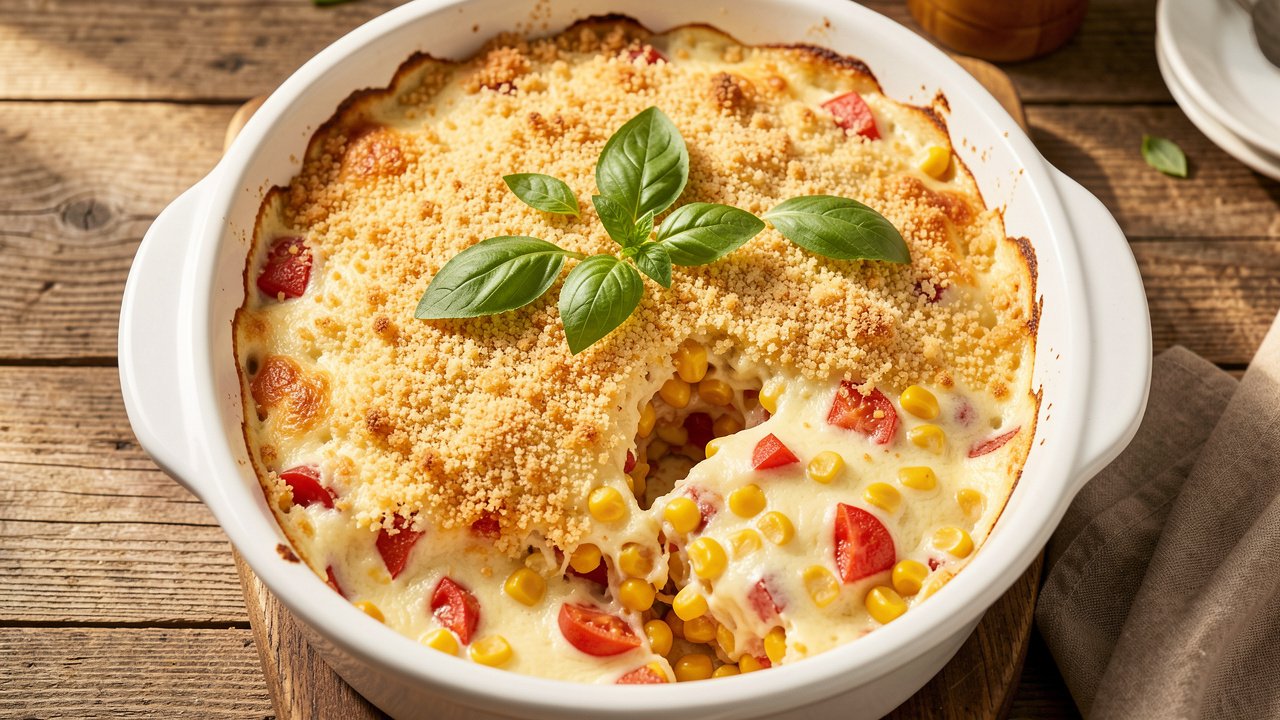
Corn and tomatoes peak in the same three weeks of the year, which is why this casserole exists. It is also why so many versions come out of the oven swimming. Both hero ingredients are mostly water, and heat pulls that water straight into your dish unless you take it out first. Everything below is built around that one problem.
Why This Fresh Corn and Tomato Casserole Works
Almost every complaint about this dish is the same complaint: it came out soupy. The fix is not baking it longer, because more time in the oven just cooks more water out of the vegetables and into the dish. The fix is deciding, before anything goes in the pan, how much water you let in.
So we take it out at the source. The tomatoes get seeded and salted, which pulls a shocking amount of liquid out in fifteen minutes. The corn gets milked, meaning the cobs get scraped after the kernels come off, which adds starch instead of water. Then eggs, a little flour, and cheese give the whole thing a custard structure that holds the vegetables in place.
The last piece is the oven. This bakes uncovered at a fairly high heat, which turns the dish into an evaporation machine rather than a steam chamber. Foil traps every bit of moisture the vegetables give up and drips it right back onto the surface.
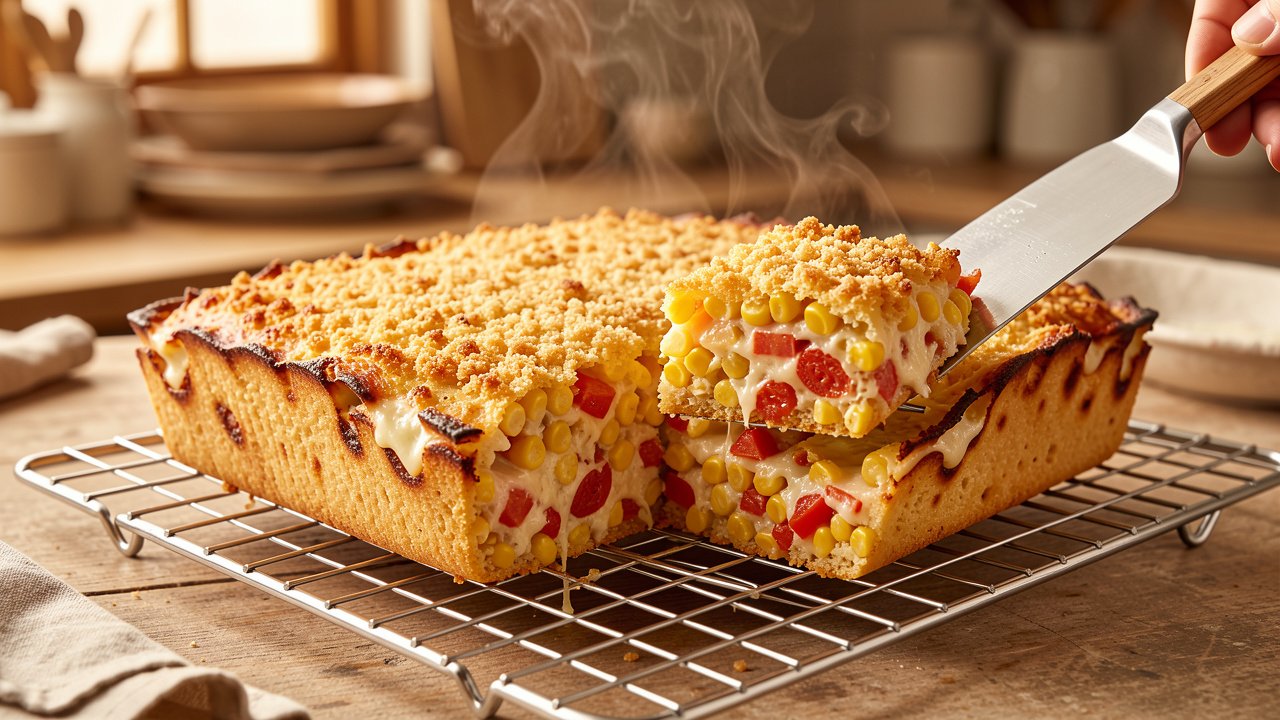
Put those four things together and you get a side dish you can cut into squares: corn still sweet and slightly crisp, tomato still bright, and a custard around them that is soft but sliceable, closer to a savory spoonbread than a vegetable stew.
Pro observation: Two pounds of tomatoes will release roughly half a cup of liquid after seeding and salting. Pour that into a measuring cup once and you will never skip this step again.
Ingredients
Kitchen Measurement Converter
Quickly convert between common cooking measurements without leaving the recipe. Pick a category, enter a value, and the result updates instantly.
Ingredient Notes & Substitutions
Fresh Corn
Six ears give you both kernels and cob milk, and the milk is why fresh beats frozen here. Frozen kernels arrive with ice crystals that melt into your custard, and the cobs and their starch were discarded in a factory months ago. If fresh is unavailable, thaw frozen corn fully, blot it dry, and add an extra tablespoon of flour.
Tomatoes
Firm, meaty tomatoes work best: Roma, plum, or any variety with thick walls and small seed pockets. Big juicy slicers taste wonderful but carry more gel. Cherry tomatoes are a good shortcut; halve them and roast them briefly instead of salting.
Eggs and Cream
Three eggs plus cream is what turns this from a vegetable bake into something with a set. Half-and-half works, slightly softer. Skim milk lacks the fat to carry the custard and leaves a thin layer at the bottom.
Cheese and Crumbs
Sharp cheddar melts into the custard and adds salt and fat, both of which help the set. For the topping, panko stays crisper than fine breadcrumbs, and crushed butter crackers are the classic Southern move.
Equipment
- 9 by 13 inch baking dish
- Colander and a bowl
- Large sharp knife
- Wide skillet
- Box grater
- Whisk and mixing bowl
Before You Start
1. Salt the tomatoes first. They need fifteen minutes to drain, so do that before you touch the corn. Everything else can happen while they sit.
2. Heat the oven to 400 F. A properly hot oven browns the top and drives moisture off the surface. A lukewarm oven just poaches the vegetables.
3. Set up for the corn. Cutting kernels sends them flying, so stand the ear inside a large bowl or in the hole of a bundt pan and cut downward. It keeps your counter clean and your cob milk contained.
Step-by-Step Instructions
Seed and Salt the Tomatoes
Core the tomatoes and cut them into half-inch pieces, then scoop out the seeds and the jelly around them with your finger or a spoon tip. That gel is almost pure water and the single biggest source of a soupy casserole. Toss the pieces with a teaspoon of salt, pile them in a colander set over a bowl, and leave them 15 minutes while you work on the corn.
Cut the Kernels and Milk the Cobs
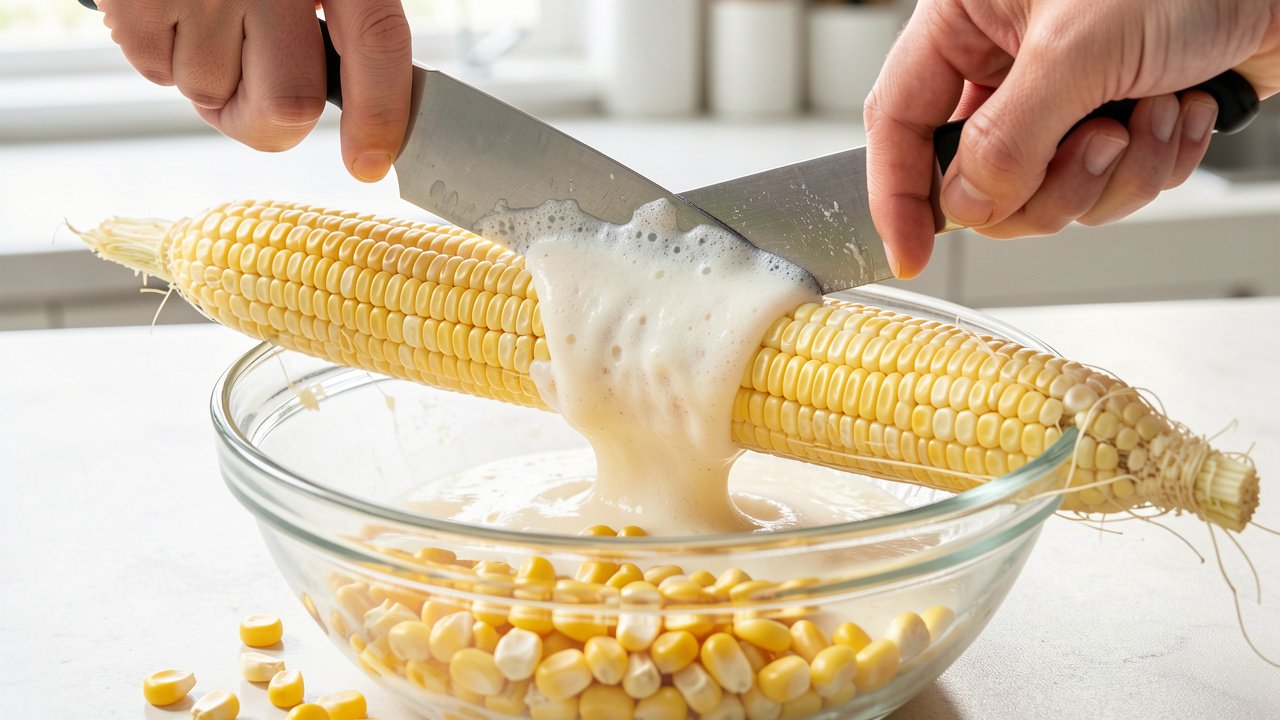
Stand each shucked ear upright in a bowl and slice down the sides to release the kernels. Now the part most people skip: flip your knife over and run the dull back of the blade firmly down each bare cob, top to bottom. A cloudy, starchy liquid squeezes out. That is cob milk. It thickens the custard for free and tastes more like corn than the kernels do. Scrape every cob into the bowl.
Sweat the Onion and Cook the Corn Briefly
Melt the butter in a wide skillet over medium heat and cook the onion 5 to 6 minutes until soft and translucent but not browned. Add the garlic for 30 seconds, until it smells sweet rather than sharp. Tip in the corn and its milk and cook just 3 minutes, stirring, until the kernels deepen in color and the milk tightens. Sprinkle the flour over and stir one more minute so it coats and loses its raw taste. Take the pan off the heat to cool a few minutes.
Whisk the Custard and Fold It All Together
Whisk the eggs, cream, black pepper, and cayenne in a large bowl until smooth with no streaks of white, then stir in the cheddar and basil. Press the drained tomatoes gently against the colander one last time and discard the liquid underneath, then fold the tomatoes and the warm corn mixture into the custard. The flour and cob milk do the thickening; the eggs do the setting. Together they are what keeps this from weeping. Pour into a buttered 9 by 13 inch dish and spread it level.

Bake Uncovered, Then Add the Topping
Slide the dish into the 400 F oven uncovered and bake 30 minutes. Do not reach for the foil: uncovered baking lets steam leave, while covering traps it and drips it back down. Meanwhile toss the panko with the melted butter and the Parmesan. At the 30-minute mark, scatter the crumbs evenly over the top and return the dish for 12 to 15 minutes more. Adding the topping partway is deliberate; a full 45 minutes and the crumbs go bitter and dark.
Check the Set, Then Rest Before Serving
It is done when the crumbs are deep golden, the edges bubble and brown where they meet the dish, and the center is set with only the barest wobble when you nudge the pan. A wide, sloshing ripple means another 5 minutes. Now rest it on a rack for 10 to 15 minutes. Residual heat finishes setting the custard, and cutting straight from the oven is the difference between a clean square and a puddle.
Chef’s Tips From Real Kitchen Testing
Taste a raw kernel first. Corn picked days ago has turned some sugar to starch and needs the full 3 minutes in the pan; corn from this morning is sweet enough that 2 minutes keeps more snap.
Use a light-colored ceramic or glass dish rather than dark metal. Dark pans set the bottom too fast and leave the center behind, so you overbake the edges waiting on the middle.
Salt the custard lightly. The drained tomatoes already carry salt and the cheddar and Parmesan bring plenty more. Season at the end of the fold, not the beginning.
Recipe Variations
Serving Suggestions
- Grilled chicken thighs or lamb chops
- A simple green salad with sharp vinaigrette
- Barbecue plates, where it replaces both the corn and the starch
- Fried eggs the next morning, with leftovers reheated crisp
Nutrition Facts
Values are estimates per serving, based on six servings, and vary with the cheese and cream you use.
Make-Ahead Tips
You can do all the wet work a day early. Seed, salt, and drain the tomatoes, cut and milk the corn, and cook the onion-corn base, then refrigerate those separately overnight. Draining the tomatoes ahead actually helps, since they keep shedding liquid in the fridge.
What you should not do is assemble it and let it sit for hours. Raw egg against salted vegetables pulls yet more water out of the tomatoes, and you lose the advantage you worked for. Fold everything together right before it goes in the oven, and keep the crumb topping dry and separate until the 30-minute mark.
Storage, Freezing & Reheating
Common Mistakes to Avoid
Troubleshooting
Watery on the plate? Almost always the tomatoes. Seed them properly and give them the full 15 minutes of salting, or roast them at 400 F for 20 minutes instead.
Set but rubbery? Too much egg or too long in the oven. Pull it as soon as the center stops sloshing; the rest does the last 10 percent of the cooking.
Topping pale while the middle is loose? Your oven runs cool. Move the dish up a rack and give it 5 more minutes rather than using the broiler, which browns crumbs long before the custard catches up.
A Note on Late-Summer Corn and Tomatoes
Baked corn puddings go back a long way in American home cooking, built on the practical fact that a glut of sweet corn arrives all at once and does not keep. Adding tomatoes is the natural next move, since the two crops come in together and the acid cuts the richness of the custard. If you have more tomatoes than you can cook through, canning crushed tomatoes holds onto the season, and our library of tomato recipes has more ideas for the pile on your counter.