Italian Recipes
Slow Cooker Tomato Sauce Recipe Hands-Off Marinara That Actually Thickens
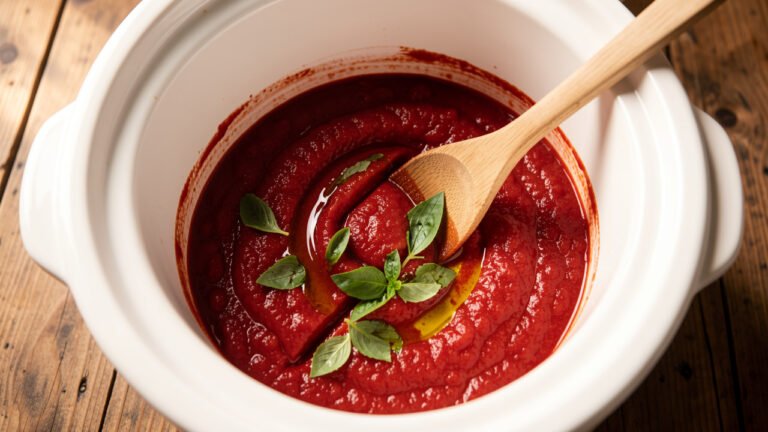
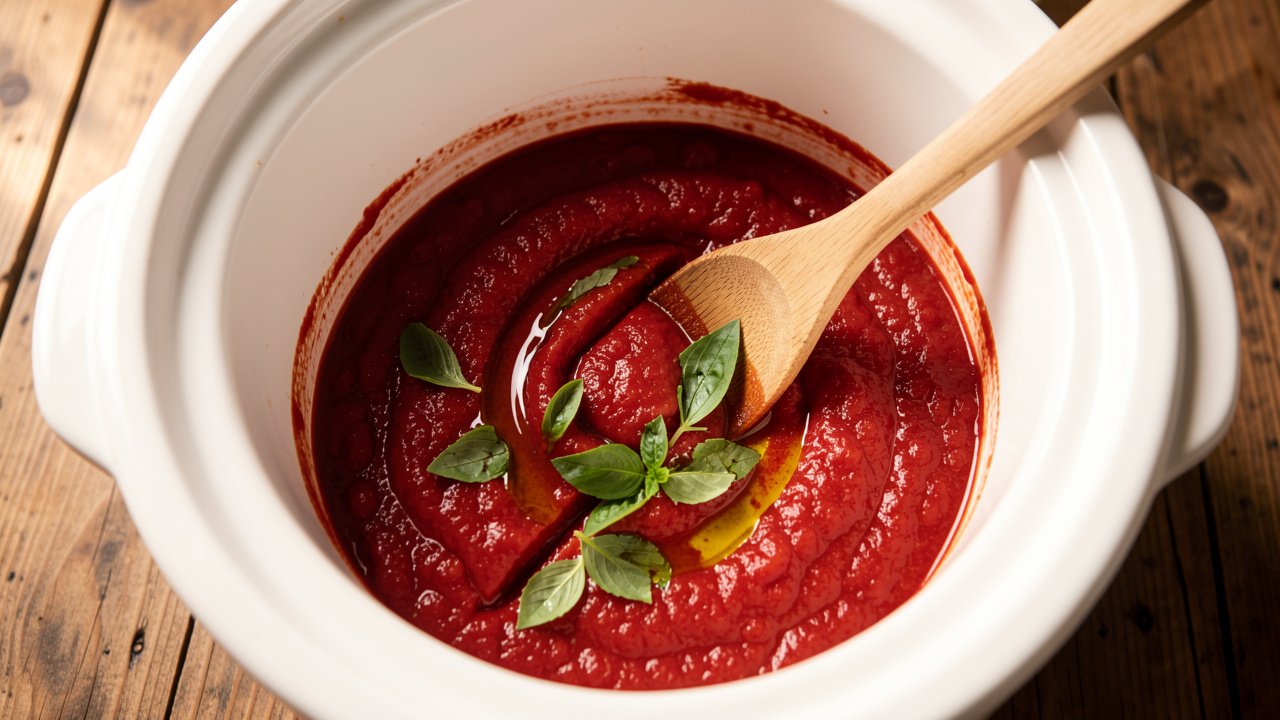
I love what a slow cooker does to tomatoes. Eight quiet hours turn a can of plum tomatoes into something round and sweet that no thirty-minute stovetop sauce ever quite reaches. But the first batch I made was pink water with basil floating in it, and it took me a while to understand why.
Why This Slow Cooker Tomato Sauce Works
Here is the one real problem with slow cooker tomato sauce, and everything else follows from it. The lid is sealed. Steam rises, hits cold ceramic or glass, condenses, and drips straight back into the pot. Almost nothing evaporates.
That matters because a stovetop sauce thickens by reducing: the pan stays open, water leaves as steam, and concentrated tomato stays behind. A slow cooker cannot do that. Dump in two cans of tomatoes with all their juice and eight hours later you have the same amount of liquid you started with, thin and oddly raw-tasting, because concentration is most of what makes sauce taste cooked.
The fix is three moves, and none of them are hard. First, control the water going in. Use meaty paste tomatoes such as Roma or San Marzano, or open canned whole tomatoes and drain off the packing juice. You want tomato flesh, not tomato soup.
Second, add concentration on purpose. Two tablespoons of tomato paste cooked in olive oil for two minutes, until it darkens from bright red to brick, brings depth the slow cooker cannot build for itself. Raw paste stirred straight into the crock tastes metallic; cooked paste tastes like sauce that has been going for hours.
Third, crack the lid for the last hour. Prop it with a wooden spoon handle, or set it off-center so there is a finger-wide gap. Steam finally has somewhere to go and the sauce reduces. This hour is the difference between fine and genuinely good.
What you get in exchange is real: long, gentle heat that never scorches the pan. Garlic goes sweet instead of bitter, and the tomatoes stop tasting like separate ingredients. All of it while you are at work.
Pro observation: The sauce is done when a spoon dragged across the bottom of the crock leaves a track that holds for a second or two. If it fills in instantly, give it more time with the lid cracked.
Ingredients
Kitchen Measurement Converter
Quickly convert between common cooking measurements without leaving the recipe. Pick a category, enter a value, and the result updates instantly.
Ingredient Notes & Substitutions
Canned Tomatoes
Buy whole peeled plum tomatoes, not crushed or pureed. Whole ones let you pour off the thin packing juice, which is the single biggest water saving in the whole recipe. Crushed tomatoes come pre-mixed with that liquid and you cannot separate it back out.
Fresh Tomatoes
In August, use 4 pounds of Roma or other paste tomatoes. Halve them, squeeze out the seeds and jelly over the sink, and chop. Slicing tomatoes such as beefsteak hold far more water and will fight you the whole way.
Tomato Paste
Tube paste is more concentrated than can paste and keeps for months in the fridge. Either works, but do not skip cooking it in the oil. That two-minute step is doing the job the sealed lid will not do.
Basil and Olive Oil
Both go in at the end, off the heat. Basil cooked for eight hours turns black and tastes like hay. A good extra-virgin olive oil stirred in cold adds a peppery finish and body that survives freezing.
Equipment
- 4 to 6 quart slow cooker
- Small skillet
- Colander or sieve
- Wooden spoon
- Sharp knife and board
- Freezer containers
Before You Start
1. Check your slow cooker size. This recipe fills a 4-quart cooker about two-thirds full, which is where slow cookers work best. In a large 7-quart cooker the shallow layer heats fast and can scorch at the edges, so watch it or double the batch.
2. Decide LOW or HIGH before you start. LOW for 6 to 8 hours gives a rounder, sweeter sauce. HIGH for 3 to 4 hours works and tastes good, but the flavor is more direct and less layered. Pick based on your day, not on the recipe.
3. Keep the reserved tomato juice. Do not pour it down the drain when you drain the cans. If the sauce ends up thicker than you like, a splash of it loosens things without watering down the flavor.
Step-by-Step Instructions
Drain the Tomatoes Properly
Tip both cans into a colander set over a bowl and let them drain 5 minutes, shaking once or twice. You should collect roughly a cup of thin juice; set it aside rather than throwing it out. What stays in the colander is the tomato flesh you want.
Soften the Onion and Garlic
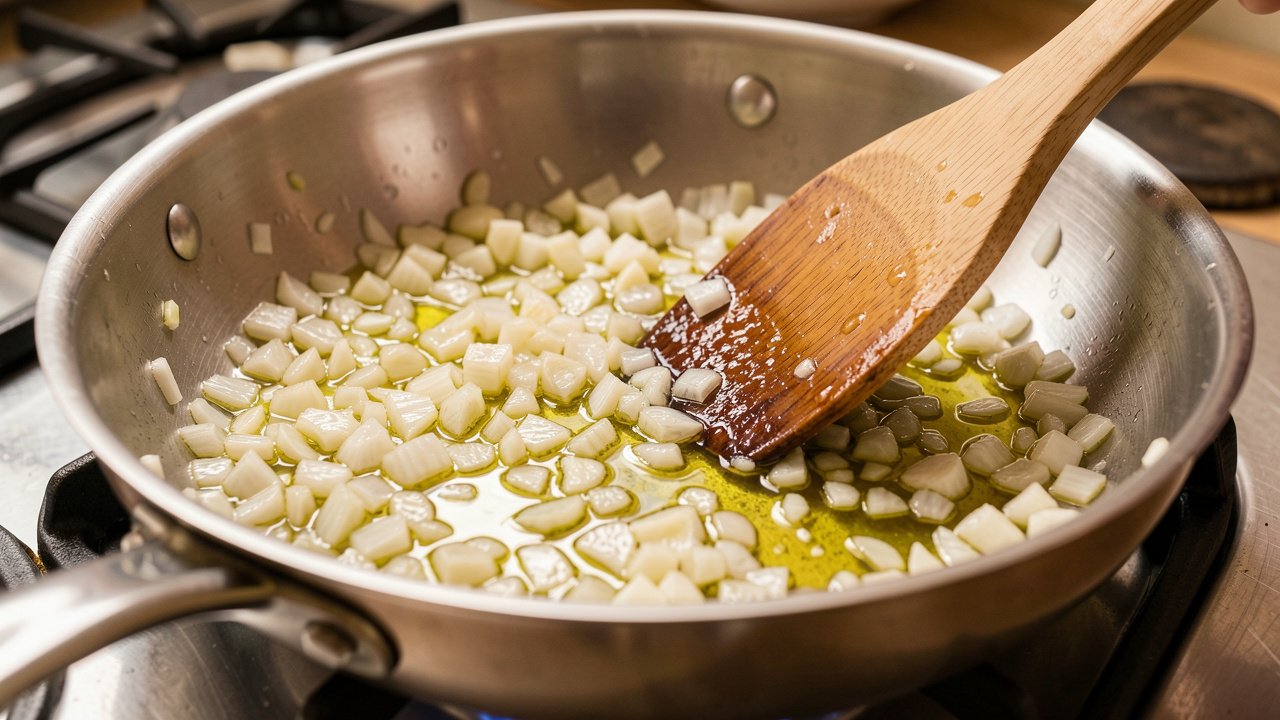
Warm 3 tablespoons of olive oil in a skillet over medium heat and add the chopped onion with a pinch of salt. Cook 7 to 8 minutes, stirring now and then, until soft and translucent with no color. Add the garlic for 60 seconds more, just until it smells sweet. Pull it off before it browns; browned garlic tastes sharp, and that sharpness only gets louder over eight hours.
Cook the Tomato Paste Until It Darkens
Push the onion aside, add the tomato paste to the bare pan, and press it flat. Cook 2 minutes, stirring, until it turns from bright red to deeper brick and smells toasty rather than tinny. This is the concentration your slow cooker cannot build on its own, so do not shortcut it.
Crush the Tomatoes and Load the Crock
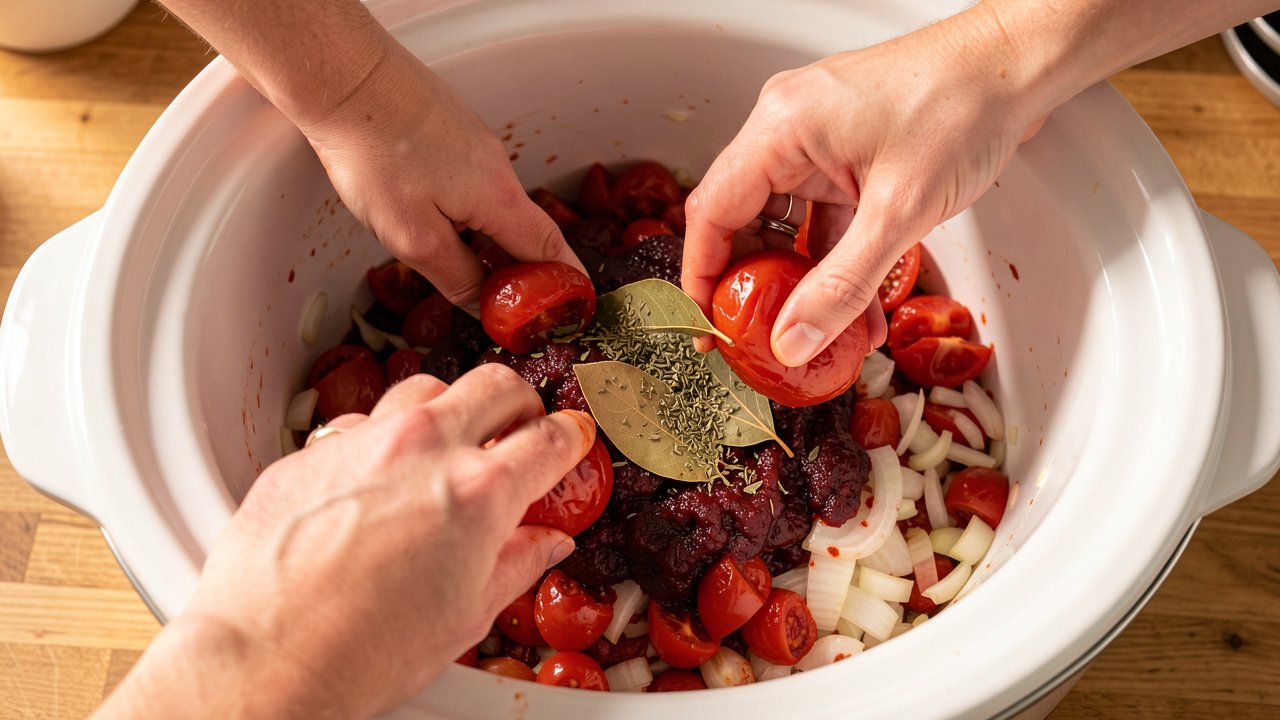
Scrape the skillet into the slow cooker. Add the drained tomatoes and crush them by hand or against the side with a spoon; a blender whips in air and turns the sauce orange. Add the oregano, red pepper flakes, bay leaf, salt, and sugar, and stir once. It will look chunky and dry compared to the sauce you are picturing. That is correct.
Cook Low and Slow, Then Crack the Lid
Cover and cook on LOW for 6 to 8 hours or HIGH for 3 to 4. Do not lift the lid to peek in the early hours; every peek costs you 15 to 20 minutes of heat recovery and buys you nothing. For the final hour, prop the lid open with the handle of a wooden spoon so a wide gap opens up. You will see steam leaving instead of dripping back. Stir once or twice during that hour and watch the color deepen from bright to brick as it tightens.
Finish Off the Heat
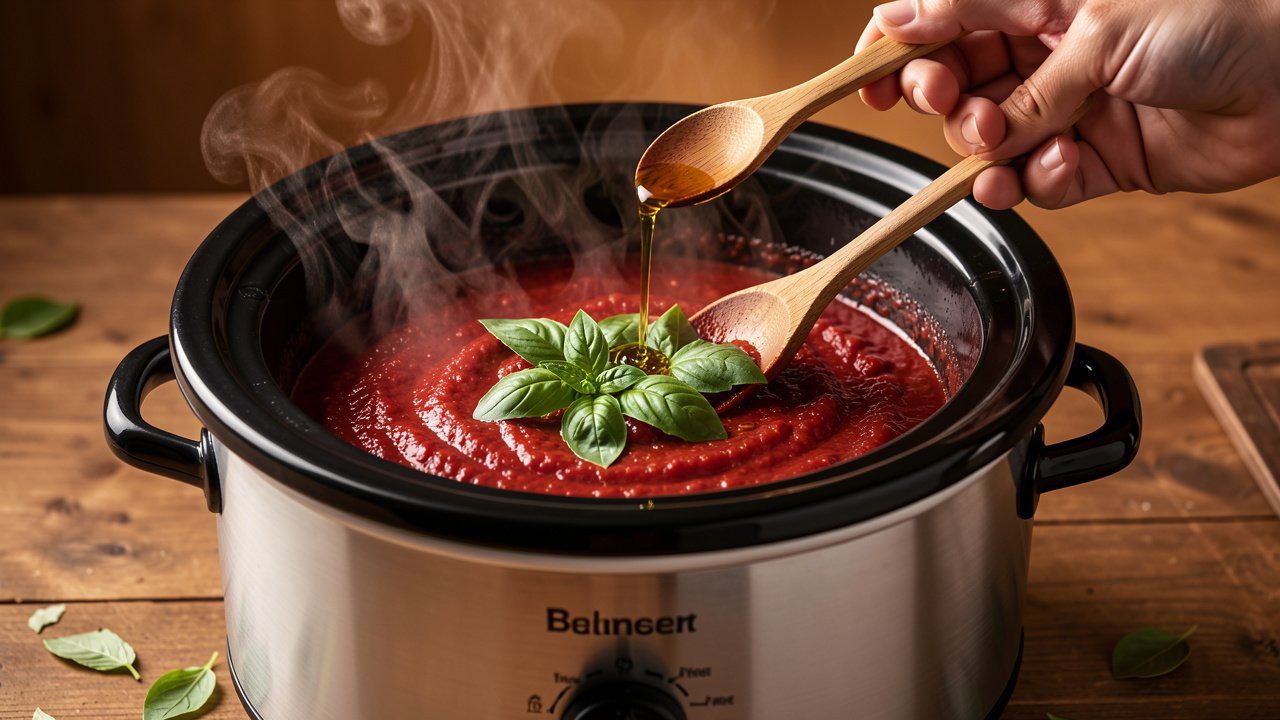
Turn the cooker off and fish out the bay leaf. Stir in the torn basil and the last 2 tablespoons of raw extra-virgin olive oil, then let it sit 5 minutes. The residual heat is enough to release the basil without cooking it flat. Taste now, not before, because salt reads differently in a hot sauce than a warm one. Add black pepper and more salt to taste.
Chef’s Tips From Real Kitchen Testing
A clean kitchen towel laid across the crock under a cracked lid reduces faster than the gap alone, because it absorbs steam instead of letting it drip back. Keep the edges clear of the heating element and never use one with the lid fully closed.
If your day runs short, finish the reduction in a wide pan on the stove for 10 minutes instead of the cracked-lid hour. Same physics, more surface area, faster result. It is a legitimate rescue, not cheating.
Salt in two stages: a teaspoon at the start to help the tomatoes release, the rest at the end once reduction has concentrated everything. Salting to taste up front means an over-salted sauce eight hours later.
Add a parmesan rind or, to keep it vegan, a 2-inch strip of dried kombu at the start. Both add savory depth over a long cook. Pull whichever you used out at the end with the bay leaf.
Recipe Variations
Serving Suggestions
- Spaghetti or rigatoni, with a splash of pasta water
- Spooned under baked eggplant or zucchini
- As pizza sauce, no cooking needed
- A dipping bowl for focaccia or arancini
Nutrition Facts
Values are estimates for one of six servings of sauce, without pasta, and vary with the canned tomatoes you buy.
Make-Ahead Tips
The prep splits cleanly across two days. Cook the onion, garlic, and paste the night before, cool it, and keep it covered in the fridge. Drain the tomatoes at the same time and keep the flesh and the juice in separate containers.
In the morning, everything goes into the crock in about two minutes and you can leave for work. Do not be tempted to load the slow cooker insert the night before and refrigerate the whole thing. A cold ceramic crock takes so long to come up to temperature that the tomatoes sit in the bacterial danger zone far longer than they should.
Storage, Freezing & Reheating
Common Mistakes to Avoid
Troubleshooting
Sauce is thin and watery? Crack the lid, switch to HIGH, and give it another hour, or boil it down in a wide pan for 10 minutes. Do not use cornstarch; it dulls the flavor and turns the sauce gluey.
Tastes raw or flat after a full day? That is missing concentration, not missing time. Stir in another tablespoon of tomato paste cooked in oil, then reduce uncovered for 20 minutes.
Too acidic or sharp? A splash more olive oil beats a pinch of sugar, since fat rounds acidity more gracefully. A grated carrot cooked in from the start works too.
Scorched at the edges? Your cooker runs hot, or the batch is too shallow for it. Scrape the sauce out without touching the dark ring at the waterline and use LOW next time.
A Note on Sauce Method
The slow cooker is one tool for tomato sauce, not the only one. When peak-season tomatoes are on the counter and you want their brightness intact, a quick stovetop sauce is the better call, and our fresh tomato sauce without sugar takes that route. Working through a glut? Canning crushed tomatoes gives you the raw material to make this sauce all winter. For the wider family, browse our guide to tomato sauce recipes.
Frequently Asked Questions
More Tomato Recipes to Try
Culinary Reviewer: Ghazala Shakeel
Last updated: [mc_modified_date]

Urooj Mukhtar is a classically trained chef and food blogger at TomatoAnswers.com, creating healthy, seasonal, plant-based recipes that put tomatoes at the center of the plate. She focuses on making nutritious, flavour-forward home cooking both accessible and delicious.