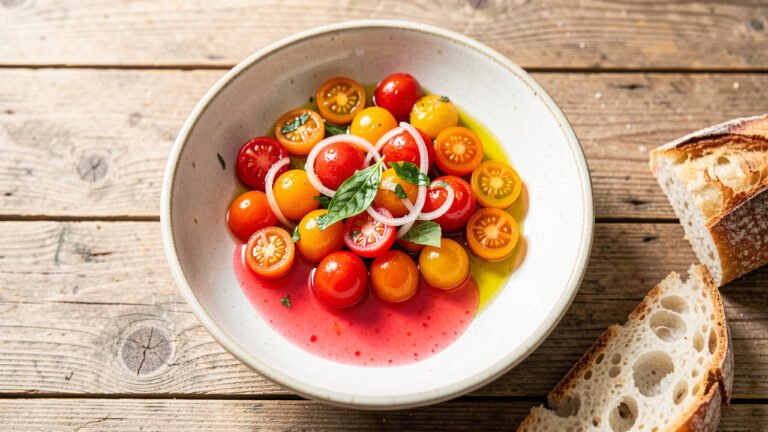
Mediterranean Recipes
Marinated Cherry Tomato Salad Recipe Room-Temperature Marination Method
The first few times I made this, I left the tomatoes whole because they looked prettier that way. They tasted like plain tomatoes sitting in a puddle of dressing. The skin of a cherry tomato is a sealed barrier, and nothing crosses it in either direction. Cut them in half and the whole dish changes.
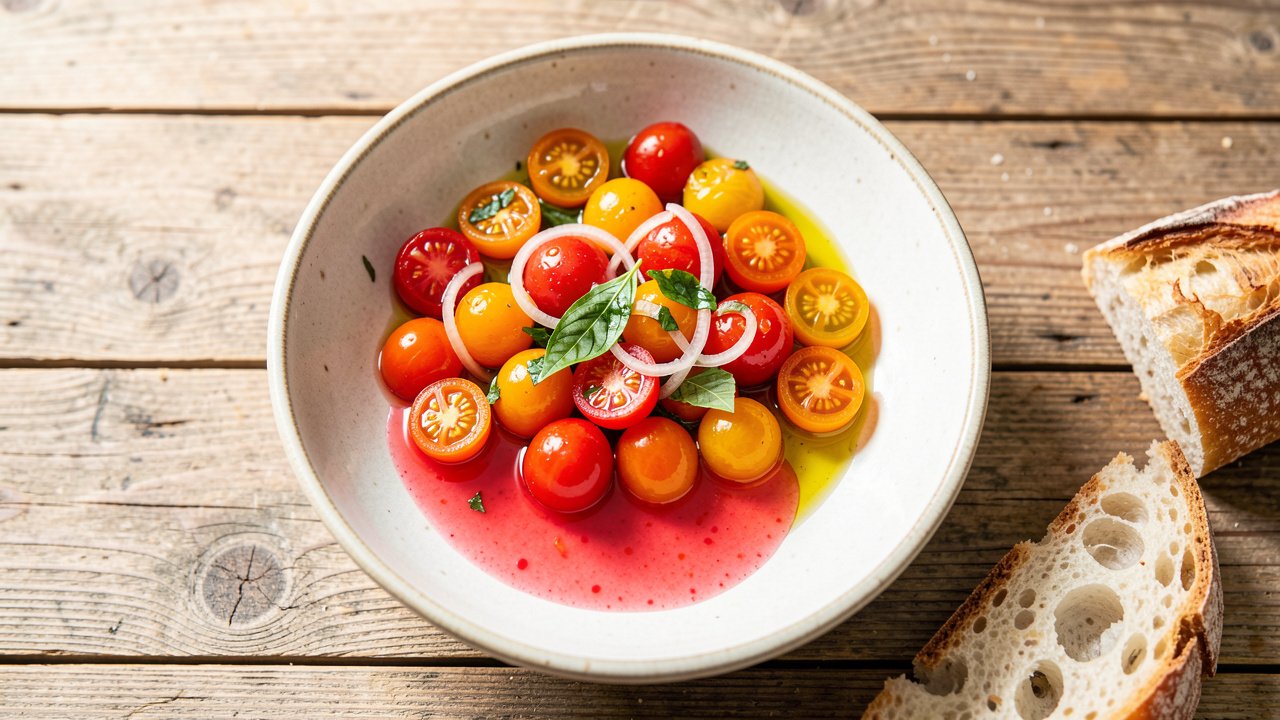
Why This Marinated Cherry Tomato Salad Works
Most tomato salads are an assembly job: you cut things, dress them, eat them. This one is different, because the marination does real work on the tomatoes while you stand around doing nothing.
Here is the mechanism. Salt on a cut tomato face makes the outside of the cells saltier than the inside, and water moves toward the saltier side, so the tomato starts releasing its own juice within minutes. You can watch it: the cut surfaces go glossy, beads form, liquid gathers in the bowl.
Traffic runs the other way too. Cells that gave up water lose internal pressure, and the vinaigrette moves into the space that opens up. That is why the tomatoes end up seasoned all the way through. The salt, vinegar, shallot, and oil are not sitting on the surface; they are inside the fruit.
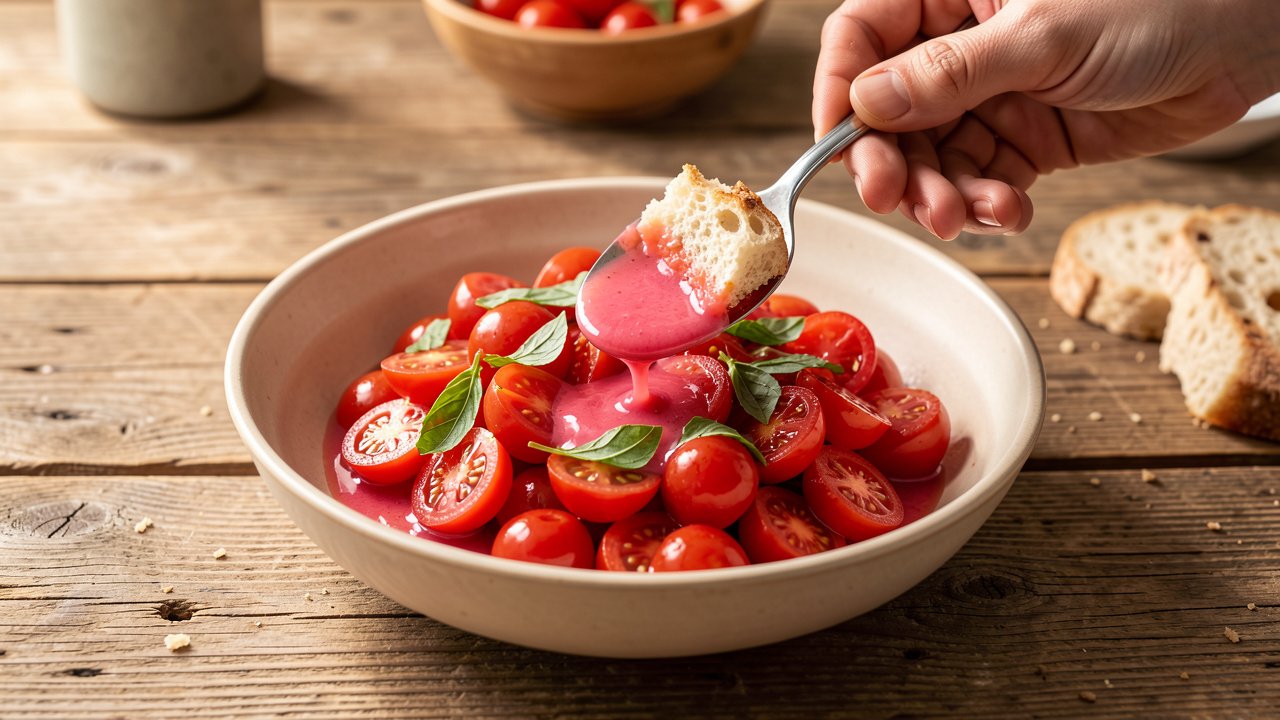
You get two things at once: tomatoes with flavor in the middle, and a pool at the bottom of the bowl that is part tomato juice, part vinaigrette, and better than either alone. That pool is the whole point. Spoon it back over the salad and serve bread to catch the rest.
Pro observation: If you tip the bowl after 40 minutes and no liquid runs to the edge, something went wrong: the tomatoes were whole, the salt was skipped, or they went into the fridge. All three stop the process cold.
Ingredients
Kitchen Measurement Converter
Quickly convert between common cooking measurements without leaving the recipe. Pick a category, enter a value, and the result updates instantly.
Ingredient Notes & Substitutions
Cherry Tomatoes
Mixed colors look good, but ripeness matters more. Squeeze one gently; it should give slightly. Rock-hard supermarket tomatoes will not release much juice no matter how long you salt them. Grape tomatoes work and hold their shape longer.
Shallot
Milder and sweeter than raw onion, which matters when nothing is cooked. Slice it paper-thin. If you only have red onion, soak it thin-sliced in the vinegar for ten minutes to knock back the bite.
Red Wine Vinegar
Enough acid to season without bleaching the tomatoes the way lemon juice can. Sherry vinegar is an excellent swap. Balsamic works but turns everything muddy brown.
Olive Oil
One of the few dishes where the oil is tasted straight, so use one you like. A grassy, peppery extra-virgin adds a lot; cheap neutral oil makes the pooled juice taste like nothing.
Salt
Kosher for the marinating salt: the larger flakes dissolve at a rate you can control. Flaky sea salt at the end for crunch. Table salt packs tighter, so halve the volume.
Herbs
Basil and oregano are the Mediterranean default. Tear basil rather than chopping; a knife bruises the leaves black. Mint, parsley, and chives are fair game. Add herbs at the end, never the start.
Equipment
- Wide shallow bowl
- Sharp paring knife
- Cutting board
- Small whisk or fork
- Microplane or fine grater
- Large serving spoon
Before You Start
1. Take the tomatoes out of the fridge. If they have been refrigerated, give them an hour on the counter first. Cold tomato flesh is mealy and its aroma compounds go quiet, and no amount of marinating fixes that.
2. Pick a wide bowl, not a deep one. You want the tomatoes in a shallow layer so most of them touch the dressing. A deep bowl leaves the ones on top dry and the ones on the bottom drowned.
3. Sharpen your knife. A dull blade crushes cherry tomatoes instead of cutting them, and crushed tomatoes dump their seeds and gel into the bowl immediately instead of releasing juice slowly.
4. Start the clock when the dressing goes on. The window is 30 to 60 minutes. Set a timer, because this is the one part of the recipe you can genuinely get wrong.
Step-by-Step Instructions
Halve Every Tomato
Cut each cherry tomato in half through its equator, not through the stem end. The equator cut exposes the most flesh and gel, where the flavor and juice live. Do not leave any whole, however small: an intact skin is a sealed barrier, and a whole tomato will sit in this bowl for an hour and come out tasting exactly as it went in.
For speed, trap a handful between two deli lids and run a long serrated knife through the gap. It cuts eight or ten at once and the halves stay tidy.
Salt Them and Wait Ten Minutes
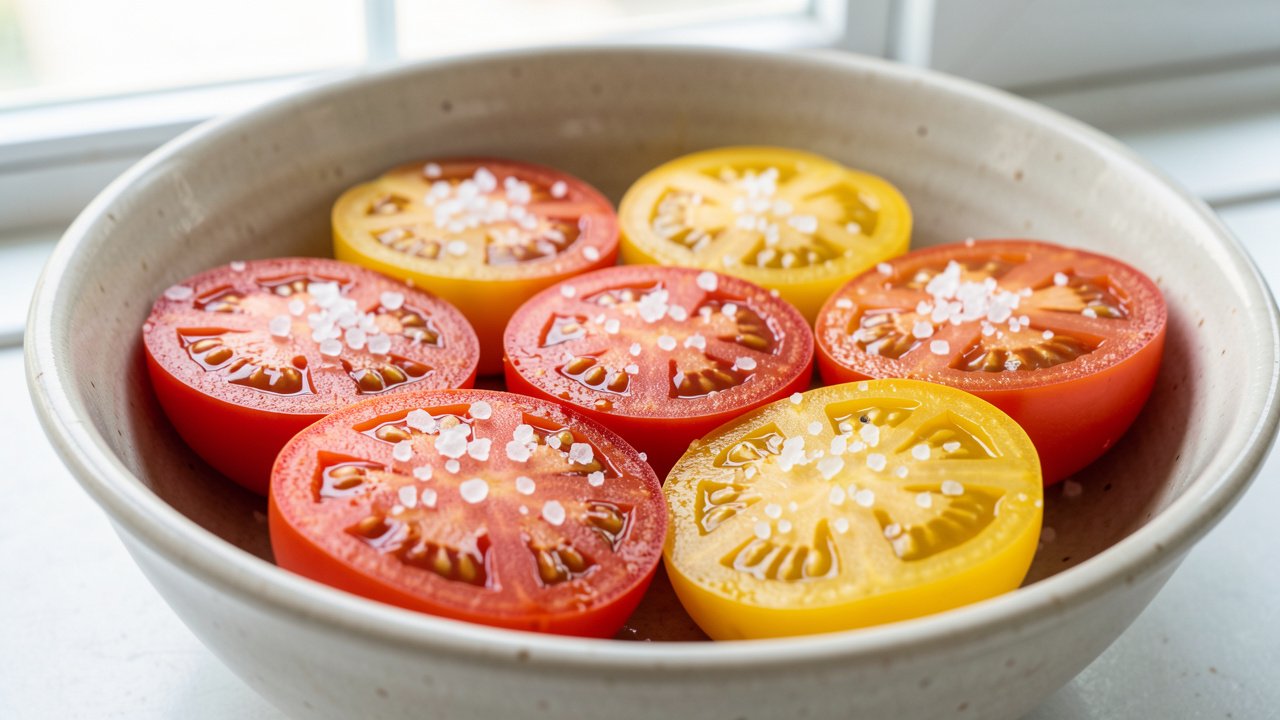
Put the halves in the wide bowl, cut sides mostly up, and scatter the kosher salt over them. Toss once with your hands so every cut face gets contact, then let them sit ten minutes before anything else goes in.
This head start matters. The salt draws water out straight away, so by the time the vinaigrette arrives the tomatoes are already releasing juice and the two liquids mix, rather than the oil sealing the cut faces first.
Soften the Shallot in the Vinegar
While the tomatoes sit, slice the shallot as thin as you can into a small bowl with the red wine vinegar and grate the garlic in on a microplane. Leave it for the rest of the ten minutes.
The vinegar tames both: raw shallot goes from sharp to gently sweet, and grated garlic loses its harsh edge. Skip this and one bite is fine while the next one bites back.
Whisk the Vinaigrette and Pour It Over
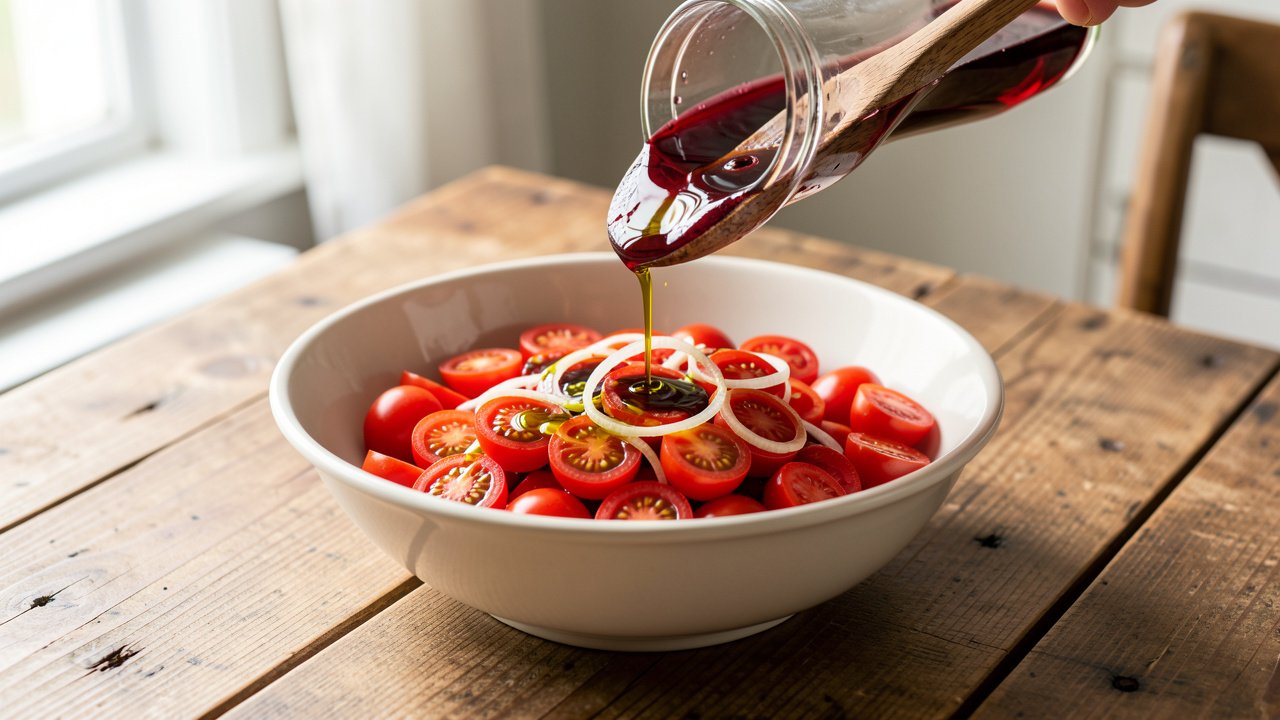
Whisk the olive oil and black pepper into the shallot and vinegar until cloudy and slightly thickened, about fifteen seconds. Pour it over the salted tomatoes and turn them gently until every half is coated.
Be gentle: you are coating them, not mashing them. The halves should stay distinct and glossy, not collapse into a rough sauce.
Marinate 30 to 60 Minutes at Room Temperature
Cover the bowl loosely and leave it on the counter. Do not refrigerate. Cold firms the pectin in tomato cell walls into that mealy, cotton-wool texture and shuts down the compounds that make a tomato smell like a tomato. Room temperature is the condition this recipe depends on.
The window is real. Under 20 minutes, almost nothing has moved: wet surfaces, bland insides. Past three hours the cells have given up too much water and collapsed into limp halves in a watery bowl. Thirty to sixty minutes is where they are seasoned through and still have snap.
Add the Herbs and Serve With the Juice
Tear the basil and strip the oregano leaves in right before serving, then fold once and taste for flaky salt. Now tilt the bowl. That pink-red liquid running to the low side is the reason you halved and salted the tomatoes in the first place.
Never pour it off. Spoon it back over the top, serve in shallow bowls so the juice stays with the salad, and put torn bread on the table.
Chef’s Tips From Real Kitchen Testing
Cut through the equator, not the stem end. It opens more gel and seed cavity, and side by side against stem-end cuts it gives noticeably more juice in the same hour.
Salt the tomatoes directly, not the dressing. Salt dissolved in oil and vinegar is diluted and slow; salt landing on bare cut flesh pulls water immediately.
If your kitchen is over 80F, check at 30 minutes rather than 45. Warmth speeds the exchange, and the slumping point arrives sooner than you expect.
Make it in the bowl you plan to serve from. Every transfer leaves juice on the sides of the old bowl, and that juice is the payoff.
Recipe Variations
Serving Suggestions
- Torn crusty sourdough or ciabatta for mopping
- Spooned over white beans or chickpeas
- Alongside grilled vegetables or flatbread
- Piled onto olive-oil-rubbed toast
Serve it within twenty minutes of adding the herbs, and always in shallow bowls rather than flat plates. On a plate the juice runs to the rim and gets abandoned, which defeats the whole exercise.
Nutrition Facts
Values are estimates per serving of salad without bread. Sodium varies with how much of the pooled juice you actually eat.
Make-Ahead Tips
You can do everything except the marination well ahead. Whisk the vinaigrette with the shallot and garlic up to a day early and keep it covered on the counter; it only improves as the shallot mellows. Wash and dry the tomatoes and pick the herbs in the morning.
What you cannot do is start the clock early. There is no version of this where you halve and dress the tomatoes at noon for a seven o’clock dinner and still get a good result. Cut, salt, and dress exactly one hour before you want to eat, and the timing takes care of itself.
Storage, Freezing & Reheating
Common Mistakes to Avoid
Troubleshooting
Barely any juice in the bowl? The tomatoes were underripe or went in cold. Add a pinch of salt, give it fifteen more minutes, and next time buy tomatoes that give slightly when squeezed.
Tastes watery and thin? It went too long. Strain the liquid off, reduce it in a pan for two minutes, cool it, and pour it back.
Too sharp? Too much vinegar for those tomatoes. Whisk in another tablespoon of olive oil rather than sugar, which just papers over the acid.
Bland in the middle? They were cut through the stem end instead of the equator, or the halves were too big. Quarter any tomato bigger than a walnut.
A Note on Marinated Tomatoes in Mediterranean Cooking
Salting tomatoes and waiting is old practice around the Mediterranean, and it usually exists to make bread useful. Panzanella in Tuscany, pa amb tomaquet in Catalonia, and the tomato salads served with flatbread across Greece and the Levant all lean on one idea: the juice is the sauce, and something starchy collects it.
That is why this recipe stops where it does. It does not need cheese or to become something else. For the creamy version, our tomato mozzarella salad covers it, and the tomato and artichoke salad with capers takes the briny route. For the bigger picture on why tomatoes and olive oil turn up together so often, read tomatoes in the Mediterranean diet. And when there is juice left over, tomato basil pasta is a good place to put it.
Frequently Asked Questions
More Tomato Recipes to Try
Culinary Reviewer: Ghazala Shakeel
Last updated: [mc_modified_date]

Urooj Mukhtar is a classically trained chef and food blogger at TomatoAnswers.com, creating healthy, seasonal, plant-based recipes that put tomatoes at the center of the plate. She focuses on making nutritious, flavour-forward home cooking both accessible and delicious.