Eastern European Recipes
Cold Tomato and Sour Cream Soup Recipe Chilled, Creamy, Loaded With Dill
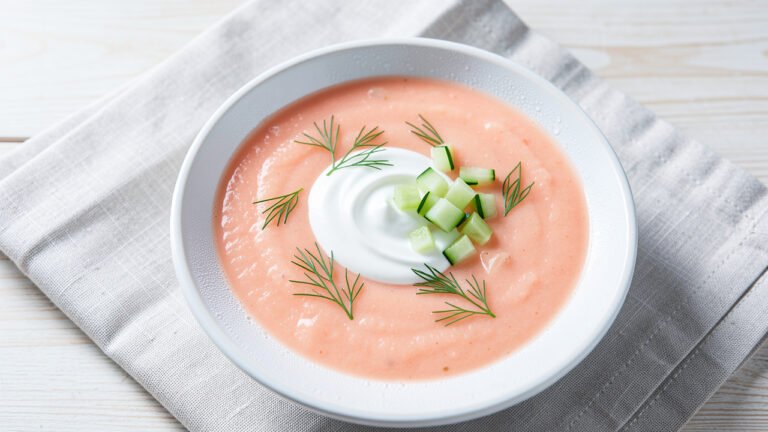
This is the soup my neighbor’s mother made every August, and the first time I tried to copy it I ruined it in about four seconds. I tipped cold sour cream straight into warm tomato and watched it break into little white grains that no amount of whisking would fix. The soup itself is easy. The dairy is the part that demands respect.
Why This Cold Tomato and Sour Cream Soup Works
Most chilled tomato soups are raw and vegetal. This one is cooked first, which makes it taste like a soup rather than like blended salad. Twenty minutes of simmering drives off the grassy note in the skins and concentrates the sugars, so the base still tastes like summer after three hours in a cold fridge.
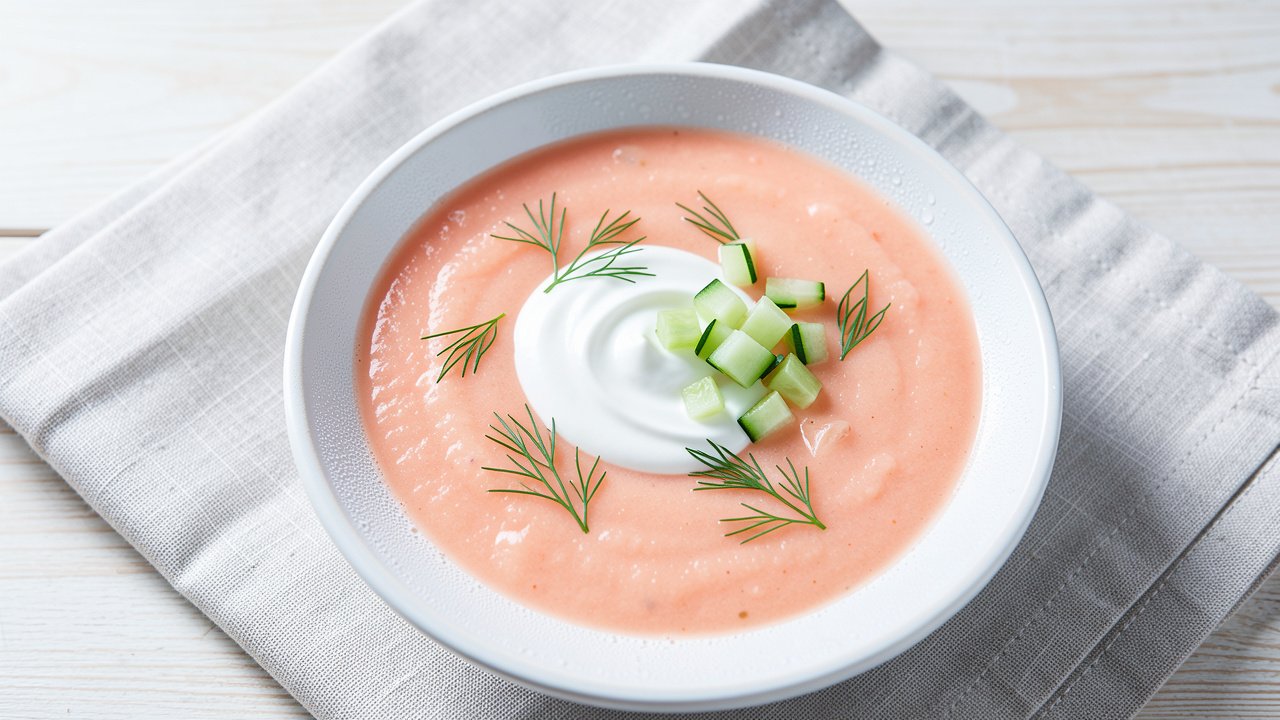
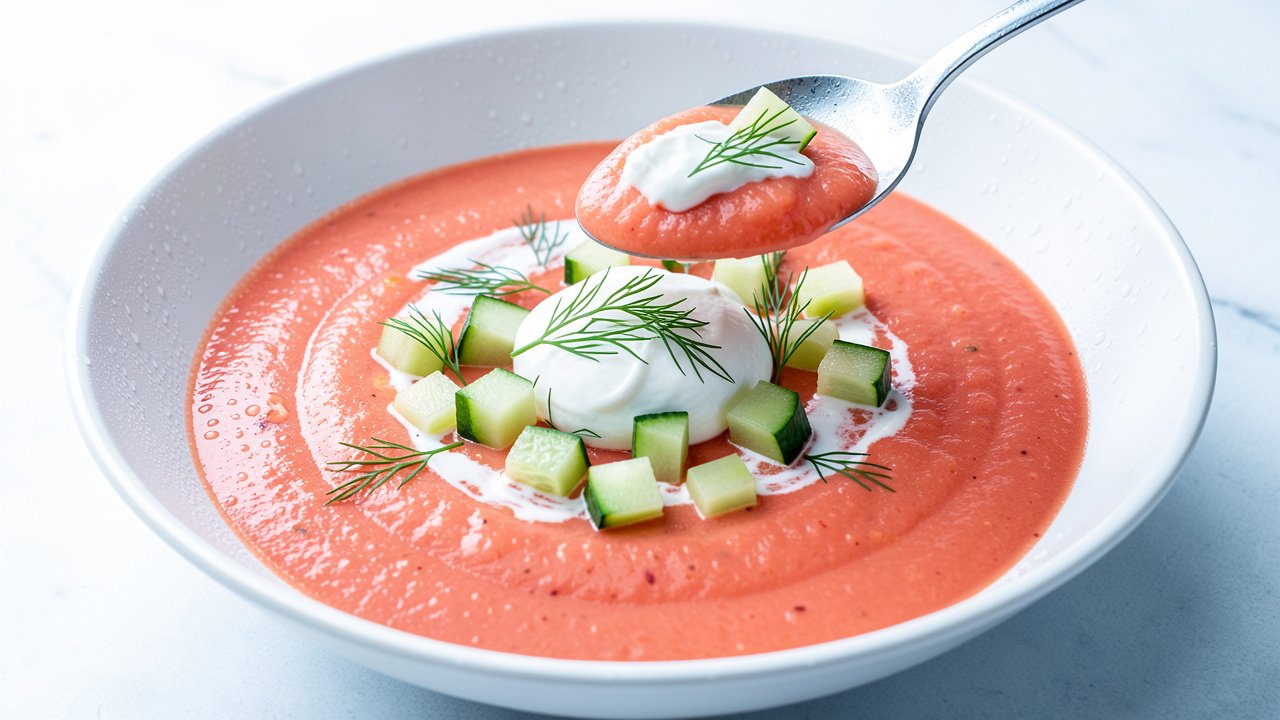
The sour cream is not a garnish here. A full cup goes into the body of the soup, turning it from red to soft coral and giving every spoonful a round, tangy weight. Tomato alone is thin and sharp when cold; dairy fat coats your tongue and carries the flavor further.
The recipe hangs on one technique: tempering. Sour cream is an emulsion of fat, water, and milk protein held in a fragile truce. Shock it with heat, or hit it with tomato acid all at once, and the proteins clench up and squeeze out water, leaving grains floating in pink liquid. Tempering raises the sour cream toward the temperature and acidity of the base slowly, and the emulsion holds.
The second thing that makes or breaks it is when you season. Cold flattens your perception of salt and acid. A soup seasoned to taste perfect while warm will taste washed out straight from the fridge, so you season at the end, at the temperature you will actually eat it.
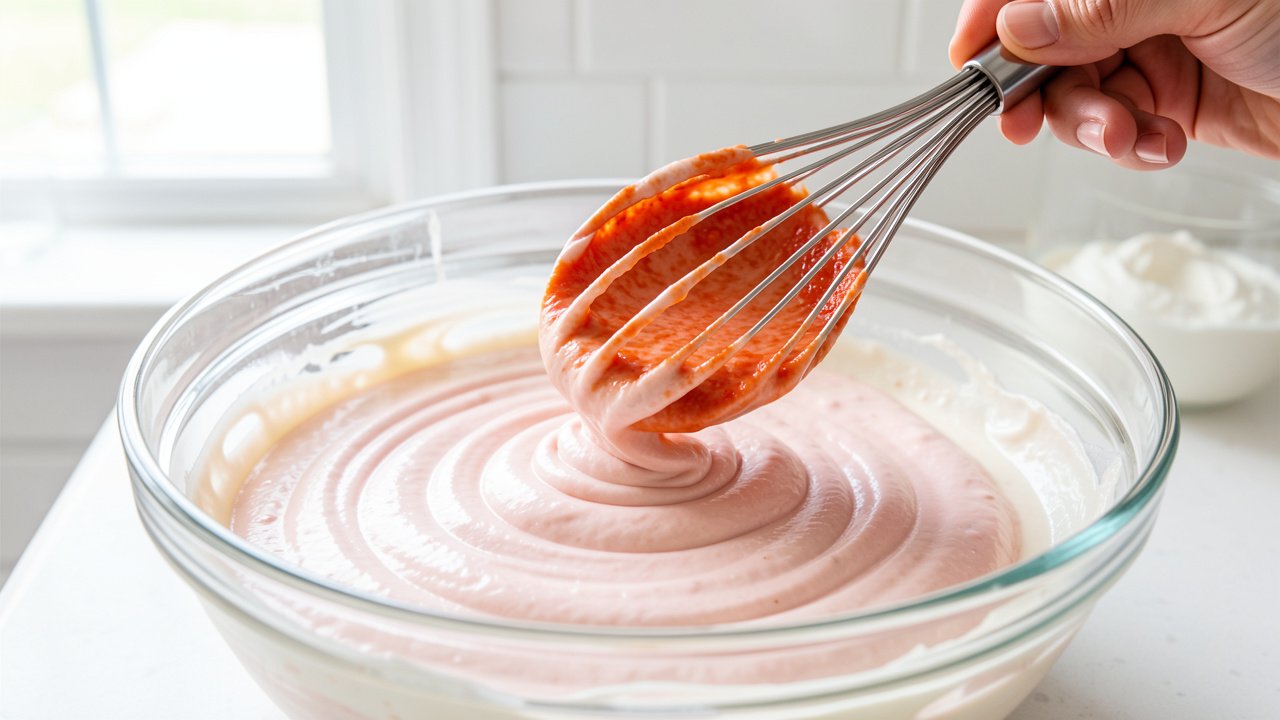
Pro observation: The tempered mixture is ready to go back into the pot when it looks like thin, glossy pink paint and pours in a smooth ribbon off the whisk. If you can see any white specks at all, stop and push it through a sieve before it goes any further.
Ingredients
Kitchen Measurement Converter
Quickly convert between common cooking measurements without leaving the recipe. Pick a category, enter a value, and the result updates instantly.
Ingredient Notes & Substitutions
Sour Cream
Use full-fat only. Light and reduced-fat sour creams carry more water and less protective fat, so they split far more easily and leave the soup watery. Bring the carton out of the fridge about twenty minutes before you temper it; a less shocking temperature gap helps.
Tomatoes
Ripe field tomatoes or romas both work. Romas are meatier and give a thicker soup with less watery liquid to cook off. In winter, two 14-ounce cans of whole peeled tomatoes beat pale fresh ones every time, and you can skip a few minutes of simmering.
Dill
Fresh only. Dried dill turns dusty and gray in a cold soup and tastes of nothing. Chop it just before serving, since the fronds bruise and lose their perfume within an hour of being cut. Save a few whole sprigs for the top of each bowl.
Cucumber
English or Persian cucumbers have thin skins and few seeds, so they stay crisp. If you only have a waxed field cucumber, peel it and scrape the watery seed core out with a spoon, or it will thin the soup as it sits.
Equipment
- Heavy saucepan
- Blender or immersion blender
- Medium mixing bowl
- Balloon whisk
- Ladle
- Fine mesh sieve
Before You Start
1. Plan around the chill, not the cooking. Active work is under forty minutes, but the soup needs three hours minimum in the fridge. Cooking it the night before is easier and tastes better.
2. Clear a cold shelf. A wide, shallow container chills much faster than a deep pot. Room in the middle of the fridge, not the door, keeps the temperature steady.
3. Hold back your salt. Salt the tomato base lightly while cooking and keep the rest of the salt and the lemon within reach for the final tasting. You are going to need them.
Step-by-Step Instructions
Soften the Onion and Garlic
Warm the olive oil in a heavy saucepan over medium heat. Add the onion with a pinch of the salt and cook 6 to 7 minutes until soft and translucent with no color at the edges. Browning adds a roasted note that fights the fresh, cool character you want here. Stir in the garlic and cook 45 seconds, just until it smells sweet.
Simmer the Tomatoes Down
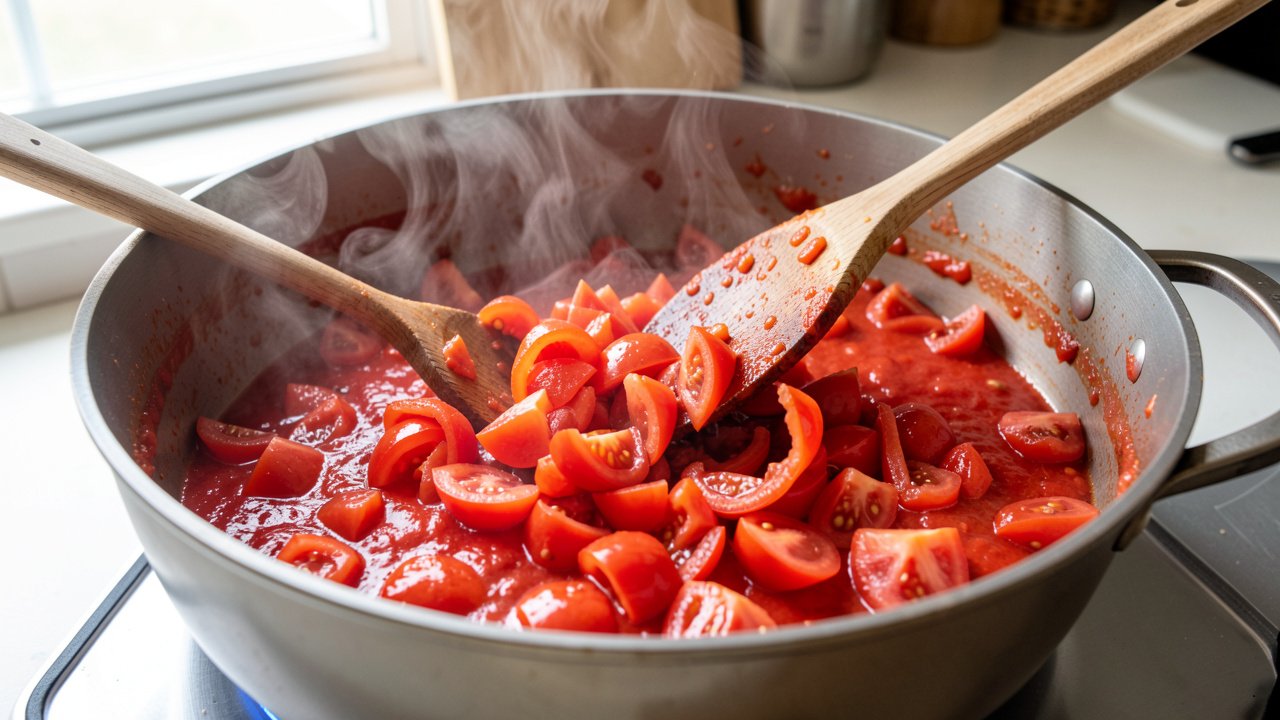
Add the tomatoes, broth, sugar, and about half a teaspoon of the salt. Bring to a simmer, then lower the heat and cook 18 to 20 minutes uncovered. The tomatoes should collapse completely, the skins should curl loose, and the surface should look thick rather than watery. Stir now and then so nothing catches.
Blend Smooth and Cool the Base
Blend the mixture until completely smooth, then pass it through a fine mesh sieve to catch skin and seeds, pushing the pulp through with a ladle. Let the base cool on the counter until barely warm, around body temperature, roughly 20 to 30 minutes. Do not skip this rest. A hot base is the most common cause of curdled soup.
Temper the Sour Cream
Put the sour cream in a medium bowl and whisk it alone for 20 seconds until it loosens into a smooth, pourable cream. Now add one small ladle of the tomato base to the sour cream, whisking constantly. Not the other way around. Whisk until uniform, then add a second ladle, then a third, letting each disappear before the next goes in. Once the mixture is thin and pink, pour it back into the pot and whisk to combine.
Chill at Least Three Hours
Pour the soup into a wide container, cover, and refrigerate at least 3 hours, preferably overnight. It needs to be genuinely cold, not cool, or it tastes like leftover soup. It will thicken as it sits and the flavors will knit together. Resist the urge to correct the seasoning now; it is not finished yet.
Season Cold, Then Finish
Take the cold soup out and taste it. It will almost certainly taste flat. Add the remaining salt a quarter teaspoon at a time, then the lemon juice and black pepper, tasting after each addition, until the tomato snaps back into focus. Stir in most of the dill and diced cucumber. Ladle into chilled bowls and top each with a spoonful of sour cream, the rest of the dill, and the sliced scallions.
Chef’s Tips From Real Kitchen Testing
Whisk the sour cream by itself before anything touches it. Straight from the carton it is stiff and lumpy, and those lumps never fully dissolve once acid arrives; they read as grains in the finished bowl.
Chill the bowls too. A cold soup in a room-temperature bowl loses its edge within two minutes. Ten minutes in the freezer before serving is enough and it makes a real difference at the table.
If the soup tastes cold and correct in the kitchen but flat at the table, it warmed up on the way. Season it slightly sharper than feels right and it will land properly once it sits in front of someone.
Add the cucumber within an hour of serving. Left overnight it leaches water, softens, and quietly thins the soup you worked to thicken.
Recipe Variations
Serving Suggestions
- Dark rye bread with cold salted butter
- A jammy soft-boiled egg, halved, in the bowl
- Boiled new potatoes with dill on the side
- A crisp dry white or cold sparkling water with lemon
Nutrition Facts
Values are estimates per serving and vary with the fat content of your sour cream and how much salt you add cold.
Make-Ahead Tips
This soup is genuinely better made a day ahead, and not just for convenience. Overnight, the tomato acidity mellows against the dairy fat and the soup loses the slightly raw edge it can have after only three hours. Cook it, temper it, and refrigerate it fully unseasoned and unfinished.
Do the last step on serving day: taste, salt, add lemon, then fold in the dill and cucumber. Chop both fresh. If you prep the soup base ahead for a party, keep the toppings in separate covered containers and assemble bowls at the last minute.
Storage, Freezing & Reheating
Common Mistakes to Avoid
Troubleshooting
Soup looks grainy or speckled? The sour cream broke. Blend the whole batch on high for 20 seconds and then pass it through a fine sieve. It will not be quite as luxurious but it will be smooth and perfectly good.
Tastes flat even after salting? It needs acid, not more salt. Add lemon juice half a teaspoon at a time. Cold dulls sourness just as much as saltiness, so the soup usually needs more than you expect.
Too thin? Whisk in another two tablespoons of sour cream, tempering with a little cold soup first. Alternatively, next time simmer the tomatoes five minutes longer.
Too thick after chilling? Loosen it with a splash of cold broth or ice water, then re-taste, since diluting also dilutes your seasoning.
A Note on Cold Soups in Eastern Europe
Chilled soured-dairy soups run through Poland, Lithuania, Ukraine, and Hungary, where summer kitchens leaned on soured milk, kefir, and smetana long before refrigeration was common. Beet-based chlodnik is the famous one, but tomato versions became popular as the fruit spread through the region’s gardens. The pattern is always the same: a vegetable base, a soured dairy body, and a hard hit of dill.
That is what separates this soup from a Mediterranean gazpacho, and from our own fresh tomato salsa tradition, where raw vegetables and olive oil do the work. Here the dairy is the point. If you like tomato soup with body, the same instinct drives our creamy Indian tomato soup and the more rustic hearty tomato lentil soup. For a broader look at how cooked tomatoes fit into daily eating, see our guide to tomatoes in the Mediterranean diet.
Frequently Asked Questions
More Tomato Recipes to Try
Culinary Reviewer: Ghazala Shakeel
Last updated: [mc_modified_date]

Urooj Mukhtar is a classically trained chef and food blogger at TomatoAnswers.com, creating healthy, seasonal, plant-based recipes that put tomatoes at the center of the plate. She focuses on making nutritious, flavour-forward home cooking both accessible and delicious.