Italian Recipes
Neapolitan Spaghetti in a Bold Tomato, Olive and Caper Sauce
Last updated: November 4, 2026
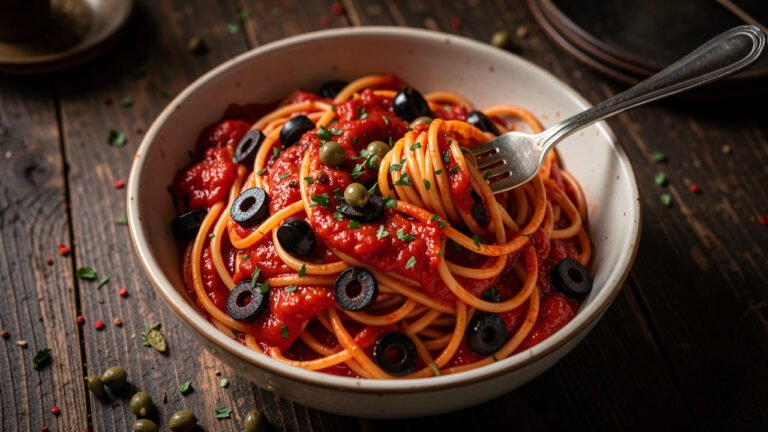
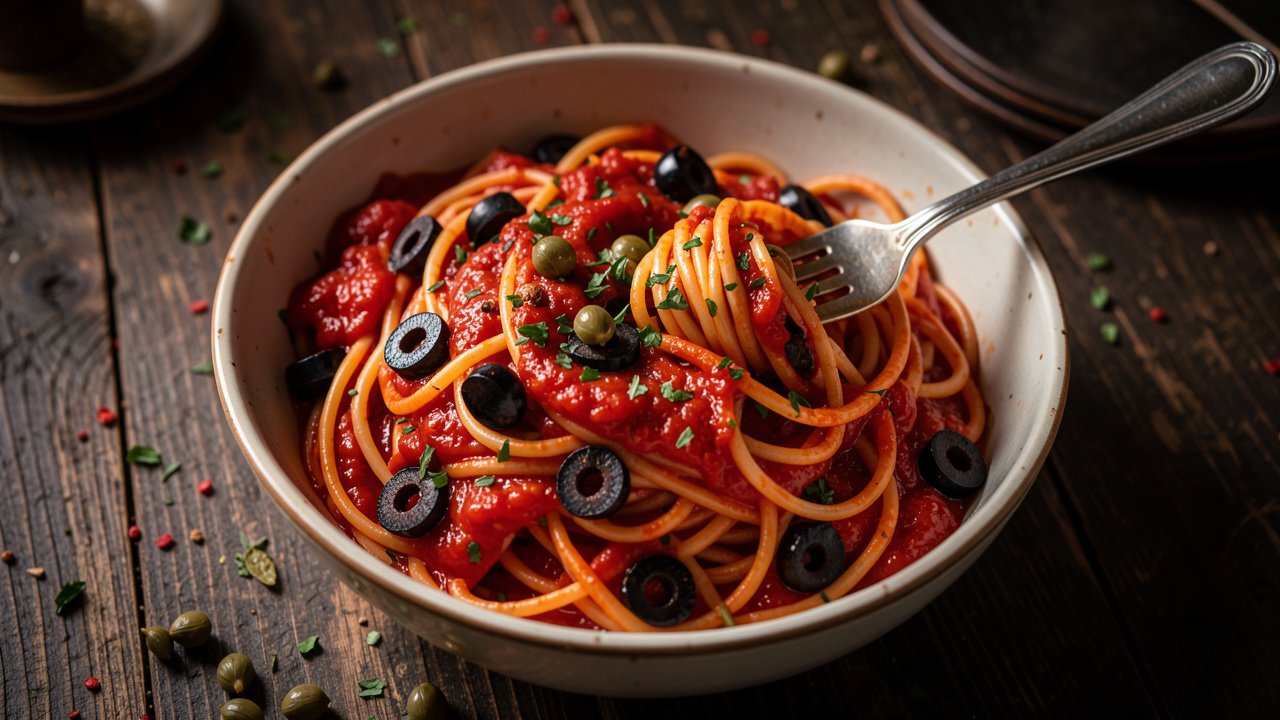
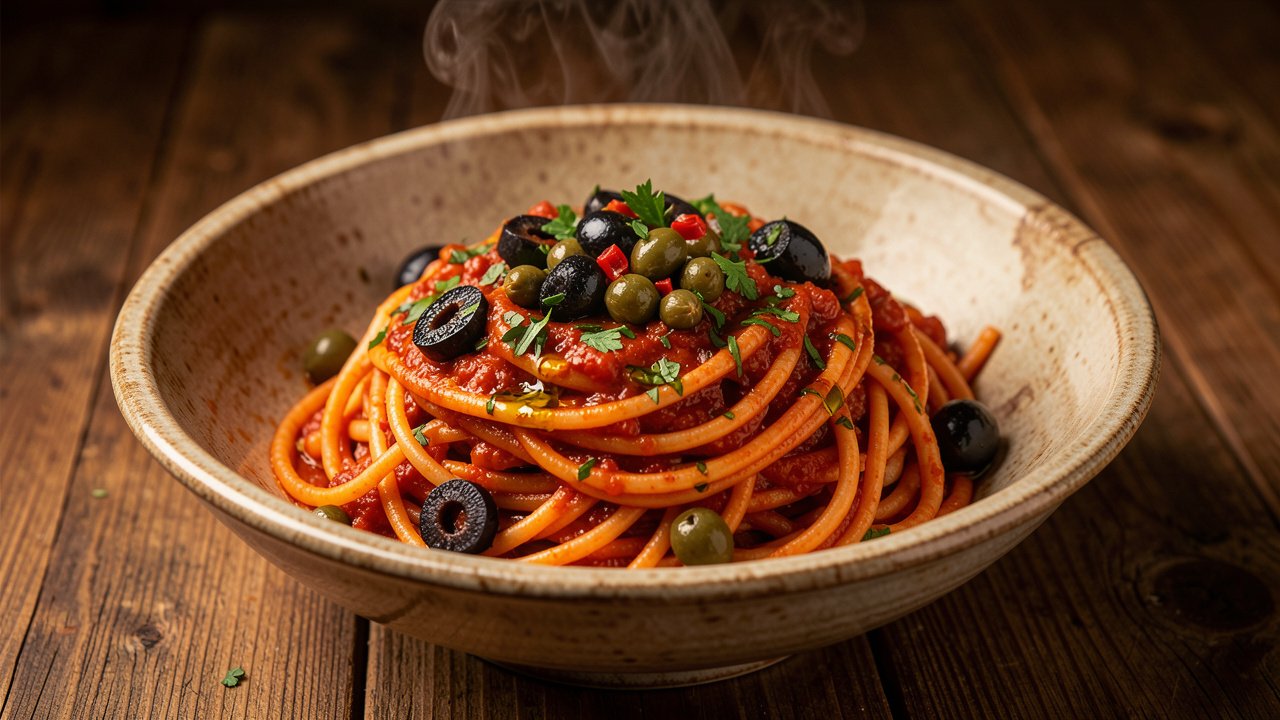
Pasta puttanesca is the pantry raid that became a classic. A handful of garlic, a can of tomatoes, a few salty anchovy fillets, olives, and capers turn into a sauce with more depth and swagger than its five-minute shopping list has any right to produce. It is the dish you make when the fridge looks empty but the cupboard is full, and it tastes like you fussed far more than you did.
Everything happens in one pan while the spaghetti boils. You melt garlic, chili, and anchovy into warm olive oil until they turn savory and fragrant, add tomatoes, olives, and capers, and let it bubble into a glossy, brick-red sauce. Toss in the hot pasta with a splash of its starchy water, shower it with parsley, and dinner is on the table in the time it takes the water to come to a boil.
Why This Pasta Puttanesca Works
Great puttanesca is really two things done well: a sauce built on layered salty, savory flavor, and pasta tossed through it so every strand is coated. Get those two right and the dish takes care of itself. The recipe here coaxes the most out of a short pantry list, then marries the sauce and spaghetti so nothing sits dry on the plate.
The sauce starts the way most bold Italian cooking does, with sliced garlic and a pinch of chili warmed gently in olive oil, then the anchovy stirred in until it dissolves completely. That melted anchovy is the secret backbone: it does not taste fishy, it tastes deeply savory, the way a long-simmered sauce does, in a fraction of the time. Crushed tomatoes, olives, and capers join and bubble together into a glossy, brick-red sauce.
Timing the pasta is the other half of the method. You want the spaghetti just shy of al dente, then finished for the last minute right in the sauce with a splash of starchy pasta water. That water carries dissolved starch that binds the oil and tomato into a clinging, emulsified coat instead of a puddle at the bottom of the bowl.
It is also forgiving and fast. Puttanesca was built from whatever was on the shelf, so the exact olives or the amount of chili are yours to adjust. Keep the garlic, tomato, olives, and capers constant, dial the heat to taste, and you get a punchy plate of pasta that tastes like a trattoria every single time.
Pro observation: Pasta puttanesca is fully halal as written, with no forbidden ingredients. The anchovy is simply a small salted fish that melts into the oil, and all the depth comes from tomato, garlic, olives, capers, and chili, so you never miss a thing.
Ingredients
Kitchen Measurement Converter
Need to convert an amount while you measure? Pick a category, enter a value, and the result updates instantly.
Ingredient Notes & Substitutions
Pasta
Spaghetti is traditional, but linguine, bucatini, or any long dried pasta works beautifully and catches the sauce. Cook it in well-salted water and pull it a minute shy of the package time, since it finishes cooking in the hot sauce.
Olives & Capers
Kalamata or Gaeta olives give the right brine and bite; pit and halve them so they spread through every forkful. Rinse the capers if they are salt-packed. Both bring the salty, tangy punch that defines puttanesca, so do not skip them.
Anchovy
Chopped anchovy fillets melt into the oil and add savory depth, not fishiness. For a vegan plate, leave them out and add an extra spoonful of capers and a few more olives for the same salty backbone. Either way the dish is fully halal.
Tomatoes
Crushed tomatoes give a smooth, clingy sauce, while a spoonful of tomato paste deepens the color and savor. San Marzano style tomatoes are sweetest; a can of whole peeled tomatoes crushed by hand works just as well. Add a squeeze of lemon at the end for lift.
Equipment
- Large pot for the pasta
- Large skillet or saute pan
- Colander
- Sharp knife and board
- Wooden spoon
- Cup for reserved pasta water
Before You Start
1. Hold back the salt until the very end. The anchovy, olives, and capers are each intensely salty, so a sauce seasoned up front turns harsh and over-salted; taste after everything has simmered together and correct only then.
2. Slice the garlic thin and keep the heat gentle while the anchovy melts. Garlic scorched in hot oil turns acrid and sours the whole sauce, so cook it low until it is pale gold and the anchovy has dissolved, never browned and bitter.
3. Scoop out a cup of pasta water before you drain. That starchy liquid is what emulsifies the oil and tomato into a glossy coat that clings; drain it all away and the sauce slides off the spaghetti and pools on the plate.
Step-by-Step Instructions
Puttanesca moves fast once the pan is hot, so have the garlic sliced, the anchovy chopped, and the olives halved before you start, and get the pasta water heating so everything lands on the table together.
Prep the Aromatics and Olives
Thinly slice the garlic, chop the anchovy fillets, halve the pitted olives, and drain the capers. Bring a large pot of well-salted water to a rolling boil for the spaghetti. Having everything within reach matters here, because the sauce comes together faster than the pasta cooks.
Melt the Garlic, Chili, and Anchovy
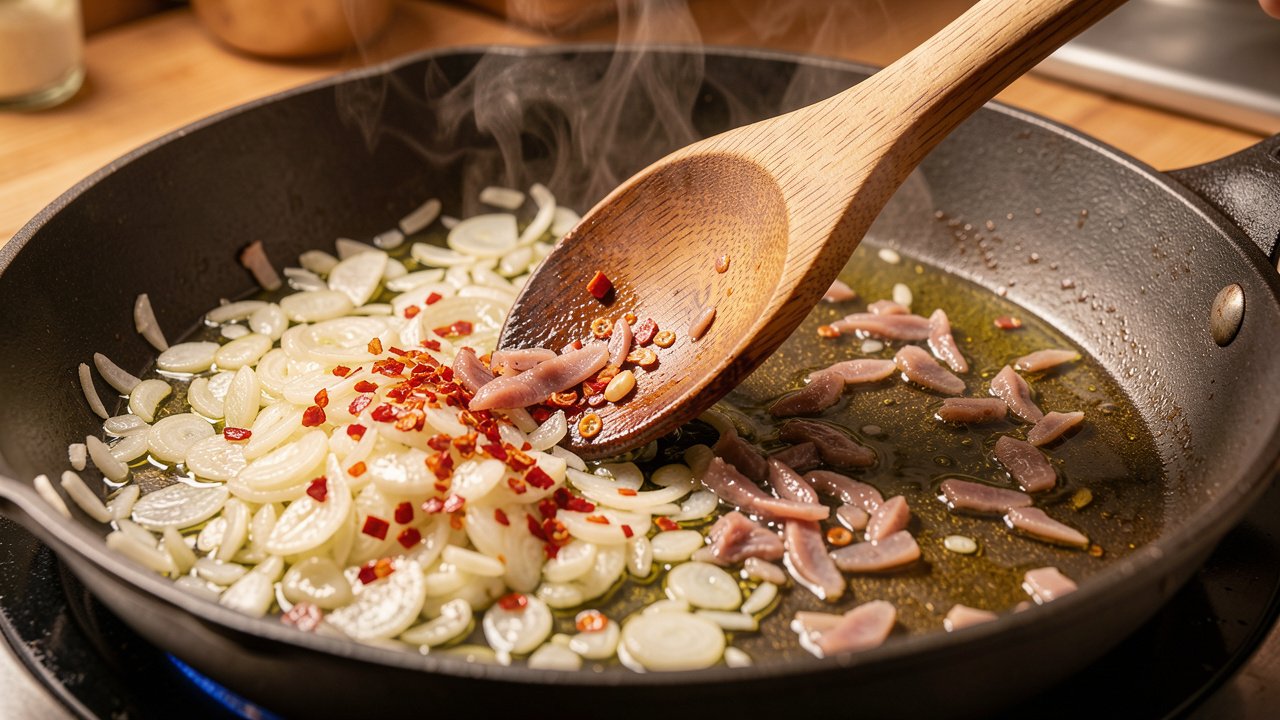
Warm the olive oil in a large skillet over medium-low heat. Add the sliced garlic and red pepper flakes and cook gently for a minute until fragrant, then stir in the chopped anchovy. Keep the heat low and stir until the anchovy dissolves completely into the oil, about 1 to 2 minutes, turning it into a savory base.
Cook the Spaghetti
Drop the spaghetti into the boiling salted water and cook it one minute shy of the package time, so it is just under al dente. Before draining, scoop out a cup of the starchy cooking water and set it aside. Drain the pasta but do not rinse it, so the surface starch stays on to grip the sauce.
Simmer the Puttanesca Sauce
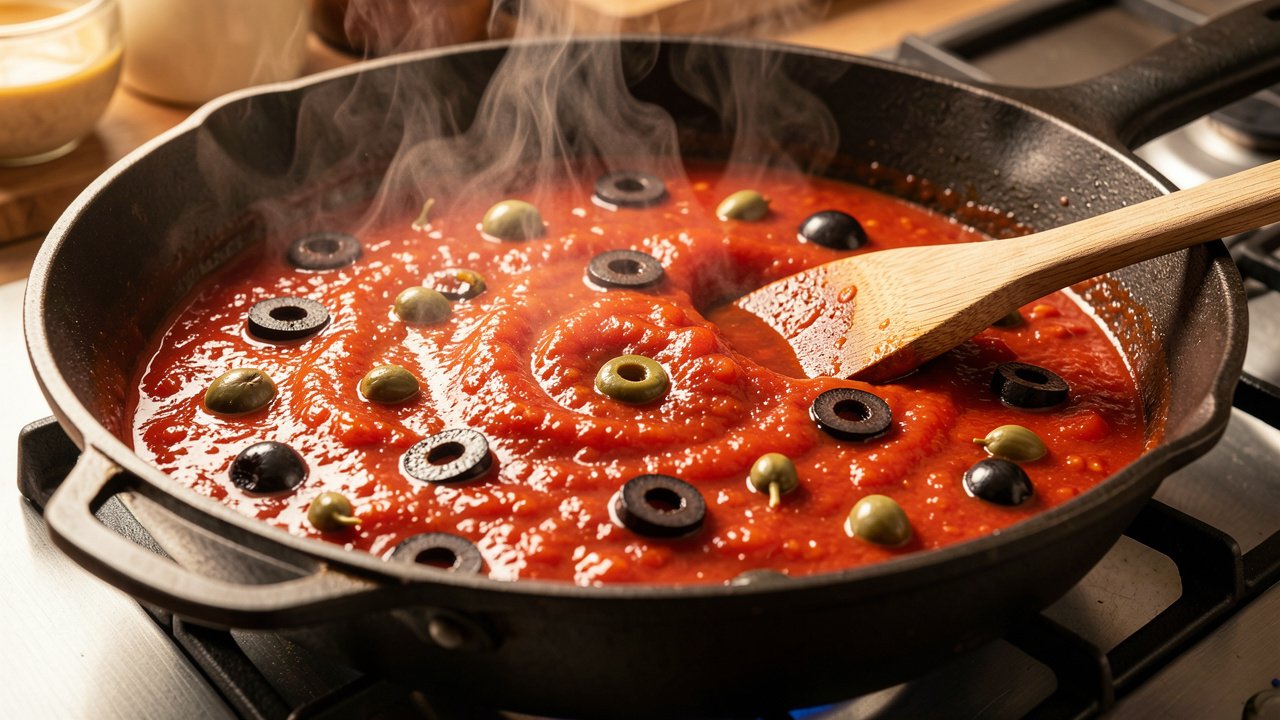
Stir the tomato paste into the skillet and cook for a minute, then pour in the crushed tomatoes and add the olives, capers, and oregano. Bring to a gentle simmer and cook 8 to 10 minutes, stirring now and then, until the sauce turns glossy and brick-red. Taste before adding any salt, since the olives and capers do most of the seasoning.
Toss the Pasta in the Sauce
Add the drained spaghetti straight into the skillet along with a good splash of the reserved pasta water. Toss and fold over medium heat for about a minute, adding more pasta water a little at a time, until the sauce turns silky and coats every strand. The starchy water is what binds the oil and tomato into a clinging glaze.
Finish and Serve
Take the skillet off the heat, stir in most of the chopped parsley and a squeeze of fresh lemon, then taste and add a little salt only if it needs it. Twirl into warm bowls, drizzle with a thread of raw olive oil, scatter the last of the parsley over the top, and serve right away while it is glossy and hot.
Chef’s Tips From Real Kitchen Testing
Melt the anchovy fully into the oil over low heat. Done right it vanishes into a deep savory backbone, not fishy specks, and it is what makes a 25-minute sauce taste long-simmered.
Finish the spaghetti in the sauce for the last minute with a splash of pasta water. The pasta drinks in flavor and the starch pulls the oil and tomato into a glossy coat that clings.
Add the parsley and a raw drizzle of olive oil off the heat. Stirring them in at the end keeps the herb bright green and the oil fruity instead of cooked flat.
Recipe Variations
Serving Suggestions
- Warm crusty bread to mop up the sauce
- A simple arugula salad with lemon dressing
- Extra red pepper flakes for those who like heat
- A plate of olives and tomatoes to start
Nutrition Facts
| Nutrient | Amount per serving |
|---|---|
| Calories | 480 |
| Protein | 15 g |
| Carbohydrates | 78 g |
| Fat | 13 g |
| Saturated Fat | 2 g |
| Fiber | 6 g |
| Sugar | 9 g |
| Sodium | 850 mg |
Values are estimates per serving and vary with the exact brands and amounts you use.
Make-Ahead Tips
The sauce is even better made ahead, since the olives, capers, and anchovy deepen as they sit. Cook it through the simmer stage, cool, and refrigerate for up to three days. When you are ready to eat, reheat the sauce to a gentle simmer, boil fresh spaghetti, and toss the two together with a splash of pasta water so the pasta is never overcooked.
Storage, Freezing & Reheating
Common Mistakes to Avoid
Troubleshooting
Sauce too thin? Let it simmer a few more minutes before the pasta goes in, or stir in an extra spoonful of tomato paste to thicken and deepen it.
Dish too salty? Toss in more cooked spaghetti to stretch the sauce, add a splash of plain pasta water, and brighten it with a squeeze of lemon to balance the brine.
Pasta clumping or dry? Add the reserved pasta water a little at a time and toss over low heat; the starch loosens everything into a glossy, clinging coat.
A Note on Italian Cooking
Pasta puttanesca is a creature of Naples and Lazio, and its name comes from the Italian phrase alla puttanesca, used for this punchy, salty, chili-flecked style of sauce. Its exact origin is the stuff of lively table debate, but what everyone agrees on is the character: bold, brash, and built almost entirely from the kind of long-keeping pantry staples a southern Italian kitchen always has on hand, which is why it can come together in minutes with nothing fresh but garlic and parsley.
It sits in a big family of quick Italian tomato pastas, and the one it is most often confused with is arrabbiata. The difference is simple: arrabbiata is just garlic, chili, and tomato, fiery and clean, while puttanesca piles on olives, capers, and anchovy for a briny, savory complexity that arrabbiata never has. If you love this tomato-and-garlic backbone, you will find the same soul in a pot of Italian chicken cacciatore or a plate of Peruvian tallarines rojos, both built on slow-simmered tomato and aromatics.
What has kept puttanesca on tables for generations is exactly what created it: it is fast, forgiving, and made from what the cupboard already holds. Keep the tomato, garlic, olives, and capers constant, dial the chili to your taste, and you have a bold, satisfying plate of pasta any night of the week.