Mexican Recipes
Mexican Beef and Vegetable Soup in a Tomato-Lifted Broth
Last updated: November 4, 2026
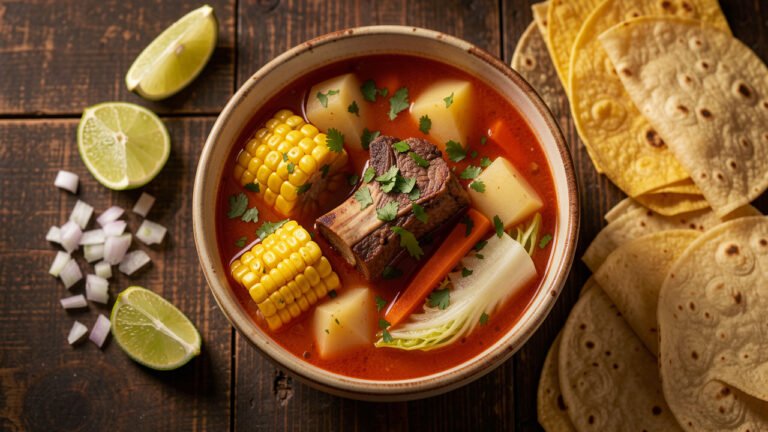
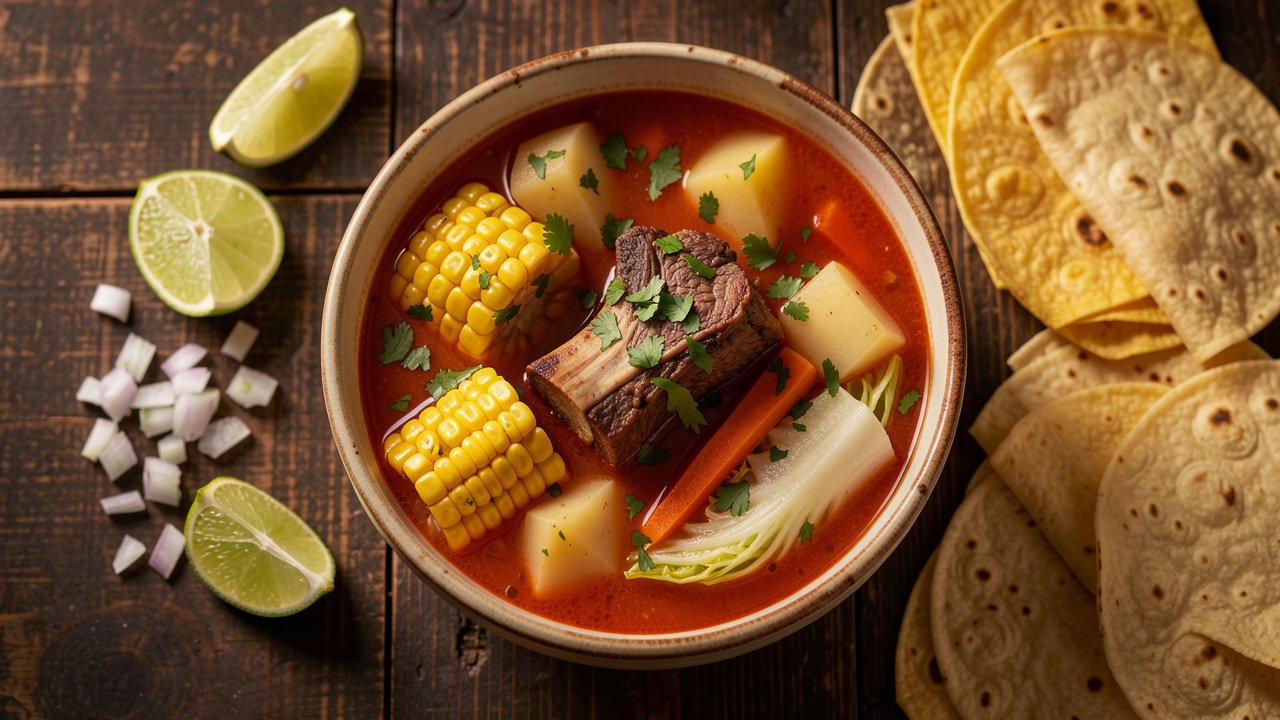
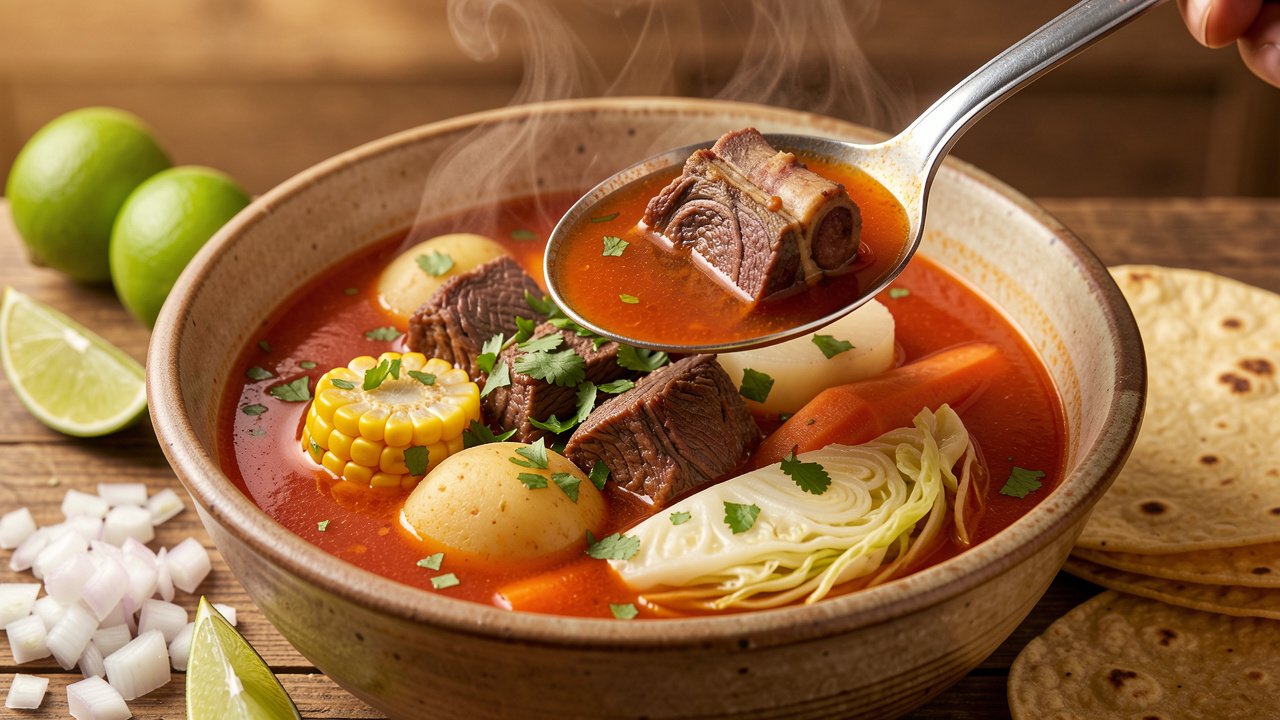
Caldo de res is the pot that turns a Sunday afternoon into an event. A few pieces of bone-in beef shank and a couple of marrow bones simmer for hours until the meat slides off the bone, throwing all their richness into a broth that stays light and clean. Then in go the vegetables, big and rustic, so every bowl comes out loaded.
The whole thing lives in a single pot. You build a clear, beefy broth first, lift it with tomato, onion, and garlic, then stagger in the vegetables so each one keeps its shape. Set out rice, lime wedges, chopped onion, cilantro, and warm tortillas, and let everyone build their own bowl.
Why This Caldo de Res Works
Great caldo de res is really two things done well: a clear, deeply beefy broth, and vegetables cooked just to tenderness so each keeps its own shape and bite. Get those two right and the pot takes care of itself. The recipe here builds a clean broth from bone-in shank and marrow bones, lifts it with tomato and aromatics, then adds the vegetables in stages so nothing turns to mush.
The broth starts the slow way, because there is no shortcut to it. Shank and marrow bones go into water with onion, garlic, and a pinch of salt, and simmer low for well over an hour while you skim the foam that rises. That patient simmer is what pulls collagen out of the shank and body out of the bones, giving you a broth with real backbone rather than thin, boiled-beef water.
Tomato is what turns it from a plain beef broth into caldo de res. Chopped ripe tomatoes stirred in partway through give the pot its warm color and a gentle brightness that keeps all that beefy richness from feeling heavy. It is a lift, not a sauce, so the broth stays light enough to drink by the spoonful.
Timing the vegetables is the last piece. Corn and carrots go in early because they take the longest; potato and chayote follow; cabbage goes in near the end so it wilts but still has structure. Add them all at once and the soft ones dissolve before the rest are done, so staggering them is what gives every bowl a full, colorful mix.
Pro observation: Caldo de res is fully halal as written, with no forbidden ingredients. All of its depth comes from beef shank, marrow bones, tomato, onion, and garlic simmered slowly, so you never miss a thing.
Ingredients
Kitchen Measurement Converter
Need to convert an amount while you measure? Pick a category, enter a value, and the result updates instantly.
Ingredient Notes & Substitutions
Beef Shank & Bones
Bone-in beef shank is the classic cut: its marrow, bone, and collagen-rich meat are what make the broth. Short ribs or oxtail work too, or a mix. Ask the butcher to cut the shank into thick, cross-sections so each bowl gets a piece with bone.
Tomatoes & Aromatics
Ripe Roma or plum tomatoes give the broth its warm color and gentle lift. In a pinch, a few tablespoons of tomato paste or a cup of canned crushed tomatoes stand in nicely. Onion and smashed garlic round out the base without overpowering the beef.
Corn & Chayote
Corn cut into thick rounds and chayote are what make it read as caldo de res. If chayote is hard to find, zucchini or a chunk of firm squash slips in at the same late stage. Leave the corn on the cob so it stays sweet and juicy.
Potato, Carrot & Cabbage
Waxy potatoes hold their shape better than starchy ones; carrots add sweetness and color; green cabbage in wedges wilts down but keeps a little bite. Feel free to add a handful of green beans or a wedge of calabaza to stretch the pot further.
Equipment
- Large stockpot or Dutch oven
- Ladle
- Slotted spoon for foam
- Sharp knife and board
- Tongs
- Fine strainer (optional)
Before You Start
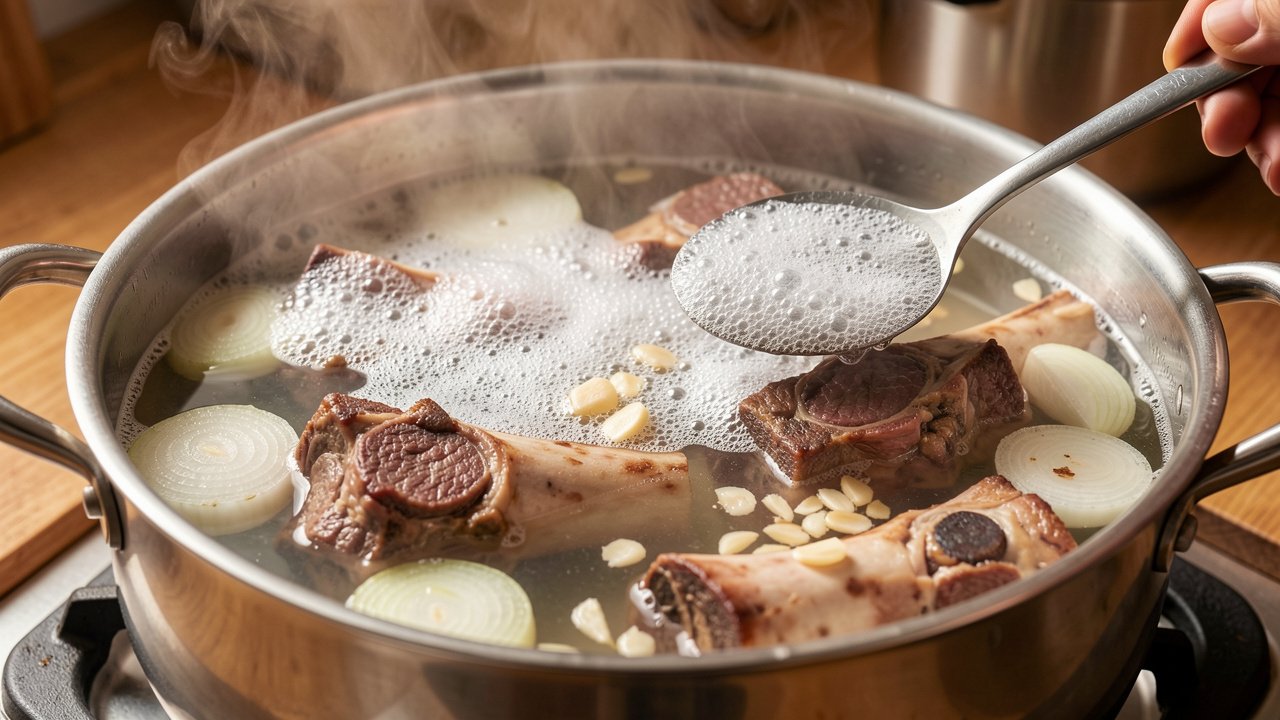
1. Skim the foam in the first ten minutes. As the shank and marrow bones come up to a boil they throw off a gray foam; lift it off with a spoon while it is still on the surface, because if you let it boil back in it clouds the broth and leaves a muddy, bitter edge.
2. Cut the vegetables large and stagger them. Corn and carrots go in early, potato and chayote in the middle, cabbage last. Chopped small or dumped in together, the softer pieces collapse into mush long before the beef is tender and the corn is sweet.
3. Hold the salt until the beef is tender. The broth reduces over the long simmer, so a pot salted at the start concentrates into something far too salty by the end; wait until the shank is fork-tender and the liquid is at its final volume, then season.
Step-by-Step Instructions
Caldo de res is mostly a patient simmer, so start the beef early and prep the vegetables while it cooks. Cut the corn, potato, chayote, carrots, and cabbage into big rustic pieces, and have the rice, lime, onion, cilantro, and tortillas ready so everything reaches the table together.
Prep the Beef and Vegetables
Rinse the beef shank and marrow bones under cold water. Halve the onion, smash the garlic, and chop the tomatoes. Cut the corn into thick rounds, quarter the potatoes, cut the chayote and carrots into chunks, and cut the cabbage into wedges. Keep the quick-cooking vegetables separate from the long-cooking ones.
Start the Beef Broth
Put the beef shank and marrow bones in a large pot, add the water, and bring to a boil over high heat. Skim off the gray foam that rises for the first several minutes. Add the halved onion and smashed garlic, lower the heat to a gentle simmer, and cook, partly covered, for about an hour.
Lift the Broth with Tomato
Once the beef is beginning to turn tender, stir in the chopped tomatoes. Keep the pot at a gentle simmer and cook another 30 minutes or so, until the shank is fork-tender and the meat is nearly falling off the bone. The tomato gives the broth its warm color and a gentle brightness without turning it into a sauce.
Add the Corn and Carrots
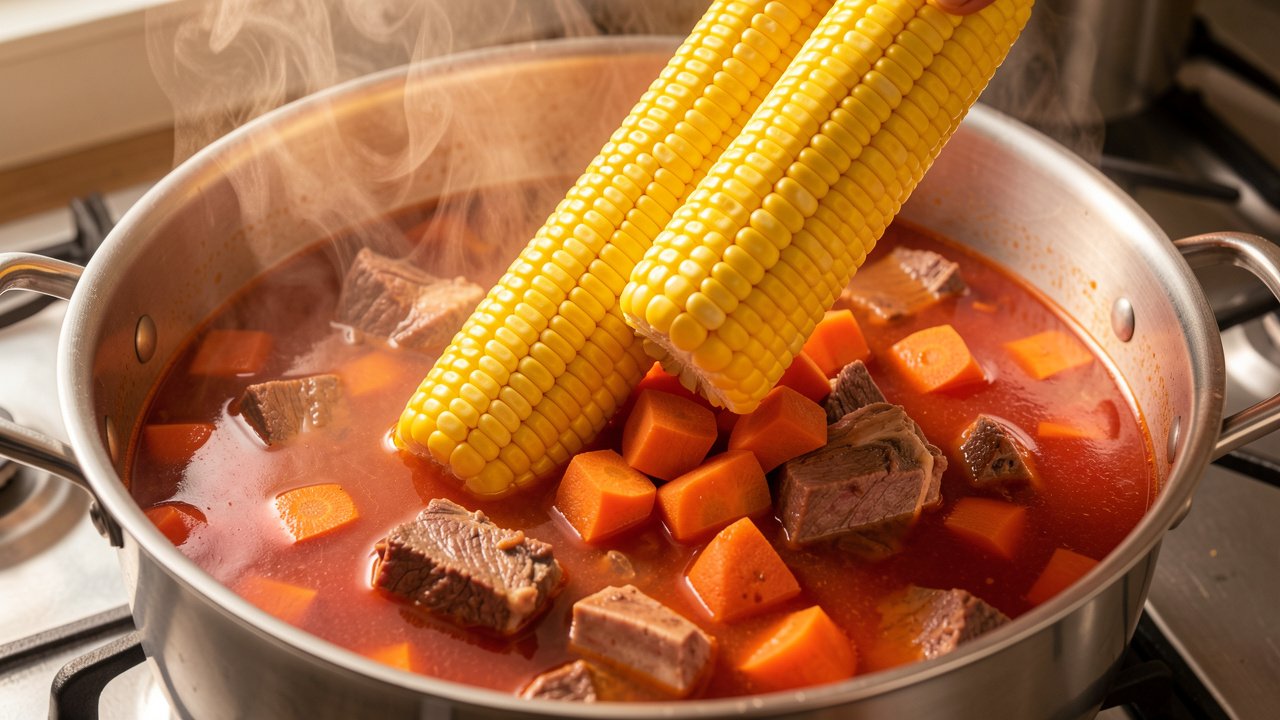
Add the corn rounds and carrot chunks to the pot, since they take the longest of the vegetables. Simmer for about 10 minutes so they start to soften and the corn releases a little of its sweetness into the broth. Keep the heat low and steady rather than letting it boil hard.
Add the Potato, Chayote, and Cabbage
Add the quartered potatoes and chayote chunks and simmer 10 minutes, then nestle in the cabbage wedges and cook 5 to 7 minutes more, until everything is just tender. Now that the broth is at its final volume, taste and season with salt and pepper until it is right.
Finish and Serve
Take the pot off the heat once the vegetables are tender and the meat pulls away easily. Stir in most of the chopped cilantro. Ladle into wide bowls, giving everyone a piece of beef with bone and a mix of vegetables and broth, and serve with rice, lime wedges, chopped onion, and warm tortillas on the side.
Chef’s Tips From Real Kitchen Testing
Simmer low and slow, skimming as you go. A bare, lazy simmer plus a few minutes of skimming early on is what gives you a broth that stays crystal clear and deeply beefy instead of cloudy and greasy.
Stagger the vegetables by how long they take. Corn and carrots early, potato and chayote in the middle, cabbage in the last few minutes, so every piece keeps its shape and its own flavor.
Serve it the traditional way. Set out hot rice to spoon into the bowl, lime wedges, chopped onion, cilantro, and warm tortillas, and let everyone dress their own caldo the way they like it.
Recipe Variations
Serving Suggestions
- A scoop of fluffy white rice spooned right into the bowl
- Warm corn tortillas for wrapping the beef
- Lime wedges, chopped onion, and cilantro to finish
- A spoonful of salsa or diced jalapeno for heat
Nutrition Facts
| Nutrient | Amount per serving |
|---|---|
| Calories | 340 |
| Protein | 30 g |
| Carbohydrates | 28 g |
| Fat | 12 g |
| Saturated Fat | 4 g |
| Fiber | 5 g |
| Sugar | 7 g |
| Sodium | 780 mg |
Values are estimates per serving and vary with the exact cut of beef and vegetables you use.
Make-Ahead Tips
Caldo de res is even better the next day, once the broth has had time to settle and deepen. Cook it through completely, cool, and refrigerate. Reheat gently on the stove to a simmer, adding a splash of water if the broth has thickened, and finish with fresh cilantro and lime just before serving.
Storage, Freezing & Reheating
Common Mistakes to Avoid
Troubleshooting
Broth too greasy? Chill the pot and lift off the solid fat cap, or skim the fat from the surface with a spoon before you reheat and serve.
Beef still tough? It simply needs more time. Keep the pot at a gentle simmer until a fork slides into the shank easily and the meat starts to pull from the bone.
Broth tastes flat? Simmer it a little longer to concentrate, then add salt gradually and a good squeeze of lime, which brightens the whole bowl.
A Note on Mexican Cooking
The name says exactly what it is: “caldo de res” simply means “beef broth” or “beef soup” in Spanish, and the dish is named for the humble pot it comes from. It is Sunday-comfort food across much of Mexico, the kind of big, forgiving pot that feeds a family and stretches to feed a few more, built on an inexpensive cut of beef and whatever hearty vegetables are on hand.
It is easy to place among Mexico’s other one-pot meals. The dish it is most often set against is birria, which is a rich, dark chili-braise of meat; caldo de res is its opposite, a light and clear vegetable-and-beef broth meant to be sipped and squeezed with lime. It shares a soul with brothy soups like sopa azteca and the tomato-crab chilapachole, and it is a close cousin of the Central American olla de carne, another slow-simmered pot of beef and root vegetables.
What keeps caldo de res on the table is exactly what created it: it is cheap, generous, and endlessly adaptable. Simmer good beef slowly, lift the broth with tomato, load it with vegetables, and set out rice, lime, and tortillas, and you have a meal that still tastes of a slow afternoon at home.