Iraqi Recipes
Stuffed Vegetables in a Tangy Tomato-Tamarind Sauce
Last updated: November 4, 2026
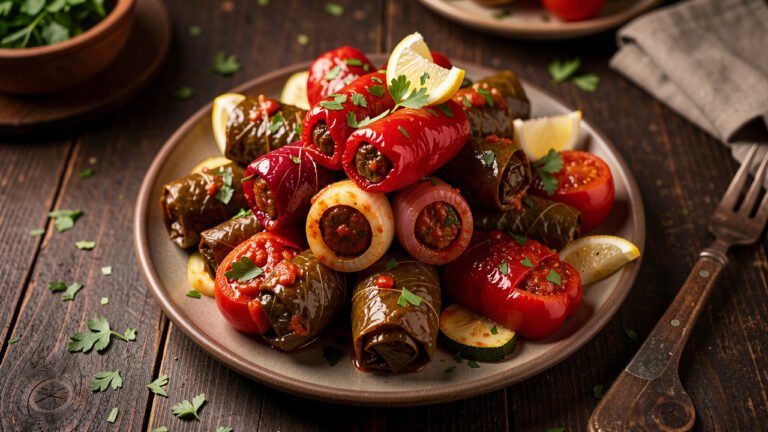
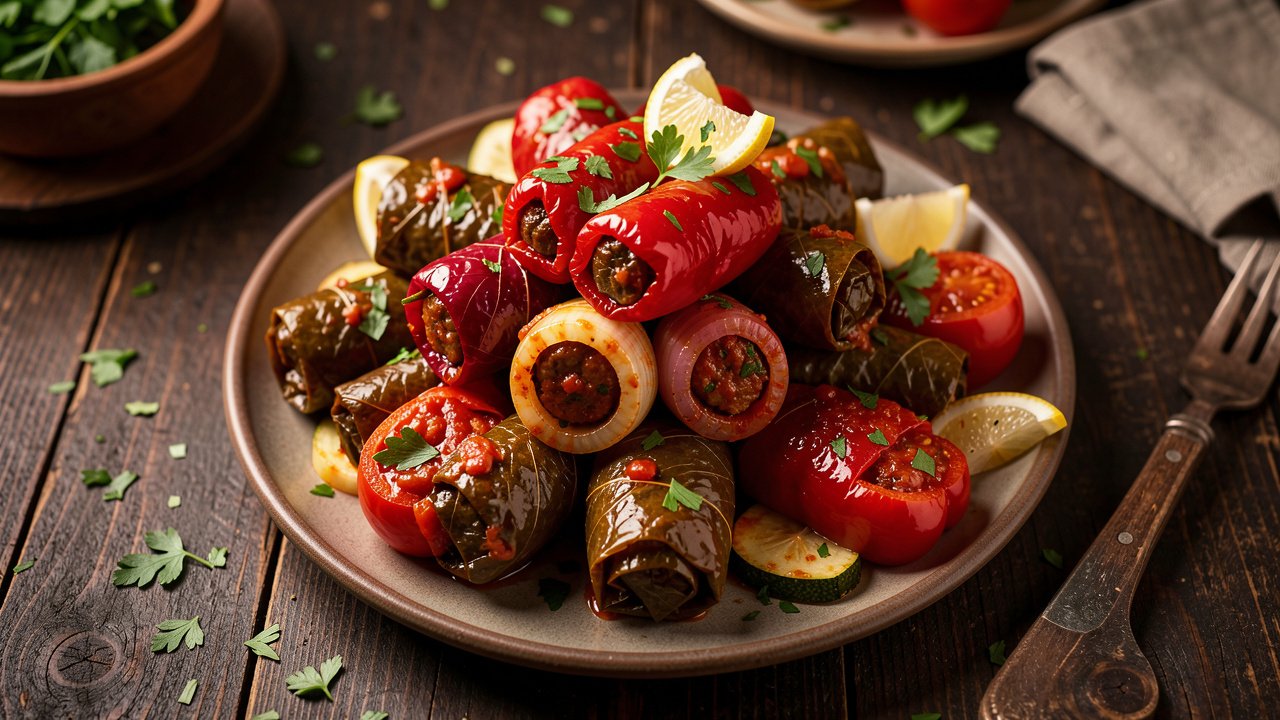
Iraqi dolma is a whole table’s worth of stuffed vegetables cooked in a single pot. Vine leaves, peppers, zucchini, onions, and tomatoes are each packed with a spiced rice-and-meat filling, then wedged in tightly and simmered in a sauce sharpened with tomato and sour tamarind. It is the dish an Iraqi family brings out for guests, holidays, and Fridays.
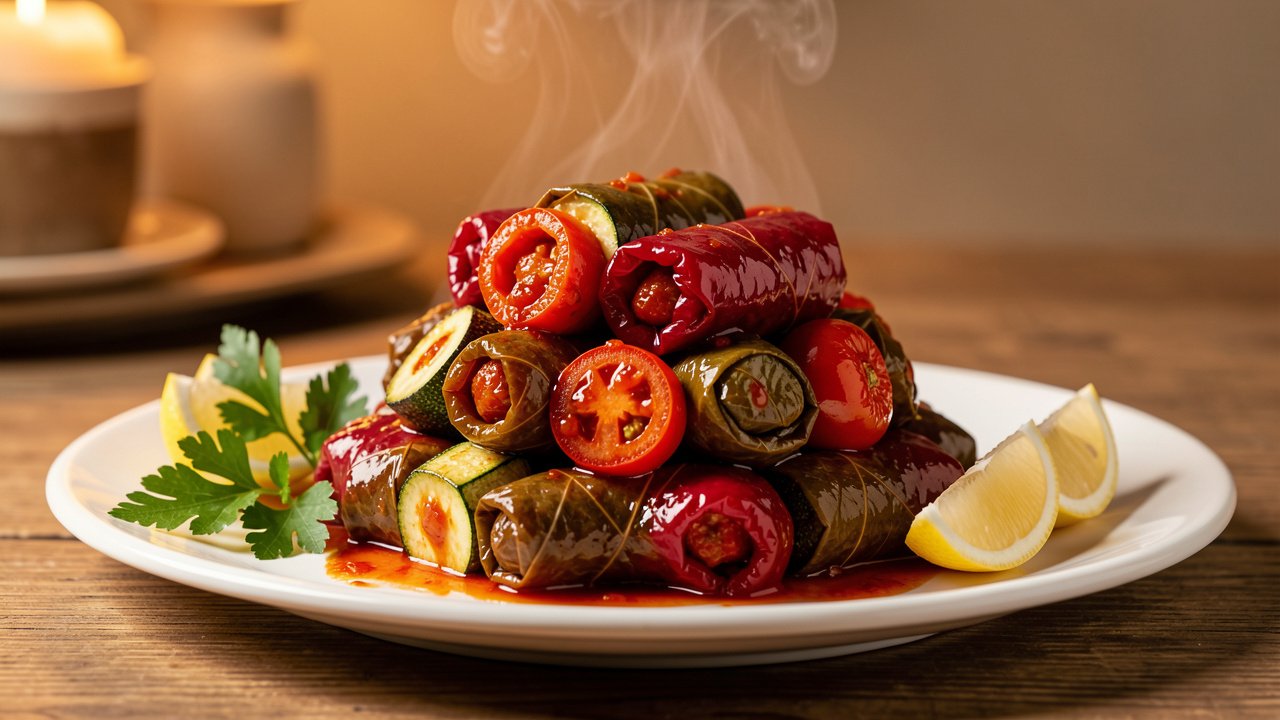
The magic is in the finish. Everything cooks pressed together under a plate so the parcels hold their shape and trade flavors, then the pot is flipped onto a serving platter in one confident motion. What tumbles out is a glossy, ruby-toned mound of dolma that everyone reaches into at once.
Why This Iraqi Dolma Works
Great dolma comes down to three things done well: a filling that stays moist and seasoned, vegetables packed tightly enough to keep their shape, and a tangy tomato-tamarind sauce that soaks into every parcel. Get those right and the invert at the end becomes the reward rather than the risk. This recipe keeps the filling raw so the rice cooks inside each vegetable and drinks up the sauce as it goes.
The filling starts the way most good Iraqi cooking does, with rice and ground lamb or beef bound together by onion, garlic, tomato paste, and a warm baharat spice blend. It goes in uncooked, so as the dolma simmers the rice swells, the meat renders its richness, and the whole parcel firms into a sliceable bite instead of a loose scoop.
The sauce is what makes it unmistakably Iraqi. Tomato gives body and color while tamarind brings the signature sour edge that cuts the richness of the meat and rice. Poured over the packed pot, it reduces into a glaze that clings to the vine leaves and vegetables and pools at the bottom, ready to spoon back over the top after you flip it out.
It is also a generous, use-your-garden dish. The exact vegetables are up to you, so keep the filling and the sour tomato sauce constant, stuff whatever is freshest, and pack the pot snugly. Weighted with a plate and simmered low, everything holds together for a clean invert onto the platter every time.
Pro observation: Iraqi dolma is fully halal as written, with no forbidden ingredients. All of the depth comes from lamb or beef, rice, tomato, garlic, tamarind, and warm spices, so nothing is missing from the pot.
Ingredients
Kitchen Measurement Converter
Need to convert an amount while you measure? Pick a category, enter a value, and the result updates instantly.
Ingredient Notes & Substitutions
Rice & Meat
Short-grain or medium-grain rice holds together best inside the parcels. Rinse it well so the filling is not gummy. Ground lamb gives the most traditional richness, but ground beef works beautifully; for a lighter pot, use half the meat and add more rice.
Vine Leaves
Jarred grape vine leaves are the easiest option; rinse them to wash off the brine before rolling. Fresh leaves need a quick blanch to soften. If leaves are hard to find, lean on more peppers, zucchini, and onion layers instead.
Vegetables to Stuff
Bell peppers, small zucchini, tomatoes, and onions are the classic medley, but small eggplant and even potato slices all take the filling well. Choose sturdy, similarly sized vegetables so they cook evenly and pack together tightly in the pot.
Tomato & Tamarind
Tomato paste plus the reserved tomato pulp build a deep, savory sauce, while tamarind paste brings the signature Iraqi sourness. No tamarind on hand? Pomegranate molasses or a good squeeze of lemon gives a similar tangy lift to the sauce.
Equipment
- Wide heavy pot or Dutch oven
- Heatproof plate that fits inside
- Apple corer or small spoon
- Sharp knife and board
- Large mixing bowl
- Wide serving platter
Before You Start
1. Fill each parcel only two-thirds full. The raw rice roughly doubles as it cooks, so a packed vine leaf or pepper will split at the seams and spill filling into the sauce. Leave clear headroom in every vegetable and roll the leaves loosely so the rice has room to swell.
2. Line the pot bottom before you stack. Lay torn leaves, tomato slices, or onion shells across the base first; the packed dolma above scorches fast against bare metal, and this cushion is what lets you invert a clean, unstuck mound onto the platter later.
3. Weight the top with a plate before the sauce goes in. An inverted heatproof plate presses the parcels together so they hold their shape and stay submerged. Without it, the top layer bobs loose, unrolls, and cooks unevenly while the bottom overcooks.
Step-by-Step Instructions
Dolma takes patience up front, so set aside time to hollow and stuff before you cook. Mix the filling, prep every vegetable and leaf, then pack the pot in tidy layers so it simmers evenly and inverts cleanly onto the platter.
Mix the Rice-and-Meat Filling
In a large bowl, combine the rinsed rice, ground lamb or beef, finely chopped onion, minced garlic, 2 tablespoons of the tomato paste, the baharat, 2 tablespoons of the olive oil, and a good pinch of salt and pepper. Fold in the reserved tomato pulp and mix well with your hands. The filling stays raw and cooks inside the parcels.
Prepare the Vegetables and Leaves
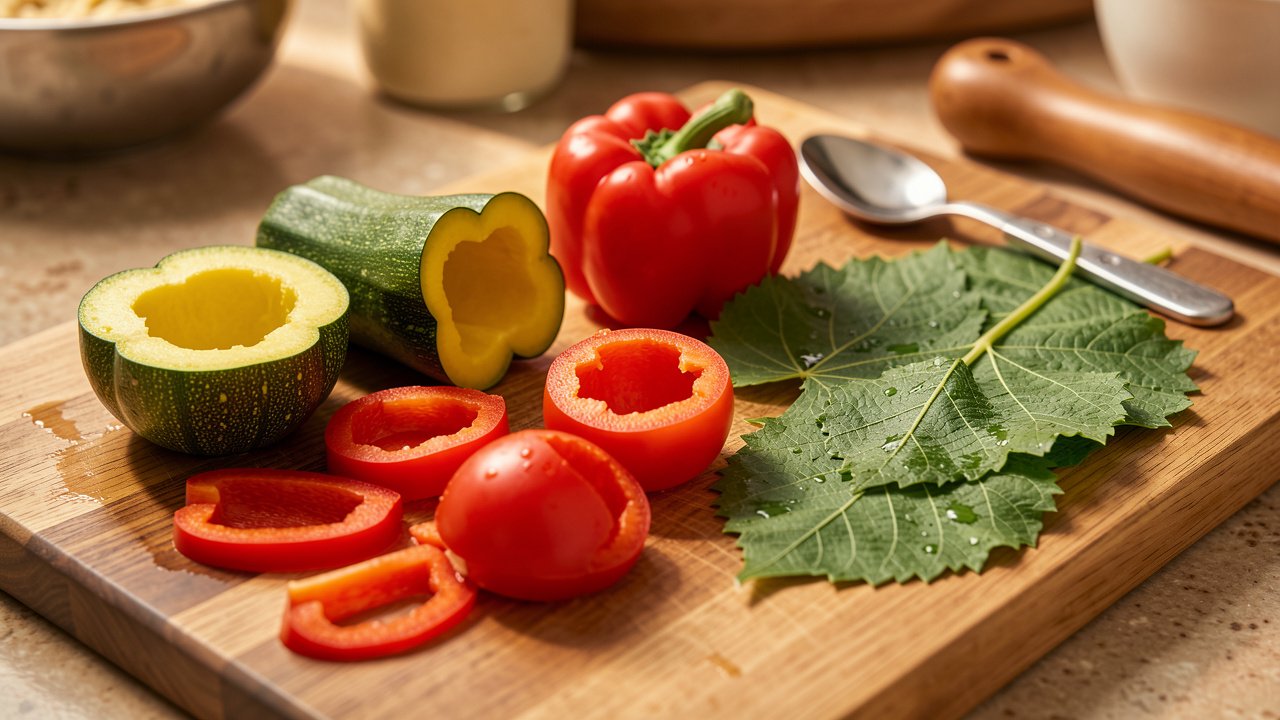
Cut the tops off the peppers and pull out the seeds. Trim the zucchini and hollow them with a corer, and scoop out the tomatoes, saving the pulp for the filling and sauce. Rinse the vine leaves and lay them shiny side down, stems trimmed, ready to roll.
Stuff and Roll
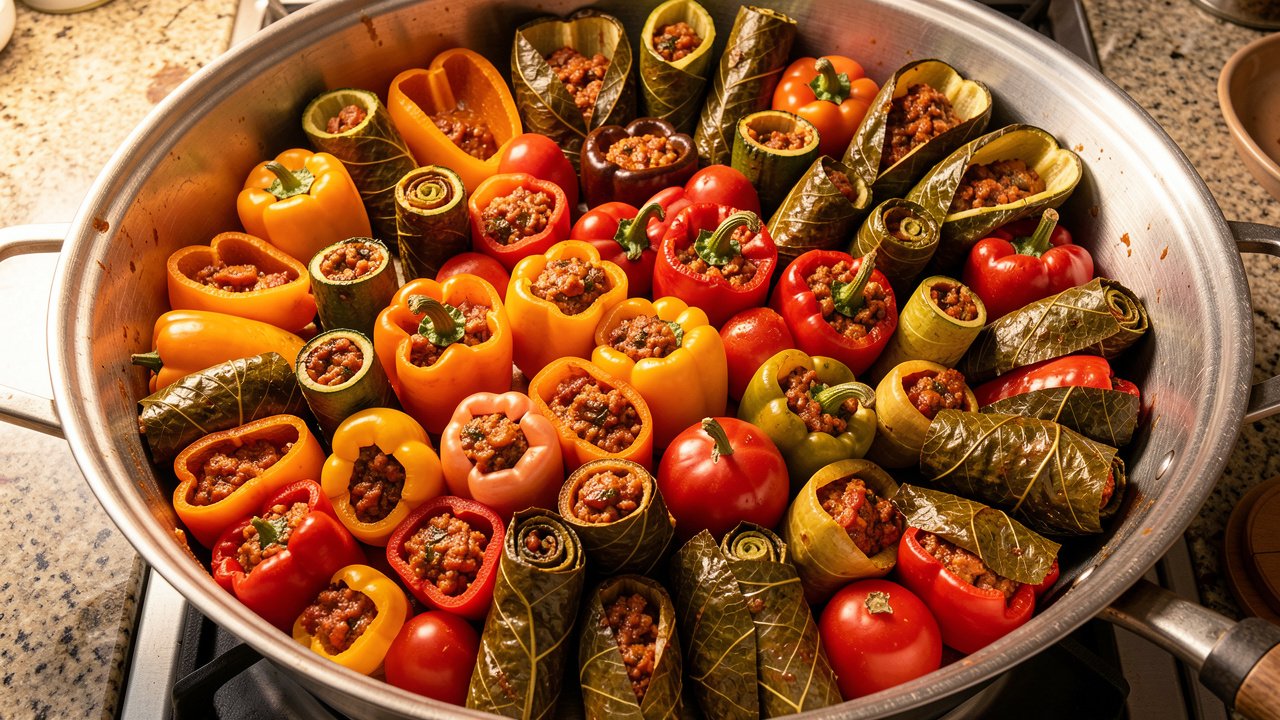
Spoon filling into each vegetable, leaving it about two-thirds full so the rice has room to swell. For the leaves, place a small line of filling near the stem end, fold the sides in, and roll into a snug but not tight cigar. Set everything aside as you go.
Layer the Pot
Line the bottom of a wide heavy pot with torn leaves or tomato slices. Pack the heavier stuffed vegetables in first, standing them upright, then nestle the rolled vine leaves seam-side down into every gap. Pack everything snugly so nothing shifts or unrolls during cooking.
Make the Sauce and Weigh Down
Whisk the remaining tomato paste and the tamarind paste with about 3 cups of water and a pinch of salt, then pour it over the packed pot until the dolma is nearly covered. Drizzle the last of the olive oil on top, set an inverted heatproof plate over everything to keep it pressed down and submerged.
Simmer and Invert
Bring to a gentle boil, then cover and lower to a bare simmer for about 60 minutes, until the rice is tender and the sauce has reduced to a glaze. Rest off the heat for 10 minutes, lift out the plate, set a wide platter over the pot, and flip it in one confident motion to unmold the dolma.
Chef’s Tips From Real Kitchen Testing
Taste the raw filling for salt by frying a tiny spoonful in a pan first. Once it is sealed inside dozens of parcels there is no way to correct the seasoning, so get it right before you stuff a single vegetable.
Keep the simmer low and steady, never a hard boil. A rolling boil rattles the parcels loose and unrolls the leaves, while a gentle simmer lets the rice cook through and the sauce reduce into a clinging glaze.
Rest the pot 10 minutes before you invert. The parcels firm up as they cool slightly and release from the sides, so the flip comes out clean instead of collapsing into the sauce.
Recipe Variations
Serving Suggestions
- Extra tomato-tamarind sauce spooned over the top
- A bowl of cooling cucumber-yogurt on the side
- Lemon wedges for squeezing over each plate
- A simple chopped salad of tomato, onion, and parsley
Nutrition Facts
| Nutrient | Amount per serving |
|---|---|
| Calories | 420 |
| Protein | 18 g |
| Carbohydrates | 52 g |
| Fat | 16 g |
| Saturated Fat | 5 g |
| Fiber | 6 g |
| Sugar | 10 g |
| Sodium | 720 mg |
Values are estimates per serving and vary with the exact vegetables, meat, and brands you use.
Make-Ahead Tips
You can stuff and pack the entire pot a day ahead, cover it, and refrigerate it uncooked. Mix the tomato-tamarind sauce separately and store it alongside. When you are ready to eat, pour over the sauce, weight it with the plate, and simmer as directed so the rice cooks fresh and stays fluffy.
Storage, Freezing & Reheating
Common Mistakes to Avoid
Troubleshooting
Rice still hard? The sauce dried out before the rice cooked through. Add a splash of hot water down the side of the pot, re-cover, and simmer 10 to 15 minutes more until tender.
Sauce too sour? Tamarind varies in strength. Stir a teaspoon of tomato paste or a pinch of sugar into the liquid to round out the tang without losing the signature edge.
Dolma fell apart on the flip? It was likely too hot or the parcels were loose. Rest the pot longer next time, pack the pot more snugly, and keep the weight plate on until you invert.
A Note on Iraqi Cooking
The word “dolma” comes from the Turkish “dolmak”, meaning to be filled, and it travels across the whole region wherever vegetables and leaves are stuffed. What makes the Iraqi version distinct is its ambition: rather than one kind of stuffed vegetable, an Iraqi cook packs a whole medley into a single pot, soured with tamarind and inverted onto a platter so the different parcels tumble out together in one glossy mound.
That is the line worth drawing clearly: a single stuffed vegetable like kousa mahshi, where only zucchini is filled, is a cousin of Iraqi dolma rather than the same dish, because dolma is defined by the mixed pot and the dramatic flip. It shares its stuffing spirit with the Greek gemista and with peppers stuffed with tomato, lentil, and couscous, and it sits at the same Iraqi table as a pot of okra bamia, all of them built on tomato and warm spice.
What has kept dolma at the center of Iraqi celebrations is exactly its generosity: it is made in one big pot to feed a crowd, it turns a garden’s worth of vegetables into a single showpiece, and the tangy tomato-tamarind sauce ties every different bite together. Pack the pot, weight it, and flip it, and you have a dish made for sharing.