Brazilian Recipes
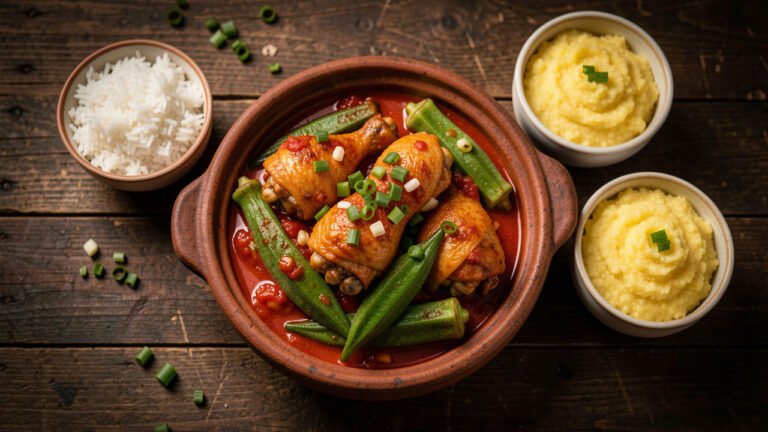
Minas-Style Chicken Braised in Tomato Sauce with Okra
Last updated: September 30, 2026
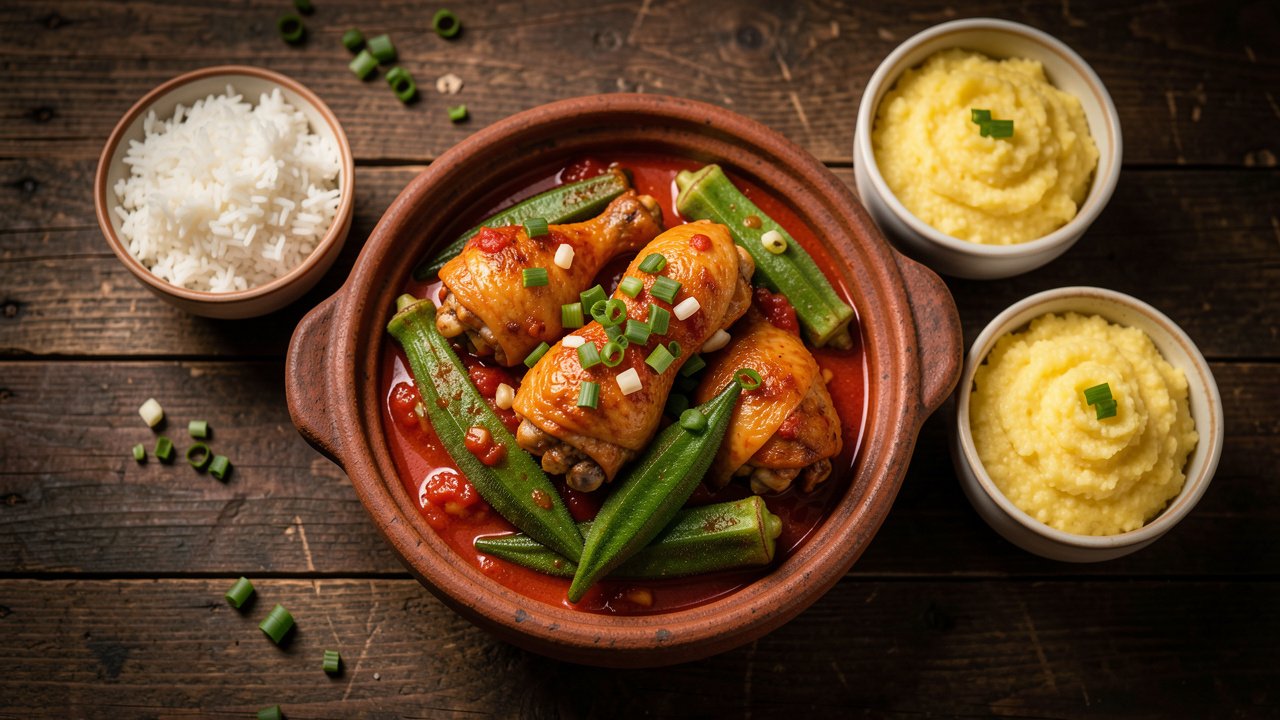
Frango com quiabo is home cooking from the interior of Brazil, the kind of pot that simmers on a back burner while the rice steams and the table fills up. Golden pieces of chicken sink into a garlicky tomato sauce until they are falling off the bone, and whole pods of okra go in near the end, tender and firm, never gummy. It is humble, generous food from the state of Minas Gerais.
The trick that separates a great version from a disappointing one is how you handle the okra. Instead of slicing it raw and letting it turn ropey, you sear the whole pods hard first, so their cut edges seal and they hold their shape in the sauce. Do that, brown the chicken well, and you get a dish that tastes like a Minas grandmother made it.
Why This Frango com Quiabo Works
A great frango com quiabo rests on two skills: browning the chicken so the sauce has a deep, roasted backbone, and treating the okra so it stays firm and clean instead of slimy. Get those two right and the dish almost cooks itself. The method here builds a garlicky tomato braise from well-seared chicken, then folds in okra that has been seared separately and added at the very end.
The sauce begins the way most good Brazilian home cooking does, with onion and plenty of garlic softened in oil, tomato paste stirred in and toasted for a minute to concentrate its sweetness, and ripe chopped tomatoes cooked down into a loose, glossy sauce. A little ground annatto, called colorau in Brazil, gives it the warm brick-red color that is the signature of a Minas kitchen.
Handling the okra is the heart of the recipe. Okra releases a sticky mucilage the moment it is cut and wet, so instead of slicing it raw you keep the pods whole, toss them with a splash of vinegar, and sear them hard in a little oil until blistered. That seals the surface, and folding them into the braise for only the last few minutes keeps them firm and bright.
It is also forgiving weeknight food. Bone-in thighs and drumsticks give the most flavor and stay juicy through the braise, but the same method works with any chicken pieces. Keep the tomato and garlic constant, sear the okra well, and you get a pot that tastes of Minas Gerais every time.
Pro observation: Frango com quiabo is fully halal as written, with no forbidden ingredients. The sauce gets all of its depth from browned chicken, tomato, garlic, and a little annatto, so you never miss a thing.
Ingredients
Kitchen Measurement Converter
Need to convert an amount while you measure? Pick a category, enter a value, and the result updates instantly.
Ingredient Notes & Substitutions
Chicken
Bone-in, skin-on thighs and drumsticks give the most flavor and stay juicy through the braise. You can use a cut-up whole chicken or bone-in breast, though breast can dry out, so pull it a little earlier. Boneless thighs work for a faster weeknight version.
Okra (Quiabo)
Choose small, firm, bright-green pods that snap rather than bend; large woody ones are tough and stringy. Keep them whole and dry until you cook, and trim only the very tip of the stem so you do not open the seed pod and release the sticky mucilage.
Tomatoes & Annatto
Ripe fresh tomatoes give the brightest sauce, but a can of chopped or crushed tomatoes works well out of season. Tomato paste deepens the color and body. Ground annatto, sold as colorau, gives the classic brick-red hue; sweet paprika is a fine stand-in.
Vinegar & Herbs
A splash of white vinegar tossed with the whole okra before searing cuts the sliminess and brightens the finished dish; lime juice does the same. Finish with chopped green onion and parsley, the everyday herbs of a Minas kitchen, for a fresh lift at the table.
Equipment
- Large heavy pot or Dutch oven
- Lid for the pot
- Wide skillet for the okra
- Tongs
- Sharp knife and board
- Wooden spoon
Before You Start
1. Wash and dry the okra completely, and keep it whole. Rinse the pods, then dry them thoroughly with a towel, because surface water plus a knife is exactly what releases okra’s sticky mucilage. Trim only the very tip of the stem cap without cutting into the seed pod, so the interior stays sealed until it hits the hot pan.
2. Pat the chicken dry and brown it in batches. Blot every piece so it sears instead of steams, and crowd nothing into the pot; overlapping pieces trap moisture, stay pale, and rob the sauce of the browned drippings that give frango com quiabo its savory backbone.
3. Sear the okra separately and hold it aside before it meets the sauce. Toss the dry pods with vinegar, then blister them whole in a little oil in a wide skillet before the braise is done. Searing seals the surface so you can fold them in at the very end and keep them firm and bright green.
Step-by-Step Instructions
Frango com quiabo comes together in stages, so prep first. Cut and pat the chicken dry, wash and dry the okra whole, chop the onion, garlic, and tomatoes, and start the rice so the whole meal reaches the table together.
Prep the Chicken and Okra
Pat the chicken pieces dry and season them with salt and black pepper. Wash the okra, dry it thoroughly, and trim just the tip of each stem, keeping the pods whole. Toss the okra with the white vinegar and set it aside. Finely chop the onion, mince the garlic, and chop the tomatoes so everything is ready to go.
Brown the Chicken
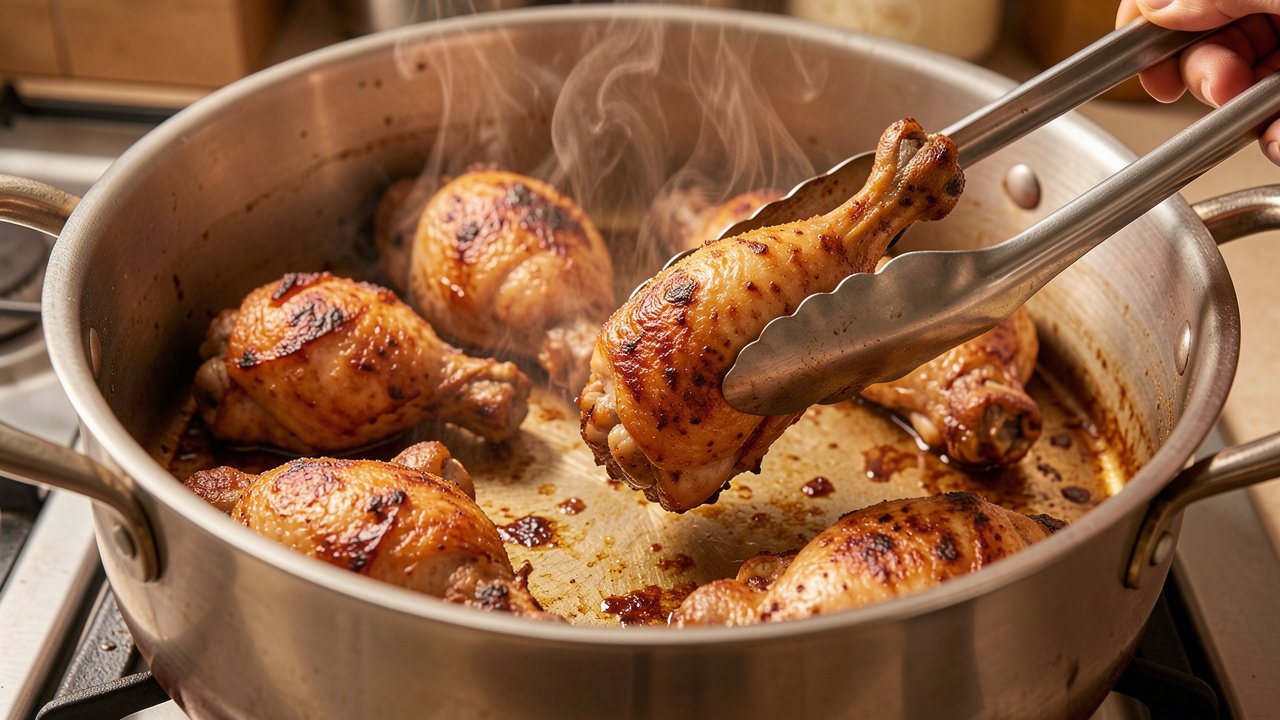
Warm 2 tablespoons of the oil in a large heavy pot over medium-high heat. Working in batches so the pot is never crowded, brown the chicken pieces deeply on all sides, about 8 to 10 minutes total, then lift them out and set aside. Those browned drippings left in the pot are the foundation of the sauce.
Build the Tomato Sauce and Braise
Lower the heat to medium and add the onion to the same pot, cooking 4 to 5 minutes until soft. Stir in the garlic and cook 1 minute until fragrant, then add the tomato paste and annatto and toast for a minute. Add the chopped tomatoes, bay leaf, and broth, return the chicken to the pot, cover, and simmer gently for about 25 minutes until the chicken is tender and the sauce has thickened.
Sear the Okra
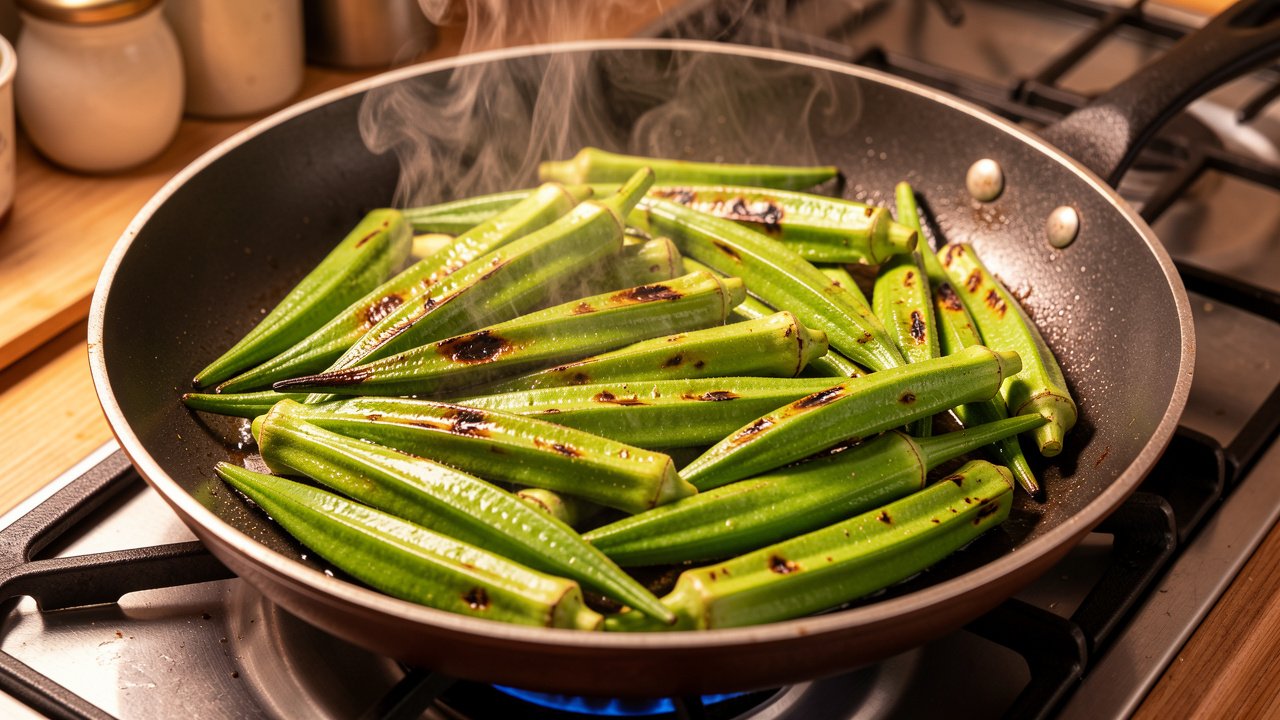
While the chicken braises, heat the remaining tablespoon of oil in a wide skillet over medium-high heat. Add the whole okra pods in a single layer and sear, turning once or twice, for 4 to 5 minutes until blistered and lightly charred. Searing seals the cut ends and keeps the okra firm, so it will not turn slimy in the sauce.
Fold in the Okra
Nestle the seared okra into the pot with the chicken and sauce, gently shaking the pan to settle it in rather than stirring hard. Cover and simmer for just 5 to 7 minutes more, until the okra is tender but still holds its shape. Taste the sauce and adjust the salt now that everything has come together.
Finish and Serve
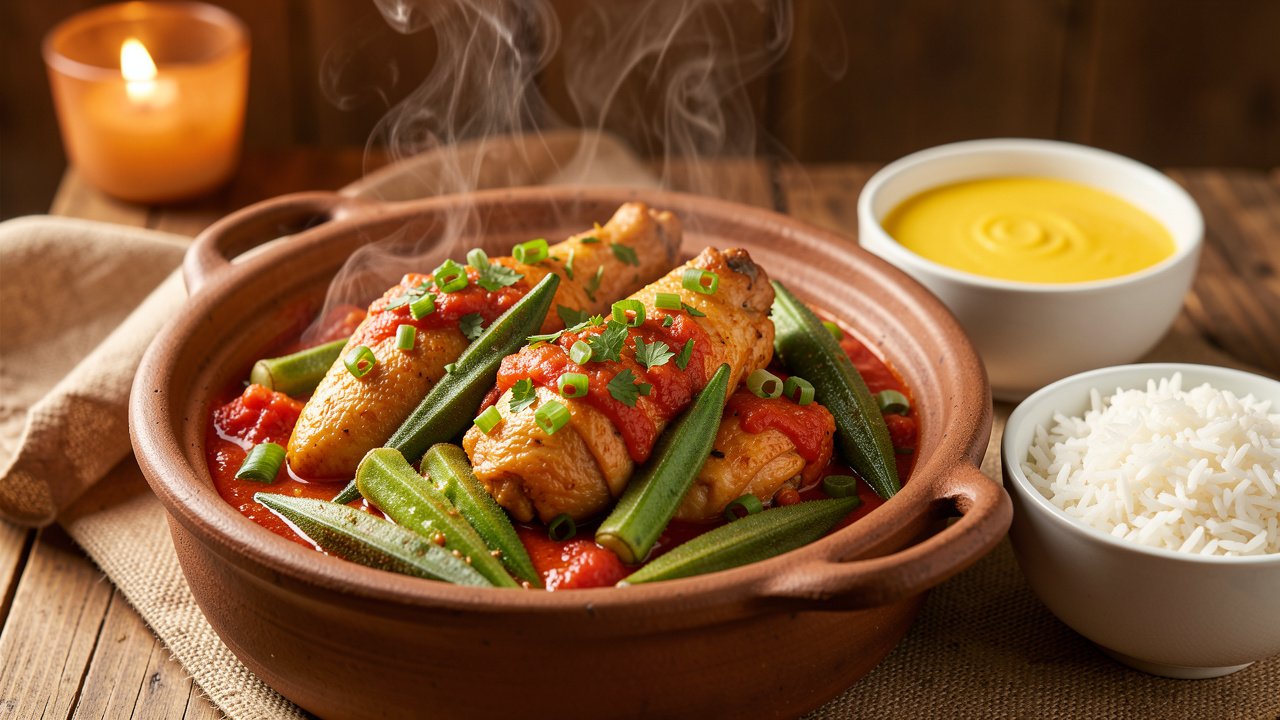
Remove the bay leaf and take the pot off the heat. Scatter the chopped green onion and parsley over the top. Serve the chicken and okra in wide bowls with plenty of the tomato sauce spooned over, alongside white rice and, if you like, a scoop of soft angu to soak up every last bit.
Chef’s Tips From Real Kitchen Testing
Sear the okra whole and separately, then add it only at the end. This single move is what keeps the pods firm and clean instead of ropey, and it is the difference between a good and a great frango com quiabo.
Brown the chicken hard before the sauce goes in. The fond left in the pot dissolves into the tomato and gives the braise a deep, roasted flavor you cannot get any other way.
Once the okra is in the pot, stop stirring. Gently shake the pan or fold once; every hard stir bruises the pods and pulls out the mucilage you worked to avoid.
Recipe Variations
Serving Suggestions
- Fluffy white rice to soak up the tomato sauce
- A scoop of soft angu, the Minas cornmeal porridge
- Couve, garlicky sauteed collard greens cut into ribbons
- A sprinkle of toasted cassava flour (farofa) on top
Nutrition Facts
| Nutrient | Amount per serving |
|---|---|
| Calories | 380 |
| Protein | 34 g |
| Carbohydrates | 16 g |
| Fat | 21 g |
| Saturated Fat | 5 g |
| Fiber | 5 g |
| Sugar | 7 g |
| Sodium | 720 mg |
Values are estimates per serving and vary with the exact cuts and brands you use.
Make-Ahead Tips
The braised chicken and sauce are even better made a few hours or a day ahead, since the flavors deepen as they sit. Cook the dish through the braise stage without the okra, cool, and refrigerate. When you are ready to eat, reheat gently, sear fresh okra, and fold it in at the last minute so it stays firm.
Storage, Freezing & Reheating
Common Mistakes to Avoid
Troubleshooting
Okra came out slimy? It was cut too much, added raw, or stirred hard in the sauce. Next time keep the pods whole, sear them first, and fold them in gently only at the end.
Sauce too thin? Uncover the pot and simmer a few minutes longer before the okra goes in, or stir in an extra spoonful of tomato paste to thicken and deepen it.
Chicken tough or dry? It cooked too fast or too hot, or the breast stayed in too long. Keep the braise at a gentle simmer and pull leaner pieces a little earlier.
A Note on Brazilian Cooking
Frango com quiabo, literally “chicken with okra,” is a signature dish of Minas Gerais, the mountainous state in Brazil’s interior known for slow, homey cooking done in heavy pans over a steady flame. Okra arrived in Brazil through the deep culinary exchange with West Africa, where it is a cornerstone vegetable, and it settled comfortably into the Minas repertoire alongside chicken, tomato, and cornmeal angu. The dish is honest countryside food, the kind ladled straight from the pot onto a plate of rice.
It is easy to picture as just another tomato chicken stew, but the okra is what sets it apart: added carefully, seared first, so it stays firm rather than slimy, it becomes the star rather than an afterthought. In that love of okra it shares a soul with dishes across the Atlantic and beyond, like the Nigerian efo riro greens stew and the Middle Eastern bamia okra braise, as well as tomato-rich chicken pots like the Filipino chicken afritada.
What keeps frango com quiabo on Brazilian tables is exactly what created it: simple ingredients, a forgiving method, and a result far greater than the sum of its parts. Brown the chicken, respect the okra, and put a pot of rice on the table, and you have a meal that tastes of the Minas countryside.