Kenyan Recipes
Fresh Tomato and Onion Salad
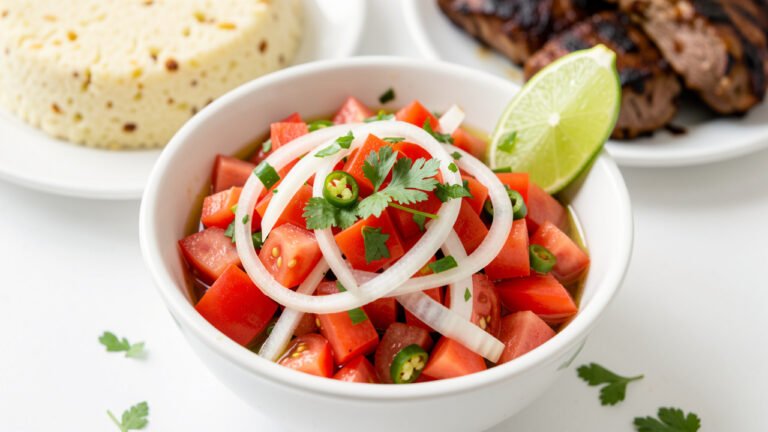
Kachumbari is the plate of color that shows up at almost every Kenyan meal, and it is the reason a rich spread never feels heavy. It is cool, sharp, and juicy, built from a handful of everyday ingredients that most kitchens already have. The trick that separates a great kachumbari from a soggy one is small but real, and once you learn it you will never make the harsh, watery version again.
Why This Kachumbari Works
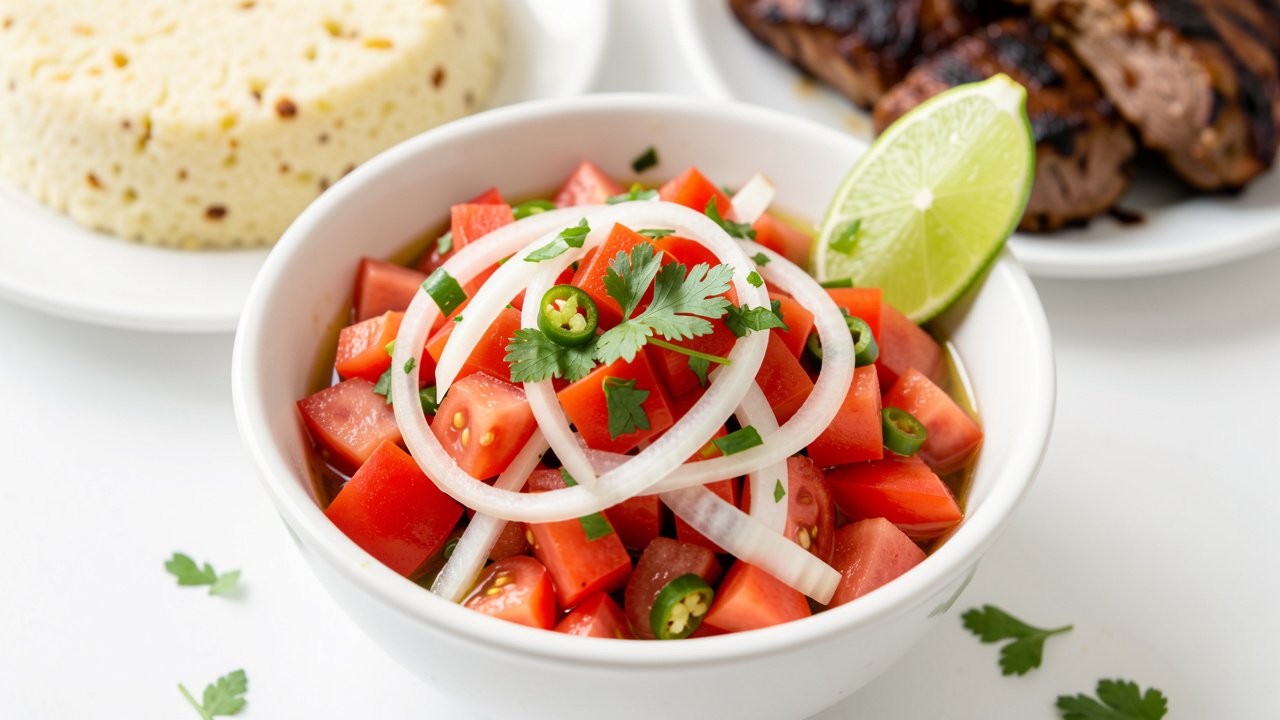
Kachumbari is proof that the best side dishes are often the simplest ones. There is no cooking, no long list of spices, and no special equipment. What you get instead is contrast: sweet ripe tomato against sharp onion, cool cilantro against a lick of chili heat, and a bright squeeze of lime pulling it all together. Set next to rich, smoky, or starchy food, it wakes up the whole plate.
The single most important step is soaking the sliced onion in cold water before it goes anywhere near the tomatoes. Raw onion straight off the board carries a strong sulfur bite that lingers and can overwhelm everything else. A short soak washes away those harsh compounds and leaves the onion crisp, sweet, and gentle, so it flavors the salad instead of dominating it.
The second quiet secret is salting late. Salt pulls water out of tomatoes fast, and if you add it too early the salad turns into a puddle. By seasoning right before serving, you keep the tomatoes firm and the dressing clinging to each piece rather than pooling at the bottom of the bowl.
It is also endlessly flexible. The base of tomato, onion, chili, cilantro, and citrus welcomes ripe avocado, extra chili for people who love heat, or a coastal touch of coconut. Once you have the method, you can shape the same salad to match whatever you are serving that day.
Pro observation: Kachumbari is at its best within an hour or two of being dressed. It is a fresh salad, not a make-ahead one, so build it close to the moment you plan to eat.
Ingredients
Kitchen Measurement Converter
Quickly convert between common cooking measurements without leaving the recipe. Pick a category, enter a value, and the result updates instantly.
Ingredient Notes & Substitutions
Tomatoes
Use firm, ripe tomatoes with plenty of flavor. Roma or plum types hold their shape and are less watery, but any good in-season tomato works. Scoop out the wet seed pockets if your tomatoes are very juicy, so the salad stays crisp rather than soupy.
Onion
Red onion is classic for its color and mild sweetness, though white onion is common too. Slice it as thinly as you can and give it the cold-water soak. Thin slices soak faster and mellow more evenly than thick chunks.
Chili
A green chili or a small piece of a hotter bird’s eye chili brings the gentle heat that defines kachumbari. Remove the seeds and membrane for a milder salad, or leave them in if you like more kick. Skip it entirely for a family-friendly bowl.
Cilantro and Citrus
Fresh cilantro, known as dhania in Kenya, gives the salad its herby lift. Lime juice is the usual choice, but lemon works just as well. Add the juice at the end and taste as you go so the salad stays bright, not sharp.
Equipment
- Sharp knife
- Cutting board
- Large mixing bowl
- Small bowl for soaking
- Fine sieve or colander
- Citrus juicer or fork
Before You Start
1. Slice the onion first. Because the onion needs a cold-water soak, slice it before anything else so it can rest and mellow while you prep the rest of the salad.
2. Choose the right tomatoes. Firm, ripe tomatoes give the cleanest dice and the least liquid. Very soft tomatoes are delicious but will make a wetter bowl.
3. Hold the salt until the end. Have everything diced and ready, but do not season until you are close to serving, or the tomatoes will weep and dilute the dressing.
Step-by-Step Instructions
Soak the Onion
Peel and slice the onion as thinly as you can. Drop the slices into a small bowl of cold water and let them sit for about 10 minutes. This is the step that tames the raw, sulfur bite and leaves the onion sweet and crisp. Drain well and pat dry before adding it to the salad.
Dice the Tomatoes
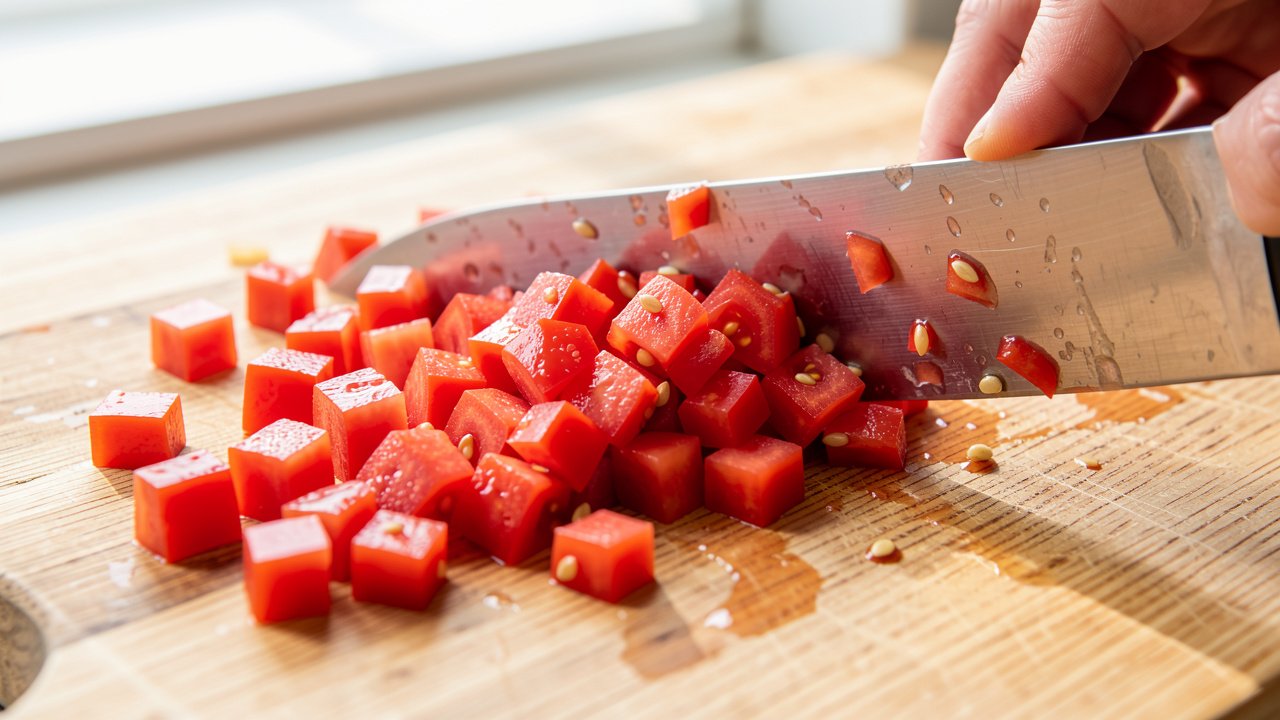
While the onion soaks, dice the tomatoes into small, even pieces, roughly half-inch cubes. If your tomatoes are very juicy, scoop out and discard the watery seed pockets first so the finished salad stays crisp. Add the diced tomatoes to a large mixing bowl.
Chop the Chili and Cilantro
Finely chop the green chili, removing the seeds first if you want a milder salad. Roughly chop a generous handful of fresh cilantro, stems and all, since the tender stems carry plenty of flavor. Set both aside so they are ready to toss in.
Combine in the Bowl
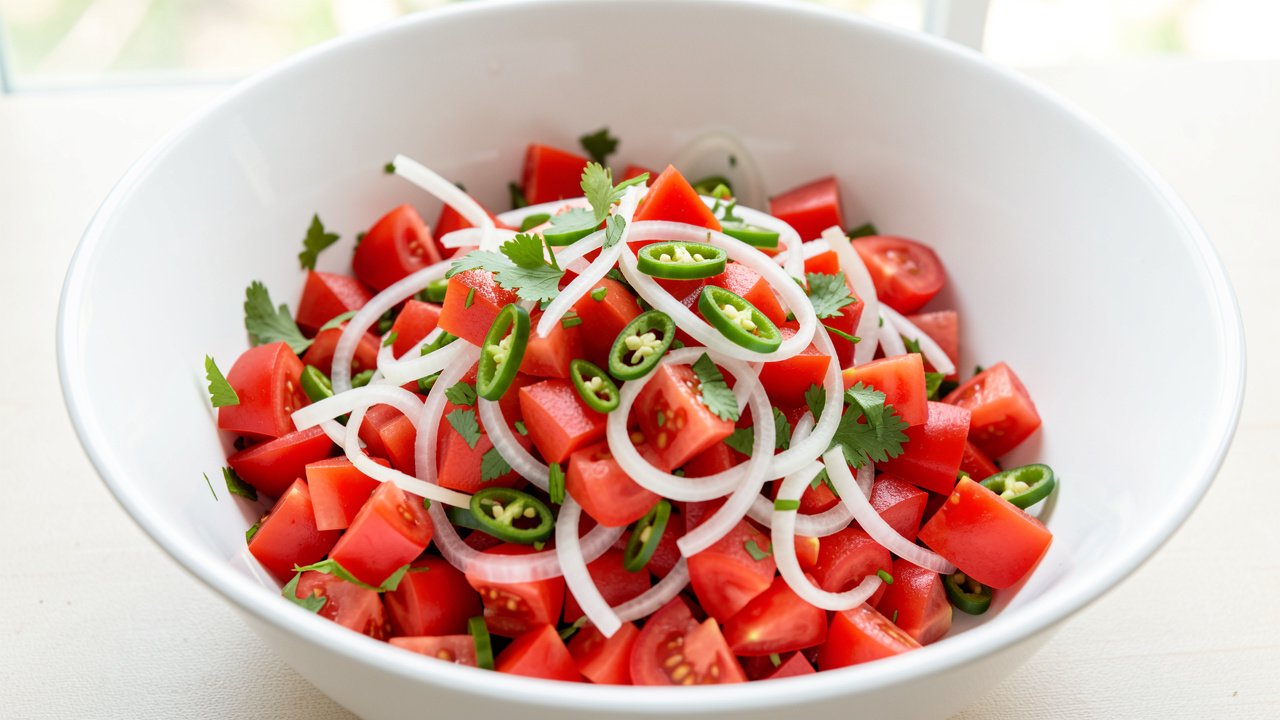
Add the drained, dried onion, the chopped chili, and most of the cilantro to the bowl with the tomatoes. Toss gently with your hands or a spoon so everything is evenly mixed but the tomato pieces stay whole. Save a little cilantro to scatter on top at the end.
Dress and Season
Squeeze the lime or lemon juice over the salad. Add the salt, and the black pepper if you are using it, then toss lightly to coat. Taste and adjust: a little more citrus for brightness, a little more salt for depth. Season now, close to serving, so the tomatoes do not weep.
Rest Briefly and Serve
Let the dressed salad sit for 5 minutes so the flavors come together, then give it one final gentle toss. Scatter the reserved cilantro over the top and serve right away, alongside nyama choma, ugali, beans, or grilled fish. Kachumbari is meant to be eaten fresh and cool.
Chef’s Tips From Real Kitchen Testing
Never skip the onion soak. Ten minutes in cold water is the difference between a mellow, sweet onion and one that overpowers every bite.
Salt last, not first. Adding salt early draws water from the tomatoes and leaves you with a watery bowl instead of a crisp salad.
Add citrus in stages and taste. It is easy to overdo the lime, and you can always add more but you cannot pull it back out.
Recipe Variations
Serving Suggestions
- Nyama choma, the classic grilled meat pairing
- Ugali, the soft maize staple
- Stewed or spiced beans and lentils
- Grilled fish, chapati, or rice pilau
Nutrition Facts
| Nutrient | Amount per serving |
|---|---|
| Calories | 50 |
| Protein | 2 g |
| Carbohydrates | 11 g |
| Fat | 1 g |
| Saturated Fat | 0 g |
| Fiber | 3 g |
| Sugar | 6 g |
| Sodium | 300 mg |
Values are estimates per serving and vary with the exact ingredients and brands you use.
Food Safety & Hygiene
Because kachumbari is a raw salad, clean handling matters more than with cooked dishes. Wash the tomatoes, chili, and cilantro thoroughly under running water before you cut them, and rinse your hands, knife, and board well. If you are prepping ahead, keep the diced components covered and chilled in the fridge until you are ready to dress and serve.
Once dressed, do not leave the salad sitting out at room temperature for long, especially in warm weather. Serve it cool, refrigerate any leftovers promptly, and enjoy them the same day for the best texture and food safety.
Storage & Freshness
Common Mistakes to Avoid
Troubleshooting
Onion still too sharp? Soak it longer, up to 20 minutes, in fresh cold water and drain well. Slicing it thinner also helps it mellow faster.
Salad turned watery? You likely salted too soon or used very juicy tomatoes. Drain off the excess liquid, and next time scoop out the seeds and season at the very end.
Tastes flat? It usually needs a pinch more salt and a fresh squeeze of lime to bring the flavors back to life.
A Note on Kenyan Cooking
Kachumbari sits at the heart of everyday Kenyan and wider East African eating, where a fresh, sharp relish balances rich and starchy staples like ugali, beans, and grilled meat. The name is shared across the region, and small variations turn up from one home and one town to the next, from extra chili in some kitchens to a coastal splash of coconut in others. It belongs to the same worldwide family of chopped tomato-and-onion relishes, so if you enjoy this you will feel right at home with a bright tomato salsa. What ties them together is freshness: good tomatoes, a clean knife, and a squeeze of citrus doing most of the work.
Frequently Asked Questions
More Tomato Recipes to Try
Last updated: September 29, 2026