Uyghur Recipes
Hand-Pulled Noodles With Tomato Lamb Sauce
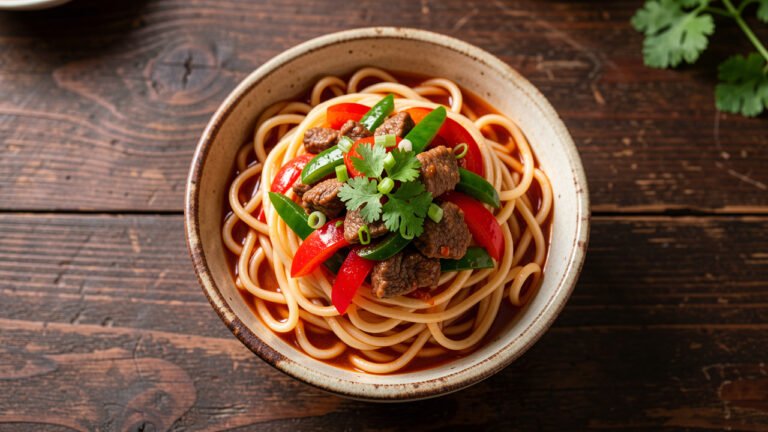
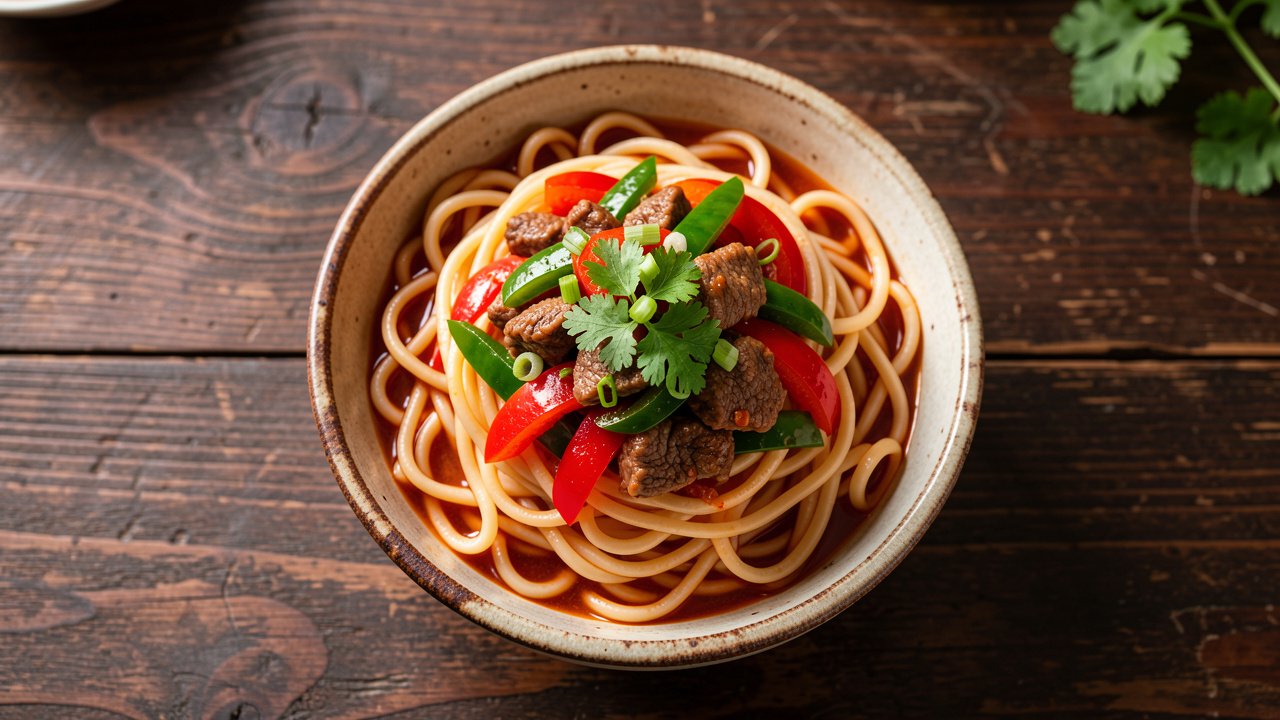
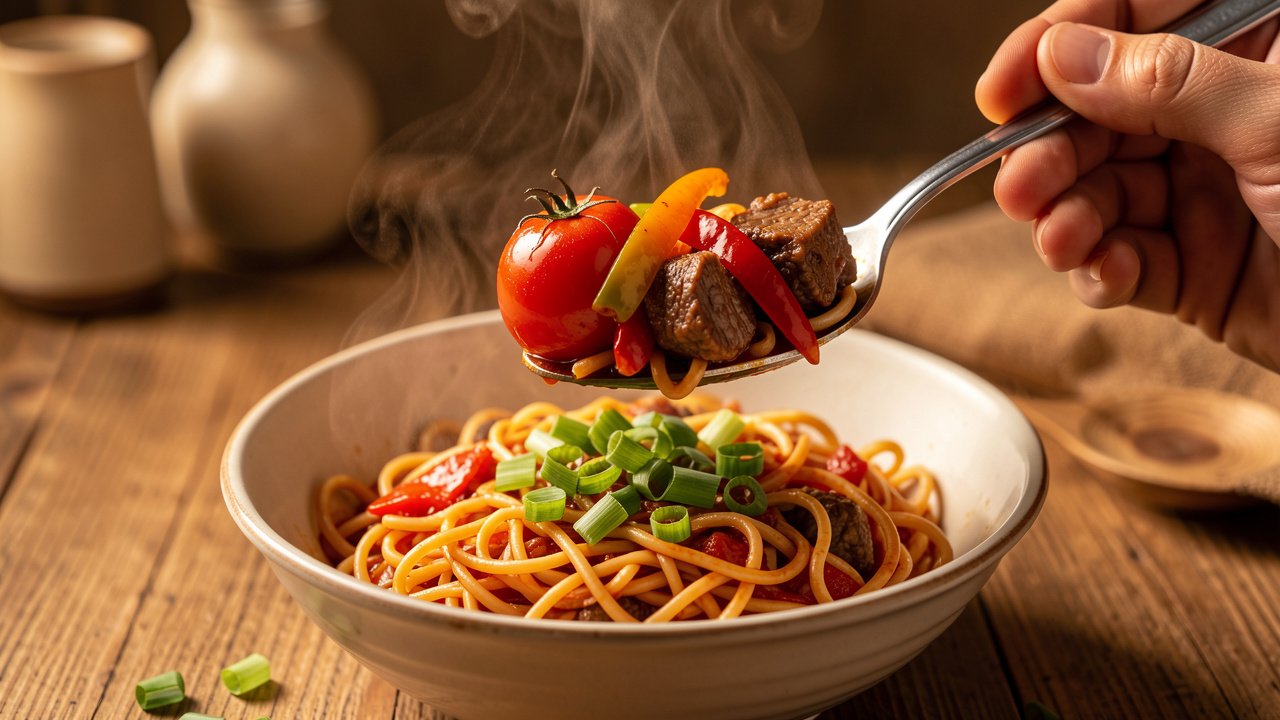
Laghman is the kind of dish that turns dinner into an event. You pull long, springy wheat noodles by hand, then crown them with a bright, saucy stir-fry of halal lamb or beef, ripe tomatoes, and crisp peppers. The first time I pulled the noodles myself, half of them snapped, but the ones that survived told me exactly why this dish is a Silk Road classic.
Why This Uyghur Laghman Works
Laghman rests on two pillars that carry the whole dish: springy hand-pulled noodles and a glossy stir-fried sauce the Uyghurs call saigan. Get both right and you have a bowl that is chewy, savory, and bright all at once, with no single flavor shouting over the rest.
The noodles are stretched, not rolled and cut, so they keep a bouncy, slippery bite that grabs the sauce. A well-rested, salted dough is what makes that possible. Give the gluten time to relax and the strands pull long and even instead of tearing.
The sauce is a fast, high-heat stir-fry. Halal lamb or beef is seared first for depth, then tomatoes and tomato paste cook down into a glossy, slightly jammy base while the peppers, long beans, and celery stay crisp. Cumin and chili give it the unmistakable Central Asian warmth.
The finishing splash of vinegar is the quiet hero. Added off the heat at the very end, it sharpens the tomato, cuts the richness of the meat, and makes every bite taste brighter. Skip it and the bowl feels heavy; add it and the whole thing snaps into focus.
Pro observation: The saigan is ready to spoon over noodles when the tomatoes have collapsed and the oil glosses the surface with a red sheen. That shine means the sauce will cling to each strand instead of pooling at the bottom of the bowl.
Ingredients
Kitchen Measurement Converter
Quickly convert between common cooking measurements without leaving the recipe. Pick a category, enter a value, and the result updates instantly.
Ingredient Notes & Substitutions
Noodles
Hand-pulled dough gives the most authentic chew, but fresh or dried wheat noodles work well when you are short on time. Choose a thick, round noodle so it stands up to the hearty sauce.
Halal Lamb or Beef
Use halal lamb or beef sliced thin against the grain so it cooks fast and stays tender. Lamb is the traditional choice for its richness, while beef gives a slightly leaner, everyday bowl.
Tomatoes
Ripe, red tomatoes plus a spoon of tomato paste build that glossy saigan base. Out of season, one 14-ounce can of diced tomatoes with the paste is more reliable than pale fresh ones.
Vinegar and Cumin
Rice vinegar adds the signature tang at the end; a black or white vinegar works too. Toasty ground cumin is essential to the flavor, so use it fresh and do not leave it out.
Equipment
- Large mixing bowl
- Wok or wide skillet
- Large pot for noodles
- Sharp knife and board
- Tongs or long chopsticks
- Colander
Before You Start
1. Make the dough first. The noodle dough needs to rest so the gluten relaxes and the strands pull long without snapping. Mix and knead it before you touch anything else.
2. Slice the meat cold. Halal lamb or beef slices thinnest when it is very cold, almost partly frozen. Thin, even pieces sear fast and stay tender in the sauce.
3. Prep all the vegetables. The saigan is a quick, high-heat stir-fry, so have the onion, garlic, ginger, tomatoes, peppers, beans, and celery cut and within reach before the wok is hot.
Step-by-Step Instructions
Mix and Rest the Dough
If you are pulling noodles by hand, combine 3 cups flour, 1 cup warm water, and a teaspoon of salt, then knead into a smooth, elastic dough. Rub it lightly with oil, cover, and rest at least 45 minutes. This is inactive time, so use it to slice the meat and prep the vegetables. To save time, use fresh or dried wheat noodles instead.
Pull the Noodles
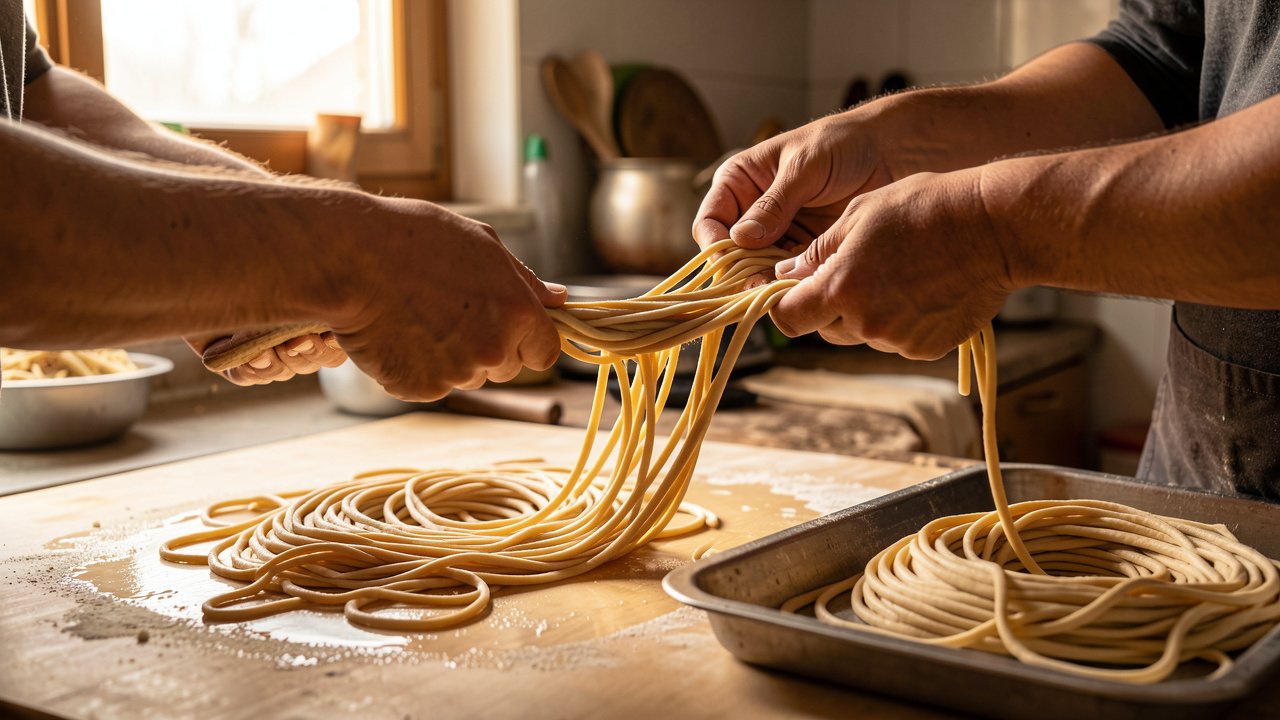
Roll the rested dough into ropes, coil them with a little oil, and rest a few minutes more. Then take a rope in both hands and gently stretch and bounce it against the counter, letting it thin out into a long strand. Work in batches and lay the pulled noodles on an oiled tray. Do not force it; if a strand resists, rest it a moment longer.
Sear the Meat
Heat 2 tablespoons of oil in a wok over high heat until it shimmers. Add the thinly sliced halal lamb or beef in a single layer and let it sear undisturbed for a minute, then stir-fry 2 to 3 minutes until browned and cooked through with no pink remaining. Push the meat to one side or scoop it out to rest while you build the sauce.
Build the Tomato Saigan
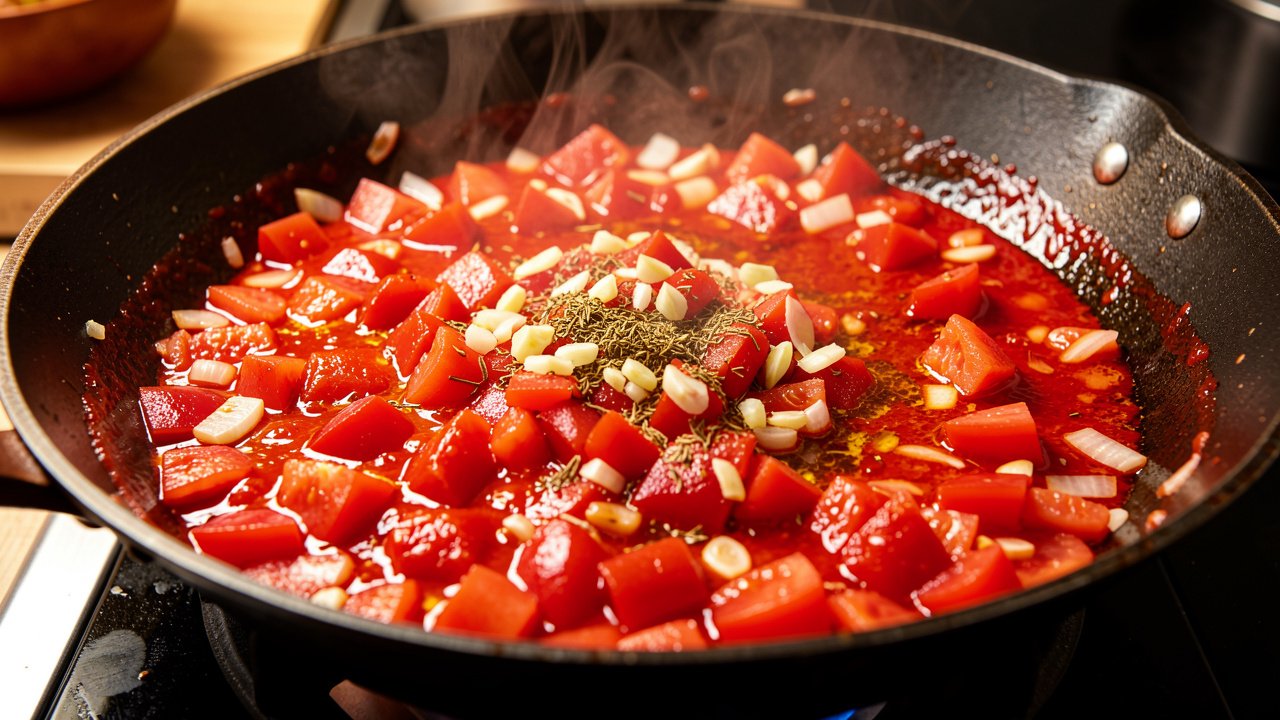
Add the last tablespoon of oil, then the onion, and stir-fry 2 minutes until it softens. Add the garlic and ginger and cook 30 seconds until fragrant. Stir in the tomato paste, cumin, chili flakes, and paprika and fry 30 seconds, then add the diced tomatoes and salt. Cook 5 to 6 minutes, stirring, until the tomatoes collapse into a glossy, jammy sauce and the oil turns red at the edges.
Add the Vegetables and Meat
Return the seared meat to the wok and add the bell peppers, long beans, and celery. Pour in the soy sauce and a splash of water, then stir-fry over high heat for 4 to 5 minutes. You want the peppers and beans crisp-tender and still bright, not soft. Taste and adjust the salt now.
Cook Noodles, Finish, and Serve
Boil the noodles in well-salted water until just tender, about 2 to 3 minutes for fresh pulled noodles, then drain. Turn off the heat under the sauce and stir in the rice vinegar. Divide the noodles among bowls, spoon the saigan generously over the top, and scatter with sliced scallions. Serve hot, with extra vinegar and chili on the side.
Chef’s Tips From Real Kitchen Testing
Rest the dough longer, not shorter. A tired, well-rested dough is soft and stretchy; a rushed one fights back and tears every time you try to pull it.
Keep the wok hot and moving. High heat sears the meat and keeps the vegetables crisp. A crowded, cool pan steams everything into a dull, watery stir-fry.
Add the vinegar off the heat. Splashed in at the very end, it stays bright and sharp; boiled into the sauce, its lift cooks away and the bowl tastes flat.
Recipe Variations
Serving Suggestions
- A side of tangy pickled vegetables or cucumber salad
- Warm flatbread or naan to catch the sauce
- Chili oil and extra vinegar on the table
- Fresh cilantro and sliced scallions to top each bowl
Nutrition Facts
| Nutrient | Amount per serving |
|---|---|
| Calories | 620 |
| Protein | 32 g |
| Carbohydrates | 68 g |
| Fat | 24 g |
| Saturated Fat | 7 g |
| Fiber | 6 g |
| Sugar | 9 g |
| Sodium | 890 mg |
Values are estimates per serving and vary with the exact ingredients and brands you use.
Make-Ahead Tips
The saigan sauce is a great make-ahead component, because the tomato and cumin deepen as they sit. Cook it a day in advance, cool, and refrigerate, then reheat in a hot wok and stir in the vinegar fresh just before serving. Pull or boil the noodles right before eating, since they are best hot and never sit well once dressed. Keep noodles and sauce separate until the last minute so the strands do not turn soft.
Storage, Freezing & Reheating
Common Mistakes to Avoid
Troubleshooting
Noodles keep snapping? The dough needs more rest. Cover it and wait another 15 to 20 minutes so the gluten relaxes, then pull more gently.
Sauce tastes flat? It usually needs salt and the finishing splash of vinegar. A pinch more cumin also wakes up the flavor.
Sauce too watery? Turn the heat to high and cook it down a couple of minutes longer, or stir in an extra teaspoon of tomato paste.
A Note on Uyghur Cooking
Laghman travels the old Silk Road, and you will find versions of it across the Uyghur homeland and Central Asia, each cook stretching the noodles a little differently. The heart of the dish is always the same: hand-pulling the noodles into long, springy strands, then topping them with a saigan sauce built on halal lamb or beef, tomatoes, and peppers. Cumin gives it that warm, toasty backbone, and a final splash of vinegar brings the brightness that makes the bowl sing. If you love these deep, spiced tomato flavors, our hearty tomato lentil soup shares the same comforting spirit, and you can browse more ideas on our tomato recipes hub.
Frequently Asked Questions
More Tomato Recipes to Try
Last updated: September 29, 2026