Salad Recipes
Lime Vinaigrette
Last updated: September 29, 2026
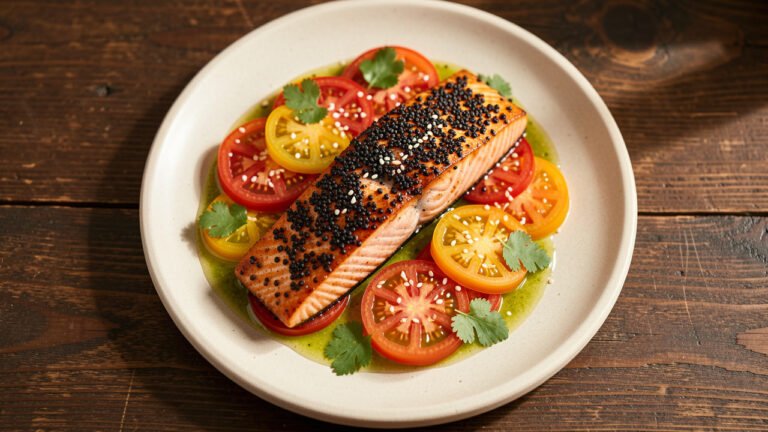
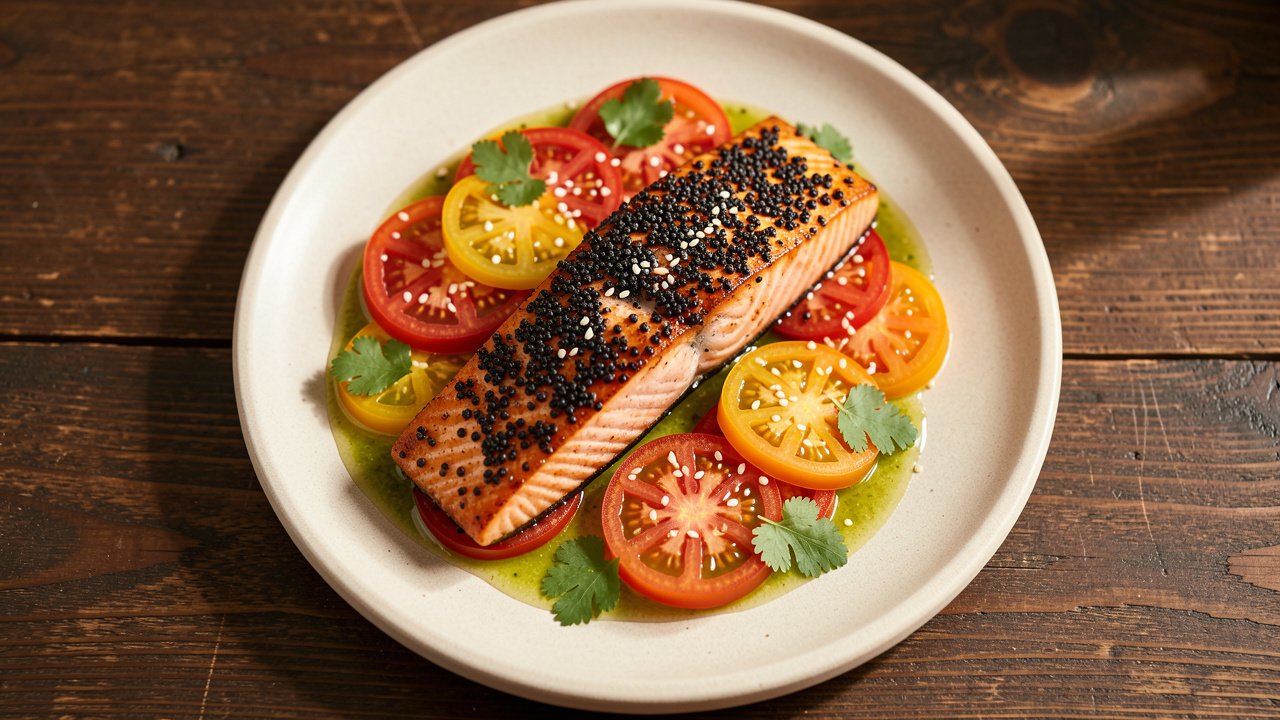
The point of this salad is contrast: hot fish landing on cold tomatoes, fat against acid, and a tingle that arrives a beat after you swallow. The first time I made it I ground the peppercorns whole, seeds and all, and the crust came out gritty. Sifting fixed it, and that one change is why the recipe reads the way it does.
Why This Szechwan Salmon Salad Works
Most people read “Szechwan” and brace for heat. That expectation is worth correcting before you cook, because it changes what you taste. Szechwan peppercorn is not chili and is not related to black pepper. It is the dried husk of a citrus relative, and it tastes bright and lemony with a faintly piney edge.
What it really does is make your mouth buzz. The compound responsible is hydroxy-alpha-sanshool, and instead of triggering the heat receptors that chili hits, it stimulates the nerves that sense light touch and vibration. Your lips read that signal as a fizzing numbness. Cooks in Szechwan call it “ma.” The chili heat is “la.” Put them together and you get “mala,” the numbing-hot pairing the region is famous for. This salad uses both, but leans on the ma.
That tingle is exactly why the dish needs cold tomatoes. The numbness dulls your palate slightly as you eat, so a flat, one-note salad would disappear underneath it. Ripe tomatoes push back with sweetness and acid, and the lime vinaigrette keeps resetting your tongue between bites.
The temperature split does the rest. Salmon comes off the heat at 125F to 130F, still soft and just set, and lands on tomatoes straight from the counter. The fish warms the dressing where it touches, the tomatoes cool the fish, and every forkful sits somewhere in between.
Pro observation: Toasted peppercorn loses its buzz within a day or two of grinding. Grind what you need for this recipe and skip the jar of pre-ground powder entirely; it is usually stale and tastes like sawdust.
Ingredients
Kitchen Measurement Converter
Quickly convert between common cooking measurements without leaving the recipe. Pick a category, enter a value, and the result updates instantly.
Ingredient Notes & Substitutions
Szechwan Peppercorn
Buy whole, never ground. Good ones are rosy-brown, open like tiny split shells, and smell like grapefruit peel when you crush one. If a berry is dull brown and smells of nothing, the buzz is gone and no amount of toasting brings it back.
Salmon
Center-cut fillets of even thickness cook predictably; tail pieces overcook while the thick end lags. Skin-on gives you a crisp side and a buffer against the pan. Farmed salmon is fattier and more forgiving than lean wild sockeye, which overshoots fast.
Tomatoes
Use whatever is ripest and never refrigerate them; cold kills the aroma. A mix of sizes and colors looks better and tastes more varied. Out of season, halved cherry tomatoes beat pale slicers every time because they stay sweet year-round.
Lime and Sweetener
Fresh limes only. Bottled juice tastes muted and slightly bitter, which fights the peppercorn. The teaspoon of honey is not there to sweeten the salad; it rounds off the numbing edge so the tingle reads pleasant rather than harsh. Maple syrup works if you want it vegan-adjacent.
Equipment
- Heavy skillet, cast iron or steel
- Instant-read thermometer
- Spice grinder or mortar
- Fine-mesh sieve
- Fish spatula
- Sharp knife and board
Before You Start
1. Get a thermometer out. This recipe lives or dies on internal temperature, and there is no visual cue accurate enough to replace a probe. An instant-read model costs less than the salmon.
2. Dry the salmon well. Blot both sides with paper towels and leave it uncovered on a plate while you prep. A wet surface steams instead of searing and the crust will not stick.
3. Do not salt the tomatoes yet. Slice them, but hold the salt until the fish is nearly done. Salt pulls water out within minutes and you will end up with a watery pool instead of a dressing.
Step-by-Step Instructions
Slice and Set Up
Cut the tomatoes into thick wedges or half-inch rounds and lay them on a wide platter, unsalted. Thinly slice the scallions and chop the cilantro. Take the salmon out of the fridge now so it loses some chill; cold fillets seize in the pan and cook unevenly.
Toast and Sift the Peppercorn
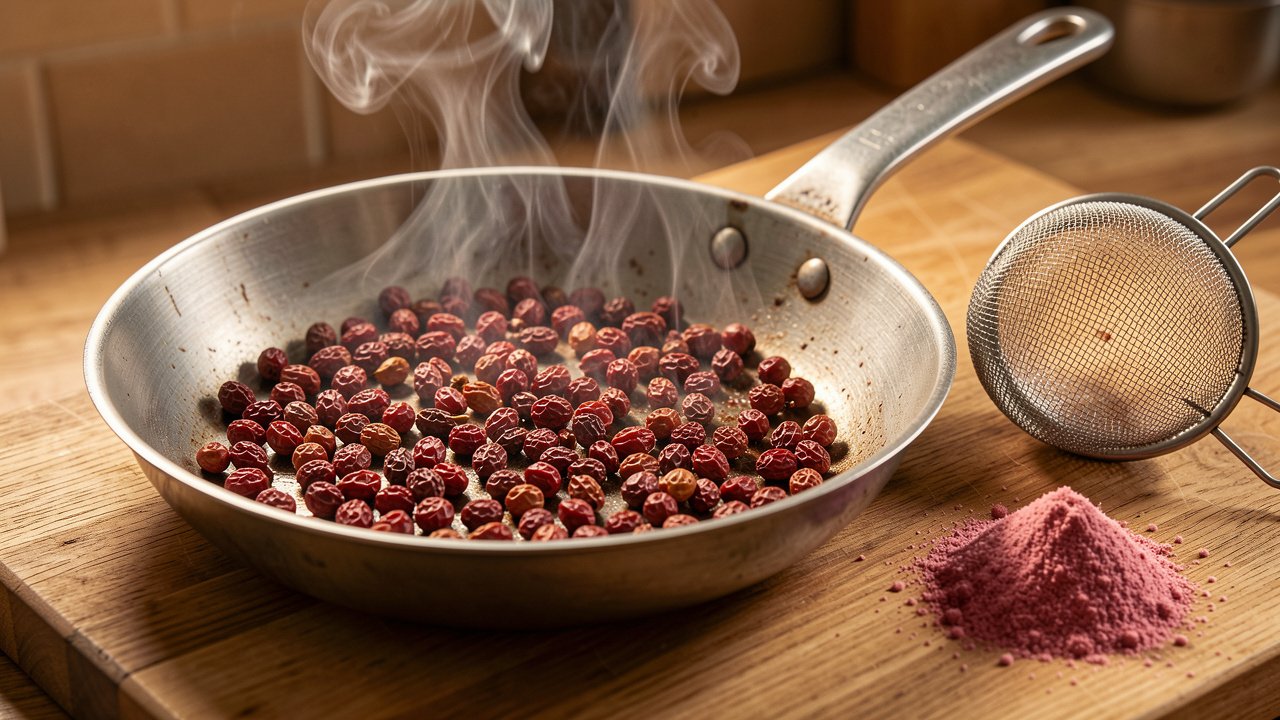
Put the Szechwan peppercorns in a dry skillet over medium-low heat. Shake the pan constantly. In 40 to 60 seconds they will smell sharply citrusy and start to darken slightly. Tip them out immediately. Scorched peppercorn turns bitter and dusty, and there is no rescuing it. Once cool, grind them, then push the powder through a fine-mesh sieve. Keep the reddish husk powder and discard the gritty black seeds and woody stems left behind. The husks carry all the aroma and the tingle; the seeds are just sand.
Mix the Lime Vinaigrette
Whisk the lime juice, soy sauce, sesame oil, honey, grated garlic, and a pinch of the ground peppercorn together in a small bowl. Taste it on its own. It should be sharp enough to make you blink, with the tingle showing up a second or two later. If it tastes harsh rather than bright, add a few more drops of honey.
Crust and Sear the Salmon
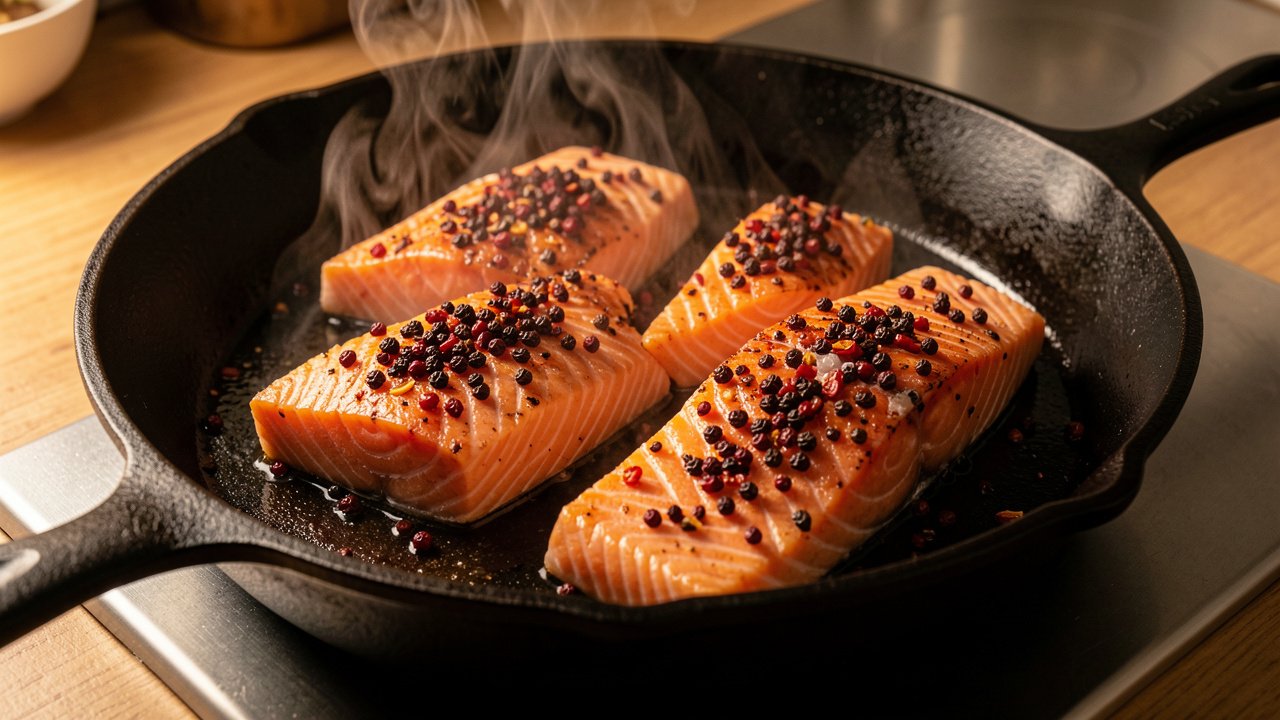
Mix the remaining ground peppercorn with the chili flakes and salt, then press the mixture firmly onto the flesh side of each fillet. Heat the neutral oil in a heavy skillet over medium-high until it shimmers. Lay the fillets skin-side down away from you and press each one flat for ten seconds so the skin does not curl. Cook 4 to 5 minutes without moving them. The flesh will turn opaque from the bottom up, and you can watch that line climb the side of the fillet.
Finish to Temperature
Flip the fillets and give them 1 to 2 minutes on the crust side, then probe the thickest part. Here is the honest picture: the USDA recommends cooking fish to 145F, and that is the safety baseline, particularly for anyone pregnant, very young, elderly, or immunocompromised. Most cooks pull salmon well below that on purpose. I take it off at 125F for medium-rare or 130F to 135F for medium, and carryover adds about 3 to 5 degrees while it rests.
At 145F the fish is firm, drier, and flakes apart on its own. At 125F to 130F it is silky and just barely set in the middle. Both are legitimate; you are trading a small amount of risk reduction for texture, and you should make that call knowing what it is. What I would not do is rely on flaking as your cue, since salmon that flakes easily is already past medium.
Salt the Tomatoes and Plate
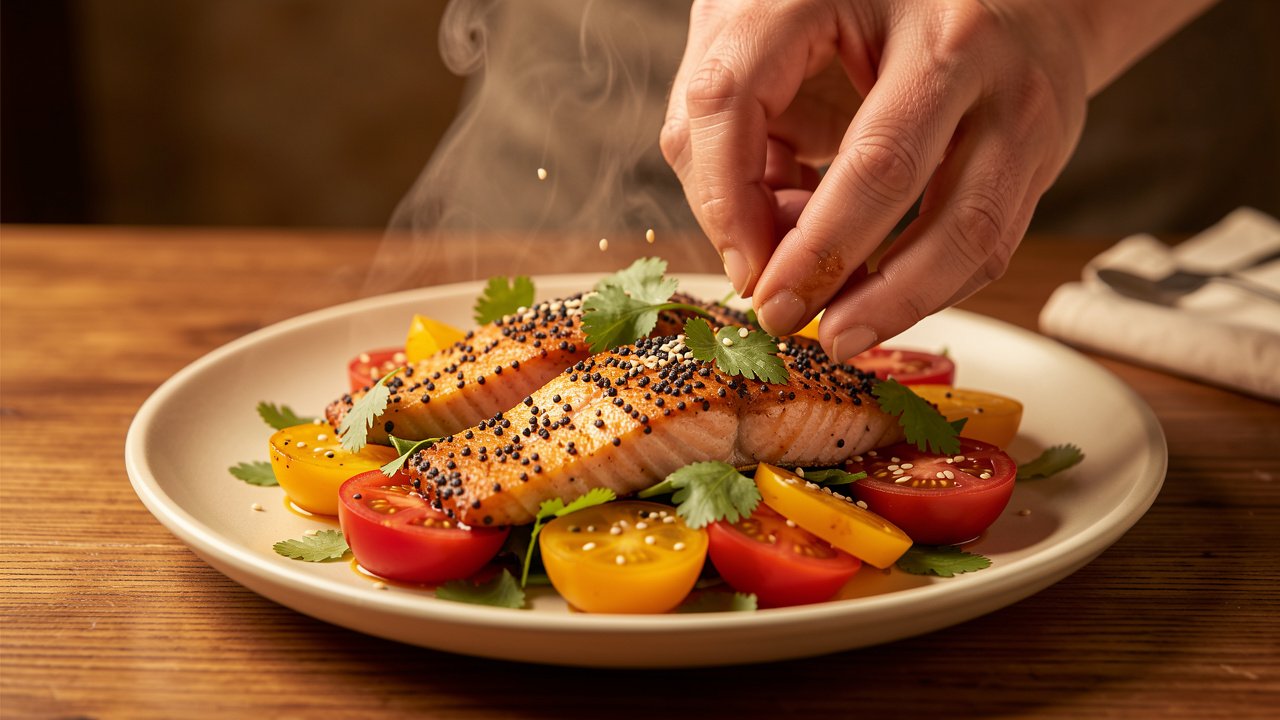
Now salt the tomatoes and spoon about two-thirds of the vinaigrette over them. Toss gently. Rest the salmon 3 minutes, then set the fillets on top of the tomatoes while they are still warm. Drizzle the rest of the dressing over the fish, scatter the sesame seeds, scallions, and cilantro, and serve right away. The gap between warm fish and cold tomato is the whole idea, and it closes fast.
Chef’s Tips From Real Kitchen Testing
Start the peppercorn in a cold pan over medium-low rather than a preheated one. The gentler ramp gives you a wider window before they scorch, which matters because the difference between fragrant and ruined is roughly fifteen seconds.
Probe the fillet from the side, sliding the tip toward the center rather than stabbing down through the top. You get a truer reading of the thickest point and you do not leave a hole in the crust.
If your peppercorn seems weak, chew one husk before you commit. A good one numbs your tongue in about twenty seconds. If nothing happens, use half again as much or buy fresher stock, because toasting cannot revive a dead batch.
Recipe Variations
Serving Suggestions
- Chilled rice noodles tossed in the extra dressing
- Steamed jasmine rice to soak up the juices
- Smashed cucumbers with rice vinegar
- A cold sparkling ginger ale
Nutrition Facts
Values are estimates per serving and vary with the cut and fat content of the salmon you use.
Make-Ahead Tips
The salmon has to be cooked to order, but everything around it can wait. Toast, grind, and sieve the peppercorn up to two days ahead and keep the powder in a sealed jar away from light; expect it to lose a little buzz by day three. The vinaigrette holds three days in the fridge, though the garlic gets louder, so mix it the same day if you can. Slice the tomatoes an hour ahead at most, and leave them out on the counter unsalted and uncovered.
Storage, Freezing & Reheating
Common Mistakes to Avoid
Troubleshooting
No tingle at all? Your peppercorn is old, or you sieved out the husks and kept the seeds by mistake. The powder you want is rosy, not black.
Crust fell off in the pan? The fillet surface was damp, or you moved the fish too soon. Blot harder and leave it alone for the full first side.
Salad tastes harsh instead of bright? The numbing is running ahead of the sweetness. Add a little more honey and a pinch of salt to the dressing and toss again.
A Note on Szechwan Seasoning
Szechwan province in southwest China built its reputation on mala, and the peppercorn came first; chilies only arrived from the Americas a few centuries ago. Before that, the numbing husk was the region’s main source of pungency. This salad is not a traditional Szechwan dish. It borrows the seasoning logic and applies it to a Western plate, which is why lime stands in for the black vinegar you would expect in Chengdu. If you like tomatoes with a sharp dressing, our tomato and artichoke salad with capers works the same acid angle, and spicy tomato shrimp pasta covers the chili side of the equation.