Djiboutian Recipes
Djibouti’s National Spiced Rice
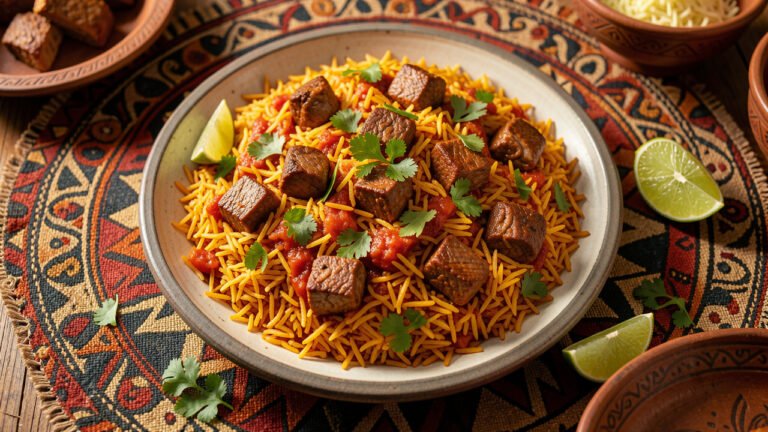
Skoudehkaris, sometimes written skudahkharis, is the dish Djiboutians reach for at family gatherings, holidays, and ordinary weeknights alike. It belongs to the same family of one-pot spiced rice dishes found across the Horn of Africa and the Arabian Peninsula, but the Djiboutian version has its own quiet balance: a deep tomato base, a warm hand with the spices, and just enough broth for the rice to drink up.
The trick I learned after a few tries is patience with two things. First, the tomato and meat base needs time to turn jammy and glossy before the rice ever goes in. Second, the rice-to-broth ratio is not something to guess at. Get those right and the pot comes out fluffy and fragrant instead of soupy or scorched.
Why This Skoudehkaris Works
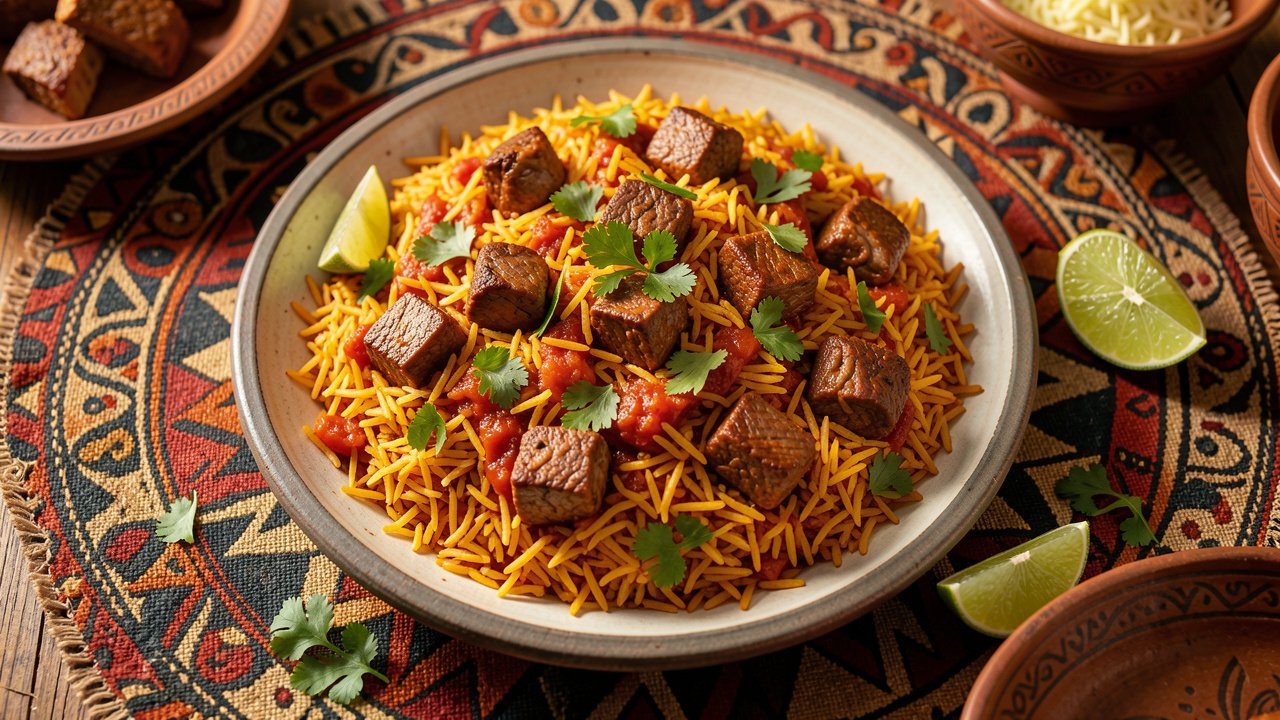
Skoudehkaris rewards a cook who builds flavor in the right order. You start by browning halal lamb or beef so it develops a savory crust, then you soften onion and garlic, and only then do the tomatoes and spices go in to form a rich, jammy base. The rice cooks last, right in that seasoned broth, so every grain carries the flavor of the whole pot.
The spice blend is what makes it unmistakably Djiboutian. Cumin and coriander give the earthy backbone, cardamom and cinnamon bring a gentle sweetness, and a little clove adds depth. Many cooks fold in xawaash, the regional spice mix, to tie it all together. None of these overpower the dish; they layer into something warm and aromatic.
Cooking the rice in the broth is the other quiet secret. Basmati that has been rinsed until the water runs clear, then simmered gently in a measured amount of liquid, comes out fluffy and separate rather than sticky. That texture is the difference between a proud platter of skoudehkaris and a heavy, mushy pot. It is also a genuine one-pot meal, so once you know the method you can swing between lamb, beef, and chicken without changing the core technique.
Pro observation: The tomato base is ready for the rice when the oil starts to glisten at the edges of the pot and the mixture smells sweet and deep rather than sharp. That sheen tells you the tomatoes and spices have cooked through.
Ingredients
Kitchen Measurement Converter
Quickly convert between common cooking measurements without leaving the recipe. Pick a category, enter a value, and the result updates instantly.
Ingredient Notes & Substitutions
Halal Lamb or Beef
Use halal lamb or beef cut into bite-size cubes, ideally with a little fat or bone for richer broth. Shoulder and stewing cuts stay tender through the long simmer. Halal chicken thighs also work and cook faster.
Tomatoes and Paste
Ripe fresh tomatoes give the best color and tang, backed by tomato paste for depth. Out of season, one 14-ounce can of chopped tomatoes stands in well for the fresh ones.
The Spice Blend
Cumin, coriander, cardamom, cinnamon, and cloves are the core. Xawaash, the Horn of Africa spice mix, adds a rounded warmth. If you cannot find it, the ground spices listed here carry the dish on their own.
Basmati Rice
Long-grain basmati keeps the grains separate and fluffy. Rinse it until the water runs clear to wash off surface starch, which is the main cause of a gummy pot. Soaking 15 minutes helps too.
Equipment
- Large heavy pot with lid
- Wooden spoon
- Sharp knife and board
- Fine-mesh strainer
- Measuring cups and spoons
- Small bowl for spices
Before You Start
1. Rinse and soak the rice. Rinse the basmati until the water runs clear, then let it soak while you brown the meat. This is the single biggest step toward fluffy, separate grains.
2. Measure the spices together. Combine the cumin, coriander, cardamom, cinnamon, cloves, and xawaash in one small bowl so they can go in at once when the base is ready.
3. Pat the meat dry. Blot the halal lamb or beef with a paper towel before browning. Dry surfaces sear and color far better than wet ones, which just steam.
Step-by-Step Instructions
Brown the Meat
Heat the oil in a large heavy pot over medium-high heat. Pat the halal lamb or beef dry, season lightly with salt, and add it in a single layer. Brown on all sides for 6 to 8 minutes, working in batches so the pot is not crowded. Remove the meat to a plate and set it aside.
Build the Aromatic Base
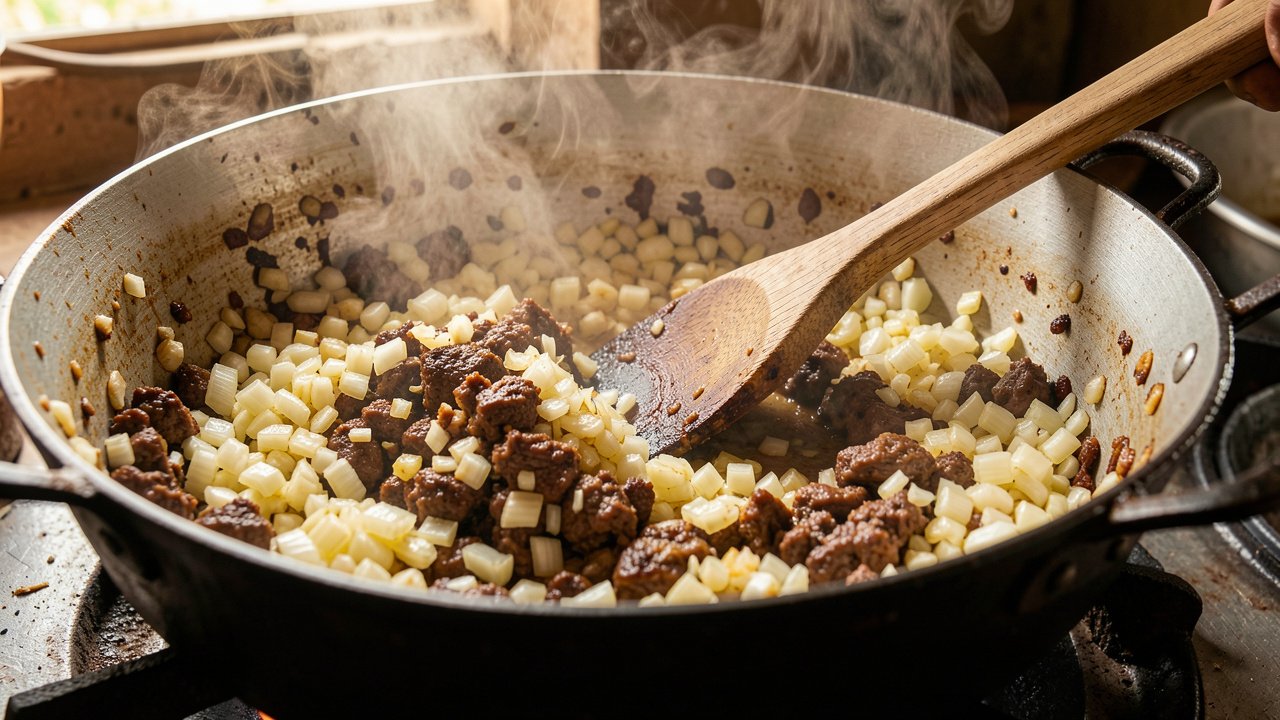
Lower the heat to medium and add the chopped onions to the same pot. Cook 6 to 7 minutes until soft and golden, scraping up the browned bits from the meat. Stir in the minced garlic and green chili and cook 1 minute more until fragrant.
Add Tomatoes and Spices
Stir in the tomato paste and cook 1 minute, then add the chopped tomatoes and the full spice blend of cumin, coriander, cardamom, cinnamon, cloves, and xawaash. Cook 8 to 10 minutes, stirring often, until the tomatoes collapse into a thick, jammy base and the oil glistens at the edges.
Simmer the Meat Tender
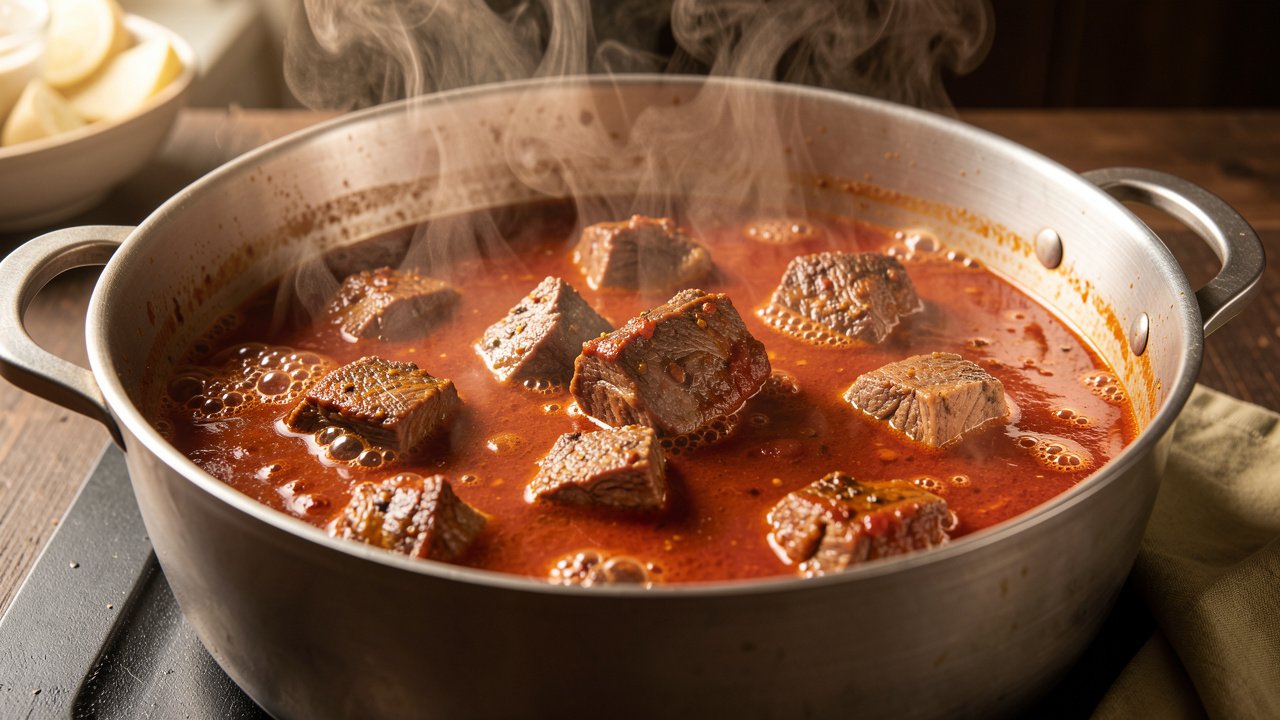
Return the browned meat and any resting juices to the pot. Pour in the water or broth, add the salt, and bring to a boil. Cover, lower the heat, and simmer gently for 30 to 40 minutes for lamb or beef, until the meat is fork-tender. Chicken needs only about 20 minutes.
Cook the Rice in the Broth
Drain the soaked basmati and stir it into the pot, making sure it is submerged in the broth. The liquid should sit just above the rice; add a splash of hot water if needed to reach that level. Bring back to a boil, then cover tightly and lower the heat to its gentlest setting.
Steam, Rest, and Serve
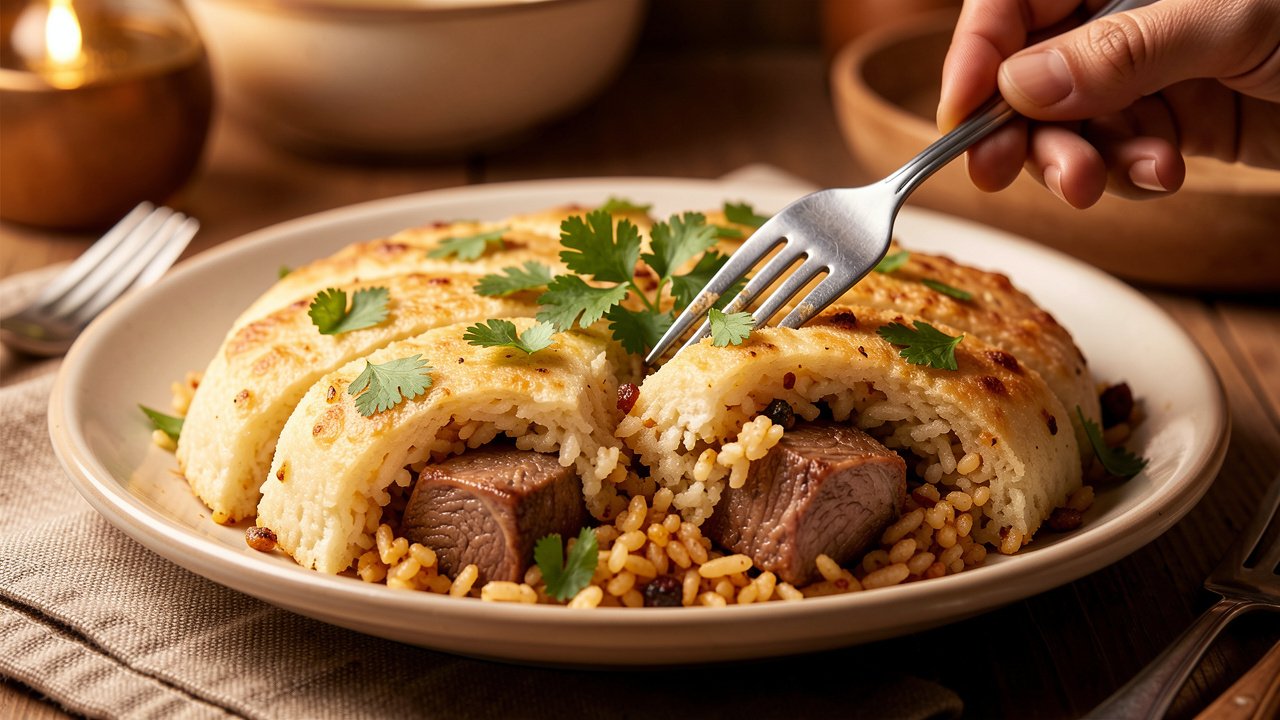
Cook covered without stirring for 15 to 18 minutes, until the rice has absorbed the broth and is tender. Turn off the heat and let it rest, still covered, for 10 minutes so the grains firm up and separate. Fluff gently with a fork, scatter the fresh cilantro over the top, and serve hot.
Chef’s Tips From Real Kitchen Testing
Trust the rice-to-broth ratio. Two cups of basmati to three cups of liquid gives fluffy grains; too much broth turns the pot mushy, too little leaves it undercooked.
Do not lift the lid while the rice steams. Every peek lets out steam the grains need, and stirring makes them gummy. Set a timer and leave it alone.
Rest before you fluff. Ten minutes off the heat lets the grains firm up so they separate cleanly instead of clumping when you stir.
Recipe Variations
Serving Suggestions
- A simple salad of tomato, onion, and lime
- Warm flatbread or Djiboutian sabaayad
- A spoonful of fresh cilantro and green chili relish
- Lime wedges and a mild yogurt on the side
Nutrition Facts
| Nutrient | Amount per serving |
|---|---|
| Calories | 520 |
| Protein | 28 g |
| Carbohydrates | 52 g |
| Fat | 21 g |
| Saturated Fat | 8 g |
| Fiber | 3 g |
| Sugar | 5 g |
| Sodium | 640 mg |
Values are estimates per serving and vary with the exact cut of meat and brands you use.
Make-Ahead Tips
The meat-and-tomato base is ideal for making ahead, since the flavors deepen overnight in the fridge. Cook the base through the simmering step, cool, and refrigerate. When you are ready to eat, bring it back to a boil, then add the soaked rice and fresh liquid and finish the steaming steps. Cooking the rice fresh keeps the grains from turning heavy on reheating.
Storage, Freezing & Reheating
Common Mistakes to Avoid
Troubleshooting
Rice came out mushy? There was too much liquid, or the pot was stirred while steaming. Next time reduce the broth slightly and leave the lid on.
Rice still hard in the middle? It needed a touch more liquid or a few more minutes of gentle steam. Add a splash of hot water, cover, and cook a little longer.
Meat still chewy? It simply needs more time. Add a little water and keep simmering gently until it turns fork-tender before the rice goes in.
Food-safety note: Cook lamb and beef cubes until fork-tender and no longer pink inside, to an internal temperature of at least 145F with a rest, and chicken to 165F. When reheating leftovers, heat all the way through to steaming hot.
A Note on Djiboutian Cooking
Djibouti sits at the mouth of the Red Sea, a crossroads of the ancient spice trade between the Horn of Africa, the Arabian Peninsula, and South Asia. That history lives in its kitchens, where cardamom, cinnamon, cloves, cumin, and coriander season everyday food. Many cooks reach for xawaash, a warm regional blend that pulls those spices together and turns up in stews, soups, and rice dishes alike.
Skoudehkaris is the dish that best captures this heritage. It is humble enough for a weeknight yet generous enough to anchor a festive table during Eid, weddings, and family gatherings, when a big pot feeds a crowd. If you enjoy spiced tomato-based comfort food, browse more ideas in our collection of tomato recipes, or try the cozy hearty tomato lentil soup for another warming, spice-forward bowl.
Frequently Asked Questions
More Tomato Recipes to Try
Last updated: September 29, 2026