Moldovan Recipes
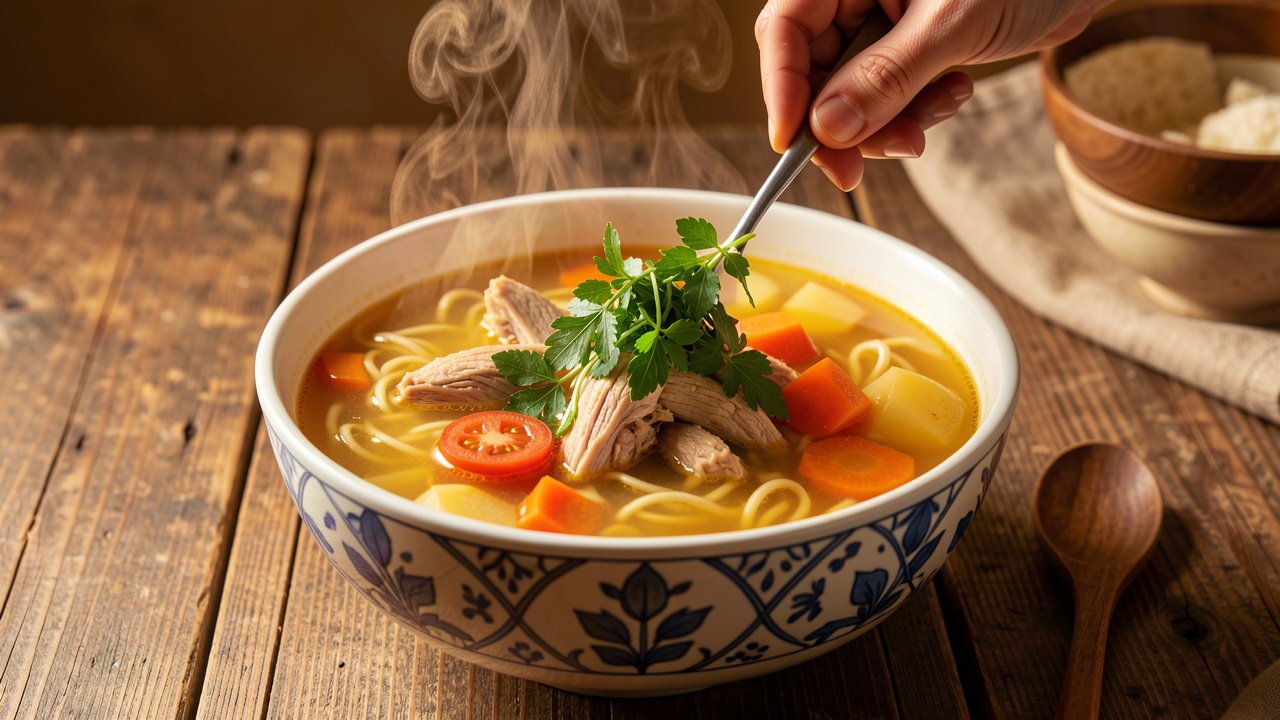
Sour Chicken Noodle Soup With Tomato
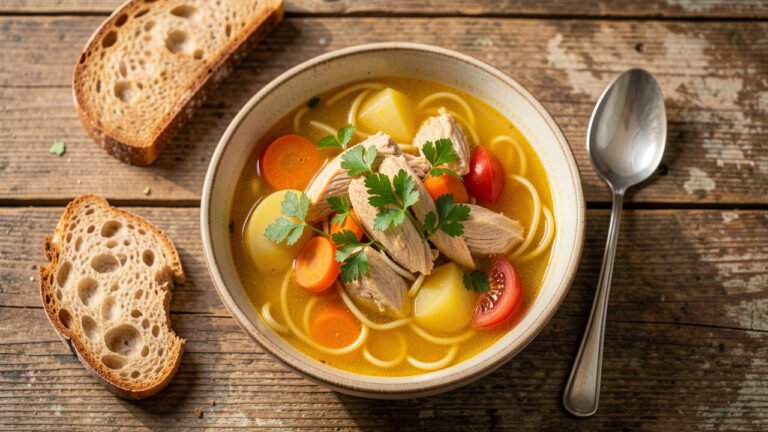
Zeama is the soup Moldovan families reach for when someone is under the weather, when the day has been long, or when a cold morning calls for something bright and restorative. It is a clear, sour chicken noodle soup, lighter than the creamy soups many of us grew up with, and its magic is in the tang. That sourness traditionally comes from bors, a gently fermented wheat bran liquid, though a good squeeze of lemon juice or a splash of sauerkraut brine gets you very close.
The first time I made zeama I stirred the bors in while the pot was at a hard boil, and the broth turned cloudy and a little bitter. Add the sour element off a rolling boil and it stays clean, golden, and lively. Finished with a generous handful of lovage, it is the kind of bowl that tastes like it has simmered all day even when it comes together in a little over an hour.
Why This Zeama Works
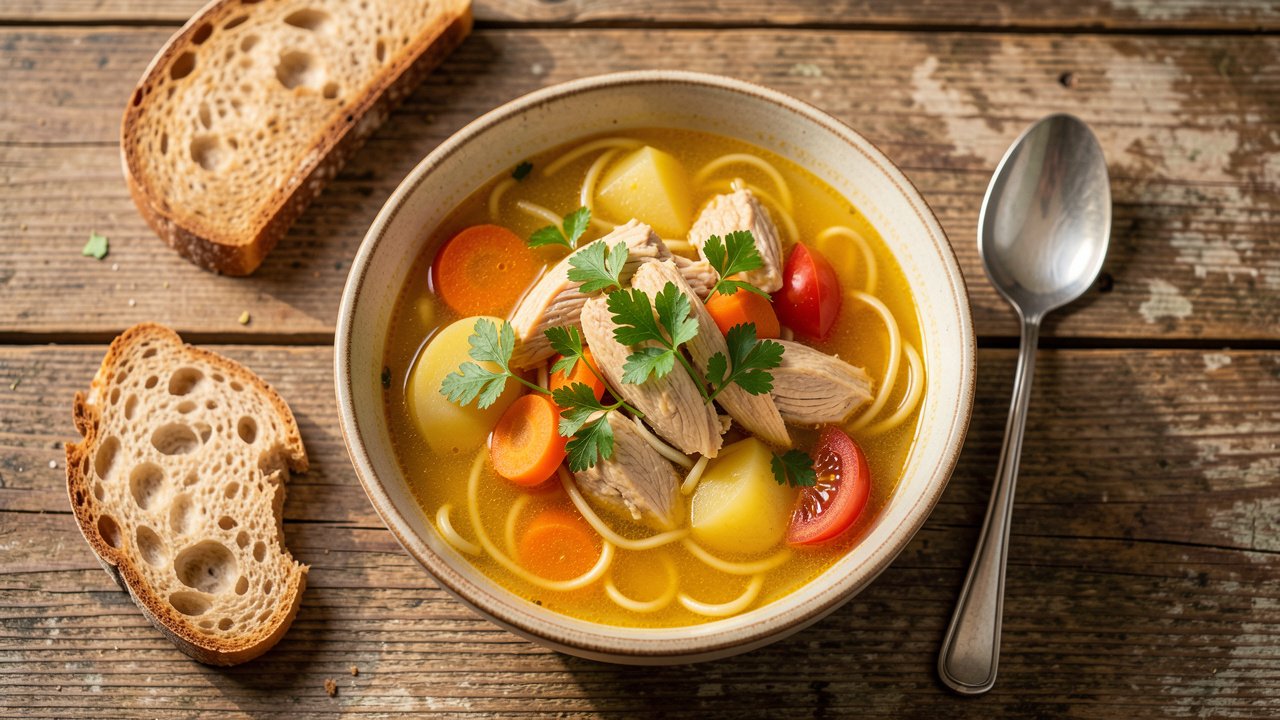
Zeama succeeds because it keeps the broth light and lets three clear notes come through: savory halal chicken, sweet root vegetables, and a bright, clean sourness. There is no roux, no cream, and no heavy fat, so every spoonful tastes fresh. The tomato adds gentle body and color without turning it into a thick stew.
The most important move is how you handle the sour element. Bors, lemon juice, or sauerkraut brine should go in near the end, off a hard boil, so the acidity brightens the broth instead of turning it bitter and murky. Treat the souring as a finishing step, not a cooking one, and the soup stays golden and clear.
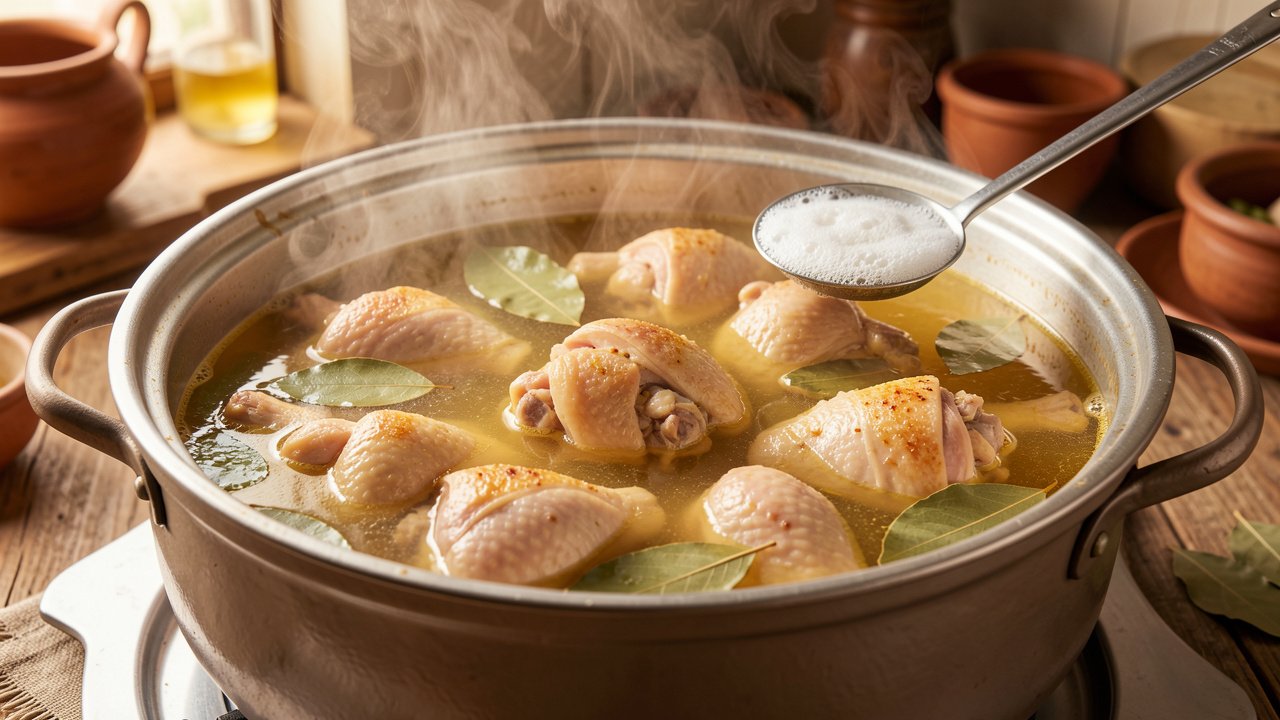
Cooking the chicken on the bone is the other quiet secret. Bone-in pieces give the broth real depth and a silky body that boneless meat cannot match. You simmer gently, skim the foam, and you are rewarded with a broth that tastes like it took all day.
Finally, the lovage is not a garnish you can skip. Known as leustean in Moldova, it has a bold celery-and-parsley aroma that defines the dish. Stirred in at the last moment, it lifts everything and makes the soup taste distinctly Moldovan rather than like a generic chicken noodle soup.
Pro observation: Taste the broth before you add any sour element, then add it a little at a time. Bors and sauerkraut brine vary a lot in strength, so building the tang gradually keeps you in control of the final balance.
Ingredients
Kitchen Measurement Converter
Quickly convert between common cooking measurements without leaving the recipe. Pick a category, enter a value, and the result updates instantly.
Ingredient Notes & Substitutions
Halal Chicken
Bone-in halal chicken pieces, such as thighs and drumsticks, give the richest broth. A halal chicken quarter or a small whole halal bird cut up works beautifully too. Skim the foam as it simmers for a clean, golden pot.
Bors and Souring
Bors, a fermented wheat bran liquid, is the traditional sour note and it is halal. No bors on hand? Use fresh lemon juice or a splash of sauerkraut brine, both halal, added to taste at the end.
Tomato
Ripe fresh tomatoes give the broth a gentle body and warm color. Out of season, one 14-ounce can of chopped tomatoes is more reliable. A spoon of tomato paste also deepens the color nicely.
Lovage and Noodles
Fresh lovage, or leustean, is the signature herb; flat-leaf parsley is the everyday stand-in. For noodles, thin homemade egg noodles are classic, but any short dried egg noodle or vermicelli works well.
Equipment
- Large soup pot or stockpot
- Ladle and slotted spoon
- Sharp knife and board
- Fine skimmer for foam
- Measuring cups and spoons
- Instant-read thermometer
Before You Start
1. Have the sour element ready but separate. Keep the bors, lemon juice, or sauerkraut brine off to the side so you can add it at the very end, off a hard boil, and taste as you go.
2. Cut vegetables in even pieces. Dice the carrot, pepper, potato, and tomato to a similar size so they cook evenly and the soup looks tidy in the bowl.
3. Cook noodles with care. If you want leftovers, consider boiling the noodles separately, because noodles left in the broth keep absorbing liquid and turn soft.
Step-by-Step Instructions
Prep the Chicken and Vegetables
Rinse the halal chicken pieces and pat them dry. Peel and dice the carrots, potatoes, and onion, dice the bell pepper and celery, and chop the tomatoes. Keep the potatoes in a bowl of cold water until needed so they do not brown.
Simmer the Chicken Broth
Put the chicken pieces in a large pot with the water, the bay leaves, half the salt, and the pepper. Bring to a gentle boil, then lower the heat so it barely bubbles. Skim off any foam that rises for the first ten minutes, then let it simmer gently for about 25 minutes until the chicken is tender.
Add the Vegetables and Tomato
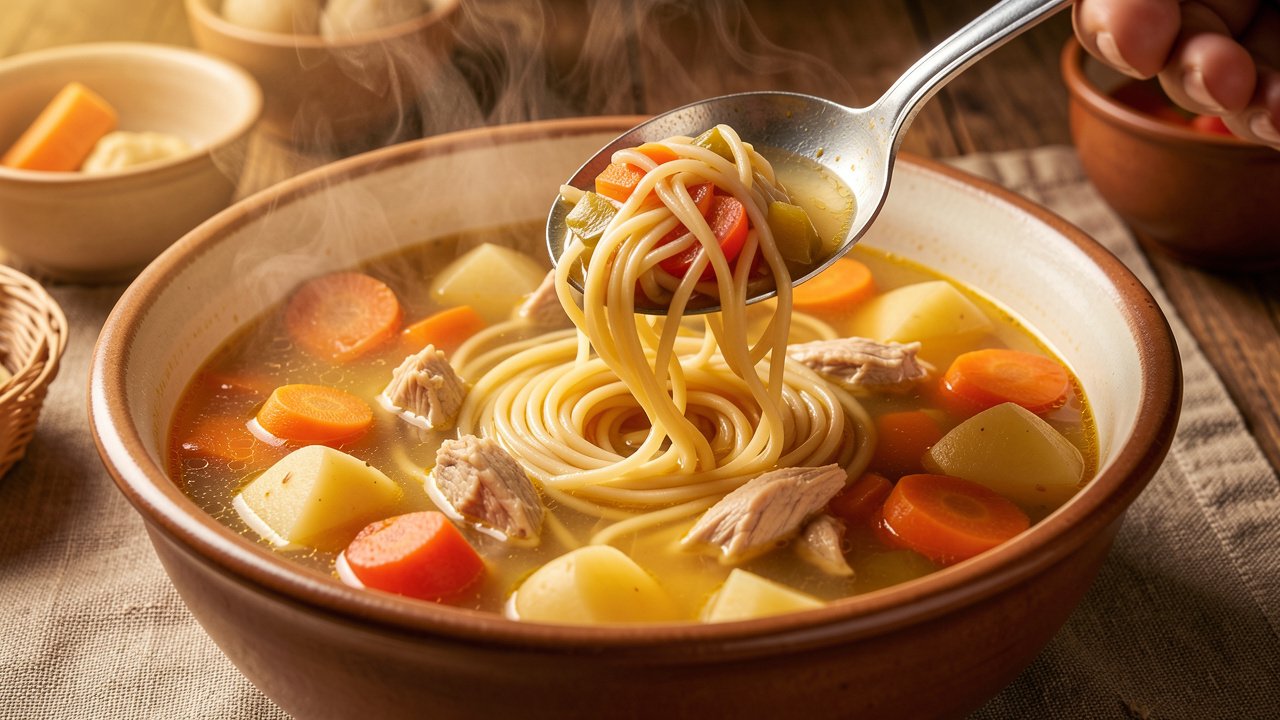
Meanwhile, warm the sunflower oil in a small pan and soften the onion, carrot, celery, and bell pepper for 5 minutes. Lift the cooked chicken out, add the softened vegetables, the potatoes, and the tomatoes to the broth, and simmer 12 to 15 minutes until the potatoes are tender. Meanwhile, remove the chicken from the bones and return the meat to the pot.
Add the Noodles
Stir the noodles into the simmering soup and cook just until tender, usually 4 to 6 minutes depending on their thickness. Stir gently so they do not clump. Keep the heat at a steady simmer rather than a hard boil so the broth stays clear.
Sour the Soup With Bors
Take the pot off a hard boil and lower the heat. Warm the bors in a separate small pan, then stir it into the soup a little at a time, tasting as you go. If using lemon juice or sauerkraut brine instead, add it the same careful way. Add the rest of the salt to taste. The broth should taste bright and tangy but not sharp.
Finish With Lovage and Serve
Check that the chicken is fully cooked to a safe internal temperature of 165F (74C) with an instant-read thermometer. Stir in most of the chopped lovage and let the soup rest off the heat for 2 minutes. Ladle into bowls, scatter the remaining lovage on top, and serve hot with rustic bread.
Chef’s Tips From Real Kitchen Testing
Add the sour element off a rolling boil. Stirring bors, lemon juice, or brine into a hard-boiling pot turns the broth cloudy and can leave it tasting bitter. Lower the heat first.
Do not overcook the noodles. Pull the soup off the heat the moment they turn tender, since they keep softening in the hot broth and can go mushy fast.
Be generous with the lovage. A timid pinch disappears; a real handful stirred in at the end is what gives zeama its signature aroma.
Recipe Variations
Serving Suggestions
- Crusty rustic bread or a soft Moldovan roll
- A spoonful of soured cream stirred in, if you like
- Sliced fresh chili or hot pepper on the side
- Extra fresh lovage and a wedge of lemon
Nutrition Facts
| Nutrient | Amount per serving |
|---|---|
| Calories | 250 |
| Protein | 21 g |
| Carbohydrates | 24 g |
| Fat | 7 g |
| Saturated Fat | 2 g |
| Fiber | 3 g |
| Sugar | 5 g |
| Sodium | 780 mg |
Values are estimates per serving and vary with the exact ingredients and brands you use.
Make-Ahead Tips
Zeama is a friendly make-ahead soup as long as you keep the noodles separate. Cook the broth with the chicken and vegetables a day in advance, cool, and refrigerate. When you are ready to eat, reheat gently, add freshly cooked noodles, sour the pot with bors or lemon, and finish with fresh lovage. This way the noodles stay firm and the tang stays bright.
Storage, Freezing & Reheating
Common Mistakes to Avoid
Troubleshooting
Broth turned cloudy? It was likely soured while boiling too hard, or the foam was not skimmed. Next time lower the heat before souring and skim early. It is still tasty even when a little cloudy.
Not sour enough? Add more bors, lemon juice, or sauerkraut brine a spoon at a time, off the boil, tasting until the tang is where you want it.
Too sour? Loosen the pot with a ladle of hot water or extra broth, and a pinch of salt helps round out the sharpness.
A Note on Moldovan Cooking
Moldovan home cooking loves bright, sour flavors, and zeama is its clearest expression. The word zeama simply means broth or juice, and in Moldova and neighboring Romania it names this tangy chicken noodle soup. The sourness traditionally comes from bors, a fermented wheat bran liquid so central to the region that the same word lends its name to soured soups across Eastern Europe. It is entirely halal, made only from grain and water left to ferment.
The other pillar is lovage, or leustean, a tall, celery-scented herb grown in nearly every village garden. Its aroma is so tied to this soup that many cooks say a zeama without leustean is not really zeama at all. Families keep it comforting and light on purpose, and it has a well-earned reputation as a restorative bowl, the soup you make for someone recovering or for a slow, cozy morning. If you like tangy, spiced bowls, our creamy Indian tomato soup shares the same warming spirit, and you can browse more ideas in our full collection of tomato recipes.
Frequently Asked Questions
More Tomato Recipes to Try
Last updated: September 29, 2026