Lamb Main Dishes
Juicy Seared Chops, Sweet-Tart Chutney
Last updated: September 29, 2026
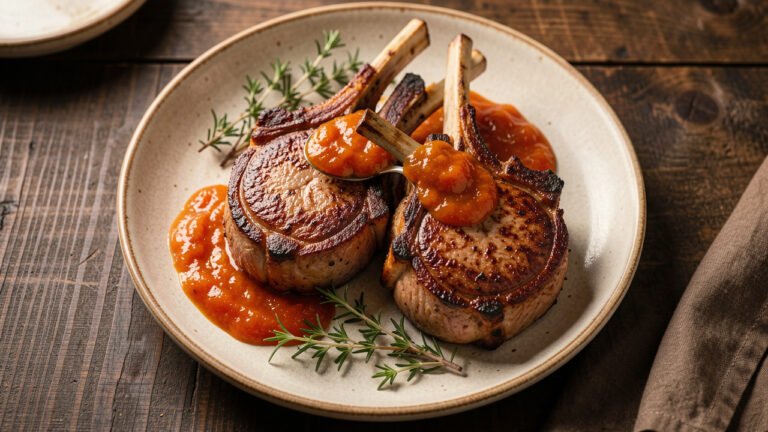
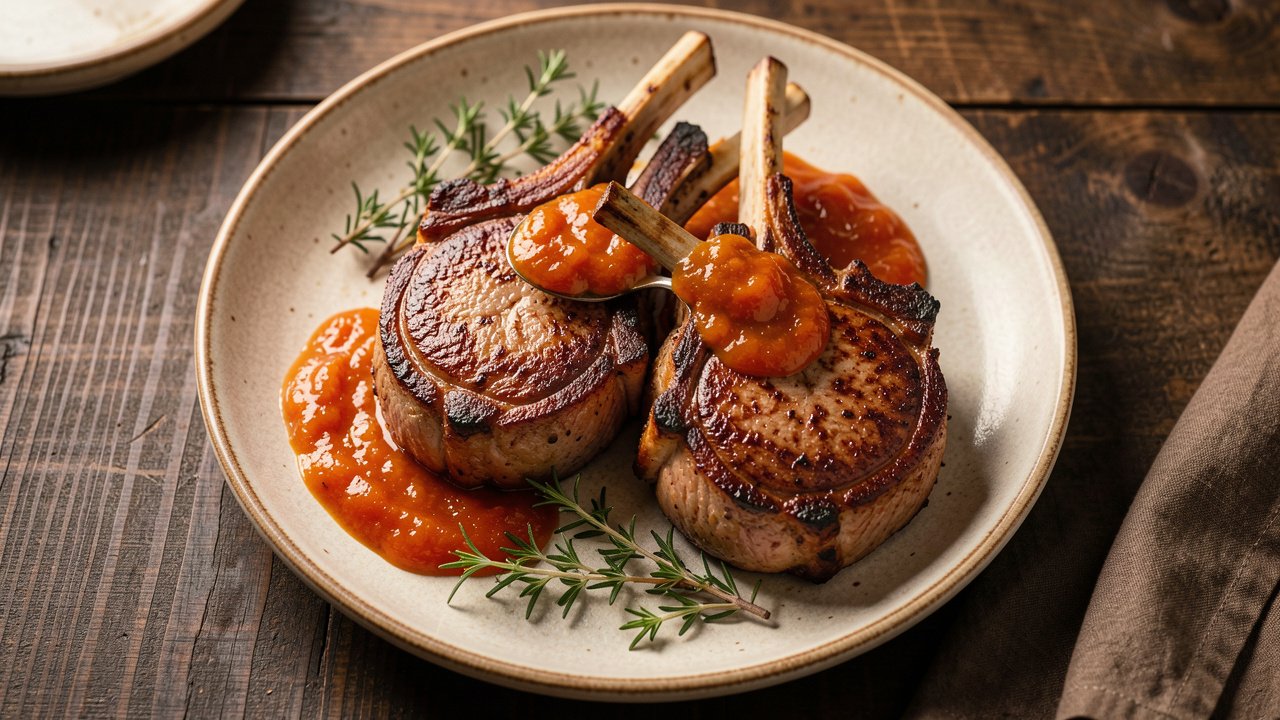
Most people who say they dislike lamb chops have only ever eaten overcooked ones. Cook a thick loin chop to a rosy medium at 140F instead of pushing it grey at 160F and you get something completely different: rosy pink in the center, tender, and worth the plate it sits on.
Why This Lamb Chop Recipe Works
The whole dish rests on one number: 140F. Lamb loin chops are lean and tender, and they are at their best cooked to a rosy medium, which means pulling them off the heat around 135F for a 3-minute rest. That restraint is the difference between a chop people push around the plate and one they finish.
At 140F the center is rosy pink and the juices run clear with a blush of color. That is not undercooked. That is lamb cooked to medium, tender and full of flavor. Cooking loin chops until they are grey all the way through is a habit borrowed from tougher stewing cuts, and it is precisely why so many people believe they dislike lamb. They have only ever eaten loin chops at 160F and above, where the muscle fibers have squeezed out their moisture and left grey, chalky meat with a strong livery edge.
Ground lamb is the exception, and it matters. Grinding takes bacteria that lived only on the surface and distributes it throughout, so ground lamb still needs 160F. Whole-muscle cuts like loin chops, leg, and rack do not.
The chutney is the other half of the argument. Lamb is rich, and richness needs contrast. Dried apricots bring concentrated sweetness and real tartness, tomato brings acidity and body, and vinegar sharpens both. Cooked down until it mounds on a spoon, it lands between a relish and a jam and cuts the fat instead of sitting politely beside it.
Buy an instant-read thermometer. It costs less than the lamb it will save and removes every guess from this recipe. Poking a chop, timing it by the clock, or cutting into it are all worse, and the last one ruins the chop you are checking.
Ingredients
Kitchen Measurement Converter
Quickly convert between common cooking measurements without leaving the recipe. Pick a category, enter a value, and the result updates instantly.
Ingredient Notes & Substitutions
The Lamb Chops
Buy loin chops 1 to 1.5 inches thick. Thin chops go from raw to overdone in the time it takes to build a crust. A thick chop gives you a wide margin, and bone-in is better still: the bone insulates the meat next to it and that area stays noticeably juicier.
Dried Apricots
Plump them in hot water or vinegar first so they soften into the chutney instead of staying leathery. Sulfur-free apricots taste fine but turn brown. Fresh apricots work in season with less sugar and liquid.
Tomatoes
Ripe fresh tomatoes give the best flavor, about a pound chopped. Out of season, one 14-ounce can of diced tomatoes drained of its thinnest liquid is more reliable, since pale winter tomatoes just add water.
Vinegar and Sugar
Apple cider vinegar suits apricot better than harsh white vinegar. Brown sugar adds molasses depth; honey works but scorches faster. Taste near the end, because apricot sweetness varies a lot from bag to bag.
Equipment
- Instant-read thermometer
- Heavy skillet or cast iron
- Medium saucepan
- Tongs
- Sharp knife and board
- Wire rack or warm plate
Before You Start
1. Dry brine the chops. Salt them on both sides and leave them uncovered on a rack in the fridge for at least 45 minutes, ideally 4 hours. The salt draws out moisture, dissolves into it, and gets pulled back in, seasoning the meat through and helping it hold water during cooking. It also dries the surface for a better crust.
2. Make the chutney first. It needs a slow reduction and tastes better with 10 minutes to settle.
3. Let the chops lose their chill. Twenty minutes on the counter helps the center come up to temperature before the outside overcooks.
4. Pat them bone dry. Surface moisture has to boil off before browning starts. A wet chop steams and turns grey; a dry one sears.
Step-by-Step Instructions
Salt the Chops and Plump the Apricots
Season the chops generously with salt on both sides and set them on a rack in the fridge, uncovered. While they sit, cover the chopped dried apricots with the vinegar and hot water for 20 minutes until they soften and swell. They should feel plump and yielding when pressed, not springy.
Cook Down the Chutney
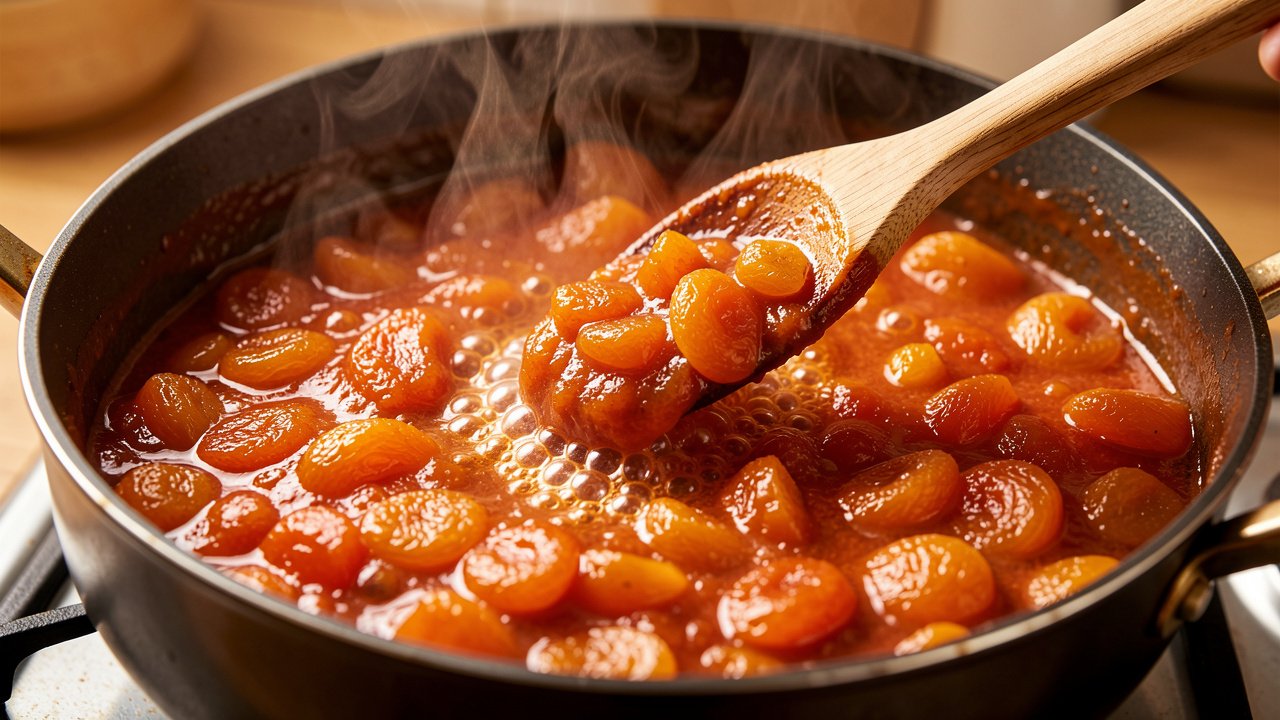
Soften the onion in a saucepan over medium heat for 5 minutes, then add the ginger, mustard seed, cinnamon, and chili flakes and stir 30 seconds until they smell warm and toasty. Add the tomatoes, the drained apricots with their vinegar, and the brown sugar. Simmer uncovered on low for 20 to 25 minutes, stirring now and then.
You are looking for one cue: drag a spoon through it and the trail should hold for a second before closing. Spooned onto a cold plate it should mound, not spread into a puddle. Taste and add a splash more vinegar if it leans sugary.
Dry and Temper the Chops
Take the chops out 20 minutes before cooking. Blot every face hard with paper towels, including the fat cap and edges. The surface should look matte and feel tacky, not slick.
Sear Hard
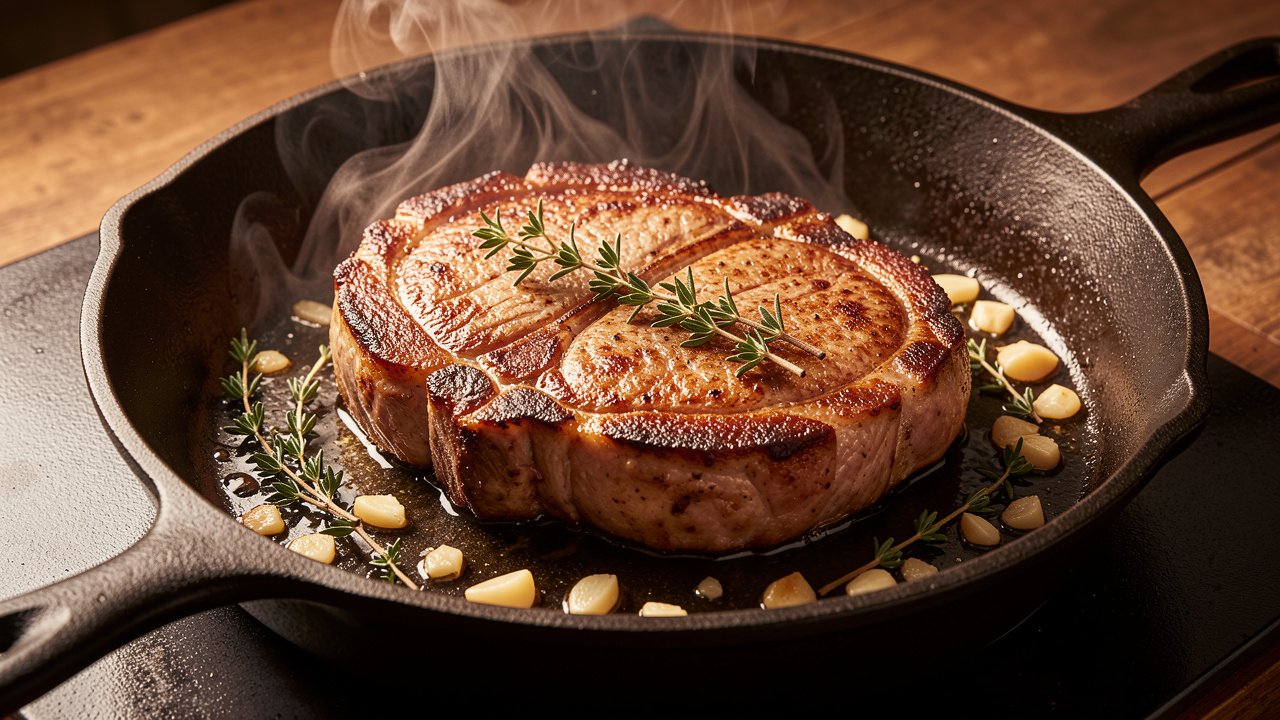
Heat a heavy skillet over medium-high until a drop of water skitters and vanishes. Add the oil, wait until it shimmers and just begins to wisp smoke, then lay the chops down away from you. Leave them alone for 3 to 4 minutes. They should sizzle loudly and steadily; if the pan goes quiet, it is too cool and you are stewing them.
Flip once when the underside releases easily and shows a deep brown crust. Sear the second side 3 minutes, then stand each chop on its fat edge for 30 seconds to render it.
Finish to 135F, Not 140F
For thicker chops, slide the whole skillet into a 375F oven for 5 to 8 minutes to bring the center up gently without burning the crust. Push the thermometer into the thickest part from the side, aiming for the center and staying clear of the bone, which reads hotter than the meat.
Pull the chops at 135F. They will coast up roughly 5 degrees while they rest, landing exactly on 140F for a rosy medium. If you wait until the thermometer says 140F in the pan, you will end up at 145F on the plate and lose the pink.
Rest 3 Minutes, Then Serve
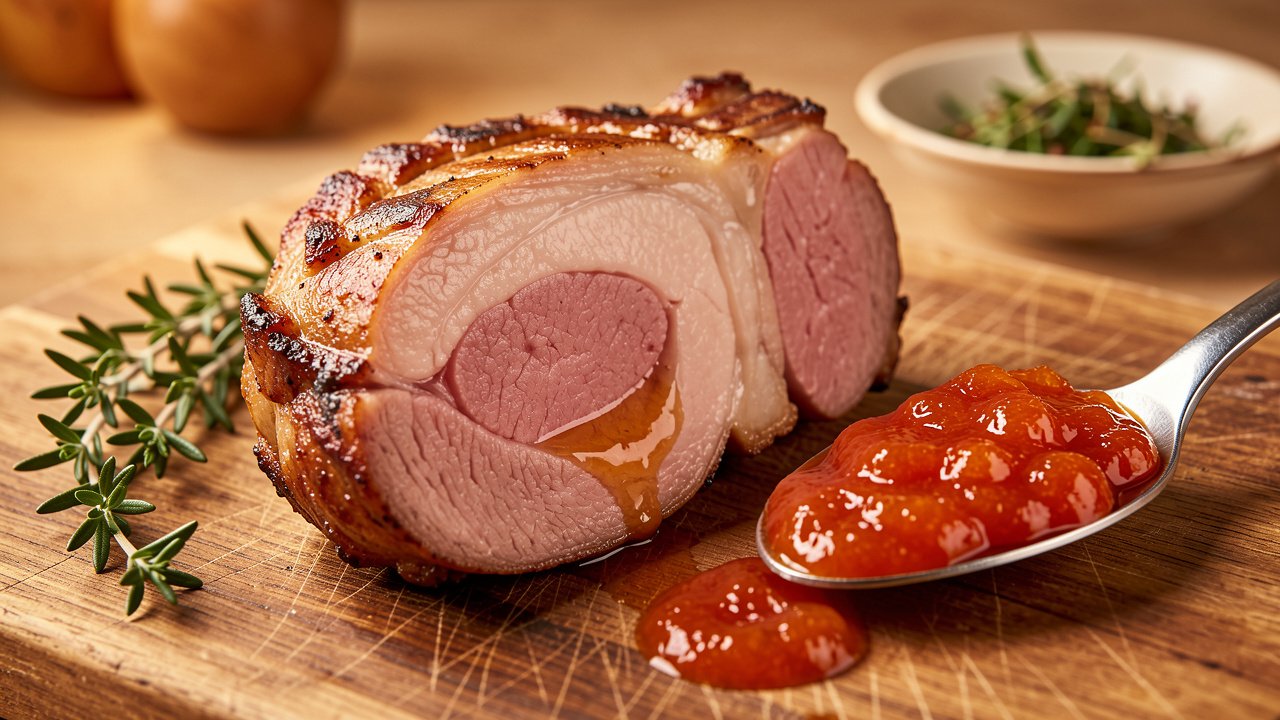
Move the chops to a warm plate and leave them at least 3 minutes. The rest is not decoration; it is when carryover finishes the job and the juices redistribute instead of flooding the board. Cut in and you should see a rosy pink blush at the center. That is the goal, not a warning sign. Spoon the warm chutney over each chop, scatter thyme, and serve.
Chef’s Tips From Real Kitchen Testing
For chops over 1.25 inches, reverse sear instead. Bake at 250F until the center hits 115F, then sear 90 seconds a side in a screaming hot pan. The gentle start cooks the interior evenly, so you get almost no grey band under the crust and land on a rosy medium.
Calibrate your thermometer in ice water; it should read 32F. A probe off by 8 degrees is worse than useless when the whole method depends on one number.
Cook the chops in two batches if they do not fit with an inch of space between them. Crowding drops the pan temperature and traps steam, and steam is the enemy of the crust you dry brined for.
Recipe Variations
Serving Suggestions
- Creamy polenta or mashed potato to catch the chutney
- Roasted brussels sprouts or green beans with lemon
- A sharp green salad with mustard vinaigrette
- Crusty bread for the last of the chutney
Nutrition Facts
Values are estimates for one chop with chutney and vary with the size of your chops and how much salt the dry brine takes up.
Make-Ahead Tips
The chutney is the make-ahead component, and it improves after a day or two as the vinegar and apricot settle into each other. Cook it up to a week early, cool it fully, and refrigerate it in a clean jar.
The dry brine can also run ahead. Salted chops hold uncovered in the fridge for up to 8 hours, and the drier surface gives a better crust. Do not push past a day, since the texture turns slightly dense and over-cured.
Storage, Freezing & Reheating
Common Mistakes to Avoid
Troubleshooting
Chop is dry despite the thermometer? Check the probe in ice water. If it reads 32F, the chop was likely too thin, or you probed the bone and cooked past your target.
No crust, just grey? The surface was wet or the pan was not hot enough. Both make water boil off instead of letting the meat brown.
Chutney too sweet or watery? Add vinegar a teaspoon at a time off the heat, or keep simmering uncovered. The mounding test tells you when it is done.
Center still pink and you are nervous? Trust the thermometer over the color. A rosy pink center at 140F with a 3-minute rest is exactly medium, and color alone is a famously unreliable doneness indicator for lamb.
Where Chutney and Lamb Come From
Chutney arrived in British kitchens from India and was rebuilt around whatever fruit was on hand, which is how apricot and tomato versions became fixtures beside roasted and grilled meats. The logic never changed: fruit, vinegar, sugar, and spice cooked down until sharp and sweet at once, made to sit next to something rich. Lamb, with its deep flavor and generous fat, is a natural match for exactly that kind of sweet-tart relish.
If you like this kind of sweet-tart tomato cooking, our fresh tomato salsa and no-sugar fresh tomato sauce work the same balance from different directions. For putting up tomatoes properly, see our guide to canning crushed tomatoes.