Hungarian Recipes
Hungarian Pepper and Tomato Stew
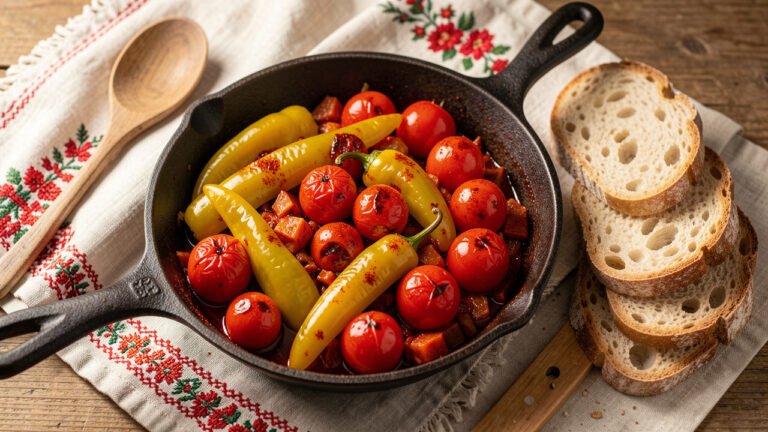
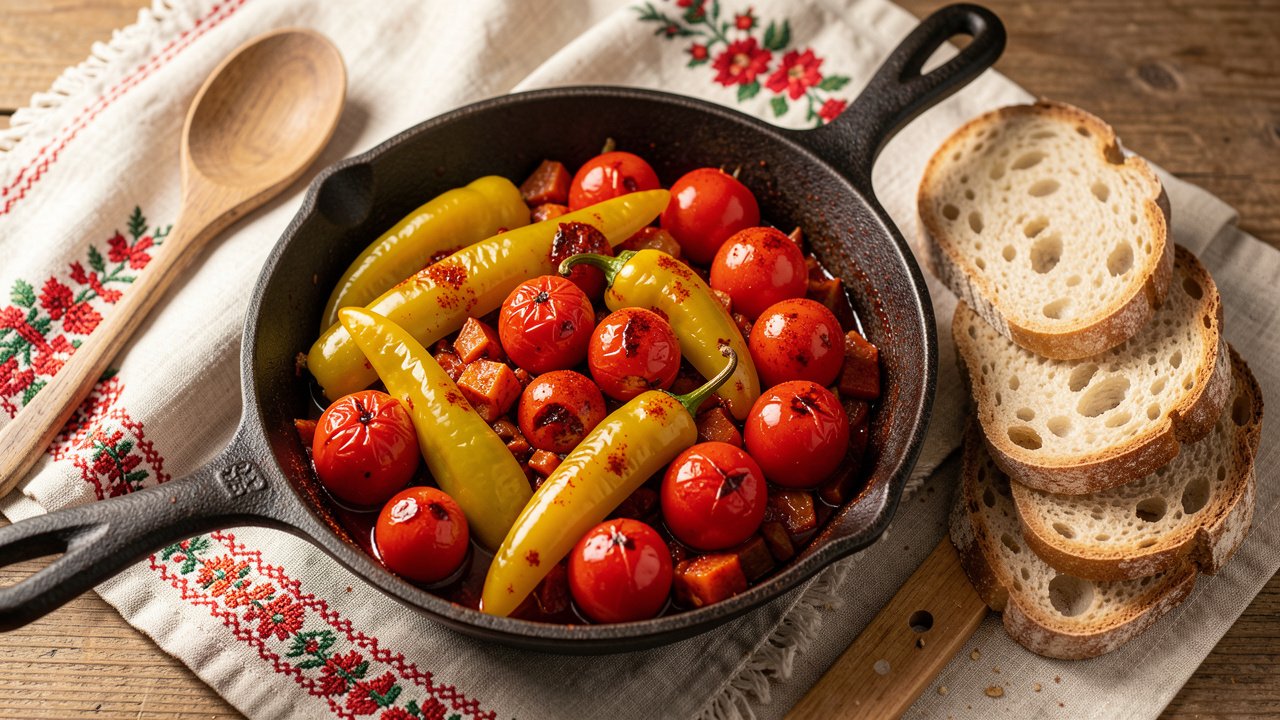
Lecso is what Hungarian kitchens make when the market stalls are piled with peppers and the tomatoes are almost too ripe to carry home. Two vegetables, an onion, oil, salt, and paprika do all the work.
The first time I cooked it I threw the paprika into a screaming hot pan and the batch turned bitter in seconds. Paprika is mostly sugar and burns faster than you expect, which is why Hungarian cooks pull the pan off the heat first.
Why This Lecso Recipe Works
Peppers and tomatoes carry plenty of their own liquid, so once they are in the pan with oil and salt they essentially stew themselves. No stock, no thickener. You are only managing heat and time.
The onion goes in first and cooks until genuinely soft and sweet, not just translucent. That sweetness is the backbone of the dish; skimp on it and the stew tastes sharp and thin.
Then the step that defines the recipe: the paprika goes in off the heat. Pulling the pan aside for fifteen seconds, stirring the paprika into the warm oil, and only then returning it to the burner gives a glossy red-orange base with no scorched edge.
Order matters after that too. Peppers soften more slowly than tomatoes, so they get a head start; add everything at once and the peppers boil rather than stew.
Pro observation: Lecso is ready when a spoon dragged across the pan leaves a channel that fills back slowly and red-orange oil pools at the edges. If liquid rushes back at once, keep cooking uncovered.
Ingredients
Kitchen Measurement Converter
Hungarian recipes are usually written in grams, so this converter is handy if you shop by the pound. Pick a category, enter a value, and the result updates instantly.
Ingredient Notes & Substitutions
Hungarian Wax Peppers
The pale yellow-green, thin-walled peppers sold as Hungarian wax, banana, or TV peppers. Sweet with only a whisper of heat, they melt as they cook. Italian frying peppers or Cubanelles are the closest match.
Tomatoes
Ripe, soft, deeply red summer tomatoes are ideal, and slightly overripe ones break down faster still. Out of season, use one 14-ounce can of chopped tomatoes, partly drained, rather than pale winter fruit.
Sweet Hungarian Paprika
Buy the freshest you can find and store it away from heat and light, since old paprika loses color and aroma. Edesnemes, the standard sweet grade, is what you want; smoked Spanish paprika will not give you lecso.
Oil
Neutral sunflower oil is the everyday choice in Hungary, though olive oil works. Be generous: the oil carries the paprika, and a stingy pan gives a dull stew instead of a glossy one.
Equipment
- Wide heavy pan or Dutch oven
- Wooden spoon
- Sharp knife and board
- Measuring spoons
- Small bowl for paprika
- Lid for the pan
Before You Start
1. Measure the paprika into a small bowl. The off-heat step takes seconds, and fumbling with a jar while the pan cools is how paprika goes in too hot.
2. Slice the peppers into rings, not dice. Rings about half an inch wide hold their shape and give lecso its familiar look.
3. Decide on your finish now. If you are adding eggs, have them beaten and ready, because they go in at the last minute.
Step-by-Step Instructions
Prep the Vegetables
Halve and thinly slice the onions. Top and seed the wax peppers and cut them into half-inch rings. Core and roughly chop the tomatoes; no need to peel, since the skins soften completely. Slice the garlic and measure the paprika into a small bowl by the stove.
Soften the Onions
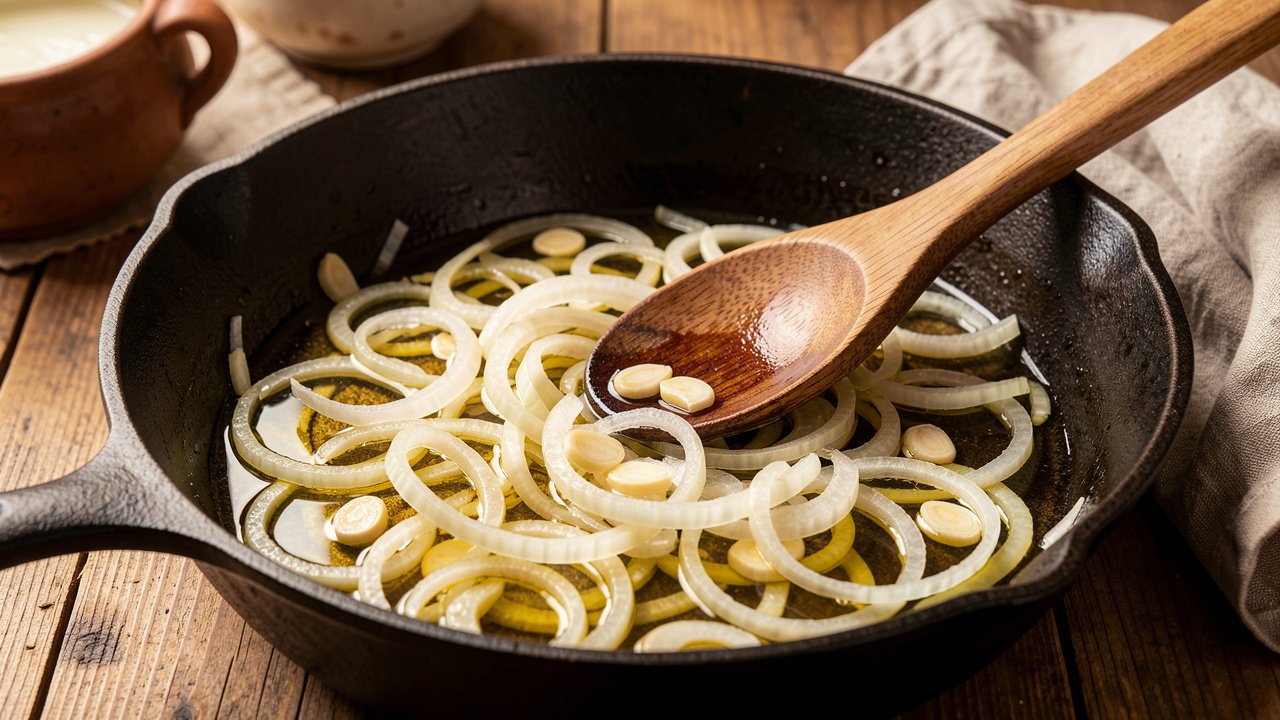
Warm 3 tablespoons of oil in a wide heavy pan over medium-low heat. Add the onions with a pinch of the salt and cook 10 to 12 minutes until limp and sweet. Do not rush this with high heat: browned onion pulls the stew away from the clean sweetness lecso should have. Add the garlic in the last minute.
Stir in the Paprika Off the Heat
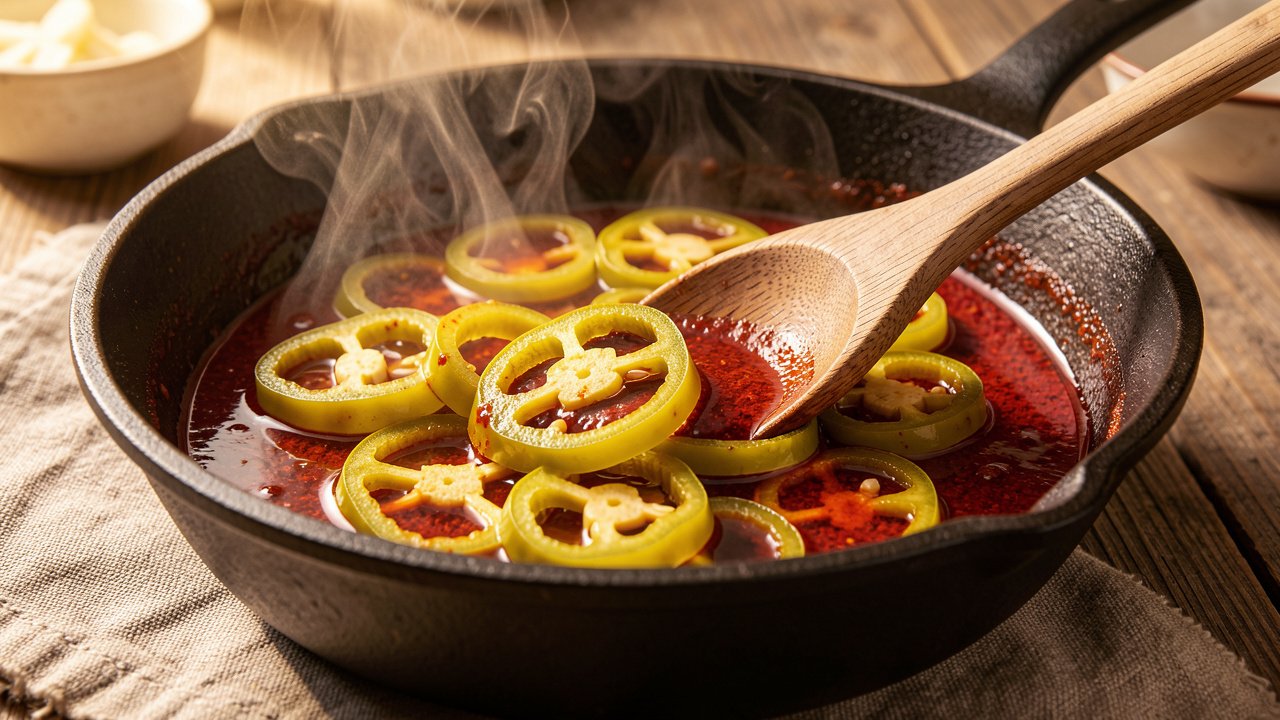
Take the pan off the burner and let it stand about 15 seconds so the oil stops shimmering. Tip in the sweet paprika, and the hot paprika if using, and stir hard for 10 to 15 seconds. The oil should turn deep glossy red-orange and smell sweet, never acrid. Return the pan to medium-low heat.
Add the Peppers
Add the pepper rings and the rest of the salt and stir until every piece is slicked in red oil. Cover and cook 10 minutes over medium-low heat, stirring twice, until the peppers slump and release their juice. If the pan looks dry, add another spoon of oil rather than water.
Stew with the Tomatoes
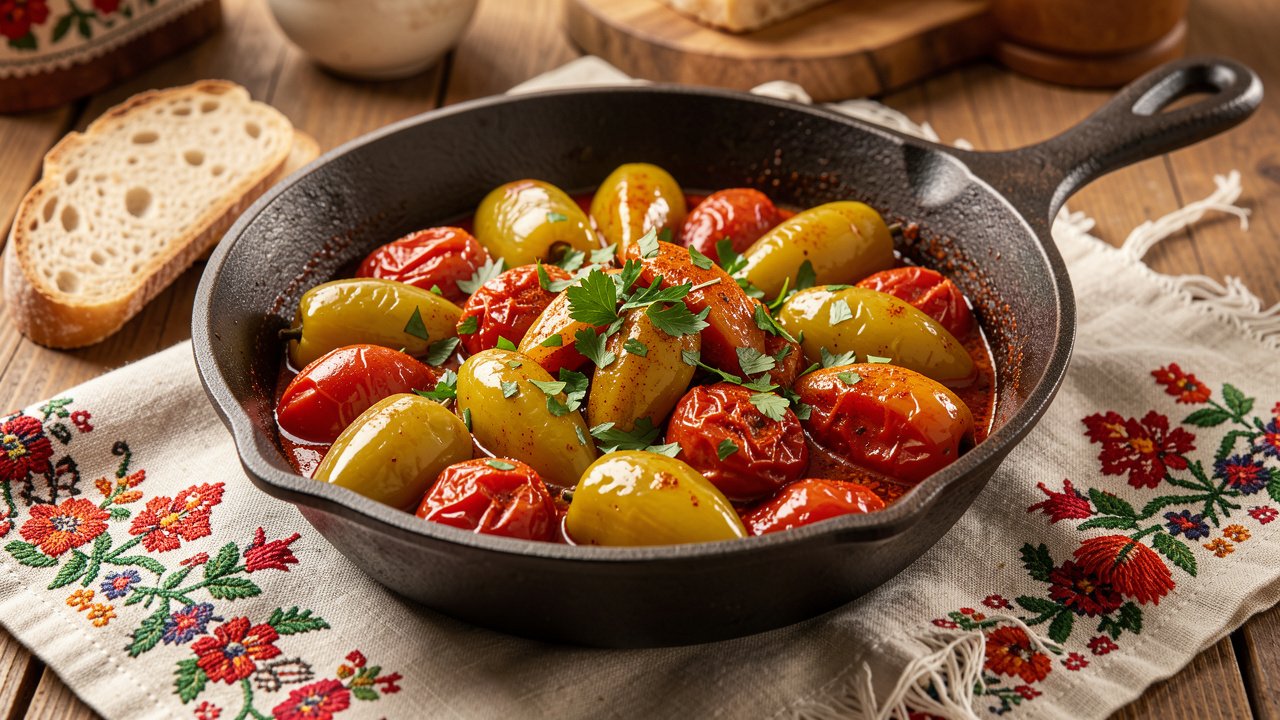
Add the tomatoes, sugar, and black pepper. Bring to a lazy bubble, cover, and cook 10 minutes. Uncover and cook 10 to 15 minutes more, until the tomatoes collapse, the peppers are tender, and the mixture is thick and jammy with red oil around the rim. The uncovered stretch drives off the excess liquid, so keep the lid off even if it looks soupy.
Rest, Season, and Serve
Taste and adjust with more salt, a pinch more sugar if the tomatoes were sharp, or extra hot paprika. Let the lecso sit off the heat, uncovered, for 10 minutes so the flavors settle and the oil rises. Scatter with parsley and serve warm or at room temperature with crusty bread.
Chef’s Tips From Real Kitchen Testing
Pull the pan off the burner before the paprika goes in, every single time. Fifteen seconds of cooling is the difference between sweet and bitter.
Never add water. The vegetables release plenty of liquid, and anything you add has to be cooked back out, dulling the flavor.
Cook it a few hours ahead. Reheated later in the day it is richer and more settled, which makes it a good dish for guests.
Recipe Variations
Serving Suggestions
- Thick slices of crusty white or rye bread
- Boiled or buttered new potatoes
- Plain rice or wide egg noodles
- A spoon of thick yogurt or sour cream
Nutrition Facts
| Nutrient | Amount per serving |
|---|---|
| Calories | 180 |
| Protein | 4 g |
| Carbohydrates | 18 g |
| Fat | 11 g |
| Saturated Fat | 1.5 g |
| Fiber | 5 g |
| Sugar | 11 g |
| Sodium | 640 mg |
Values are estimates per serving and vary with the exact ingredients and brands you use.
Make-Ahead Tips
Lecso genuinely improves with a rest. Cook it in the morning and reheat gently at dinner: the paprika oil works through every ring of pepper and the tomato sweetness reads deeper. Made a full day ahead it is better still. Hold back the parsley until serving.
Storage, Freezing & Reheating
Common Mistakes to Avoid
Troubleshooting
Tastes bitter? The paprika caught the heat. To salvage the batch, stir in extra sugar and more chopped tomato to dilute it, and cool the pan first next time.
Too watery? Take the lid off and simmer another 8 to 10 minutes. Do not thicken with flour, which makes lecso pasty; reduction is the only correct answer.
Peppers still firm after 25 minutes? Probably a thick-walled variety. Cover, drop the heat low, and give them another 10 to 15 minutes.
Too sharp? The tomatoes were underripe. A teaspoon of sugar and a pinch more salt rounds it out.
Color dull rather than red? Your paprika is old. It loses pigment within a year of opening, so buy small tins.
A Note on Hungarian Cooking
Paprika arrived in Hungary in the sixteenth century and took two hundred years to move from a botanical curiosity to the ingredient that defines the national kitchen. By the nineteenth century Szeged and Kalocsa were milling it at scale, and stirring it into fat away from direct heat had become standard practice. Every Hungarian stew, from goulash to paprikash, starts the same way.
The peppers are just as specific. The pale, thin-skinned variety Hungarians call TV paprika, sold elsewhere as wax or banana peppers, is grown for exactly this cooking. It is sweet, barely hot, and collapses into silk after twenty minutes in a pan.
Lecso is also a preserving dish. In August, when peppers and tomatoes cost almost nothing, families cook enormous pots and put it up in jars or freezer bags for winter. For more ideas, browse our collection of tomato recipes.
Frequently Asked Questions
More Tomato Recipes to Try
Last updated: September 29, 2026