Greek Recipes
Greek Vegetarian Braise
Last updated: September 29, 2026
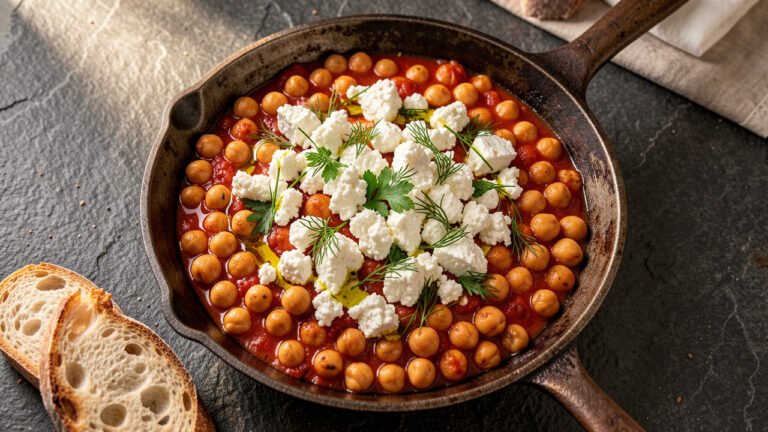
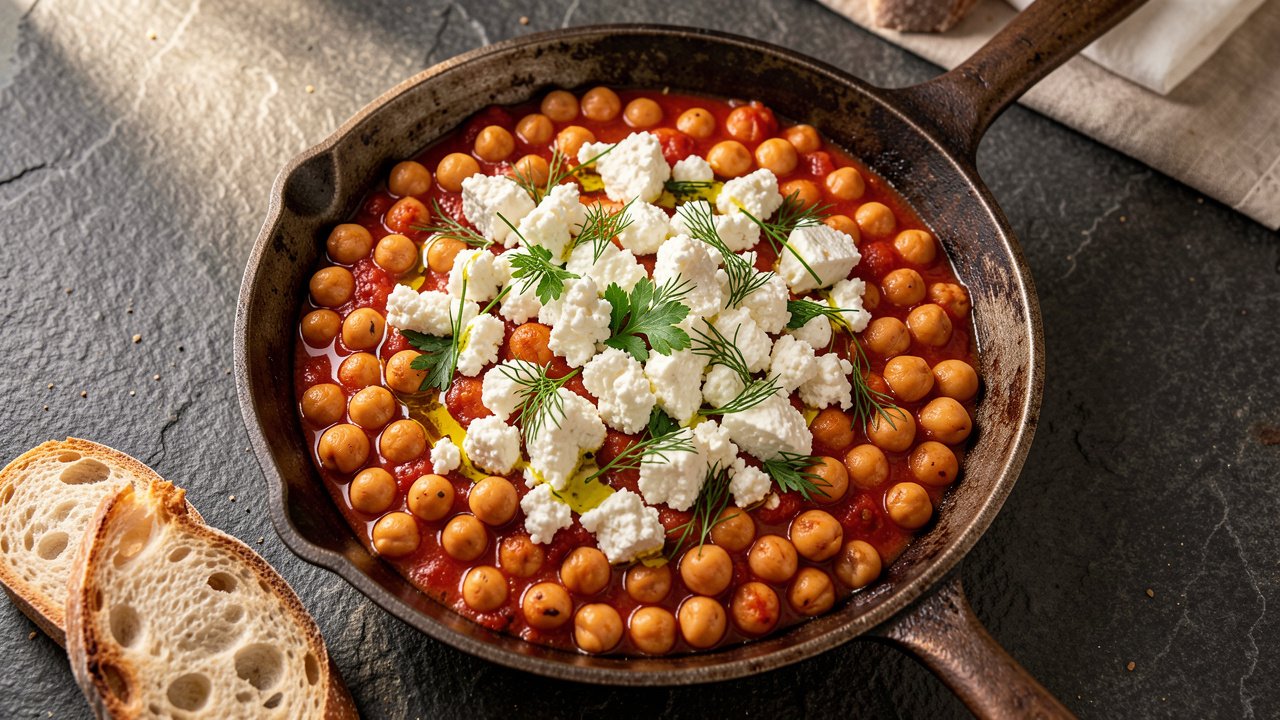
This is the kind of dinner that tastes like it took all day but comes together in one pan. The vegetable broth and a splash of white wine vinegar cook down into the tomato and give it a savory backbone, while a slow simmer turns humble canned chickpeas soft and almost creamy. Feta goes on last so it stays milky instead of melting into nothing.
Why This Chickpea Braise Works
Greek home cooking leans on a short list of good ingredients treated with patience, and this dish is a clear example. Chickpeas, tomatoes, garlic, broth, and feta are all pantry-friendly, yet together they build layers of flavor that feel far more involved than the effort suggests.
The vegetable broth and white wine vinegar are doing quiet but important work. When you deglaze the pan and let the broth bubble down, its sharp edge mellows and leaves behind a savory, slightly tangy depth that plain tomato sauce never reaches. Skip this and the sauce tastes flat and one-note.
A gentle, unhurried simmer is what turns firm chickpeas creamy. As they sit in the warm sauce, they soak up the tomato and broth and soften at the center, so each bite is tender rather than chalky. The sauce reduces alongside them and clings to every chickpea.
Feta is the finishing move, and timing matters. Crumbled over the top at the end and warmed only briefly, it stays soft and milky, adding salty, tangy pockets against the sweet tomato. Stir it in early and it melts away; add it late and it keeps its character.
Pro observation: The sauce is ready when a spoon dragged across the pan leaves a trail that fills in slowly. That thickness means the broth and tomato have reduced enough to coat the chickpeas instead of pooling around them.
Ingredients
Kitchen Measurement Converter
Quickly convert between common cooking measurements without leaving the recipe. Pick a category, enter a value, and the result updates instantly.
Ingredient Notes & Substitutions
Chickpeas
Two cans of chickpeas keep this fast, and their canning liquid is fine to add for body. If you cook dried chickpeas, use about three cups cooked and save some of the cooking water for the sauce.
Broth and Vinegar
Vegetable broth plus a splash of white wine vinegar brings savory depth and bright acidity to the tomato. Use a light, low-salt broth so you can season to taste, and add the vinegar off the heat for a fresher tang.
Feta
Buy a block of Greek feta in brine, not pre-crumbled, which is drier and less creamy. Crumble it by hand into rough chunks so you get soft, salty pockets rather than an even melt.
Tomatoes
Canned whole or crushed tomatoes give the most reliable sauce year-round. If using fresh, choose very ripe ones and cook them a few minutes longer so they break down fully.
Equipment
- Wide, heavy skillet or braiser
- Wooden spoon
- Sharp knife and board
- Can opener and colander
- Measuring cups and spoons
- Oven mitt (if you broil)
Before You Start
1. Drain and rinse the chickpeas. Give them a quick rinse in a colander so the sauce tastes clean, though you can keep a little of the liquid to loosen things later.
2. Have the broth and vinegar measured and ready. Deglazing happens fast, so pour the broth before you start softening the onion and garlic.
3. Decide stovetop or broiler. If you want a lightly browned feta top, position an oven rack near the broiler now and use an ovenproof pan.
Step-by-Step Instructions
Soften the Onion and Garlic
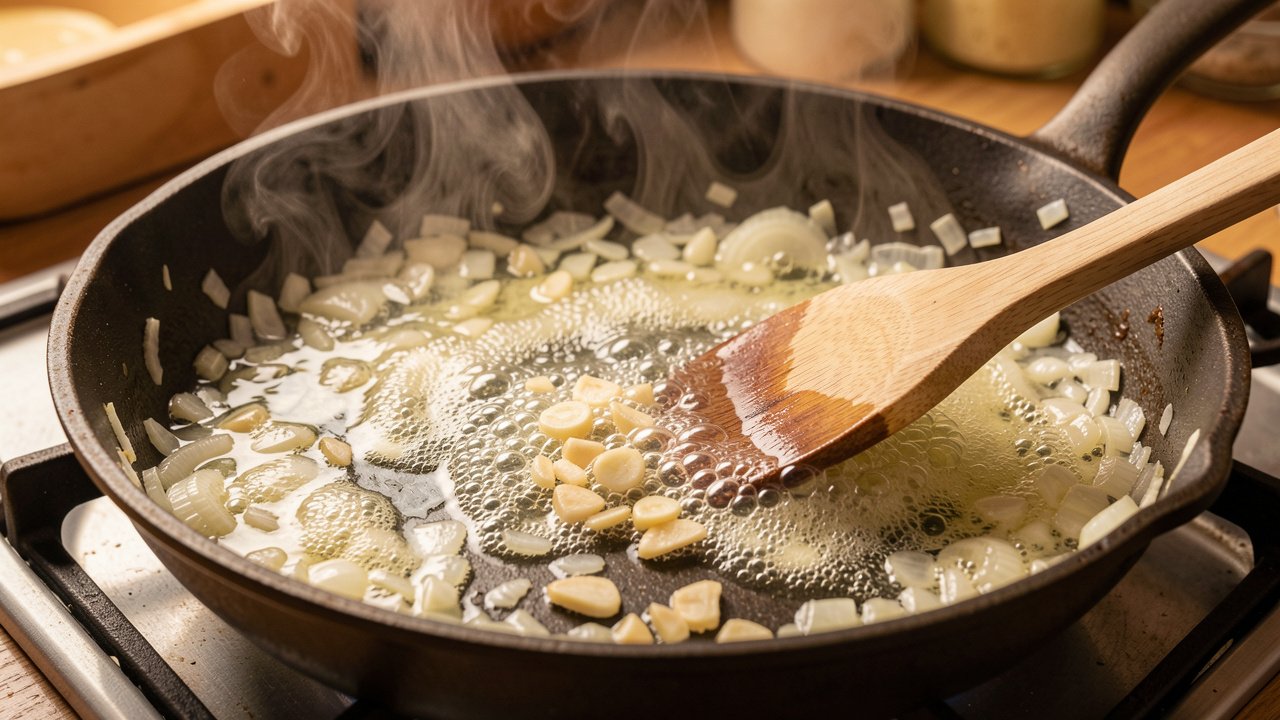
Warm a generous three tablespoons of olive oil in a wide skillet over medium heat. Add the chopped onion and cook 5 to 6 minutes until soft and translucent. Stir in the sliced garlic and cook 1 minute more, just until fragrant, watching so it does not brown and turn bitter.
Deglaze with the Broth
Pour in the vegetable broth and white wine vinegar and scrape the bottom of the pan with your spoon to lift any browned bits. Let it bubble and reduce by about half, 3 to 4 minutes, until the sharp smell mellows and what is left smells savory and rounded. This step builds the deep base flavor.
Build the Tomato Sauce
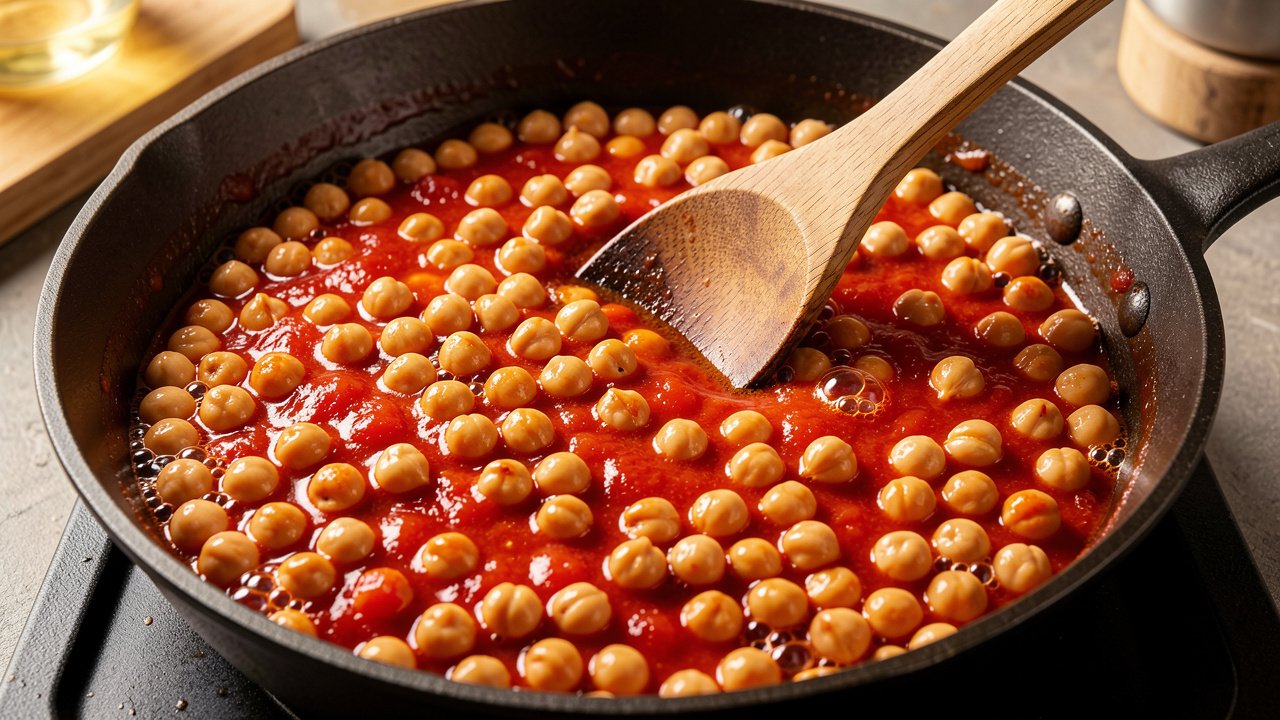
Add the crushed tomatoes, dried oregano, a pinch of red pepper flakes, and a good pinch of salt. Stir well and bring to a low simmer. Cook 5 minutes so the tomato loses its raw, tinny taste and starts to thicken slightly around the edges of the pan.
Add the Chickpeas and Simmer
Tip in the drained chickpeas and stir to coat them in the sauce. Lower the heat to keep a gentle, lazy simmer and cook 15 to 18 minutes, stirring now and then. The sauce should thicken and the chickpeas turn soft and creamy. If it gets too tight, loosen with a splash of water.
Crumble the Feta on Top
Turn off or lower the heat, then crumble the feta over the surface in rough chunks. For a soft, milky finish, cover the pan for 2 minutes to warm the cheese through. For lightly browned edges, slide the pan under a hot broiler for 3 to 4 minutes until the feta just colors.
Finish with Herbs and Serve
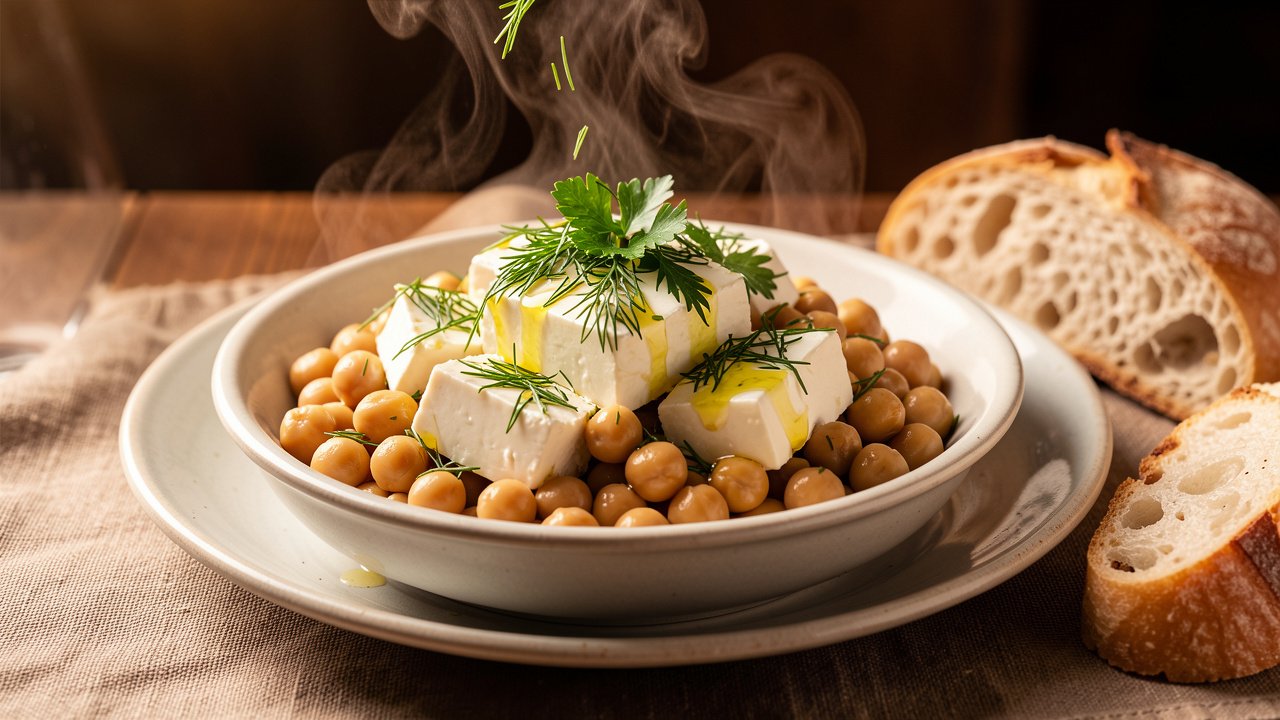
Scatter chopped fresh dill and parsley over the top and finish with a drizzle of your best olive oil. Taste and add a squeeze of lemon or a little more salt if it needs lift. Serve warm straight from the pan with plenty of crusty bread for scooping up the sauce.
Chef’s Tips From Real Kitchen Testing
Do not rush the broth reduction. Letting it cook down until the raw smell is gone is what separates a savory braise from a watery, thin sauce.
Use generous olive oil and add a final raw drizzle at the table. It rounds out the acidity and gives the dish that glossy, restaurant-style finish.
Lightly mash a few chickpeas against the side of the pan near the end. Their starch thickens the sauce naturally and makes it cling better.
Recipe Variations
Serving Suggestions
- Warm crusty bread or toasted pita for scooping
- Fluffy rice or orzo to soak up the sauce
- A simple Greek salad with cucumber and olives
- Lemon wedges and extra chopped dill
Nutrition Facts
Values are estimates per serving without bread, and vary with the feta and broth you use.
Make-Ahead Tips
The chickpea and tomato base is a great make-ahead dish, since the flavors settle and deepen overnight in the fridge. Cook it through the simmer, cool, and refrigerate without the feta. When you are ready to eat, reheat gently, loosen with a splash of water, then add fresh feta and herbs just before serving so they stay bright.
Storage, Freezing & Reheating
Common Mistakes to Avoid
Troubleshooting
Sauce tastes sharp or acidic? A small pinch of sugar or an extra drizzle of olive oil softens the tomato’s edge.
Sauce too thin? Simmer a few minutes longer uncovered, or mash a spoonful of chickpeas into it to thicken.
Too salty? Feta and canned tomatoes both bring salt, so add water and a squeeze of lemon rather than more seasoning.
A Note on Greek Chickpea Cooking
Chickpeas, or revithia, are a cornerstone of Greek and wider Mediterranean cooking, often braised slowly with olive oil, tomato, and herbs into humble but satisfying meals. Feta and a splash of bright vinegar are natural partners in that tradition. If you love these flavors, our guide to tomatoes in the Mediterranean diet and our hearty tomato lentil soup follow the same warm, thrifty spirit, and the tomato and artichoke salad with capers makes a bright side.