Bosnian Recipes
Layered Slow-Baked Meat and Vegetable Pot
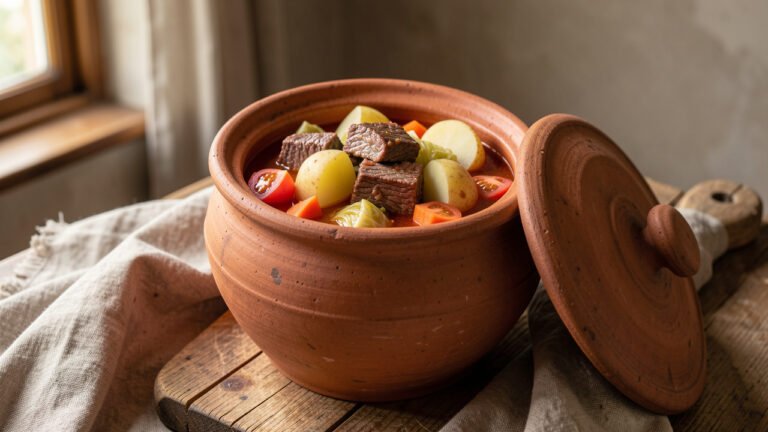
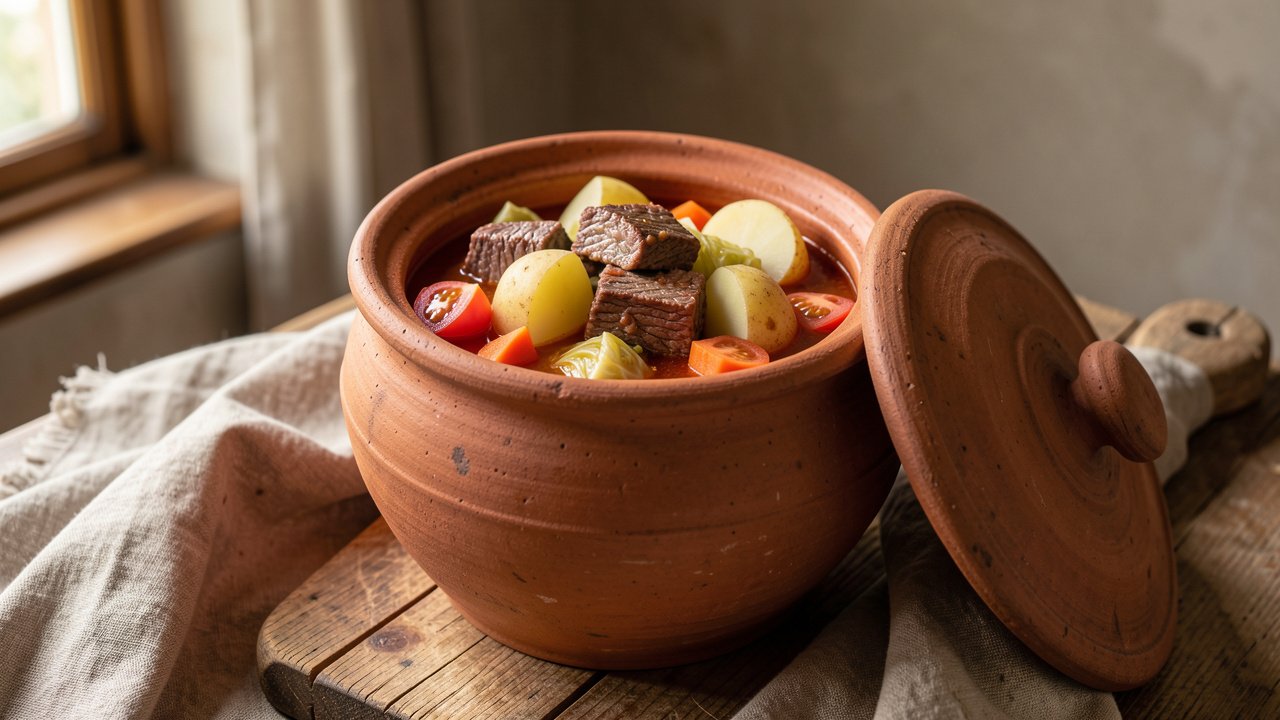
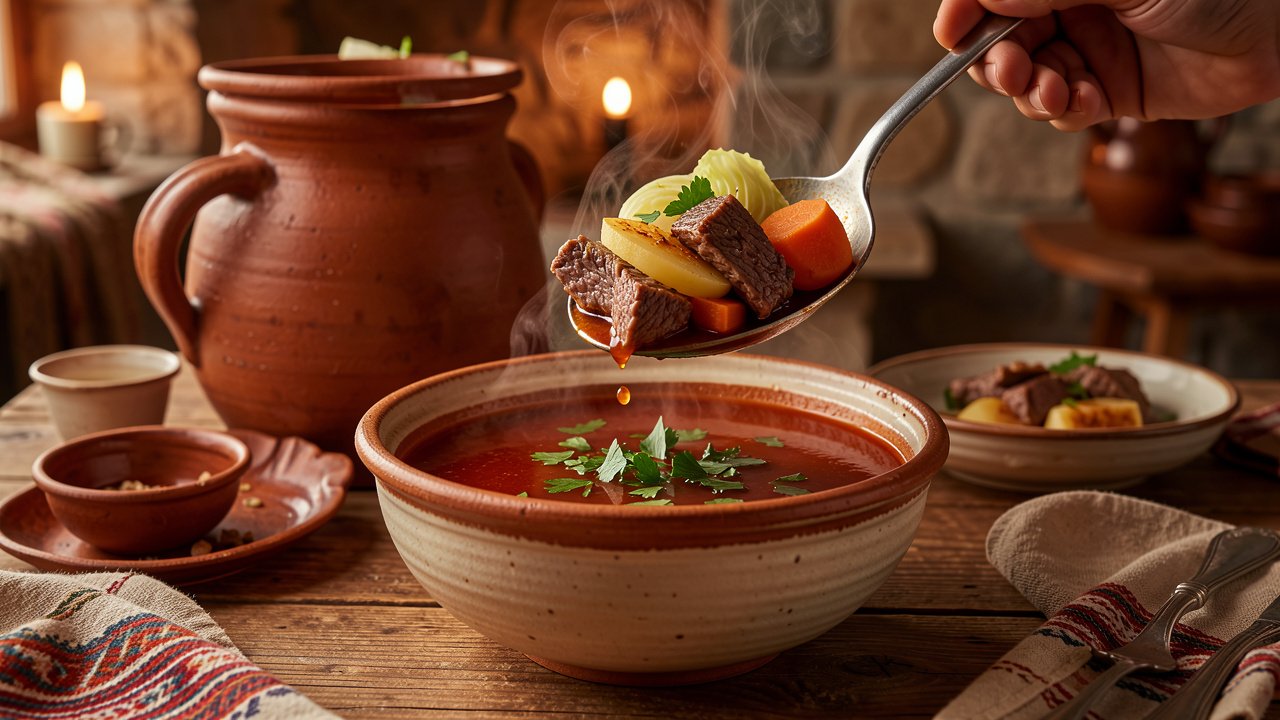
The first time I made bosanski lonac I did the one thing you must not do: I lifted the lid at two hours and stirred. What came out was tasty but formless. The second time I left it alone, and the difference was obvious. Distinct cabbage wedges, whole potato halves, and meat that slumped apart under a spoon, in a deep red-brown broth the pot had made itself.
Why This Bosanski Lonac Works
Most stews start with browning and end with stirring. This one does neither. Packed tightly and sealed, the vegetables release their own water: the cabbage weeps, the tomatoes break down, the onions turn to syrup, and all of it drips through the layers, basting the meat for hours. The result is a broth nobody made on purpose.
The tall shape matters. A wide pan lets steam escape, so the vegetables boil rather than braise; a narrow pot keeps the layers stacked and concentrates juices where the meat sits. Cutting big is the other rule: potatoes halved, carrots in fat chunks, cabbage in wedges with some core attached, onions quartered, garlic whole. Anything that looks neat at the start will vanish over three hours.
Tomato ties it together. Quartered fresh tomatoes melt into the top layers and drip acidity down the pot, while tomato paste in the stock gives the broth its color. Without it the dish tastes heavy; with it, the halal beef or lamb tastes cleaner and the cabbage loses any hint of sulfur.
Pro observation: Add far less liquid than instinct says. The pot should look almost dry going in. By hour two it will be swimming in juice the vegetables made themselves.
Ingredients
Kitchen Measurement Converter
Bosanski lonac is a weigh-and-stack dish, so a converter helps when sizing meat and vegetables to your pot.
Ingredient Notes & Substitutions
The Meat
Halal beef chuck, shin, or lamb shoulder in two-inch pieces. Collagen-rich cuts are essential; lean steak turns dry. Bone-in makes the broth richer.
Cabbage
Firm green or Savoy cabbage in six or eight wedges, each with a sliver of core so the leaves hold. It gives up the most liquid of anything in the pot.
Tomatoes and Paste
Ripe, meaty tomatoes quartered with skins on hold together best. Out of season use one 14-ounce can, drained and torn. The paste is separate and not optional.
Root Vegetables
Waxy potatoes such as Yukon Gold keep their shape far better than floury bakers. Parsnip, celery root, or turnip belong here too.
Equipment
- Tall clay pot or deep Dutch oven
- Tight-fitting lid
- Sharp chef’s knife
- Large cutting board
- Parchment or foil to seal
- Instant-read thermometer
Before You Start
1. Soak a clay pot if you use one. Unglazed clay needs 15 to 20 minutes in cold water and must start in a cold oven. Sudden heat cracks it.
2. Cut everything first. Layering goes quickly, so have the vegetables prepped and grouped in bowls.
3. Pick the right pot. Taller and narrower beats wide and shallow. Everything should fit snugly to within an inch of the rim.
Step-by-Step Instructions
Prep the Meat and Vegetables
Cut the halal beef or lamb into two-inch chunks, pat dry, and season with the salt, paprika, and peppercorns. Cut the cabbage into six wedges, leaving a little core on each. Halve the potatoes, chunk the carrots, quarter the tomatoes and onions, slice the peppers wide, and peel the garlic cloves whole.
Start the First Layer
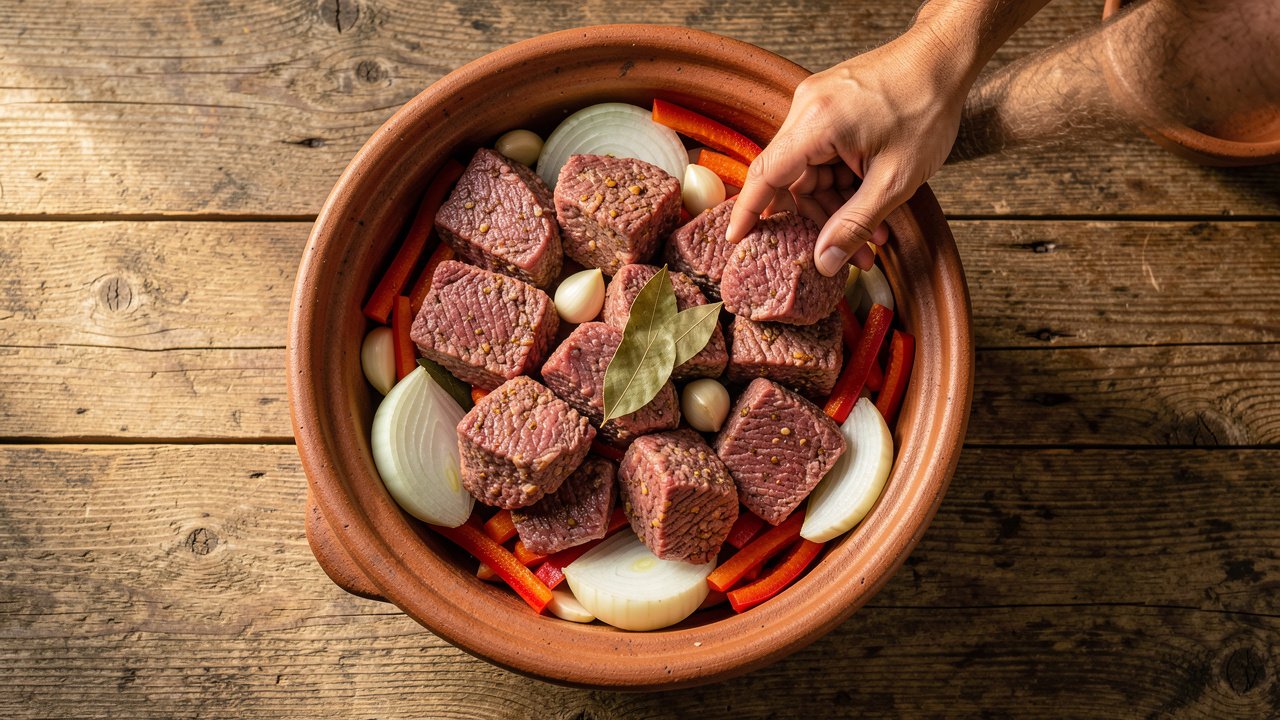
Rub the pot with the sunflower oil. Lay half the onion quarters and half the pepper strips across the bottom, then set the seasoned meat on top in a single crowded layer, tucking the whole garlic cloves and bay leaves among the pieces.
Build the Vegetable Layers
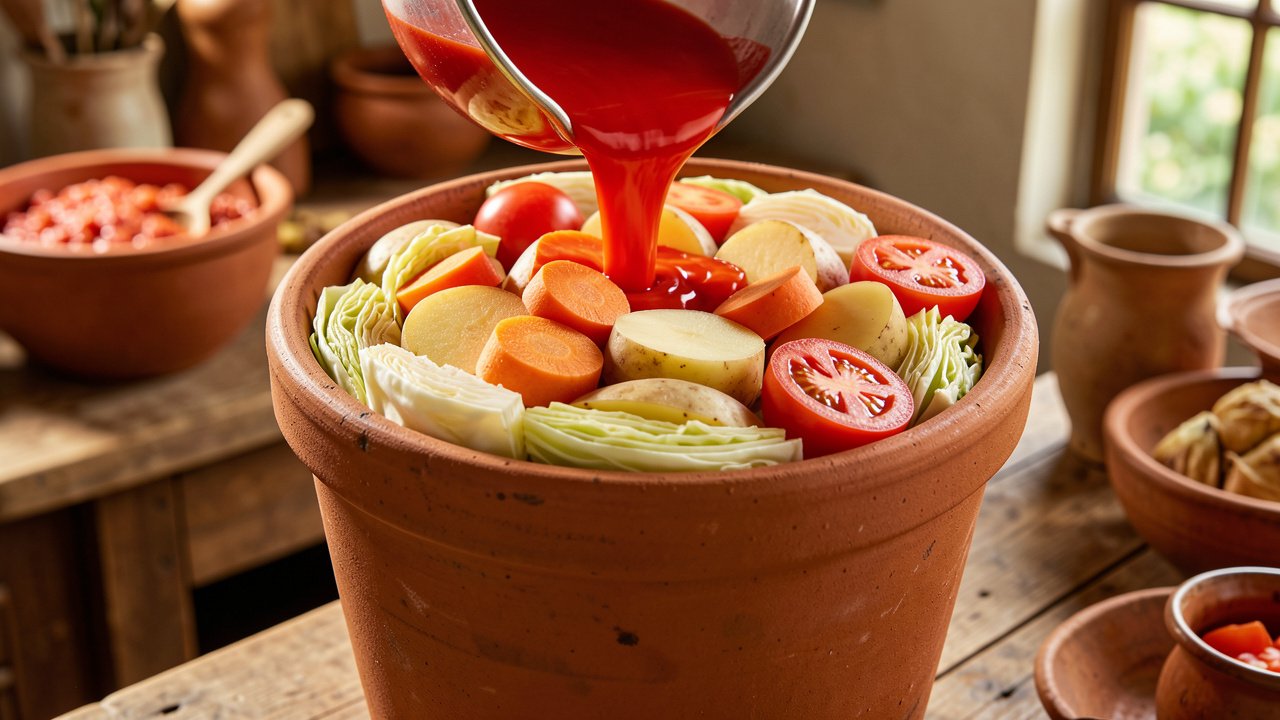
Stack upward, keeping each layer distinct. Carrots and potatoes next, packed into the gaps, then the remaining onion and peppers, then the cabbage wedges, and finally the tomatoes on top so their juice runs down. Press gently; the pot should be full to an inch below the rim.
Add the Tomato Stock
Whisk the tomato paste into the stock until smooth, then pour it slowly down the inside edge of the pot rather than over the top, so it settles to the bottom without washing the seasoning off. It will look like nowhere near enough liquid, and that is correct. Do not stir, now or at any point.
Seal and Bake Low and Slow
Lay parchment or foil over the pot and press the lid down on it for a tight seal. Bake at 325F (160C) for three to three and a half hours. A soaked clay pot goes into a cold oven and heats gradually. Do not check before two and a half hours; each lift of the lid vents the steam doing the cooking.
Check, Rest, and Serve
Lift the lid. The meat should pull apart with almost no pressure, and a thermometer in the largest piece should read at least 195F (90C). If not, reseal for another 30 to 45 minutes. Rest uncovered 10 minutes, scatter the parsley, then spoon straight down through the layers so every bowl gets a bit of everything.
Chef’s Tips From Real Kitchen Testing
Pack the pot tightly. Air gaps let the layers slump, so add another cabbage wedge rather than leaving space.
Season the meat directly, not the liquid. Salt on the meat draws out moisture that becomes broth, and keeps the vegetables from tasting oversalted.
The parchment-under-the-lid trick matters: most lids leak at the rim, and over three hours that means much less broth.
Recipe Variations
Serving Suggestions
- Crusty somun or country bread
- A sharp cabbage and pepper salad
- Ajvar, the roasted red pepper relish
- Plain yogurt to cut the richness
Nutrition Facts
| Nutrient | Amount per serving |
|---|---|
| Calories | 520 |
| Protein | 42 g |
| Carbohydrates | 34 g |
| Fat | 24 g |
| Saturated Fat | 8 g |
| Fiber | 7 g |
| Sugar | 11 g |
| Sodium | 780 mg |
Values are estimates per serving and vary with the exact cut of meat, vegetables, and brands you use.
Doneness and Food Safety
Whole cuts of beef and lamb are safe at 145F (63C) with a three minute rest, and ground meat needs 160F (71C). Bosanski lonac goes past both on purpose: collagen-heavy cuts only turn tender once the center holds near 195F to 205F (90C to 96C). Check the largest chunk with a thermometer, not the clock.
Keep the raw meat refrigerated until you layer, and wash the board and knife before they touch the vegetables. Refrigerate leftovers within two hours. If you use unglazed clay, make sure it is food-safe and lead-free.
Storage, Freezing & Reheating
Common Mistakes to Avoid
Troubleshooting
Meat still tough after three hours? It is undercooked, not overcooked. Reseal for another 45 minutes and check for 195F (90C).
Too much watery liquid? The pot was too wide or you used too much stock. Ladle some out, reduce it in a pan until glossy, and pour it back.
Vegetables fell apart? Cut too small, or the pot was stirred. Go chunkier and leave more core on the cabbage wedges.
Broth tastes flat? It needs salt and acidity. Stir tomato paste into a ladle of hot broth, pour it back, and squeeze in lemon.
A Note on Bosnian Cooking
The dish takes its name from the vessel. A lonac is a tall, narrow, often unglazed clay pot, and for generations it was set at the edge of a hearth or pushed into the cooling oven after the bread came out, left in falling heat all afternoon. The shape was practical: narrow pots fit small hearths and held heat through thick walls.
That is where the no-stirring rule comes from. It was never a flourish; nobody was standing over the pot. Bosnian home cooking leans on this patient technique, and on layering to build flavor without a long spice list. Paprika, bay, garlic, pepper, and good tomatoes do nearly all the work. Every household has its own version, but the method stays constant: big pieces, tight layers, a sealed lid, hours of quiet heat. If you like slow one-pot cooking, our hearty tomato lentil soup is the same idea.
Frequently Asked Questions
More Tomato Recipes to Try
Last updated: September 29, 2026