Kuwaiti Recipes
Spiced Shrimp and Tomato Rice
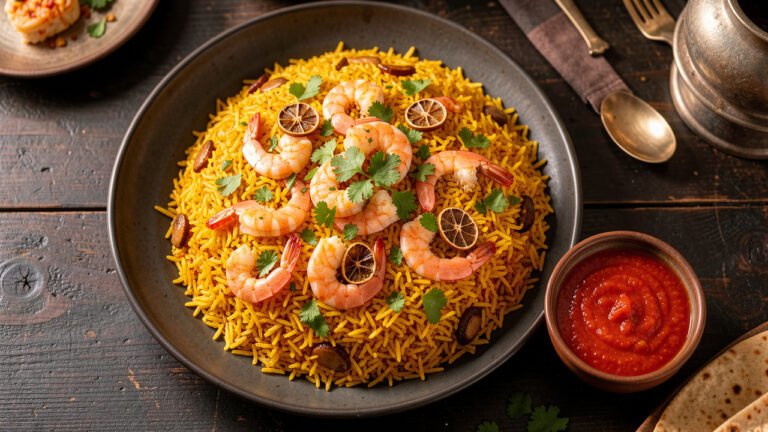
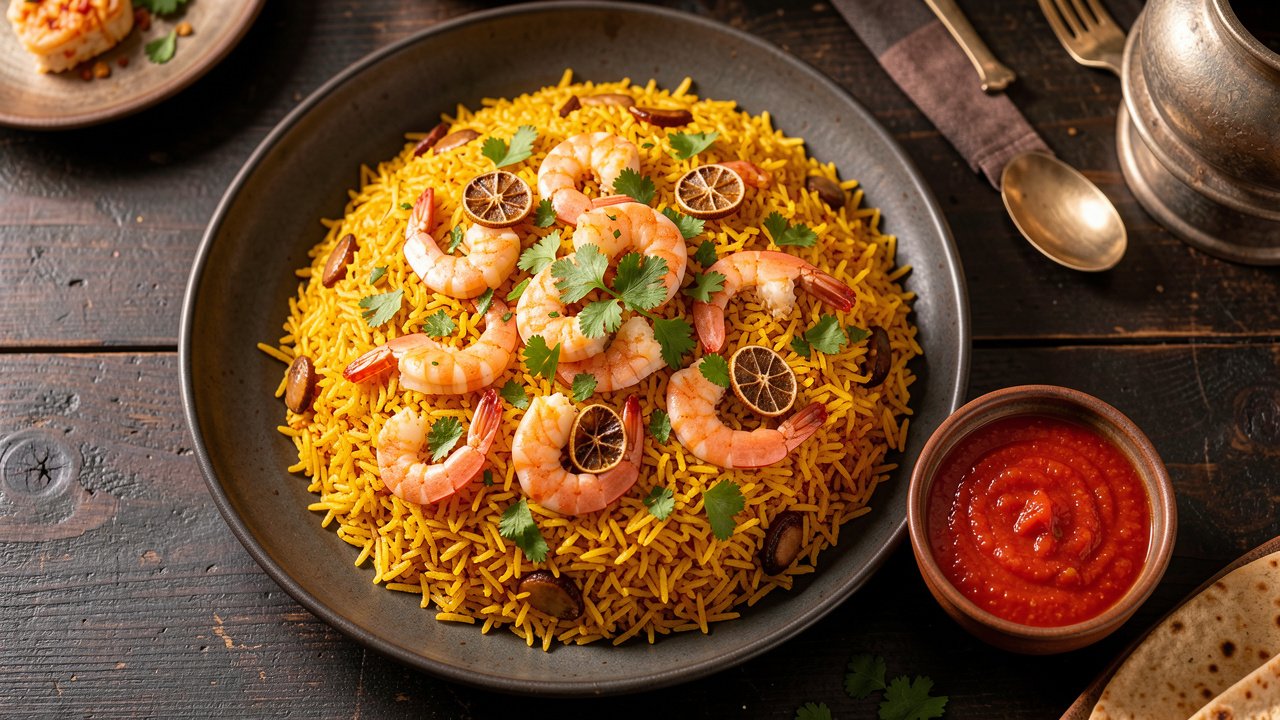
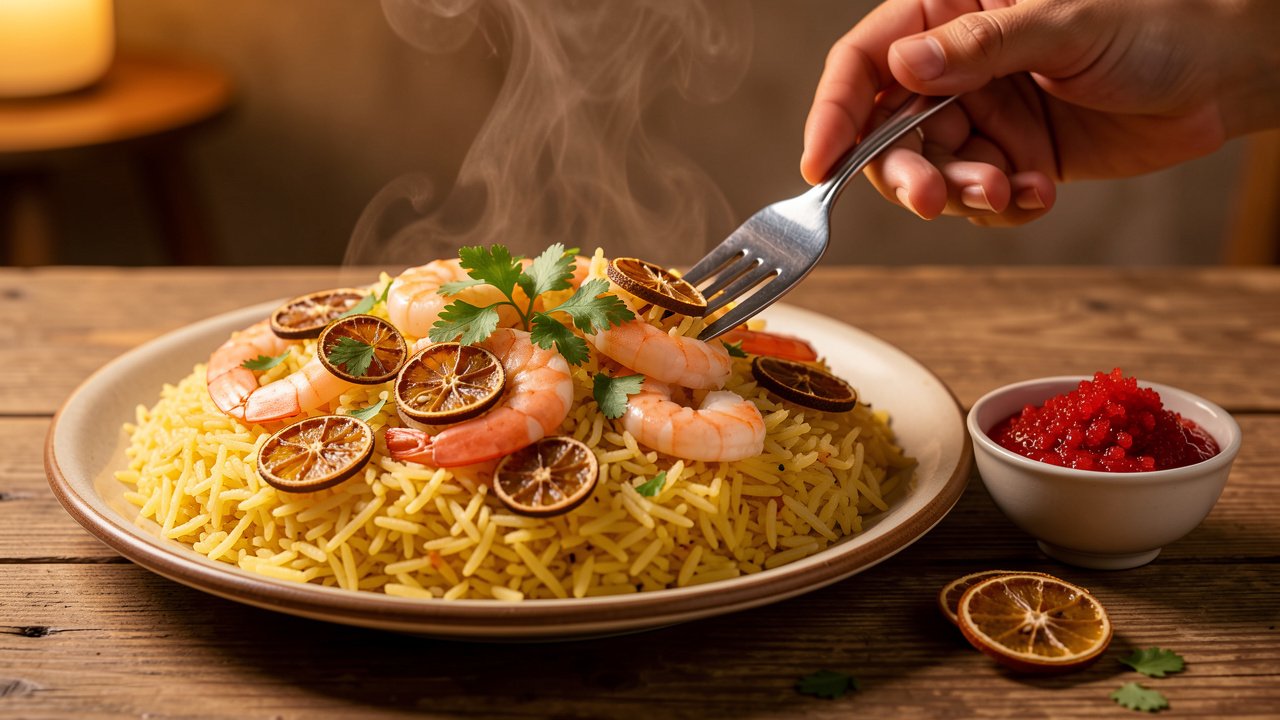
Murabyan, also written as machboos rubyan, is the shrimp cousin of Kuwait’s famous rice dishes, and it is one of those meals that turns a quiet weeknight into an event. The base does most of the work: tomatoes cooked down with onion, garlic, and warm bzar spice until they turn jammy and deep, then just enough broth to steam the rice into something perfumed and golden. The shrimp go in near the end, so they stay tender rather than turning to rubber.
Why This Kuwaiti Murabyan Works
Gulf cooking is built on layered spice and a deep savory base, and murabyan is a perfect small lesson in both. The tomatoes and onion cook down slowly with garlic and bzar until they lose all their raw edge and turn into a thick, glossy foundation. That base is the whole dish; get it right and everything else falls into place.
The single ingredient that makes this taste unmistakably Kuwaiti is loomi, the dried lime. Pierced and dropped into the pot whole, it releases a sour, almost fermented citrus note that you cannot get from fresh lime or lemon. It cuts through the richness of the shrimp and keeps the rice from tasting heavy.
Steaming the basmati directly in the spiced shrimp broth is the other quiet secret. Instead of boiling rice separately and spooning sauce over it, you let each grain absorb the flavor from the bottom up. The result is a pot where the rice itself tastes of tomato, spice, and the sea.
It is also forgiving. The same base welcomes a smoky dukhan finish, mixed seafood, or an extra chili for heat. Served on a shared platter with daqoos on the side, it turns dinner into something worth gathering around.
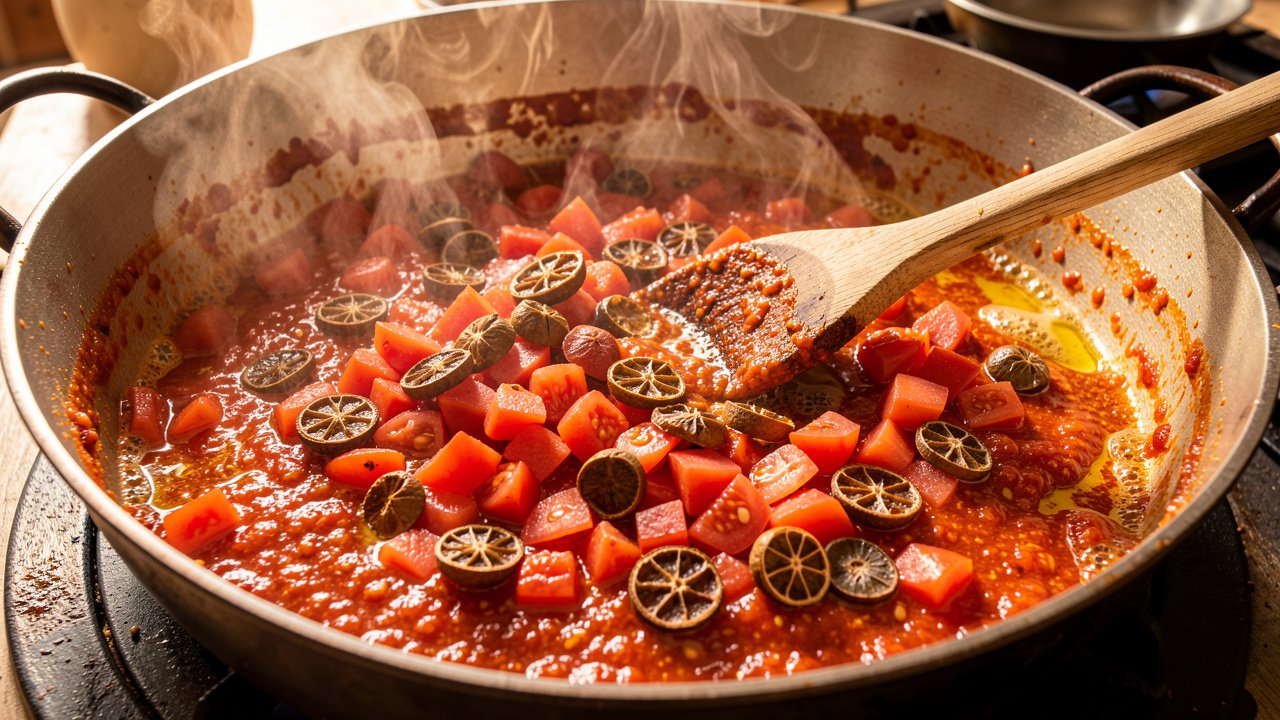
Pro observation: The tomato base is ready for the broth when the oil starts to bead and separate at the edges of the pot. That sheen means the spices have bloomed and the raw tomato taste is gone.
Ingredients
Kitchen Measurement Converter
Quickly convert between common cooking measurements without leaving the recipe. Pick a category, enter a value, and the result updates instantly.
Ingredient Notes & Substitutions
Shrimp
Use large halal shrimp, peeled and deveined, tails on or off as you like. Fresh is ideal, but good frozen shrimp thawed in the fridge work well too. Pat them dry before they go in so they sear rather than steam.
Tomatoes
Ripe, red tomatoes give the sweet-savory base its depth. Out of season, one 14-ounce can of chopped tomatoes is often more reliable than pale fresh ones. You will want a couple extra for the daqoos.
Bzar and Loomi
Bzar is the Gulf baharat blend of black pepper, cumin, coriander, cinnamon, cardamom, and dried lime. Loomi, the dried lime itself, is essential; pierce each one so its sour perfume can seep into the broth.
Herbs and Rice
Cilantro and a little dill are traditional and brighten the whole pot. Use aged basmati and rinse it until the water runs clear so the grains stay separate and fluffy rather than gummy.
Equipment
- Wide, heavy pot with lid
- Wooden spoon
- Sharp knife and board
- Fine sieve for rinsing rice
- Measuring spoons
- Small bowl for spices
Before You Start
1. Rinse and soak the rice. Rinse the basmati until the water runs clear, then let it soak for 20 minutes while you build the base. This helps it cook evenly into separate grains.
2. Prep the shrimp. Peel, devein, and pat the shrimp dry, then keep them chilled until the base is ready. Dry shrimp brown better and stay tender.
3. Pierce the loomi and measure the bzar. Poke each dried lime a few times so its flavor releases, and have the bzar and turmeric measured before the onions hit the pot.
Step-by-Step Instructions
Prep the Aromatics and Rice
Finely chop the onions, garlic, ginger, tomatoes, and green chilies. Rinse the basmati until the water runs clear and leave it to soak. Pierce the dried limes and measure the bzar and turmeric into a small bowl so they are ready to add together.
Build the Aromatic Base
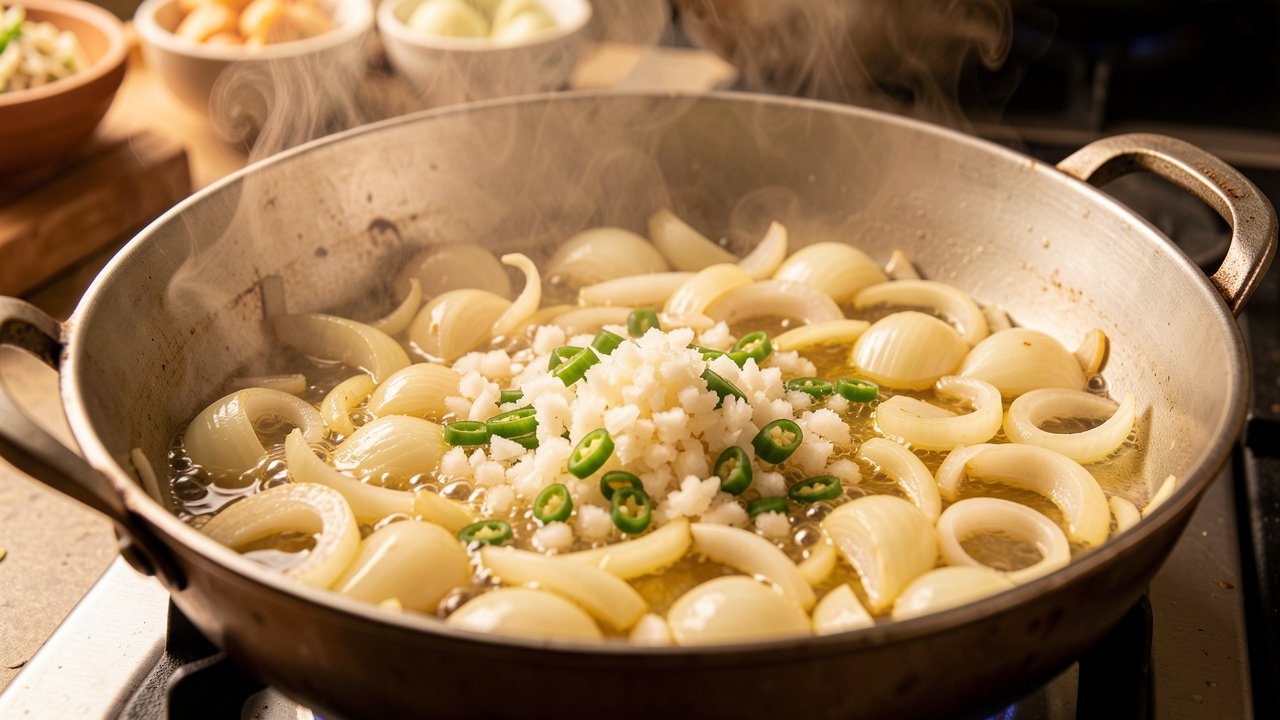
Heat the oil in a wide, heavy pot over medium heat. Add the onions and cook 8 to 10 minutes until soft and deep golden. Stir in the garlic, ginger, and green chilies and cook 1 minute more until fragrant and the raw smell disappears.
Bloom the Spices
Add the bzar, turmeric, and ground fenugreek and stir for about 30 seconds so the spices bloom in the oil and lose their dusty edge. Stir in the tomato paste and let it cook for another minute until it darkens slightly and smells sweet and toasted.
Cook Down the Tomatoes
Add the chopped tomatoes, the pierced dried limes, and 1 teaspoon of the salt. Cook 10 to 12 minutes, stirring often, until the tomatoes collapse into a thick, jammy base and the oil starts to separate at the edges. This is where the deep savory flavor is built.
Simmer the Shrimp, Then Steam the Rice
Stir in half the cilantro and the dill, then add the shrimp and cook 2 to 3 minutes, just until they turn pink and opaque. Lift the shrimp out and set aside so they do not overcook. Pour in the hot water and remaining salt, bring to a boil, then drain the soaked rice and stir it in. Lower the heat, cover tightly, and steam 15 to 18 minutes until the water is absorbed and the rice is tender.
Fold In the Shrimp and Serve
Gently fold the reserved shrimp back into the rice, cover, and let it rest off the heat for 5 minutes so the shrimp warm through without overcooking. Fluff with a fork, scatter the remaining cilantro over the top, and pile onto a platter. Serve hot with daqoos sauce on the side.
Chef’s Tips From Real Kitchen Testing
Cook the shrimp only until they curl into a loose C and turn opaque. A tight O shape means they have gone too far and will be rubbery. Pulling them out and folding them back in at the end is the surest way to keep them tender.
Get the rice-to-broth ratio right. For rinsed, soaked basmati, roughly 1.5 parts liquid to 1 part rice gives fluffy separate grains. Too much broth turns it mushy; too little leaves it undercooked at the center.
Do not skip the loomi. The dried lime is what makes murabyan taste like murabyan, giving the pot its signature sour, savory lift. Pierce it well so the flavor can escape into the broth.
Recipe Variations
Serving Suggestions
- Fresh daqoos tomato-garlic-chili sauce on the side
- A crisp salad of cucumber, tomato, and mint
- Warm flatbread to scoop up the rice
- Lime wedges and extra fresh cilantro
Nutrition Facts
| Nutrient | Amount per serving |
|---|---|
| Calories | 470 |
| Protein | 28 g |
| Carbohydrates | 58 g |
| Fat | 13 g |
| Saturated Fat | 2 g |
| Fiber | 3 g |
| Sugar | 5 g |
| Sodium | 780 mg |
Values are estimates per serving and vary with the exact ingredients and brands you use.
Make-Ahead Tips
The tomato and bzar base is a great make-ahead component, and its flavor only deepens overnight in the fridge. Cook the base through the tomato stage, cool it, and refrigerate for up to two days. When you are ready to eat, reheat it, add the broth and rice, and cook the shrimp fresh so they stay tender. Chop the herbs and stir them in just before serving.
Storage, Freezing & Reheating
Common Mistakes to Avoid
Troubleshooting
Rice came out mushy? There was too much broth or the pot was stirred while steaming. Next time cut the liquid slightly and leave the rice alone under the lid; spread cooked rice on a tray to dry a little if it is already too wet.
Rice still hard in the middle? It needed more time or more liquid. Sprinkle over a few tablespoons of hot water, cover, and steam on low for another 5 to 8 minutes.
Shrimp turned rubbery? They cooked too long. There is no reversing it, so next time cook them just until opaque and fold them in off the heat.
Base tastes flat? It usually needs salt and a longer cook on the tomatoes, or another pierced loomi to lift the flavor.
A Note on Kuwaiti Cooking
Kuwaiti food sits at a crossroads of the Gulf, India, and the wider region, and murabyan shows it. The warm bzar spice blend, the sour black loomi, and the love of rice cooked in a savory broth all point to centuries of sea trade. Daqoos, the fresh tomato-garlic-chili sauce spooned alongside, adds the bright, punchy contrast that Gulf cooks prize, and the whole thing lands on a single shared platter meant to be eaten together. If you enjoy tomato-forward cooking, browse our full library of tomato recipes, or try a comforting bowl of hearty tomato lentil soup for another warmly spiced dish.
A note on food safety: Cook shrimp until they are opaque all the way through, with no gray translucency at the center, which usually takes just 2 to 3 minutes. Do not leave cooked murabyan at room temperature for more than 2 hours, and reheat leftovers only once, until piping hot throughout.
Frequently Asked Questions
More Tomato Recipes to Try
Last updated: September 23, 2026