
Polish Recipes
Cabbage Rolls in Tomato Sauce
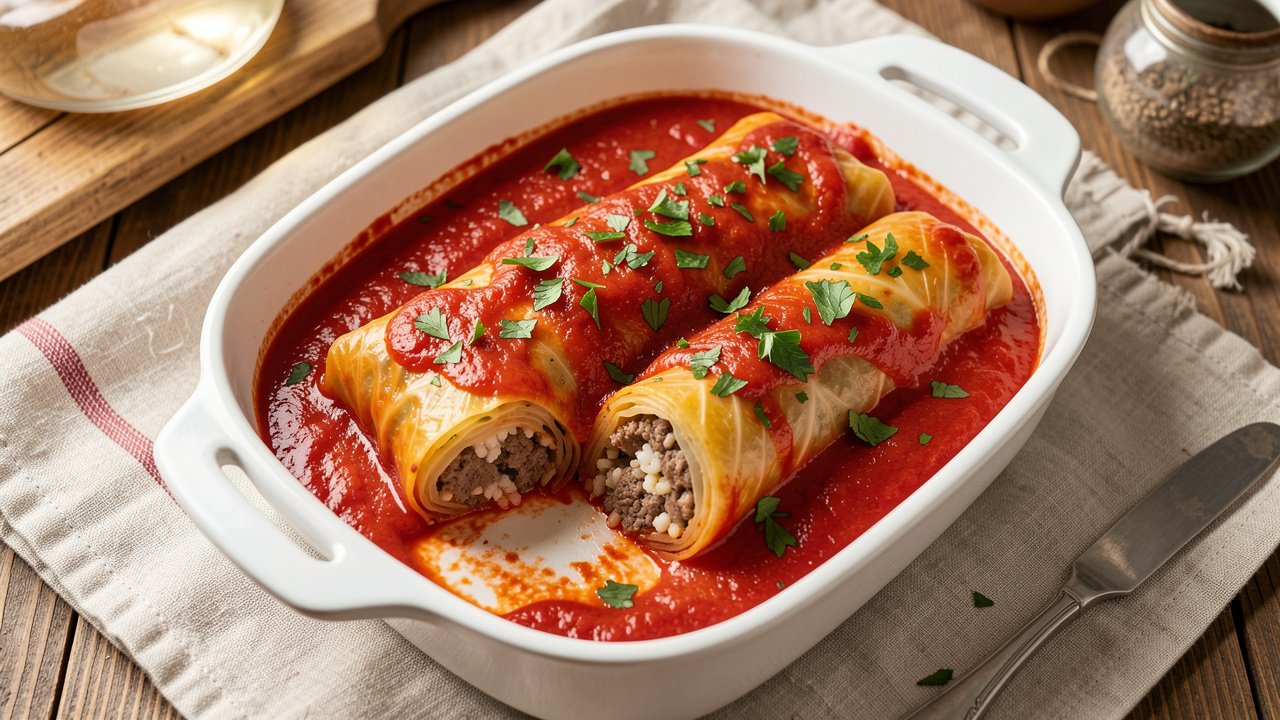
Golabki (pronounced go-WOMP-kee) are one of those dishes that taste like someone spent all day loving you. Soft cabbage leaves hug a savory bundle of halal beef and rice, and everything slowly braises in tomato sauce until the whole kitchen smells like a Polish grandmother’s Sunday. The first time I rushed them, I under-blanched the cabbage and the leaves cracked as I rolled; the fix turned out to be patience, not skill.
Why These Golabki Work
Golabki succeed on the strength of three simple ideas working together: leaves that are soft enough to roll without tearing, a filling that stays moist and holds its shape, and a tomato sauce with enough body to braise the rolls without drying them out. Get those right and the dish is almost impossible to ruin.
The filling here uses halal beef mixed with cooked rice, grated onion, garlic, and marjoram, which is the herb that gives golabki their unmistakable Polish backbone. Adding already-cooked rice matters, because raw rice keeps drinking liquid as it braises and can leave the centers hard. Pre-cooked grains simply soak up flavor and keep everything tender.
Braising slowly and low is the other quiet secret. A gentle simmer, covered, lets the cabbage turn silky and the tomato sauce sink deep into each parcel. Rushing it over high heat toughens the leaves and leaves the middle undercooked, so the timing is worth respecting.
Best of all, golabki are forgiving and freezer-friendly. Once you learn the rolling motion, the whole thing becomes a relaxing weekend project that rewards you with several dinners. They taste even better the next day, when the tomato sauce has had time to settle into the cabbage.
Pro observation: The rolls are done when a knife slides through the cabbage with no resistance and the sauce has thickened enough to coat the back of a spoon. That is your signal, not the clock alone.
Ingredients
Kitchen Measurement Converter
Quickly convert between common cooking measurements without leaving the recipe. Pick a category, enter a value, and the result updates instantly.
Ingredient Notes & Substitutions
Cabbage
A large, loose-headed green cabbage is easiest to work with, since the leaves peel away in wide, flexible sheets. Savoy cabbage, with its crinkled leaves, is even more pliable and tears less, so it is a lovely upgrade if you can find it.
Halal Beef
Use halal beef with a little fat, around 80 to 85 percent lean, so the filling stays juicy. A leaner blend works but benefits from an extra spoonful of oil mixed in. You can also use a half-and-half mix of halal beef and ground turkey.
Rice
Plain cooked white rice is traditional and reliable. Slightly undercooked, day-old rice holds its shape best. Brown rice works too, but cook it fully first, since it will not soften much more inside the rolls.
Tomato Sauce
Crushed tomatoes or passata give a smooth, rich braise. A spoonful of tomato paste deepens the color and flavor, and a pinch of sugar balances the acidity. Fresh tomatoes, peeled and blended, work beautifully in summer.
Equipment
- Large pot for blanching
- Deep braising pot or dish
- Sharp paring knife
- Large mixing bowl
- Tongs and slotted spoon
- Cutting board
Before You Start
1. Cook the rice ahead. The filling needs cooled, cooked rice, so make it earlier or use leftovers. Warm rice makes the filling mushy and harder to shape.
2. Core the cabbage first. Cut a deep cone around the core before blanching. This lets the leaves release cleanly and saves you fighting with the head later.
3. Keep a bowl of ice water nearby. Shocking the blanched leaves stops the cooking and makes them cool enough to handle right away.
Step-by-Step Instructions
Blanch the Cabbage Leaves
Bring a large pot of salted water to a boil. Cut a deep cone around the cabbage core and remove it. Lower the whole head into the water and simmer, peeling off leaves with tongs as they soften, about 2 to 3 minutes each. Move the softened leaves to a bowl of ice water, then lay them flat on a towel. You want them bendy and translucent, never crisp.
Make the Filling
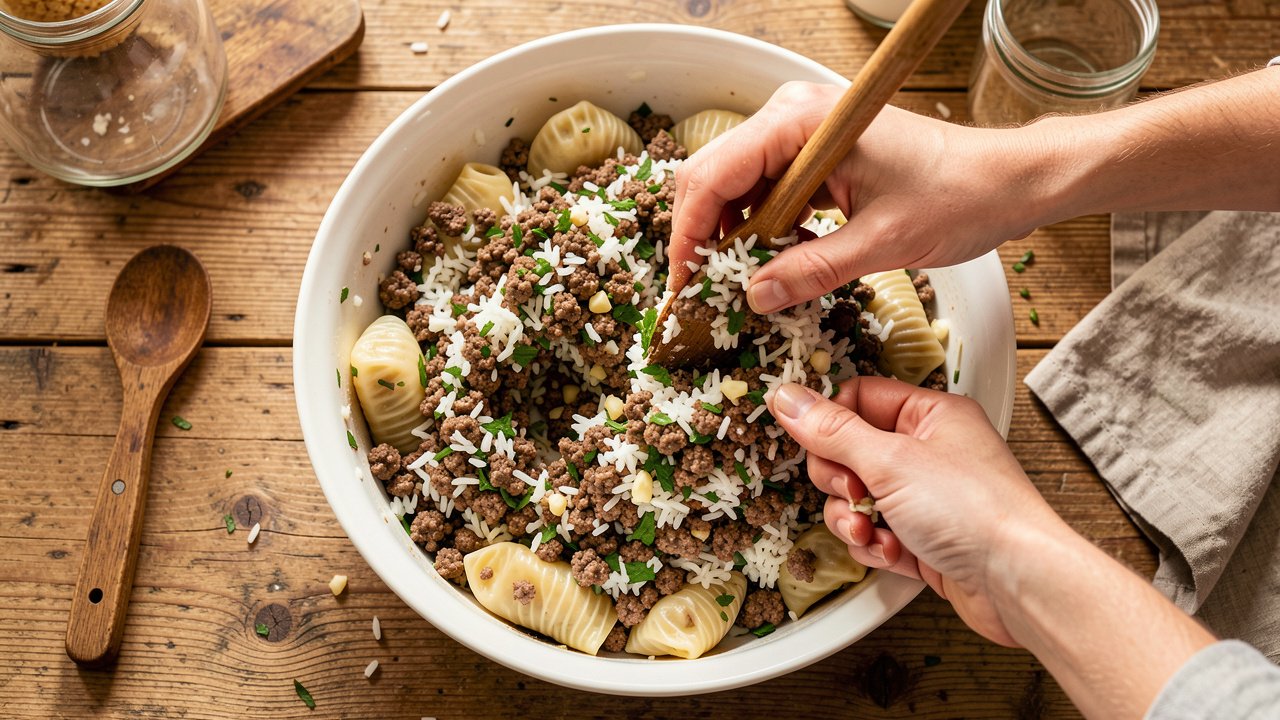
In a large bowl, combine the halal beef, cooled cooked rice, chopped onion, garlic, egg, marjoram, salt, and pepper. Mix gently with your hands until just combined; overmixing makes the filling dense. The mixture should feel soft and hold together when pressed into a small ball.
Roll the Golabki
Lay a leaf on the board, thick rib facing you, and shave down the tough central rib with a knife so it lies flat. Place about a quarter cup of filling near the base. Fold the base over the filling, tuck in both sides, and roll up snugly into a neat parcel. Repeat, aiming for about 12 rolls. Do not overstuff, or the leaves will split and the ends will pop open.
Make the Tomato Sauce
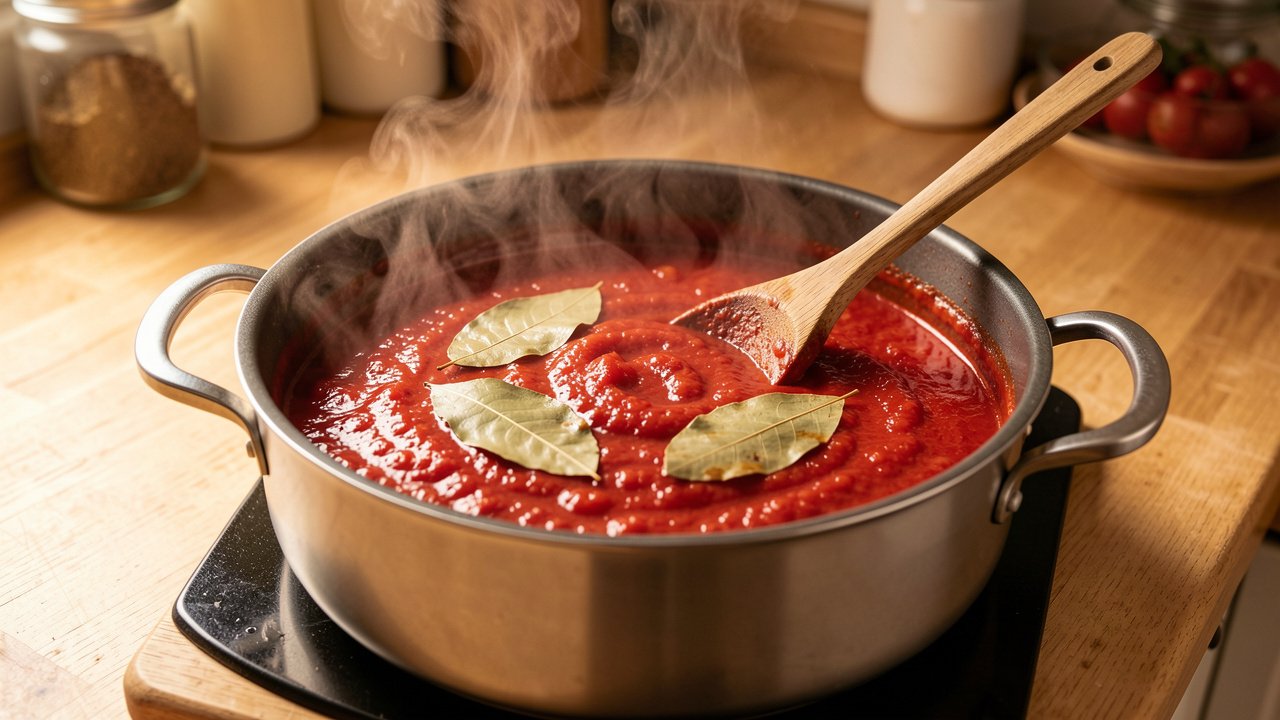
Heat the olive oil in your braising pot over medium heat and soften any leftover chopped onion for a couple of minutes. Stir in the tomato paste and cook 1 minute, then add the crushed tomatoes, beef broth, sugar, bay leaves, and a good pinch of salt. Simmer 5 minutes until it tastes rounded and slightly sweet. Ladle a thin layer of sauce into the base of the pot.
Braise the Rolls
Arrange the golabki seam-side down in the pot, packing them snugly in a single layer so they hold their shape, then stack a second layer if needed. Pour the rest of the sauce over the top until the rolls are nearly submerged; add a splash of broth or water if the sauce looks skimpy. Cover and simmer very gently on low heat for about 75 minutes, or bake covered at 350 F (175 C). Keep it a slow braise, never a hard boil.
Rest and Serve
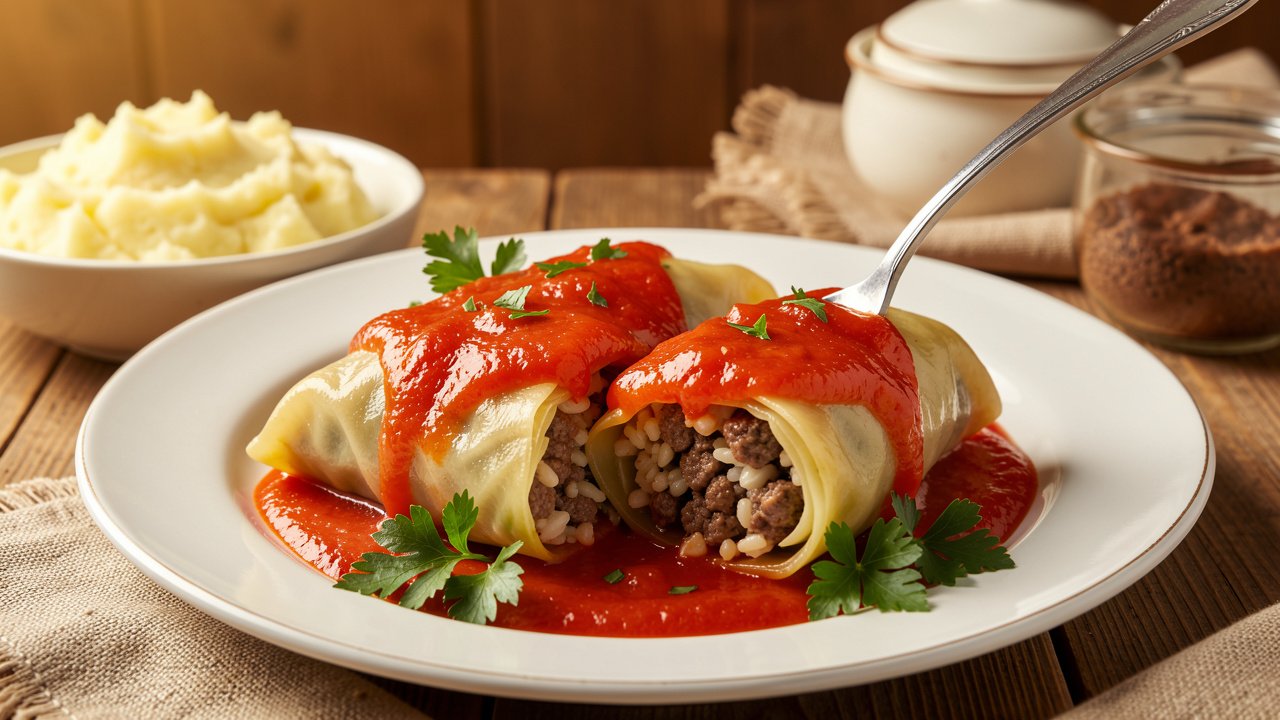
The golabki are ready when a knife slides through the cabbage easily and the beef is fully cooked, reaching an internal temperature of 160 F (71 C). Let them rest, uncovered, for 10 minutes so the parcels firm up and lift out cleanly. Spoon extra sauce over the top, scatter with fresh parsley, and serve hot with mashed potatoes or crusty bread.
Chef’s Tips From Real Kitchen Testing
Blanch the leaves until they are genuinely floppy. Firm leaves crack at the fold, so give them the extra minute. Savoy cabbage is the most forgiving of all.
Line the bottom of the pot with a few torn or leftover leaves before adding the rolls. They act as a cushion and stop the golabki from scorching on the base.
Cook a small spoonful of the raw filling in a pan and taste it before rolling. It is the easiest way to check the salt and marjoram without guessing.
Recipe Variations
Serving Suggestions
- Creamy mashed potatoes to catch the sauce
- Crusty rye or sourdough bread
- A simple cucumber and dill salad
- Extra tomato sauce and fresh parsley
Nutrition Facts
| Nutrient | Amount per serving |
|---|---|
| Calories | 340 |
| Protein | 24 g |
| Carbohydrates | 28 g |
| Fat | 15 g |
| Saturated Fat | 5 g |
| Fiber | 5 g |
| Sugar | 9 g |
| Sodium | 680 mg |
Values are estimates per serving and vary with the exact ingredients and brands you use.
Make-Ahead Tips
Golabki are made for getting ahead. You can assemble the raw rolls a day in advance, arrange them in the sauce, and keep the covered pot in the fridge until you are ready to braise. They actually taste better on the second day, once the tomato sauce has soaked fully into the cabbage, so cooking a batch the day before a gathering is a smart move. Reheat gently and add a splash of broth if the sauce has thickened.
Storage, Freezing & Reheating
Common Mistakes to Avoid
Troubleshooting
Rolls falling apart? They were likely overstuffed or not packed tightly in the pot. Place them seam-side down and snug against each other so they support one another.
Filling still hard in the middle? The rice was probably too raw or the braise too short. Use fully cooked rice and give the pot the full low, slow simmer.
Sauce too thin? Simmer uncovered for the last 10 minutes, or stir in another spoonful of tomato paste to thicken and enrich it.
A Note on Polish Cooking
Polish home cooking is built on humble, filling ingredients transformed by time and patience, and golabki are a perfect example. Cabbage, beef, rice, and tomato are pantry basics, yet the slow tomato-braise turns them into a dish reserved for Sunday tables, holidays, and family celebrations. Every household guards its own version, some sweeter, some sharper, all comforting. If you love this style of warming, tomato-rich comfort food, our hearty tomato lentil soup shares the same cozy spirit, and you can browse more ideas in our full collection of tomato recipes.
Frequently Asked Questions
More Tomato Recipes to Try
Last updated: September 24, 2026