Uzbek Recipes
Central Asian Layered Steam-Stew
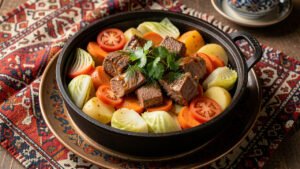
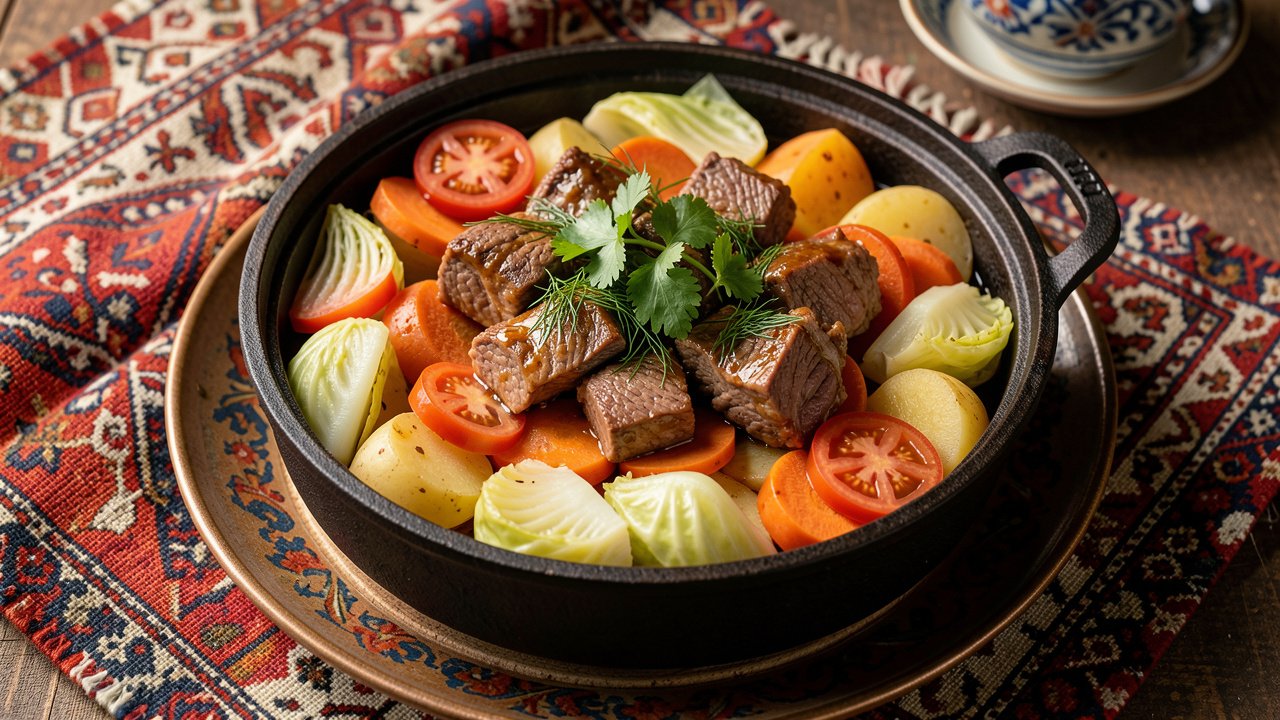
Dimlama is the kind of dish that looks after itself. You build it in layers, seal the pot, and let low, patient heat do the work while the vegetables release their moisture and steam the whole thing from the inside. There is no stock, no splash of water, and almost no stirring. The reward is a pot of halal lamb or beef and vegetables that taste deeply of one another.
The first time I made it I could not resist lifting the lid to peek, and I let out the steam that does all the cooking. The batch after that, I left it sealed and trusted the process, and the difference was night and day. This is a recipe that rewards a little faith and a heavy pot.
Why This Uzbek Dimlama Works
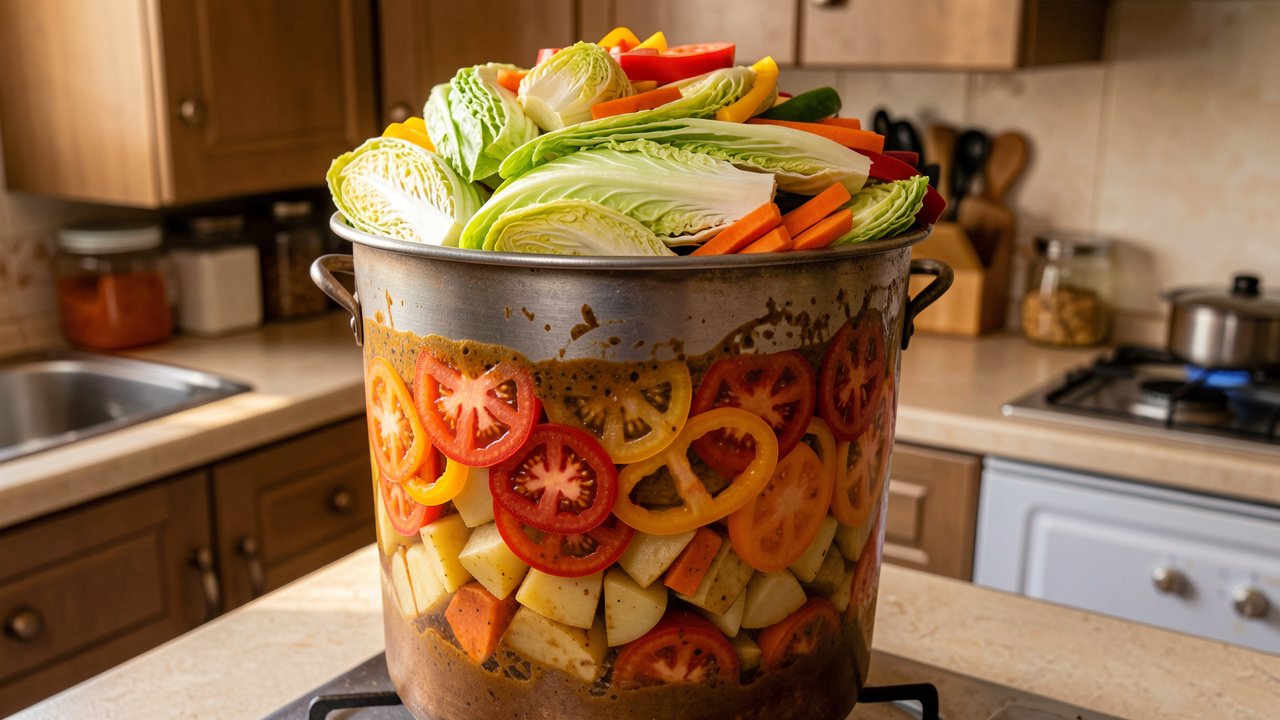
Dimlama is built on one simple idea: vegetables and meat contain enough moisture to cook each other if you trap the steam. When you layer onion at the bottom, then meat, then a rising stack of carrot, potato, tomato, cabbage, and pepper, and seal the pot tightly, the heat draws juices out of every layer. Those juices turn to steam, circulate, and cook the whole pot without a single drop of added water.
Because nothing boils in liquid, the flavors stay concentrated. Potatoes taste of potato, carrots stay sweet, and the halal lamb or beef perfumes everything above it as its juices rise. This is the opposite of a watery stew where the flavor leaches out into broth. Here the flavor stays exactly where you want it.
The onion layer at the very bottom is the quiet hero. It melts down early and forms a soft, sweet cushion that keeps the meat from scorching against the hot metal. Get that layer right and the rest of the dish almost cannot go wrong.
It is also generous and forgiving. A single heavy pot feeds a table of six, the vegetables are flexible, and there is very little active work once the lid goes on. Once you understand the layering and the low, steady heat, dimlama becomes a dish you can make on instinct.
Pro observation: When you tilt the sealed pot gently after the first hour and hear a soft simmering hiss rather than silence, you know the vegetables are releasing their juices and the steam is doing its job. That sound means you are on track.
Ingredients
Kitchen Measurement Converter
Quickly convert between common cooking measurements without leaving the recipe. Pick a category, enter a value, and the result updates instantly.
Ingredient Notes & Substitutions
Halal Lamb or Beef
Use bone-in halal lamb shoulder or halal beef chuck cut into large chunks. A little fat on the meat is good, because it renders down and enriches the steam. Bone-in pieces add extra flavor as they cook.
Tomatoes
Ripe, juicy tomatoes matter here, because their liquid helps create the steam. Slice them thick and lay them near the top so they collapse into the pot. Out of season, a few canned whole tomatoes work well.
Cabbage and Peppers
Green cabbage cut into sturdy wedges holds its shape and forms a natural lid that traps steam. Any color of bell pepper works; red and yellow add sweetness, while green keeps it savory.
Potatoes and Carrots
Waxy potatoes hold together best over the long steam. Cut carrots and potatoes into big pieces so they cook through without falling apart into the juices at the bottom.
Equipment
- Heavy pot or Dutch oven with lid
- Sharp knife and board
- Vegetable peeler
- Tongs
- Large serving platter
- Measuring spoons
Before You Start
1. Choose a heavy pot with a tight lid. A thick base spreads the low heat evenly, and a snug lid keeps the steam trapped. If your lid is loose, cover the rim with foil before setting it on.
2. Cut everything large. Big chunks survive the long steam without turning to mush. Uniform, chunky pieces are the goal for every layer.
3. Plan for low and slow. Dimlama is not a rushed dish. Set aside a couple of unhurried hours and resist the urge to lift the lid.
Step-by-Step Instructions
Prep the Meat and Vegetables
Cut the halal lamb or beef into large chunks and season it with the cumin, coriander, half the salt, and the black pepper. Peel and thickly slice the onions. Cut the carrots and potatoes into big chunks, slice the tomatoes, cut the cabbage into wedges, and slice the bell peppers. Peel the garlic cloves and keep them whole. Have everything grouped and ready before you build the layers.
Build the Base Layer
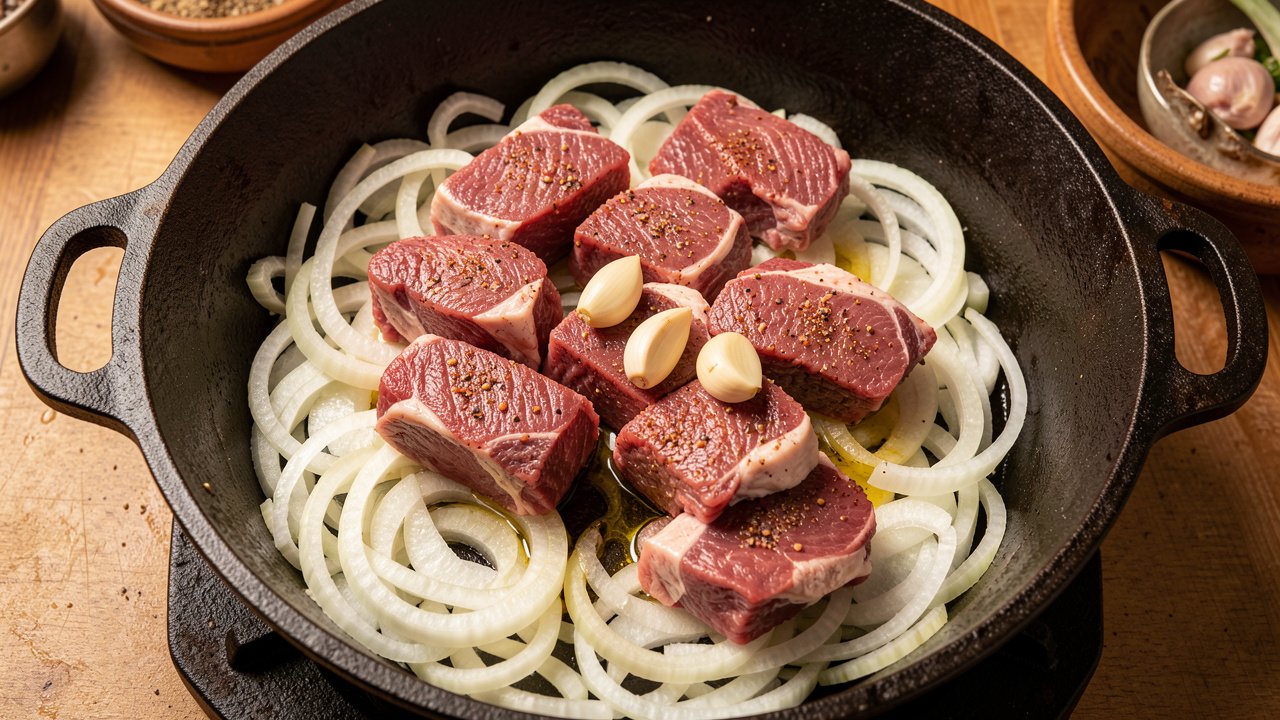
Pour the oil into the cold heavy pot and spread the sliced onions across the bottom in an even bed. Set the seasoned meat on top of the onions in a single layer, tucking the whole garlic cloves in among the chunks. This onion cushion protects the meat from direct heat and melts into a sweet base as the pot warms.
Layer the Root Vegetables
Scatter the carrots over the meat, then arrange the potatoes on top in an even layer. Sprinkle a little of the remaining salt between the layers as you go. Do not stir; the whole point is to keep the layers distinct so the steam rises cleanly through them. Press the vegetables down gently to make a compact stack.
Add the Tomatoes, Cabbage, and Peppers
Lay the sliced tomatoes over the potatoes so their juice can drip down through everything below. Add the bell peppers, then finish with the cabbage wedges arranged across the top like a lid. The cabbage seals in the steam and softens into something silky by the end. Sprinkle over the last of the salt.
Seal and Steam Low and Slow
Cover the pot tightly. If the lid does not seal well, lay a sheet of foil over the rim first. Set the pot over medium heat just until you hear it begin to sizzle, about 8 to 10 minutes, then turn the heat to its lowest setting. Let it steam undisturbed for about 2 hours. Do not lift the lid, because every peek lets out the steam that is cooking the dish. You can start a timer to keep yourself honest.
Rest, Check, and Serve
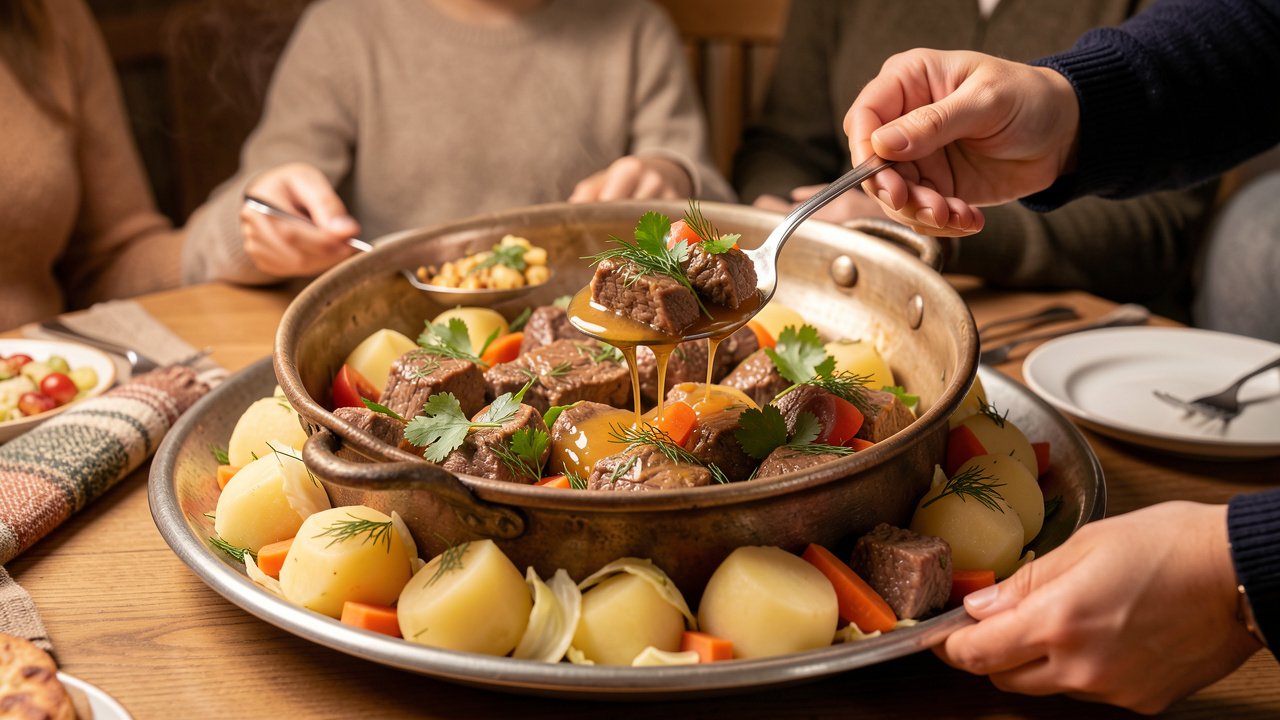
After 2 hours, lift the lid and check that the meat is fork-tender and the potatoes pierce easily. Halal lamb or beef should be cooked all the way through with no pink remaining and juices that run clear; if the meat is still firm, reseal and steam another 20 to 30 minutes. Let the pot rest off the heat for 10 minutes. To serve family-style, spoon the vegetables onto a large platter, set the meat on top, pour over the pot juices, and shower with the chopped cilantro and dill.
Chef’s Tips From Real Kitchen Testing
Never add water. The vegetables carry all the moisture the dish needs. Extra liquid turns dimlama into a boiled stew and washes out the concentrated flavor.
Keep the heat truly low once it starts to sizzle. Too high and the bottom layer scorches before the steam builds. A gentle, steady hiss is exactly what you want.
Resist lifting the lid. Each peek releases steam and lengthens the cook. If you must check, wait until at least 90 minutes have passed and be quick.
Recipe Variations
Serving Suggestions
- Warm flatbread or non to scoop up the juices
- A bowl of the strained pot broth on the side
- A simple tomato and onion salad, achichuk-style
- Plenty of fresh cilantro, dill, and green onion
Nutrition Facts
| Nutrient | Amount per serving |
|---|---|
| Calories | 420 |
| Protein | 28 g |
| Carbohydrates | 32 g |
| Fat | 20 g |
| Saturated Fat | 7 g |
| Fiber | 6 g |
| Sugar | 9 g |
| Sodium | 680 mg |
Values are estimates per serving and vary with the exact cut of meat and vegetables you use.
Make-Ahead Tips
Dimlama tastes even better the next day, once the layers have had time to settle into one another. You can build the whole pot a few hours ahead, keep it covered in the fridge, and start the steam when you are ready. Leftovers reheat beautifully; the vegetables have already given up their moisture, so a low, covered warm-through is all they need. Add the fresh herbs only at serving time so they stay bright.
Storage, Freezing & Reheating
Common Mistakes to Avoid
Troubleshooting
Bottom layer scorched? The heat was too high or the onion bed too thin. Next time build a fuller onion layer and use the lowest flame with a heat diffuser if you have one.
Vegetables still firm? The lid was not sealing, so steam escaped. Reseal with foil under the lid and give it another 20 to 30 minutes on low.
Too much liquid at the bottom? Very watery tomatoes or a slightly loose lid can pool juice. Spoon it out and reduce it in a separate pan into a quick sauce to pour back over the platter.
A Note on Uzbek Cooking
Uzbek and wider Central Asian home cooking is built around the heavy pot and the shared table. Dimlama sits alongside plov and shurpa as one of the great one-pot dishes, prized because it feeds a crowd from humble ingredients with very little fuss. The no-water steam method is its signature: layering meat and vegetables so they cook in their own juices is both practical and deeply flavorful, a technique passed down through generations of family kitchens.
Serving is part of the ritual. The pot is carried to the table and turned out onto a big platter so everyone helps themselves, tearing bread to soak up the juices. If you love hearty, layered comfort food, browse more ideas in our tomato recipes collection, or try the cozy hearty tomato lentil soup for another slow, warming pot.
Frequently Asked Questions
More Tomato Recipes to Try
Last updated: September 24, 2026