Greek Recipes
Greek Stuffed Tomatoes and Peppers
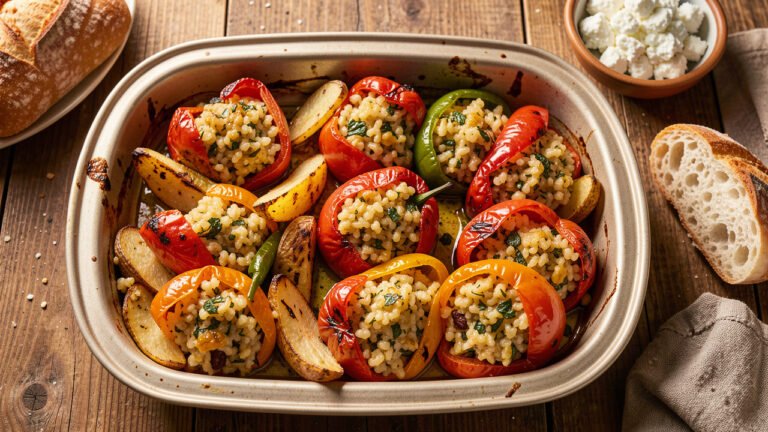
Gemista, sometimes spelled yemista, simply means “filled” in Greek, and that is exactly what this dish is: garden vegetables filled with a herby rice that steams and swells right inside them. It is humble, generous food, the kind that fills a whole baking tray and feeds a table without any fuss. The magic is in the slow bake, where the tomato juices, olive oil, and herbs melt together into a sauce the rice drinks up.
The first time I made gemista I pulled it out too early, and the rice was still chalky in the middle. The lesson stuck: this is not a dish to rush. Give it time, keep it well oiled, and add enough liquid, and you are rewarded with meltingly soft peppers, jammy tomatoes, and creamy, perfumed rice.
Why This Gemista Works
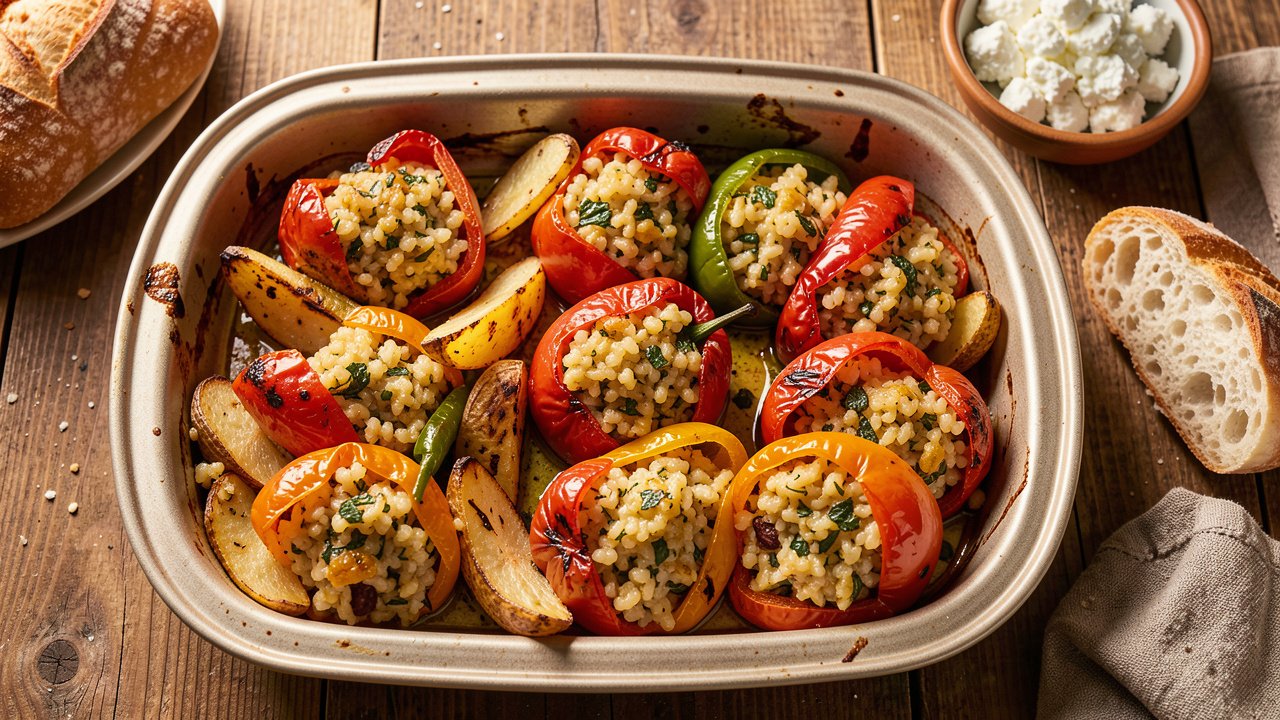
Gemista belongs to the family of Greek dishes called ladera, meaning cooked in olive oil, and that generous pour of oil is not a splurge but the whole point. As the tray bakes, the oil, tomato pulp, and herbs mingle at the bottom into a rich sauce that bastes the vegetables and cooks the rice from the outside in. Skimp on the oil and the dish goes dry and tight; be generous and everything turns silky.
The rice is only parcooked, or often not cooked at all, before it goes into the vegetables. That is deliberate. It finishes inside the tomatoes and peppers, soaking up their sweet juices, so every grain tastes of the vegetable it was baked in rather than of plain water.
Then there are the herbs. Gemista lives and dies by fresh mint, parsley, and dill, used with a confident hand. They are what lift the dish from a simple baked stuffed vegetable into something bright and unmistakably Greek.
Finally, the potato wedges are not an afterthought. They prop up the tomatoes and peppers so they hold their shape, soak up the flavorful oil, and roast into soft, golden bites that many people quietly love most.
Pro observation: The filling is seasoned correctly when a spoonful of the raw rice mix tastes just a touch too salty and herby on its own. It mellows a lot during the long bake, so bland-tasting filling now means bland gemista later.
Ingredients
Kitchen Measurement Converter
Quickly convert between common cooking measurements without leaving the recipe. Pick a category, enter a value, and the result updates instantly.
Ingredient Notes & Substitutions
Tomatoes
Choose large, firm, ripe tomatoes with sturdy walls so they hold their shape. The scooped pulp goes straight into the filling, so nothing is wasted. Avoid overripe, mushy tomatoes that collapse when hollowed.
Bell Peppers
Any color works. Red and yellow peppers bake up sweeter, while green ones stay a touch more savory. Pick short, squat peppers that sit upright in the dish rather than tall, tippy ones.
Rice
Medium or long-grain white rice is traditional. Do not use instant rice, which turns to mush, or fully cooked rice, which will overcook. Rinse the rice first to keep the grains separate.
Fresh Herbs
Mint, parsley, and dill are the classic trio and should be fresh, not dried. If you are missing one, lean on the others. A little chopped fresh basil is a fair extra, though not strictly traditional.
Equipment
- Large baking dish or roasting tray
- Sharp knife and board
- Spoon for hollowing
- Mixing bowl
- Small pan for onions
- Aluminum foil
Before You Start
1. Save every drop of tomato pulp. When you hollow the tomatoes, scoop the flesh into a bowl and chop it finely. It is the main source of moisture and flavor for the rice, so do not throw it away.
2. Do not overfill. Rice swells as it cooks, so fill each vegetable only about three-quarters full. Overpacking is the fastest way to a burst tomato and a dish that boils over.
3. Have enough liquid ready. Between the tomato pulp, the olive oil, and the added water or stock, the rice needs real moisture to soften. Keep a little extra warm water on hand in case the tray looks dry midway.
Step-by-Step Instructions
Hollow the Vegetables
Slice a lid off the top of each tomato and pepper and set the lids aside; you will put them back before baking. Scoop the seeds and pulp from the tomatoes into a bowl and chop the pulp finely. Remove the seeds and white ribs from the peppers. Lightly salt the inside of each tomato and set them all upright in an oiled baking dish so they fit snugly.
Make the Herbed Rice Filling
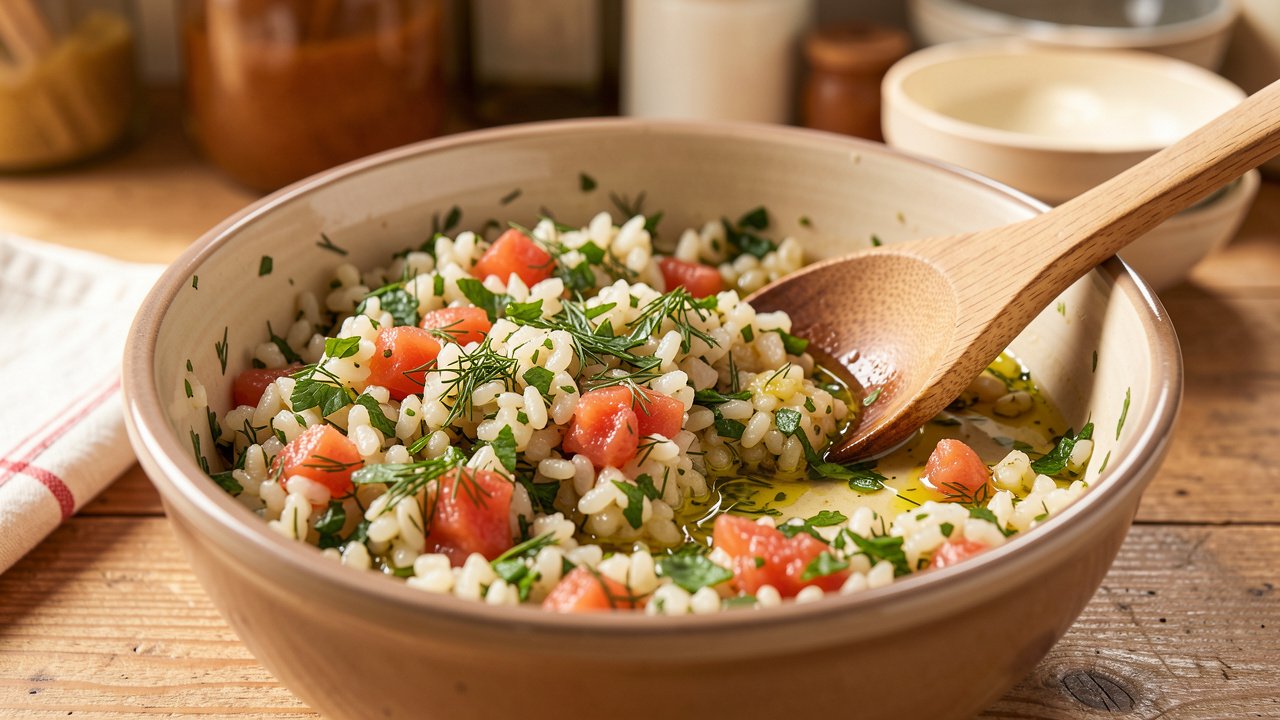
Soften the chopped onion in a splash of olive oil over medium heat for 5 to 6 minutes, then stir in the garlic for a minute more. Take it off the heat and add the rinsed raw rice, the reserved tomato pulp, tomato paste, chopped parsley, mint, and dill, sugar, salt, black pepper, and most of the olive oil. Stir well; the mixture should be loose and glistening, not stiff. Taste and adjust so it is boldly seasoned.
Stuff and Arrange
Spoon the rice mixture into each tomato and pepper until about three-quarters full, leaving room for the rice to swell. Cover each with its reserved lid. Peel and cut the potatoes into thick wedges, season them with salt and pepper, and tuck them into the gaps between the stuffed vegetables so everything is held snugly in place.
Add Liquid and Oil
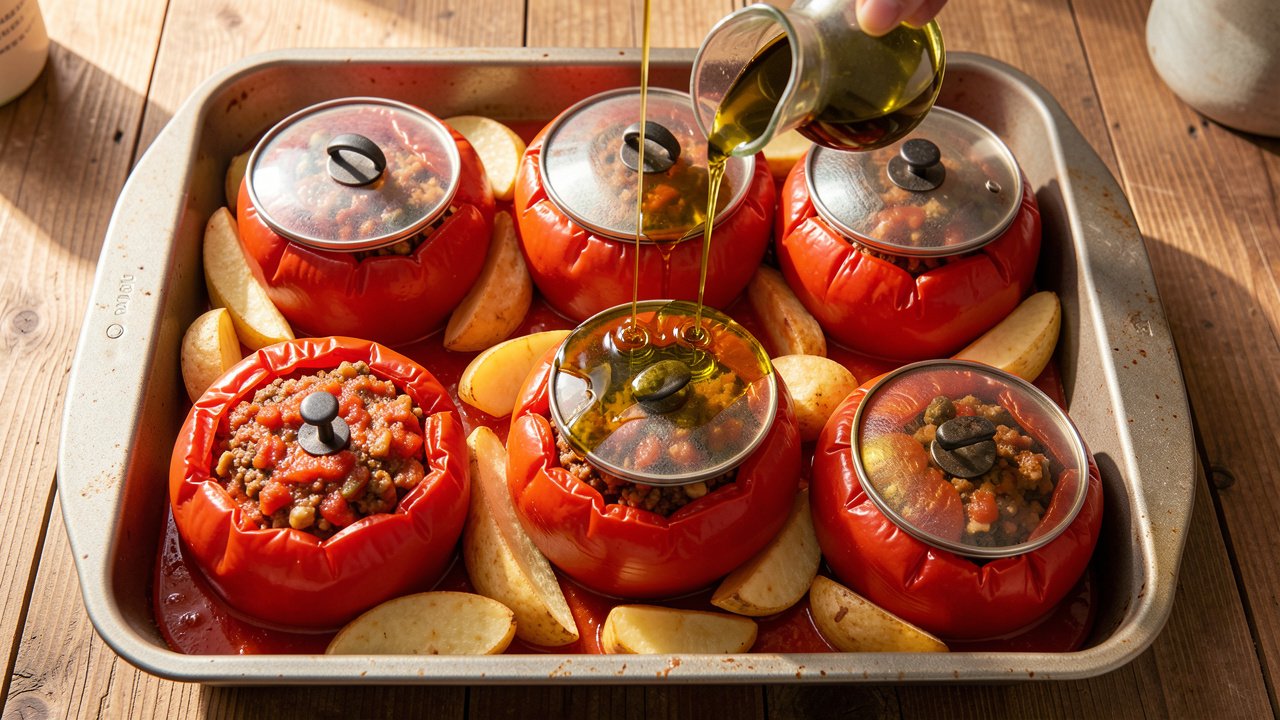
Whisk the water or vegetable stock with any leftover tomato pulp and pour it into the bottom of the dish until it comes about a third of the way up the vegetables. Drizzle the remaining olive oil generously over everything, including the potatoes and the lids. This oil and liquid become the sauce that cooks the rice and keeps the dish from drying out.
Bake Low and Slow
Cover the dish loosely with foil and bake at 375 F (190 C) for about 45 minutes so the rice steams and softens. Remove the foil and bake for another 25 to 35 minutes until the rice is tender, the vegetables have slumped and caramelized, and the tops are golden. If the tray looks dry at any point, add a splash of warm water.
Rest, Then Serve Warm
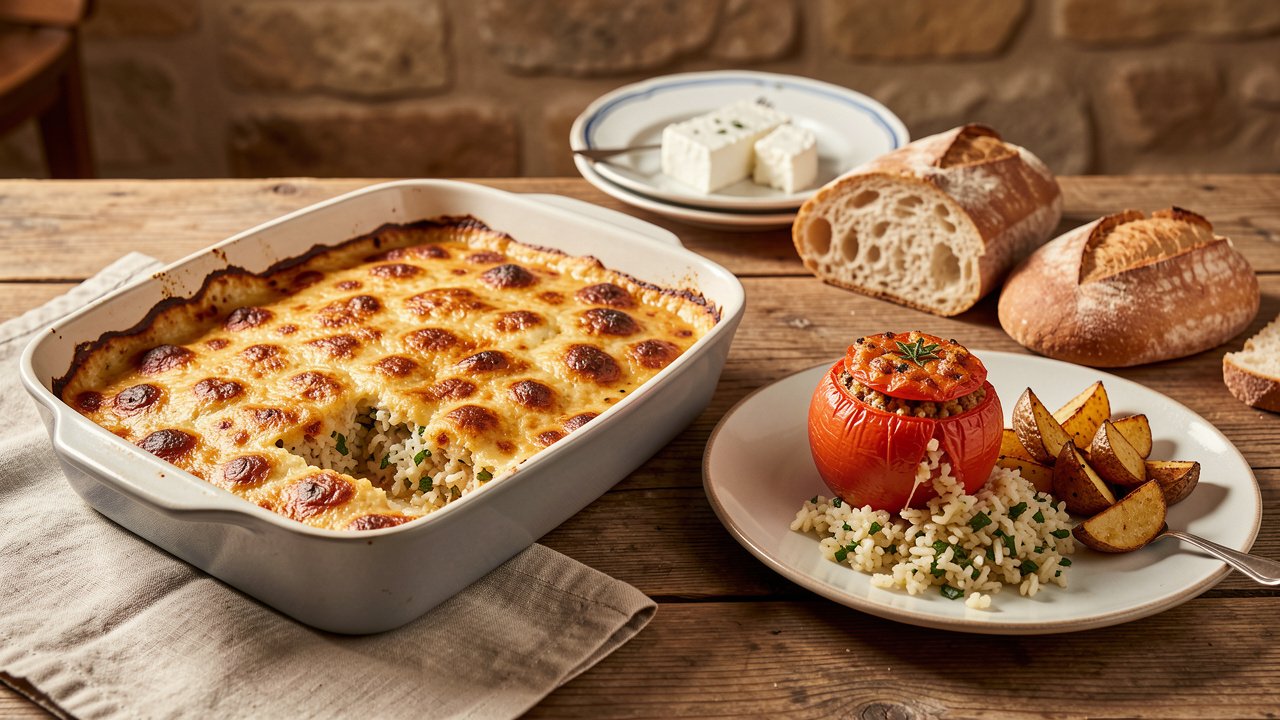
This is the step most people skip. Let the gemista rest out of the oven for at least 15 to 20 minutes. The rice finishes absorbing the juices, the flavors settle, and the vegetables firm up enough to serve neatly. Gemista is meant to be eaten warm or at room temperature, never piping hot, with bread and a little feta on the side if you like.
Chef’s Tips From Real Kitchen Testing
Taste the raw filling and make it a little too bold. The long bake and the swelling rice mellow the seasoning dramatically, so timid filling gives you flat gemista.
Be braver with the olive oil than you think you should. Ladera dishes rely on it, and it is what turns the tomato juices at the bottom into a glossy sauce instead of a dry tray.
Fill only three-quarters of the way. Rice roughly triples in volume, and a packed vegetable will split open and spill its filling into the dish before it is done.
Recipe Variations
Serving Suggestions
- Crusty bread to mop up the olive oil sauce
- A wedge of feta cheese on the side
- A simple Greek salad with cucumber and olives
- Thick strained yogurt with a drizzle of oil
Nutrition Facts
| Nutrient | Amount per serving |
|---|---|
| Calories | 390 |
| Protein | 6 g |
| Carbohydrates | 48 g |
| Fat | 20 g |
| Saturated Fat | 3 g |
| Fiber | 6 g |
| Sugar | 10 g |
| Sodium | 640 mg |
Values are estimates per serving and vary with the exact ingredients and brands you use.
Make-Ahead Tips
Gemista is a wonderful make-ahead dish, and many Greek cooks insist it tastes even better the next day once the herbs and olive oil have settled into the rice. Assemble the stuffed tray, covered, up to a day ahead and bake when ready, or bake fully and reheat gently. Because it is served warm or at room temperature, it is also ideal for taking to a gathering.
Storage, Freezing & Reheating
Common Mistakes to Avoid
Troubleshooting
Rice still hard after baking? It ran out of moisture. Add a good splash of warm water, cover with foil, and return it to the oven until the grains soften.
Vegetables burst open? They were overfilled or baked too hot. Next time fill only three-quarters full and keep the oven moderate so they soften gently.
Dish tastes flat? It almost always needs salt and more olive oil, plus a fresh scatter of mint or dill stirred through just before serving.
A Note on Greek Ladera Cooking
Gemista sits at the heart of the Greek tradition of ladera, the family of vegetable dishes slow-cooked in plenty of olive oil until soft and sweet. Green beans, okra, peas, and stuffed vegetables all belong to this group, the backbone of everyday Greek home cooking, especially during the many fasting periods when the table is naturally plant-based. Ladera dishes are almost always served warm or at room temperature rather than hot, because that is when the olive oil tastes fruitiest and the flavors are most rounded. It is unhurried food meant to be picked at with bread. If you love cooking with ripe tomatoes, browse our full collection of tomato recipes, or turn a summer glut into fresh tomato salsa alongside.
Frequently Asked Questions
More Tomato Recipes to Try
Last updated: September 23, 2026