Spanish Recipes
Spanish Meatballs in a Garlicky Tomato and Sweet-Pepper Sauce
Last updated: November 4, 2026
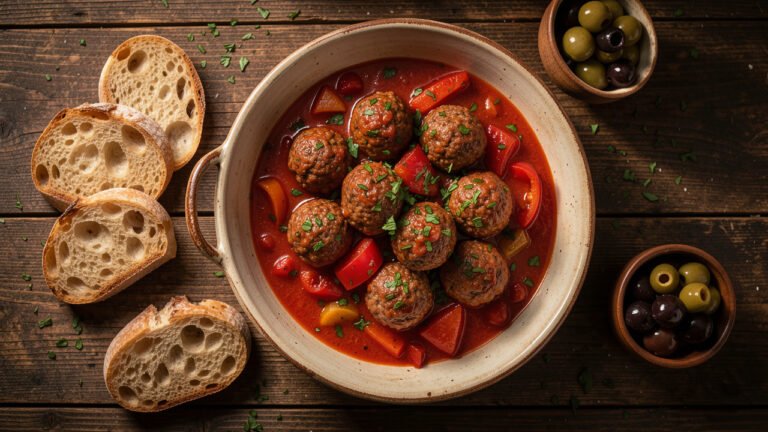
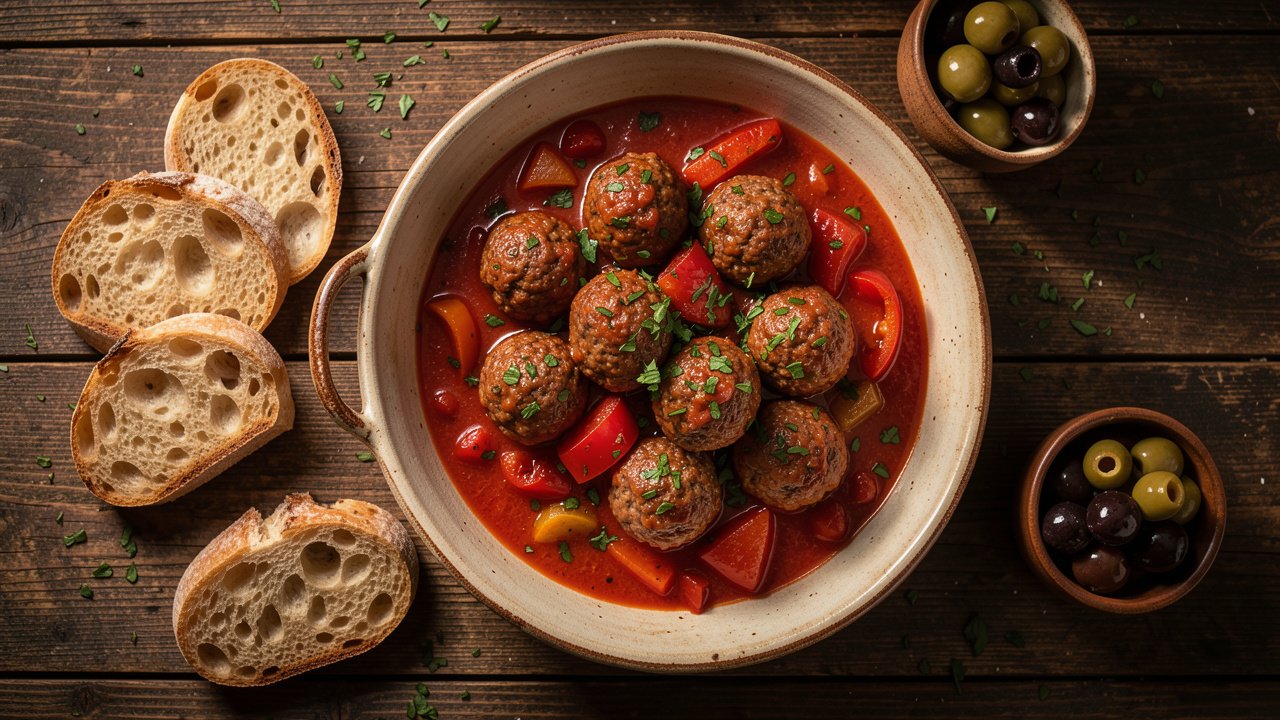
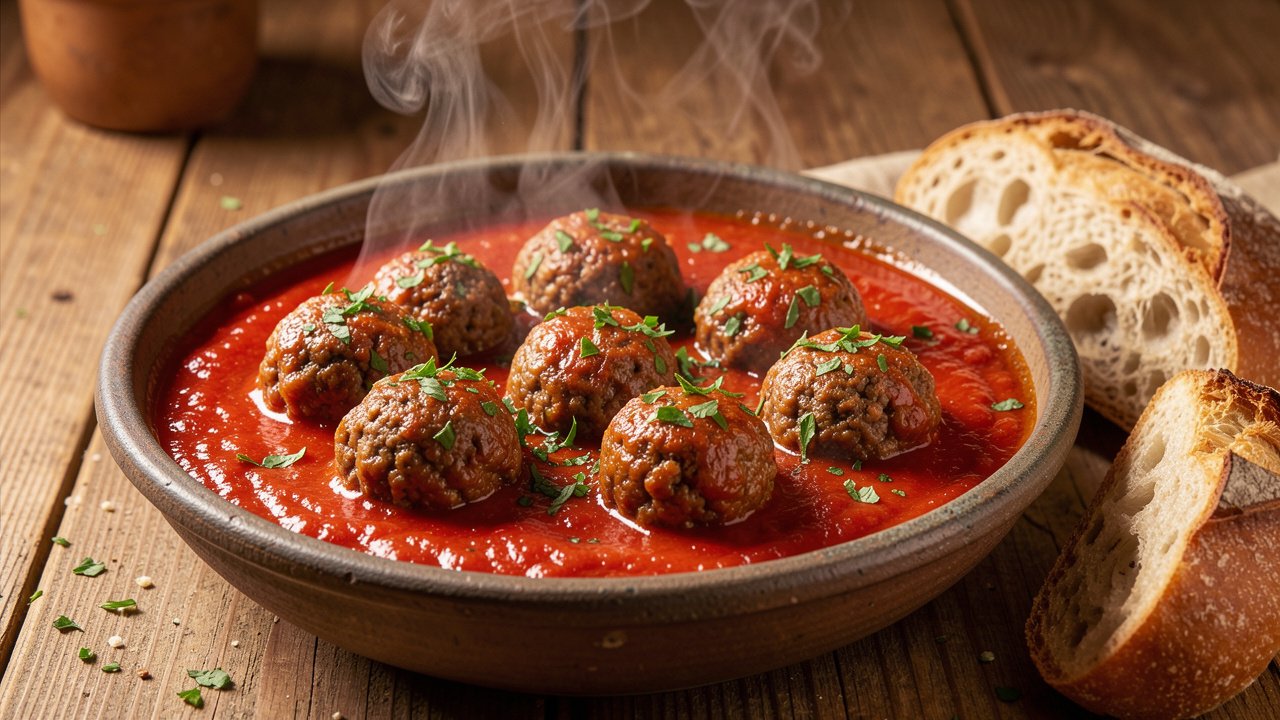
Albondigas en salsa de tomate is the kind of dish that turns a quiet afternoon into a feast. Small, tender beef meatballs are browned until golden, then gently simmered in a deep red sauce built from garlic, sweet pepper, and tomato until they soak up every bit of flavor. It is tapas-bar cooking at its most generous, meant to be shared straight from the pan.
The whole thing comes together in one wide pan. You mix and roll the meatballs, brown them just for color, then build a sweet tomato sofrito in the same pan and let the meatballs finish cooking right in the sauce. Put a loaf of bread on the table, pour everyone a share, and let the sauce do the talking.
Why These Albondigas en Salsa de Tomate Work
Great albondigas are really two things done well: a meatball that stays tender and juicy, and a tomato sauce with real depth of flavor. Get those two right and everything else takes care of itself. The recipe here keeps the meatballs soft with a simple soaked-bread binder, then builds a sweet, garlicky sauce that the meatballs finish cooking in.
The sauce starts the way most good Spanish cooking does, with onion and sweet red pepper softened slowly in olive oil, then garlic and tomato paste stirred in and toasted for a minute to concentrate their flavor. Crushed tomatoes and a splash of beef broth join to make a thick, spoonable sauce rather than a thin soup, because this is a saucy tapa meant to cling to the meatballs and to bread.
Handling the meatballs gently is the heart of the method. They are browned only to color in the hot pan, never cooked all the way through, so they can finish poaching in the simmering sauce and stay silky. As they cook they release a little savory richness into the sauce, which is part of what makes the dish so moreish.
It is also wonderfully forgiving. Albondigas are home cooking first and tapas-bar fare second, so the exact seasoning is up to you. Keep the sweet-pepper sofrito and the garlic constant, roll the meatballs small and even, and you will get a pan that tastes like a corner bar in Seville every single time.
Pro observation: These albondigas are fully halal as written, with no forbidden ingredients. The sauce is thickened with beef broth and sweet pepper rather than anything off-limits, so it stays rich, deep, and family-friendly.
Ingredients
Kitchen Measurement Converter
Need to convert an amount while you measure? Pick a category, enter a value, and the result updates instantly.
Ingredient Notes & Substitutions
Beef & Lamb
A good ground beef with a little fat keeps the meatballs juicy. For a more traditional flavor, use half beef and half lamb, which gives a richer, slightly sweeter bite. Both are naturally suitable here; pick whatever your butcher does best and keep it fully halal.
Soaked Bread & Egg
Soft white bread soaked and squeezed is the secret to a tender albondiga, melting into the meat so it never turns hard. The egg binds everything so the balls hold their shape. For a gluten-free version, use soaked gluten-free bread or a little cooked rice instead.
Sweet Pepper & Onion
Red bell pepper gives the sauce its gentle sweetness and classic Spanish color; a ramiro or other sweet red pepper works beautifully too. Soften it slowly with the onion so the base turns mellow and jammy rather than sharp. Green pepper works but tastes greener.
Tomato & Broth
Crushed tomatoes give a smooth, thick sauce, while tomato paste deepens the color and flavor. Beef broth adds savory depth and keeps the whole dish fully halal, with no forbidden ingredients. Smoked paprika is what gives the sauce its warm, unmistakably Spanish backbone.
Equipment
- Large wide pan or skillet
- Lid for the pan
- Large mixing bowl
- Sharp knife and board
- Wooden spoon
- Tongs or a slotted spoon
Before You Start
1. Chill the mince and lightly wet your hands before rolling. Warm hands smear the fat and the meatballs crack open as they brown; cold meat and damp palms give you smooth, even balls that stay round all the way through the sauce.
2. Brown the meatballs only to color, not all the way through. Leaving the centers barely raw lets them finish poaching in the simmering sauce and stay juicy, while cooking them fully in the dry pan first leaves them tough and dry.
3. Finely chop the pepper and onion before the meat hits the pan. Once the meatballs are simmering you cannot break down the sofrito any further, so the sweet, smooth base has to be built first or the sauce stays chunky and sharp.
Step-by-Step Instructions
Albondigas come together in stages, so have your mise en place ready: mix the meatball ingredients, chop the onion and pepper, mince the garlic, and open the tomatoes before you start cooking so each stage flows into the next.
Mix and Shape the Meatballs
In a large bowl, combine the ground beef, the soaked and squeezed bread, egg, half the minced garlic, half the parsley, the smoked paprika, and a good pinch of salt and pepper. Mix with a light hand just until it comes together, then roll into small, even meatballs about the size of a walnut. Keep them cold until you cook.
Brown the Meatballs
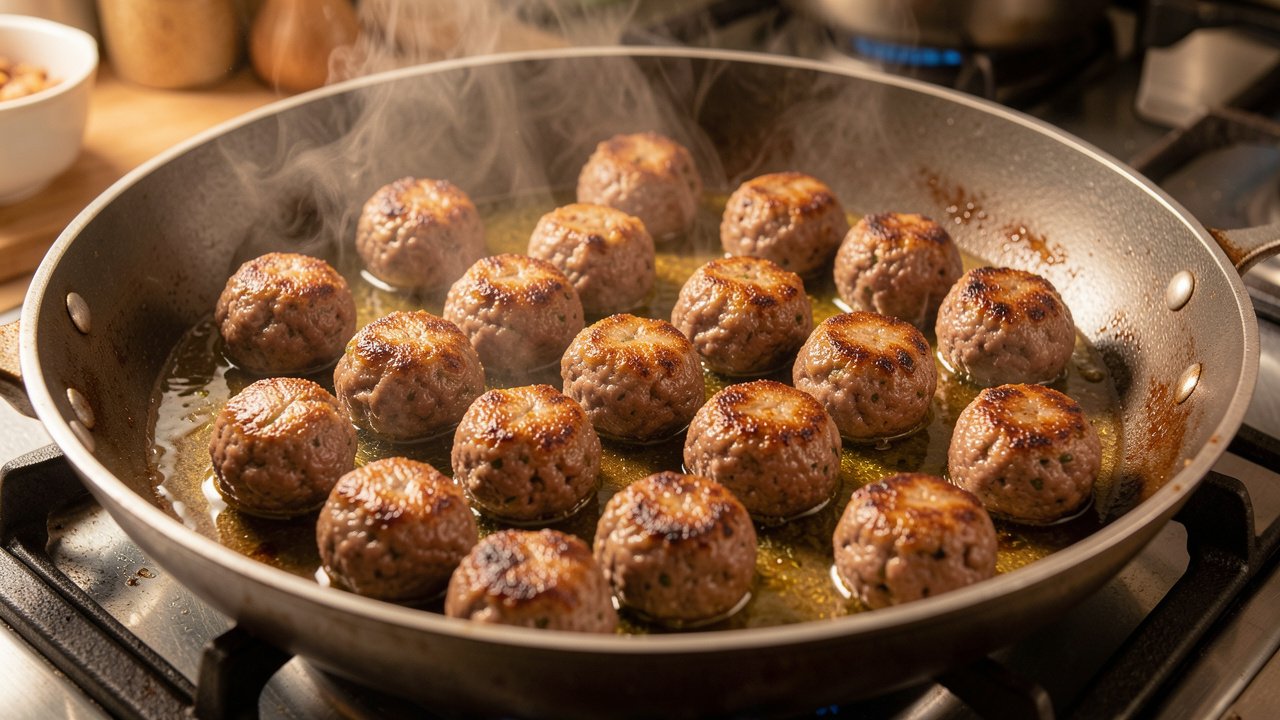
Warm the olive oil in a large wide pan over medium-high heat. Add the meatballs in batches, leaving space around each one, and brown them on all sides for 3 to 4 minutes until golden. They do not need to be cooked through yet. Lift them out onto a plate and set aside.
Build the Sweet Sofrito
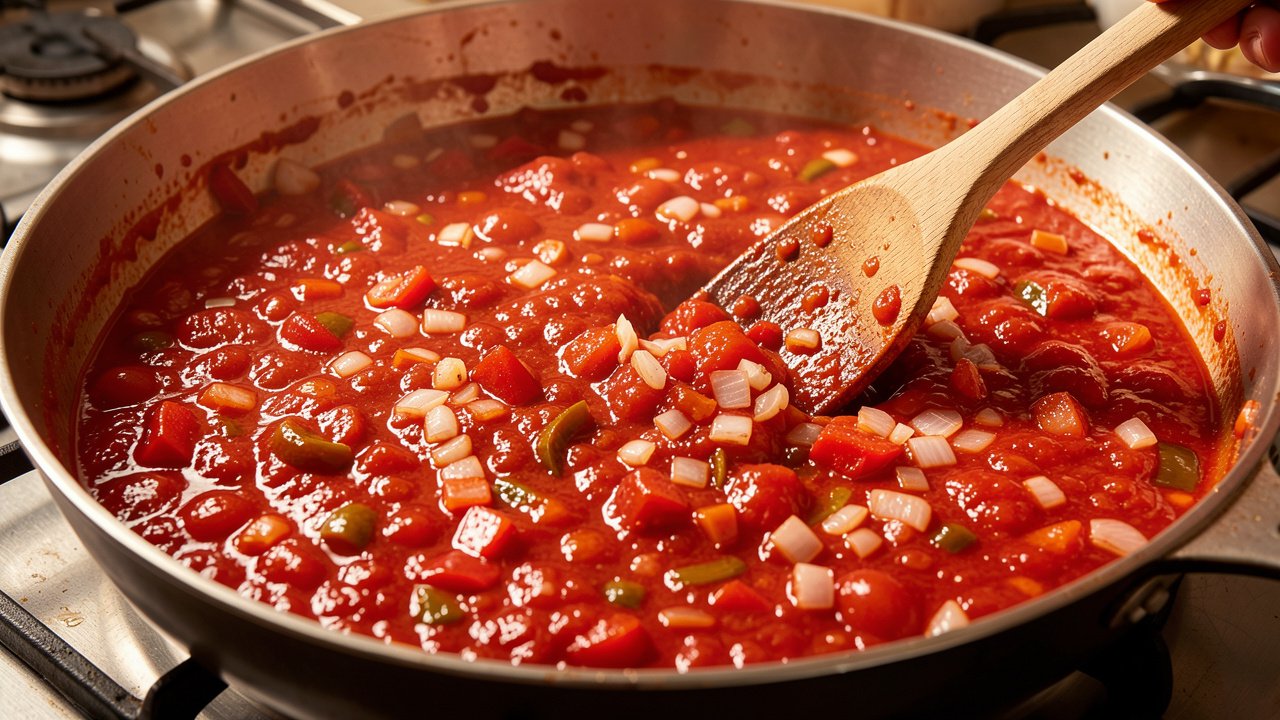
Lower the heat to medium and add the chopped onion and red bell pepper to the same pan with a pinch of salt. Cook 6 to 8 minutes, stirring, until soft and sweet. Stir in the remaining garlic and the tomato paste and cook for another minute, so the paste darkens slightly and loses its raw edge.
Simmer the Tomato Sauce
Pour in the crushed tomatoes and the beef broth, then stir and season with salt and black pepper. Bring to a gentle simmer and cook, uncovered, for about 10 minutes so the sauce thickens and the flavors marry. Taste and adjust the seasoning now, before the meatballs go back in.
Return the Meatballs to the Sauce
Nestle the browned meatballs back into the sauce along with any juices from the plate. Spoon a little sauce over the top, cover the pan, and simmer gently for 15 to 18 minutes, turning once, until the meatballs are cooked through and have soaked up the sauce. Keep it at a bare simmer so they stay round and tender.
Finish and Serve
Take the pan off the heat and scatter over the remaining chopped parsley. Taste the sauce and add a little more salt if it needs it, or a pinch of sugar if the tomatoes are sharp. Serve the albondigas warm, straight from the pan, with plenty of crusty bread for the sauce.
Chef’s Tips From Real Kitchen Testing
Roll the meatballs small and uniform, about walnut size. Even balls brown at the same rate and cook through in the sauce together, so none are raw inside while others overcook.
Mix the meat with a light hand and never knead it. Overworked mince goes dense and bouncy; stop as soon as the egg and bread disappear into the meat.
Let the meatballs finish in the sauce, not the dry pan. Browning gives color, but poaching in the simmering tomato keeps them juicy and lets them trade flavor with the sauce.
Recipe Variations
Serving Suggestions
- Thick slices of warm, crusty bread for the sauce
- Patatas bravas or simple fried potatoes
- Fluffy white rice to soak up the sauce
- A spread of other small tapas to share
Nutrition Facts
| Nutrient | Amount per serving |
|---|---|
| Calories | 420 |
| Protein | 28 g |
| Carbohydrates | 22 g |
| Fat | 24 g |
| Saturated Fat | 8 g |
| Fiber | 5 g |
| Sugar | 10 g |
| Sodium | 720 mg |
Values are estimates per serving and vary with the exact meat and brands you use.
Make-Ahead Tips
Both the meatballs and the sauce are even better made a day ahead. Shape and brown the meatballs and build the sauce in advance, then store them together in the fridge; when you are ready to eat, reheat gently and let the meatballs finish simmering in the sauce. You can also roll the raw meatballs a few hours ahead and chill them, which helps them hold their shape.
Storage, Freezing & Reheating
Common Mistakes to Avoid
Troubleshooting
Meatballs falling apart? Too little binder or too much handling. Add a little more soaked bread to the mix next time, and chill the shaped balls for 15 minutes before browning so they firm up.
Sauce too thin? Simmer it uncovered a few minutes longer, or stir in an extra spoonful of tomato paste to thicken and deepen it before the meatballs go back in.
Sauce too sharp or acidic? A pinch of sugar or a longer, gentler simmer rounds out the tomatoes, and the sweet red pepper mellows the acidity further as it cooks down.
A Note on Spanish Cooking
Albondigas carry their history in their name: the word comes from the Arabic al-bunduqa, meaning “the little ball”, a reminder of the centuries of Moorish influence on the Spanish kitchen. Meatballs in sauce have been cooked across Spain for generations, and today a pan of albondigas en salsa de tomate is one of the most beloved tapas, as at home on a bar counter in Seville as it is on a Sunday family table.
It is worth clearing up one common mix-up: this is not the same as the Mexican sopa de albondigas. The Spanish dish is a thick, saucy tapa where the meatballs are the star and the tomato clings to them, while the Mexican version is a brothy soup with meatballs floating in a light, vegetable-filled broth. If you want a bowl of meatballs in liquid, that is the Mexican dish; this one is all about the sauce.
Albondigas also sit in a wide family of tomato-sauced comfort food around the world. If you love this, you are in good company with the breaded, tomato-topped Argentine-Italian milanesa napolitana, the slow-braised Italian chicken cacciatore, and, for a brothier cousin, the Mexican caldo de res. All of them turn humble meat and tomato into something generous and comforting.