Lebanese Recipes
Green Beans Braised in Tomato and Olive Oil
Last updated: November 4, 2026
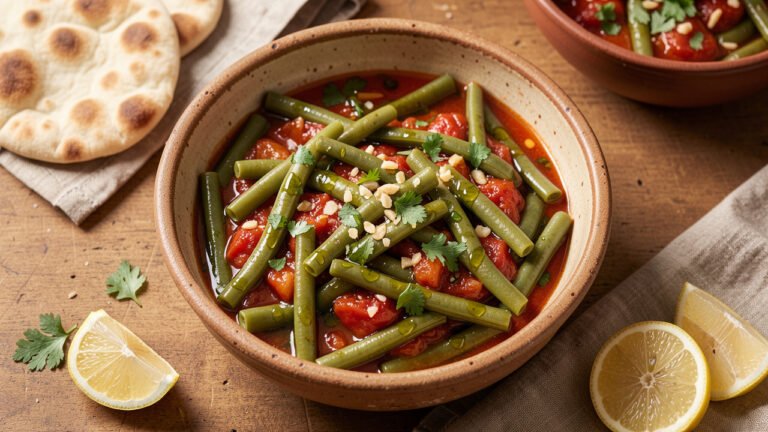
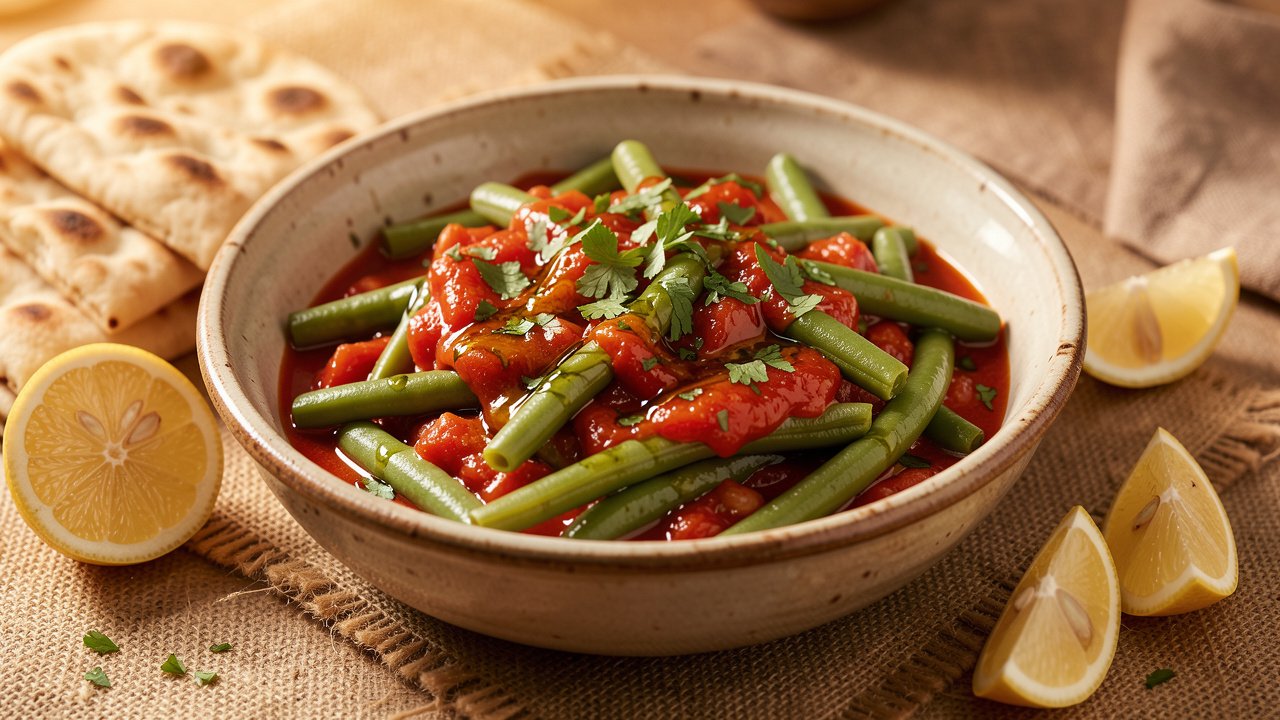
Loubieh bi zeit is one of those quiet Levantine dishes that tastes far more generous than its short ingredient list suggests. Fresh green beans are braised low and slow with onion, garlic, and ripe tomatoes in a good pour of olive oil until they turn meltingly soft and glossy. It is humble, nourishing, and completely plant-based, the kind of dish that sits on the mezze table next to hummus and pickles and somehow disappears first.
The whole thing happens in one wide pan. You soften the aromatics, build a quick tomato sauce, then let the beans braise gently until they give way and drink up the oil and tomato. There is no rushing it and no last-minute timing to worry about; in fact, loubieh bi zeit is usually made ahead and served cool, so the flavors have time to settle into something deep and savory.
Why This Loubieh bi Zeit Works
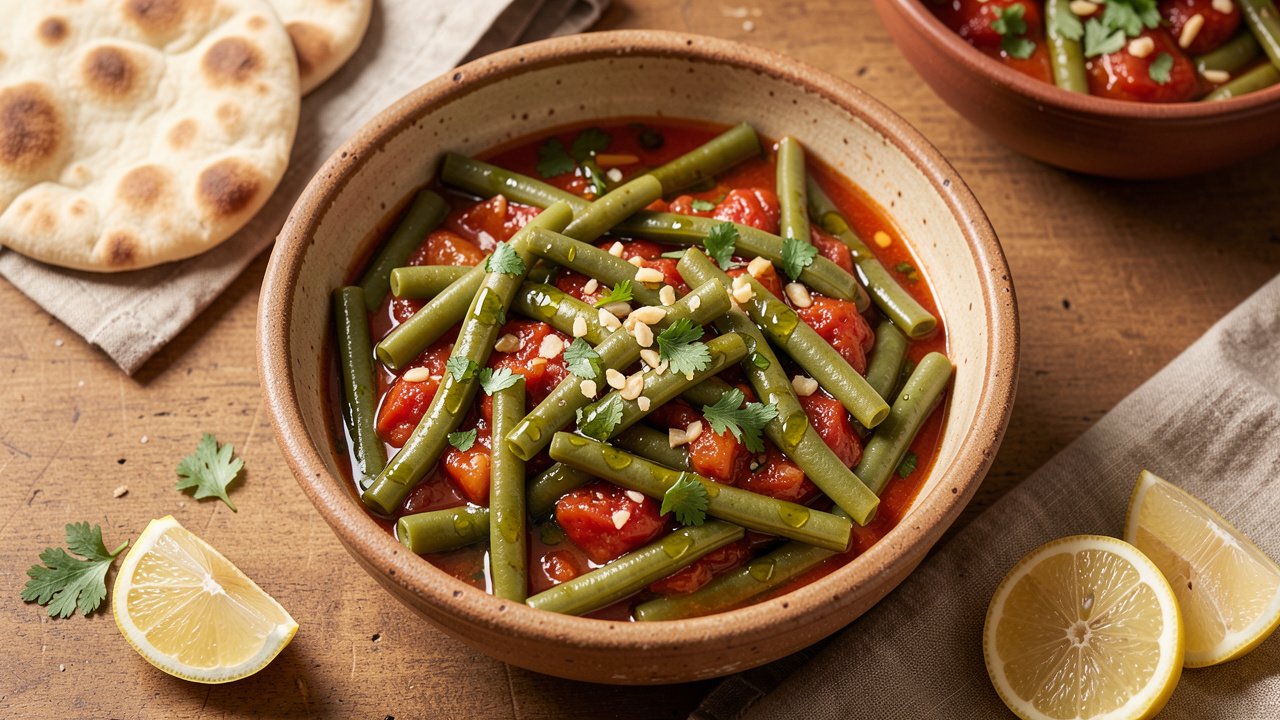
Great loubieh bi zeit is really two things done well: a tomato sauce with real garlicky depth, and green beans braised long enough to go completely tender. Get those two right and the dish takes care of itself. The recipe here builds a fast but full-flavored tomato base, then lets the beans cook down slowly in it so they soften all the way through and soak up every bit of the oil and sauce.
The base starts the way most good Levantine vegetable cooking does, with onion softened in a generous amount of olive oil, then plenty of garlic and a spoon of tomato paste stirred in and toasted for a minute to concentrate its sweetness. Chopped ripe tomatoes join to make a loose, savory sauce rather than a thick paste, because the beans need liquid to braise in and the finished dish should glisten with tomato and oil.
The slow braise is the heart of the method. Snappy, crisp-tender beans are wrong here; loubieh bi zeit wants its beans cooked until they slump and give way easily, which is when they finally take on the flavor of the sauce. A gentle, covered simmer gets them there without scorching the tomato or boiling off the braising liquid.
It is also made to be eaten cool. Olive oil carries flavor beautifully at room temperature, so a batch that rests for half an hour, or overnight, tastes rounder and more savory than one served straight from the pan. That make-ahead ease is exactly why it is a mezze-table staple across Lebanon.
Pro observation: Loubieh bi zeit is naturally vegan and fully halal as written, with no forbidden ingredients. Every bit of its richness comes from olive oil, tomato, garlic, and the beans themselves, so you never miss a thing.
Ingredients
Kitchen Measurement Converter
Need to convert an amount while you measure? Pick a category, enter a value, and the result updates instantly.
Ingredient Notes & Substitutions
Green Beans
Fresh beans are best, whether slim French beans or wide flat romano beans, which are especially traditional. Trim the stem ends and halve long beans so they fit the pan. Frozen whole green beans work in a pinch; add them straight from frozen and expect a slightly softer result.
Olive Oil
This is a dish named for its oil, so use a good extra-virgin olive oil and do not be shy with it. The oil both braises the beans and becomes part of the finished sauce. A final drizzle of raw oil just before serving lifts the whole dish.
Tomatoes & Paste
Ripe, in-season tomatoes give the sweetest sauce; in winter, a can of chopped tomatoes is a reliable swap. The spoon of tomato paste deepens the color and backstops out-of-season fruit, so keep it even when your fresh tomatoes are excellent.
Aromatics & Spice
Garlic and a little ground coriander are the classic Lebanese signature; some cooks add it fried with extra garlic at the end. Swap cilantro for flat-leaf parsley if you prefer, and a pinch of sugar balances the acidity of sharper tomatoes.
Equipment
- Large wide pan or pot
- Lid for the pan
- Wooden spoon
- Sharp knife and board
- Colander
- Serving platter
Before You Start
1. Commit to braising the beans until fully soft. Loubieh bi zeit is meant to be meltingly tender, not crisp, so plan for a long, gentle braise. Beans pulled while still snappy taste raw and will not drink up the tomato-oil sauce that makes the dish.
2. Pour the olive oil with a confident hand. The “zeit” is the whole point; the oil braises the beans and becomes the sauce. Skimp on it and the dish turns watery and dull instead of glossy and savory, so measure the full amount rather than eyeballing less.
3. Finish it at least 30 minutes before you want to eat. This dish is served warm or at room temperature, and resting lets the oil and tomato settle into the beans. Serve it straight off the heat and it tastes flatter than the same pot given half an hour to come together.
Step-by-Step Instructions
Loubieh bi zeit is a relaxed, one-pan braise, so there is no frantic timing. Trim the beans, chop the onion and tomatoes, and mince the garlic before you start, then let the pan do the slow work while you set the mezze table.
Prep the Beans and Aromatics
Trim the stem ends from the green beans and halve any long ones so they fit the pan, then rinse and drain them in a colander. Finely chop the onion, mince the garlic, and chop the ripe tomatoes. Having everything ready means the braise can go straight from one step to the next.
Soften the Onion and Garlic
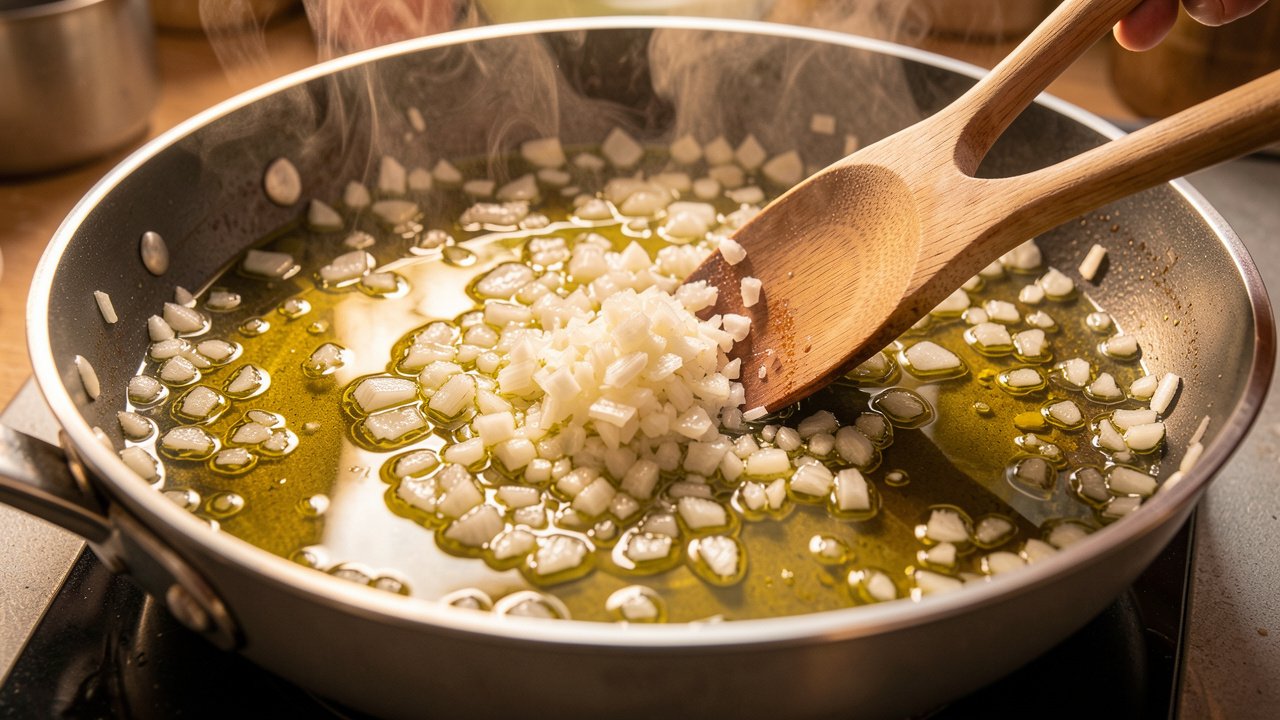
Warm the olive oil in a large wide pan over medium heat. Add the onion with a pinch of salt and cook 5 to 6 minutes until soft and translucent, then stir in the garlic and cook for 1 minute until fragrant. Keep the heat gentle so the garlic sweetens rather than browns.
Build the Tomato Sauce
Stir in the tomato paste and cook it for a minute so it darkens and loses its raw edge, then add the chopped tomatoes, ground coriander, sugar, and a good pinch of salt and black pepper. Let it simmer 5 minutes, stirring now and then, until the tomatoes collapse into a loose, glossy sauce.
Add the Green Beans
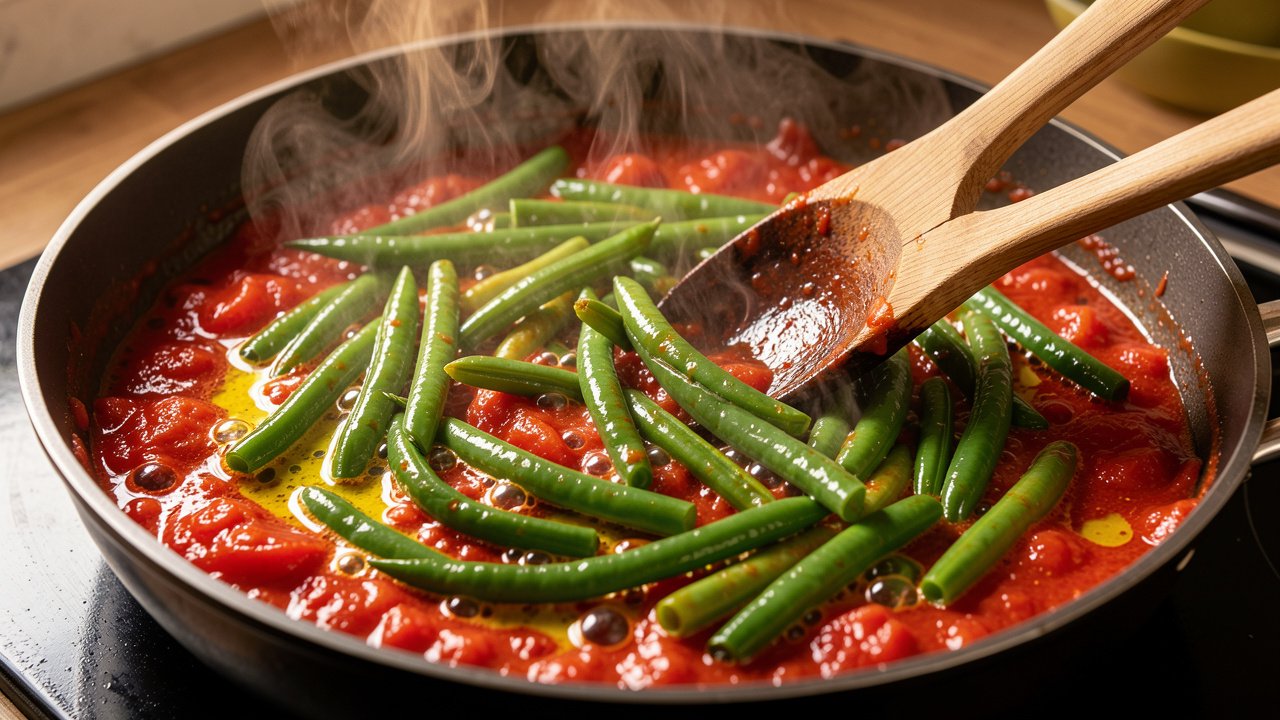
Tip the green beans into the pan and stir to coat them in the sauce, then pour in the water. Bring everything to a gentle simmer, turning the beans so they settle into the liquid. The beans will look crowded at first and will soften down as they braise.
Braise Low and Slow
Cover the pan, lower the heat, and let the beans braise gently for 30 to 35 minutes, stirring once or twice, until they are completely tender and the sauce has thickened around them. Add a splash more water if the pan looks dry before the beans are soft. They are ready when a bean bends without snapping.
Rest and Serve
Take the pan off the heat and stir in the chopped cilantro and a final drizzle of olive oil, then taste and adjust the salt. Let the loubieh bi zeit rest for at least 30 minutes so the flavors settle. Serve it warm or at room temperature with warm pita, as part of a mezze spread.
Chef’s Tips From Real Kitchen Testing
Braise the beans well past crisp-tender. The dish is supposed to be soft and silky; a bean should bend, not snap, which is exactly when it stops tasting raw and starts tasting of the sauce.
Use more olive oil than feels normal. It is the defining ingredient, and it both carries the braise and becomes the sauce, so a generous pour is what gives loubieh bi zeit its glossy, savory body.
Make it ahead and serve it cool. A rest of half an hour, or a night in the fridge, lets the oil and tomato soak deep into the beans, and the flavor is noticeably rounder than straight from the pan.
Recipe Variations
Serving Suggestions
- Warm pita or flatbread for scooping
- A mezze spread with hummus, olives, and pickles
- Extra lemon wedges to squeeze over the top
- A bowl of plain rice for a fuller meal
Nutrition Facts
| Nutrient | Amount per serving |
|---|---|
| Calories | 240 |
| Protein | 5 g |
| Carbohydrates | 20 g |
| Fat | 17 g |
| Saturated Fat | 2.5 g |
| Fiber | 6 g |
| Sugar | 9 g |
| Sodium | 480 mg |
Values are estimates per serving and vary with the exact tomatoes and amount of olive oil you use.
Make-Ahead Tips
Loubieh bi zeit is a natural make-ahead dish and arguably tastes best the next day. Cook it through completely, cool it to room temperature, and refrigerate. Bring it back to room temperature before serving, or warm it gently, and add a fresh drizzle of olive oil and a scatter of cilantro to wake it up.
Storage, Freezing & Reheating
Common Mistakes to Avoid
Troubleshooting
Sauce too watery? Uncover the pan for the last few minutes of braising and let it reduce, or stir in an extra spoonful of tomato paste to tighten and deepen it.
Beans still tough? They simply need longer; add a splash of water, re-cover, and keep braising gently until a bean bends without snapping, checking every few minutes.
Tastes flat or sharp? It usually wants salt, a pinch more sugar to balance acidic tomatoes, or a final drizzle of raw olive oil and a squeeze of lemon to brighten it.
A Note on Lebanese Cooking
The name says exactly what the dish is: in Arabic, loubieh means green beans and bi zeit means “in oil.” It belongs to a whole family of Levantine “bi zeit” dishes, vegetables slow-cooked in olive oil and eaten cool, that fill the mezze tables of Lebanon, Syria, and Palestine. These were everyday home cooking long before they became restaurant staples, a thrifty way to turn a glut of summer vegetables into something that keeps and tastes better for the wait.
The dish it is most often compared to is Greek fasolakia. The difference is one of both method and moment: fasolakia is usually served hot as a side alongside a main, while loubieh bi zeit is olive-oil braised and served cool as part of a mezze spread in its own right. It shares its slow-simmered, tomato-rich soul with other great one-pot vegetable and legume dishes, like Greek briam, Argentine guiso de lentejas, and North Indian rajma, all of them proof that tomatoes, time, and a little patience make the most generous food.
What keeps loubieh bi zeit on the table is exactly what created it: it is cheap, plant-based, forgiving, and better made ahead. Use good beans and good oil, braise them patiently, and let the pot rest, and you have a dish that tastes of a Levantine summer whatever the season.