Persian Recipes
Fried Eggplant and Beef Stew in Tomato and Saffron Sauce
Last updated: September 30, 2026
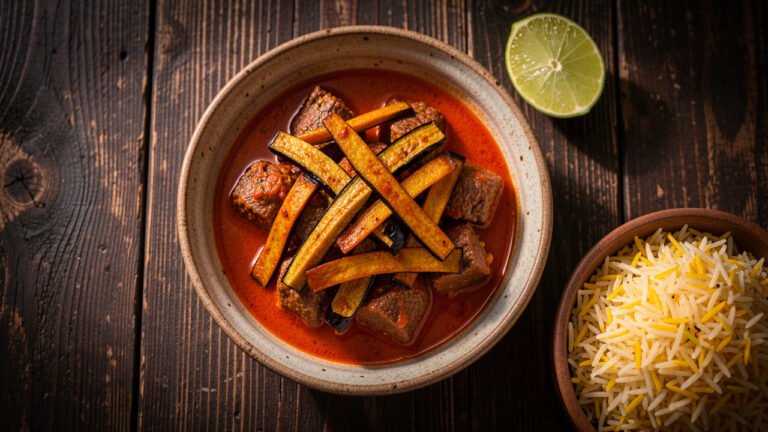
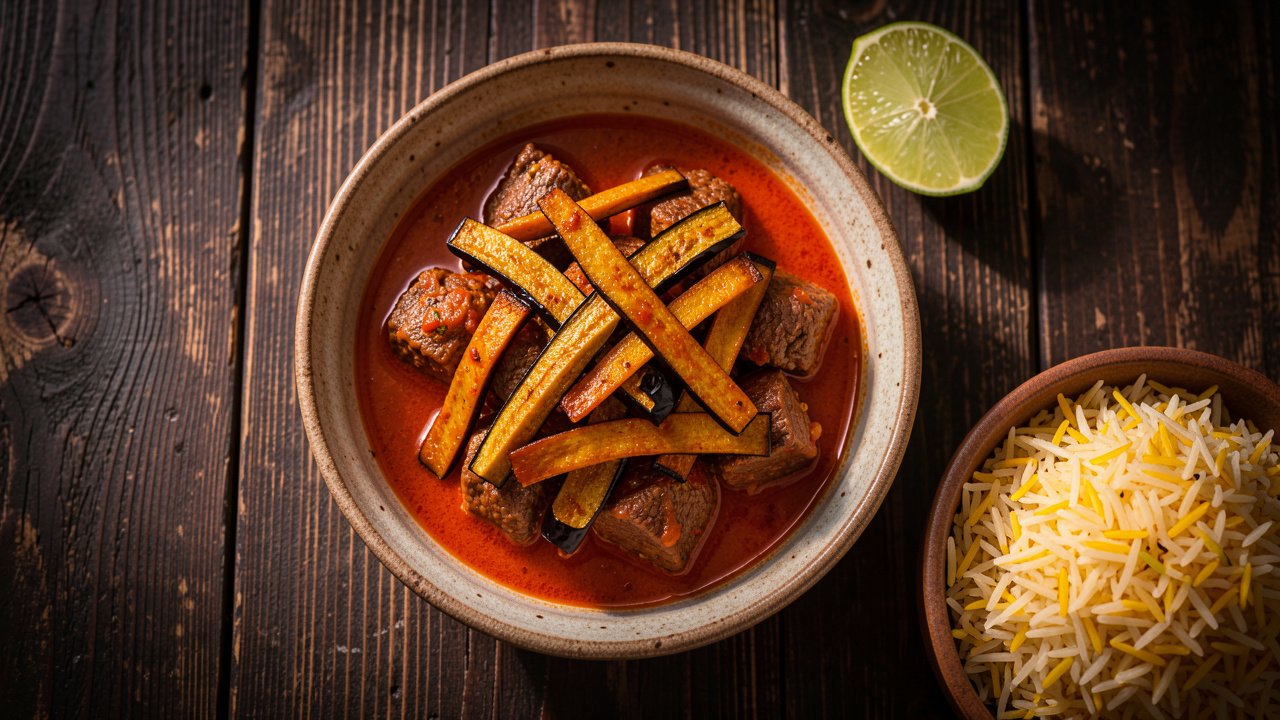
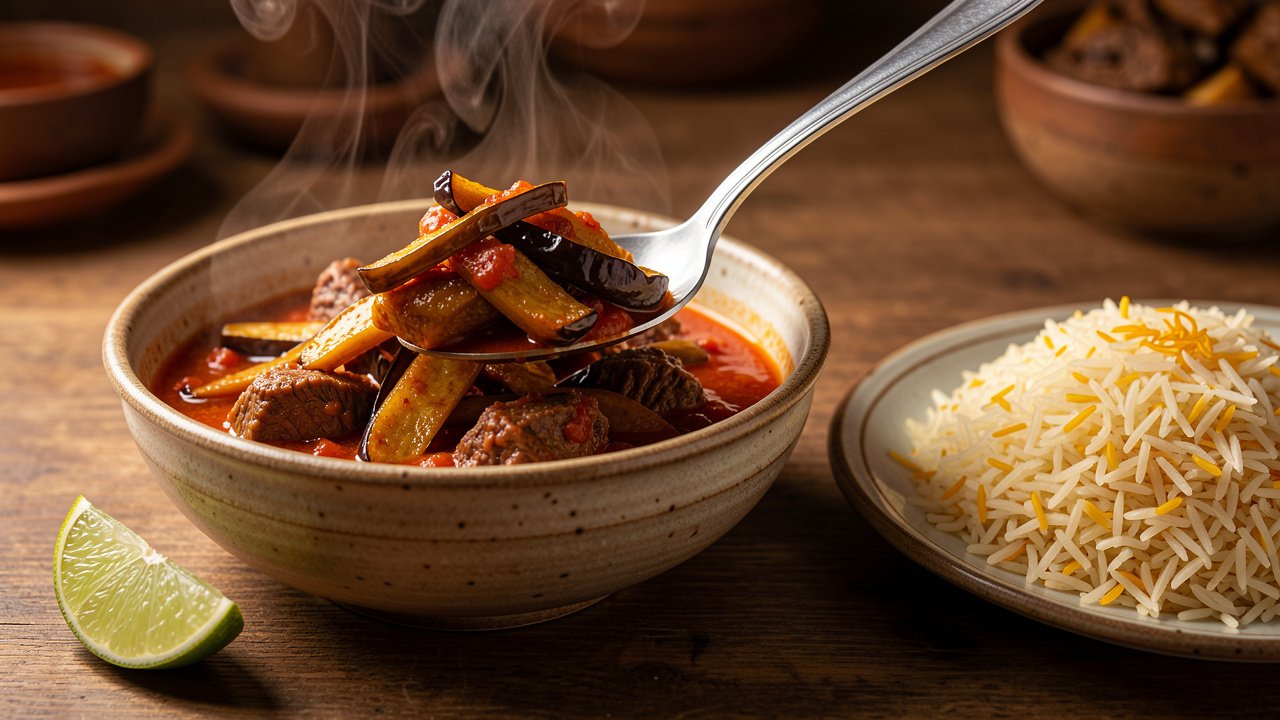
Khoresh bademjan is one of the cornerstones of the Persian table, a slow-simmered stew where fried eggplant and tender beef meet in a sauce built on tomato, turmeric, and saffron. The eggplant is the star: fried until golden so it turns meltingly soft yet still holds its shape, then laid gently into the pot to soak up all that savory sauce.
What makes it sing is the balance of rich and tart. A generous squeeze of lime or a splash of verjuice cuts through the deep, saffron-scented base, so every spoonful stays bright rather than heavy. Ladled over a mound of fluffy rice, it is exactly the kind of unhurried home cooking Persian kitchens are known for.
Why This Khoresh Bademjan Works
Great khoresh bademjan comes down to two things done with care: eggplant that is fried properly so it stays silky and intact, and a slow-built sauce that is deep with saffron and tomato yet bright with lime. Get those right and you have the balance of rich and tart that defines the dish.
The eggplant is treated as its own component. Salting it first draws out the bitter moisture so it fries golden and drinks in far less oil, and frying it to a firm, deep gold sets the flesh so it can go back into the pot without collapsing. This is the single step that separates a proper bademjan from a muddy, greasy one.
The sauce is where the beef gives back what it took. Browning the meat first builds a savory backbone, then onion, turmeric, tomato paste, and fresh tomato cook down into a glossy base. A pinch of bloomed saffron carries its color and perfume through the whole pot, and a long, gentle simmer melts the beef to tenderness.
Timing the eggplant is the final trick. It slides in near the end, so it has just enough time to absorb the sauce and turn velvety without dissolving. Finish with lime or verjuice off the heat, and the tartness stays fresh and lifted rather than cooking away into the background.
Pro observation: Khoresh bademjan is fully halal as written, with no forbidden ingredients. The tartness that some cooks reach for is provided here by fresh lime or verjuice, and the depth comes entirely from beef, tomato, turmeric, and bloomed saffron.
Ingredients
Kitchen Measurement Converter
Need to convert an amount while you measure? Pick a category, enter a value, and the result updates instantly.
Ingredient Notes & Substitutions
Beef & Lamb
Stewing beef such as chuck or shank is ideal, since the slow simmer melts the connective tissue into tenderness. Lamb shoulder is the classic alternative and adds a richer flavor. Cut the meat into even cubes so every piece cooks at the same pace.
Eggplant
Long, slender eggplants or firm globe eggplants both work well. Peel them and cut into thick strips or halves so they hold together after frying. Salting them first is not optional here; it is what keeps them silky rather than bitter and oil-logged.
Tomato & Saffron
Tomato paste deepens color and flavor, while chopped ripe tomatoes loosen the sauce into a glossy base. Bloom the saffron by grinding the threads and steeping them in a spoonful of hot water so their color and aroma spread evenly through the pot.
The Tart Note
Persian cooks brighten this stew with something sour. Fresh lime juice is the easiest choice, while verjuice (the tart juice of unripe grapes) is the traditional one. A splash of plain vinegar works in a pinch. Add it at the end so the brightness stays fresh.
Equipment
- Large heavy pot or Dutch oven
- Wide frying pan or skillet
- Colander for salting the eggplant
- Sharp knife and board
- Wooden spoon
- Small bowl for blooming saffron
Before You Start
1. Salt the eggplant and let it drain first. Toss the strips with salt in a colander and leave them 20 to 30 minutes, then pat them dry. This pulls out the bitter, spongy moisture so the eggplant fries golden and absorbs far less oil, staying silky instead of greasy.
2. Fry the eggplant to firm, deep gold before it ever meets the sauce. Frying sets the flesh so the strips hold their shape when they go back into the pot; soft, pale eggplant collapses into mush the moment it simmers.
3. Bloom the saffron before you cook. Grind the threads to a powder and steep them in a spoonful of hot water for a few minutes. Blooming releases the color and perfume into liquid, so it spreads through the whole sauce instead of sitting in dull specks.
Step-by-Step Instructions
Khoresh bademjan rewards a little patience, so set yourself up first. Salt the eggplant and let it drain, bloom the saffron, and cube the beef while the eggplant sits, so everything is ready when the pot gets going.
Salt and Drain the Eggplant
Peel the eggplants and cut them into thick strips or halves. Toss them with a generous pinch of salt in a colander and let them sit for 20 to 30 minutes so the bitter moisture beads up and drains away. Pat the strips completely dry with a towel before frying.
Fry the Eggplant Until Golden
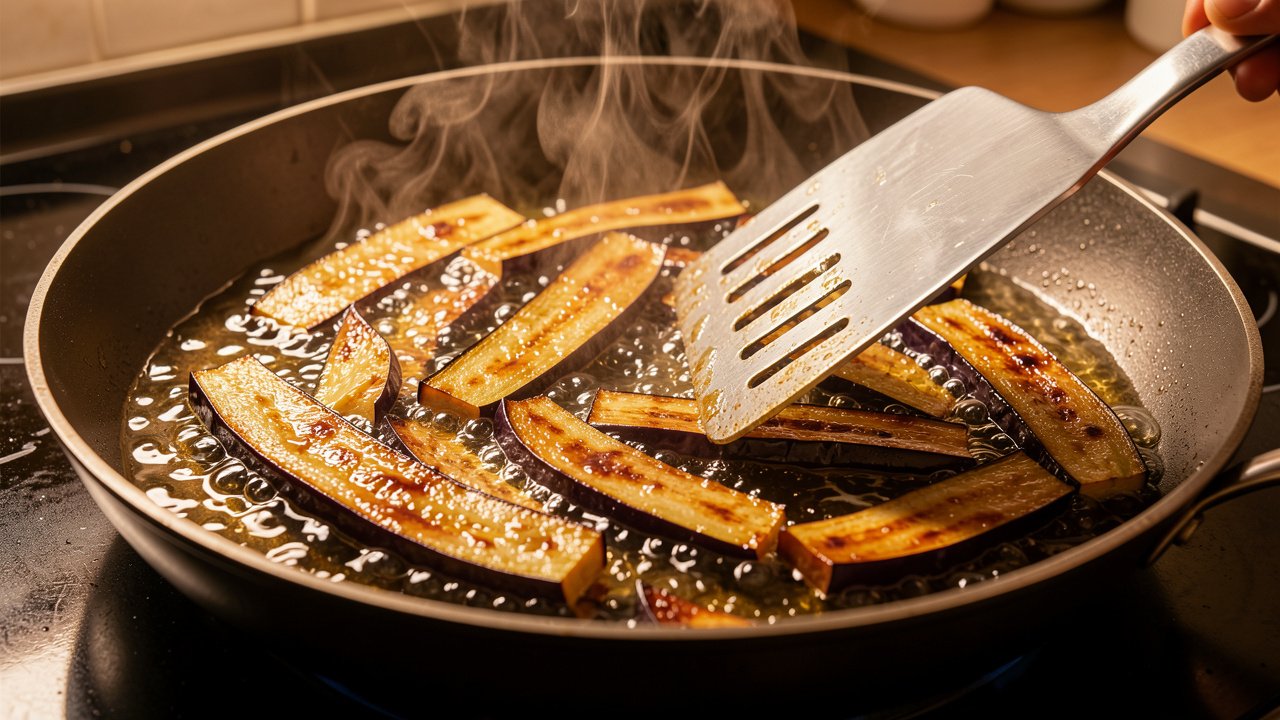
Heat the vegetable oil in a wide frying pan over medium-high heat. Fry the eggplant strips in batches, turning once, until they are deep golden and softened but still holding their shape, about 3 to 4 minutes per side. Lift them onto paper towels to drain and set aside.
Brown the Beef and Onions
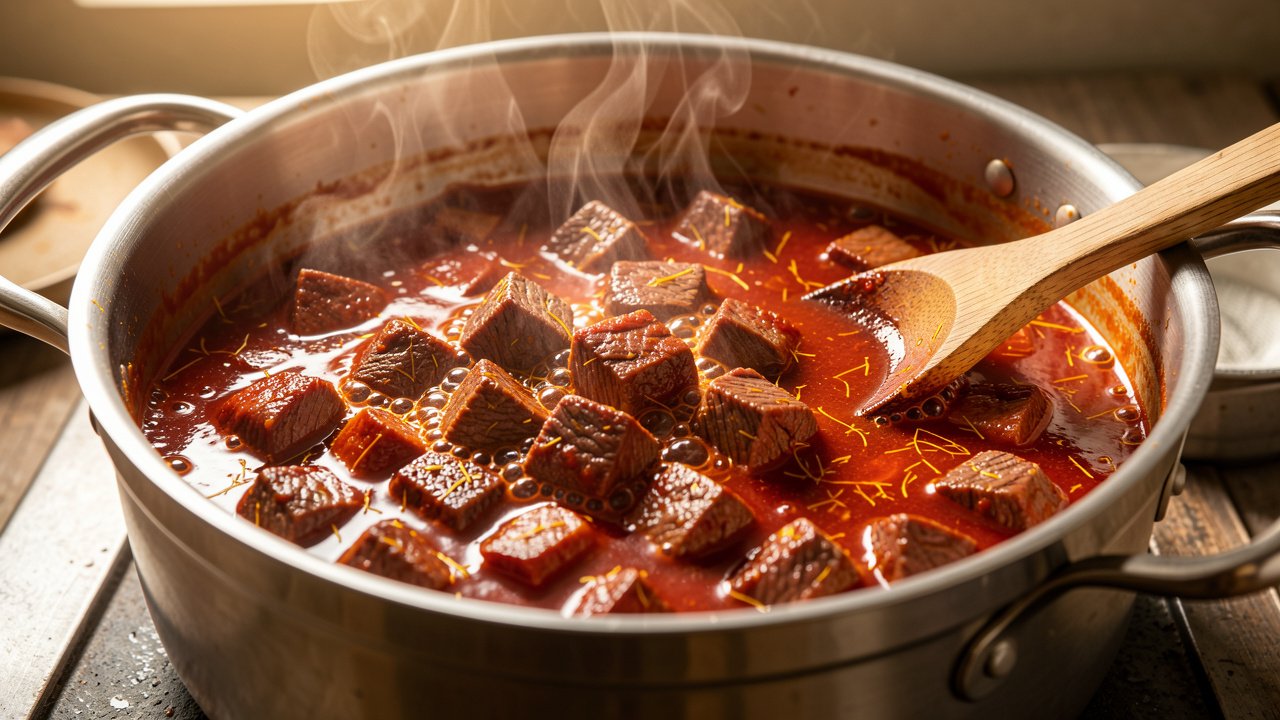
In a large heavy pot, warm a little oil over medium-high heat and brown the beef cubes on all sides, then push them aside and add the sliced onion. Cook the onion until soft and golden, 6 to 8 minutes, then stir in the garlic and turmeric and cook for a minute until fragrant.
Simmer the Tomato and Saffron Sauce
Stir in the tomato paste and let it toast for a minute, then add the chopped tomatoes, the bloomed saffron, and the water or broth with a good pinch of salt and pepper. Bring to a gentle simmer, cover, and cook on low for about 45 minutes, until the beef is fork-tender.
Layer in the Fried Eggplant
Lay the fried eggplant gently over the top of the stew, nestling the strips into the sauce without stirring hard. Cover and simmer on low for another 20 to 25 minutes, so the eggplant turns velvety and drinks up the sauce while keeping its shape. Add a splash more water if it looks dry.
Finish with Lime and Serve
Take the pot off the heat and stir in the lime juice or verjuice, then taste and adjust the salt. Let it rest a few minutes so the flavors settle. Serve the khoresh bademjan warm over fluffy rice, spooning plenty of the saffron sauce and eggplant over every plate.
Chef’s Tips From Real Kitchen Testing
Treat the eggplant as its own dish. Salt it, dry it, and fry it to firm gold before it goes anywhere near the sauce, so it stays silky and whole instead of greasy and collapsed.
Give the beef a real, unhurried simmer. Forty-five minutes on low melts stewing cuts into tenderness; rush it and the meat stays tough while the sauce has no time to deepen.
Add the lime or verjuice off the heat at the very end. Its brightness is the whole point of the dish, and cooking it too long dulls the fresh, tart lift into something flat.
Recipe Variations
Serving Suggestions
- Fluffy saffron rice (chelow) to catch the sauce
- Plain steamed basmati rice for an everyday plate
- A crisp shirazi salad of cucumber, tomato, and onion
- Warm flatbread and a bowl of tangy pickles
Nutrition Facts
| Nutrient | Amount per serving |
|---|---|
| Calories | 380 |
| Protein | 26 g |
| Carbohydrates | 20 g |
| Fat | 24 g |
| Saturated Fat | 6 g |
| Fiber | 6 g |
| Sugar | 9 g |
| Sodium | 620 mg |
Values are estimates per serving and vary with the exact cut of meat and amount of frying oil you use.
Make-Ahead Tips
Khoresh bademjan is even better the next day, once the flavors have had time to settle into the eggplant. Cook it through completely, cool, and refrigerate. If you want to plan further ahead, fry the eggplant and cook the beef sauce separately, then combine and finish them together when you reheat.
Storage, Freezing & Reheating
Common Mistakes to Avoid
Troubleshooting
Sauce too thin? Uncover the pot and simmer a few minutes longer to reduce it, or stir in an extra spoonful of tomato paste to thicken and deepen the base.
Eggplant turned mushy? It was either under-fried or left to simmer too long. Fry it to a firmer gold next time and add it only in the final stretch of cooking.
Stew tastes flat? It usually needs more of the tart note or salt. Add a little more lime or verjuice off the heat, and check that your saffron was bloomed rather than dropped in dry.
A Note on Persian Cooking
The name says it plainly: “bademjan” is the Persian word for eggplant, and “khoresh” is a slow-cooked stew meant to be ladled over rice. Khoresh bademjan is a cornerstone of Persian home cooking, the kind of dish that fills a pot on a weekend and feeds a family for days, and its balance of rich meat, saffron, and a bright sour note is a signature of the cuisine.
It belongs to a large family of Persian khoresh dishes, each built on the same idea of meat gently braised with a defining vegetable or fruit. It is most often set beside khoresh gheimeh, and the difference is simple: gheimeh is built on yellow split peas and diced meat, while bademjan is built on fried eggplant. It also shares its love of eggplant with the smoky mirza ghasemi and the yogurt-rich borani banjan.
What keeps khoresh bademjan on the table generation after generation is exactly what makes it forgiving: brown the meat well, fry the eggplant with care, keep the tomato and saffron constant, and finish with something tart. Spoon it over a plate of saffron rice and you have a dish that tastes of the Persian home kitchen.