Japanese Recipes
Tomato-Ketchup Chicken Fried Rice in a Soft Omelette
Last updated: September 30, 2026
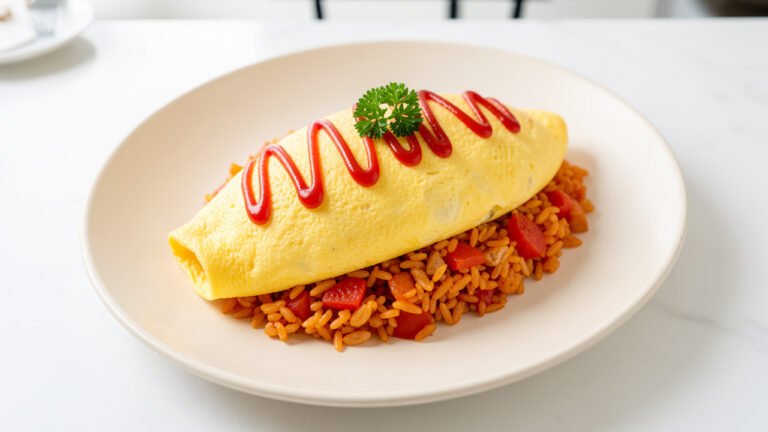
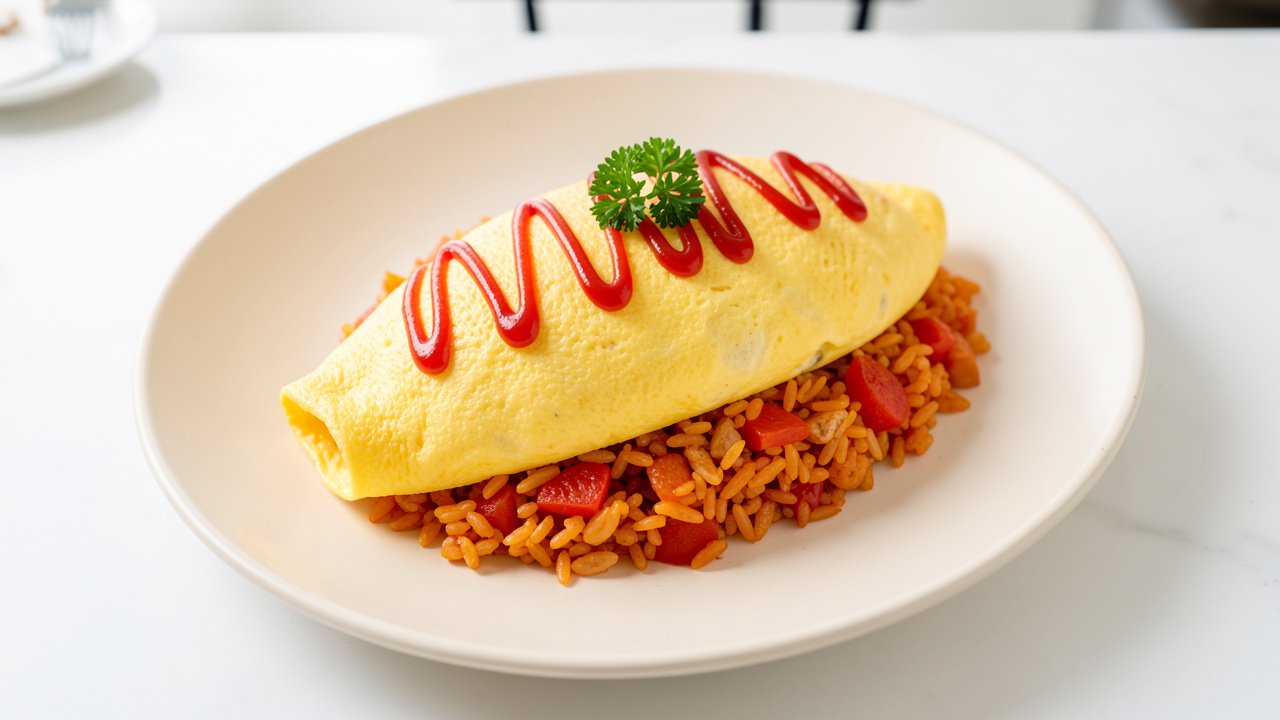
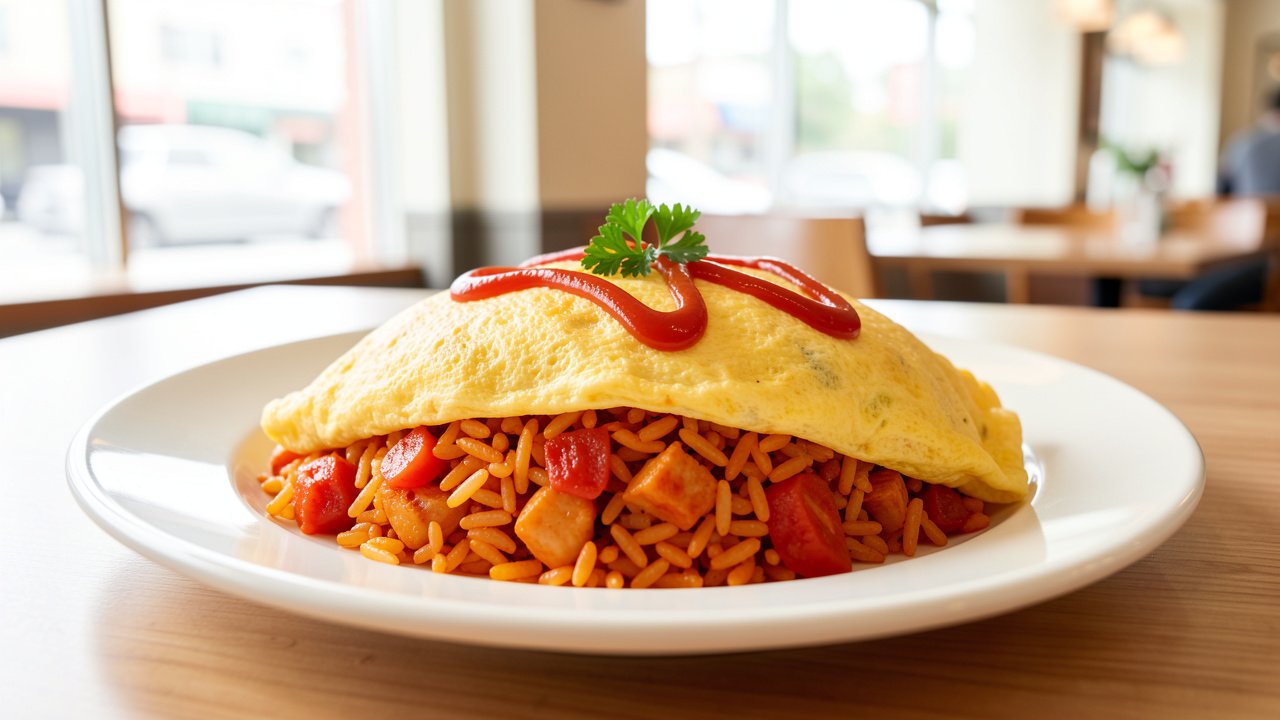
Omurice is the ultimate comfort plate of the Japanese diner: a mound of glossy, tomato-ketchup fried rice studded with chicken, tucked under a soft omelette so tender it almost trembles. Crack the egg open at the table and it drapes over the rice like a blanket, and a final zigzag of ketchup makes it look exactly as cheerful as it tastes.
The whole thing is built in one pan and two quick stages. First you fry cold day-old rice with onion, chicken, and ketchup until every grain is separate and savory-sweet, then you cook a pale, barely set omelette and slide the rice inside. It is fast food in the best sense, homey and a little nostalgic, and easy to master once you learn the two small tricks that make it work.
Why This Omurice Works
Great omurice is really two techniques done well: fried rice with separate, savory-sweet grains, and a soft omelette pulled from the pan at exactly the right second. Get those two right and the rest is just plating. The recipe here builds a fast, ketchup-glazed fried rice, then cooks a gentle, pale omelette that stays tender enough to drape.
The rice base starts the way most good ketchup rice does: onion and diced chicken cooked in a hot pan, then cold day-old rice broken up and tossed until loose. The ketchup goes in and gets fried against the hot pan for a minute so its raw, sharp edge cooks off and it turns deep and mellow, coating every grain in glossy tomato color.
Timing the egg is the heart of the method. You want the omelette cooked over gentle heat and lifted from the pan while the top is still glossy and barely set, because that residual softness is what lets it fold and drape over the rice instead of cracking. A splash of broth beaten into the eggs keeps them silky and pale rather than dry.
It is also endlessly adaptable. Omurice was born as a use-what-you-have diner plate, so the mix-ins are up to you. Keep the cold rice and the fried ketchup constant, swap the chicken or vegetables for whatever is on hand, and you get a plate that tastes like a Tokyo lunch counter every single time.
Pro observation: Omurice is fully halal as written, with no forbidden ingredients. It is built entirely on chicken, egg, and rice, seasoned with tomato ketchup and a splash of broth, so nothing needs to be swapped out or left in.
Ingredients
Kitchen Measurement Converter
Need to convert an amount while you measure? Pick a category, enter a value, and the result updates instantly.
Ingredient Notes & Substitutions
Rice
Cold, day-old short or medium-grain Japanese rice is ideal, because it has dried out enough to fry into separate grains. If you only have fresh rice, spread it on a tray and chill it, uncovered, for at least an hour. Leftover jasmine or long-grain rice works too.
Chicken
Boneless thigh stays juicy and forgiving through the high-heat fry, but breast works if you dice it small and do not overcook it. For a vegetarian plate, swap in diced mushrooms and a little extra vegetable, added the same way.
Ketchup & Seasoning
A good tomato ketchup is the signature flavor, both fried into the rice and drizzled on top. For deeper color and a rounder tomato note, stir a teaspoon of tomato paste in with the ketchup. A splash of broth stands in for any cooking liquid the rice needs.
Eggs & Fat
Fresh large eggs give the softest omelette. Beating a spoonful of broth into them keeps the egg silky and pale rather than dry. Butter gives the omelette its classic flavor and slippery release; a neutral oil works if you prefer.
Equipment
- Nonstick frying pan
- Large skillet or wok
- Mixing bowl for eggs
- Whisk or fork
- Silicone spatula
- Sharp knife and board
Before You Start
1. Chill the rice before it ever hits the pan. Warm, freshly cooked rice is full of steam and clumps together, so it fries into loose, sticky mush instead of separate grains. Use rice cooked the day before and cold from the refrigerator, or spread fresh rice on a tray and chill it uncovered for at least an hour so the surface dries.
2. Beat and season the eggs before you fry the rice. The soft omelette cooks through in under a minute and gives you no time to stop and whisk. Crack the eggs, beat in a spoonful of broth and a pinch of salt, and have them ready by the stove so you can pour the instant the pan is hot.
3. Portion and mold the fried rice before you pour the eggs. A soft omelette sets in seconds and waits for nothing, so shape the rice into an oval mound on the plate first. Then the egg can go straight from pan to rice while it is still tender enough to drape.
Step-by-Step Instructions
Omurice moves fast once the eggs hit the pan, so have the fried rice made, the plate ready, and the eggs beaten before you start the omelette. That way the egg goes onto the rice while it is still soft enough to fold.
Prep the Rice and Chicken
Break up the cold day-old rice with your fingers so there are no clumps. Cut the chicken thigh into small dice, finely chop the onion, and measure out the ketchup, peas and carrots, and seasonings. Crack the eggs into a bowl, beat in the chicken broth and a pinch of salt, and set them by the stove.
Fry the Chicken and Onion
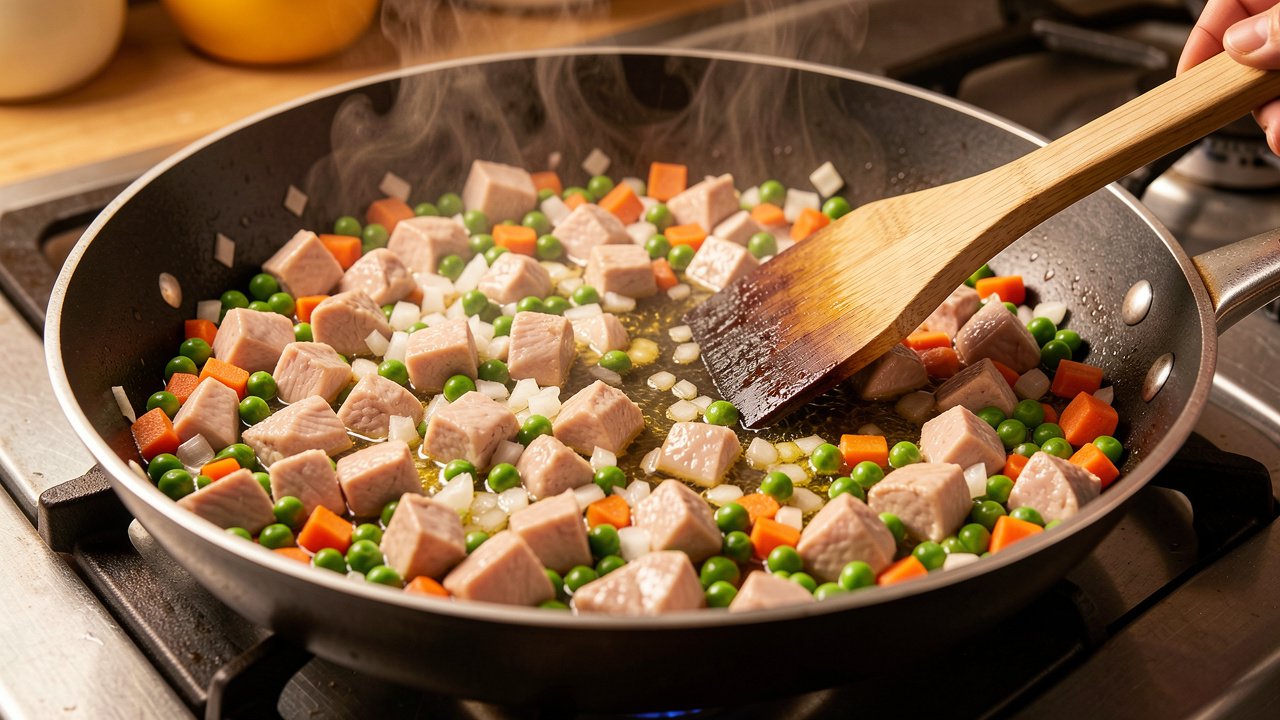
Warm the neutral oil in a large skillet or wok over medium-high heat. Add the diced chicken and cook 3 to 4 minutes until it is opaque and lightly colored, then add the onion and the peas and carrots and cook 2 to 3 minutes more until the onion softens and turns fragrant.
Make the Ketchup Fried Rice
Push everything to one side, add the ketchup to the empty part of the pan, and let it fry for about a minute until it darkens and smells sweet, cooking off its raw tang. Add the cold rice, then toss and fold everything together over the heat until every grain is coated a glossy orange and separate. Season with the salt and pepper, then slide the rice onto plates and mold each portion into an oval mound.
Cook the Soft Omelette
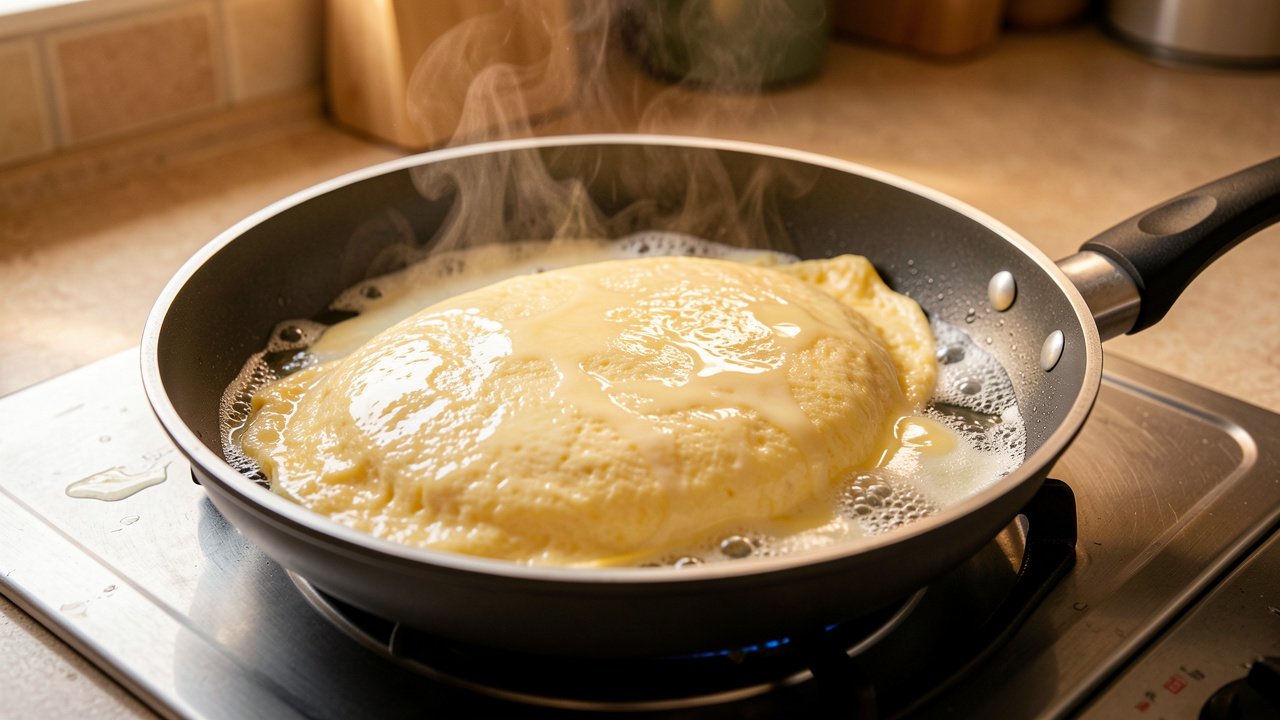
Wipe the pan, set it over medium-low heat, and melt a little butter until it foams. Pour in half the beaten eggs and swirl the pan so they spread into a thin round. As the edges set, drag them gently to the center and tilt the pan, cooking just until the top is still glossy and barely set, about 45 seconds. Do not let it brown or firm up.
Drape the Omelette Over the Rice
Slide or flip the soft omelette out of the pan so it drapes over one mound of rice, letting the edges fall around it like a blanket. If you like the classic look, lay it seam-side down and tuck the edges under with the spatula. Repeat with the remaining butter and eggs for the second plate.
Finish with Ketchup and Serve
Squeeze the finishing ketchup over each omelette in a neat zigzag or a simple line down the middle. Serve right away, while the rice is hot and the egg is still soft, so the first cut lets the tender omelette slump open over the tomato rice underneath.
Chef’s Tips From Real Kitchen Testing
Fry the ketchup on its own for a full minute before the rice joins it. Cooking it against the hot pan burns off the raw, sour tang and turns it deep and mellow, which is the difference between a rich rice and a sharp one.
Pull the omelette while the top is still glossy and barely set. That soft, undercooked surface is what lets it fold and drape over the rice; a fully firm omelette cracks and looks stiff instead.
Keep the egg heat low and steady. A hot pan browns and speckles the omelette and turns it rubbery, while gentle heat keeps it pale, silky, and tender enough to slump open when you cut it.
Recipe Variations
Serving Suggestions
- A crisp green salad with a light sesame dressing
- A bowl of clear vegetable or chicken soup on the side
- Quick-pickled cucumber for a fresh, tangy bite
- Extra ketchup or a spoon of tomato sauce for the table
Nutrition Facts
| Nutrient | Amount per serving |
|---|---|
| Calories | 520 |
| Protein | 26 g |
| Carbohydrates | 58 g |
| Fat | 20 g |
| Saturated Fat | 6 g |
| Fiber | 3 g |
| Sugar | 10 g |
| Sodium | 780 mg |
Values are estimates per serving and vary with the exact chicken, rice, and brands you use.
Make-Ahead Tips
The ketchup fried rice can be made a day ahead. Cook it through, cool, and refrigerate in an airtight container. When you are ready to eat, reheat the rice in a hot pan until piping and loose again, then cook the soft omelettes fresh to order, since a made-ahead omelette loses the tender drape that makes omurice special.
Storage, Freezing & Reheating
Common Mistakes to Avoid
Troubleshooting
Rice sticky or mushy? The rice was too fresh or the pan too crowded. Spread it thin over higher heat to drive off the moisture, and next time chill the rice overnight before frying.
Omelette torn or stuck to the pan? The pan was not hot enough or lacked fat. Use a well-buttered nonstick pan, let it heat before the egg goes in, and swirl the egg quickly so it releases cleanly.
Ketchup flavor flat or too sharp? If it tastes flat, fry an extra spoonful of ketchup or a little tomato paste into the rice. If it tastes too sharp, a small pinch of sugar rounds it out.
A Note on Japanese Cooking
Omurice belongs to yoshoku, the family of Western-influenced Japanese dishes that took shape in the late 1800s and early 1900s as Japan reworked European and American cooking to its own taste. The name itself says it all: a portmanteau of “omelette” and “rice.” Tokyo and Osaka diners are both credited with popularizing it in the early twentieth century, and it has been a beloved lunch-counter and home-kitchen comfort food ever since.
It sits in a wider circle of ketchup-and-tomato yoshoku plates that came out of the same era. The dish it is most often confused with is a plain omelette, but the difference is the filling: omurice always wraps a seasoned tomato-ketchup fried rice inside the egg, never a bare fold. It shares a pantry and a spirit with Napolitan, the ketchup-glazed spaghetti, and with the richer, demi-glace-style hayashi rice, while its tender-egg technique echoes the everyday Chinese tomato and egg stir-fry.
What has kept omurice on menus and family tables for over a century is exactly what created it: it is homey, forgiving, and endlessly adaptable. Keep the cold rice and the fried ketchup constant, drape it in a soft omelette, and finish with a cheerful ribbon of ketchup, and you have a plate that still tastes like a Japanese diner lunch.